
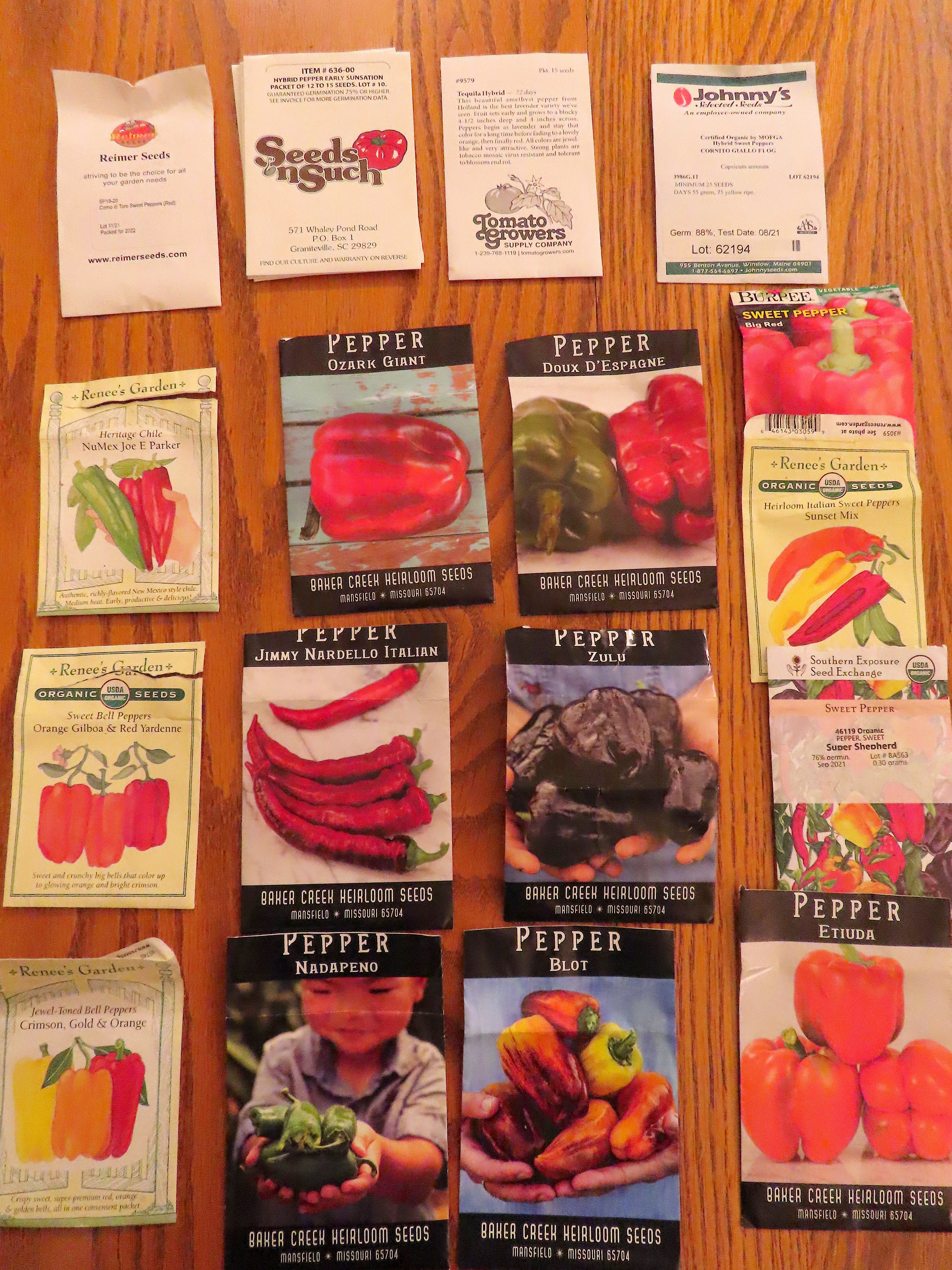
In today’s podcast (above), we talk with renowned pepperhead Dave DeWitt, author of several hot pepper books. We talk hot pepper basics, and Dave adds advice on how to overwinter your hot pepper plants for a second year of growth (and heat!). We have a complete, human-corrected transcript of the podcast towards the bottom of today’s newsletter. Short of time? Here are the main points from today’s podcast:
Start from seed for variety, or order early from pepper catalogs. Super-hot varieties like Bhut Jolokia or Scorpion peppers may be difficult to find as transplants, so grow them from seed.
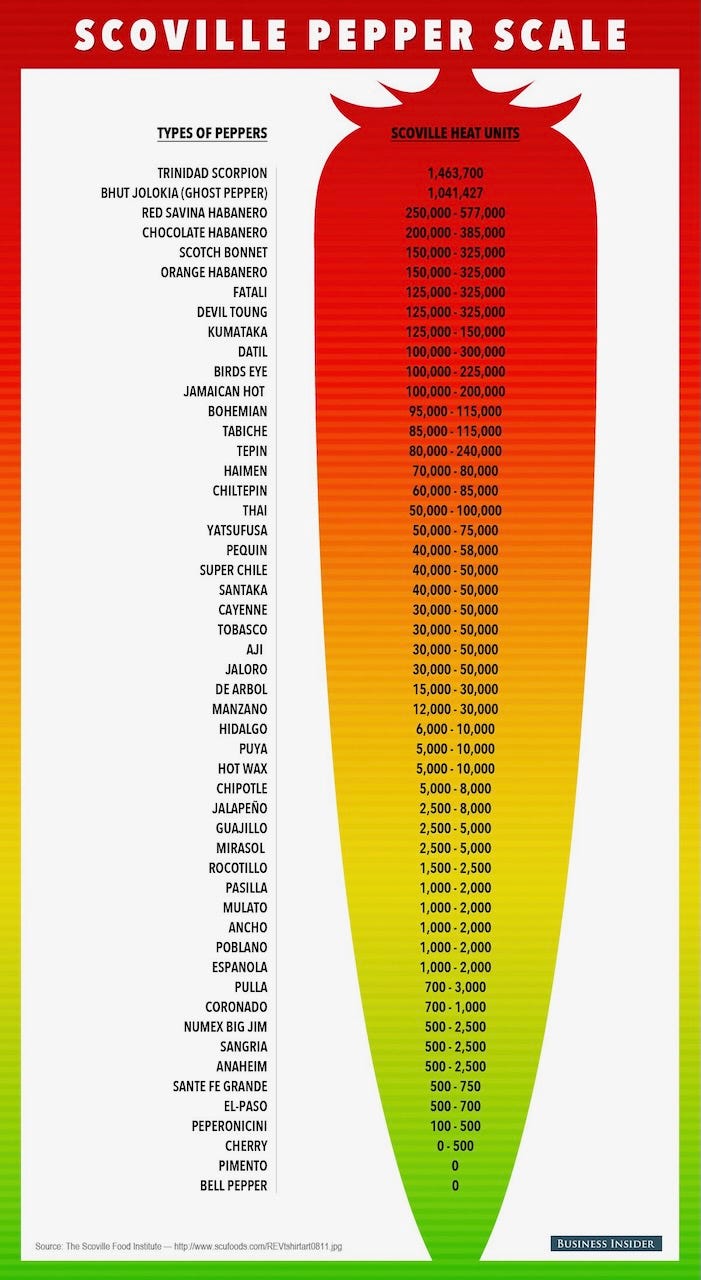
Don’t judge peppers by heat alone. Habaneros hit 80,000–200,000 Scoville units but have a fruity, apricot-like flavor, good for both heat and taste. Diluting them (e.g., one habanero in 4 cups of salsa) keeps flavor without overwhelming heat.
Skip water or beer for pepper burn. Capsaicin isn’t water-soluble, so the relief is temporary and heat returns. Use dairy instead: yogurt, sour cream, heavy cream, whole milk or ice cream (the casein protein strips capsaicin off your mouth).
Never let pepper roots sit in water-logged soil. Add perlite or pumice (not vermiculite) to potting soil/containers to keep roots well-drained and prevent root rot or Phytophthora fungal disease.
Give peppers 10–12 hours of full sun daily. They’re unaffected by day length until fall, and stop flowering once they hit their max fruit load.
Use moderate nitrogen fertilizer. Too much N (especially from urea) produces lots of foliage but few pods. Organic fertilizers (naturally low in salt, under 10% nitrogen) are a safer bet.
Get your soil tested annually (via a University extension service, e.g., Colorado State, UMass/Amherst, Texas A&M, or Utah St) to catch salt buildup, a common yield-killer from repeated watering/fertilizing in raised beds. If salts build up, flood-irrigate the bed heavily at season’s end to flush them out.
To overwinter a pepper plant, grow it in a container, bring it indoors (a south-facing window is enough) over winter, and move it back outside in spring. You’re just keeping it alive in the winter, not expecting fruit until summer returns.
Choose smaller-podded varieties (like pequins) for overwintering success. Pequins retain more vigor in year two, while larger-podded types (like New Mexico chilies) lose vigor and yield less after their first year.
Probably by now, you have discovered a pepper gardener’s main conundrum every summer: “Why did I plant so many pepper plants? What am I going to do with all those peppers?”
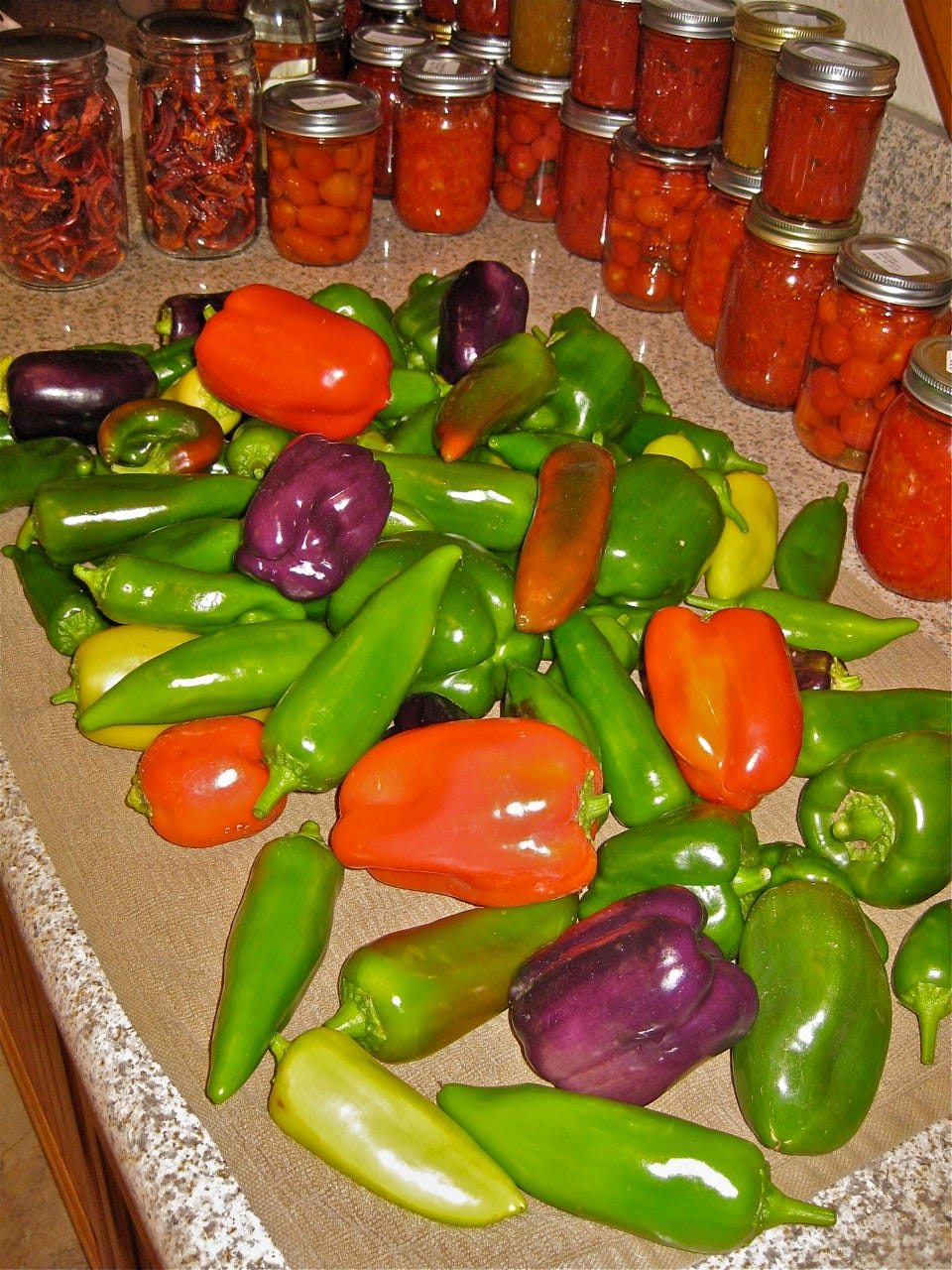
In late July, you’re probably not totally inundated yet with mature sweet or hot peppers, so you have time to make a decision (by the way, donating them to your nearest food bank or food pantry isn’t a bad choice). The good news is: as those plants mature, they will become more colorful and sweeter by late summer (and the hot ones will get hotter).
We spend much of summer making several batches of sweet red pepper relish, using a recipe we found in an old copy of Sunset's Home Canning book.
I’ve shared this recipe before, and it has received rave reviews:
From Claire: “I ran upon this last year and made a big batch. I shared it with family and friends and they loved it. Of course I used red, green, yellow and orange peppers. I’m growing my own peppers this year but I’ve already hit the produce market and made 2 batches so far. Thanks for such a great recipe!”
From Ann: “We made this recipe with all our peppers at the end of the season last year. All of our friends raved about it so we got out our peppers that we froze for the winter and just made a new batch!”
From Nancy: “I absolutely love this recipe. I make it with bell peppers and banana peppers and lunchbox peppers and jalapeños and onions. We love it. Easy to make and delicious to eat. Thank you for sharing!”
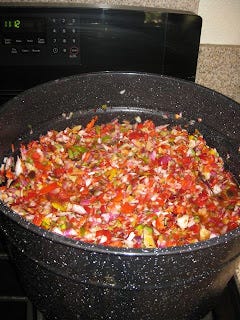
Pepper relish is delicious on many dishes, including as a topping for hot dogs and hamburgers...or just dolloped onto a cracker. It's the one homemade holiday gift that we distribute each December that our friends and family actually request!
Here’s the recipe.
6 pounds of sweet red peppers, seeded and cut into one-inch squares (we throw in a few Anaheim peppers for a touch of heat). Use your favorite blend of sweet and hot peppers!
3 pounds onions, cut into one-inch chunks
4 cups distilled white vinegar
3 cups sugar
2 Tbs canning salt or non-iodized table salt
1 Tbs mustard seeds
Chop the peppers and onions, then put in a food processor or food chopper with a medium blade.
Pour chopped peppers and onions into a heavy-bottomed, 8-10 quart stainless steel or unchipped enamel pan.
Mix in the vinegar, sugar, salt and mustard seed.
Bring to a boil over medium-high heat, stirring occasionally.
Reduce heat to medium-low and let it boil gently, uncovered.
Stir often to prevent sticking.
Cook about 50 minutes, until relish is thickened but still juicy.
Makes about 7 pints.
A quarter-cup serving has 81 calories, 1 g protein, 16 g carbohydrates, 2 g total fat, 0 mg cholesterol, 43 g sugar, 3 mg sodium
Storage:
Unprocessed: Ladle into pint jars or refrigerator containers, leaving a half-inch head space. Apply lids, let cool, then refrigerate. Refrigerator life: 1 month.
or
Processed: Ladle hot relish into clean, hot pint jars, leaving a half-inch headspace.
Run a narrow nonmetallic spatula between relish and jar sides to release air bubbles.
Wipe rims and threads clean. Top with hot lids, then firmly screw on bands.
Process in boiling water canner for 15 minutes. Shelf life: up to 1 year.
Flamingo
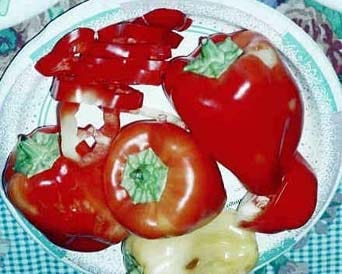
Flamingo, from Harris Seed Company, is truely unique with fruit that mature from a light yellow to pinkish-orange, then to red. This sweet bell pepper has concentrated fruit set and can produce high yields. Similar to Gypsy, Flamingo performs well in most pepper growing areas and its earliness makes it a stand-out in the northern U.S. and Canada. Wonderful color change through the growing season. OK taste. Good grilled.
Nu Mex Joe E. Parker
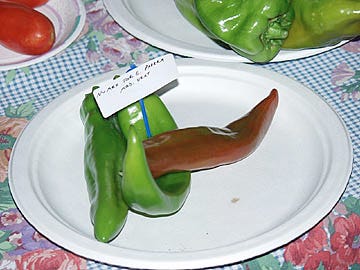
6 to 7-inch thick-fleshed peppers turn from green to red and are relatively mild to medium in flavor. Ripens earlier than most other peppers of its type. 65 days." The overall winner of the Farmer Fred Pepper Party Taste Tests (from a long time ago). Great in chili! We grow this every year, great in salsas and for homemade nachos.
Giant Marconi
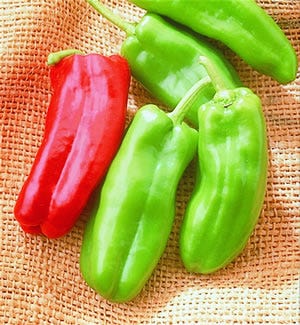
72 days. Large, tapered, elongated fruits grow 8" by 3", with a sweet, smoky flavor that's equally delectable when fruits are eaten green or red, fresh or grilled. Widely adaptable, it produces larger than normal crops just about anywhere. “Withstands severe weather with excellent disease resistance." This 2001 AAS Award Winner has (in my opinion) more flavor than the Giant Aconcagua.
Tequila
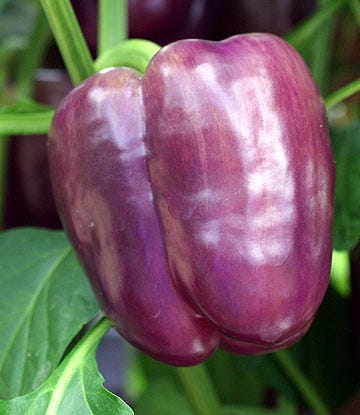
Peppers begin as lavender and stay that color for a long time before fading to a lovely orange, then finally red. Strong plants are tobacco mosaic virus resistant and tolerant to blossom end rot. 72 days. The Farmer Fred Absolute Favorite Sweet Pepper!
Anaheim
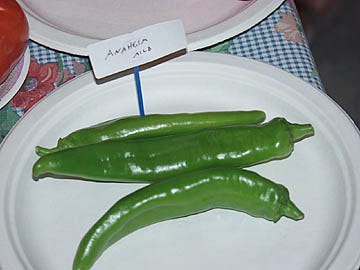
70 days. “Also know as the 'New Mexican Chile', this moderately pungent fruit is deep green, but turns red at full maturity. Excellent for canning, freezing or drying. 75 days." A good choice for nachos for the weak of heart...and stomach.
Jimmy Nardello
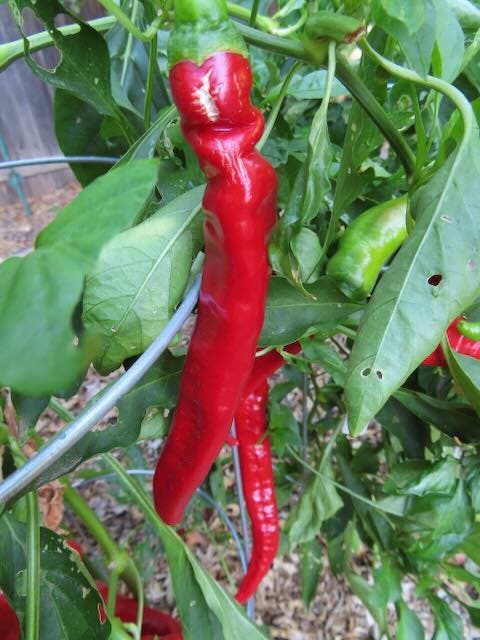
These bright green and red sweet peppers fry beautifully. Originally from the Basilicata region of south Italy. The plants are 24" tall, and festooned with 10-12" peppers. One of my favorites for grilling.
Corno di Toro Yellow
Italian 'bull's horn' colorful sweet peppers are 8 to 10 inches long and curved like a bull's horn. Ripen to deep red or bright yellow and are delicious fresh in salads, but more often are sauted or grilled. Prolific tall plants. 68 days. Gorgeous on the grill, and in salads, too.
Poblanos have become one of our favorite peppers to keep around the kitchen and garden, and after a few years of growing and cooking with them, we appreciate their mildly hot, spicy flavor when added to recipes.
Poblanos are mildly warm, at about 1000-2000 Scoville Units of Heat (sweet peppers are usually ranked around 0; Jalapenos about 2500-8000). So, you may want to pick up a few at a grocery store or farmers’ market to make sure you’re OK with them. It can be rather confusing finding poblanos at a grocery store. In the fresh produce section, they may be labeled “Anchos”. The difference? Anchos are the absolute finished product of the poblano. According to the Holmes Seed Company, A poblano is the fresh, unripe, dark-green pepper, while an ancho is that same poblano left on the plant to ripen to red and then dried. What’s for sale at the store is usually that fresh, green version of the poblano/ancho pepper confusion. But I can understand the confusion at my local grocery chain: they are too busy raising prices on canned cat food right now (from 99 cents to $1.29) to change any mis-labled signage in the vegetable aisle.
Look for poblanos at the market that are deep, glossy green with taut, unwrinkled skin. A good one feels heavy for its size and firm to the touch, with no soft spots. The shape is wide at the stem and tapers to a point, roughly the size of a small bell pepper. Some develop dark, almost black-green patches near the stem; that’s normal and not a sign of spoilage. Avoid any with wrinkled or shriveled skin, which means moisture loss and a mealier texture once cooked. Heat level is genuinely unpredictable, ranging from mild to a noticeable kick, so if you’re cooking for spice-sensitive eaters it’s worth doing a small taste test before committing a whole batch to a dish.
Poblanos are easy enough for a beginner to grow from either a plant or seed, but offer big rewards if you show a little patience. They need a long, warm growing season, so starting seeds indoors 8 to 10 weeks before the last frost is the way to go, then transplanting once nighttime temperatures stay reliably above 55°F. They want full sun, well-draining soil, and consistent watering; letting the soil dry out too much stresses the plant and can make peppers taste bitter. I’ve found staking helps, since the plants get top-heavy once the fruit sets. From transplant to harvest takes about 60 to 80 days for green poblanos, longer if you’re waiting for them to ripen to red or brown for drying into ancho chiles. One plant produces generously enough that even a couple in a backyard garden can keep a household well supplied through late summer…or longer. We were harvesting poblanos last December! (USDA Zone 9 humblebrag)
Using poblanos in recipes is where they really shine. Their flavor is earthy and mild with just enough warmth to keep things interesting, which makes them far more versatile than their fierier cousins. Roasted and charred until the skin blisters, then peeled, they turn silky and smoky, perfect for rajas, chile rellenos, or blended into a creamy poblano soup. Stuffed with cheese or a meat-and-rice filling and baked, they hold their shape well without turning to mush. Diced raw, they add a gentle vegetal bite to salsas, though I prefer them cooked, where their flavor really opens up. Dried and smoked, they become ancho chiles, a completely different ingredient with a deep, raisin-like sweetness that’s essential to a good mole.
Overall, poblanos are a rewarding pepper on every front: easy to grow, forgiving in the kitchen, and flexible enough to anchor a dish or play a supporting role. Highly recommended for anyone looking to expand beyond bell peppers and jalapeños.
Farmer Fred:
[0:00] Do you like hot peppers? If you do, you need to know how to grow them right to get the best. And we are talking to the best when it comes to pepper information. It’s Dave DeWitt. Dave DeWitt is a food historian and one of the foremost authorities in the world on chili peppers, spices, and spicy foods. He has all sorts of best-selling books on the subject. He’s got the Pepper Garden, the Hot Sauce Bible, the Chili Pepper Encyclopedia, the Spicy Food Lovers Bible, the complete chili pepper book, and he even has a habanero cookbook, so we know we’re talking to the right guy. Dave DeWitt, it’s a pleasure talking with you again.
Dave DeWitt:
[0:39] We haven’t talked in a while.
Farmer Fred:
[0:40] We should point out, it takes a long time to grow a quality chili pepper plant. And as you mentioned, yes, you should be starting seed. I know around here, you start seeds around January just to get them up to a size where you could transplant them in April. But as I said, a lot of nurseries still have a pretty good selection of pepper plants. And I’m amazed at the amount of hot pepper plants that are available now. It used to be mostly sweet peppers. And now I think the majority, at least around here, are hot pepper plants. But if people want the best selection of hot pepper plants, they really need to do it from seed, don’t they? Because that’s where you’re going to find the widest variety.
Dave DeWitt:
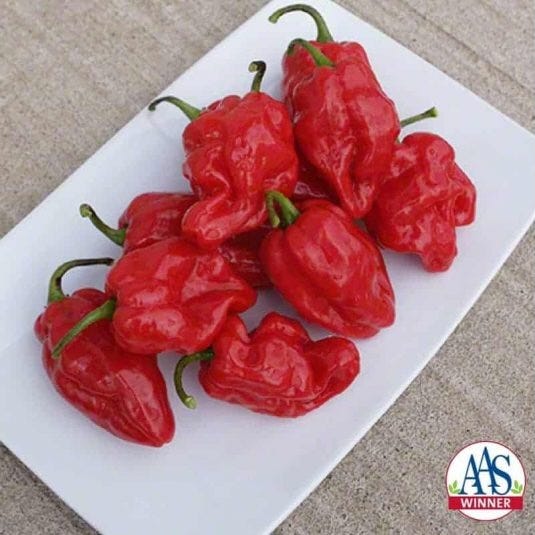
[1:21] Or order early from chiliplants.com. And they have 500 different varieties of chili plants and they’re, very dependable and very good, but you have to order a minimum of six just depending on the size of the plants. They’re a little bit pricey, but they come in very good containers. But they’re probably sold out by now, I would think, because it’s so popular. But if you want super hots, the Bhut Jolokias and the Scorpions and that sort of thing. You’re going to have to grow them from seed.
Farmer Fred:
[1:54] Let’s talk a little bit about the hot pepper plants and taste buds, because a lot of people think they like hot peppers. But what I find with a lot of the really hot peppers, it’s mostly heat and not much flavor, whereas some of the more moderately hot pepper plants have excellent taste. Now, I would think over the years, since you’re in New Mexico, you’ve probably been eating chili peppers your entire life. You’re probably a bit inured to eat, but I would think that you could rattle off some names of some really tasty hot pepper plants.
Dave DeWitt:
[2:31] The habanero would be a good selection because the habanero is a hot, it was the start of the superhots. It used to be called the hottest chili pepper in the world before the superhots from Trinidad were uncovered and so you can still find them i mean Albertson’s here carries them in their produce department. Not the bedding plants; but of course the pods, and so they’re not as hot as you would imagine. But still 80 000 scoville heat units is hot, they go up to 200,000 but most of them aren’t nearly that hot. You’re not going to just pop these in your mouth and chew them up. So there’s going to be some dilution of the heat level as you cook with them. And, if you make a big bunch of fresh salsa and you put one habanero in there, and say you have four cups of salsa, that would be about right. The heat level would be hot, but it wouldn’t be killer. And you would still be able to have a good flavor because habaneros are very fruity and they have a apricot-like flavor. By the way, the taste buds have nothing to do with perception of heat. All mammals are born with capsaicin receptors, which are separate from taste buds. Taste buds measure salty, sweet, umami, and that sort of thing, but they don’t measure the heat. The heat comes from genetics and the capsaicin receptors in our mouth and tongue. And it was thought that the hot peppers came about to prevent mammals from eating the pods and digesting the seeds. Birds do not digest the seeds. They pass right through the birds. So they’re a good disseminator, and they were the original disseminators before mankind got control of chili pepper plants, when chili pepper plants were wild and unnecessary. And they operate the same way that the taste buds operate in the sense that it’s all genetic. Among people, there are super tasters and non-tasters with taste buds. You know, people who have a lot of them are super tasters, are overwhelmed by things that are salty and sweet and that sort of thing. And the same thing happens with the capsaicin receptors. If you were born with a lot of capsaicin receptors, then you’re going to be very super sensitive to the heat levels of peppers.
Farmer Fred:
[4:56] Give us some first aid tips for people who accidentally eat a pepper that is a little too hot for them. I know water is a mistake.
Dave DeWitt:
[5:06] Right. The capsaicin is not mixable with water, so it doesn’t do any good to try to do water. But dairy products, especially the thicker, heavier, the better, We’re talking yogurt. We’re talking about ice cream. We’re talking about sour cream. Those are very good at cutting the heat because they have a protein called casein, C-A-S-E-I-N, and that will strip the molecules, capsaicin molecules, off your mouth and tongue. And so that’s the best thing to do. So if you overdose on super hot peppers and you have too much capsaicin, rinsing your mouth with somethng very thick. And the thicker, the better. milk. Remember, 2% milk is 98% water. So keep that in mind. If you’re thinking about using skim milk, don’t. It’s useless. Heavy cream would be good. And ice cream, as I said, yogurt and sour cream are all good for combating the very super hot peppers that you get too much. And you hear all kinds of of things like you drink enough beer you won’t mind how hot it is and stuff like that. But beer in itself is 97 percent water so just keep those things in mind when you’re trying to dilute the heat. Now, water and beer and all that kind of stuff will seem like it’s working, but the heat returns. In other words, it’ll be momentarily the cooling factor will help, but then it’ll come back to you. So I say dairy products are the only answer. People will tell you, oh, put some lemon juice on it or put some salt on it or blah, blah, blah. None of that works. It’s all mythology.
Farmer Fred:
[6:44] I like the idea of having a freezer full of ice cream just in case.
Dave DeWitt:
[6:49] That’s very good. And the sweet seems to help a little bit as well.
Farmer Fred:
[6:54] Let’s talk about some basics for growing the best hot chili peppers. What sort of conditions, what sort of soil, what do they like to really thrive?
Dave DeWitt:
[7:07] The main thing is that they don’t like to sit in water. If the roots sit in water, they’ll either get a a fungal disease called Phytophora, or they’ll just drown because the roots supply oxygen as well as supplying water. And if the roots are completely submerged, they won’t be able to supply any oxygen to the roots. So the roots will die, the plant will die. And so make sure that, no matter how you do it, if you do it in containers, especially, make sure that they’re well-drained. And so I always add perlite to my garden because vermiculite, absorbs water and keeps things very wet. Perlite does not absorb water. It just loosens the soil so that the water will pour through the soil. You have to water a little bit more and that, of course, will cost you more money. At least your plants will be healthy.
Farmer Fred:
[8:01] How many hours a day of sun do peppers need?
Dave DeWitt:
[8:04] Well, they need full sun for the most part. And so we’re talking, you know, 10, 12 hours a day. Chili peppers are immune to the day-night cycle, so it doesn’t matter to them. When it starts getting into the fall, that’s when chili peppers aren’t like that. They will keep flowering as long as they don’t reach their fruit load. And that’s what chili plants do, and tomatoes do too. that there’s a certain amount of fruit that can be on the plant. And once the plant can’t support any more of the fruits on the plant, then the flowering shuts down.
Farmer Fred:
[8:42] What sort of fertilizer do chili peppers need?
Dave DeWitt:
[8:46] Well, for vegetative growth, they need high nitrogen, but you don’t want to overdo it. If you over-fertilize with nitrogen, chili peppers, you’ll get all foliage and no pods at all. And that’s happened to a lot of gardeners, especially people who use urea. And that’s one of the things I wanted to mention. I screwed up and did not realize that the salts were building up in my raised beds where I was growing my tomatoes and chili plants. And the first indication I had was when my yield went down from a couple of hundred pounds of say tomato plant, tomatoes to just a few pounds. And I’m thinking, what the hell? So I had my soil tested and I would recommend to everybody have their garden soil tested.
Dave DeWitt:
[9:46] If you’re growing in pots, it’s not too bad because you can switch out the soil every year. But if you have an extensive garden with raised beds, it’s hard to switch out your soil every year. You could rotate, but rotation has nothing to do with the salts building up. And what happens is as you water, if the water has salts in it, it will accumulate in the soil. And that happens in the West, especially. I sent my soil off to be tested. And the reason that my yields were going down was because the salts of all kinds were building. I’m not talking about just table salts. I’m talking about all the combination of salts that there are. And there’s dozens and dozens of different salt combinations that can build up in your soil. The only way to get rid of that, if you have raised beds, is to flood the raised beds with just bunches of water, which is going to cost you money, but it’s better to flood them and the salts will dissolve and flow out the bottom of the raised beds. And so what I’m doing now every year is at the end of the season, I just flood irrigate. Even when the plants are gone, I just keep flooding them. And I sent my soil off this year there were no salts in my soil, so now my plants are doing great again so just keep that in mind that salt buildup, it interferes with the plants taking in the nutrients for foliage and for fruiting. Beware of what i say about the salt buildup. And pay attention to it. Have your soil tested every year. That would be my advice. And the extension services can do that. I used Colorado State University. They have a really good testing lab. It’s not very expensive. And they give you a complete report that looks like a scientific paper almost, telling you exactly what your garden needs. And they’ll give you advice. And I thought I knew a lot about gardening, but I wasn’t paying close enough attention to my soil. And so that was the big lesson I learned. You can get the best varieties, you can buy the best bedding plants and all that stuff, it doesn’t matter. It’s all useless if your soil is building up salt.
Farmer Fred:
[11:55] Two of the things you mentioned about a successful pepper plant to keep it at moderate nitrogen levels and watch out for salt buildup, that’s a good argument for using organic fertilizers because organic fertilizers are very low in salts and they generally have a nitrogen content of less than 10%, but they also have the phosphorus and the potassium that the plant would need for fruiting.
Dave DeWitt:
[12:21] I agree with what you’re saying.
Farmer Fred:
[12:23] Talk a little bit about something that you touched on, and it makes sense for people who want to have a long-lasting hot pepper plant. You mentioned growing peppers in containers, and you mentioned the fact that in tropical areas, they become trees, they live through the winter. This is a good idea if people want to keep that hot pepper plant going, is grow it in a container and then move it to a warm spot if they live in a cold winter area, and then bring it back out again come spring.
Dave DeWitt:
[12:53] Yes, you can do that. And most people say, well, there’s not enough light. Well, you’re not going to get fruits all year long. I have a greenhouse, and I have tropical plants like hibiscus and so forth that I put on my patio during the summer, bring them in, and they all have to be pruned back. And chili plants are no exception to that. You know, if you take a chili plant that’s in a container and put it outside during the summer and bring it back inside during the winter, it doesn’t have to have all that much light. Put it in a southern exposed window and so forth like that. All you’re trying to do is keep the plant alive. You’re not trying to grow fruits because that’ll come in the summer. Now, I’m sure there’s some exceptions to the rule if, you know, people have a really good greenhouse operation. The difference between summer light intensity and winter light intensity is incredible. You hardly even notice it, but for a plant, I’m telling you that it’s just a complete difference. The way the sun is in the sky, you don’t get the full intensity of the light like you do in the summertime.
Farmer Fred:
[14:01] With the hot pepper plants that you’ve grown that you’ve overwintered, in year number two, do you get hot peppers quicker?
Dave DeWitt:
[14:11] No, as a matter of fact, your yield would be less usually.
Farmer Fred:
[14:14] Hmm.
Dave DeWitt:
[14:15] Even though these plants are perennials, they’ve been bred for so long to be annuals that the problem is, vigor and a lack of vigor as the plant gets older. It seems like the larger the pod, the less vigor the plants have. The smaller potted plants, like if you’re growing piquins or Chiltipins or something like that, they seem to have more vigor as they grow older. But the larger potted plants don’t, like the New Mexico chilies and so forth like that, lose vigor a lot.
Farmer Fred:
[14:52] Okay. That’s a good tip that if you want to overwinter your chili pepper plants, the smaller potted versions have a better chance for success in year two than the larger potted varieties.
Dave DeWitt:
[15:04] Exactly.
Farmer Fred:
[15:05] We’ve been talking with Dave DeWitt, author of several great pepper books like The Pepper Garden, The Hot Sauce Bible, The Chili Pepper Encyclopedia, The Spicy Food Lover’s Bible, The Complete Chili Pepper Book, and a lot more. Dave, thanks for a few minutes of your time today.
Dave DeWitt:
[15:22] Okay, Fred, good talking to you as usual.
We receive promotional support from Amazon and Smart Pots. When you click on one of their links in today’s newsletter, they throw some of their loose change my way.
Fred Hoffman is also a University of California Cooperative Extension Master Gardener in Sacramento County. And he likes to ride his bike(s).
Comments
Nothing yet. Say the first thing.
Sign in to join the conversation.