
In today’s podcast, nurseryman and Japanese maple expert Chris Aycock of El Dorado Nursery provides the basics for Japanese maple care, especially in the summer months.
Chris focuses on growing Japanese maples in different climates, explaining that the main factor is matching varieties to local conditions and caring for them appropriately.
For hot valley areas, he says mulch is very important to keep roots cool, and morning sun with afternoon shade is ideal. He also notes that some varieties can handle full sun, but they should be planted away from hot walls because reflected heat can be harmful.
For coastal areas, he says Japanese maples can grow well as long as they are not hit directly by sea spray. In windy, hot, dry inland areas, he says wind can be more damaging than sun, so some protection from afternoon wind is recommended.
At higher elevations such as Lake Tahoe (6200 ft), he says Japanese maples can be grown but may need protection from heavy snow load. He notes that some varieties do not perform well in intense cold, while others, including laceleaf types and Bloodgood, have been seen there.
He describes several varieties as reliable choices, including Bloodgood for a large red upright tree, Fire Glow for a smaller upright form, and Orangeola as a vigorous laceleaf type. For containers, he recommends laceleaf varieties and some intermediate upright types.
On care, he says watering three days a week is sufficient in his foothill area if there is good mulch. He recommends slow-release fertilizers, including acid-type formulas made for rhododendrons, azaleas, and camellias.
He also says fall color is best when trees are exposed to the elements rather than shaded by other trees. He recommends buying maples in fall if a specific color is wanted, and he explains that grafted varieties usually stay true to type. Seedlings may produce new forms, though their traits are unknown.
A complete (as well as human-corrected) transcript of our conversation is near the bottom of this newsletter.
If you own a Japanese maple tree, or pass by one on your daily strolls, check the leaves. Are they getting a little brown around the edges? Are the leaves beginning to fall off? Welcome to the second half of summer, where the quadruple whammy of triple digit temperatures, hot dry winds, reflected heat from a nearby wall/concrete surface, or irregular watering can make many Japanese maples start to suffer. Note the location of those Japanese maple trees. Are they in full sun, getting more than six or eight hours a day? Is it facing a direction where winds are common in the hot afternoon? Around the Sacramento area, it is primarily the west and southwest winds, the Delta breeze.
Although most Japanese maples prefer morning sun and afternoon shade, there are several varieties that can take the full sun.
Chris Aycock of El Dorado Nursery and Gardens in Shingle Springs, CA has his favorite Japanese maples for sun or partial sun. “An old standard is the ‘Bloodgood’ Japanese maple,” says Aycock. “It gets about 20 feet tall and wide. If you want something smaller, ‘Fireglow’ is a nice 12 to 15 foot, upright growing variety. If you're looking for a lace-leaf Japanese maple, ‘Orangeola’ is one of my favorites. It's a very fast growing, cascading lace-leaf-style Japanese maple, with orange-red foliage. It’s very tough and very vigorous.”
Scott Paris of High Hand Nursery in Loomis, CA says he has found three Japanese maples for sunny areas in Northern California: ‘Seiryu’, ‘Pine Bark’, and ‘Tobiosho’.
“The ‘Seiryu’ is amazing,” says Paris. “It is the only upright growing lace-leaf variety. With its beautiful red fall color, it is a showstopper. When stressed in the heat, it is very rare that it flags. Instead, it gets a cinnamon hue.”
Paris is also high on the ‘Pine Bark’ Japanese maple. “This has cool-looking leaves, and the bark resembles a pine tree, with stunning red fall color.”
One of Paris’ most consistent performers among Japanese maple trees is the ‘Tobiosho’. “It’s a basic green maple in the summer,” Paris explains. “People usually cruise by it and yawn. But no, this maple is a consistent grower with outstanding fall color.”
That’s good information if planting a Japanese maple is on your fall to-do list. But for those with suffering Japanese maples right now, here are some do’s and don’ts.
• If the leaves on the Japanese maple tree are browning, fight the urge to pull them off. Those browning leaves, while hanging on the tree, can help the tree avoid sunburn to the branches and trunks.
• Be careful with watering. Check the soil moisture at a depth of eight or 10 inches before you irrigate. Japanese maples need regular watering, but too much standing water can lead to soil-borne diseases in the root area.
• Remove any lawn beneath the tree that is competing for the water. Because turf roots are shallower, they will get first dibs on any water from sprinklers or drip irrigation systems.
• Add mulch beneath the tree to help preserve a more consistent soil moisture level. Arborist Anne Fenkner of Davey Tree Company suggests the “4-4-4” rule for mulching beneath trees: “Place wood chips that are four inches deep, starting four inches away from the trunk of the tree, and extend that mulch four feet out all around the tree.”
• Aycock seconds that mulching motion, with an added tip: “Mulching is very critical, it helps keep the roots cool. Although we will recommend full sun for quite a few of the varieties, we will tell you to plant it away from the house so there's no reflective heat. You're better to have it out in the open rather than up against a hot wall.”
• Don’t fertilize a suffering Japanese maple in the heat of the summer. The best season for a single application of fertilizer for Japanese maples, according to Paris, is spring. “Japanese maple trees are not greedy,” says Paris. “But maples resent quick-release ammonium sources of fertilizer. Apply in early spring and not more than once a year.” All-purpose, slow-release organic fertilizers, usually with nitrogen, phosphorus, and potassium content in the single digits, are widely available. Remember, too, that as the mulch layer around your Japanese maple tree breaks down, it is feeding the soil, too. Don’t forget to add more mulch as it breaks down.
Farmer Fred:
[0:00] Thinking of growing a Japanese maple? We are talking with a guy who can help you out no matter where you might live. We’re at a local nursery in the foothills of the Sierra Nevada called El Dorado Nursery here in Shingle Springs (California). Chris Aycock runs the place and he’s a Japanese maple specialist and he sells Japanese maples to people who live in the hot, hot valley, as well as the cold, cold, high Sierra, so he would know which Japanese maples might work best for you. Chris, Japanese maples, they really are widely adaptable. You just have to know which varieties are best for your climate.
Chris Aycock:
[0:37] Yes. Yes, you do. And how to care for them in the individual areas as well. So mulching for the hot valleys is very, very important for them.
Farmer Fred:
[0:46] And I would think too in the hot valley, they’d like some protection from the sun.
Chris Aycock:
[0:50] Well, ideally, they would like some protection from the sun. We would like protection from the sun in the hot valley, too. So morning sun, afternoon shade is perfect for Japanese maples and humans. There are quite a few that are adaptable to the full sun. Again, mulching is very critical. Keep the roots cool. Although we will recommend full sun for quite a few of the varieties, we will tell you to pull it away from the house so there’s no reflective heat.
Chris Aycock:
[1:15] So you’re better to have it out in the open rather than up against a hot wall.
Farmer Fred:
[1:19] How well do Japanese maples do along the coast?
Chris Aycock:
[1:22] I’ve seen them growing over there, and I’ve seen them in nurseries. The Mendocino Gardens, Botanical Gardens sells them. I think as long as they’re not getting hit with the sea spray itself, they should be fine.
Farmer Fred:
[1:32] There is some problems, especially in the hot, dry valley, with hot, dry winds. So be aware of that.
Chris Aycock:
[1:38] Right. The winds are actually worse than the full sun on a Japanese maple. So, you know, if you live in some of these areas that get that high wind every evening, you know, we usually, and serrano comes to mind in this neck of the woods, we usually recommend that you protect them a little bit from that hot afternoon wind.
Farmer Fred:
[1:54] What about for people who live at the upper elevations that you’re selling to, who live at 5,000, 6,000 feet, they have cold, cold winters, I bet there you could probably find a Japanese maple or two, say, up at Lake Tahoe.
Chris Aycock:
[2:08] You can. There are Japanese maples planted in Tahoe, although they do tend to protect them a little bit up there from the snow load. You know, Sierra Cement (wet snow), because that could take the branches out in a heartbeat. There are quite a few varieties that will not grow up there. One that comes to mind is coral bark, “Sango Kaku”. It does not like that intense cold weather, although I have seen lace leaves and blood goods and fire glow and several other species up there.
Farmer Fred:
[2:34] What are some of the easier varieties, the least temperamental Japanese maple varieties to grow?
Chris Aycock:
[2:40] Oh, that’s a trick question. So they’re really not that difficult to grow overall. There are some that are more temperamental than others, but for the most part, 95% of them you’re going to care for the same. So I say “Bloodgood”. That is your old standard red upright Japanese maple that gets up to 35 feet tall and wide. It is basically the red form of the green seedling. You know, if you want something smaller, fire glow that I mentioned is a nice 12 to 15 foot upright growing one. If you’re looking for a lace leaf, “Orangeola” happens to be one of my favorites. It’s kind of this very fast-growing, medusa-like lace leaf cascading with an orangey-red foliage to it. Very, very tough. Very vigorous.
Farmer Fred:
[3:28] What about Japanese maples for containers? What are the best varieties for a large container?
Chris Aycock:
[3:33] Probably the laceleafs or any of your intermediate uprights, oh, the “Shojo Nomura,” any of your laceleaf varieties should be fine in big containers.
Farmer Fred:
[3:45] I would think that regarding the fall shows for Japanese maples, it really depends on your climate.
Chris Aycock:
[3:49] Well, the more the tree is exposed to the elements, the better the fall color you’re going to get. So if you nestle a Japanese maple under the shade of other trees trying to protect it from the summer sun, you generally don’t get as nice fall color on those as you do the ones that are sitting out and exposed to the elements.
Farmer Fred:
[4:07] Fertilization and water, what are some typical requirements for Japanese maples in that regard?
Chris Aycock:
[4:12] Well, that’s going to vary throughout the country, but for this area, we’ll recommend watering three days a week is sufficient, even in the full sun. So, provided you have a good mulching layer right there.
Farmer Fred:
[4:25] What sort of fertilizers are best for Japanese maples?
Chris Aycock:
[4:28] Oh, we like slow-release fertilizers. You know, the Gardner and Bloom Acid, their Rhododendron Azalea Camellia Food makes a great fertilizer. Another one that we really love around here is MaxSea. It’s much better.
Farmer Fred:
[4:41] Japanese maples, widely adaptable throughout most of the United States. It really does have a nice effect. Great for containers, great in the ground. I would say put it at a place where you can enjoy it while sitting in the house.
Chris Aycock:
[4:54] Yeah, and plant several different varieties so that you get a different array of fall color because it’s not just red. There are oranges and brick colors and yellows and, you know, and different shades of red.
Farmer Fred:
[5:07] I would imagine one good tip then for buying Japanese maples is do it in the fall when they’re turning color at the nurseries and pick them out then.
Chris Aycock:
[5:14] As a general rule of thumb for any tree, if you’re trying to pick that fall color out and you want a specific one, that’s the best time to do it. Although these are all grafted varieties. You know, there are thousands of them listed in a book by (J.D.) Vertrees, and they’re pretty true to form if you get a good grafted variety. If you’re planting a seedling, then you definitely want to look for it in the fall.
Farmer Fred:
[5:34] That brings up another question. They do seed. Are those worth growing?
Chris Aycock:
[5:39] Well, time will tell. You can take those seedlings and grow them on, and who knows, you may come up with a different form that’s never been seen before in the world. That’s how most of them are usually found.
Farmer Fred:
[5:49] All right, Japanese maples. Why not add one or two to your landscape? Chris Aycock is with El Dorado Nursery and Gardens in Shingle Springs, California, here in the Sierra foothills. Chris, thanks for the lecture on Japanese maples.
Chris Aycock:
[6:01] Oh, thank you. Thanks for stopping in.
(originally appeared in the August 18, 2023 Beyond the Garden Basics)
Thanks for reading and subscribing to the Beyond The Garden Basics Newsletter & Podcast! Smartpots and Amazon provide promotional support.
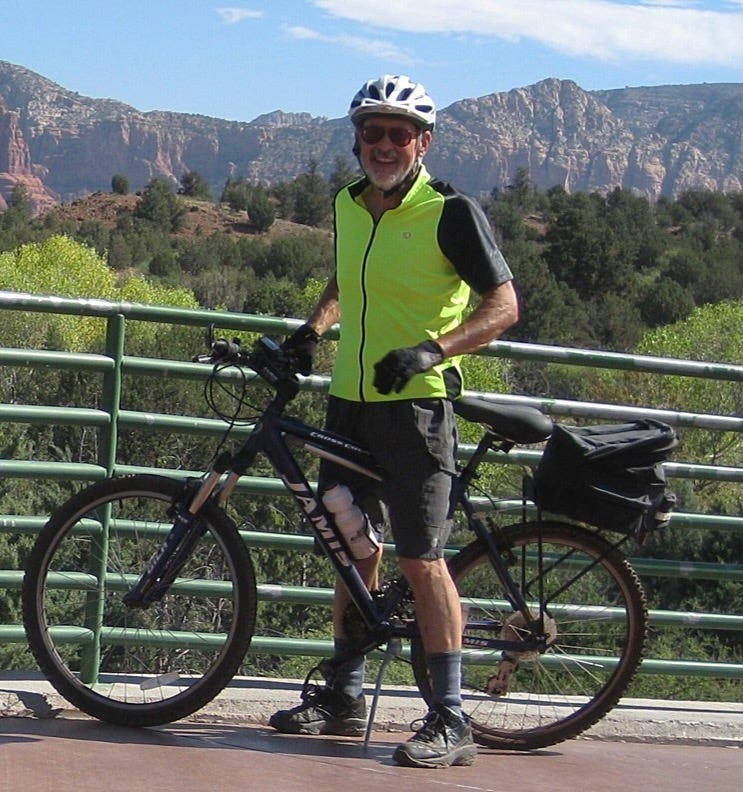
Fred Hoffman is also a University of California Cooperative Extension Master Gardener in Sacramento County. And he likes to ride his bike(s).
Comments
Nothing yet. Say the first thing.
Sign in to join the conversation.