
In today’s podcast, Master Gardener Gail Pothour and myself discuss some of the most popular cool season vegetables to grow in the cooler months here in USDA Zone 9: carrots, lettuce, peas, and beets.
Here’s a summary of the podcast. A full transcript is at the bottom of this newsletter.
• Carrots need deep, loose, stone-free soil; heavy clay soil is better suited to raised beds or containers, or to shorter, sturdier varieties like Danvers or Chantenay rather than the long, slender Imperator types sold in stores.
• Carrot transplants are a bad idea since disturbing the root causes twisting or bending; direct-seeding is strongly preferred.
• A tip for spacing tiny carrot seeds: dip a moistened chopstick into the seed and place seeds individually a couple of inches apart.
• Carrot seeds germinate slowly (three to four weeks) and need consistent moisture. Cover with row cover or burlap and keep soaked until seedlings emerge.
• Planting fast-germinating radishes next to carrot rows marks where the carrots are coming up so you don’t accidentally disturb the soil.
• To grow cilantro through summer without it bolting, grow it as microgreens in a shady spot, harvesting at one to two inches tall.
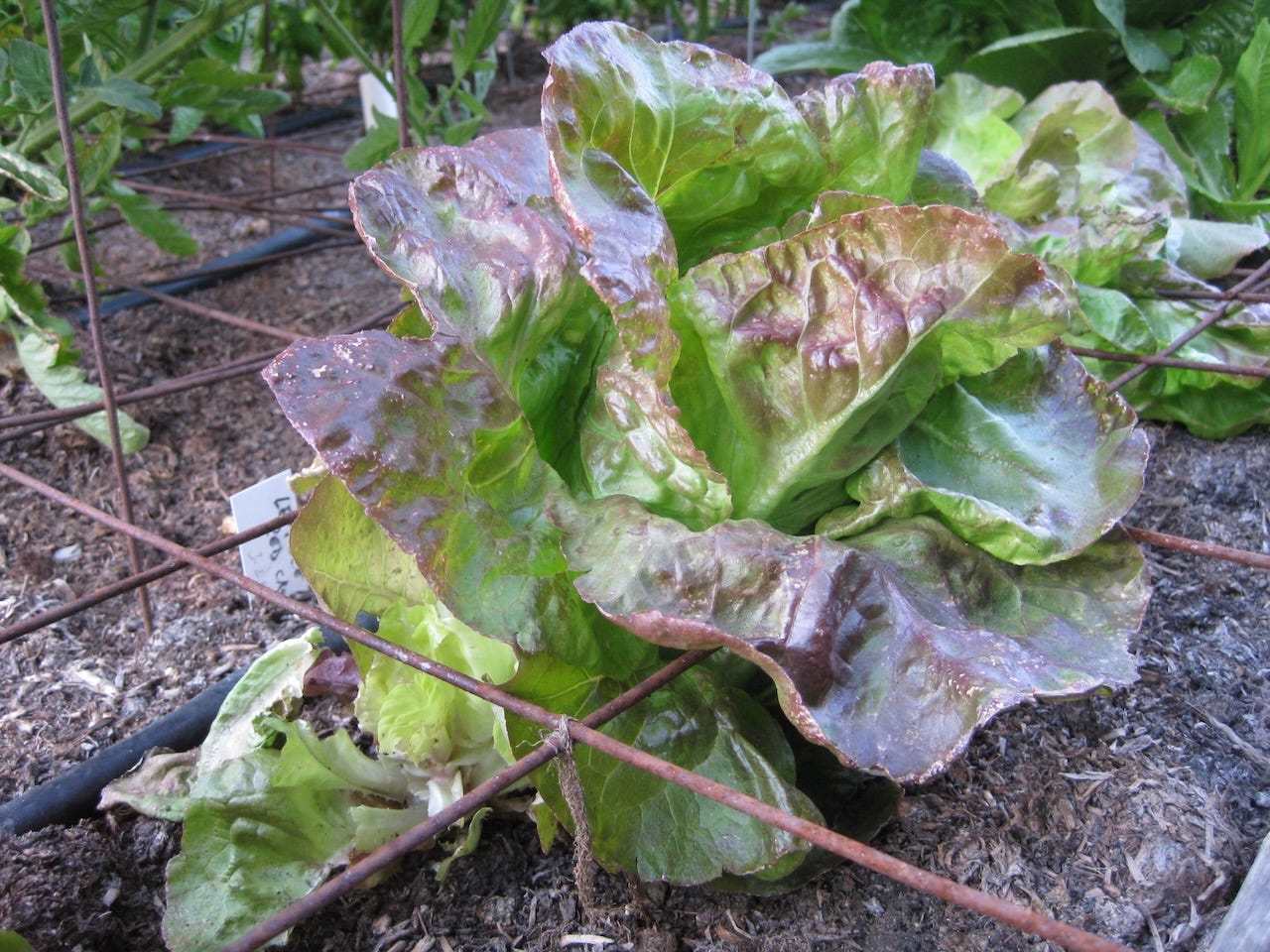
• For lettuce, skip Iceberg (referred derisively as “nutritionless and tasteless” and poorly suited to hot climates) in favor of loose-leaf, romaine, or butterhead types.
• Heat-tolerant lettuce varieties that performed well in a horticulture center trial include Jericho, Year-Round Bronze, Red Cross, Merlot, Paraday, and Nevada; loose-leaf varieties generally outlast head lettuce in heat.
• Lettuce seed needs light to germinate (don’t bury it too deep) and will go dormant in hot soil, so avoid heating mats when starting it.
• Swiss chard and Tokyo Bekana (an Asian cabbage with a mild, lettuce-like flavor) are recommended as reliable heat-tolerant greens that can substitute for lettuce, bok choy, or Napa cabbage.
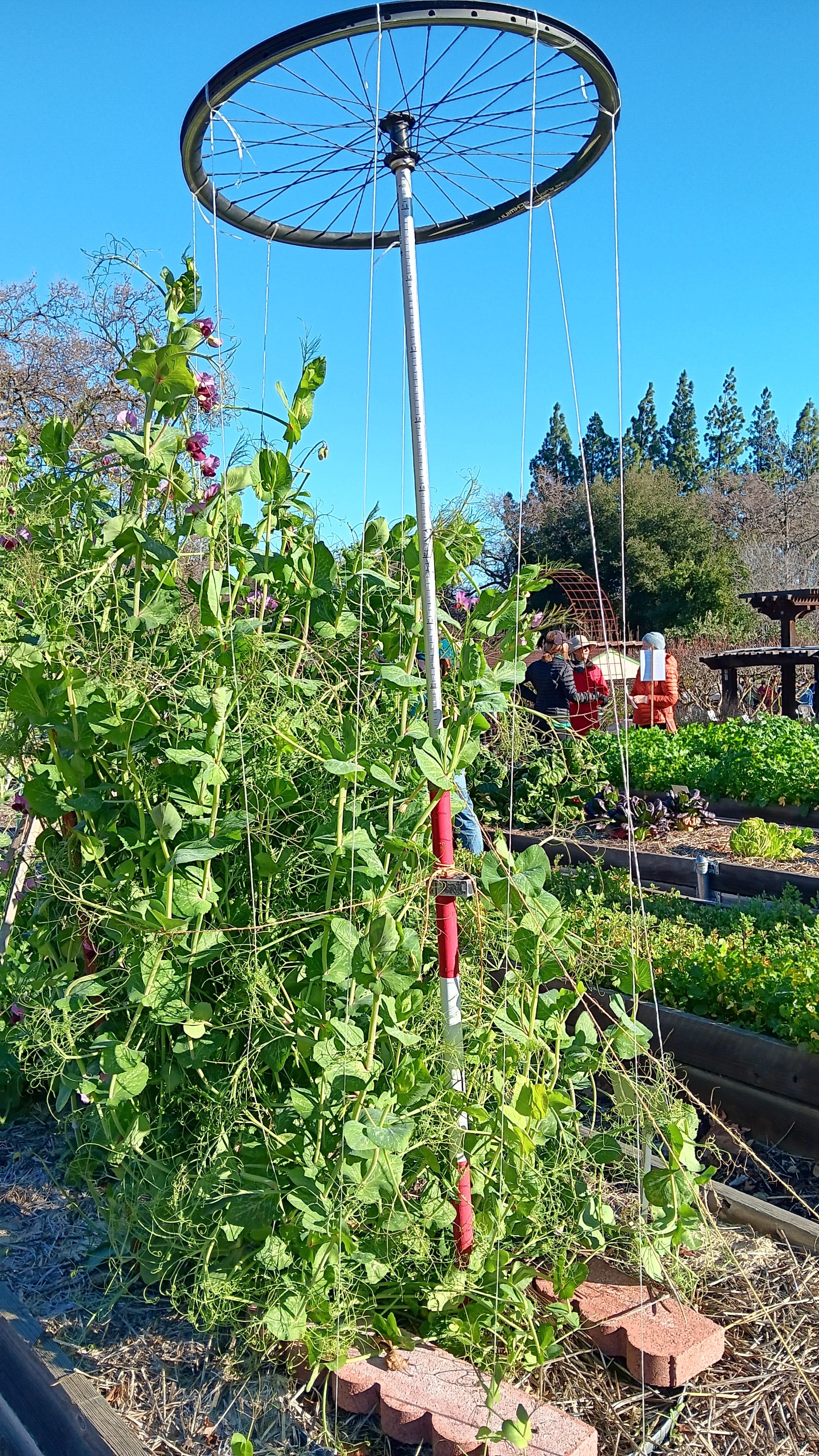
• For peas, Snack Hero (an All-America Selections winner) is highlighted as an exceptionally sweet, non-woody, green-bean-shaped snap pea; peas are vining and need trellising (an old umbrella frame works well).
• Soaking pea seeds in lukewarm water for about six hours before planting can aid germination.
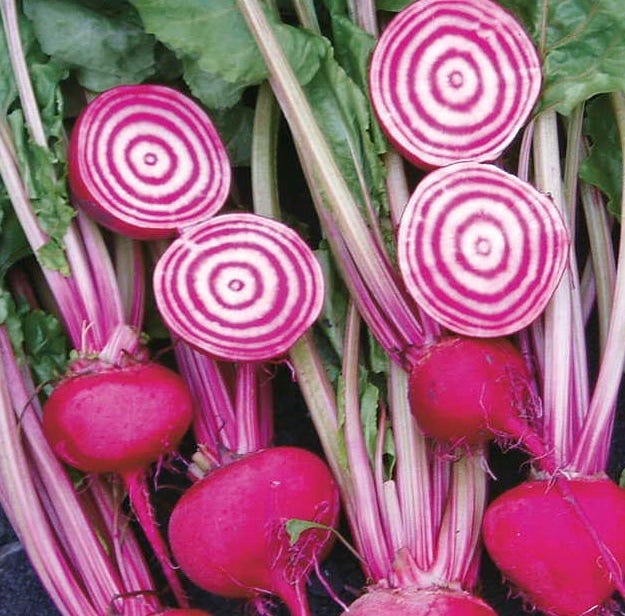
• Beets are a “use every part” plant. Both roots and leaves are edible, with the leaves making good salad greens and microgreens (Bull’s Blood is favored for greens, golden beets for milder roots, and Chioggia for its striking red-ringed flesh).
Do you want your family to eat healthy year-round? The healthiest, freshest foods are the fruits and vegetables you grow yourself. And in many areas of the West and South, the 365-day vegetable garden is easy to achieve. And now, summer, is the time to be planting the seeds and transplants for the vegetables your family will enjoy throughout the fall, winter and following spring.
Although we are still in mid-summer, this is the time to start your winter vegetable garden here in Northern California, as well as other mild-winter areas around the state and the nation. Most of this planting can be done during the milder months of September and October (along with mid-August for some winter crops). For specific crop planting times for the interior of Northern California, refer to this chart from the UC Davis Vegetable Research and Information Center.
The winter garden bed should have many of the same characteristics as the summer garden:
a sunny and level location close to the house;
a convenient water source;
and, soil that drains easily.
Because of possible heavy rains this winter, raised beds can solve that drainage problem for homeowners living with clay soil. Mix in other soil amendments, such as compost and manure, to improve crop production in the foggy, wet, cold days that await.
For foothill gardeners, a raised bed with wooden sides has an added benefit. Those structures can support a hinged, translucent top, such as glass, polyethelene, or fiberglass…an instant cold frame to protect winter vegetables from low temperatures or heavy wind and rain.
Starting vegetables in the heat of the summer, especially from seed, requires a consistently moist seedbed until the plants are up and growing. An automatic garden watering system, such as a battery operated timer that attaches to a faucet, can ease that process.
Here are some of the winter vegetable varieties that do well in most of USDA Zone 9 from late summer through late winter, how much room to leave between the plants in each row, and how much to plant for a family of four (with moderate appetites):
Artichokes: A bit of a challenge in the warmer interior valleys. Easy to grow in coastal areas. Plant from roots, not seed. Green Globe; 4 feet apart; 5-10 plants.
Broccoli: Green Goliath, Green Duke, Waltham 29; 10 inches apart; 20 foot row.
Brussels sprouts: Jade Cross Hybrid; 24 inches apart; 20 foot row.
Cabbage: Earliana, Copenhagen Market, Savoy King, Burpee Hybrid; Tokyo Bekana; 24 inches apart;15 plants.
Cauliflower: Snowcrown, Snowball Y, Purple Head; 24 inches apart; 15 plants.
Carrots: Nantes or Danvers half long, Short n’ Sweet; 2 inches apart; 25 foot row.
Chinese cabbage: Michili, Pak Choi; 6 inches apart; 10 foot row.
Garlic: California Late, California Early, Elephant Garlic; 6 inches apart; 20 foot row.
Kale: Dwarf Blue Curled Vates, Dwarf Curled Scotch; 10 inches apart; 12 plants.
Kohlrabi: Early White Vienna, Sweet Vienna; 3 inches apart; 10 foot row.
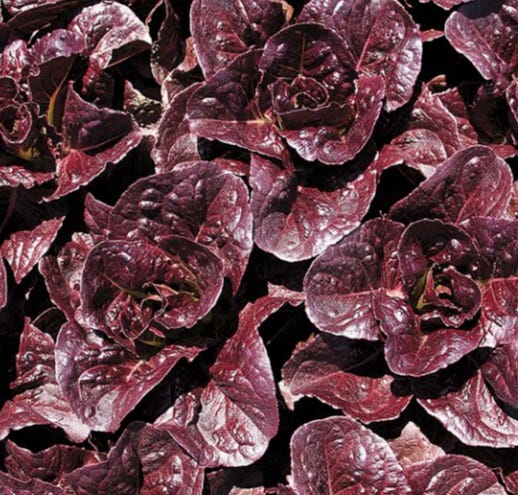
Loose leaf lettuce: Ruby, Bibb, Salad Bowl, Green Ice; Pomegranate Crunch; 6 inches apart; 15 foot row.
Peas: Mammoth Melting Sugar, Sugar Ann, Sugar Snap, Oregon Sugar Pod II. 2 inches apart; 5 foot row.
Onions: Patterson, Red Burger, Red Zeppelin, Redwing, Walla Walla, Texas White; 4 inches apart; 20 foot row.
Radish: Champion, Watermelon, Crimson Giant, Cherry Belle; 5 inches apart; 20 foot row.
Rutabaga: Victoria, Valentine, Strawberry; 3 inches apart; 15 foot row.
Spinach: Melody Hybrid, America, Bloomsdale Long Standing; 6 inches apart; 15 foot row.
Turnips: Purple Top White Globe, Shogoin (greens); 2 inches apart; 10 foot row.
Perennial Vegetables that need a lot of room:
Asparagus: Mary Washington, UC72, UC157, 500w; 12 inches apart; 20 foot row.
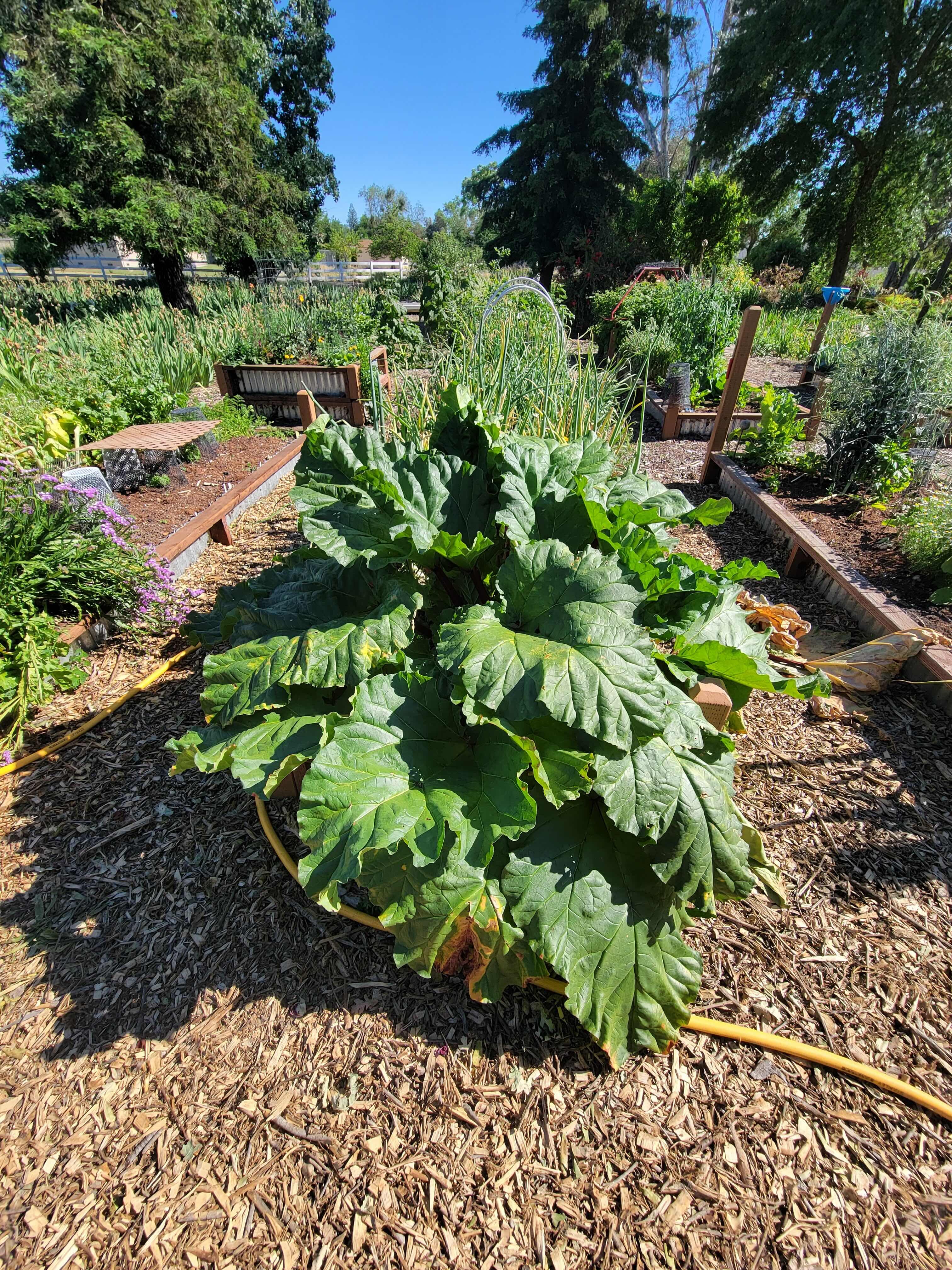
Rhubarb: Victoria, German Wine, Crimson Cherry; Success; 2 feet apart ; 20 foot row.
Farmer Fred:
[0:00] A few years ago, back in May of 2023, we talked with food expert and local master gardener, Gail Pothour, about growing the top 10 most favorite vegetables as determined by a poll that was held nationally. And those top 10 vegetables to grow in the United States were, as you might imagine, number one was tomatoes, followed by cucumbers, sweet peppers, beans, carrots, summer squash, onions, hot peppers, lettuce, and peas. So I thought for this episode talking about cool season vegetables, we would talk about the three that we mentioned in those two podcasts back in the Garden Basics with Farmer Fred, episodes 263 and 264. And you can find those, by the way, at gardenbasics.net as well as at any of your podcast aggregators. It’s still around. But I thought we would concentrate for this talking about the cool season vegetables, carrots, lettuce, peas, and with a special mention, beets. So those are things that you could be starting now in August. Now, we recorded those two episodes in the spring. So if you hear about references to increasing heat or some crops that are starting to dwindle, Well, that was because it was in mid to late spring when we recorded it.
Farmer Fred:
[1:20] But there are a lot, even though it’s hot now, it’s the time to get started on cool season vegetables. And those include those that can be grown in USDA zones 9, 8, and with a little protection 7 and 6. If you’ve got cold frame, or even better, a greenhouse, in which case, heck, you could grow wherever you live during the wintertime, as long as you give it just a little bit of heat, not too much. So here’s Gail and I talking about carrots, lettuce, and peas, cool season vegetables that you can be growing in your own yard starting now.
CARROTS
Farmer Fred:
[2:05] Oh boy, here we go. It’s a crop that I think because it’s a root crop, you can grow it just about year round, depending on your climate. Carrots.
Gail Pothour:
[2:14] I have actually never tried growing them in the summer here because I think we’re too hot. I think the roots would be too woody. It’s generally a fall crop into spring in our area. But yeah, carrots can be easy to grow, depends on your soil. They do like to have deep loose soil, you know, no stones or clods in them. I mean, if you have real heavy soil, there are varieties that are shorter and can maybe a little sturdier and can tunnel right through that clay. But they typically like to have a real loose soil. And you can get that if you have a raised bed. You know, if you’re like we have clay here, I couldn’t grow carrots in my ground. I can do it in a raised bed or a large container.
Farmer Fred:
[2:55] And you’re absolutely right. Right. Or if you have rocky soil, too, and you want to grow carrots, it might be a good idea to grow the shorter varieties like Danvers half lawn.
Gail Pothour:
[3:05] And like Danvers and There’s a type that’s called a Chantenay, and they’re real blunt and sturdier. They’re thicker at the top, and they can just power their way through heavy soils easier than the ones you find at the grocery store, which typically are the Imperator types. They’re long and slender, and you really need to have good, loose, deep soil to grow those varieties.
Farmer Fred:
[3:28] Yep. Raised bed is the perfect solution for growing carrots. And here in USDA Zone 9 in California, you can plant carrots from seed, which is, I don’t even know if you can. Have you ever seen carrots at a nursery as a transplant?
Gail Pothour:
[3:42] I have, actually. I have recently, and I was astonished because I don’t know how you would transplant a carrot without getting that root to be disturbed. I mean, it could twist or it could bend, and that’s what you’re harvesting, and so you want good straight roots. So I don’t know how you would do that.
Farmer Fred:
[4:03] Were they in just normal size containers or were they in like nine inch tall tree pots?
Gail Pothour:
[4:08] No, it was a six pack.
Farmer Fred:
[4:09] Oh, no.
Gail Pothour:
[4:11] Yeah.
Farmer Fred:
[4:12] Oh, my. Well, you can plant carrots from seed. That’s a lot safer. And here in USDA Zone 9, you can plant them in March, April, May. And like you mentioned, the fall through winter planting season of August through December of planting carrots from seed. Debbie Flower once gave us a very good tip for planting carrot seeds. Because they’re so small, they’re very difficult to put them in place one inch apart. Because they’re so small, there’s a clump of them and you need to get that thinned out so that they stand two or three inches apart, ideally. And one of her students came up with it and they used moist chopsticks. They dipped the chopstick in water and then dipped it in a bowl of carrot seed. And then we’re very carefully shoving the carrot seeds off the chopstick into place in the garden a couple of inches apart. And that’s it to work.
Gail Pothour:
[5:10] I haven’t heard of that. I’ll have to give that a try because, yeah, carrots, the seeds are so tiny that it’s impossible to, almost impossible, to spread them out at their ultimate thinned destination. But wow, okay, I’ll have to try that. They do take a long time to germinate, I have found. I mean, it could take several weeks, three, even three or four weeks. So you’ve got to keep them pretty moist. And we, at the Horticulture Center, what we typically do is put a piece of Agrabon row cover over it. You could use burlap or whatever, and then soak that. And that would keep the soil moist until they start to come up. But they have a long germination period.
Farmer Fred:
[5:48] Another tip to help thwart that waiting period, or at least let you know that, oh, I’ve planted there, I better not disturb that soil. Debbie Flower gave us this tip, is to plant radishes nearby the carrot seeds. Because radishes germinate so quickly, it will let you know that there are carrots also waiting to come up in that spot. so don’t go digging around there.
Gail Pothour:
[6:09] That’s right. Yeah, that’s a good tip to do. And radishes germinate so quickly, and you’ll have them harvested before the carrots are even ready to thin much.
Gail Pothour:
[6:19] So yeah, that’s a good tip.
Cilantro Summer Growing Tip
Farmer Fred:
[6:20] All right. We can’t finish yet, though, because I got to tell you the tip for growing cilantro in the summertime.
Gail Pothour:
[6:27] Oh, yes.
Farmer Fred:
[6:28] All right. This tip came from Renee Shepherd of Renee’s Garden Seeds, and I was discussing this with her once, and her supplier of cilantro seeds, who does it in the Bay Area, told her that when he wants a crop of cilantro in the summertime, what he does is he grows it as microgreens. In a shady area, he will just, every couple of weeks, scatter seeds across a flat in some good potting soil or seed-starting mix. And let them grow one to two inches tall, and then harvest those microgreens, those cilantro microgreens, and use it just like regular cilantro.
Gail Pothour:
[7:05] And I grow microgreens all the time. It never occurred to me to do cilantro. Huh. And he does them outside.
Farmer Fred:
[7:11] And he does them outside, yeah. Okay. All right, because they don’t have time to bolt.
Gail Pothour:
[7:16] That’s true. Oh, I’m going to give that a try. Yes. Thank you.
Lettuce
Farmer Fred:
[7:23] All right. Now we come to number nine on the list of the 10 most popular garden vegetables. And it’s a cool season crop in California. If you live in a very mild climate, or the Bay Area of California, you can certainly grow all the lettuce varieties you want. Lettuce. And I can see why people grow lettuce. And I hope that you try something different than iceberg. Iceberg, to me is the most nutritionless, tasteless lettuce that has fallen into mass marketing because there’s a lot of leaf lettuce varieties that are, so much tastier and also can withstand heat better than iceberg.
Gail Pothour:
[8:02] Yeah, I was going to say iceberg doesn’t do that well in the Sacramento area. We’re too hot. And so we generally recommend to try a loose leaf or romaine or one of the butterhead types. But if you have to have an iceberg, pick that up at the store. Don’t try growing it. It won’t do that well here.
Farmer Fred:
[8:20] Yeah, it’s a waste of space, as a matter of fact. Now, I have been on a lifelong gardener search for a lettuce variety, a loose leaf lettuce variety that can take the heat. Some are better than others as far as getting maybe through July, but it seems like when July turns into August, they all start bolting.
Gail Pothour:
[8:39] Right. And actually, several years ago, we did an experiment two years in a row at the horticulture center because we get this question a lot. Why can’t I grow lettuce in the summer? So we thought, okay, let’s find some varieties, grow them through the heat of summer and see how they do. First off, you need to start with some varieties that are heat resistant, like Jericho. That was bred in Israel, so it’s a little more heat resistant. And we tried, you know, half dozen or so different varieties. We monitored When we planted them, how many weeks it was before they started bulging, some did better than others, some did pretty well, but what we found is you need to mulch heavily to keep the moisture in, keep them well watered, provide shade during their entire lifespan in the summer, and then be prepared as soon as one starts to bolt, take it out, and then replant with another transplant, so kind of a succession planting. It is possible, but it’s a lot of work. Let’s say it takes a lot of water and shading and monitoring. Not sure if it’s worth it or grow it in the shade if you have a shady location. But often it’s not just the sunlight, it’s the heat. And even in the shade in Sacramento, we can be fairly warm in the summertime. So it’s a tough thing to do.
Farmer Fred:
[9:58] The closest green I’ve found that can be grown year round, and especially if you do it in the shade, It does okay here in that Swiss charge.
Gail Pothour:
[10:07] Right, yeah, that can be grown year-round. I have done it in an area of my yard where it got some afternoon shade in the summertime, and it was able to, you know, to over summer. But yeah, any of the other leafy greens are going to be a little tough. One of my favorites, oh, absolute favorite lettuce is called pomegranate crunch. It’s a red romaine, and it is very good. I get it as pelleted seeds, which makes it a little bit easier to germinate. Lettuce can have a difficult time germinating. Lettuce does need light in order to germinate, so don’t plant the seed too deeply. Pelleted seeds don’t have that problem. But I think if sometimes people have difficulty getting lettuce to germinate because maybe they buried it too far. It needs light. It’s one of the few vegetables that needs light to germinate.
Farmer Fred:
[11:01] And I believe it’s one of those seeds that will not germinate in heat.
Gail Pothour:
[11:05] Period. Right, right. If you tried sowing lettuce seed in the summer, maybe for a fall crop, if your soil temperature is too warm, the lettuce seed can go dormant. So if you’re also starting it indoors, whereas I use a heating mat to get a lot of my seeds to germinate, you don’t use a heating mat for lettuce because the soil will be too warm and lettuce seeds will go dormant in heat.
Farmer Fred:
[11:28] Some of the varieties that have been recommended as heat-tolerant lettuces that I’ve grown over the years and they’re barely heat-tolerant are black-seeded Simpson and Deer Tongue. They’re pretty good, but like I said, they do eventually bolt. But if you’re so if you’re looking for a first of all, I think one good rule to remember is if you want lettuce to last in the yard as long as possible, grow loose leaf varieties, not head lettuce.
Gail Pothour:
[11:56] And of the ones that we did in our heat-tolerant trial, the ones that did well, besides Jericho, was year-round bronze. It’s an oak leaf. And it was late to bolt in the summer, so it actually did very well. Red cross is a red butterhead. Merlot, a dark red leaf lettuce. And a paraday, a red oak leaf. That’s one of my favorites, but I can no longer find seeds for it. And then Nevada, it’s a green loose leaf, kind of a semi-heading type. So all those did well, as well as can be expected in our summer heat. So they did better than a lot of other varieties.
Farmer Fred:
[12:35] I’m glad you mentioned Nevada because I have grown that one before and it was pretty good. But I think if you want a dependable green, do the Swiss chard.
Gail Pothour:
[12:43] Right. I agree. All right.
Farmer Fred:
[12:48] Since that episode with Gail Pothour was recorded a few years ago, I’ve come across another variety of green that could be part of your heat-tolerant lettuce crop, although technically it’s a cabbage. It’s called Tokyo Bekana Asian Cabbage. It’s been described as a cross between Napa cabbage, bok choy, and lettuce. It can be eaten raw in salads or cooked. You can roast it, grill it, or searing it, and that brings out a delicious nutty flavor you can add it to stir fries for a succulent crunch. And if you come across a recipe that uses bok choy or Napa cabbage, you can substitute Tokyo Bekana instead. Tokyo Bekana, it’s a fast growing, non-heading, loose leaf Chinese cabbage that features bright, frilly lime green leaves with a mild, succulent, lettuce-like flavor and crisp, juicy stems. You can harvest it young as a baby salad green or grown to maturity in 40 to 45 days. And in my informal testing here in a rather hot summer climate, Tokyo Bekana almost, almost makes it through the heat of August. Not quite before it starts bolting, but of all the lettuce varieties I have tried, the Tokyo Bekana cabbage, which again is really more lettuce-like than cabbage-like, does last the longest.
Peas
Farmer Fred:
[14:16] Well, let’s wrap this up with the number 10 most popular garden vegetable grown according to the National Garden Association and the Rapid City Journal, the Rapid City, South Dakota Journal newspaper. It’s peas. I think of peas. I’m looking out my window here and through the Abutilon jungle and looking at what I have growing in barrels. And I’ve got some Oregon sugar pod peas on their last legs.
Gail Pothour:
[14:40] It’s getting toward the end of their life here, especially since we, I think we just hit our first 85 degrees or something after having so much rain and coolness. So peas are going to start struggling. I don’t grow a lot of peas at home, but we grow them at the horticulture center. And there’s a new one that we’re growing. It’s an All-America Selection winner called Snack Hero. It’s a relatively new winner. And it was amazing. It looks like a green bean. So it’s more cylindrical, long and slender like a green bean is, and about four inches long. And it was so tasty. We were snacking on them raw at our workday the other day. They’re really good. It’s not a tall plant, maybe a couple feet tall. So we have it growing up an old umbrella frame that we have collapsed down to make like a pyramid. And then we ran some strings of it. So it’s growing on that. But it was an exceptional variety. Very tasty, not woody or stringy at all. So really sweet, called Snack Hero.
Farmer Fred:
[15:45] When did you plant that?
Gail Pothour:
[15:46] Well, you know, they planted them when I was out of town. So it was probably in October, maybe.
Farmer Fred:
[15:52] Okay, so there was a cool season pea.
Gail Pothour:
[15:54] Right. Yeah, and then we have another variety of snap pea growing up, an umbrella frame that we’ve opened up and then run strings. You can run strings up or some kind of a mesh for them to grow up. So a lot of peas are vining type, so they need some kind of support. So that’s one way to use up your old umbrella that the canvas is torn, you know, grow them up an umbrella frame.
Farmer Fred:
[16:17] All right. So there you go. The 10 most popular garden vegetables from tomatoes to cucumbers, sweet peppers, beans, carrots, summer squash, onions, hot peppers, lettuce, and peas. By the way, with peas, do you soak the seeds before you plant them?
Gail Pothour:
[16:35] You know, I don’t know if we’ve soaked them or not since I was in here. You can. That’s a good way to get them to germinate is soak them overnight. I’ve heard I don’t know if they need to be soaked that long.
Farmer Fred:
[16:46] Usually six hours or so is plenty of lukewarm water.
Gail Pothour:
[16:50] Yeah, I would think so.
Farmer Fred:
[16:51] Yeah. Now, you had mentioned before we started that you were disappointed that melons didn’t make the top 10 list. I’m disappointed beets didn’t make the top 10 list.
Gail Pothour:
[17:00] Yeah, I’m surprised at that as well. I thought beets would be on. Well, it depends on the list. I’ve seen several top 10 lists and they’ve had potatoes on them, different things. So it just depends on which list you’re looking at. But if I had to pick between only two things to grow, it’d be tomatoes and melons, I think.
Farmer Fred:
[17:19] Okay. And what I like about beets, this reminds me of something my uncle Hubert used to say back on the family farm in Beach, North Dakota, when he raised pigs and he said, we use all parts of the pig except the oink. And beets are like that because the entire plant is edible.
Gail Pothour:
[17:39] Oh, yeah. I can do beets as microgreens. Yeah. So you eat the tops all the time.
Farmer Fred:
[17:44] And leaves this time of year are lush and make great salad material.
Gail Pothour:
[17:50] Mm-hmm. Absolutely.
Farmer Fred:
[17:52] My favorite beet variety to grow because it reminds me of something psychedelic, is the Chioggia beet that has that concentric red ring throughout the entire middle. Mm-hmm.
Gail Pothour:
[18:04] Like a bull’s eye.
Farmer Fred:
[18:05] Yeah. Yeah, and it’s delicious, too.
Gail Pothour:
[18:07] Yeah, I’m not a big beet fan, but I’ve learned to eat them. But if I grow them, I like to do the golden beets. They’re not as beady, I guess that’s a word. So they’re a little milder. But if I’m growing microgreens for the tops, I do Bull’s Blood.
Farmer Fred:
[18:24] Ah, okay.
Gail Pothour:
[18:25] Yeah, it’s real good,
Farmer Fred:
[18:26] Good tops. And do you wear an apron during all this?
Gail Pothour:
[18:31] You have to, because you get that red all over you, you know?
Farmer Fred:
[18:34] Gail Pothour, we have offered people a short, sweet education on growing home vegetables, and I hope more people try it this year.
Gail Pothour:
[18:42] We have, and it was fun. I enjoyed it.
By becoming a paid subscriber to the Beyond the Garden Basics podcast and newsletter, I’ll be able to keep buying fish emulsion to feed my plants. My cat appreciates your support!
Thanks for reading and subscribing to the Beyond The Garden Basics Newsletter & Podcast! Smartpots and Amazon provide promotional support.
Fred Hoffman is also a University of California Cooperative Extension Master Gardener in Sacramento County. And he likes to ride his bike(s).
Comments
Nothing yet. Say the first thing.
Sign in to join the conversation.