

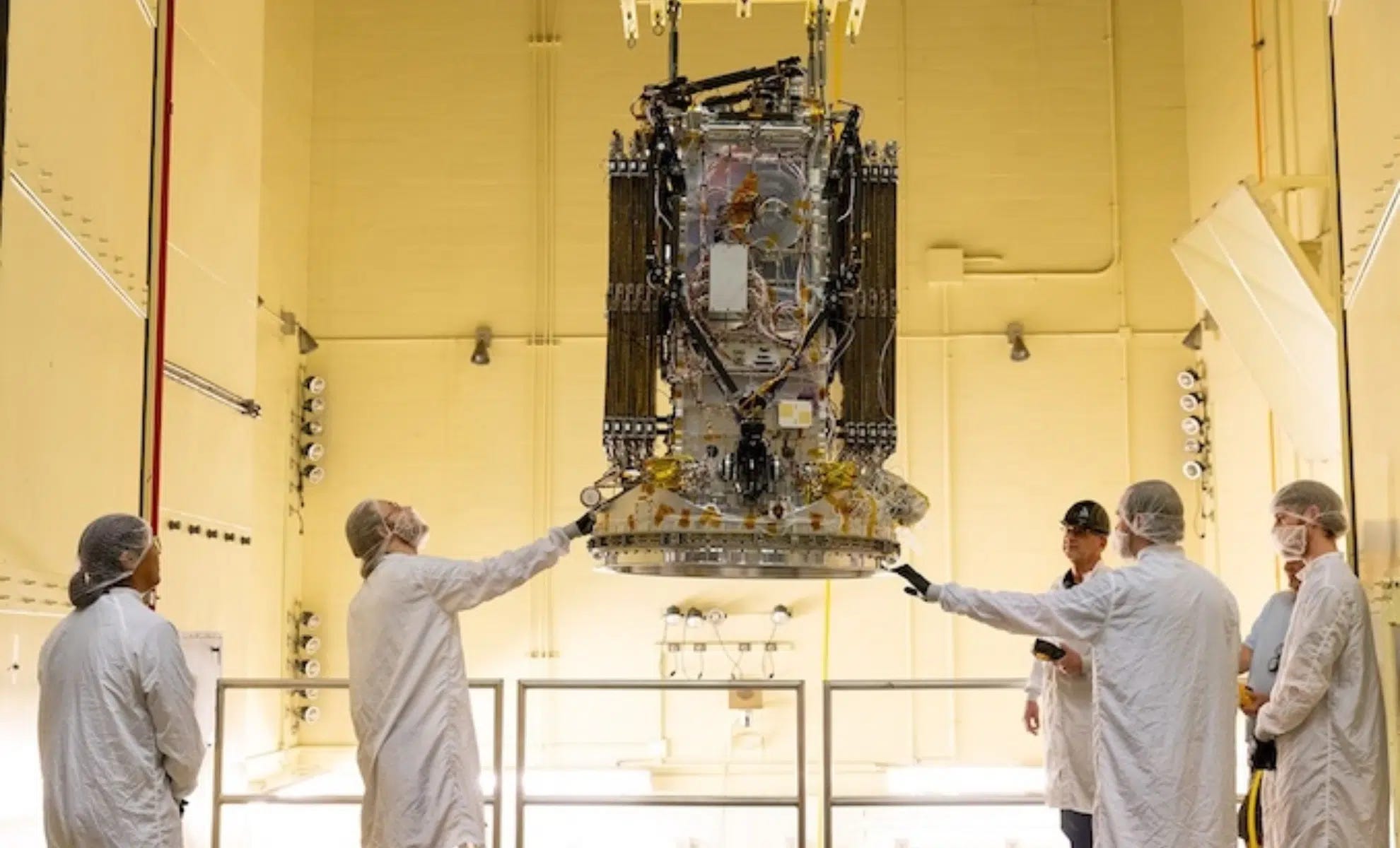
NASA’s Neil Gehrels Swift Observatory has been watching the universe’s most violent explosions since 2004. Be it gamma-ray bursts, black holes, neutron stars, all is under its watchful eye. But Swift has no onboard propulsion, and years of heightened solar activity have dragged it from 600 km to just 400 km above Earth. Without intervention, it re-enters the atmosphere and burns up sometime later this year.
Enter Link a 770-pound robotic servicing spacecraft built in just eight months by a small Arizona company called Katalyst Space Technologies. On May 8, NASA confirmed that Link completed its full suite of environmental testing at Goddard Space Flight Center: vibration chamber, thermal vacuum, ion thruster firing, and robotic arm deployment. Link is now shipping back to Katalyst for final launch preparation.
Why it matters???
A $30M commercial spacecraft could save a $500M scientific instrument in service for 22 years. If it works, this proves that fast, cheap, commercial orbital servicing is real and it opens the door to rescuing, refuelling, and extending the life of dozens of other aging satellites currently on death row.
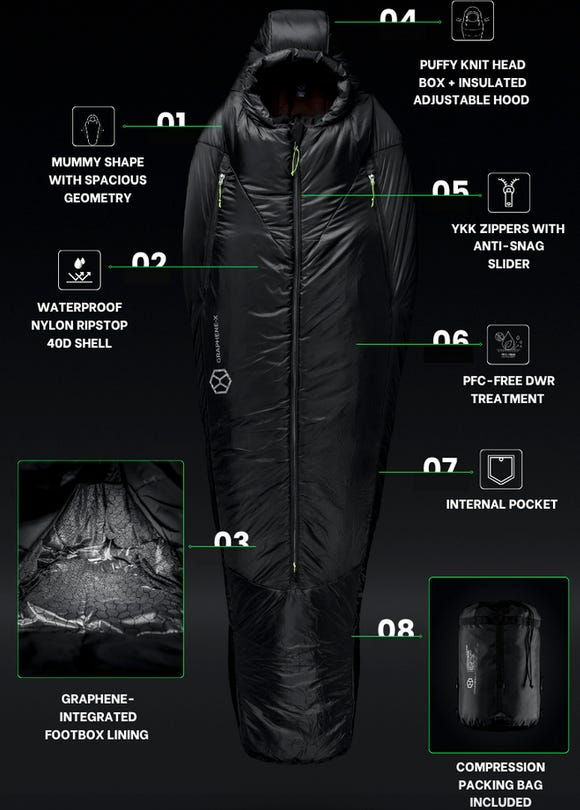
It passively expands and contracts with the weather like a biological thermostat, but built from graphene. Graphene-X launched the Tardigrade Sleeping System this week, a modular outdoor sleep platform built on GRAPHINSULATE™ (graphene-aerogel fill) and W.A.I.™ (aerogel tubes that passively adapt to temperature). W.A.I. won the ISPO Innovation Prize in December 2024. Graphene-X has delivered all twelve of its previous Kickstarter campaigns, raising over $3M from 30,000 backers across 100 countries.
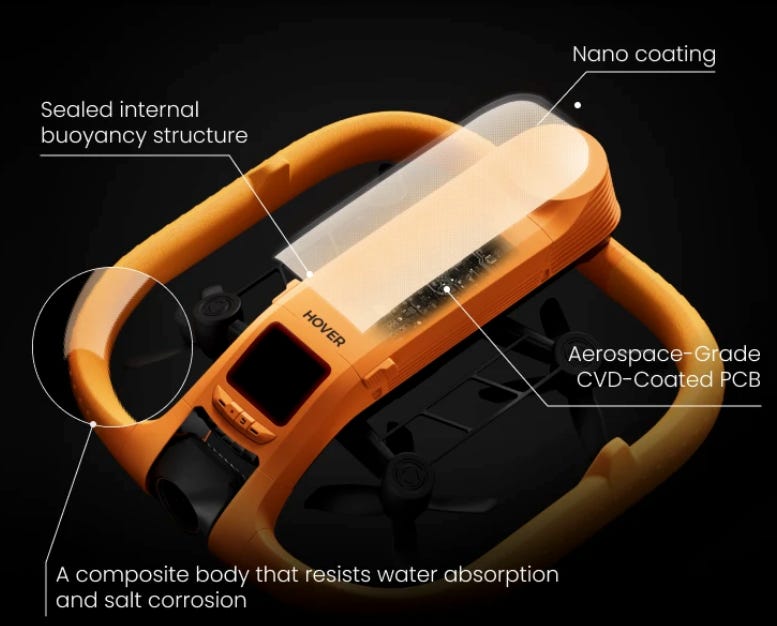
A drone you can throw into a lake, and it just keeps filming you. HOVERAir AQUA is a fully waterproof autonomous flying camera with IP67 rating having onboard AI tracking that follows subjects without a controller. Designed for boating, surfing, kayaking, and watersports. Now in Late Pledge on Indiegogo after a successful original campaign.
Researchers at the Jülich Supercomputing Centre in Germany, working with NVIDIA, used JUPITER, Europe’s first exascale supercomputer, to fully simulate a 50-qubit universal quantum computer for the first time.
Your laptop can simulate about 30 qubits. JUPITER just did 50 and it took 2 million gigabytes of memory.
The previous record was 48 qubits, also set by Jülich in 2022. The new feat required around 2 petabytes of memory, made possible by NVIDIA GH200 Superchips that seamlessly blend GPU and CPU memory. The team built a custom simulator called JUQCS-50 that achieves an 11.4× speedup over the previous benchmark.
A PhD researcher at USC Viterbi has developed an algorithmic framework that treats chip design as an exploration problem, which is not a human intuition problem. The system automatically discovers circuit architectures that look “wrong by textbook standards” yet outperform everything conventional approaches can produce. In practical terms: a low-noise amplifier that covers 5G and 6G bands simultaneously at performance levels never achieved before, and a power amplifier that runs at over 30% efficiency on a chip smaller than a grain of rice. Design cycles that typically take expert teams six to twelve months are now compressing to days or two weeks.
CRS-34 lifted off on May 12 carrying experiments that could reshape how we think about orbital infrastructure. NASA and SpaceX launched the 34th Commercial Resupply Services mission on May 12, carrying thousands of pounds of science equipment to the International Space Station. Among the payloads: experiments testing photonic computing chips in the radiation environment of orbit (University of Florida), biological research for long-duration spaceflight, and materials science investigations. The Dragon spacecraft, flying on its sixth mission, docked at the ISS within two days of launch.
From wearable exoskeletons to a rover on Mars, the 2026 RBR50 list is out. The Robot Report released its annual RBR50 Robotics Innovation Awards 2026, profiling the fifty most innovative robotic systems of the year. The list spans new materials and processors, full solutions for manufacturing and logistics, a novel AI-driven garment-making robot, and a rover operating on Mars. Winners represent both established industrial automation giants and emerging deep-tech startups. The gala recognising winners is set for May 27 at the Robotics Summit in Boston.
It’s not just that the robot is fast. It’s that it learns, adapts, and plays with genuine competitive strategy. Sony AI’s Ace robot is now the first autonomous system ever to compete at an elite human level in a real-world sport. In the most recent competitive matches in March 2026, Ace defeated all three professional players it faced at least once. The robot perceives, reasons, and acts in complex, rapidly changing physical environments — tracking ball spin and trajectory at speeds humans can barely register. Sony published the work in Nature, calling it “a landmark moment in AI research” beyond sports: the first proof that a physical AI system can perform at elite levels in fast, unpredictable real-world conditions.
JAL and GMO AI launched a trial at Haneda and the maths are startling. Japan Airlines partnered with GMO AI & Robotics to deploy Unitree-based humanoid robots for baggage loading, container transport, and cabin cleaning at Haneda Airport, beginning in May 2026. The robots cost approximately US$15,400 per unit. Japan’s working-age population is projected to decline 31% by 2060, and Haneda handles 85.9 million passengers annually. Humanoid form factors were deliberately chosen: airports were built for people, and these robots fit infrastructure that already exists without modification.
Apophis will pass closer to Earth than GPS satellites in 2029. Two space agencies will be watching every second. On May 8, JAXA and ESA formally signed the Memorandum of Cooperation for the RAMSES mission, a spacecraft that will launch in 2028 to rendezvous with asteroid Apophis ahead of its historic close Earth flyby on April 13, 2029. Apophis, 375 metres wide, will pass just 32,000 km above Earth, closer than many satellites in orbit. RAMSES will observe in real time as Earth’s gravity physically reshapes the asteroid: altering its spin, deforming its surface, redistributing internal mass. JAXA contributes the H3 rocket, solar arrays, and an infrared imager.
It’s not just a test flight. It’s the first step toward refuelling spacecraft in orbit. SpaceX is targeting May 19 for the launch of Starship Version 3 Flight 12 from Starbase, Texas. This is the first flight of the completely redesigned vehicle featuring Booster 19 and Ship 39, with larger grid fins, updated Raptor 3 engines, and a lighter structure. Future V3 flights must demonstrate in-orbit propellant transfer refuelling a spacecraft in space, a feat never achieved. Without it, NASA’s Artemis III crewed lunar landing cannot proceed.
The standard way to edit plant genes uses modified viruses. Novin AgriTech does it with nanoparticles and ultrasound. Novin AgriTech, a Purdue University spinout, received a USDA SBIR Phase I grant on May 11 to develop novel traits for cereal crops using its proprietary InPACT platform, a nanoparticle-assisted ultrasound gene delivery system. Unlike viral vectors commonly used in plant gene editing, InPACT delivers genetic material through ultrasound-activated nanoparticles, potentially making crop trait development faster, cheaper, and regulatory-pathway simpler. The team is targeting yield improvement, disease resistance, and drought tolerance in wheat.
Citrus greening disease has devastated US groves for years. A gene-edited tree might finally turn the tide. The US Environmental Protection Agency approved a gene-edited citrus rootstock this week designed to help trees resist citrus greening disease, a bacterial infection spread by an insect that has devastated Florida and other citrus-growing regions. Unlike transgenic GMO approaches, this variety was developed using gene-editing techniques that modify the plant’s own DNA without inserting foreign genes. The approval signals a regulatory shift: gene-edited crops are increasingly being assessed on a different, faster track than conventional GMOs.
Thanks a lot for reading Innovation Snaps.
Please share your comments & this newsletter if you enjoyed it. Though tried my best to avoid mistakes, please remit for any typos/mistakes.
No posts
Comments
Nothing yet. Say the first thing.
Sign in to join the conversation.