

Shalom Chaverim -
Last Friday, July 3rd, marked 1,000 days since October 7th. Even though it is 2026, we don’t, and will never have to, mark the year when stating that date—no different than an American invoking September 11th. Unlike Americans, who will eventually forget the meaning of that date within the next 1-2 generations (don’t believe me, ask someone the date of Pearl Harbor), every generation of Jews will remember what that day represented for us. So what were Jews doing on that 1,000th day?
It seems the biggest controversy was who was the rightful winner of the Miss Israel contest. I don’t really know the details, and I couldn’t care less. In the days leading up to this 1,000th day, Jewish influencers were posting about how tough it has been for them, complaining about the lack of fairness in a beauty pageant, and announcing their potential run against one of the longest-standing members of the U.S. Senate. I’m no longer surprised nor outraged by any of it—only severely disappointed.
As a Jewish professional, I saw, first hand, the impact of the rise in Jewish influencers immediately after October 7th and throughout 2024. Those with the largest followings were offered the opportunity to make gala keynote speeches, moderate conference panels, and frequently appear on debate shows in the media. Keep in mind, these same influencers built their followings on discrediting galas, questioning the importance of conferences, and being ill-prepared to debate in front of an international audience. Then the calendar flipped to 2025, and the organizations started to flip the script along with it. Jewish organizations became more selective—making their decisions based on who had subject expertise and who offered new insights rather than someone with the latest viral video.
So what were Jews doing on that 1,000th day?
It seems the biggest controversy was who was the rightful winner of the Miss Israel contest.
It became clear that the Jewish influencer bubble would pop. There are only so many times an audience can hear “No more Jews on trembling knees!” and “Jewish joy is the key to our survival!” At some point, even the most popular podcasts will lose their steam as Jews become tired of hearing another Jewish celebrity talk about losing friends due to their Zionism. So what will all these people, who gained mild amounts of “fame” inside an insular community, do when their social media quips no longer cut it on a main stage?
Unfortunately, 1,000 days later, I don’t have an answer for you. I have learned that many are passionate about solving Jewish problems as long as they don’t have to do any real work beyond the internet or aren’t empowered to solve it themselves (and well-funded of course). Those who swear that everything we’re doing to fight antisemitism is wrong have no quantitative, or even qualitative, data, to prove what they’re doing is any more effective. People who have complained about the lack of funding for Jewish day schools have yet to engage in a real discussion about the economics of it. Social media personalities “who have been doing this even before October 7th” love to complain about legacy organizations. Yet they all have something eerily in common: They’ve all had bad experiences where they swear an organization “screwed” them in some particular way. I’ve reached out directly to multiple people offering connections and strategic advice to help further their cause only to be met with silence. It seems as though introductions to organizations with millions of dollars at their disposal and offering to help write fundraising content for free isn’t as important as having 10,000 followers.
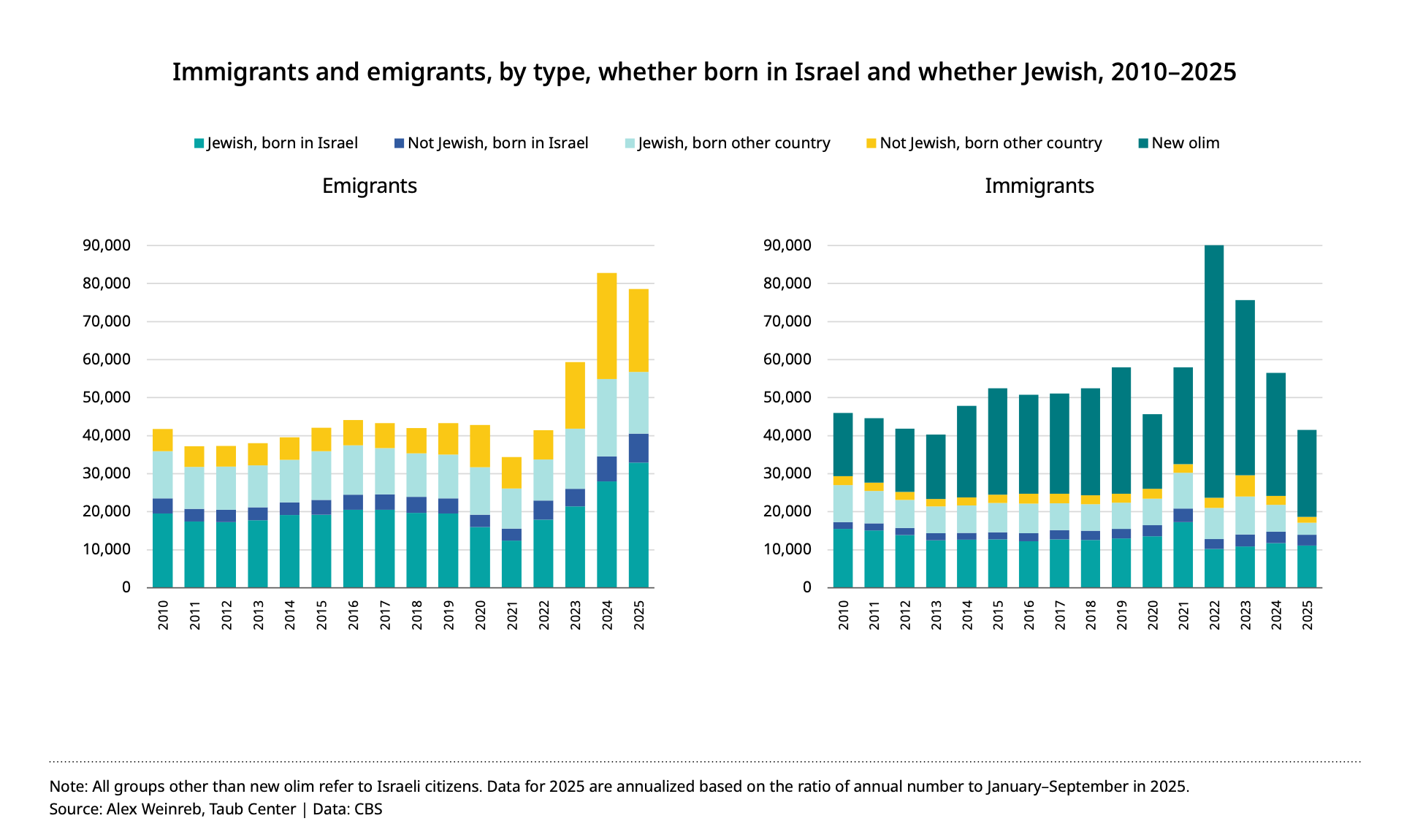
While Jews are complaining about a rigged beauty pageant, Israelis are still suffering and American Jews are in an even worse position politically than we were 1,001 days ago. Despite how resilient Israelis are, we can’t ignore that the population is still suffering and will continue to do so even when the war is over. Israelis who bore the brunt of this war both in the South and in the North have yet to return to a normal life, if they’ve returned at all. You would never know this, though, because the influencers who receive paid trip after paid trip only ever seem to end up in the Old City of Jerusalem and the beaches of Tel Aviv. From your favorite influencer’s latest fully subsidized trip to Israel, you would never know the underlying issues that are causing native-born Israelis to emigrate from Israel at higher rates in the last three years than in the last decade. From the inspiring captions in front of the Kotel, you probably don’t know that the social welfare budget is the largest in Israel’s history and there is a shortage of physicians and nurses. When you see the latest post boasting about Mossad’s latest triumph, it’s easy to be ignorant of how the ongoing war is having a long-term, negative impact on children who have a parent in reserve duty.1
In the Diaspora, Jewish safety has declined as violent attacks have increased in number and severity. Here in the United States, our situation might not be as bad as it is in Canada, the U.K. or Australia, but we are anything but on the right trajectory. Jews have become the number one target for hate crimes in the last three years, and we have never been weaker as an interest group. In addition to the charlatan that was elected in New York City, more Democratic Socialists will occupy seats in the House of Representatives, and possibly the U.S. Senate, than ever before. AIPAC is a well-accepted dog whistle, dismissing violence against Jews is no longer a deal breaker, and the Democratic Party is well on its way to officially declare its complete separation from Israel. Not to mention that the Republican Vice President of the United States is sympathetic to a right-wing podcast sphere that is happy to spread the same blood libels as the Left.
Both content creators and consumers love nothing more than to attribute this tragic outcome to nameless legacy organizations or just use the ADL as a scapegoat. Yet, when the creators, who rile up consumers with these statements, are challenged to provide evidence to their own measurement of impact, they have little to show for it. Creators love spending their time and energy debating on college campuses for the sake of a viral clip, but can’t tell you how many minds they’ve changed. Many of these new organizations who sprouted in the aftermath of October 7th, or just before, can’t definitively state their impact on Jewish identity or Jewish engagement—most likely because they don’t know, or care, to track that data. But don’t worry everyone because the vibes are immaculate!
But don’t worry everyone because the vibes are immaculate!
It is fitting that on the day we crossed the 1,000 day mark, we were reading Parshat Pinchas, which describes the passing of leadership from Moses to Joshua. After leading the people out of bondage and through the desert, Moses was refused entry for a singular mistake—arguably one of the most contentious decisions other than the binding of Isaac. Similarly, our legacy organizations, who shaped the Golden Age of American Jewry, and possibly the greatest time for Jews in diaspora history, are now being told that this single mistake means they cannot be our leaders any further. They must pass the staff to the next generation to lead us. Unlike Moses who gave up his staff willingly, our legacy organizations have not accepted culpability for such mistakes, and are unwilling to instill the next generation with the power and authority needed to lead the Jewish people. Perhaps, they aren’t wrong for doing so.
Numbers 27:16-17 says:
“Let GOD, Source of the breath of all flesh, appoint someone over the community who shall go out before them and come in before them, and who shall take them out and bring them in, so that GOD’s community may not be like sheep that have no shepherd.”2
Lord Rabbi Jonathan Sacks stated in his “Lessons of a Leader” that this quality is of the upmost importance, balancing two sides of leadership. The first being that a leader must lead from the front, which seems fairly easy to understand for anyone trying to make a difference. It is the other clause that seems to be the issue. Rabbi Sacks noted that a leader cannot be so far out ahead of their flock that when they turn around, no one is actually following them.3 I know it sounds ironic to claim that people who literally have hundreds of thousands of followers don’t have a following, but what evidence do we have that they actually believe in their leadership other than a simple click of a button?
Before entering the Promised Land, the Israelites took a new census of the people—taking account of a new generation who would enter. After doing so, Moses decreed how the land would be split and passed some of his authority onto Joshua to lead the Israelites on an entirely new mission—conquer the land of Canaan. Similarly, we must take account of who the new generation of Jews are and acknowledge that the mission will be different. Unlike the previous generations, whose mission was to build a golden age for Jews in the diaspora, ours will be to ensure Jews in the diaspora survive. Just like Moses passed his staff to Joshua knowing a new leader was required, so must our leaders pass their staff to someone new.
1,000 days later, we’re still looking for our Joshua.
https://www.taubcenter.org.il/wp-content/uploads/2026/06/EN-PON-2026-2.pdf
https://www.sefaria.org/Numbers.27.17?lang=bi&with=all&lang2=en
https://aish.com/lessons_of_a_leader
Comments
Nothing yet. Say the first thing.
Sign in to join the conversation.