
How do you know you’re too old for something? Grey hair – maybe. Four beers are suddenly one too many – been there, done that. You didn’t find Obsession particularly engaging – seems like it, when everyone below 30 loves it and everyone above finds it ok. At least in my circles.
But we try to look at the facts here, people. Your film doesn’t become the highest-grossing original horror of the century if it truly sucks. And it doesn’t – the concept of modern male insecurity turning into predatory behavior definitely works, it’s the dramaturgy of it as a whole that I have issues with. And most of its problems come in the second and third acts.
And so, let’s look at how Obsession sets up and hints at major throughlines well.

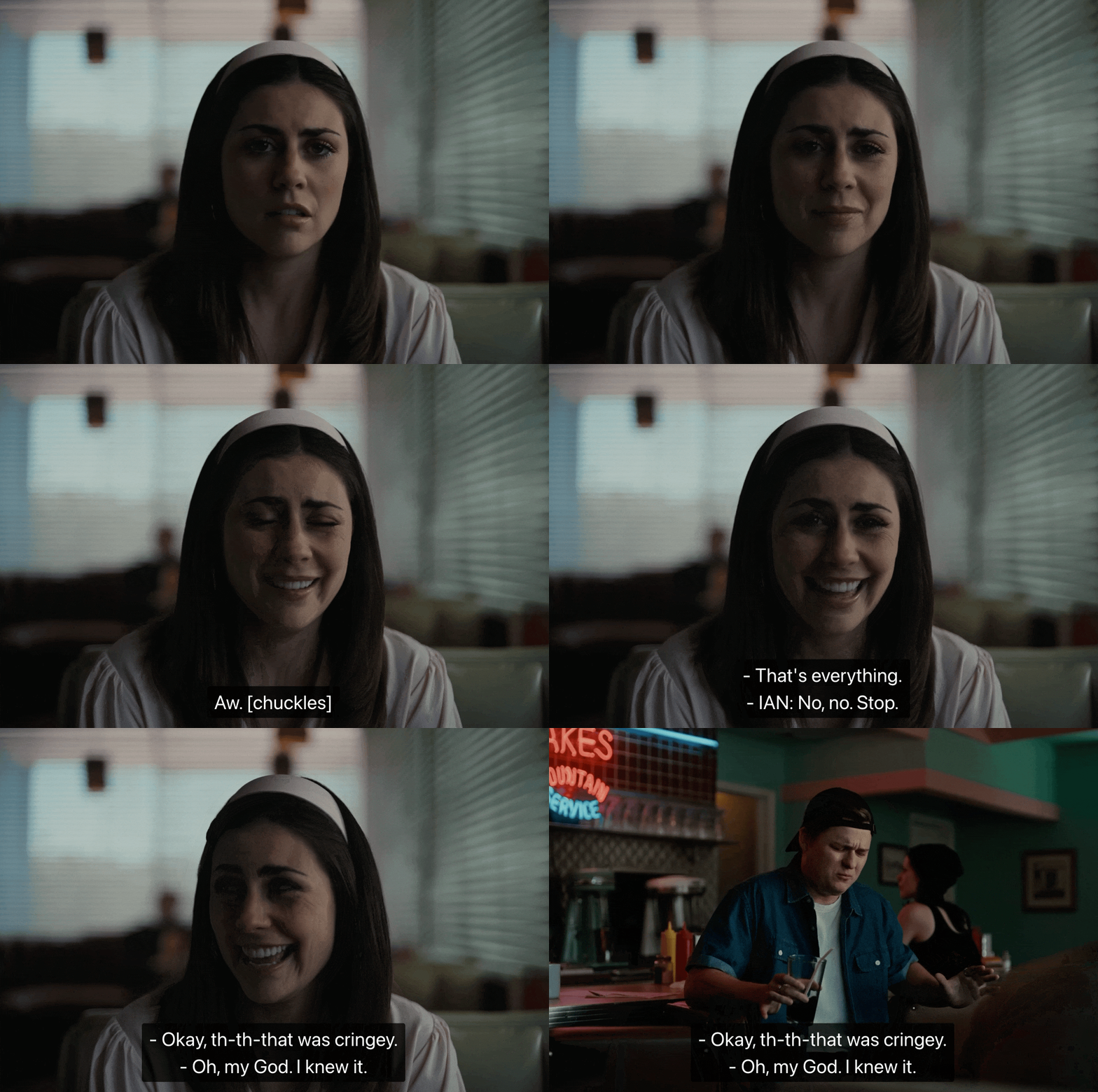
Bear is pouring his soul out to a girl he loves, Nikki. He struggles, anxious, blubbering, yet finds the strength to tell her how he truly feels. It’s honest, sweet.
She listens. It clearly gets to her, when-
Okay, th-th-that was cringey.
Bear’s friend, Ian, breaks up what turns out to be a rehearsal for Bear’s love confession. And the girl sitting in front of him is actually not Nikki.
Bear immediately goes back into his shell under Ian’s scrutiny.
The girl suggests a gift for Nikki, but that also is met with protest on Ian’s part.
IAN: Thank you.
GIRL: What?
IAN: Thank you.
GIRL: You want me to go?
IAN: Yeah, if-if you want, yeah.
The girl (turns out she's a waitress at the diner where the scene takes place) leaves, and Ian takes her seat.
He advises Bear to flirt with Nikki, to be playfully mean with her. Maybe call her “Freaky Nikki” as a jest. Bear pushes back, he doubts Nikki would enjoy bringing up the time she was bullied.
Then how about grabbing a drink, Ian proposes. Bear points out that every time he tries, Nikki always brings Ian (and their other friend Sarah) with her to the trivia. It’s virtually impossible for Bear to be alone with her. Maybe Ian could skip it for once.
IAN: I wake up every Wednesday rock hard, thinking about trivia.
BEAR (later): Then when do I ask?
IAN: Any other time. All you have is time.
Reluctantly, Bear agrees. He’ll wait. He’ll do it at the right time.
On paper, this scene is an exposition dump. We learn Bear’s history with Nikki, the old bullying, the trivia-night logjam, the entire social geometry of the group — a screenwriter’s nightmare of information. So why doesn’t it play like a lecture? Because the scene never tells us who these people are; it makes us read them. And reading people is the one cognitive task humans can’t switch off. The instant we watch someone act, our brains are already appraising who they are and that quiet, involuntary appraisal is where the whole scene does its work.
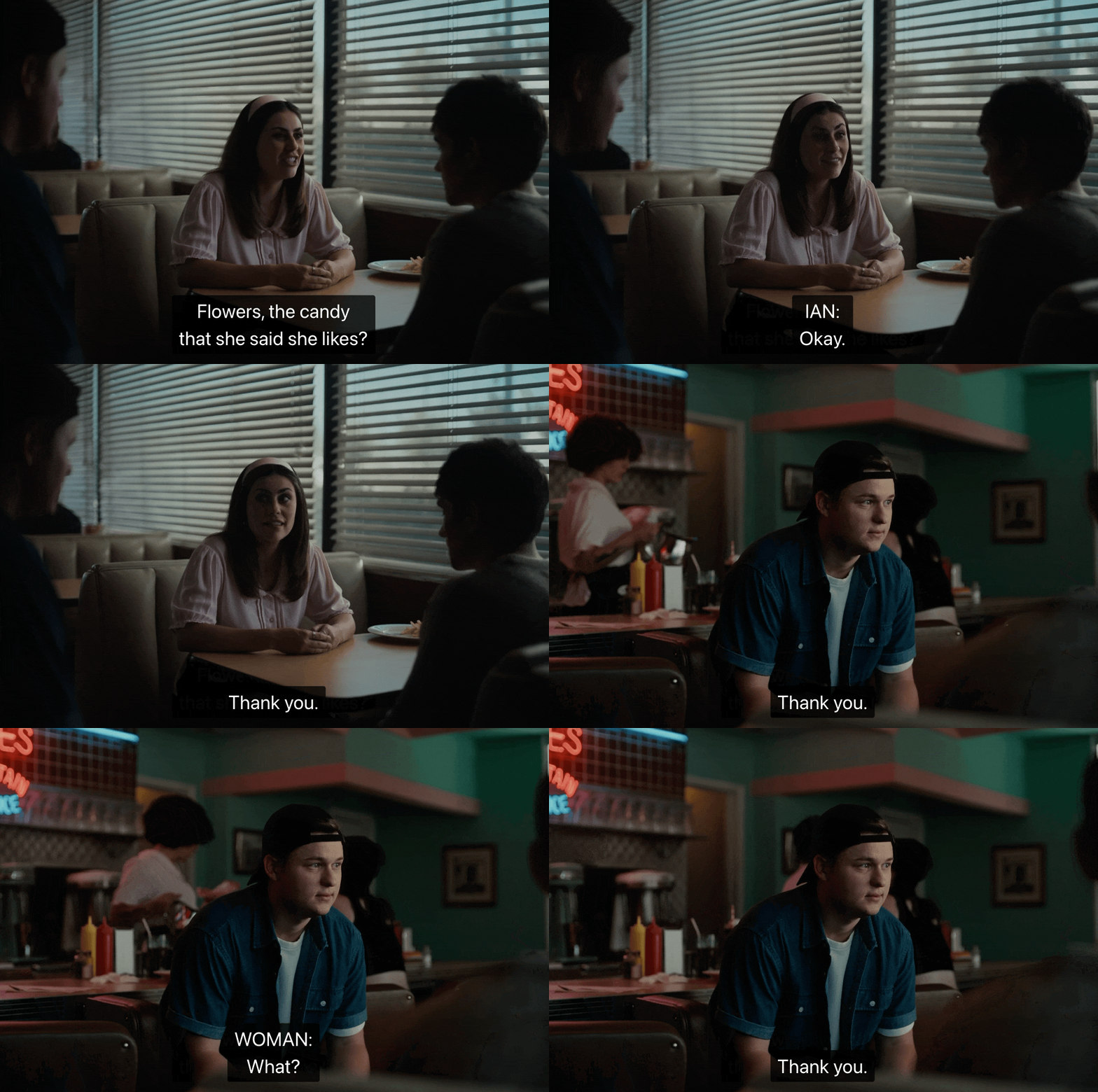
There’s a precise name for what happens the moment Ian opens his mouth: spontaneous trait inference. Ever since Winter and Uleman’s classic 1984 experiments and confirmed in a 2024 meta-analysis of the whole field, we’ve known that when we observe a behavior, we automatically staple the trait behind it onto the actor (helpful, rude, generous, cold), unintentionally and largely outside our awareness. You don’t decide to judge Ian; you can’t help it. He cuts the waitress off with a flat “Thank you” (translation: get lost), coaches Bear to be cruel about the bullying, and stonewalls every plan that would leave Bear alone with Nikki, and with no conscious verdict on your part, a little tag gets stapled to him: this guy is not on Bear’s side. You probably couldn’t articulate it if asked. So when the reveal lands later (Ian’s been sleeping with Nikki and feeding Bear sabotage on purpose) it doesn’t shock you so much as your brain already logged that info without you knowing. That’s the throughline, planted below the waterline.
But Ian only gets a handful of small, deniable moments. Why do they stick? Negativity bias — what Baumeister and colleagues summed up as “bad is stronger than good.” Negative information about a person forms a faster, stickier, harder-to-disconfirm impression than positive information, and one genuinely unkind act is far more diagnostic of character than a dozen pleasant ones (nice is cheap and default; cruelty is revealing). So Ian’s three-second dismissal of the waitress does more impression-forming damage than all his matey banter can undo. The scene even hands you a control group: the waitress herself, warm and sincere, taking Bear’s confession as genuinely sweet. Her warmth sets the baseline, which makes Ian’s coldness read that much louder.
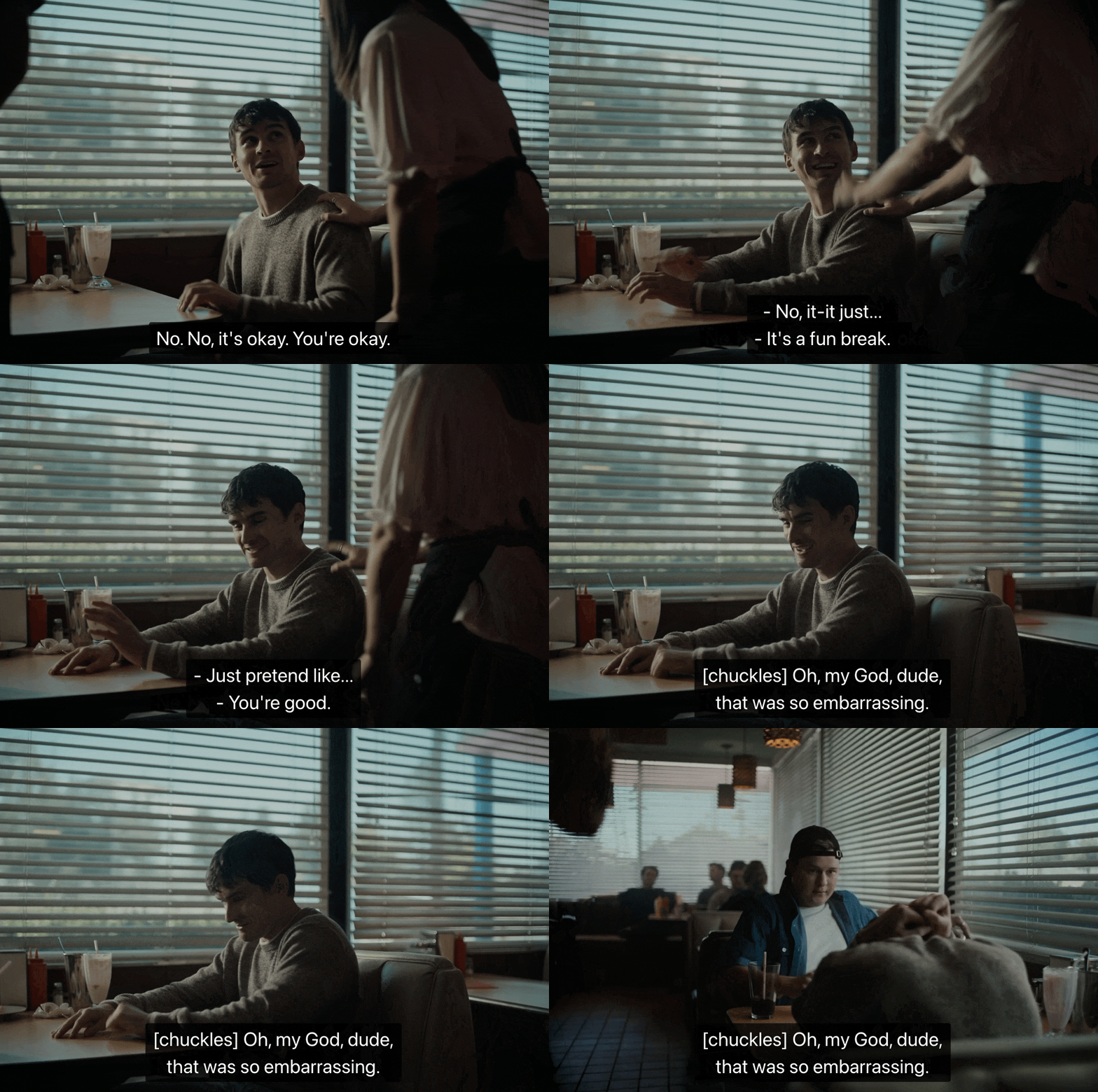
And the comedy? Those double reversals (the confession that’s really a rehearsal, the “Nikki” who’s really a waitress) are the same expectation-violation machinery, just running in a harmless mode. They resolve into a punchline, so we laugh. Ian’s behavior violates a different expectation (the one that says a good friend has your back) and it pointedly doesn’t resolve, so it curdles into unease instead. Same engine, two outputs: one keeps us entertained and reading closely, the other plants the dread. That’s the sleight of hand of the whole scene. It buries a page of backstory and a major betrayal inside four minutes of banter, and lets your own involuntary people-reading haul the freight. You walk out feeling like nothing happened. Everything did.
Psychology Cheat Sheet:
What it is: Spontaneous Trait Inference (+ Negativity Bias) — the scene plants its throughlines (Bear’s history, and Ian’s hidden betrayal) through behavior, letting the audience auto-infer character instead of being told.
What it does: Buries heavy exposition and a future betrayal inside comic, conflict-driven action, so we read the characters rather than receive facts — and quietly tag Ian as untrustworthy without noticing we’ve done it.
Why it works (science): We unintentionally, largely outside awareness, infer traits from behavior (spontaneous trait inference — Winter & Uleman; 2024 meta-analysis), so Ian’s small cruelties plant an implicit “not on Bear’s side” impression with no conscious verdict. And negative, character-revealing cues form faster, stickier impressions than positive ones (negativity bias — Baumeister et al.), so a few deniable moments are enough — then pay off when the betrayal is confirmed.
Effect on viewers: We swallow a mountain of exposition without feeling lectured, and leave with a low, un-articulated distrust of Ian that the later reveal cashes in — the “I knew something was off” feeling we never actually decided on.
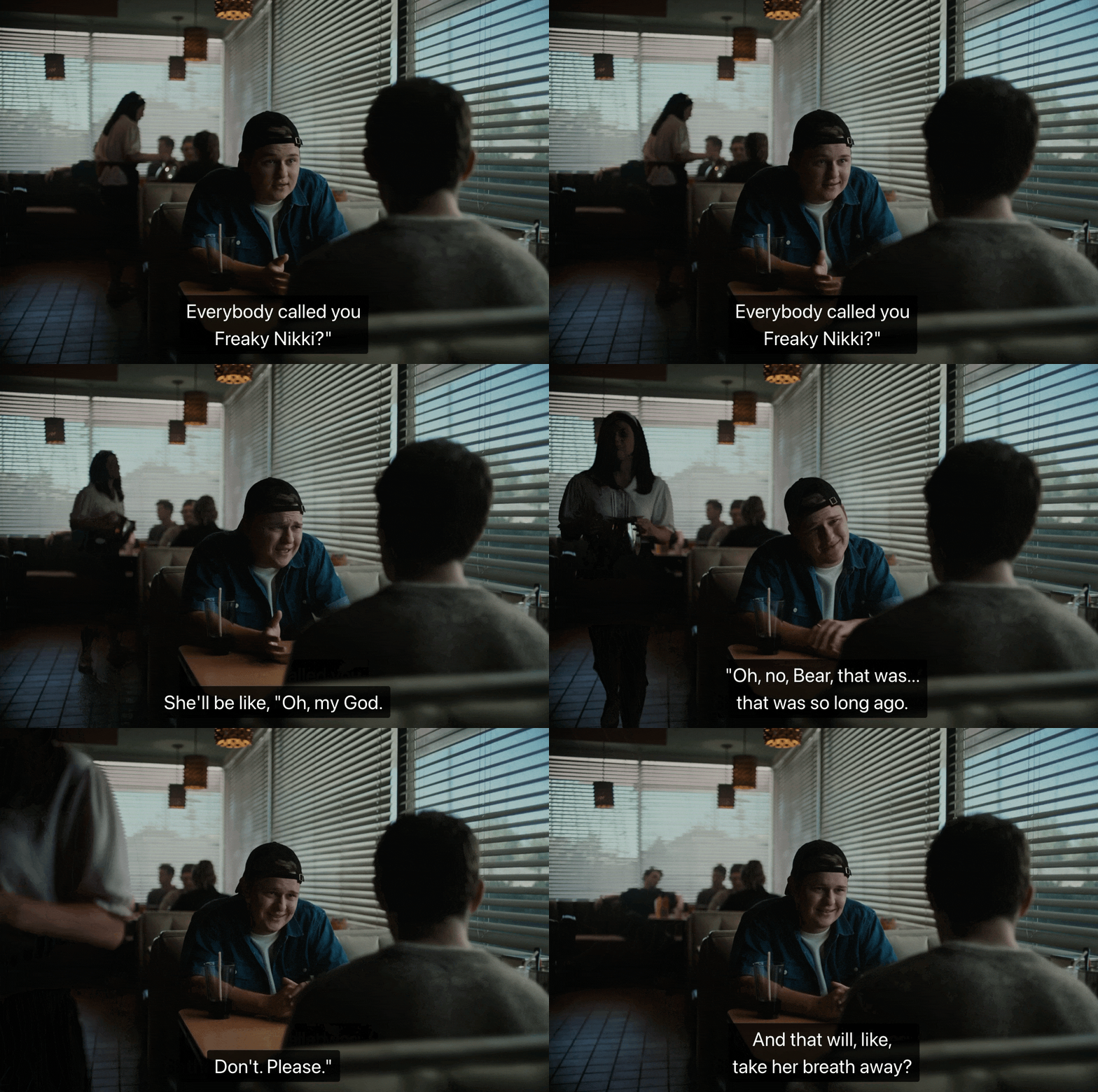
The banality of dramaturgy – active goals. Simple, right? Yes, but how often we let the “active” part slip through the cracks. “Discourage Bear from opening up to Nikki” is an active goal. It invites tactics, it involves stakes. Mind that the stakes are not apparent to the audience yet, but it doesn’t matter - character behavior pushed by the stakes is intriguing enough.
The “bad” version of this scene looks like Ian “spending time with Bear” which is too passive, or Ian “helping Bear with his love life” which is active but takes away the ulterior motive and reverts our attention to the exposition rather than playing a guessing game with the character.
Bottomline: check your characters’ goals. A good test is to ask yourself, what would the character lose if they just said “no” to their goal? A girl they love (active) or a random hangout with a friend (passive).
Exposition. Sometimes you gotta take an exposition dump. Because it’s easier to give up three minutes of engagement once in the very beginning than gamble on it mid-movie.
Ok, then at the very least make sure your scene has switches – physical actions or new information that change the course of the scene.
To plan a switch, ask yourself what the viewer is supposed to think at this particular moment in the scene and why. And once you have an answer you can argue well, think of how you can surprise them.
Bear is pouring his heart out to a girl. He’s nervous, struggles to find words, but honest. The setting is a public place, a diner. Enough clues for the audience to infer - it’s a date, or at the very least a “love confession”. Check. Now you know where the audience is.
Then switch – oh, it’s not a confession, it’s a rehearsal.
Now you got your chuckle from the audience and got them relaxed (laughter is a mechanism of emotional relief). They trust you even more now. And what are they thinking? Ian is making fun of Bear, Bear is red with embarrassment, the girl tries to make him feel better and also suggest other ways to get the girl – like a friend would.
Arguably, the audience sees this “rehearsal” as a group of friends trying to help Bear out.
Gotcha. Again. Not a friend. A waitress.
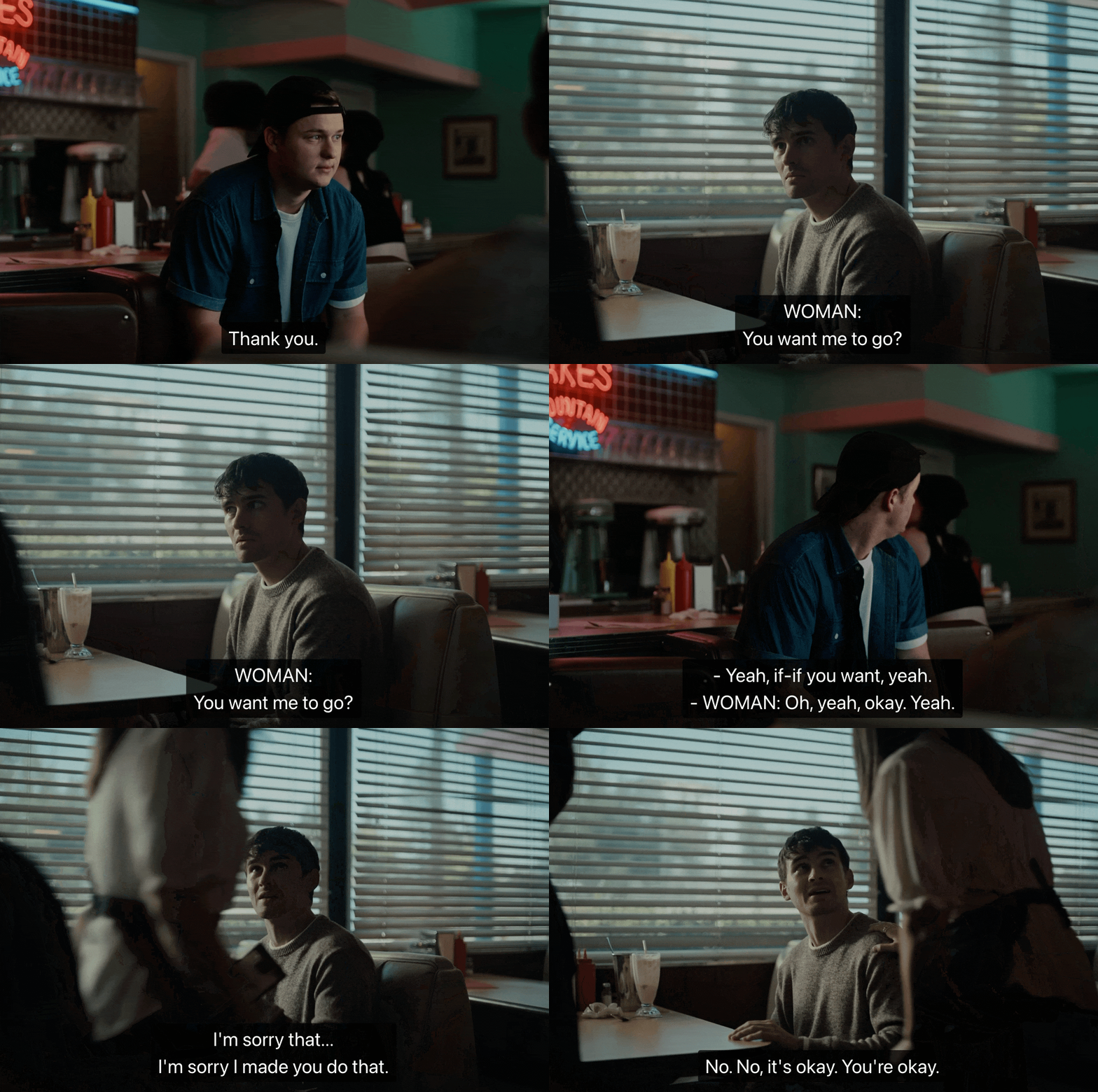
How you treat people of lower status than yourself often reveals who you are. Why? Because there’s nothing for you to gain. It’s stupid to be shitty to your boss cause you might lose a job. Being shitty to a waitress? A dick move, but that’s about it.
Ian’s not an outright dick to the waitress, but he does read as dismissive and a bit cowardly. Our brain picks that signal up.
The movie actually has another example of the same mechanism when Nikki gives money to a homeless person. Same idea – she has nothing to gain, yet she helps, hence, she is a good person.
So. Want to show who your character is beneath the mask? Have them interact with a lower status character that they have nothing to gain from.
Only, please, don’t use homeless people. It’s the most student-film thing ever. Well, after movies about drug addicts. (Can you guess what my first short was about?..)
That’s all I got, folks. I’m curious though if you liked the film or not. Cause I can sit here and say science this and science that, but at the end of the day it’s only a lens. And it’s very important to calibrate those from time to time.
So. Obsession? Loved it? Hated it? Meh, perhaps? I’d appreciate it if you responded to this email with your thoughts or left a comment.
Every share helps. Help.
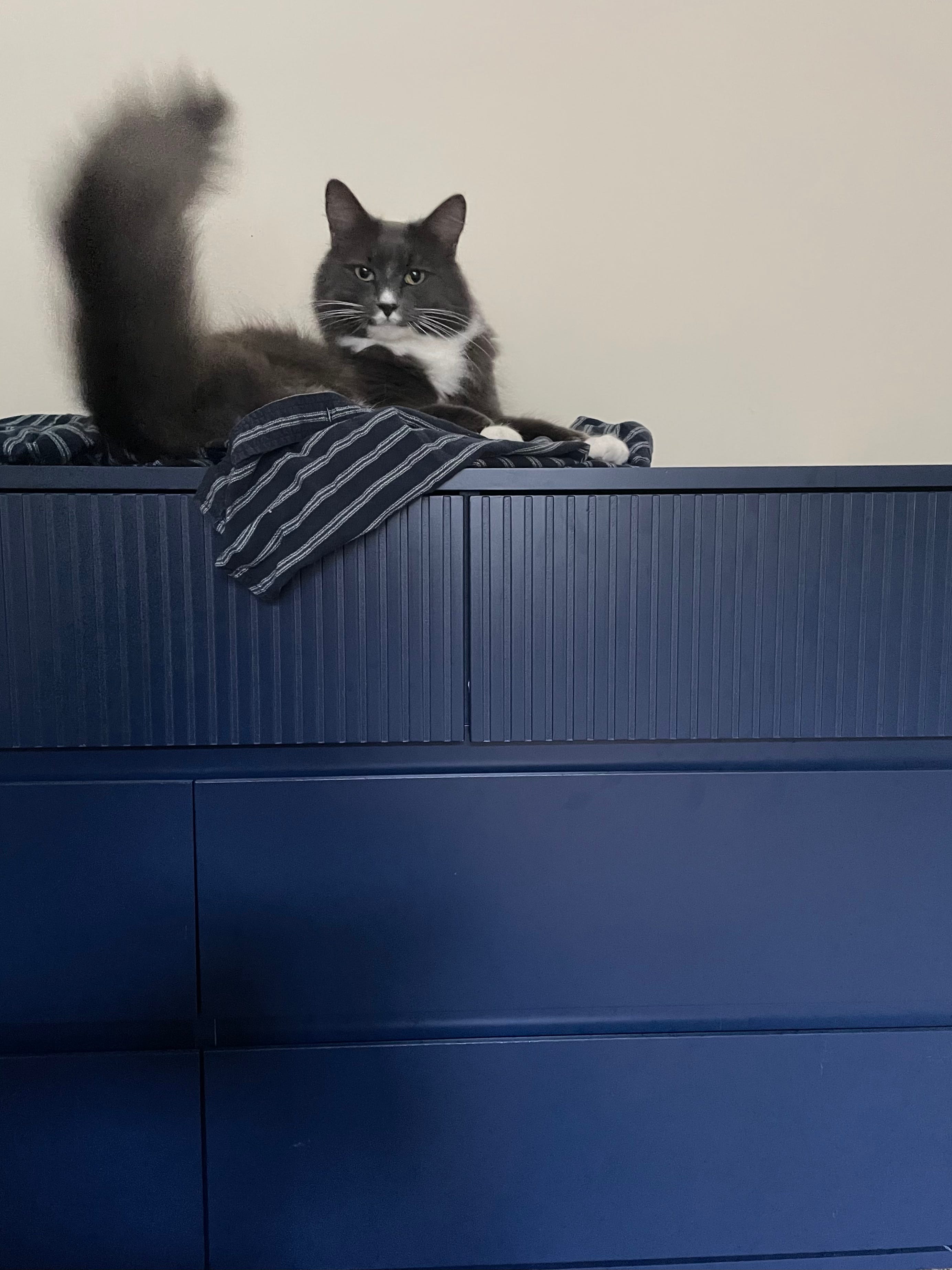
Oh, yeah. Felix got fleas. He’s treated now but refuses to walk on carpets. I carry him around. I suspect that was always the plan.
Until next time.
Comments
Nothing yet. Say the first thing.
Sign in to join the conversation.