
While I spent formative years in the Netherlands, I couldn’t just fly over to Amsterdam for the Magic Con currently underway there. Thankfully, Wizards of the Coast invited me to preview what would be revealed at the convention, which included a timeline of 2027’s products and events:
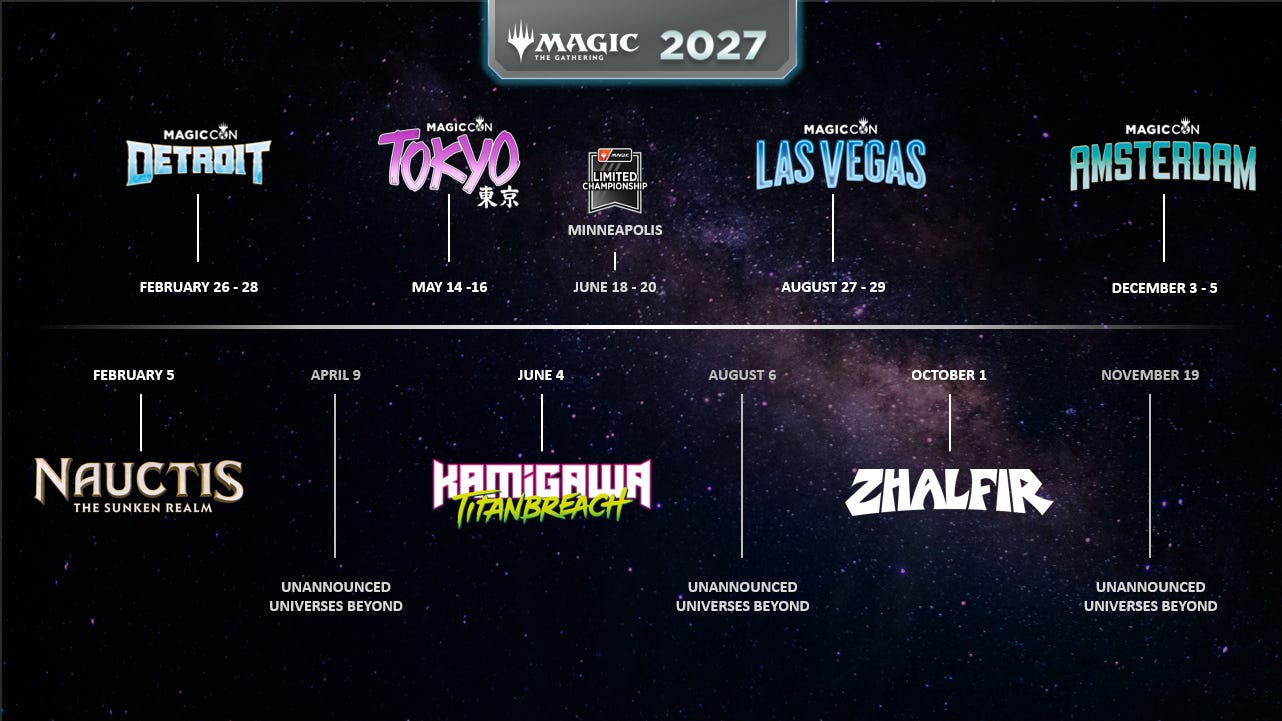
I asked lead Magic designer Mark Rosewater why upcoming underwater plane, Nauctis, wouldn’t focus on Blue mana, as 2002’s Torment focused on Black. He answered in his typically laconic way: “Torment taught us why color imbalance is a bad idea.” I’m inclined to agree, even as Torment remains a nostalgic favorite of mine.
Senior creative director Jacqueline Jones also answered a question I posed about the upcoming Kamigawa Titanbreach:
Me: I’ve lost count of how many interplanar wars Magic has seen. Aside from the obvious Kaiju influence, how are you keeping things fresh for the new Kamigawa set?
Jones: This is an interplanar conflict, but what really excited us on the creative side was the chance to revisit two of Magic’s most beloved planes [Ikoria and Kamigawa] and explore sides of them we’ve never had the opportunity to before. While the stakes are multiversal, the story stays grounded, letting players experience the conflict through the eyes of the people fighting to defend their homes.
I’m optimistic for Titanbreach. Ikoria: Lair of Behemoths was my first Arena set and I drafted it into oblivion during the 2020 lockdown. Kamigawa: Neon Dynasty rightly deserves its reputation as one of the best draft sets ever, so I expect I’ll enjoy the resulting mash-up, tired as its kaiju framing might be.
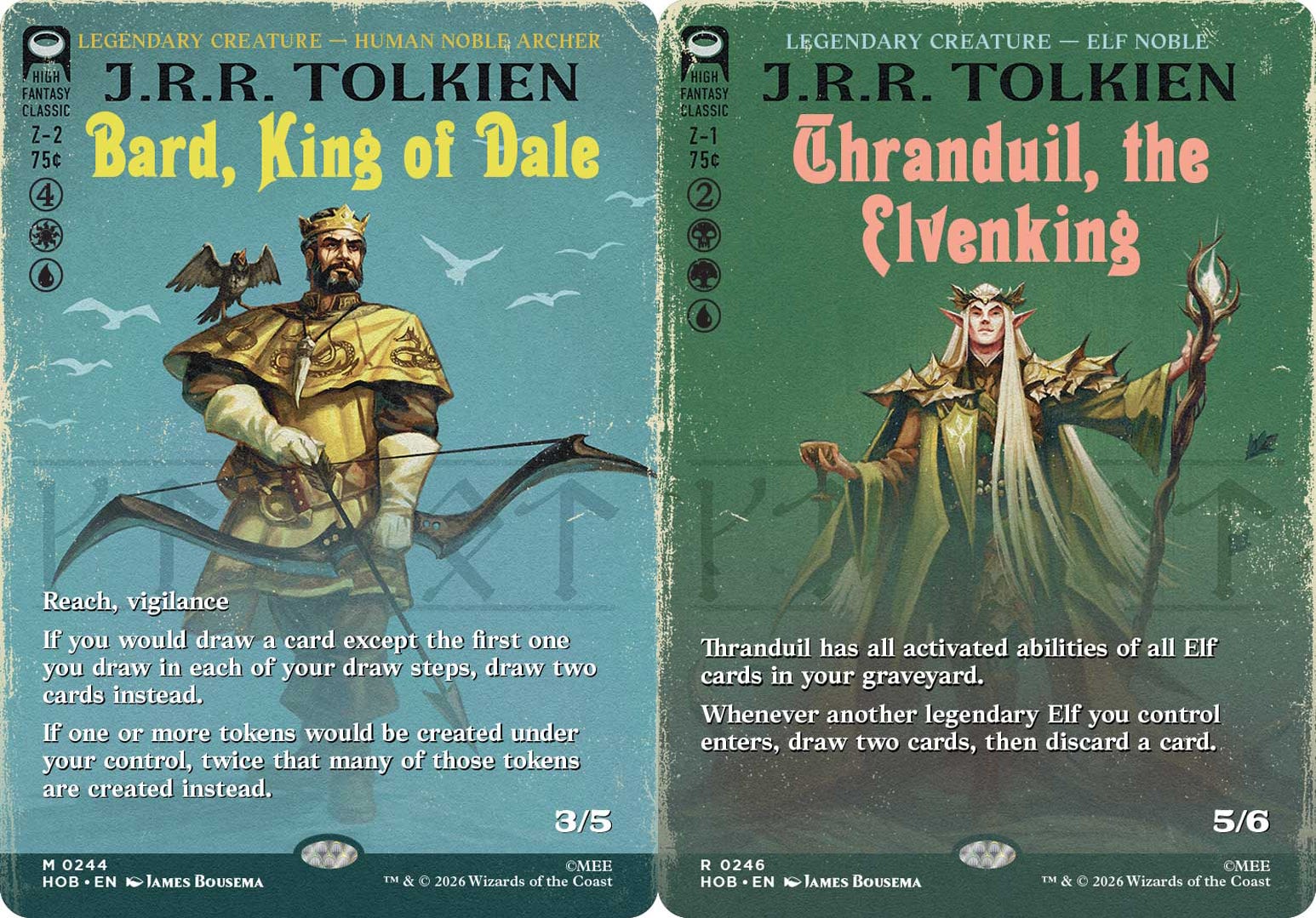
But the preview for The Hobbit, releasing August 14th, really caught my attention. Magic communications director Blake Rasmussen confirmed to me that it’s “smaller” than a typical release: “with 198 cards in the main set, plus booster fun and scene cards.” That’s just three cards larger than March’s Teenage Mutant Ninja Turtles main set. Much as I yearn for larger sets and the replayability they enhance, bonus sheets — reskinned reprints that appear in about a third of packs — do take the edge off. I also like the classic Tokienian art of these booster fun cards, as opposed to recent comic-book stylings.
We glimpsed five main draft archetypes. Where TMNT focused on enemy color pairs and Spider-Man focused on allied pairs, The Hobbit features a mix.
First up, White-Blue Draw 2 Humans.
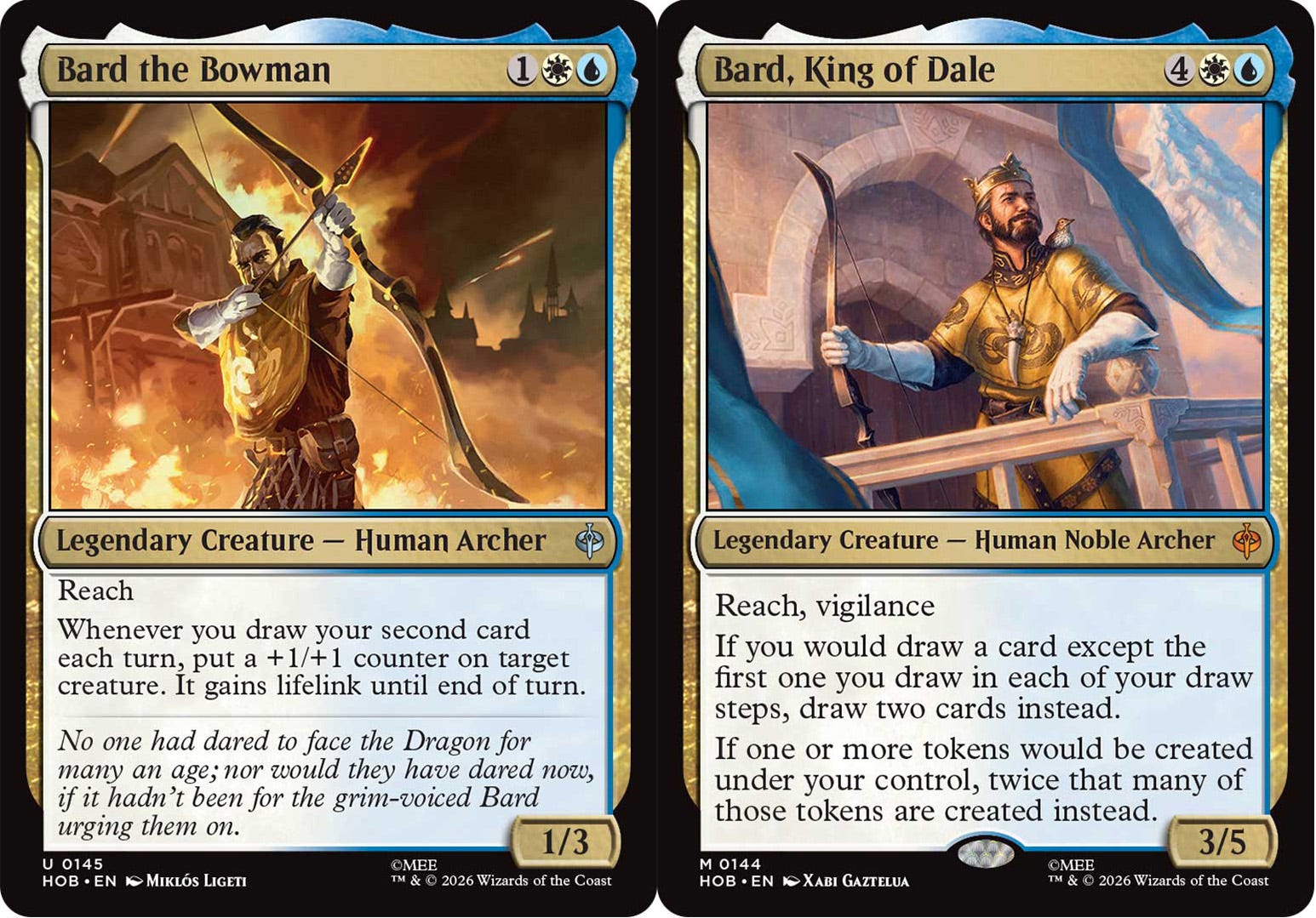
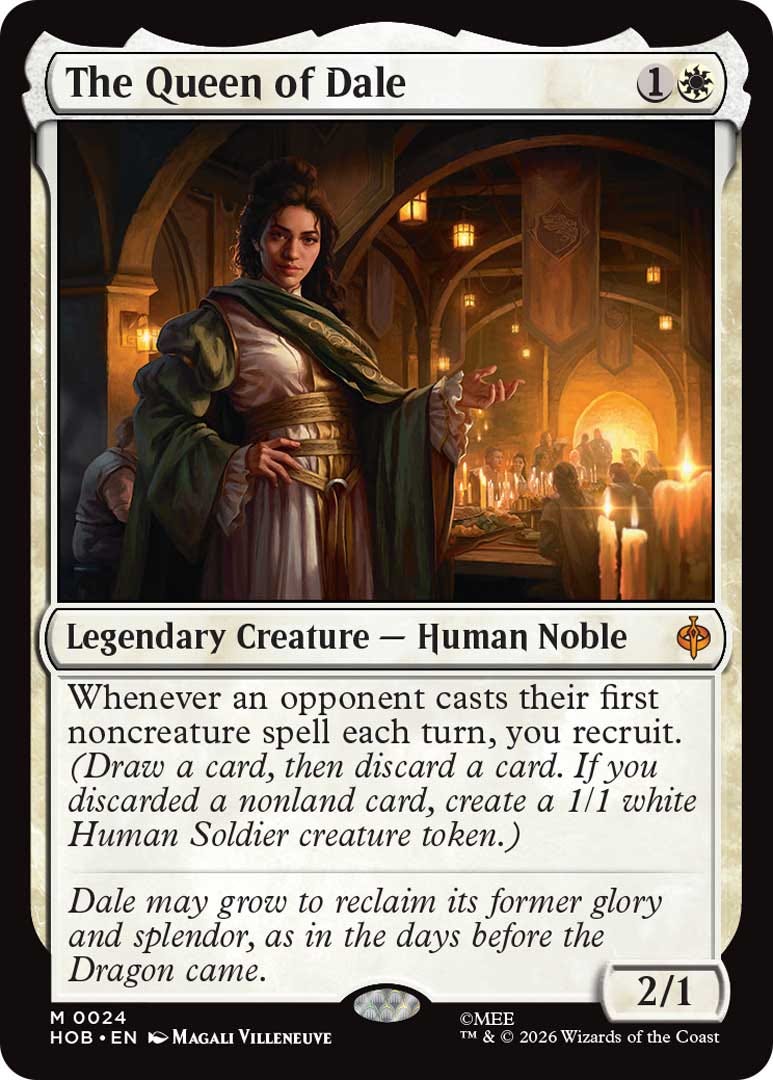
Drawing a second card on your turn isn’t too tough and The Hobbit comes with a new mechanic to enable it: recruit. Set design lead Annie Sardelis acknowledged that it’s modelled on a recurring staple, connive.
Next, we’ve got Black-Red amass — though this time you’re building armies of Goblins, not Orcs.
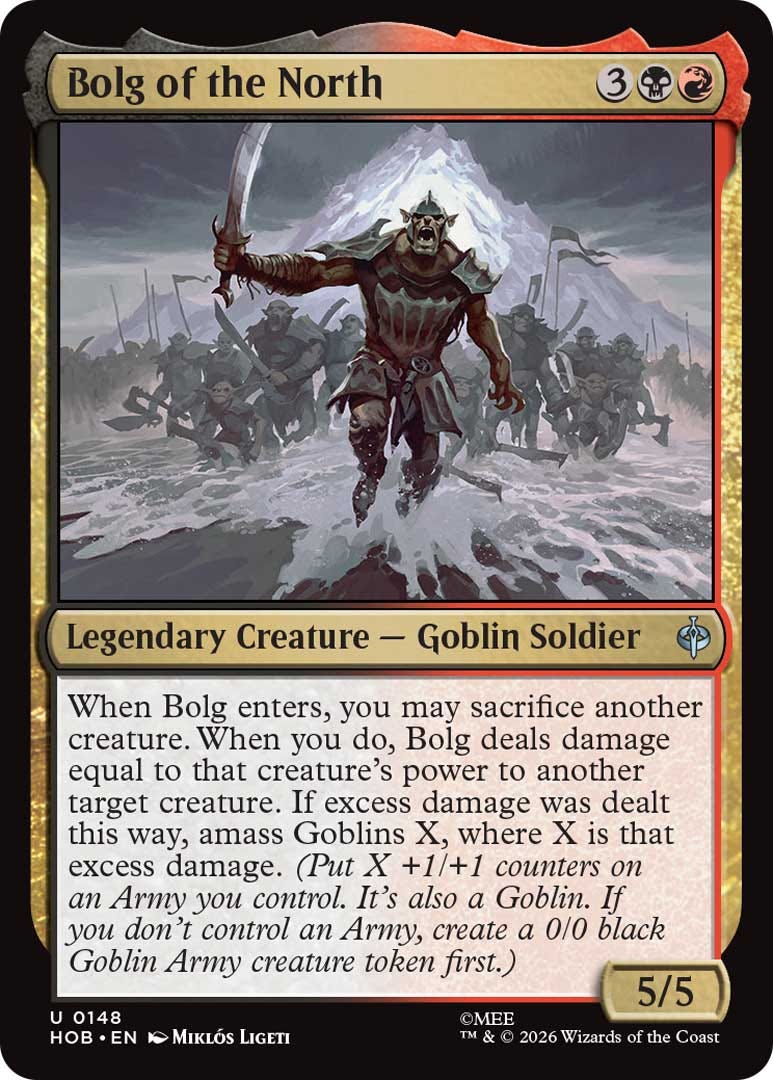
We didn’t see much of this archetype but this signpost uncommon indicates it’ll also sacrifice creatures for value, further echoing Black-Red themes from The Lord of the Rings set.
Then we have Black-Green ferocious.
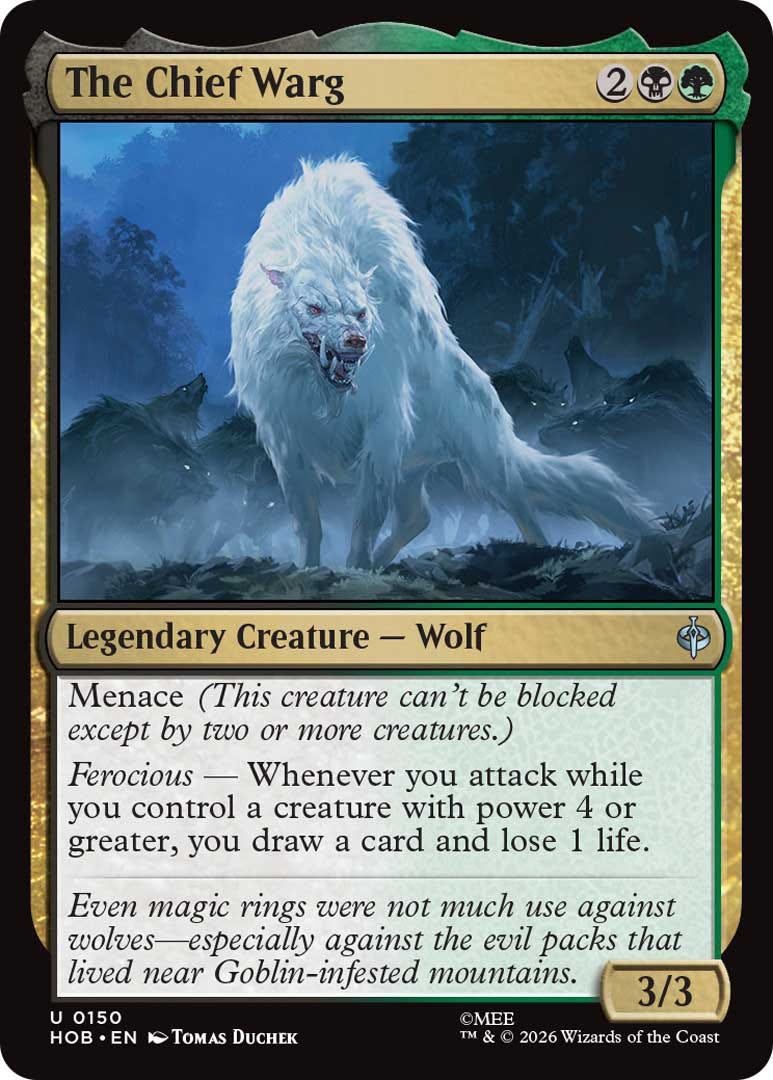
This archetype’s been done nearly to death, but I’m intrigued to see a Black-Green version rather than the typical Red-Green.
Now we come to my favorite archetype by far: Red-White storied Dwarves.
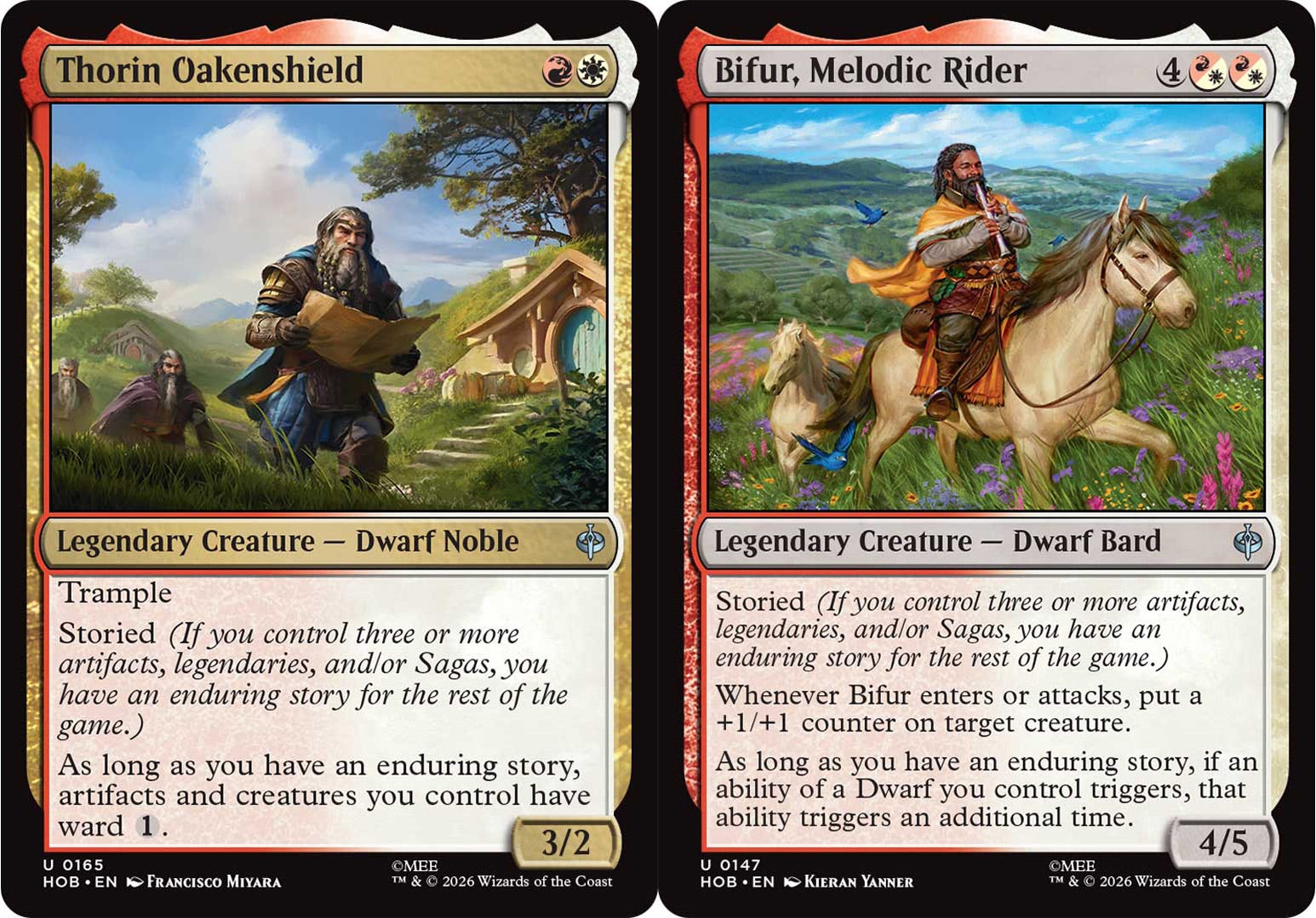
Sardelis confirmed that the enduring story condition works like the city’s blessing: once triggered, you’ll keep it regardless of whether you lose artifacts, legendaries, or sagas (which all happen to be historic permanents, by the way).
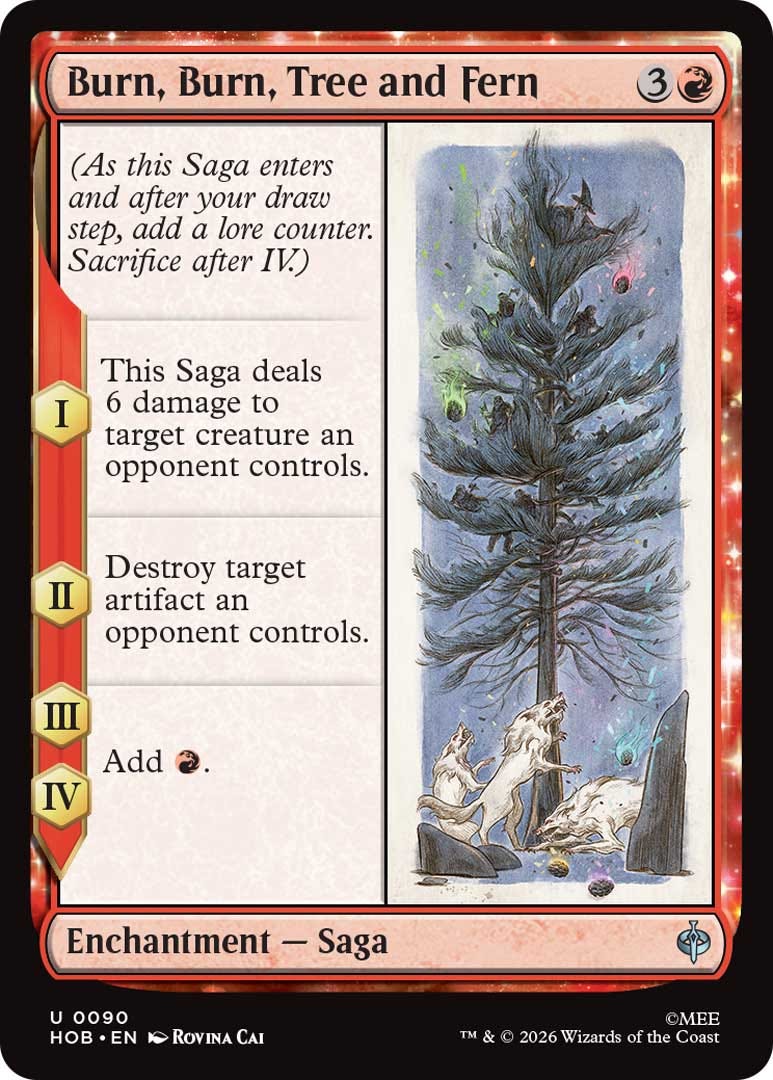
I love sagas, I love dwarves, I love these cards for their flavor — and I suspect I’ll love their gameplay as well.
Finally, we’ll round things out with Green-Blue landfall Elves.
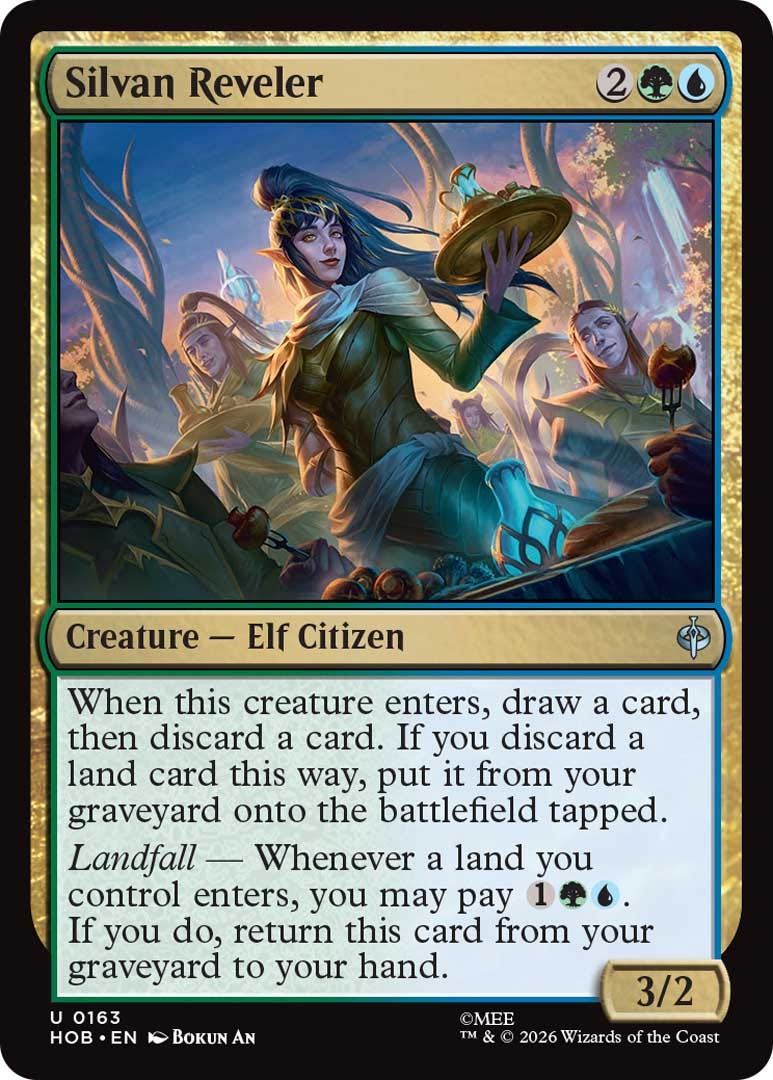
Another tried-and-true archetype, I’m more fond of landfall than ferocious. As Sardelis asked the preview pool, “who doesn’t like playing lands?” She explained that she wanted to do something different with Elves than the scrying theme from The Lord of the Rings, and I’m glad for the change. Blue-Green scry didn’t really come together in LTR.
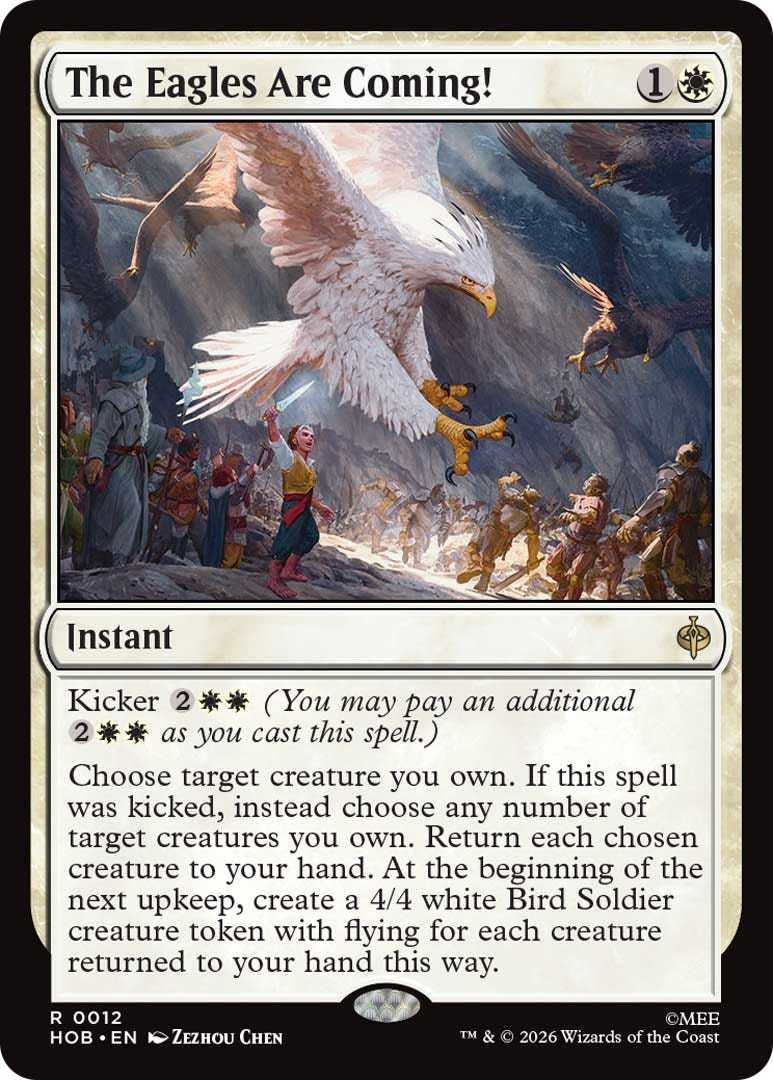
The set’s otherwise chock-a-block with nifty references, intriguing lands, and adventures (another mechanical favorite of mine). Kicker makes a one-off return too:
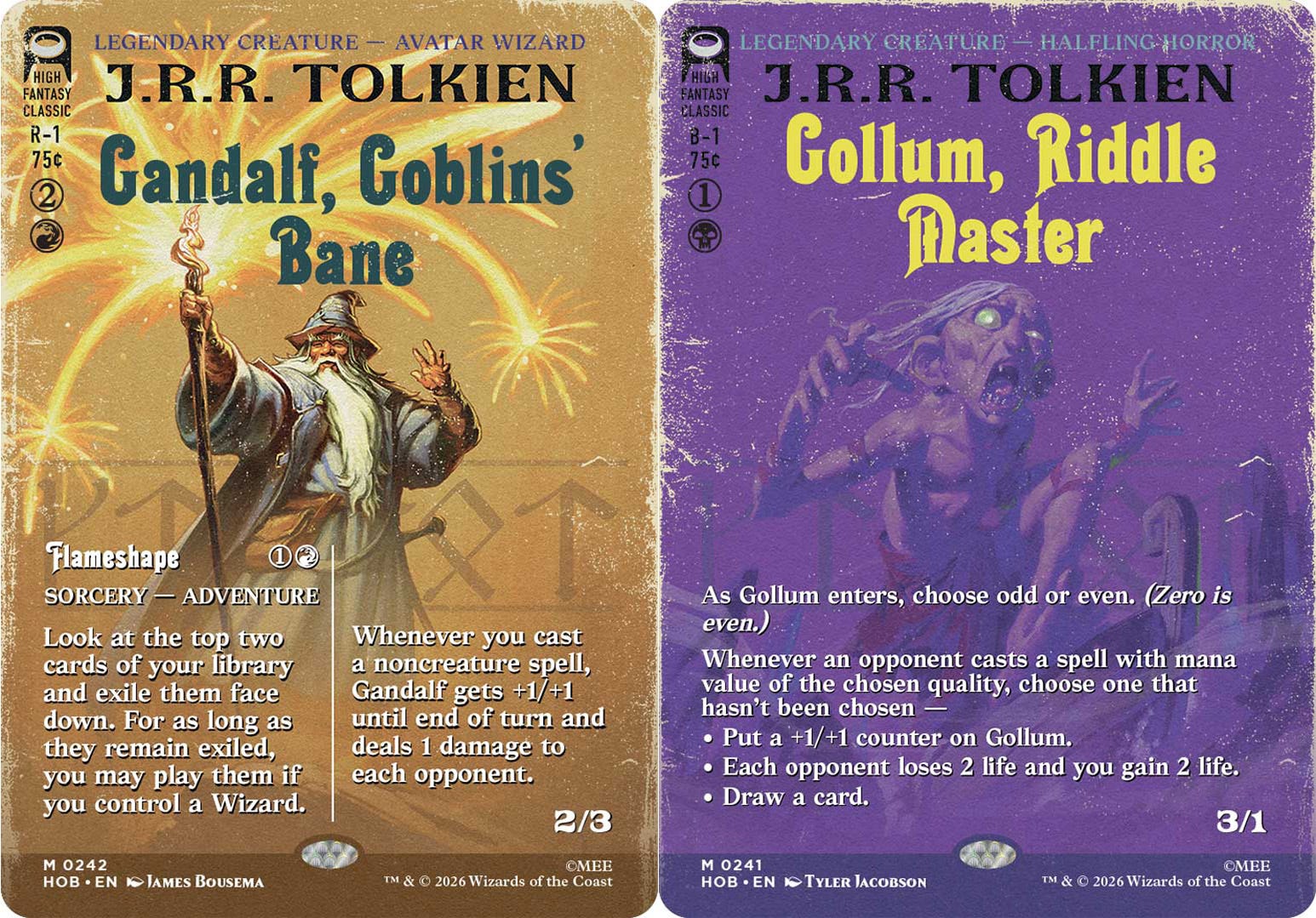
And of course I couldn’t end this little preview without two of the novel’s biggest characters:
Physical media are disappearing. Video games are next — Pink Gorilla Games co-owner Kelsey Lewin joined Here & Now to discuss the broader implications of PlayStation killing discs in 2028. Lewin’s also a podcast contributor, served as Video Game History Foundation co-director, and brought a deep personal and scholarly perspective.
This is your brain on fatherhood: How childrearing, not just pregnancy, changes bodies and minds — I joined hosts Peter O’Dowd and Scott Tong in interviewing Darby Saxbe, a clinical psychologist and professor of psychology at the University of Southern California. Her book was revelatory, and I’m happy we worked the perspective of three eras of dads into the piece (myself with a baby, Peter with a preteen and teen, Scott with kids in their twenties).
Battle over AI data centers heats up — a two-part conversation about communities with wildly different attitudes on data center construction.
Darline Graham sworn into brother’s senate seat as S.C. gears up for special Republican primary
Death of Sen. Graham complicates GOP agenda as Congress returns from recess
No posts
Comments
Nothing yet. Say the first thing.
Sign in to join the conversation.