
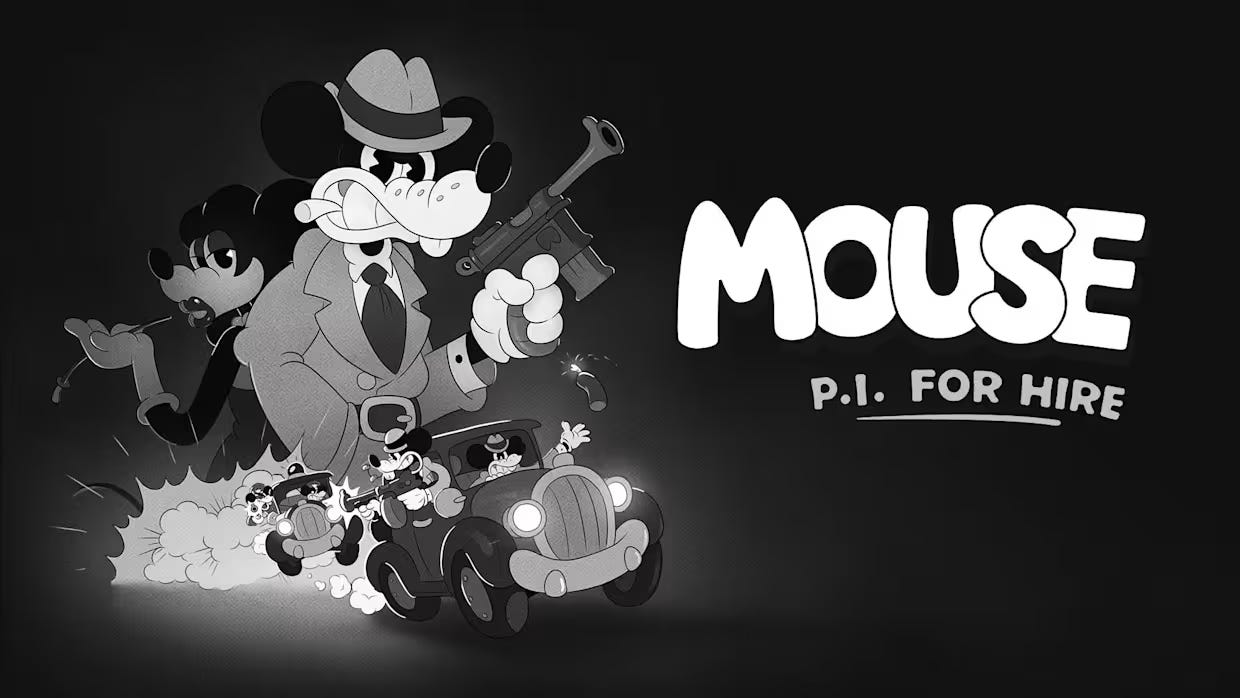
Last Fall, I wrote an article outlining my most anticipated games of the season which included MOUSE: P.I. For Hire. Just in time for Fall 2025, MOUSE: P.I. finally released on April 16th, 2026. I first learned about it from its Summer Games Fest trailer, where the combination of rubber hose animation, noir tropes, and what looked to be boomer shooter gameplay really stood out to me. It didn’t hurt that it was flaunting Troy Baker’s performance as the jaded, streetwise Jack Pepper, our titular mouse P.I. That trailer painted what looked like a complete picture of a game combining boomer shooter action with crime-solving mechanics and a real story, but looking back at trailers and screenshots from the years this game spent in development reveals a lot of little revisions. I think MOUSE: P.I. might have been trying to put too many pieces together, and what we got wasn’t quite as hard-boiled as I’d hoped.
Largely beyond reproach, at any rate, is MOUSE: P.I.’s art style. Combining 3D environments and 2D characters, the city of Mouseburg and its surrounding areas are brought to life effectively. There’s a lighthearted approach to the combination of largely innocent rubber hose styling and the gritty noir aesthetic, such that it feels just as silly to blow off a mouse’s head as it does to explode them into a pile of dust with eyes. Small touches give every animation a lot of life, and characters are full of visual personality. Despite the game’s monochromatic style, it effectively highlights interactive level props and important info doesn’t blend together. You get the sense that the artists just had a good time drawing as much as they could, especially with the largely-superfluous world map that draws out the Mouseburg region in detail. The soundtrack’s retro jazz tones and orchestral tension, both in its original music and a variety of licensed tracks ranging from Dizzy Gillespie to Vivaldi, set the mood well as Jack tours city streets, movie sets, hidden laboratories, and more.
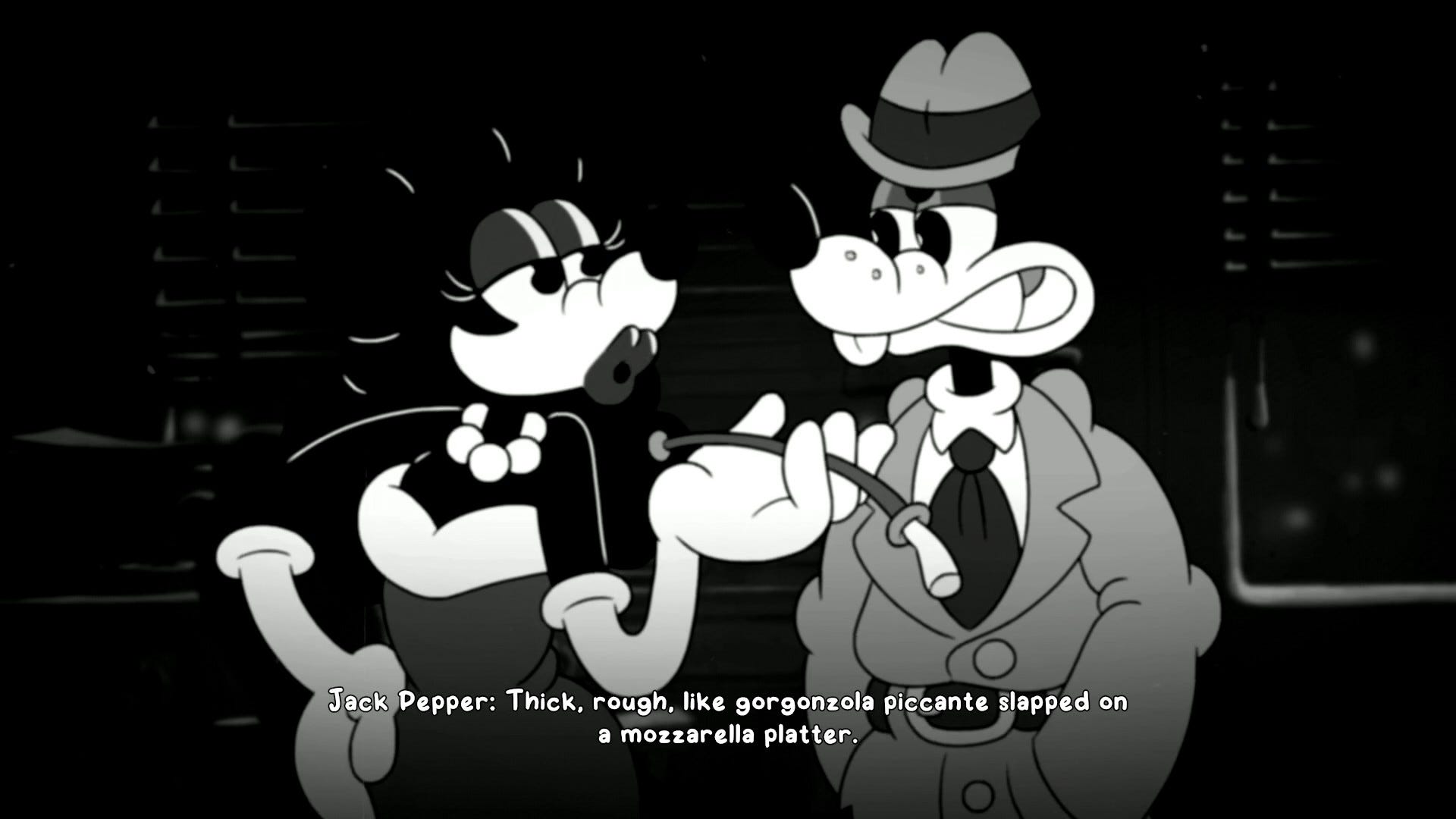
The art works well in concert with MOUSE: P.I.’s story, certainly much more of a priority than it usually is for boomer shooters. Set in a mouse-inhabited proxy for Prohibition-era America, the story revolves around a ridiculously tangled conspiracy involving the fascist Big Mouse Party, a dead actress, disappearing shrews, and foreign scientists. Jack Pepper is brought onto the case when his Mouseburg Herald contact, Wanda Fuller, lets him in on the case of a missing magician: his old war buddy Steve Bandel. Every lead he chases pulls him in a different direction - and right into the crosshairs of the mob, the BMP, corrupt cops, a bizarre cult, cheeseleggers (cheese is like drugs, you see, because they’re mice) and more. In typical noir fashion, the mean streets of Mouseburg are rife with dirty dealings and shady characters, and the oppression of the diminuitive shrews by the BMP effectively mirrors the pre-WWII setting which defines noir as a genre. Like the animation, the story approaches the serious situations its cartoons are going through with an appropriate amount of self-aware humor. Turns out cartoon logic is a great way to explain a lot of the less-sensible video game tropes which exist for fun, too!
A highlight of MOUSE: P.I.’s story is the characters, who have a surprising amount of depth. Jack Pepper, portrayed by Troy Baker, is a highlight. Though he fits the noir detective bill closely, small details like his past as a soldier with Steve and current mayoral candidate Cornelius Stilton flesh him and the world out well. He has something of a fatherly relationship with Tammy Tumbler, a young tinkerer whose real father Jack locked up when he was still a cop. Characters generally feel like they have whole lives under their belts, and the performances are lively across the board. I enjoyed Florian Clare’s performance as the dry, witty Wanda, and Frank Todaro impressed in combining Stilton’s practiced, dignified delivery with a natural stutter. My only real gripe with the script is an absolutely ridiculous number of references. It’s no harm when they nod towards clear inspirations like Blood and Steamboat Willie (hey, it’s kind of weird for this game to be inspired by both of those things, huh?), but there were so many references to all kinds of random things that it was genuinely distracting at times.
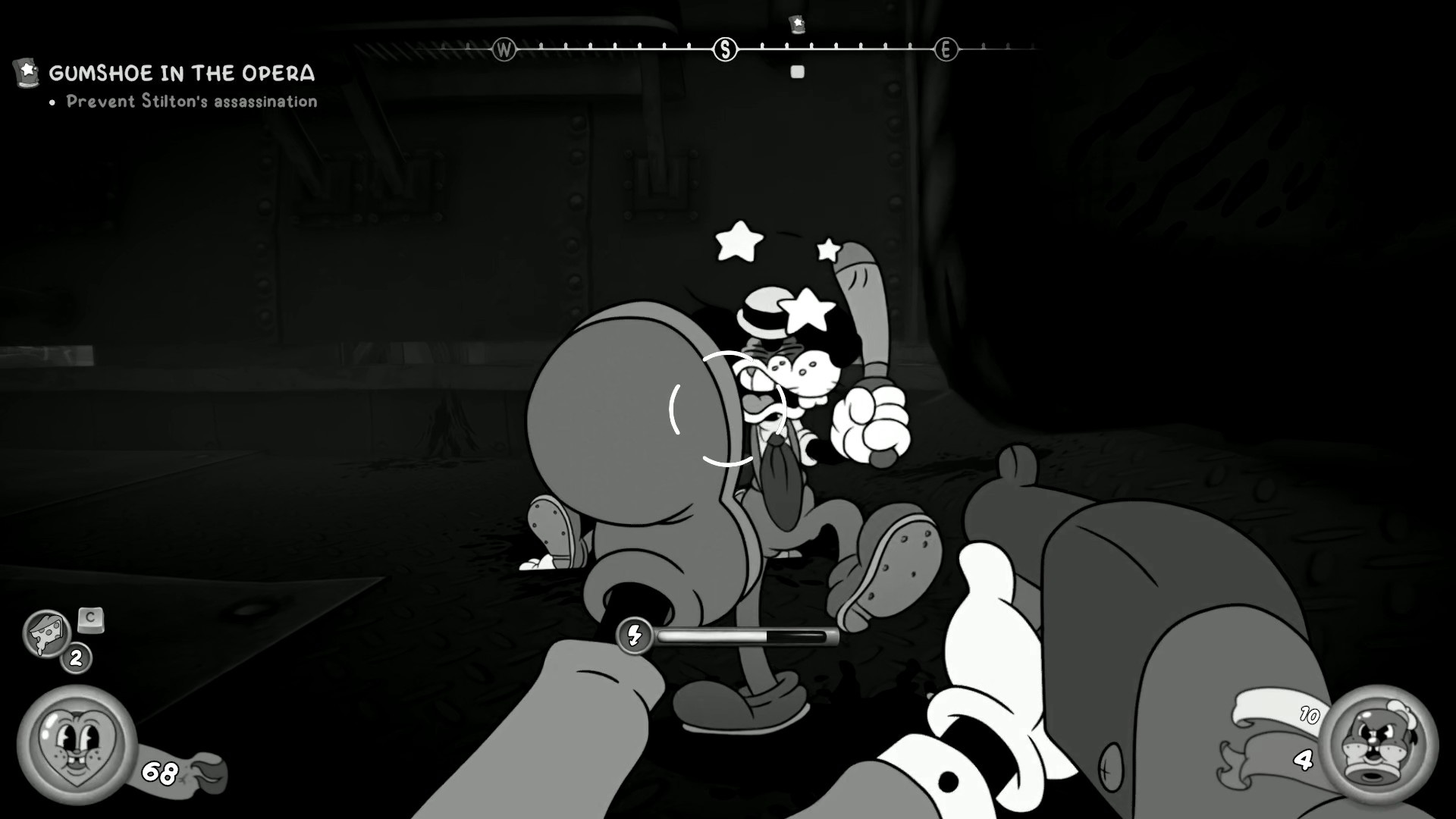
Unfortunately, MOUSE: P.I.’s gameplay isn’t executed with much of the same confidence. I’ve been describing it as a boomer shooter and, while it certainly has the speed and slaughter to be one, there’s a lot of ways where it doesn’t play the genre tropes straight. Guns generally need to reload and have things like bullet spread and recoil. Kicking enemies, double-jumping, and dashing all drain stamina. Running out of stamina always felt very punishing, especially since so many of your most important actions all drain it significantly. The variety of enemies you face is also quite low; you’ve seen most of the foes you’ll be facing in every level by the halfway point or even a little earlier. Encounters across the whole game start to blend together as it struggles to up the ante, which was fairly noticeable during my 15-hour playthrough. There’s plenty of boss fights, though, nearly all of which were much more interesting and fun than the standard combat. Bosses had a way of waking me up, forcing me to engage with the game’s mechanics a lot more seriously than normal fights ever prepared me for.
Though MOUSE: P.I.’s weapons are lovingly-rendered and often creative, like the ink-melting Devarnisher and the brain-blasting Jarhead, getting new ones typically didn’t excite. Most of the weapons feel weak before you give them some upgrades, and first impressions are everything. The aforementioned Jarhead’s primary fire is a generally slow and terrible projectile that stuns and does low damage, but its alternate fire - which you have to unlock - melts enemies if you aim at the head. It’s like they were trying to hide the good part of the weapon until after most would write it off. The game’s combat is so focused on crowds of weak enemies as well that the more complicated weapons seemed kind of pointless in the face of staples like the tommy gun - sorry, the James Gun in this game - and the boomstick. The Devarnisher and the Kiss Kiss both apply damage over time to enemies, but with how little health most enemies have, there’s not much use for either. The Loose Cannon, a literal cannon which acts as the game’s rocket launcher, has pretty low damage for how little ammo it can store. In general, the combat felt like it was missing something to bring it all together.
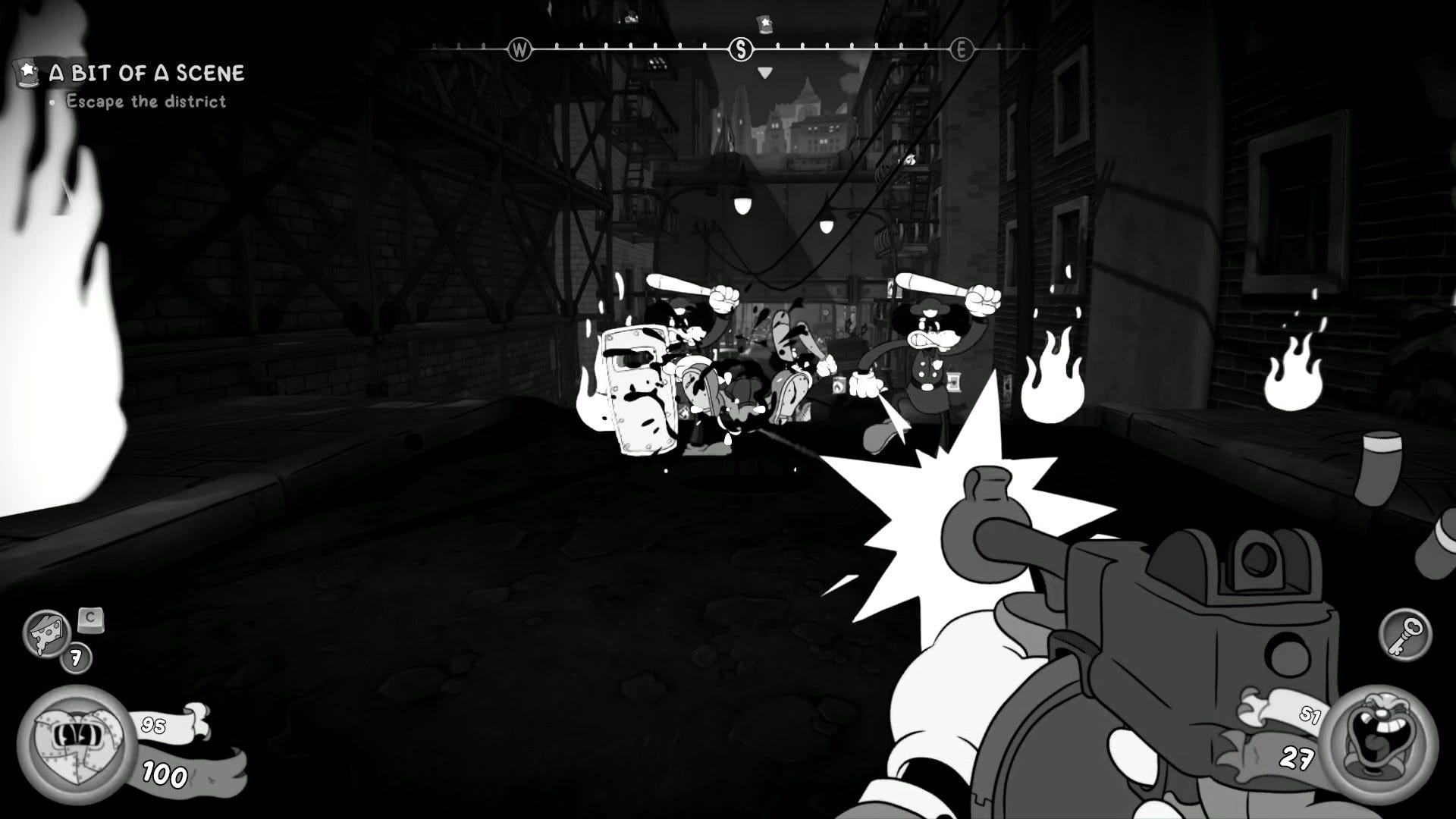
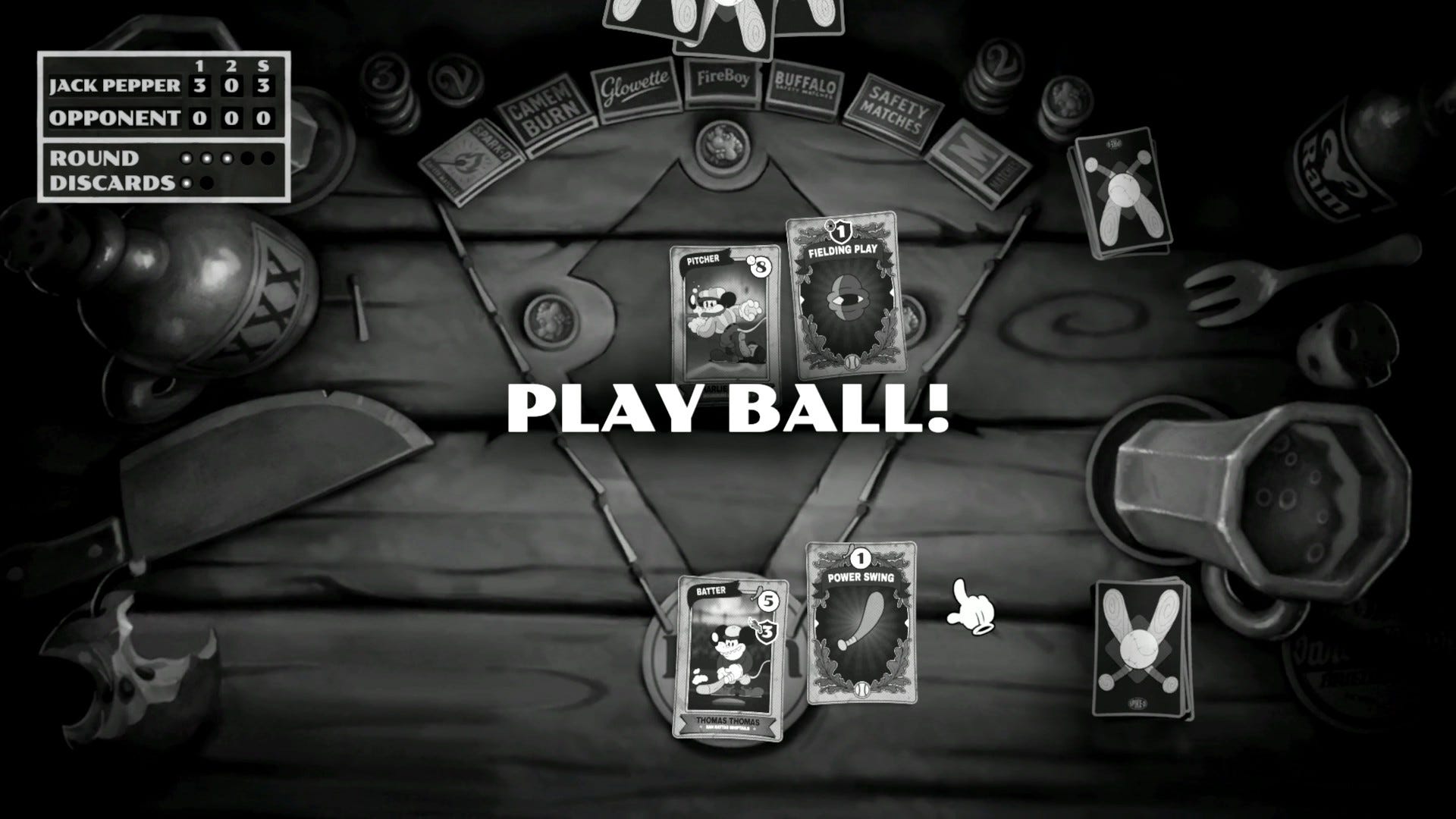
Prerelease screenshots also hinted that MOUSE: P.I. might involve some investigation in its gameplay, but in the final product, this is largely absent. Level design is largely linear, consisting of sequences of fights broken up by conversations with key figures and maybe a notional moment where you’re prompted to take out a camera and take a picture of something. Secrets litter the levels for the curious, ranging from old newspapers with worldbuilding details to baseball cards for use in a minigame. I think some of the clues were secrets, but I’m not really sure. Between levels, the game has you pin your clues to a board so you can resolve leads when you have enough of them. By the end of a game, I had as many as three levels available at once because of leads I’d resolved. With how the game pushed me along its main path, I’m not sure how much I missed - or where I’d look for it. A game about a mouse detective wasn’t the type of game I expected to have a button to press to give you a trail to your next objective. Even some simple puzzle solving could’ve added some appropriate flavor to the gameplay.
MOUSE: P.I. For Hire has a lot of style, but not as much substance as I’d hoped. Its heart is in the right place with a good sense of humor, but the gameplay doesn’t measure up too well in a genre which has had so many hits in recent years. I feel like it went through a lot of structural changes that resulted in a compromised, but nonetheless complete and playable final product. Still, for something with this kind of advertising budget and as many names in the credits as I saw, a little more polish could have gone a long way. All in all, at 30 dollars and fifteen hours, you could do worse things with your money and your time. MOUSE: P.I. does succeed where many games fail in feeling charming and getting a laugh out of me, even if I can point to better shooting experiences.
No posts
Comments
Nothing yet. Say the first thing.
Sign in to join the conversation.