
On April 1st, 2026 Steam started beta testing some changes to their home page. Some of you may have been involved in that. On June 4th, the changes went live, detailed in this press release.
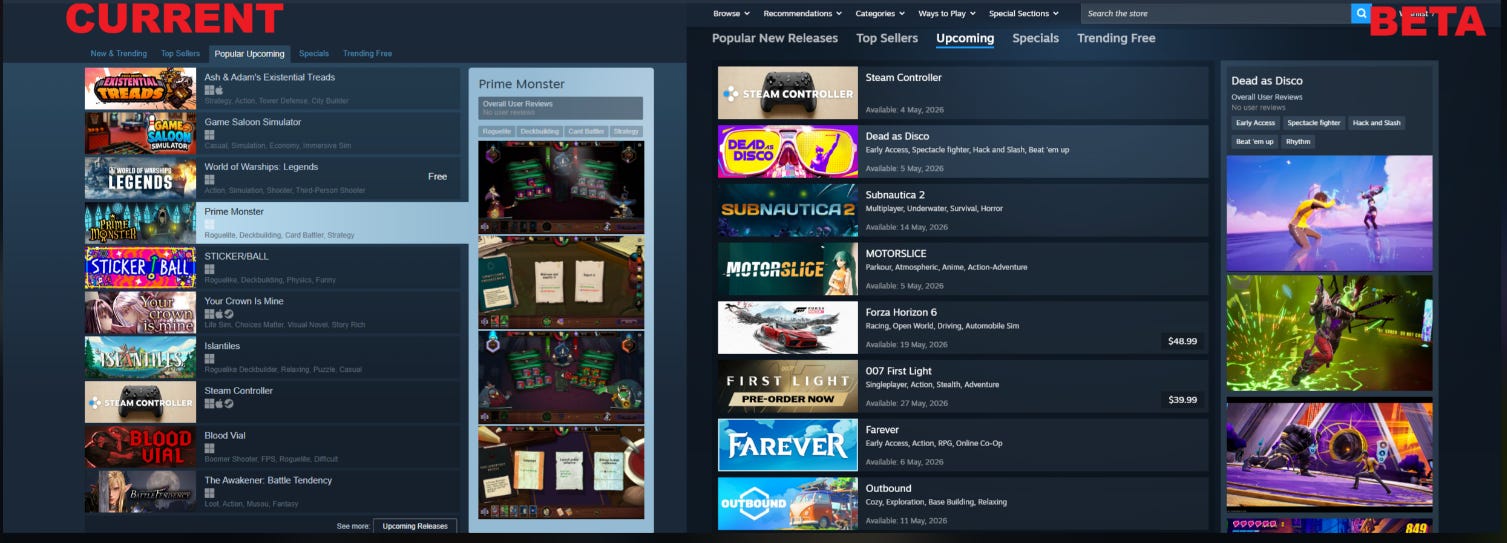
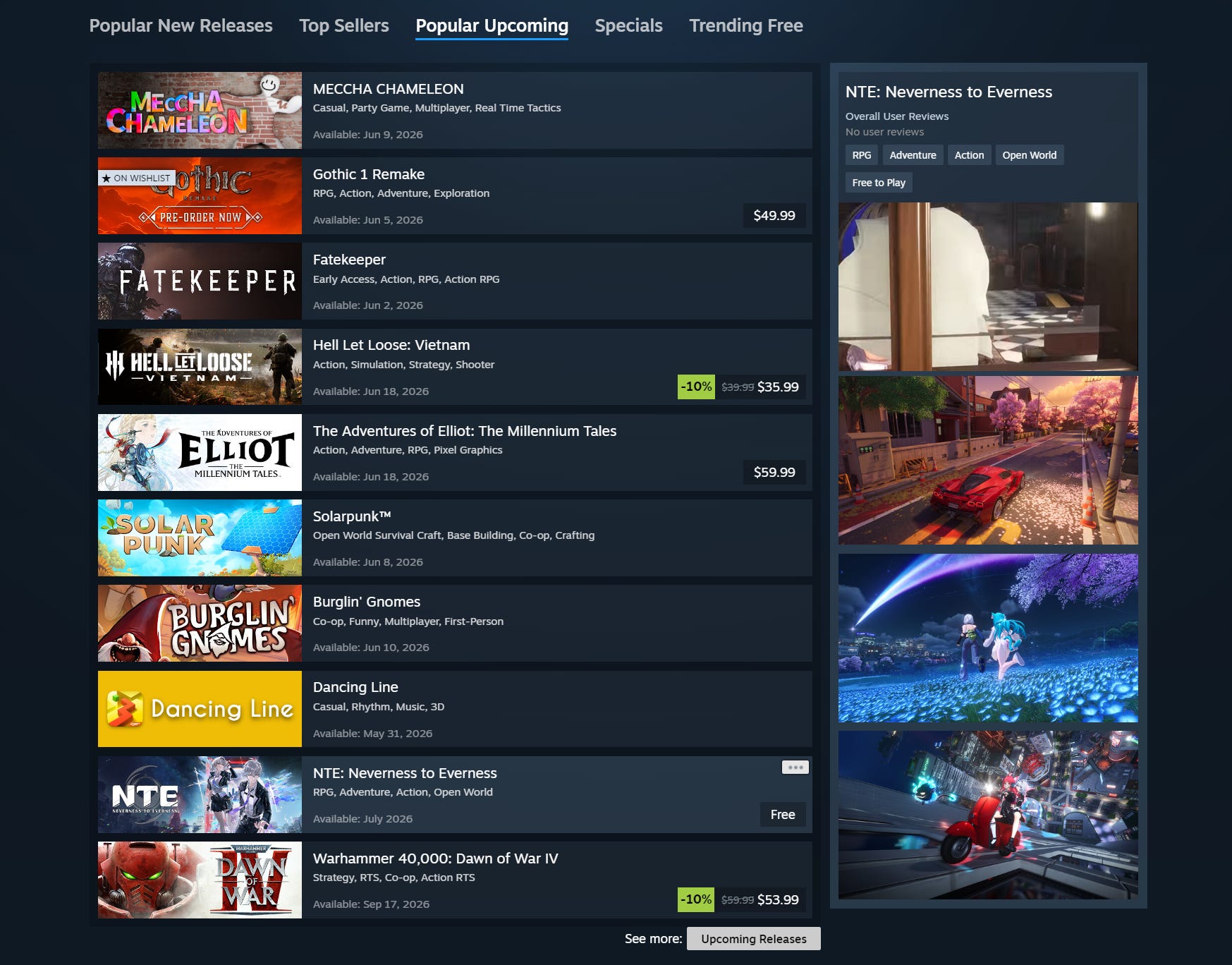
There’s a number of small updates, but possibly the most consequential change for indie developers is the change to the Popular Upcoming widget. The widget now only shows the most popular upcoming releases. It used to show a rotation of any game, regardless of popularity, about to release that has met a wishlist threshold relative to the games releasing at the same time.
What this means for indie devs is it’s almost impossible for small games to be included on the widget, which was something that was achievable previously.
Below is an image posted to Reddit during the beta giving an example of the difference in games shown before and after the change.
This directly affects indie games and will reduce the amount of visibility and wishlists you can count on at launch. That being said, they added something I personally think is a pretty cool idea: a Personal Calendar widget. In this article I’ll try to determine if this helps replace that lost visibility from the Popular Upcoming widget.
Let’s back track a little bit and talk about why the Popular Upcoming widget has even mattered to indie devs. Traditionally, it shows games releasing that day who meet the wishlist threshold. Games would fall off as other games below them on the list neared their launch time.
So as long as you had enough wishlists, you were almost guaranteed a spot in Popular Upcoming. Usually having somewhere between 5000-7000 wishlists would get you on the list.
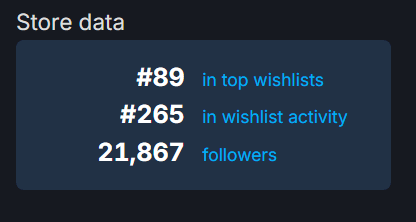
You could even confirm your game was on the list ahead of time by checking SteamDB. Once SteamDB assigned you a ranking in top wishlists, that typically means you made Popular Upcoming. See the image below.
I think a lot of devs grab onto this because it gives them a goal to shoot for. You’ve probably heard it said that you want a minimum of 7000 wishlists before launch. This is to ensure you’re on Popular Upcoming before launch.
So, how beneficial is it to have your game on Popular Upcoming? It varies of course, but somewhere around 1000 wishlists per day on average. Some games are fortunate enough to be on Popular Upcoming for multiple days.
That’s no small amount of wishlists, but I want everyone to realize it’s also not life changing. For most games, not having access to Popular Upcoming will only take away about 1000 wishlists at launch they thought they could count on.
Every wishlist matters of course, but the reason these are particularly important is because that amount of wishlists over a small period of time could be exactly what your game needs to make it on the New and Trending widget.
We’ll dig into that widget another time, but just know it has been renamed to Popular New Releases and has been the difference between a mediocre launch and a great launch for a lot of games.
It’s unclear how many wishlists a game needs to make it onto Popular Upcoming now. The lowest I’ve seen is around 150k wishlists, but I’ve seen mention of games with as little as 80k making it on. Regardless, for the majority of devs reading this it won’t apply to you.
So, while this certainly hurts indie devs, your overall approach doesn’t need to change much. The plan should still be to get as many wishlists as possible pre-launch and try to make it on Popular New Releases.
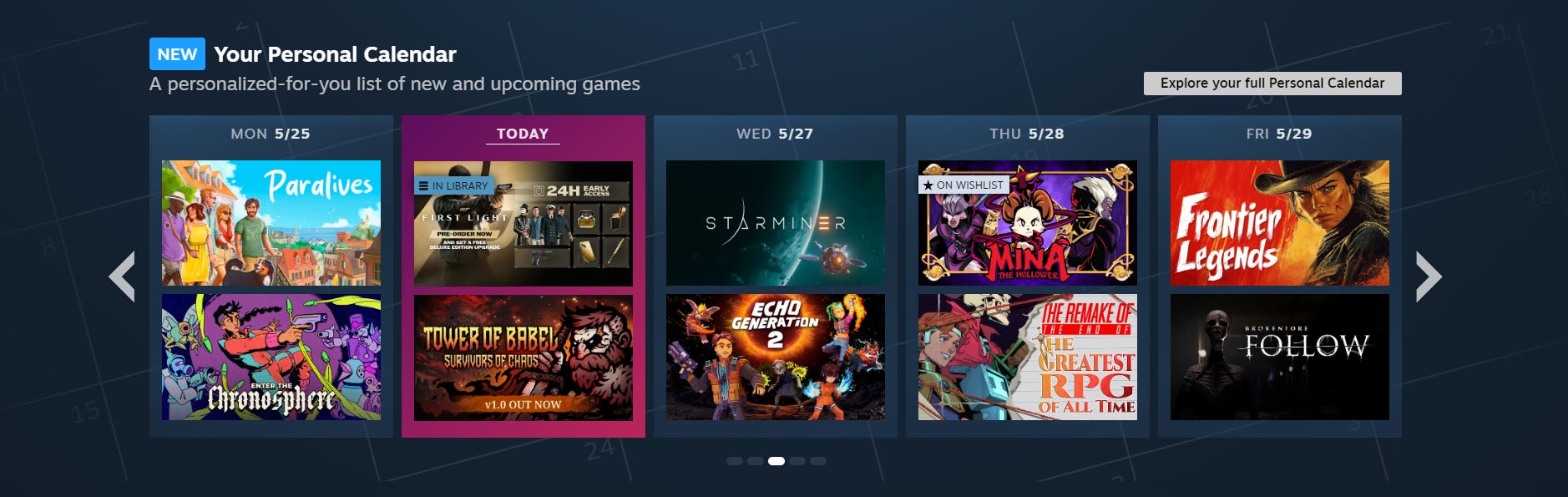
But wait, there’s more. Earlier I referenced the Personal Calendar widget. This is yet another indicator that Steam does not forget about the little guy. I’m not saying they’re especially altruistic, but it is in Steam’s best interest that indie games be given a shot.
Even Steam doesn’t know what game is going to be the next Balatro or Schedule I. Steam is in the business of selling games, that’s literally their business model. It is in their best interest to show your little game to the exact people who are most likely to buy it.
The Steam store interface has been trending towards being more personalized for a while now. The Popular Upcoming widget is not personalized, it has always been strictly based on wishlist count and launch timing.
This new Personalized Calendar is exactly what it sounds like, personalized. Leading up to your launch Steam will show your game to the exact players who like games similar to yours. Not only that, the calendar appears to start showing your game 2 months before your launch. That is much different than Popular Upcoming which would only show it the day of or day before launch.
Popular Upcoming would provide a lot of impressions, but to a generalized audience. I would expect impressions in the Personalized Calendar to convert to wishlists at a much higher rate.
Popular Upcoming is a widget at the bottom of the home page that is not initially visible, you have to toggle the tab to see it. The Personalized Calendar is much more prominent in the middle of the Store page as you scroll down.
You’re able to explore up to 500 games in the calendar with lots of filtering options. Indie Game Joe recently posted about the change in r/gamedev and he highlighted some case reports for wishlists gained for games he’s aware of. He noted games gaining 2300, 1368, 1000, and 500 wishlists respectively.
I’ll have to study the calendar over time to determine if the exposure it provides is comparable to Popular Upcoming, but in my opinion it is looking promising. Notably, if a player is not logged in as they are browsing Steam none of the personalized recommendation widgets are shown, including the calendar.
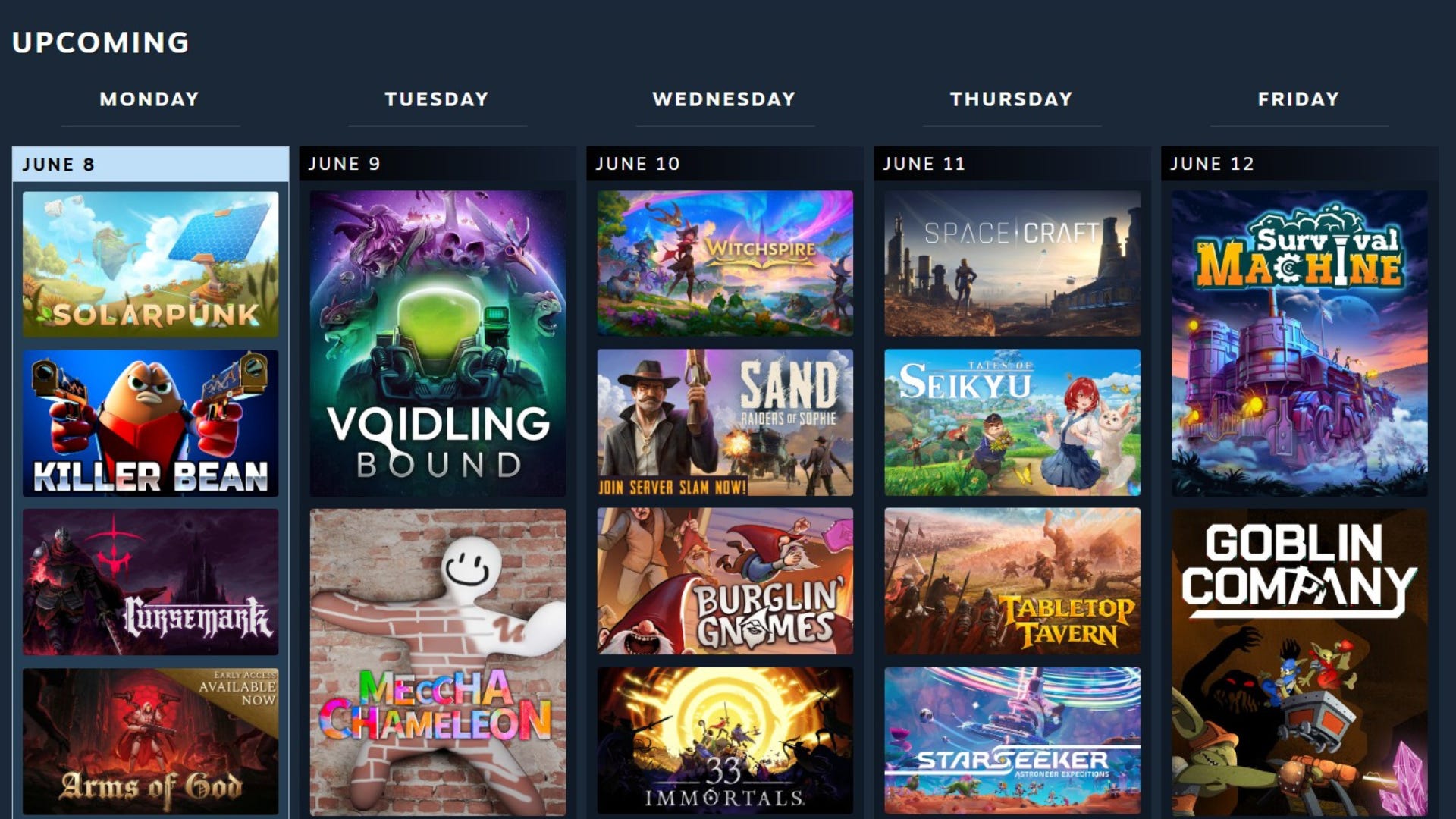
The calendar seems to show games in all levels of popularity. In my own calendar I saw big games with 100k wishlists and I was also able to quickly identify a game with about 300 wishlists. Including a game with only 300 wishlists actually surprises me, by any metric that game does not have a high chance of success after launch.
So why include it? It is certainly a positive sign for indie devs, but I wonder if games can fall off of personalized calendars over time. Does Steam treat it like the Discovery Queue, where they give a game some impressions and if they convert well it continues to show that game, but if not it doesn’t? I’ll have to track this over time to confirm, but my gut says this is how it will work.
I’ve seen a lot of reports over the last couple of years from devs that felt like Popular Upcoming did not perform as well for them as they expected. Steam has all the data points, they certainly picked up on this as well.
Indie Game Joe also does a good job of pointing out that Steam has changed a lot over the last 15 years, and with every change indie devs tend to freak out. Here’s my advice: don’t freak out.
Steam has proven time and time again to be a very competent organization, I don’t often say that about billion dollar companies who basically have a monopoly on a product. Steam does what is in their best interest, they just happen to be aware that allowing indie games to have a chance to succeed is also in their best interest. When your interest in selling your game aligns with Steam, you’re in good shape. Trust that, but make sure you are aware of the changes so you can adapt.
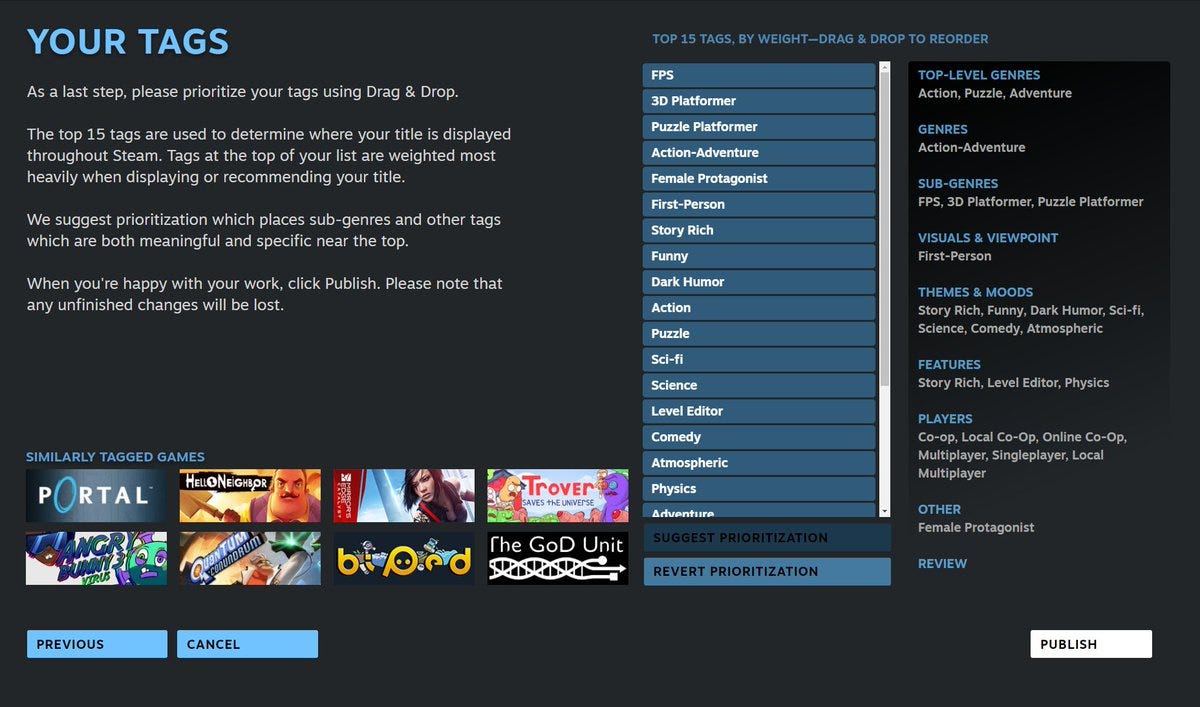
This is going to be the 3rd time in the last couple of months that I’ve written about Steam tags. The fact that they keep coming up should be a sign to you, they are vitally important.
The Personalized Calendar is just the latest example of that. As Steam moves more and more towards personalized recommendations, you need to double and triple check that your Steam tags are optimized. If Steam doesn’t know what your game is, it can’t appropriately recommend it to players.
Instead of beating a dead horse, I’ll refer you to my articles on the importance of Steam tags as well as the recent Steam tag changes. Since we’re talking about it, I’ll plug my free Steam tag analyzer tool one more time.
The other issue Popular Upcoming has had since the way to get on the list was figured out, is that to some degree it can be gamed. Devs know that if they hit a certain target wishlist range, they’ll make it on the list. This has resulted in efforts to obtain low quality wishlists in order to hit that target, even if it means those wishlists won’t convert well if at all.
It’s possible that we figure out more about how the calendar works over time and it’s able to be gamed too. But I think that’s unlikely. Here’s why: while we understand a little bit about the Discovery Queue, we really don’t know exactly how it works and certainly not how to game it. I think that’s the way it is, and will always be, with these personalized widgets. I also think Steam knows that, and is likely a factor in their decisions to implement these kind of changes.
So don’t freak out. Trust Steam, if for no other reason than you have no other option. They hold the success or failure of your game in their hands, so it’s best to try and understand them in order to adapt to their changes.
Now, I’m going to go sift through my calendar because I’ve already seen some great games I didn’t know about.
[Need help growing your list of streamer contacts? Use our community-managed streamer database to find targeted streamers for your game. It’s only accessible to subscribers of this newsletter. Log in and start building your list!]
Comments
Nothing yet. Say the first thing.
Sign in to join the conversation.