
One of the biggest lessons I’ve learned in 26 years of coaching is that you have to treat your players almost like you would your own kids.
Not exactly, obviously. But treat them like people.
Know them. Talk to them. Take an interest in their lives.
Because one of the easiest mistakes we can make as coaches is having a relationship with a player that is based entirely on football.
Every conversation is about his stance. His assignment. His effort. His grades. Practice. The game Friday night.
And then we wonder why we don’t really know the kid.
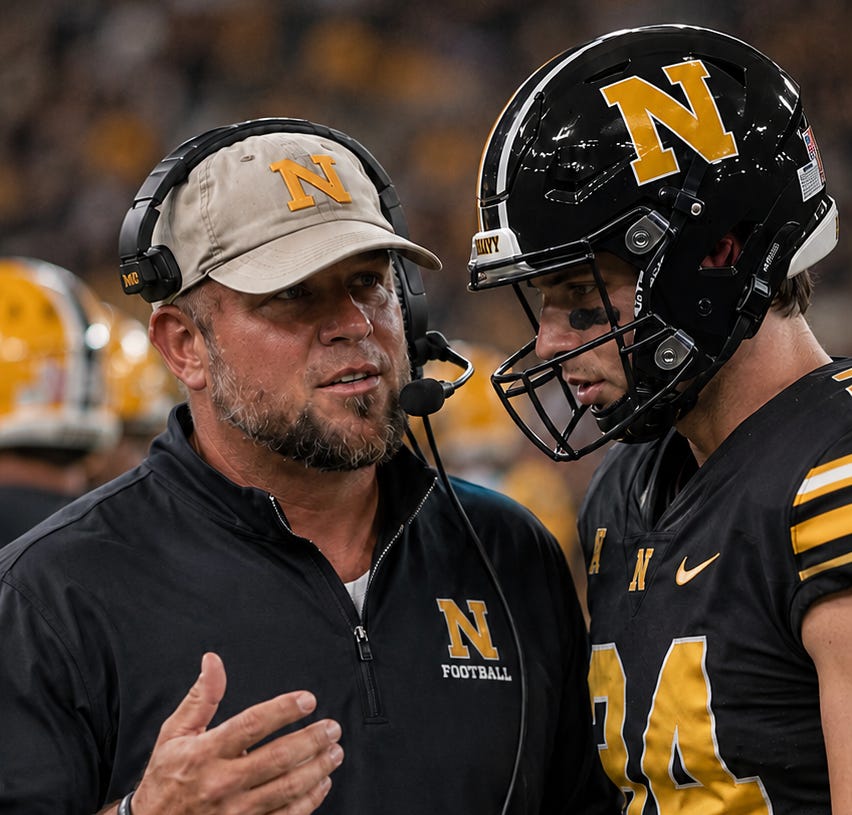
One of the best habits I learned a long time ago is also one of the simplest:
Greet your players at the door every day.
I try to make sure I’m there when they come in.
Fist bump. Handshake. Look them in the eye. Say their name. Ask them how they’re doing.
It doesn’t have to be some five-minute heart-to-heart conversation.
But think about what that simple habit guarantees:
You never go an entire day without acknowledging that kid.
And that’s especially important with the players who aren’t stars.
Your starting left tackle is probably going to get plenty of your attention. You’re going to coach him during indo. Talk to him during team. Correct him during film. Find him on Friday night.
What about your third-team guard?
What about the freshman who isn’t going to see the field this year?
What about the scout-team kid who spends most of practice helping everybody else get better?
Those kids notice who talks to them.
And they definitely notice who doesn’t.
Ask about their grades.
Ask about their family.
Find out what they like to do when they’re not at the field.
If they’re involved in another sport or activity, go watch them.
Show up at the basketball game. Go see them wrestle. Watch the baseball game. Attend whatever they’re involved in.
You don’t have to make some grand announcement that you’re there.
Just showing up tells them something:
Coach cares about me when I’m not wearing his uniform too.
Those little things add up.
Once our season starts, my linemen and I try to do something together every Thursday night.
Sometimes we’ll go bowling.
Sometimes we’ll just eat at my house.
It isn’t an offensive line meeting. I’m not breaking down fronts over dinner.
We’re spending time together.
Those nights have probably done as much for some of my relationships with players as anything I’ve ever done on a practice field.
I’ve screwed this one up plenty of times.
Especially when I was younger.
I’ve had players I initially thought were hard to coach. Maybe I thought they didn’t listen. Maybe I thought they had a bad attitude. Maybe I thought they just didn’t care enough.
Then I got to know them.
And realized I had the kid wrong.
I can’t count how many players early in my career I probably formed the wrong first impression about.
Some kids aren’t going to immediately open up to you just because the school hired you and somebody put “Coach” in front of your name.
Trust takes time.
And some kids have a lot more reason to be cautious about adults than we realize.
So think about it from their perspective.
Would you work harder for a complete stranger who constantly barks orders at you?
Or would you work harder for somebody who has taken time to know you, has shown that he genuinely cares about you, and who you know has your best interests in mind?
That doesn’t mean you stop coaching them hard.
I actually think it’s the opposite.
Relationships make hard coaching more effective—not unnecessary.
When a player knows you care about him, correction feels different.
He knows you’re trying to help him.
This is probably the part coaches need to hear the most.
Sometimes we get so consumed with football that our relationship with players becomes transactional.
What can this kid do for our football team?
We coach him because we need him to block.
We talk to him because he’s starting Friday.
We praise him because he made a play.
Then when he can’t help us anymore, suddenly we don’t have much to say to him.
Kids can feel that.
And then we’ll turn around and complain:
“These kids won’t play hard.”
Well…
Have we given them somebody worth playing hard for?
This is also why we can only build relationships with our best players.
I’ve seen staffs pour attention into the starters while the backups and scout-team players barely get acknowledged.
Then somebody gets hurt.
Now you need that backup.
Or it’s Week 9 and you desperately need the scout team to give you a great look.
And suddenly you’re asking something from a kid you’ve barely invested anything in.
That’s backwards.
Don’t wait until you need something from a player to start investing in him.
There’s an old idea I’ve always believed in:
The janitor should be treated like the principal.
Football shouldn’t be any different.
The All-State senior and the freshman scout-team guard should both feel like they matter when they walk into your room.
That doesn’t mean everybody gets equal playing time.
It doesn’t mean everybody gets coached exactly the same.
It means everybody gets treated with respect.
Everybody gets acknowledged.
Everybody deserves to know that their coach sees them as more than a depth-chart position.
That’s relationship building.
And most of the time, it isn’t complicated.
Shake their hand.
Look them in the eye.
Ask about their life.
Remember what they tell you.
Show up for them.
Spend time with them when you don’t need anything from them.
Do that consistently enough, and eventually something changes.
You’re no longer just the guy telling them what to do.
You’re their coach.
Before you move on, think about these:
Which players on your team do you know the least about?
Do you spend more time talking to starters than backups?
When was the last time you talked to a player without discussing football?
Is there a player you’ve labeled “hard to coach” that you may simply not understand yet?
If your players were asked whether you genuinely care about them beyond what they can do for your football team, what would they say?
Those aren’t always comfortable questions.
But they’re worth answering.
Building Relationships is one of 50 lessons in The Coach’s Notebook, available inside the GameDay Systems Vault. Every lesson includes practical coaching points, reflection questions, and an action plan coaches can use individually or work through together as a staff throughout the season.
The goal isn’t just to know more football. It’s to become a better coach.
No posts
Comments
Nothing yet. Say the first thing.
Sign in to join the conversation.