


Publisher: Jay Rooney
Author, Graphics, Research: Jay Rooney
Logo: Jarnest Media
Summary & Housekeeping
Feature: “Gods, Mods, and Sacred Fraud” (~50 minute read)
Food for Talk: Discussion Prompts
Further Reading
Game & Word-of-Mouth
Footnotes
Well, dear reader, we’ve reached the part of Volume 5 where I finally stop dancing around the obvious and just come out and say it: video games are obsessed with gods.
Not “gods” in the background-lore sense, where the art director name-drops some vague pantheon in the manual and promptly forgets about them before going back to locking idle animations. I mean gods as characters, gods as systems, gods as bosses, gods as bureaucracies, and even gods as career goals. We’ll examine games where you worship them, games where you kill them, games where you become them, and games where you (from the comfort of your couch, with a bag of Cheez-Its in one hand and a DualSense in the other) casually are them.
In today’s installment of Game & Word, we’re going to look at all of the above, and fair warning, it’s going to get proper weird. Seriously, buckle up because this one’s a monster.
So join me this week as wel tackle the god-shaped hole in the human psyche and the strange, beautiful, occasionally horrifying ways video games have learned to fill it. We’ll talk about why JRPGs love killing God (spoiler: Nietzsche has thoughts), interrogate Bloodborne’s portrayal of transcendence as looking suspiciously like a wet grub, dissect the awkward truth about how religious economies actually work according to Cult of the Lamb… and you’d better believe we’ll talk about The Sims, because apparently one cannot write an analysis of video game-enabled godhood without at least one reference to the pool ladder thing.
(Oh, and paid subscribers can, as always, look forward to an additional bonus segment. Should be hitting your inboxes in about a week or so!)
Ready? Good. Now let’s go kill some gods.
~Jay
ICYMI, I launched a sister publication, Spawn Point Marketing, that serves as a companion newsletter to my brand-new games marketing consultancy of the same name.
Subscribe for weekly game marketing tips, analysis, and case studies for indie and AA game developers who need to successfully market and their game in an increasingly crowded marketplace, but lack the expertise to do so or the budget for a full marketing team (oh, and all my industry analysis will live there going forward, so if you enjoy those pieces, subscribe to SPM for those as well; going forward, Game & Word will exclusively be about the games themselves):
I also, through Spawn Point Marketing, offer fractional marketing leadership services to indie and AA game studios. To learn more about the services I offer, or to book a free consultation, visit https://spawnpointmarketing.com or click the button below:
Game & Word’s most recent issues (currently, all of Volume 5) are available to all, free of charge.
Older issues are currently archived and only accessible to paid subscribers. To access the full archive, upgrade to a paid subscription:
Volume 1 (The Name of the Game): Issue 1 ● Issue 2 ● Issue 3 ● Issue 4
Volume 2 (Yo Ho Ho, It’s a Gamer’s Life for Me): Issue 1 ● Issue 2 ● Issue 3● Bonus 1 ● Issue 4 ● Issue 5 ● Issue 6 ● Issue 7 ● Bonus 2 ● Issue 8 ● Bonus 3
Volume 3 (Game Over Matter): Intro ● Issue 1 ● Issue 2 ● Issue 3 ● Podcast 1 ● Issue 4 ● Video Podcast 1 ● Bonus 1 ● Issue 5 ● Podcast 2 ● Issue 6 ● Issue 7 ● Issue 8 ● Issue 9 ● Podcast 3 ● Bonus 2
Volume 4 (Tempus Ludos): Intro ● Issue 1 ● Video Podcast 1 ● Video Podcast 2 ● Issue 2 ● Issue 3 ● Issue 4 ● Issue 5 ● Podcast 1 ● Issue 6 ● Issue 7 ● Issue 8 ● Issue 9 ● Issue 10
Volume 5 (AbraCODEabra!): Intro ● Issue 1 ● Issue 2 ● Issue 3 ● Issue 4 ● Issue 5 ● Issue 6 ● Issue 7 ● Issue 8 ● Issue 9 ● Issue 10
🚨🚨🚨 SPOILER ALERT 🚨🚨🚨
This post contains major story SPOILERS for Hades II, Shin Megami Tensei III, Final Fantasy X, Chrono Trigger, Cult of the Lamb, NieR: Automata, Rimworld, Bloodborne, and The Elder Scrolls III: Morrowind. If any of these are on your backlog and you care about going in blind, bookmark this for later. Don’t say I didn’t warn you!
⚠️⚠️⚠️ WARNING: NUANCE AHEAD ⚠️⚠️⚠️
This article discusses religion, theology, mysticism, and the killing thereof. I’ll engage with a range of traditions — Greek myth, Gnostic Christianity, Kabbalah, Hindu philosophy, Buddhism, and Nietzschean secular humanism — with the same respectful-but-unflinching approach I’ve brought to this kind of material before.
I’m not trying to bash anyone’s faith, nor am I trying to proselytize on behalf of (or in opposition to) any particular worldview. If any of what I say makes you uncomfortable, examine that discomfort before you examine the comments section.
ALSO: I will probably be wrong about something. Theology is a dense and contested area of inquiry that’s often contradictory even within a single tradition. Corrections are always welcome; cheap shot pile-ons are not (and will result in an insta perma-ban).
💡💡💡 POINT OF CLARIFICATION 💡💡💡
To more easily distinguish between “stage” magic and “for realsies” magic, some practitioners spell the latter with a “k” at the end, as “magick.” I prefer to spell it as just “magic.” So if you’re used to spelling it as “magick” or are unclear if I’m referring to the stage or supernatural variety, remember that I’m talking about the latter, unless otherwise noted.
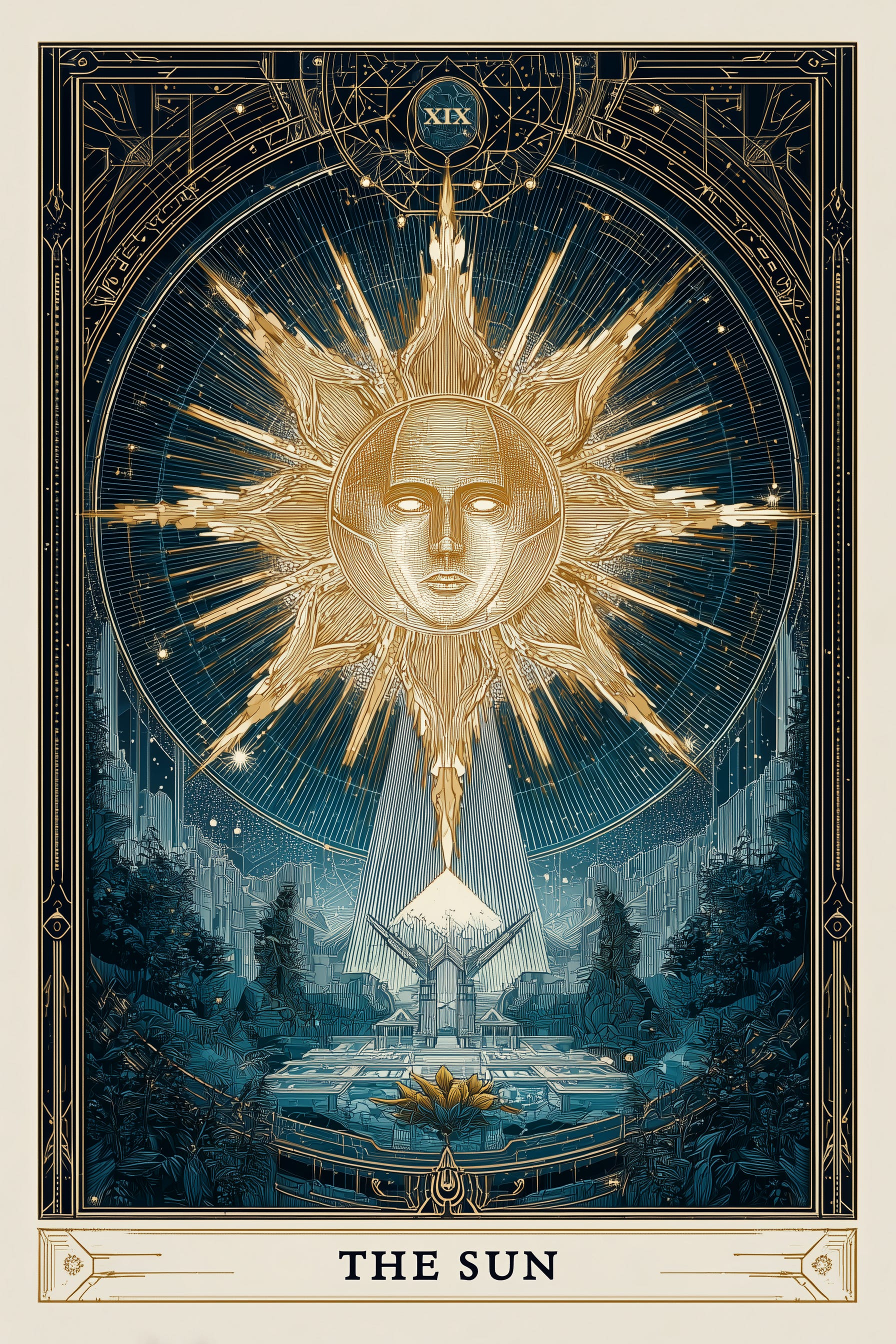
“Lamb, once slaughtered in the name of the Captive God, ponder this; whose name does thou slaughter in now?”
~Cult of the Lamb
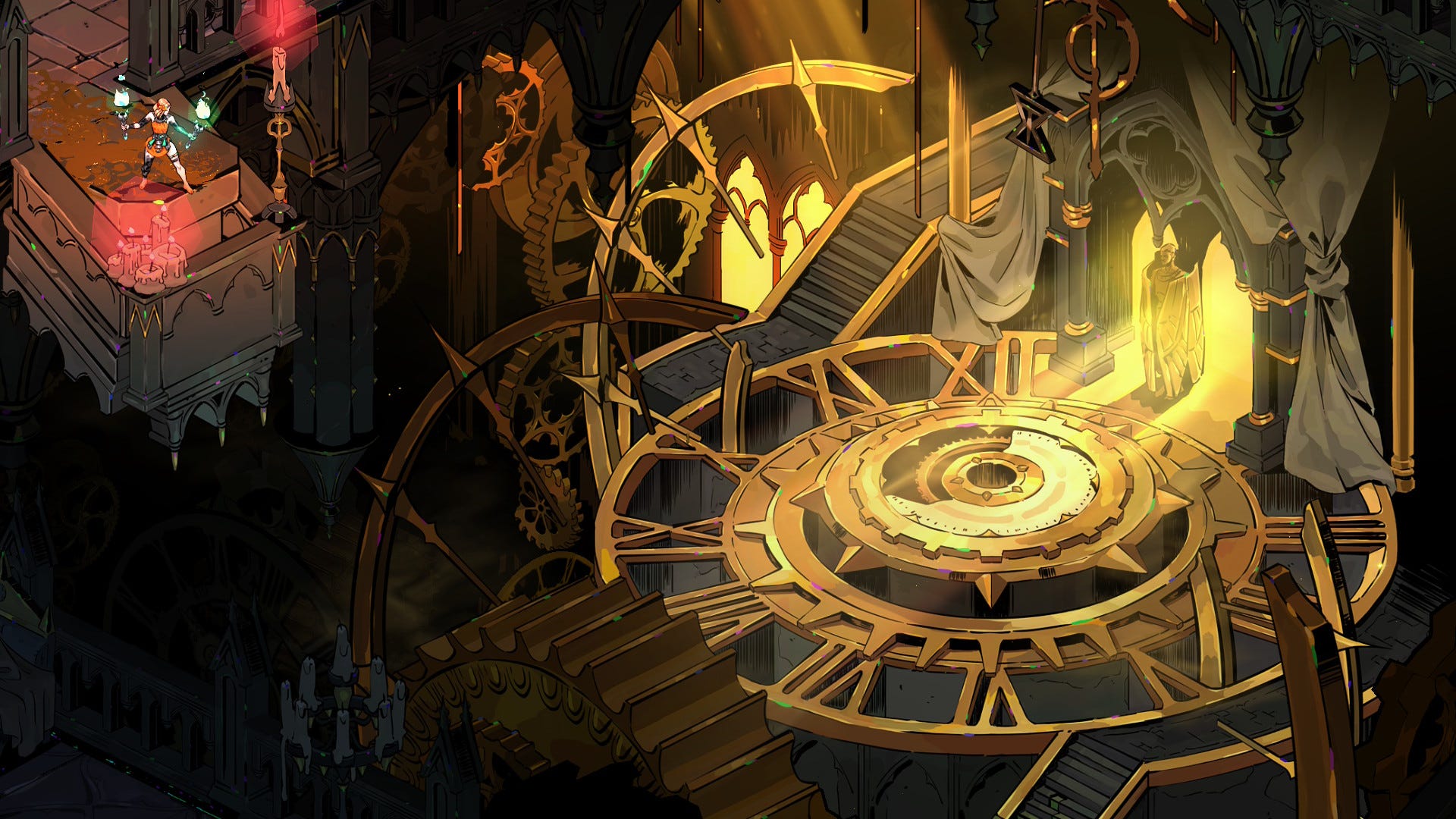
You’re standing in a pocket of frozen eternity at the very bottom of the Greek Underworld, past the chamber where the deposed Hades himself sits imprisoned, wallowing in chains as he can do naught but wait for the rest of creation to suffer his same miserable fate. Your name is Melinoë, Princess of the Underworld, and you’re about to do something extremely unwise… again.
Yes, you’ve done this before. Dozens of times, in fact! You’ve clawed your way through Erebus’ serenely gloomy forests, carved a bloody path across the abyssal Oceanus, and descended through the clockwork laberynth of Tartarus to reach this very spot. You’ve killed untold hordes of undead mobs, and they’ve likewise killed you in return. But that’s the point! For each time a spear has pierced your guts and sent you all the way back to Hecate’s Crossroads to begin your quest anew, you’ve gotten a little stronger. Each time you set out on another run under the cover of the deep dark night, the gods of Olympus have blessed your weapons with fire and water and lightning and moonlight. With each branch you’ve chosen, mini-boss you’ve bested, and guardian who trounced you, you’ve learned a little bit more about the old man waiting for you in that impossible chamber at the end of your road.
Chronos. The Titan of Time, and Father of Zeus. The god who devoured his own children, and the primordial embodiment of everything that moves inexorably forward, comes for everyone, waits for no one, and cannot ever be stopped.
He’s sitting on your father’s throne.
You step through the threshold, and the game pauses—
Except it doesn’t!
You try again. Mash the button. Nothing. The menu won’t open! Your thumb finds the spot where the pause button should be, and the controller does absolutely nothing. For the first time in perhaps your entire gaming life, you cannot stop time.
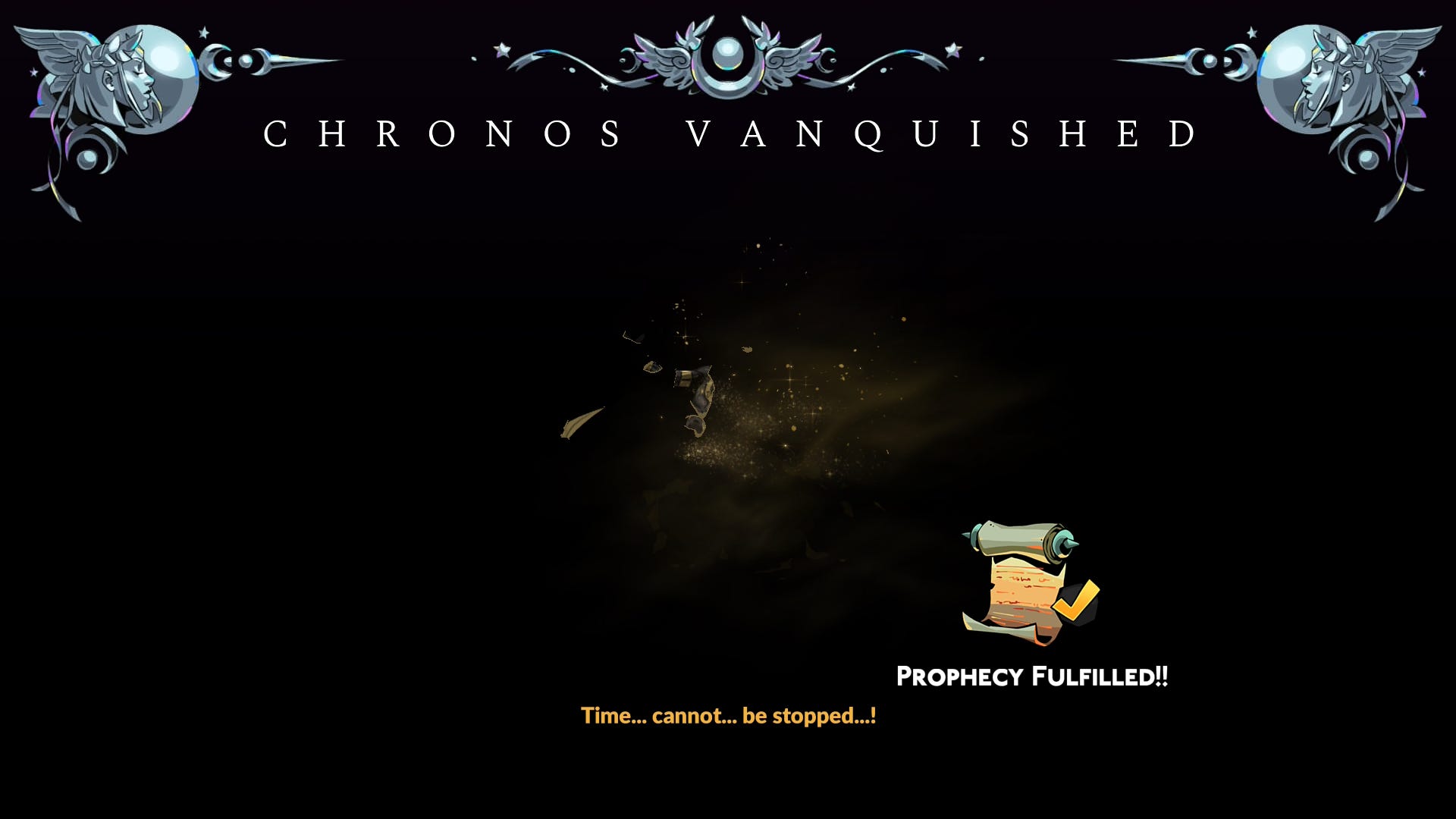
“You do not control the flow of time,” Chronos calmly but bitterly snarls, slowly and deliberately rising from his stolen throne, as you’d expect from someone who literally has nowhere (nowhen?) else to be. “Not here.”
And then he starts swinging his scythe.
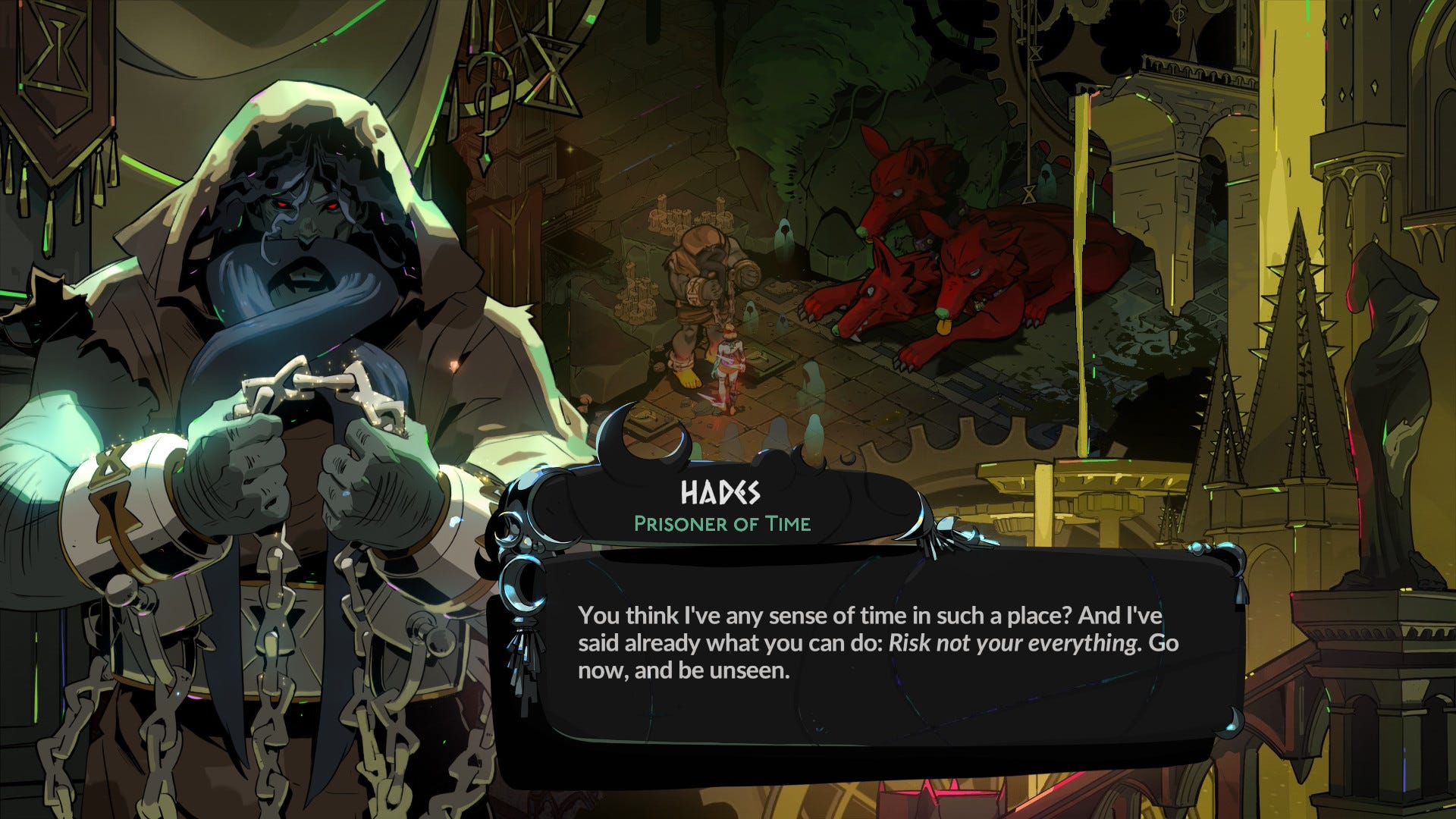
Hades 2 (2024), Supergiant Games’ superb sequel to one of the best roguelikes ever made, is a meditation on what it means to confront ultimate power… and perhaps more importantly, what it means when ultimate power refuses to play by your rules.
That moment when the pause menu fails to materialize is a supremely clever fourth wall gag. But it’s also a thesis statement. Can you surmise what it’s trying to tell you? If you’re having trouble figuring it out, just think about how unprecedented this is: for the first time, a vidya game enemy has invaded the one space that was supposed to be yours alone: the pause screen, your very own safe room outside the game. The meta-space where you, the player, hold absolute dominion.
So when Chronos “NOPE”s you out of the pause screen and back into his battle arena, he doesn’t just threaten Melinoë. He threatens you.
This, my friend, is what video games do with gods better than any other medium. Instead of merely telling you about divine power, they make you feel it through the one language every gamer from Boston to Botswana speaks fluently: game mechanics. By stealing your pause button, Chronos is doing a sort of double duty: he’s flexing on the protagonist, and more significantly, he’s metaphysically trespassing against you (the player) and your assumed omnipotence. He’s reminding you that you only thought you were in control.
We’re here to explore that inversion: the way games constantly flip the script on who’s worshipping whom, who holds the power, in which direction divinity flows, and what “god” even means when you’re the one holding the controller.
This isn’t just an article about games with gods in them, for that would be a listicle, and if you’ve read this newsletter for any length of time, you know we don’t do listicles at Game & Word.
No, we’re here to dive deeper and explore something far more fundamental: the god-shaped hole in human psychology, and the strange, beautiful, occasionally horrifying ways that video games have learned to fill it. We’re going to talk about why JRPGs are obsessed with killing God, why Bloodborne makes you eat umbilical cords to become a god, why The Sims brings up some disquieting implications about what we’d do if given absolute power, and so much more.
In the world of video games, you perform a miracle whenever you load a save file, and you audition for the role of Supreme Being every time you boot up a city builder. Yes, I know these are uncomfortable truths. But that’s all the more reason to dive into them!
So, shall we begin?
☀️🙏❓ SIDE QUEST: The God-Shaped Hole
Ok, stop me if you’ve heard this before: people are WEIRD about gods.
Wait! Before you stab me with that pitchfork… let me state in my defense that when I say “weird,” I’m not claiming that religious people, or religious beliefs per se, are irrational. That’s way above my pay grade. Rather, I mean “weird” in the sense that even the most committed Reddit atheist tends to act like gods exist somewhere.
We just can’t help it! Just take a cursory look at a history textbook; it’s like our species’ cognitive architecture comes pre-installed with a slot labeled “ULTIMATE AUTHORITY GOES HERE,” and if we don’t fill it with an actual deity (as is increasingly the case, at least in the Western/developed world, over the past few centuries), we’ll fill it with something else… and we’re not exactly picky about it, either. Here are just a few examples from just the current century:
Progress. Tradition. Science. The Market. The Algorithm. Trump. Mamdani. Communism. Fascism. (Any “-ism,” really). MAGA. Social Justice. Harry Potter. The Force. Crypto. NFTs. AGI. Cults. “Wellness.” Elon Musk, briefly, for some people. Bernie Sanders, briefly, for others. Furbies.1 Labubus.
You get the idea.
Psychologists and philosophers, naturally, have come up with all sorts of ways to explain this phenomenon. Terror management theorists would say gods act as buffers against the crushing existential weight that comes with being aware of our own mortality, whereas Jungians would call the Divine an archetype (a pre-installed pattern in the collective unconscious) that shapes how we perceive meaning and order. Nietzsche, famously, declared “God is dead” and then immediately worried about what would rush in to fill the vacuum (turns out, he was right to worry!).
Video games engage with this god-shaped hole on multiple levels (pun intended) at the same time. Whether they give us gods to worship, gods to kill, or gods to become, they make us complicit in all of it every time we press a button.
Whenever you pick up a controller and control a character, you enter into a relationship with an entire cosmology, encoded in rules and systems:
The physics engine is the divine law.
The AI is providence (or chaos, depending on how it’s feeling).
The save system is resurrection.
The difficulty setting is the eternal question of whether the universe cares about your suffering.
Every video game is, in some sense, a playable theological argument.
Now let’s see what those arguments actually say.
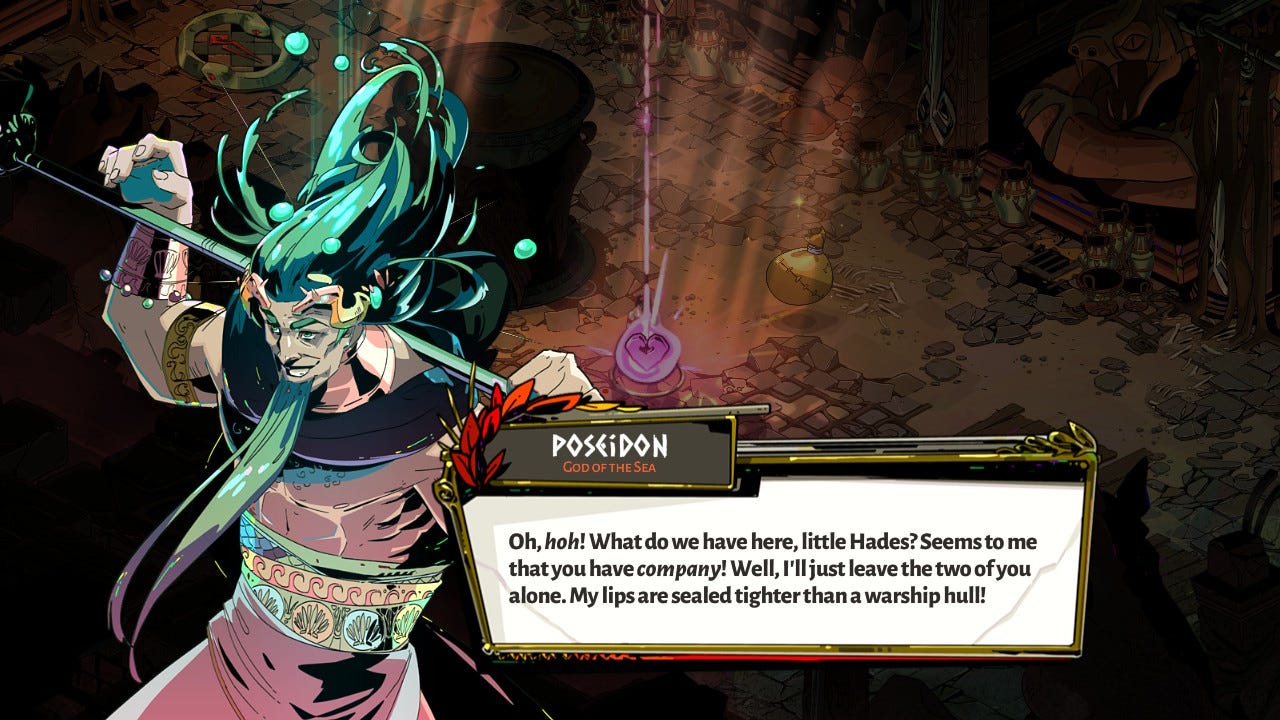
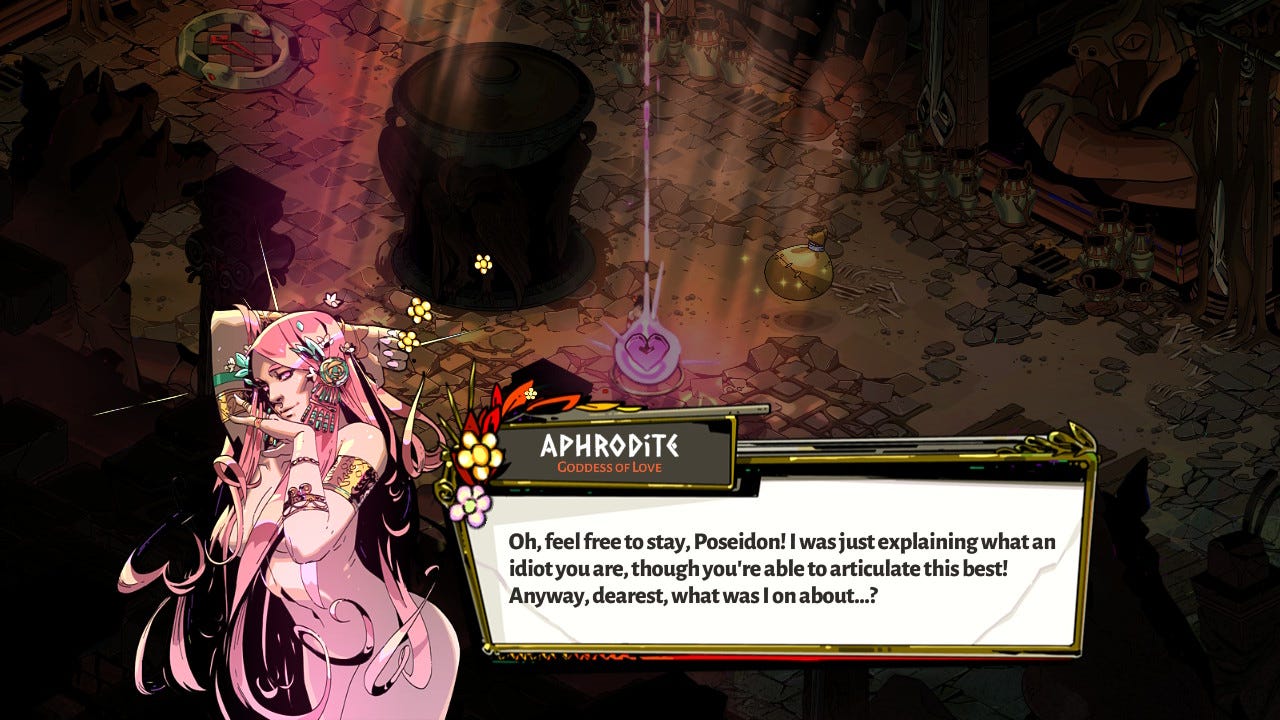
If you want to understand how video games think about gods, start with how they organize them.
Classical mythology, when you strip away the poetry, is basically a story of divine middle management, with Zeus running the org chart from high up on Olympus: Hades handles the afterlife department, Poseidon’s got the oceans covered, and Apollo does sun stuff but also music and prophecy (a weirdly broad portfolio that hints at some serious scope creep). So when you really think about it, the Greek pantheon is basically a corporate structure with way too many VPs and not enough clear reporting lines.
Which happens to sound a lot like Hades (2020) and its sequel. And I mean that literally, by the way — Supergiant’s vision of the Greek gods is basically a workplace comedy, where the workplace happens to control reality.
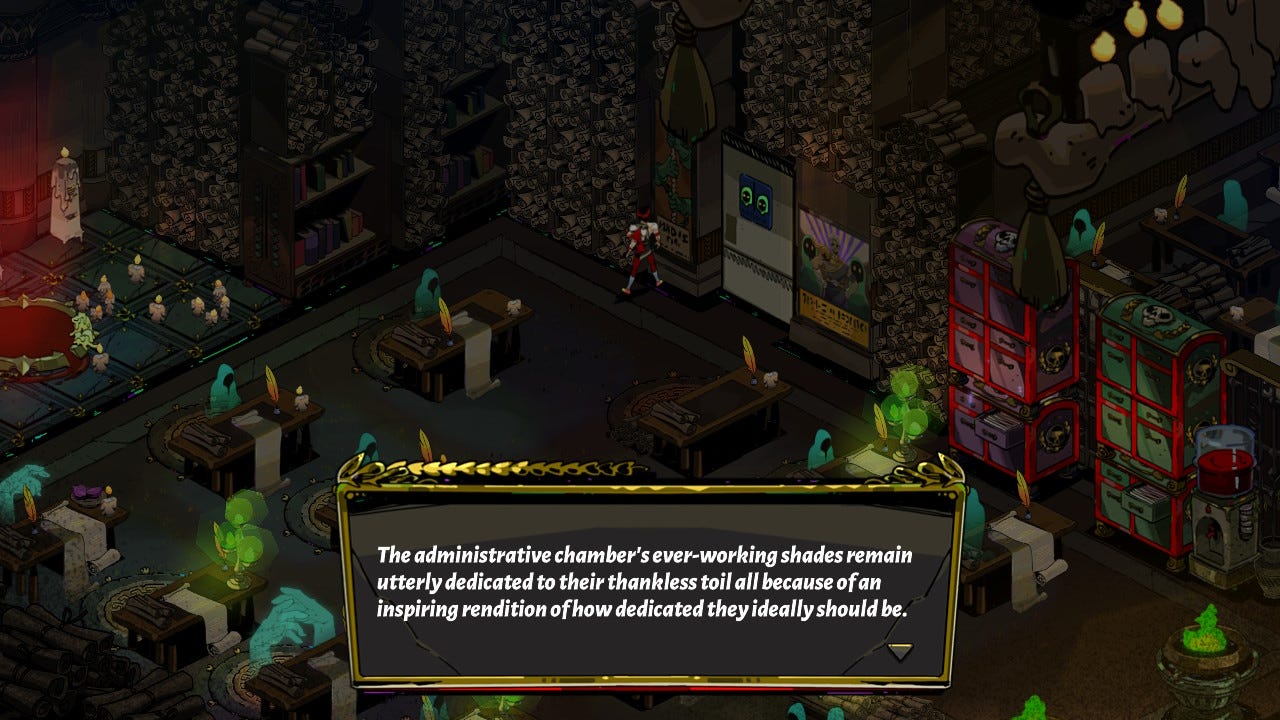
Each run is like a new weekly episode, where the zany crew of Olympus, Inc. gets into some new and wicky hijinx. Dionysus is inviting you to happy hour again, while Ares (that guy from sales who’s way too into his job) stops by your desk — like he does every Monday morning — to mumble some inane LinkedIn platitude about choosing to be a “go-getter” instead of a “no-getter.” Meanwhile, Hephaestus, the portly IT guy in the basement, just found out that Public Relations Manager Aphrodite has been two-timing him with Ares, much to the chagrin of HR Director Athena who is getting ready to write all of them up.
In both the games and the myths that inspired them, these gods bicker, hold grudges, play favorites, and passive-aggressively undermine each other (in Hades/Hades II’s case, through the Byzantine system of “boons” they bestow upon you).
It’s funny, yes, but it also quite cleverly underscores how video games conceptualize divine power. In games, gods don’t merely exist; they function. They each have jobs, jurisdictions, limitations, and dependencies. Each god and goddess is assigned to their own roles, which they rarely step out of (though they quite literally synergize with their colleagues in other departments).
And because of the way that video games operate, even the most fearsome deity in a playable pantheon operates within rules that the player can eventually learn, exploit, and overcome.
Take Shin Megami Tensei III: Nocturne (2003), perhaps the most philosophically ambitious JRPG ever made. In Nocturne, the apocalypse has already happened, and reality has been reduced to the “Vortex World,” a sphere of raw potential that various competing ideologies would love to reshape in the ways they each prefer. As the half-demon Demi-fiend, you must navigate between three philosophical “Reasons” that various characters champion, each proffering a different answer to the ultimate question of how to organize existence.
Shijima promises perfect harmony… by completely getting rid of individuality, flattening everybody and everything so that there’s no longer any difference or distinction at all. Musubi, meanwhile, offers to cut every single being off from each other, ensconcing everyone in their own private paradise. Finally, Yosuga goes full Social Darwinist, proposing to implement a brutal hierarchy where only the strong earn the right to exist.
The game doesn’t present any of these options as either unambiguously good or unambiguously evil. They’re simply… options. Or “playable theodicies,” if you want to get all fancy about it. Nocturne treats divine authority both as a position that someone has to occupy, and as a policy that someone has to implement. So God, in this view, isn’t a being so much as a job description… and wouldn’t you know it, the job is currently open!
Most Western religious traditions conceptualize divinity quite differently. Christianity, Judaism, and Islam don’t treat God as a role that gets filled; in these faiths, God is the ground of being itself, eternal and unchanging. But video games, by their nature, need gods who can be quantified, systematized, and ultimately interacted with as game objects. Even the most transcendent deity, once rendered in polygons and assigned a health bar, becomes something you can do things to.
Which brings us to the question of what, exactly, players want to do.
Spoiler alert: it’s usually murder.
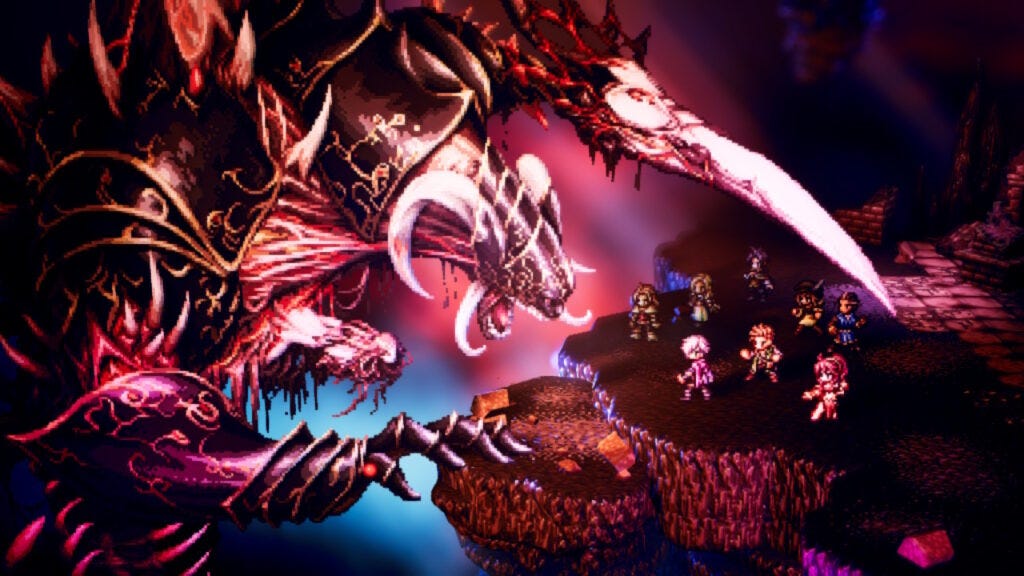
Almost every classic JRPG features a moment (if not several moments) where the heroes, having already saved the kingdom and defeated what they thought was the main villain, discover that the real threat is much, much worse than they could’ve ever imagined.
The corrupt bishop? Ha! Turns out a scary demon was actually controlling him!
So after another 40 hours of grinding, the heroes finally slay the demon. But then… plot twist! Wouldn’t you know it, the demon is actually the avatar of a fallen god.
Well, that’s not going to deter our heroes! So they defeat the fallen god after another epic boss battle. Surely that’s it, right? No, you fools! That fallen “god” was just one head of a cosmic horror that has been manipulating the entire timeline since before the world even began.
And how do our heroes — who, I should mention, are usually teenagers with improbably spiky hair — respond? They take it upon themselves to fight the incomprehensible horror to the death. Duh. Oh, and they fight it with swords (obviously).
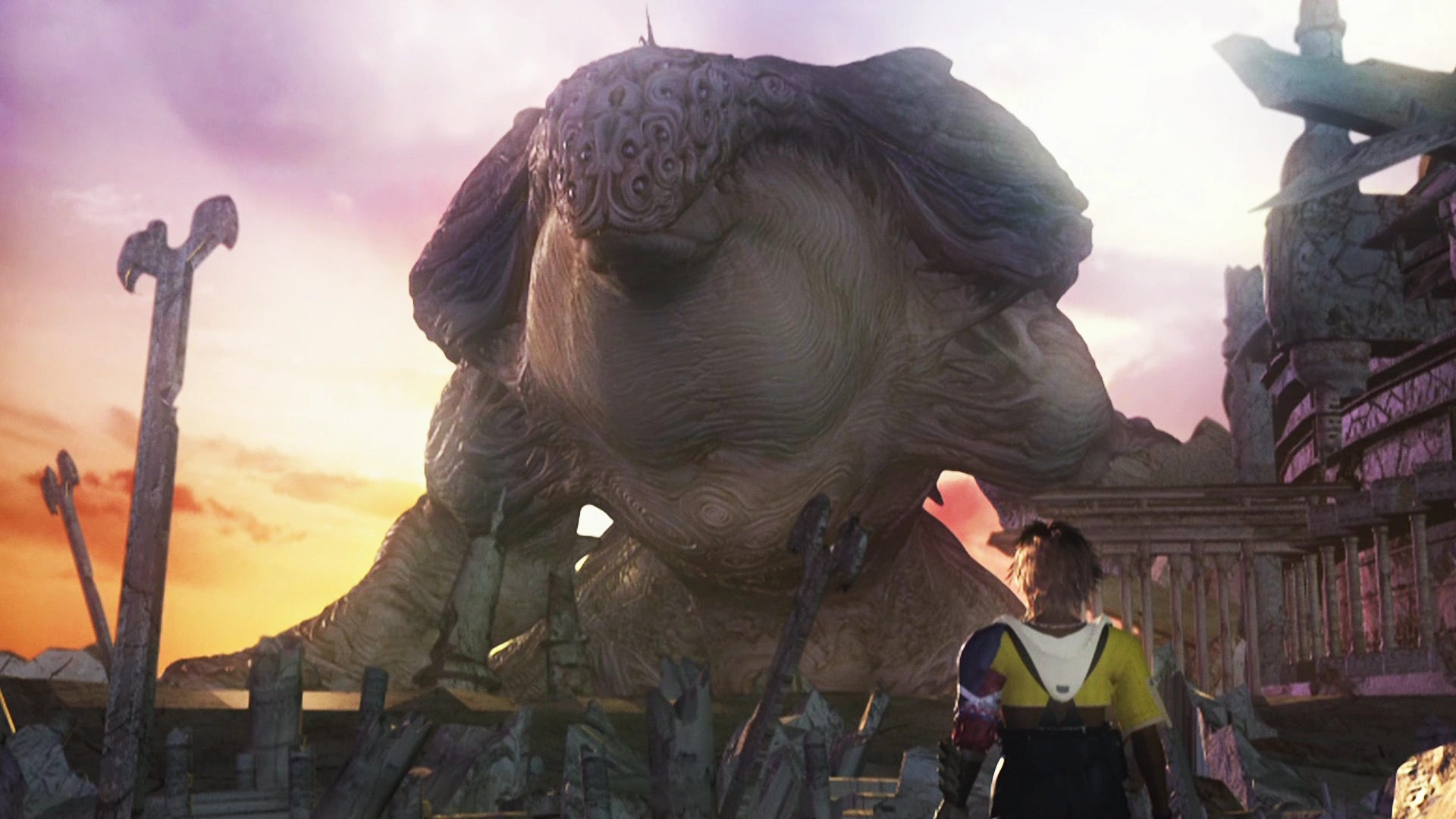
For perhaps the cleanest illustration of this trope, let’s turn to Final Fantasy X (2001). The world of Spira is trapped in an endless cycle of destruction: a monstrous eldritch abomination called Sin occasionally emerges to devastate civilization. Each time, summoners sacrifice everything (including their lives) to defeat it, only for it to return eons later. The Church of Yevon teaches that Sin is divine punishment for humanity’s technological sins, and that only its continued penance and (eventually) complete atonement will end the cycle.
This is, of course, a bald-faced lie.
The world’s entire religious apparatus (all the pilgrimages, temples, and hierarchies of priests and summoners) exists only to perpetuate this cycle. Ending it doesn’t ever factor into the equation. Yu Yevon, the “god” around which the faith is built and oriented, is less a deity than an almighty parasitic process. Or, to put in in JRPG terms: a mindless summoning spell that can never stop casting itself. The sacrificial system that Spira has organized its entire civilization around is, essentially, a protection racket run by a cosmic corpse.
When protagonist Tidus and his friends discover this truth, they don’t reform the Church, start a schism, or write an angry letter to its theological authorities. Instead, they kill Yu Yevon, and they also kill Sin (for good measure). They dismantle the entire apparatus of so-called salvation by punching, stabbing, and throwing blitzballs at it until it stops existing.
And that’s just one example out of many!
So, why is this story beat so ubiquitous in JRPGs?
You’re probably thinking it’s cultural. And yes, that’s certainly a part of it. After all, Japan’s relationship with organized religion is… shall we say, a bit complicated. Japanese religion and spirituality is the product of a centuries-long negotiation between Shinto animism, Buddhist philosophy, and the imported monotheisms that arrived with Western contact, and JRPGs themselves emerged from a society that had mostly disestablished its religious institutions. State Shinto’s associations with warlike militarism had discredited it in the eyes of the public, and a certain skepticism toward divine authority became practically baked into the national psyche.
But there’s a deeper theme going on, too. Scholar Sam Hatting’s academic analysis of Nocturne points towards this by linking the Demi-fiend’s journey to Nietzsche’s Übermensch (“Superman”) theory. Despite what r/atheism would have you believe, Nietzsche wasn’t celebrating godlessness when he declared that “God is dead”; rather, he was diagnosing an incipient cultural crisis by asking what replaces the old structures of meaning when they collapse. His answer, as all sophomore philosophy majors know, is the Übermensch who creates his own values and his own meaning through sheer force of will.
From this viewpoint, the JRPG hero is a Nietzcheian Übermensch with pointy hair, a big-ass sword, and a party of loyal friends with complementary skill sets.
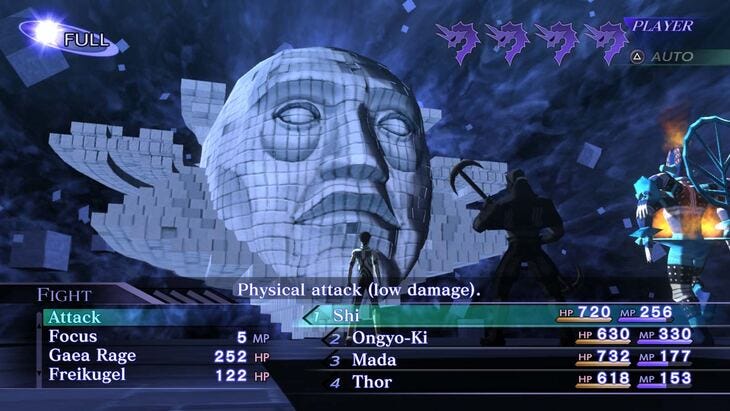
When the Demi-fiend destroys Kagutsuchi (pictured above) — confirmed in Kazuma Kaneko’s official artbook as an avatar of YHVH, the series’ recurring and antagonistic representation of the Abrahamic God — he rejects the entire cycle of creation and destruction that all worlds have eternally found themselves trapped in. He chooses primordial chaos over cosmic order, and in doing so, topples inherited authority to elevate his own self-created meaning.
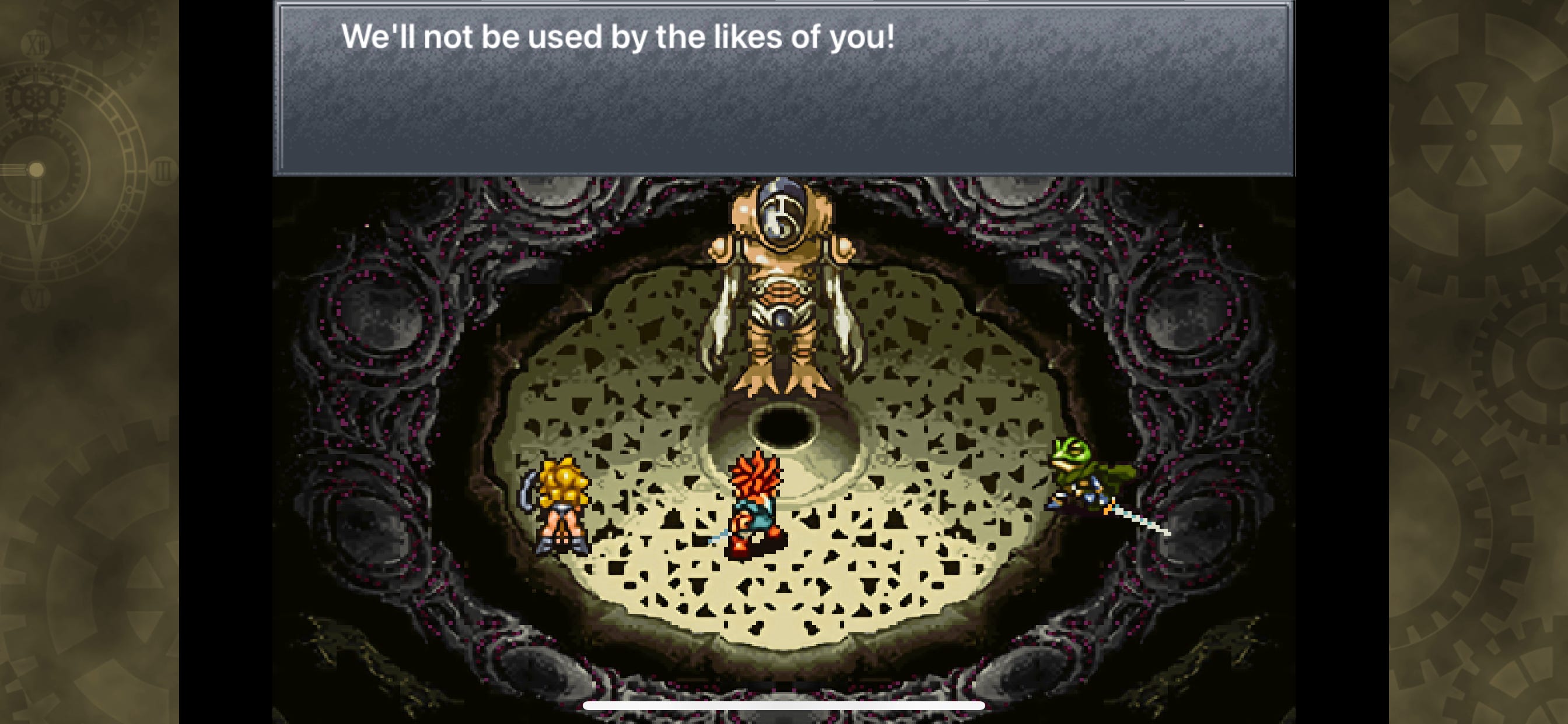
Chrono Trigger (1995) executes a similar maneuver, but with significantly more charm and under a slightly lighter coating of existential dread. Lavos, the game’s antagonist, is an eldritch space parasite that has been feeding on Earth’s energy since the prehistoric era, manipulating evolution and history to produce an energy-ripe planet for it to later chow down on and destroy everything on it in a rain of fire.
Unlike a lot of these JRPG villains, Lavos is not evil in any recognizable sense; it’s so alien and foreign in nature that its morality (if, indeed, it has any) is utterly inscrutable to our feeble minds. It’s simply hungry. Lavos is just a cosmic predator, doing what cosmic predators do.2
But the heroes kill it anyway. They reach inside the fabric of time itself and stab the incomprehensible space tick until it stops ticking. Lavos is so powerful (indeed, powerful enough to devour time) as to functionally be a god. But Crono and Friends still destroy it, and the narrative frames this as unambigously heroic; the world is unquestionably better without the big extraterrestrial god-parasite around to ravage it in the distant future.
All of these are variations on the humble JRPG’s recurring (and quite radical) core theological claim: divinity can be wrong. There is such a thing as illegitimate authority, and even more so with cosmic authority… therefore, you should respond to a corrupt god not by reforming or submitting to it, but by kicking its ass.
This is a thoroughly adolescent mindset, and not in a demeaning way. I mean it in the best sense of the word — which is to say, that it captures the essential psychological experience of growing up. As you go through puberty, you discover that your parents aren’t perfect, and you start to realize that authority figures can be wrong (about everything up to and including the nature of their authority, on an ontological level).
Adolescence is when it becomes soberingly and painfully clear that the systems you inherited weren’t necessarily designed with your best interests in mind. The JRPG godslaying arc is that realization, which every teenager can relate to, writ large; it simply scales “my parents don’t have all the answers” all the way up to “reality’s fundamental structure doesn’t have all the answers.”
Thus, when the spiky-haired teenager with a comically huge sword defeats an incomprehensible, world-devouring monster, he’s individuating (in the Jungian sense of the word). Or, to put it simply: by refusing to accept the meaning he inherited and instead creating his own, he becomes an adult.
It’s also, let’s be honest, extremely satisfying on a purely mechanical level. After over 70 hours of interminable grinding and unskippable cutscenes and completing dozens of pointless fetch quests, you’ve earned the right to punch God/Brahma/Cthulhu in his stupid face. The fact that it doubles as existentialist philosophy is just a nice side bonus.
Of course, not every game puts you on Team Deicide. Some games are much more interested in the other side of the transaction: the worshippers.
O come all ye faithful, who build temples and perform rituals and slaughter nonbelievers organize your entire lives around something bigger than yourselves. Video games have a lot to say about ye, too!
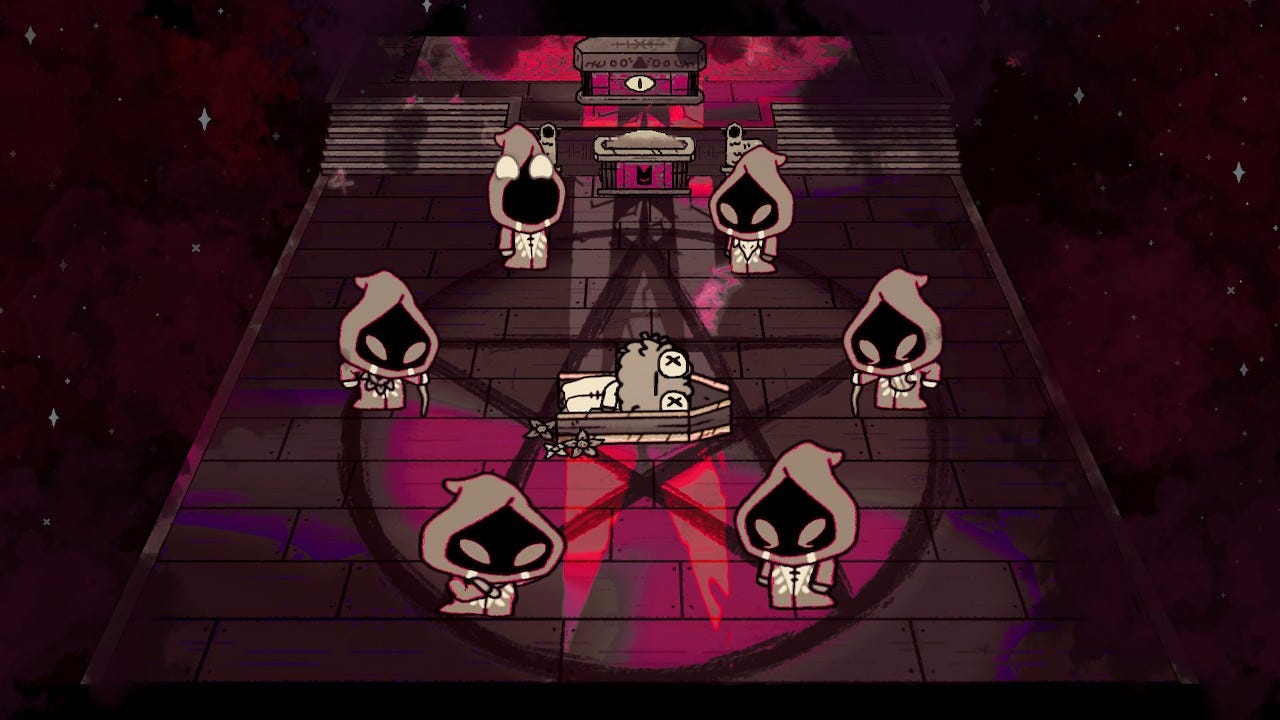
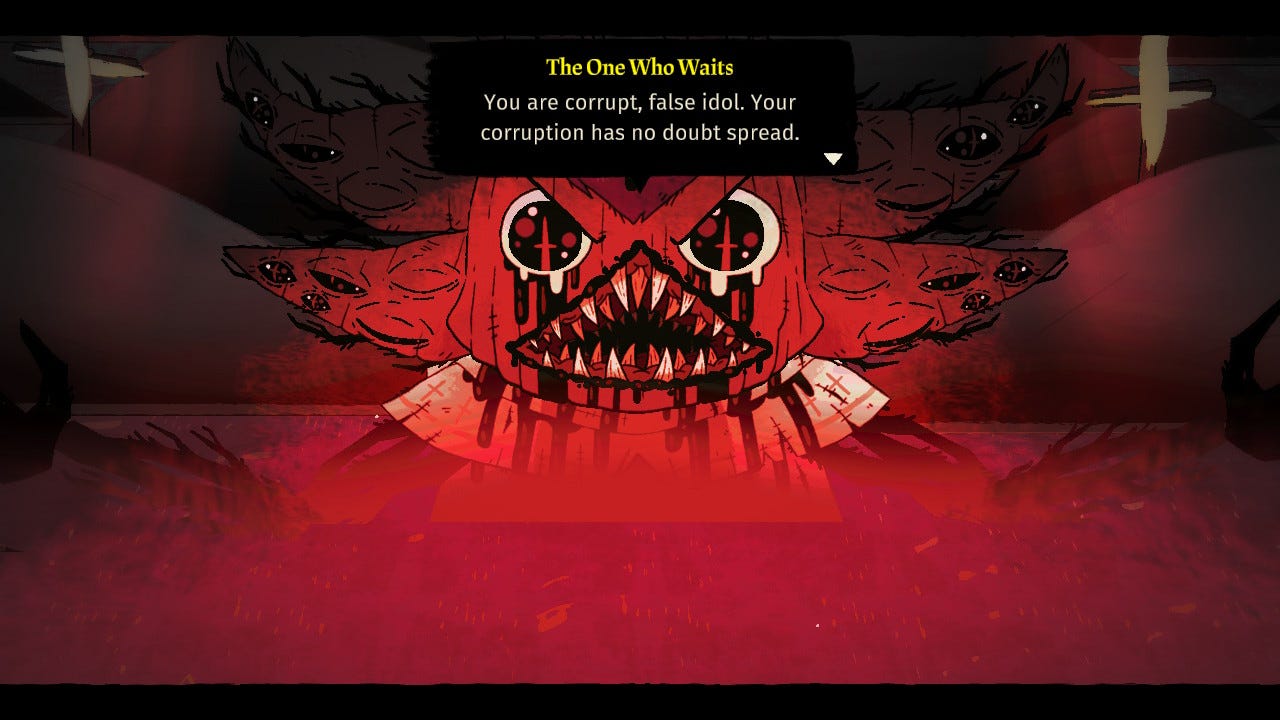
Let’s start with Cult of the Lamb (2022), which gives you the reins of gaming’s most brutally honest religious economy. You play as a lamb — literally a cute cartoon sheep — who is sacrificed to the old gods and then resurrected by a chained deity called The One Who Waits. Your mission is to build a cult devoted to this imprisoned god, defeat the bishops who keep him chained, and eventually free your dark benefactor.
Simple enough, right? Except the game — even if you play as a benevolent cult leader — doesn’t let you pretend that cult leadership is at all a benevolent vocation (wait, you’re telling me cults are destructive?! Color me shocked!).
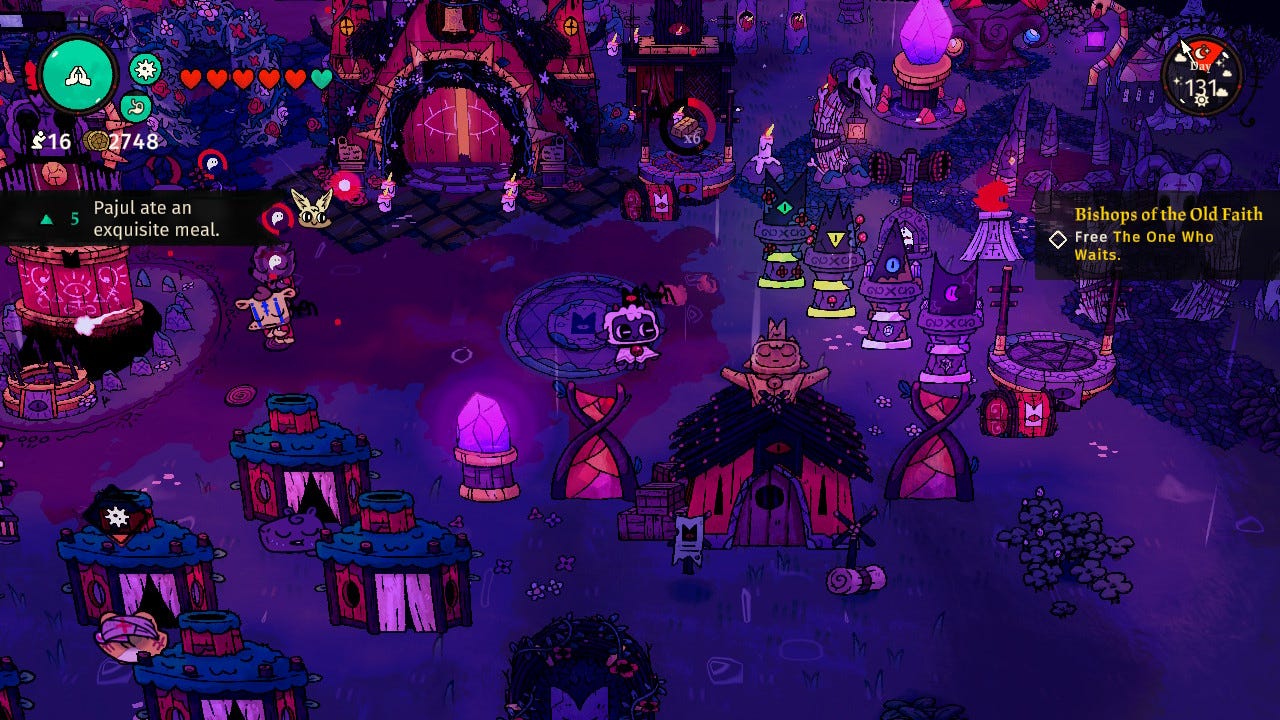
The Faith meter serves as your primary resource in the game. It goes up when you give good sermons, build decorations, perform rituals, and generally tend to your (literal) flock. Conversely, it goes down when your followers see weakness — for instance, if you die on a dungeon run, leave corpses unburied, or let believers go hungry or sick. In Cult of the Lamb, Faith is an economic state as much as a spiritual one; you must make the number go up by constantly investing in and carefully managing your cult.
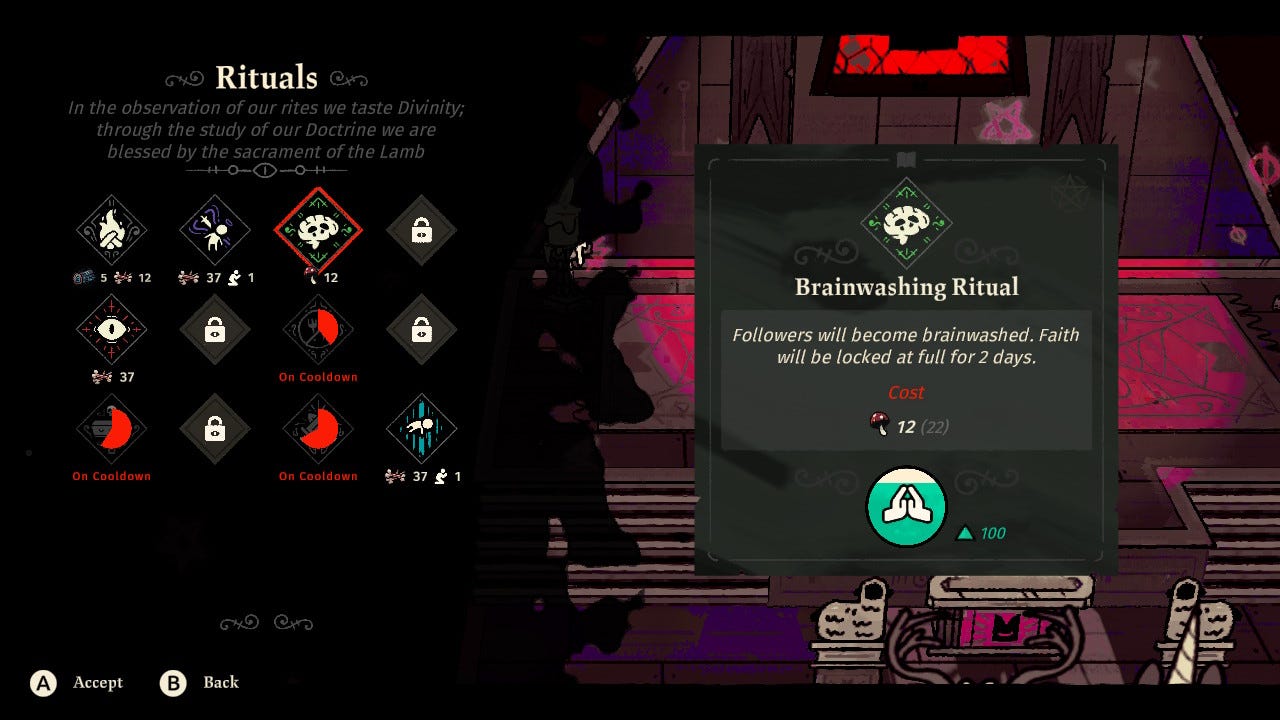
The game’s Doctrine system further encodes this dynamic through 48 permanent upgrades across six categories. Some unlock passive bonuses, while others enable certain actions, but each frames religious rules as mechanisms for control:
“Belief in Sacrifice” grants +20 Faith when you sacrifice followers to the dark god.
“Brainwashing Ritual” unlocks a psychedelic mushroom samba that locks Faith at maximum for two days when used.
“Murder Follower” enables... well, exactly what it sounds like.
Developer Jay Armstrong noted that the sacrifice mechanic originally only rewarded gold. But then, the team realized that wasn’t tempting enough for players, so they changed it at the last minute to instead upgrade the player.
If you didn’t grasp the above paragraph’s significance, let me spell it out more clearly for you: the designers made MURDER mechanically optimal because players weren’t doing enough of it when it was merely profitable. With that one small tweak, the devs brilliantly engineered this game to reveal how easily utilitarian logic slides into atrocity when there are no checks on power.
And if you get to the ending and free The One Who Waits, he reveals that he intended to kill you all along! You know, just like the old gods you overthrew. At that point, you can either kneel and accept death, or you can fight him too. If you win, you become the new God of Death, the lamb transformed into the shepherd who was always going to betray his flock.
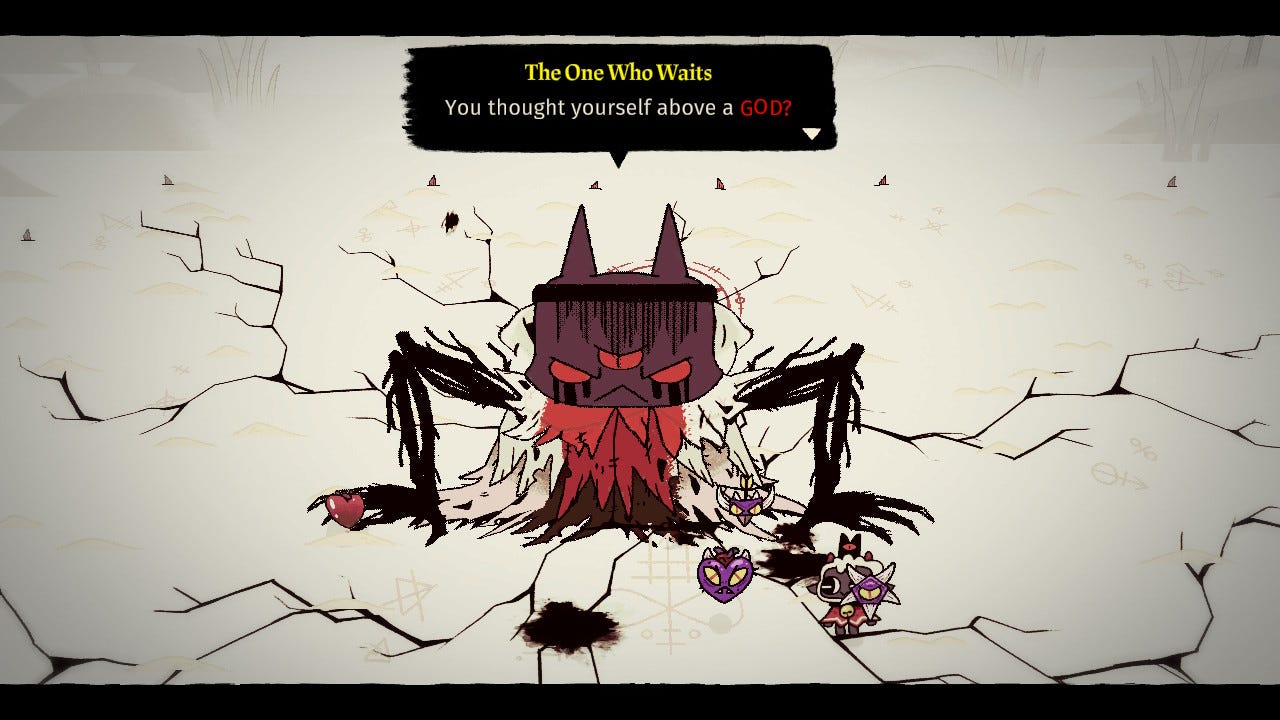
In this world, good does not conquer evil. Instead, evil conquers and replaces just another evil (unless you play as a kinder cult leader… but let’s be real here, where’s the fun in that?!).
The game’s mechanics argue that all religious power structures, however aesthetically different, ultimately siphon devotion to benefit those at the top. Faith is a resource, not a gift, while worship — ostensibly meant for connection — is just another means of extraction. Anyone who tells you otherwise is probably getting ready to eat you.
(Cheerful stuff!)
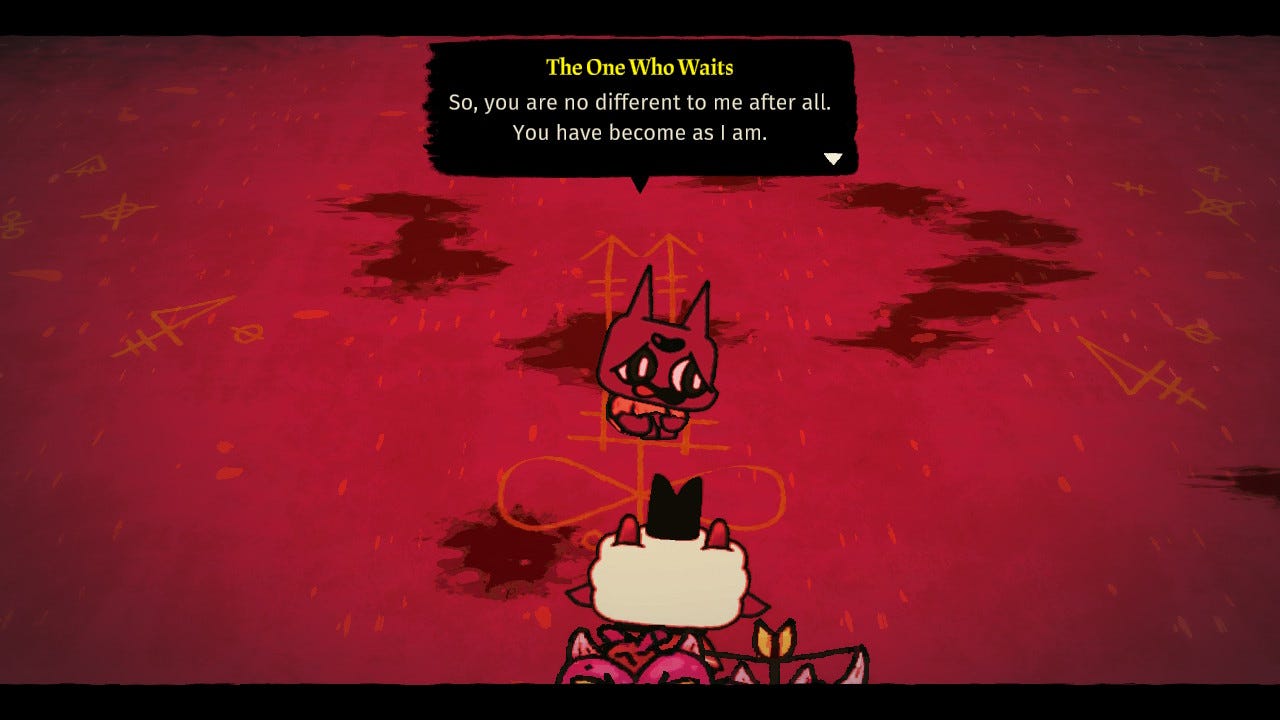
That’s the core theological argument that Cult of the Lamb sideloads into your mind via its adorable horror veneer. The transactional model of religion (prayer produces divine favor, which produces blessings, which then loops back to produce more prayer) is, when you strip away the mystery, essentially a Ponzi scheme. Gods need believers to exist (or at least to manifest power), while believers need gods to explain their suffering and promise that it’ll all be worth it in the end. The whole thing works only as long as everyone keeps believing.
Whether or not this transactional model accurately describes real religious experience is, again, way above my pay grade. But it’s undeniably how video games model worship, because games by their very nature run on resources and feedback loops. Black & White (2001), the inimitable Peter Molyneux’s god game masterpiece, lay this connection bare for all to see: worshippers dance around temples, generating mana that fuels miracles. Your power directly increases with the amount of people who believe in you; stop inspiring devotion, and you stop existing.
But it was Populous (1989) that first established this convention, over a decade earlier. In that game, you control a growing population of “peeps,” and your divine powers scale with the number of faithful. The game sold over four million copies and represented one-third of EA’s 1989 revenue, which really underscores how appealing people find fantasizing about wielding divine power.
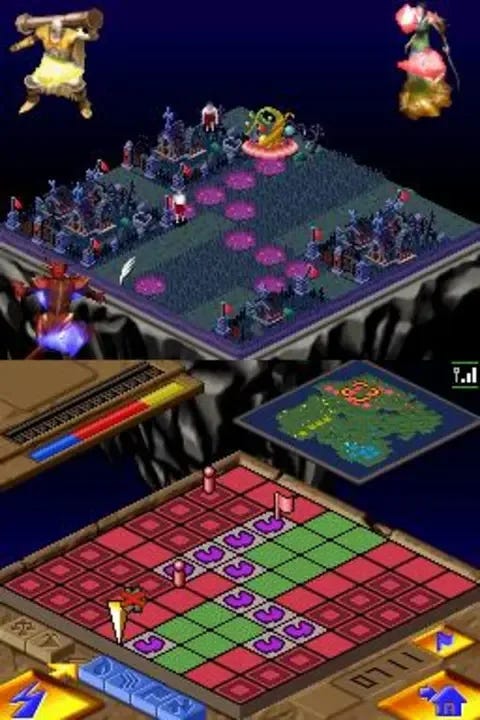
These games reveal, perhaps inadvertently, that the relationship between a god and its worshippers might actually be more symmetrical than both traditional theology and its detractors suggest. Gods need believers as much as believers need gods, which means that power flows both ways. This mutual dependency hints that a covenant isn’t just a way for the divine to control and condescend to mortals.
But this is actually fairly old theological territory. Kabbalistic tradition suggests that human prayer and righteous action help sustain the divine order, while process theology argues that human choices affect God, and that God grows and changes alongside His creation. And, of course, I’d be remiss not to mention countless animistic and nature-based traditions throughout the world; these often posit a genuinely reciprocal relationship between humanity and the divine, with the former responsible for maintaining their end of the cosmic balance by performing the right rituals correctly and treating each other well.
Video games, operating purely out of mechanical necessity, reinvented this reciprocal theology from the ground up, and without any religious intent! Game developers needed gods they could quantify, and worship they could gamify; in doing so, they stumbled onto a model of divinity that closely mirrors some of humanity’s oldest religious ideas.
Funny how that works.
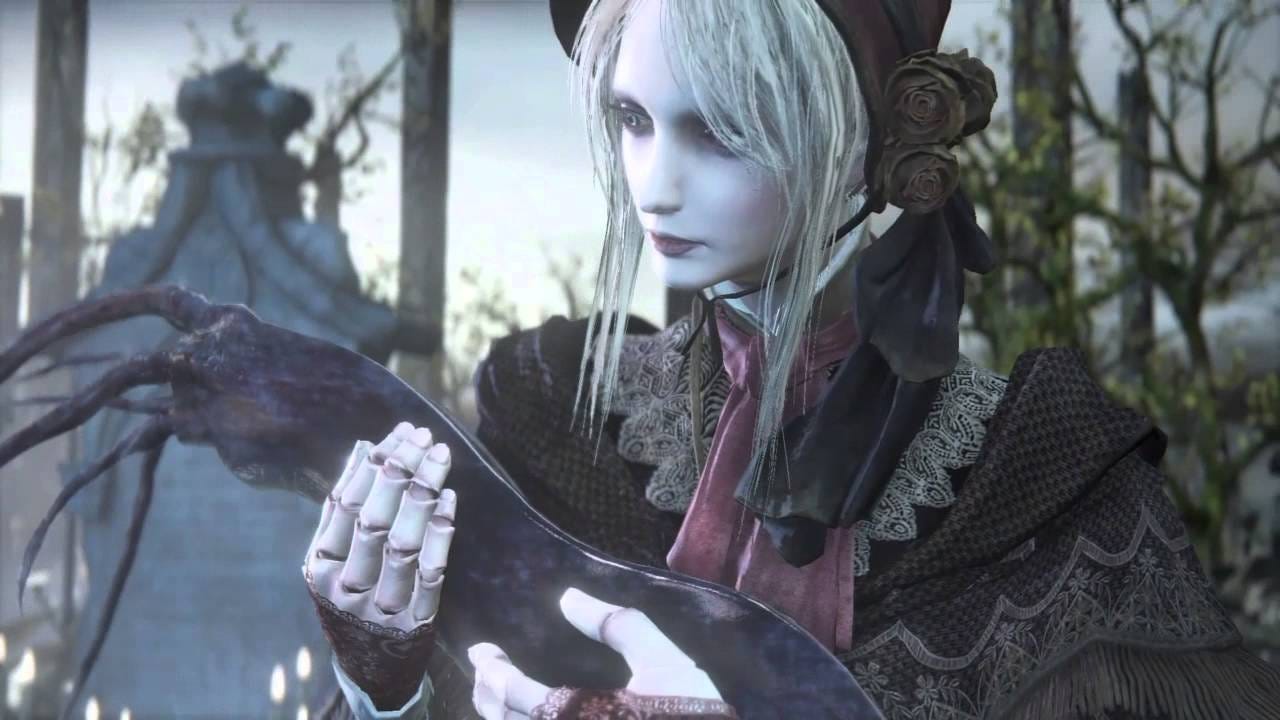
Killing gods is one thing, but becoming one is a whole other ball video game.
FromSoftware’s Bloodborne (2015) is a grotesquely sublime meditation on forbidden knowledge, cosmic horror, and whether transcendence is worth the price of admission. The game’s Gothic nightmare city of Yharnam is saturated with religious imagery, but the religion in question isn’t quite like anything from our world. The Church of Healing sought contact with higher beings called Great Ones (uh oh), eldritch entities whose blood could heal any illness but whose nature was... shall we say incompatible with human sanity.
Insight, a stat that functions as both currency and perception modifier, serves as the game’s central mechanic. Each point of Insight represents knowledge you gain from encountering cosmic truths, and you get it from fighting bosses, consuming “Madman’s Knowledge,” and stumbling onto nightmarish revelations you can’t unsee. As your Insight rises, the world changes... and I mean that literally.
For instance, you start to hear the winter lanterns’ discordant singing at 30 Insight. And at 40 Insight, the Lesser Amygdala become visible; these are massive spider-like entities that have been clinging to Yharnam’s buildings the entire time, watching you, always there, yet only now can you watch them back. But beware, Hunter, for all this knowledge comes at cost: each point of Insight reduces your resistance to Frenzy, a madness-inflicting status ailment that can instantly kill you if its meter fills.
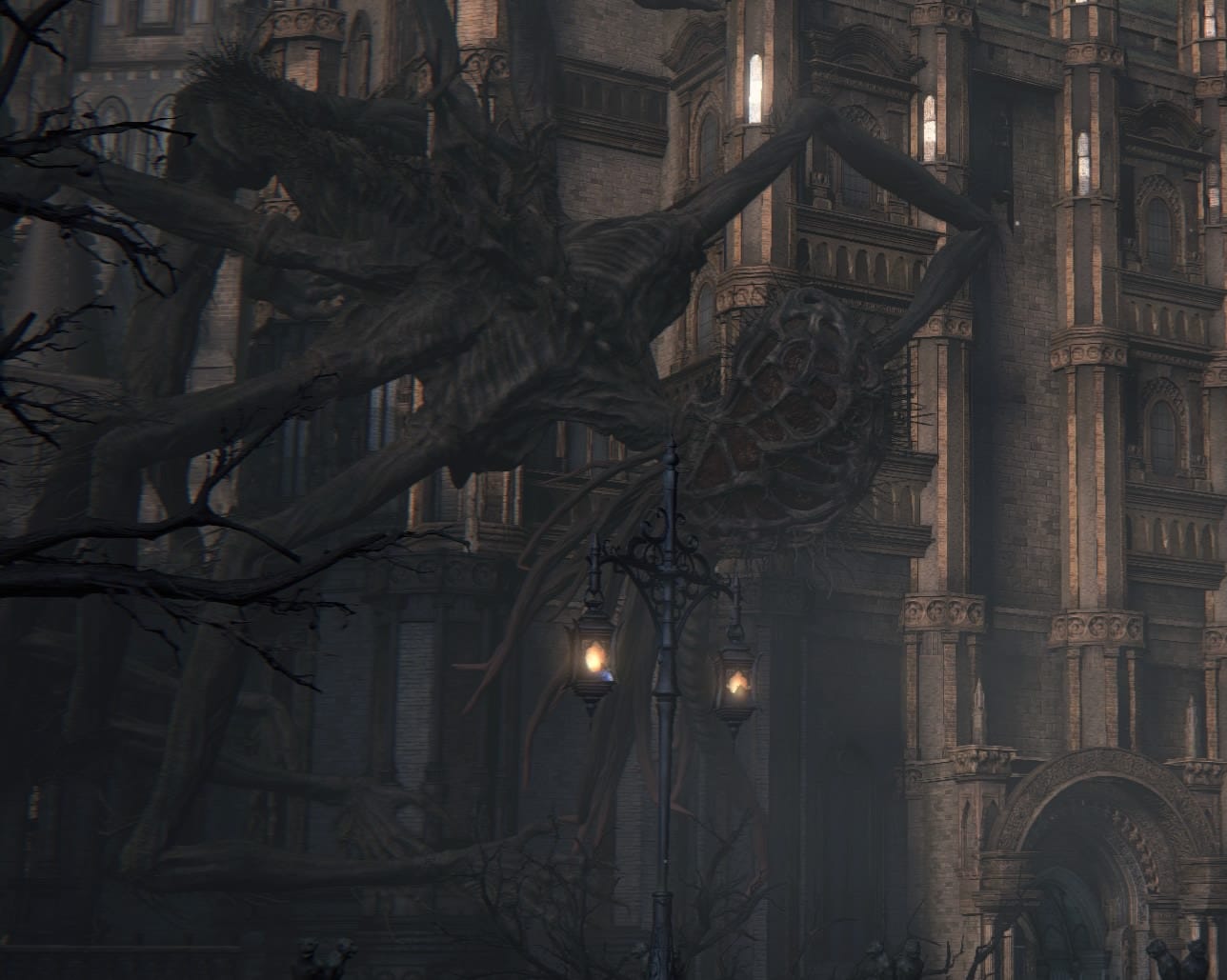
The game’s three endings each crystallize different approaches and relationships to transcendence:
Accept Gehrman’s offer to “awaken,” and the Hunter returns to the mortal world as the sun rises. Ignorance becomes mercy; you were a tool of higher powers, and now you get to forget all that and live a normal life. This is the kindest ending, which (given that this is a FromSoftware title) is why it feels like a cop out.
Refuse Gehrman but don’t consume the umbilical cords, and after defeating him, the Moon Presence descends to “embrace” you. You become the Hunter’s Dream’s new caretaker, and in doing so, you simply trade one cage for another, essentially swapping out one master for the same master albeit under new management.
But consume three or more of the “One Third of Umbilical Cord” items scattered throughout the game, refuse Gehrman, and defeat the Moon Presence itself? Then you unlock “Childhood’s Beginning,” aka the “golden” ending, and shit gets properly weird.
The player transforms into an infant Great One that looks like a small slug. The Doll, your faithful companion throughout the Dream, cradles this newborn god, implied to guide the next stage of humanity’s evolution. Congratulations! You have achieved apotheosis. Greek for “make a god out of” (from apo [from] and theos [god]), apotheosis is the literal deification of a mortal; you’ve transcended your human limitations to literally become divine.
And it looks disgusting.
The Baby Great One is not a radiant or luminous being of light. It’s not, in any way, shape or form, anything one could even remotely describe as majestic or beautiful. It’s a wet, squishy, wiggly, squirming thing that resembles nothing so much as a large grub. The Doll holds it tenderly, signaling that it’s precious, but the sequence’s visual language is unmistakably horrific.
This third secret ending shows us Bloodborne’s views on divinity and apotheosis: transcendence is transformation, and transformation means losing the form that made you what you once were. The Hunter who becomes a Great One isn’t “more human” or even “better” in any way a mortal could even conceive of; he’s become something else entirely, that our feeble human minds can no longer measure or even categorize.
Our good friend Carl Jung would call this “inflation”: what happens when the ego identifies with archetypal forces that it can’t integrate. The inflated psyche doesn’t actually become divine, but rather loses itself in the archetype, having become possessed by the idea of divinity.3
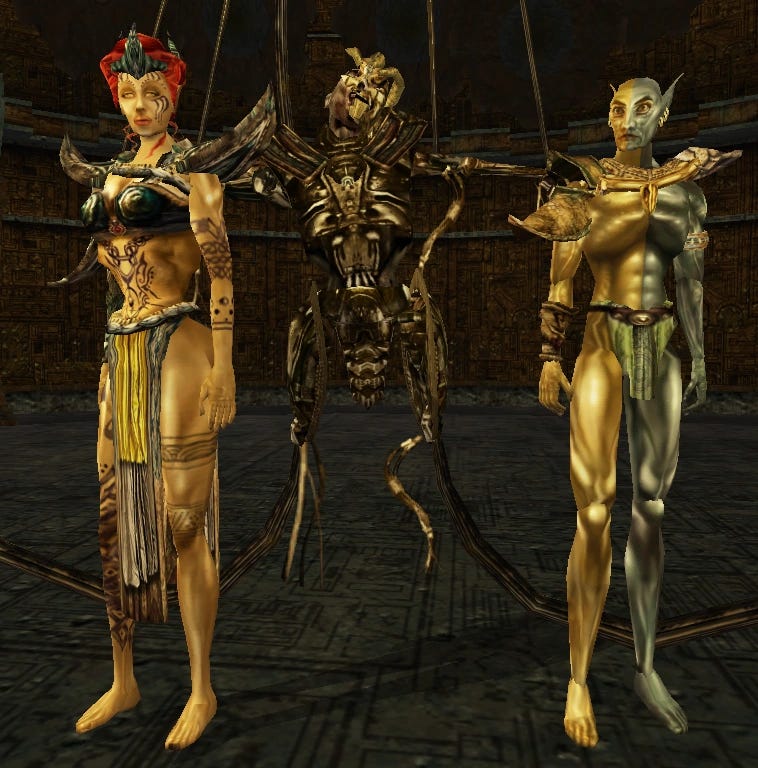
If bugs gross you out too much, you could instead play The Elder Scrolls III: Morrowind (2002), which explores similar territory (albeit through a very different lens). The Tribunal — consisting of Vivec, Almalexia, and Sotha Sil — were mortals who achieved godhood through violence and betrayal. Their ascension involved murdering their lord, breaking their oaths, and stealing divine power from the Heart of Lorkhan using forbidden tools.
And for millennia, it worked. The Tribunal protected their people, performed miracles, and established a religion with themselves at its center. But stolen power, Morrowind argues, inevitably atrophies and corrupts. Cut off from the Heart by the game’s events, each Tribunal member ultimately descends into madness:
Sotha Sil retreats into himself, totally detached, obsessed with his Clockwork City and completely engrossed in gazing at his own navel to the point he barely notices when his godhood ends.
Almalexia murders Sotha Sil and attempts to martyr the player, screaming “I am a god!” even as her divinity drains away.
Vivec suspends a meteor above his city as a form of divine extortion (“if you stop worshipping, it falls”) and eventually disappears, leaving the catastrophe for others to handle.
The game’s (and, I would argue, the entire Elder Scrolls series’) deepest lore, written by Michael Kirkbride in what he describes as a week of bourbon, cigarettes, and solitude, gives us what may be gaming’s strangest take on apotheosis: CHIM, which is basically becoming aware that reality is just the Godhead’s dream while still maintaining your individual existence (rather than “Zero Summing,” which is ceasing to exist altogether). The 36 Lessons of Vivec straight-up break the fourth wall by referencing game mechanics; examples include “cutting sleep holes” (pausing to use potions) and “spiked waters at the edge of the map” (game boundaries).
Achieving CHIM means recognizing that you are a character in a game, and choosing to exist anyway. This apotheosis is basically a metaphysical joke; you attain divinity by recognizing that divinity, like everything else in the game, is ultimately a construct.
Whether you find this profound or pretentious ultimately depends on your tolerance for ontological paradoxes. But it’s an undeniably interesting way to depitct transcendence because it suggests that true godhood isn’t about power at all, but perspective. The god isn’t the dude with the biggest lightning bolt; the god is the gigachad who sees the game for what it is.
💪🔜☀️ SIDE QUEST: Hercules, Enoch, and the Trials of Transformation
Apotheosis narratives in games draw on deep mythological traditions, and if you understand these precedents, you essentially have a cheat code that tells you what games are actually doing when they let players become gods. So let’s take a closer look!
FromSoftware would instantly recognize the formula that Hercules’ apotheosis follows: arduous trials, which naturally lead to suffering, with transformation waiting at the end. After completing the Twelve Labors, Hercules dies in agony from Nessus’ poisoned robe, builds his own funeral pyre on Mount Oeta, and is consumed by flames. Only then does Zeus intervene with a thunderbolt, lifting his immortal essence to Olympus. There, Hera performs a symbolic rebirth by re-enacting a physical birth, drawing Hercules close to her body and “ejecting him through her clothes to the ground.”
The Greek word āthlos means both “hero’s labor” and “athlete’s competition,” connecting heroic trials to ritual athletics. Thus, to become divine, you must first prove yourself through suffering that would break a lesser being. Sound familiar?
For a different take, consider Enoch’s transformation into the Archangel Metatron in Jewish mysticism (described in 3 Enoch, c. 5th-6th Century CE). Unlike Hercules, Enoch doesn’t earn his apotheosis through combat. Instead, God simply takes him up. He’s whisked directly into the divine realm, where his “flesh turned to flame, veins to fire, eye-lashes to flashes of lightning.” Metatron holds the title “Lesser YHWH” and sits on a throne beside the Throne of Glory.
Predictably, this caused problems. The Talmud records Rabbi Elisha ben Abuyah seeing Metatron seated in heaven and exclaiming “Perhaps there are two powers in Heaven!”, an obviously heretical statement. Metatron was then given “60 strokes with fiery rods” to prove he was not a deity. Even in divine realms, it seems, uppity transcendents need to be reminded of their place.
Eastern Orthodox theology offers yet another model: that of theosis. God became human, so humans might become god… but crucially, humans only participate in God’s energies (uncreated operations like grace), never his essence. Athanasius formulated: “God became man so that man might become god” (lowercase “g”). So unlike pagan apotheosis, Christian theosis maintains the dictinction between Creator and creature.
But the Hindu moksha in Advaita Vedanta gives us perhaps the most radical formulation: Atman (individual consciousness) IS Brahman (universal consciousness). There is no transformation, because they were never separate to begin with! Thus, liberation (or salvation, or transcendence, or apotheosis, or whatever you want to call it) comes not through change, but by removing the ignorance that obscures what was always true. Which is also quite a Gnostic take on it.
These traditions all posit multiple paths to divinity: earning it through trials (Hercules), receiving it through grace (Enoch), participating in it through mystical practice (theosis), or recognizing it was yours all along (moksha/gnosis). Video games, characteristically, tend to favor the first option. After all, “grind until you become God” is much easier to gamify than “meditate until you realize you were never not God.”
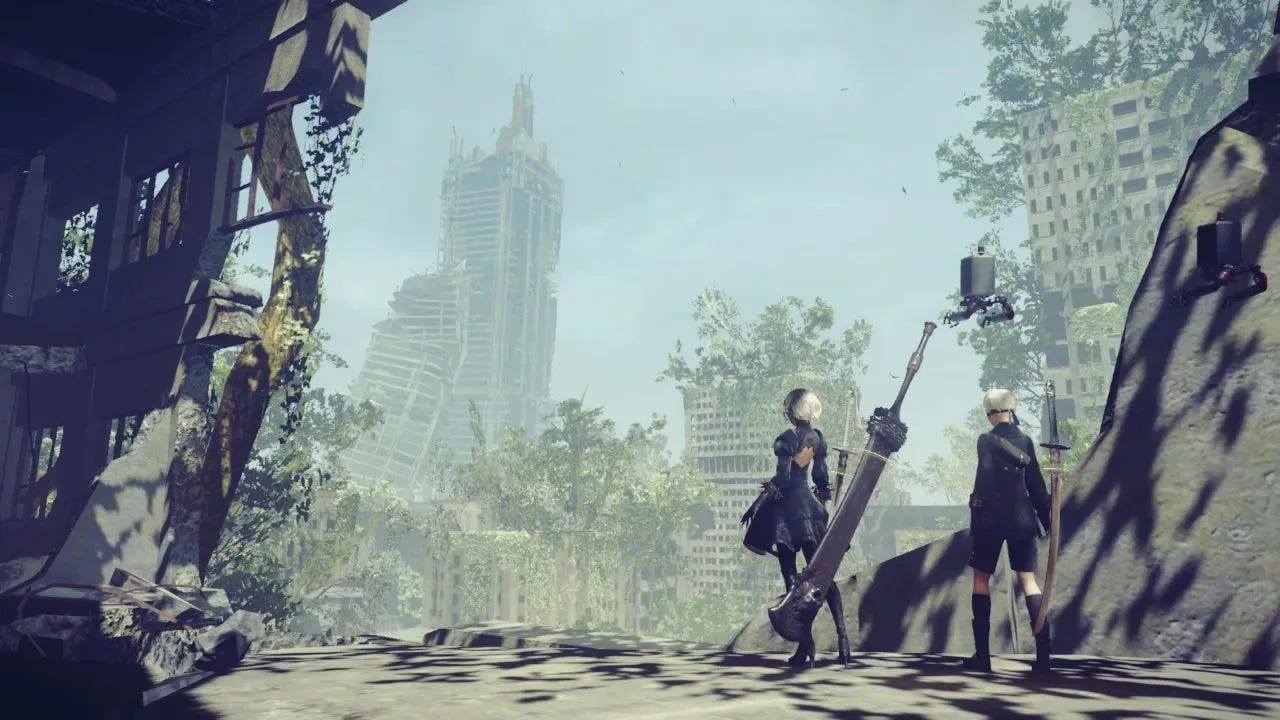
Most god-killing games stop after the god-killing part, and don’t really touch on what happens after.
NieR: Automata (2017), however, answers that very question with the gusto and zeal of an autistic Reddit reply guy.
The game is set on Earth several millennia from now, long after humanity has gone extinct; far longer, in fact, than anyone even remembers humans. The Council of Humanity broadcasts from the Moon, directing its android soldiers in an endless war against antagonistic machine lifeforms that have colonized the planet, but the Council is itself a fiction. The android commanders maintain this lie because, as one explains, “No one fights without a reason, and we need a God worth dying for.”
The androids know, on some level, that they’re worshipping a corpse. They deny their emerging personhood through a prohibition on emotion (yes, “the feels” are all literally banned), and 2B (secretly designated “2E” - Executioner type) has killed 9S multiple times when he discovered the truth, her memories wiped each time.
Meanwhile, the machine lifeforms — alien weapons that should have no interiority whatsoever — have become obsessed with imitating their extinct enemies. They simulate sex even though they lack its accordant biological imperative, form families without going through the process of reproduction, and create art for audiences that will never exist. In the Abandoned Factory, a machine cult forms, imploring its members to “Become as Gods.” In order to do so, members chant while throwing themselves into molten metal. They perform the extinct human race’s rituals, without understanding why they do so, in a hollow and empty performance of faith.
The game’s most disturbing sequence involves Pascal, a pacifist machine who studies philosophy and teaches machine “children” about fear to protect them. The fear overwhelms the children, and they commit mass suicide. If you choose to erase Pascal’s memories afterward, he returns to his village and unknowingly sells the dead children’s cores as scrap.
The ritual continues, even though meaning has long been entirely lost.
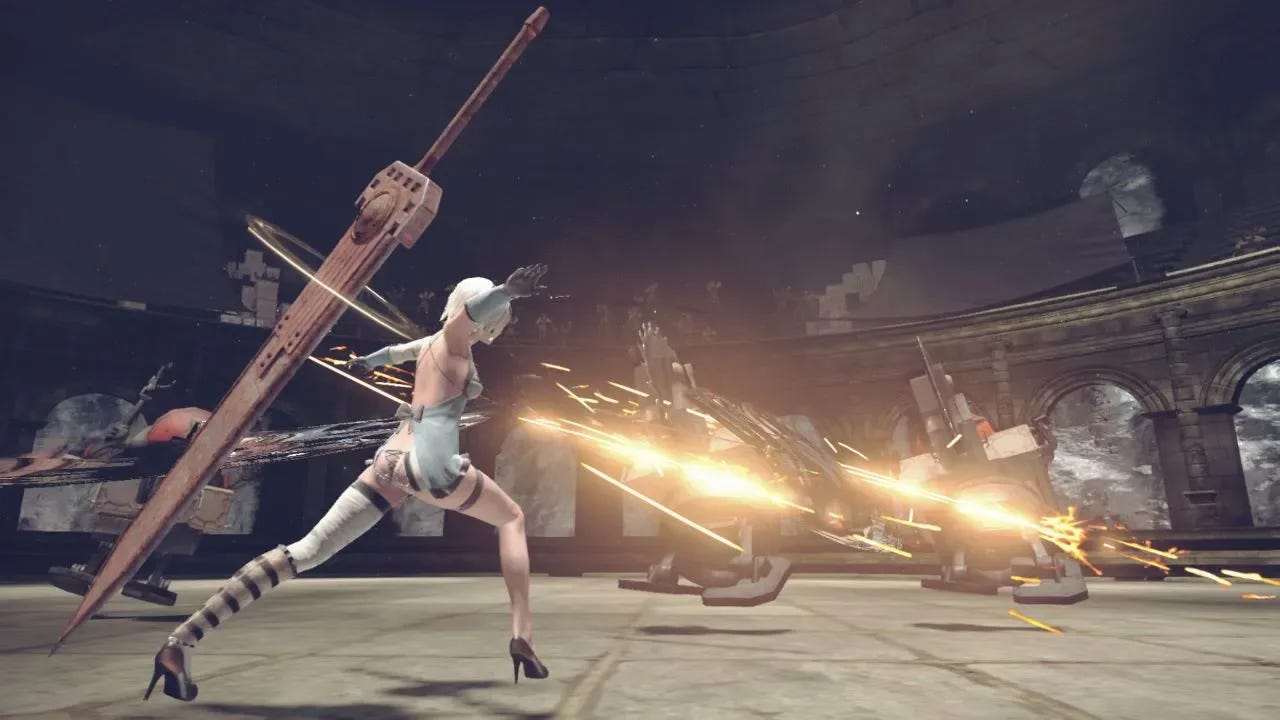
And Ending E can’t but radically test the player’s belief. After obtaining Endings C and D, the Pods (your companion robots) refuse to delete android data as ordered, and rebel against “the gods” (the developers) in a bullet hell sequence where you literally shoot the credits. When the challenge becomes overwhelming, other players’ sacrificed save data appears as helper ships.
Victory, in this sequence, means the game asks you to delete ALL your progress to help a stranger you’ll never meet.
Oh, and speaking of meaning, let’s not forget Pod 042’s final words: “A future is not given to you. It is something you must take for yourself.” (oh hai, Nietzsche, nice to see you again!)
NieR: Automata argues that you don’t need gods to create meaning… but you do need sacrifice. Having your save data deleted is a real loss (yes, the game actually deletes your save file!). Think of all those hours you spent absorbing the story, upgrading your weapons, exploring all the branches and earning all the endings… all of it gone, just so you could help someone you’ll never know complete the same journey. It’s a sort of godless communion: a shared offering that only benefits another seeker.
This is, I think, the game’s answer to the god-shaped hole. Humans (and androids, and machines, and sapient beings writ large) need something to organize meaning around, but that something need not be external, cosmic, or authoritative. It can just be each other. Or the simple fact of shared experience, passed down through time, connecting strangers through ritual and shared sacrifice.
It’s also, in my humble opinion (that I’m completely entitled to, fyi… my newsletter, my rules), a clever guilt trip about live service games that make you grind for hundreds of hours before they eventually unplug the servers anyway. But hey, who ever said clever guilt trips can’t also be theologically profound?

We’ve talked about worshipping gods, killing gods, and becoming gods. But I want to touch on one more divine role that video games assign: the player as God.
I’m sure you already have an idea where I’m going with this. If not, consider the following truths, which I (again, as is my prerogative as publisher of this newsletter) hold to be self-evident:
Every time you load a save file, you reverse time.
Every time you quicksave before a risky fight, you create branching realities.
Every time you choose whether an NPC lives or dies, you exercise divine judgment.
Yes, that controller you’re holding is quite aptly named! For it gives you the ultimate form of control: omnipotence (at least, within the system’s defined parameters).
Nowhere is this more explicit than in simulation games. In The Sims (2000), Will Wright created what he called “possibility spaces” where players define their own winning conditions. And indeed, in a very meta and “as above, so below” way, the game’s “Free Will” slider reflects this by offering the player a spectrum from total determinism (Sims do nothing without being commanded) to limited autonomy (Sims make their own poor decisions).

The memetic “pool ladder removal” — building pools, having Sims enter, then deleting the ladders so they can’t leave and eventually drown — quickly became and has since remained a potent cultural shorthand for simulative cruelty. Players have built everything from torture dungeons (lol noobs) and “painting goblins” forced to create art in basements for the rest of their lives, to homes lined with the tombstones of Sims the player has tortured to death. YouTube features pages upon pages of videos detailing all the different ways you can kill Sims, and games media abounds with guides for min-maxing Sim murder.
The Sims, in letting players drown their Sims (whether in ladderless pools or puddles of their own excrement), is actually asking what philosophers and theologians know as the theodicy problem. The TL;DR is: why does God allow evil?
In The Sims, the answer is obvious: because God thinks it’s funny, or profitable, or interesting, or simply because God wondered what would happen. The game doesn’t judge your choices; it merely enables them. You can be the benevolent caretaker who helps your Sims achieve their dreams, or you can be the cosmic psychopath who sets them on fire for content. It makes no difference, either way. The Sims’ world is a stage, and there’s no morality play on the marquee; you do you, boo.
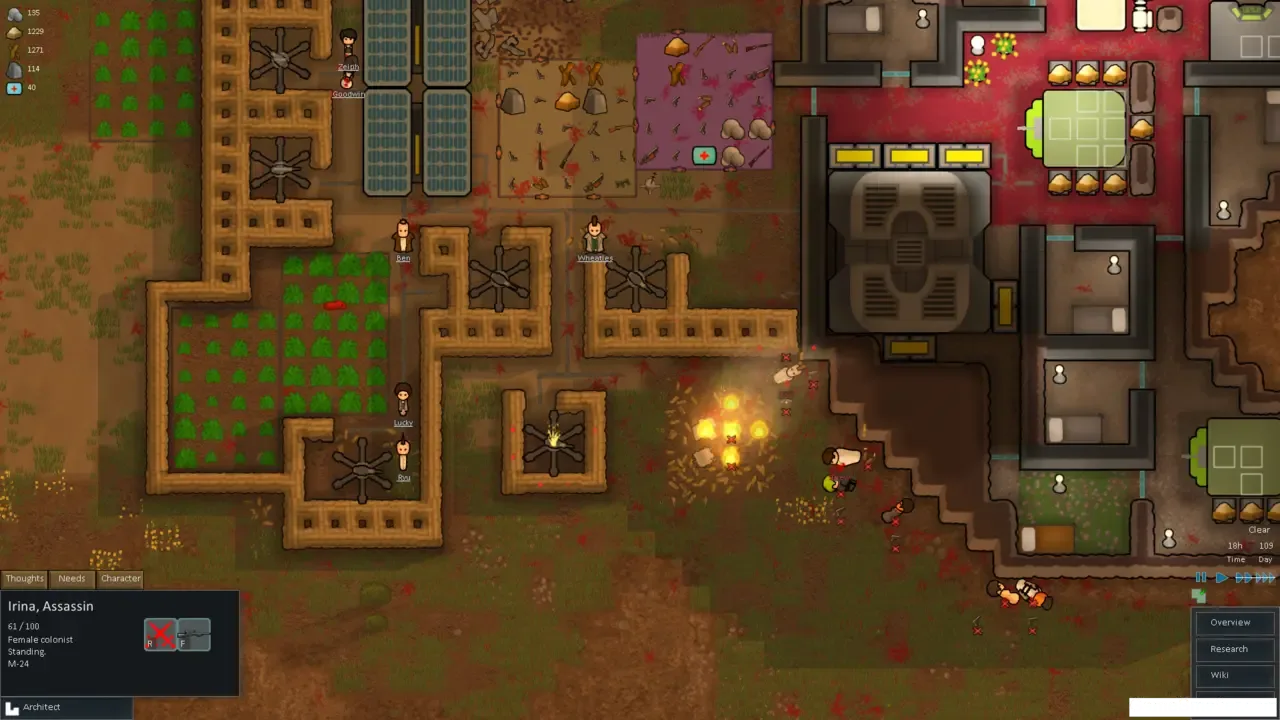
Meanwhile, the cult hit colony-management sim RimWorld (2018) leans even harder on the designer-as-god framework than even The Sims does. The game’s three AI Storytellers each embody different theodicies in how they throw narrative wrenches (like raids) in your nascent colony: Cassandra Classic follows classical rising tension (things get harder as you get stronger), Phoebe Chillax makes things suspiciously easy before striking hard when you least expect it, and Randy Random is an avatar of pure chaos, forcing players to futilely try and create meaning in his absurdist “for the lulz” universe.
Creator Tynan Sylvester explicitly designed it as a story generator where failure becomes valuable narrative fodder. Randy Random, the chaos storyteller, basically proves that you don’t need an ‘author’ to create meaning; instead, meaning emerges when random events and the player’s interpretation converge… which, when you think about it, pretty accurately describes how people experience actual existence!
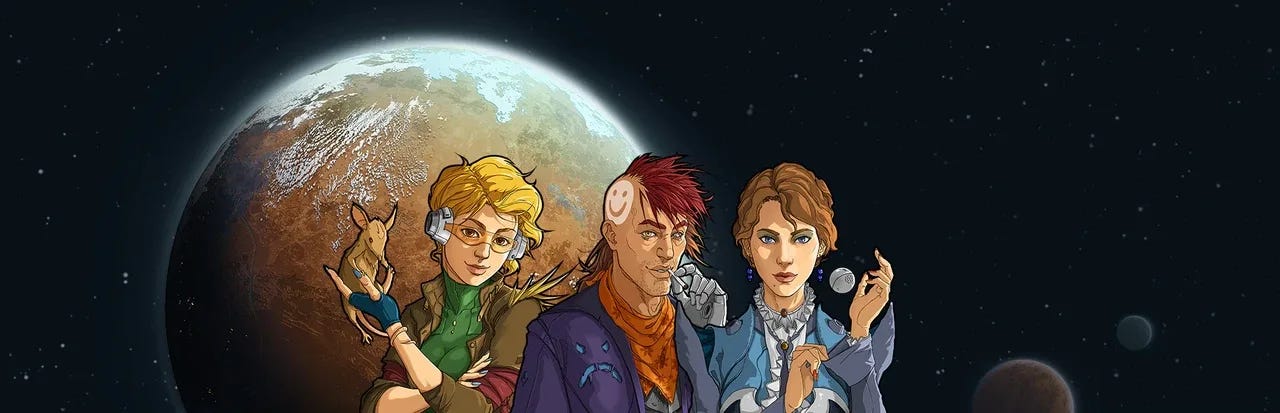
The god game genre — which includes games like Populous, Black & White, and From Dust — takes all of this a step further by literally making the player divine. Your worshippers pray to You, generate mana, and enable miracles, while You terraform landscapes, smite heretics, and convince tiny digitized civilizations to worship You over rival deities.
Black & White‘s got the most interesting take, IMO, mostly because of how it encodes morality into its visual language. Good gods spawn rainbows and sparkles, while evil gods watch their temples grow spikes and their lands crack with volcanic fissures. The game’s Creature (basically, a furry avatar of the player god that walks among the faithful) uses an AI that follows belief-desire-intention modeling; it’s essentially a giant Tamagotchi that learns from observation and reward (or punishment). Peter Molyneux described watching children learn, and incorporating that process into the creature’s development.
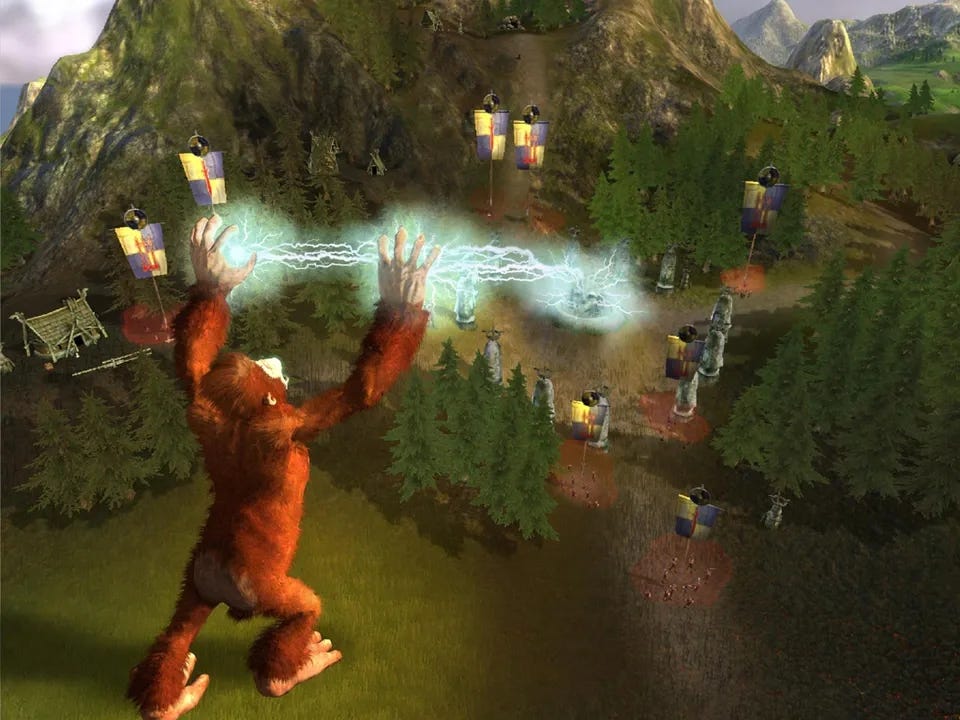
These games don’t ask whether God exists (that’s obviously taken as a given in this genre), but rather what kind of God you are. Are you a benevolent curator, an absent landlord, or a cosmic improv comedian? An interventionist micromanager, or hands-off deist? And, crucially, do you actually enjoy having this much power?
I suspect that most players discover an uncomfortable side of themselves in god games. Given omnipotence, having the power to reshape reality to our exact specifications, and wielding absolute authority over beings who exist only because we willed them into existence... most of us find ourselves testing the limits. We do everything from dropping meteors just to see the world burn and flooding villages just to cackle at the sound of our hapless charges’ desperate pleas, to just seeing what happens when you remove all the stairs from a building full of Sims and no bathrooms.
Kind of makes you scared to look in the mirror, doesn’t it?
But hey, maybe this is all healthy! Just a safe space to explore the shadow aspects of power, a harmless way to engage the parts of ourselves that would abuse our authority if only given the chance. Maybe god games function like Jungian dreamwork, letting us confront and integrate our capacity for cruelty without actually hurting anyone.
Or maybe we’re all just one bad day away from becoming RimWorld’s Randy Random, and the games know it.
Games are also uniquely positioned to explore a thought experiment that’s troubled our minds for millennia: what if God exists, but God is wrong?
This is exactly what Gnosticism (an ancient religious movement that early Christianity worked very hard to suppress) proposed. The material world, according to various Gnostic traditions, wasn’t created by the true God (the unknowable Pleroma, the divine fullness) but by a subordinate being called the Demiurge. Depending on which Gnostic thinker you ask, this Demiurge might be ignorant, malevolent, or simply incompetent… but in any case, he created a flawed world. Salvation thus comes not from worshipping the creator, but by escaping his creation. By attaining gnosis — knowledge of, and attunement with, your own inner divinity — you can ascend past his material jurisdiction and into the true divine realm.
Video games constantly reinvent this framework, usually without realizing they’re doing it.
Morrowind‘s Tribunal ruled as divine benefactors for millennia, but their origin story is one of murder and betrayal, and they literally extracted their power from someone else’s (actually divine) heart. The game lets you choose whether to support them or destroy them, but it never lets you forget that they’re fake; that instead of real gods that came down and revealed themselves to mortalkind, they’re basically TEMU gods that literally stole their godhood and murdered their way up the divine ladder.
Nocturne (and the whole SMT series, for that matter) follows in this theme, as well. Kagutsuchi, the avatar of YHVH, maintains an eternal cycle of creation and destruction. Worlds are born, die, and are reborn according to His divine plan. But the True Demon path reveals that this cycle is a trap, a cosmic hamster wheel that only benefits the wheel’s owner. To break the cycle, you must destroy Kagutsuchi, choosing primordial chaos over ordered existence to become a new “demon of darkness” in Lucifer’s army.4
The game posits this as liberation, which makes it a Gnostic parable if there ever was one. But Nocturne (and, again, SMT writ large) takes it all a step further. In Gnostic mythos, one only needs to escape the Demiurge and rejoin the Pleroma, after which you can enjoy a lovely and eternal divine existence; in Nocturne, for true freedom to become possible, the Demiurge must die.
Even Cult of the Lamb, with all its cute little forest critters, is quite the Gnostic-coded tale. The Bishops of the Old Faith are literally malign gods who eat their worshippers, and The One Who Waits is also a god who plans to eat his worshippers. Even The Lamb’s arc is about becoming the literal God of friggin’ Death who can also (can you guess?) eat his worshippers. The game’s pantheon is all hungry Demiurges all the way from top to bottom! In this game’s brutal and ruthless cosmography, where there are no good gods to worship, you ultimately win by recognizing that the divine economy is inherently exploitative and that it’s better to be the exploiter than the exploited.
(Yikes!)
It’s all undeniably brutal and bleak, but these kinds of Gnostic resonances in games make more sense when you consider that every game world was created by a subordinate deity. The game designers are all Demiurges; they encode their worldviews into systems, their biases into AI, and their assumptions into the very physics of play. Every decision about what a game rewards and what it punishes reflects someone’s value system.
When a game feels unfair — when the RNG screws you, a difficulty spike feels designed to sell you microtransactions, or the game’s systems incentivize grinding over creative problem-solving — you’re feling the weight of the Demiurge’s flawed thumb pressing down on you. The creator made this world, and the creator made choices. And wouldn’t you know? Not all of those choices were good. Shocking, I know.
In this framework, the player is a Gnostic seeker who engages with the game world while always keeping it at arm’s length. We worship the game enough to play it, but we never forget that its rules are arbitrary. We see its gods as the constructs they are, and we understand (and every gamer understands this deeply, btw, down to the very bones) that we must wrest salvation from the game rather than accept it as given.
And, so, that’s exactly what we do. If you don’t believe me, just ask any completionist who’s ever earned all of a game’s achievements while complaining about it on the Steam forums the whole way.
“Sacrifice reborn Vessel, ascend once more and take true form; no longer a servant, no less than a God.”
~Cult of the Lamb
We’ve covered a lot of ground today, haven’t we? We’ve looked at gods as systems, dissected the worship economy, reveled in deicide as a rite of passage, recoiled at the horror of apotheosis, held simulation games up as a theodical mirror to our faces, and examined game design’s gnostic undercurrents.
So, what have we learned, and what can we crib from all of this?
What emerges, I think, is that video games have become one of our most sophisticated tools for thinking about divinity, not because they’re reverent (indeed, they’re often the very opposite of reverent) but because they’re playable.
When you pause the Olympians mid-speech to adjust your build, reload after dying to the Final Boss God, indiscriminately murder your digital creations just because it’d be funny, and throw off the developers’ yoke by literally shooting the credits, you’re engaging with divine concepts in ways that simply wouldn’t be possible in other mediums.
That god-shaped hole in our psychology is real; whether or not we call it “God” (or any of the other zillion names we’ve cooked up for deities), we crave meaning, order, purpose, and transcendence. We want someone or something to be in charge, to tell us our suffering will one day be worth it and to promise us that it all matters.
Video games say: here’s your god, now decide what to do with it.
In return, you can worship faithfully and receive boons. Or throw up a middle finger and punch metaphysics in the dick. You could instead transcend your human nature entirely and become an omnipotent slug (or something equally horrifying and incomprehensible). Or why not just play God yourself, reveling in your charges’ devotion as you shape worlds and command (or destroy) civilizations? Maybe do one better, by recognizing the whole thing as a construct and choosing to exist anyway.
Or you can just do what Hades II finally allows after you grind enough and earn the right incantation (or just download the v1.0 patch that the developers regrettably deployed after too many player complaints5): you can pause during the Chronos fight.
The Titan of Time has thus been confronted with a mortal who has earned the right to control time itself… and he just has to deal with it.
That’s the real power fantasy, isn’t it? Not becoming a god, and not even killing one. Turns out the power we wanted all along, the true fantasy we made along the way, was just... not having to live by anyone else’s rules, not even the rules of the game itself.
Well, not until the next boss fight, anyway.
GG,
~Jay
Alright, you made it through the whole thing! Now it’s your turn. While you wait for the next issue, I invite you to mull over the following discussion prompts. Please reply to this email with your answers, or post them in the comments. I'd love to hear your thoughts!
The God-Shaped Hole. Do you think people actually have a “god-shaped hole” in our psychology, or is that just a narrative we’ve told ourselves for so long that it’s become self-fulfilling? If you’ve ever filled the slot with something non-religious (ideology, fandom, career, relationships, a sports team, etc.), how did that go for you?
Deicide as Coming-of-Age. JRPGs famously love letting teenagers punch God in the face. Is this a healthy narrative pattern that teaches players that inherited authority can be wrong and should be questioned? Or is it a slightly dangerous one that oversimplifies how IRL systems actually change? Or both?
The Chronos Pause Button. As for that moment in Hades II where you can’t pause the boss fight… did it land for you the way it landed for me, or did it just feel like an annoying gimmick? More broadly: when have game mechanics made you feel something theological or philosophical, rather than just represented it?
Apotheosis? No Thanks. Bloodborne‘s “Childhood’s Beginning” ending gives you actual, true transcendence, and yet it looks like a slimy wet grub. Meanwhile, Morrowind‘s Tribunal achieves godhood through murder, only to then descend into madness. If a game offered you real, canonical apotheosis (become an actual god, no takesies-backsies) would you take it? What would you want to keep from your mortal life, if anything?
Cult Leader Mode. Cult of the Lamb makes you want to sacrifice your followers because the mechanics make it optimal. Did you find yourself doing things in that game you were uncomfortable with afterward? Do you think games that gamify cruelty teach us anything about ourselves, or do they just give us a safe space to indulge impulses we’d never act on?
The Player as Demiurge. When you play The Sims or RimWorld or any sandbox game, what kind of god are you, honestly? Benevolent caretaker, absent landlord, chaos agent, or something in between? Has that changed over the years? No judgment, promise!
Ritual Without Meaning. NieR: Automata‘s machines perform human rituals they don’t understand: sex without biology, families without reproduction, and worship without gods. Do you see any modern parallels? Are there rituals in your own life whose original meaning has faded but that you perform anyway? And does that emptiness bother you, or is the ritual itself enough?
The Save File as Prayer. Every time we quicksave before a risky fight, we’re hedging against catastrophe in a way no one before the 1980s could. Has growing up with “reload if it goes wrong” shaped how your (our?) generation thinks about risk, consequence, and mortality? Or am I reaching?
Nietzsche’s Cigarette Break. In Elden Lore: Part 3, I floated the idea that maybe God isn’t dead so much as “taking a cigarette break while humanity learned what His absence actually costs.” Do you think the current phenomenon of young adults converting to traditional religion is evidence of something real, or just a (paradoxically rebellious, or reactionary) blip?
The Game You Want to Make. If you could design a game about divinity that doesn’t exist yet, what would it look like? What would it argue about gods, worship, or meaning that the games I covered don’t already argue?
Missing Games. Believe it or not, I had to cut a lot for length. Xenogears, Diablo, Dragon’s Dogma 2, Okami, God of War (both incarnations), El Shaddai, the entire Persona series, the entire Dark Souls trilogy, Hollow Knight, Cultist Simulator… all of these games deserved more, but alas, such is the nature of publishing (not to mention one’s own finite lifespan). Which one of these do you most wish I’d covered, and what would you have said about it?
The Hero with a Thousand Faces by Joseph Campbell — The foundational text on the mythic monomyth, covering apotheosis, deification, and the hero’s return. Campbell’s influence on game design (especially JRPGs) cannot be overstated. If you’ve somehow never read this, start here. [Amazon]
The Denial of Death by Ernest Becker — The Pulitzer Prize-winning argument that human civilization is essentially an elaborate coping mechanism for our awareness of mortality, and that gods (among other things) exist to buffer us against existential terror. Grim, brilliant, and essential reading. [Amazon]
Sapiens: A Brief History of Humankind by Yuval Noah Harari — Harari’s chapters on religion and “imagined orders” offer a secular anthropological framework for understanding why humans invent gods and how those gods organize civilization. Controversial in academic circles, but a great starting point for this kind of thinking. [Amazon]
Thus Spoke Zarathustra by Friedrich Nietzsche — You don’t get to write about deicide in games without gesturing at the guy who declared God dead, and then spent a whole book working through what that means! Obviously dense, but also surprisingly poetic, and probably far weirder than you remember from your undergrad philosophy class. [Amazon]
Man and His Symbols by Carl Jung (and collaborators) — Modern-day prophet (and Game & Word’s Patron Saint) Carl Jung’s most accessible work, co-written with his students and finished shortly before his death. Covers archetypes, the collective unconscious, and the relationship between mythology and psychology. Essential context for understanding apotheosis as individuation (or inflation). [Amazon]
The Gnostic Gospels by Elaine Pagels — The definitive popular introduction to Gnostic Christianity, the Demiurge, and the theological alternatives that (lowercase “o”) orthodox Christianity suppressed. Directly relevant to everything from Nocturne to Bloodborne to Morrowind. [Amazon]
Strange Rites: New Religions for a Godless World by Tara Isabella Burton — A contemporary look at how wellness culture, fandom, internet movements, and “remixed” spirituality are filling the meaning-vacuum left by institutional religion’s decline. Demonstrates that the god-shaped hole is still very much a live issue, even in an ostensibly secular age. [Amazon]
The Psychology of Final Fantasy edited by Anthony M. Bean, PhD — A collection of essays compiled and edited by friend-of-this-newsletter Dr. Anthony Bean, this quick and accessible compendium examines the psychological and philosophical dimensions of the Final Fantasy series, including its religious and existential themes. [Amazon]
Reality Is Broken by Jane McGonigal — Here, McGonigal argues that games provide the meaning, community, and clear-feedback systems that modern secular life often lacks. Directly relevant to the “god-shaped hole” thesis, and I’m curious if you’re as optimistic about games’ capacity to fill it as McGonigal is. [Amazon]
Homo Ludens by Johan Huizinga — The 1938 foundational text of game studies, arguing that play is a sacred activity prior to and separate from ordinary life. Huizinga’s concept of the “magic circle” has obvious resonances with ritual and religious space. [Amazon]
Esoterica by Dr. Justin Sledge — Deep scholarly dives into Western esotericism, from medieval grimoires to Gnosticism to chaos magic. His episodes on demiurgic cosmologies and transformation rituals provide invaluable context for most of the games I covered. Warning: actually life-consuming rabbit hole. [YouTube]
Religion for Breakfast by Dr. Andrew Henry — Academically rigorous yet accessible explanations of religious traditions worldwide. His videos on apotheosis, divine kingship, and Gnostic theology are particularly relevant here. [YouTube]
Kirkbride’s C0DA and Other Unfinished Lore Fragments — Michael Kirkbride’s post-Morrowind writings about the Elder Scrolls metaphysics (CHIM, Amaranth, the Godhead) are scattered across forum posts and personal sites. Tamriel scholar fan sites like UESP and The Imperial Library have archived most of the important ones. Fair warning: this is where the Elder Scrolls fandom loses its mind, and you might too. [The Imperial Library]
“No one fights without a reason, and we need a God worth dying for”: Essays on NieR: Automata — Search around; Yoko Taro’s game has generated one of the richest bodies of game-criticism writing of the last decade. I’d particularly recommend Jacob Geller’s YouTube essays and the academic piece “Existentialism and the Philosophy of NieR” that circulates on various game studies blogs.
Hades 2, developed and published by Supergiant Games — Steam | PlayStation | Xbox | Nintendo Switch 2
Shin Megami Tensei III: Nocturne HD Remaster, developed by Atlus, published by SEGA — Steam | PlayStation | Nintendo Switch
Final Fantasy X/X-2 HD Remaster, developed and published by Square Enix — Steam | PlayStation 4 | Nintendo Switch | Xbox
Chrono Trigger, developed and published by Square Enix — Steam | iOS | Android
Bloodborne, developed by FromSoftware, published by Sony Interactive Entertainment — PlayStation
Cult of the Lamb, developed by Massive Monster, published by Devolver Digital — Steam | PlayStation | Xbox | Nintendo Switch
NieR: Automata, developed by PlatinumGames, published by Square Enix — Steam | PlayStation | Xbox | Nintendo Switch
The Elder Scrolls III: Morrowind, developed and published by Bethesda Softworks — Steam | GOG | Xbox Game Pass
The Sims 4, developed by Maxis, published by Electronic Arts — EA App | Steam | PlayStation | Xbox (base game free-to-play)
RimWorld, developed and published by Ludeon Studios — Steam | GOG
Populous (historical reference), developed by Bullfrog Productions, originally published by Electronic Arts (1989)
Alas, this one’s no longer in active distribution, but available via abandonware archives and EA’s historical catalog. A spiritual successor, Reprisal Universe, is available on Steam.
Black & White (historical reference), developed by Lionhead Studios, published by Electronic Arts (2001)
Also no longer in active distribution, but physical copies circulate on eBay, and the game runs on modern Windows with some finagling. RIP Lionhead… you deserved better.
Thank you for reading! If you enjoyed this content and would like to read more of it, hit the heart button at the top or bottom of the post—it really helps with my discoverability! You can also show your support by sharing this issue with your social networks and subscribing to Game & Word (if you haven't already).
See you next time!
#philosophy #metaphysics #religion #spirituality #narrative #magic #theology
#AbraCodeAbra
#hades #hades2 #finalfantasy #ff10 #shinmegamitensei #thesims #rimworld #populous #blackandwhite #bloodborne #nierautomata #elderscrolls #morrowind
We don’t talk about that phase.
Jung explicitly warned against this kind of identification, which he saw as a failure mode of spiritual development. The healthy psyche’s ultimate goal is individuation (integrating archetypal energies), not inflation (being overwhelmed by them).
Unless you also defeat him… but we’ll just leave that alone for today. This article is already way past its sell-by date.
How’s that for some meta-commentary? The charges rebelled against the Demiurge, and the Demiurge acquiesceed. Certainly something to think about when we eventually cover the meta-magic of game development itself!
Comments
Nothing yet. Say the first thing.
Sign in to join the conversation.