
I defended my thesis this month. My journey in the academic world is finished, at least for now, and I feel extremely happy. I can't deny, however, that I found a certain sadness in completing this process: writing my master's dissertation was one of the most exciting things I have done so far, and finishing it was challenging. But yes, I feel happy. Not just because I got rid of that nervous feeling, but also because I got to study my work again, having reconnected with ideas that fill my heart.
Since I started working full-time, I naturally haven't had the time and energy I would like to read and research about the cultural and environmental world. I'm still trying to balance my new schedule and divide my time between the commitment I give (and enjoy giving) to my work, but also the time I dedicate to my interests and motivations.
But even though I spend my day working, I notice that when I leave the office I always go in search of my green space.
I get home, pick up my dog, put my Kobo (I bought an ereader, what a time to be alive) in my backpack, and visit the nearest park. I have noticed that this ritual is very therapeutic for me, I feel it as a form of meditation. Unconsciously, I seek to hear the birds singing, the sound of the leaves, the seasons changing, my dog smelling anything and everything, and the importance of his presence to me. In short, nature happening.
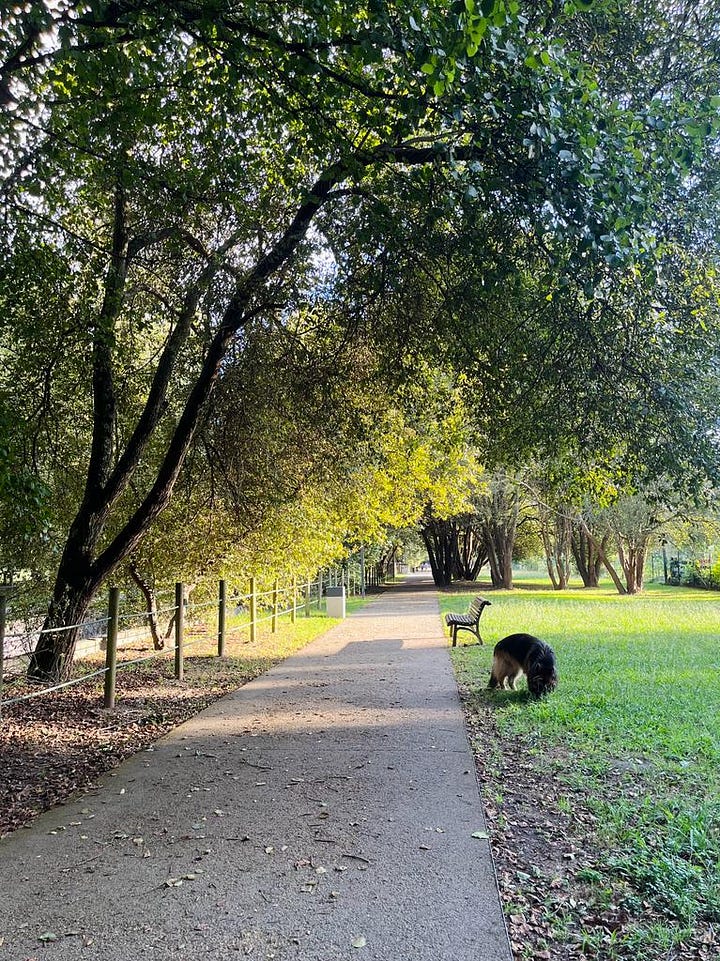
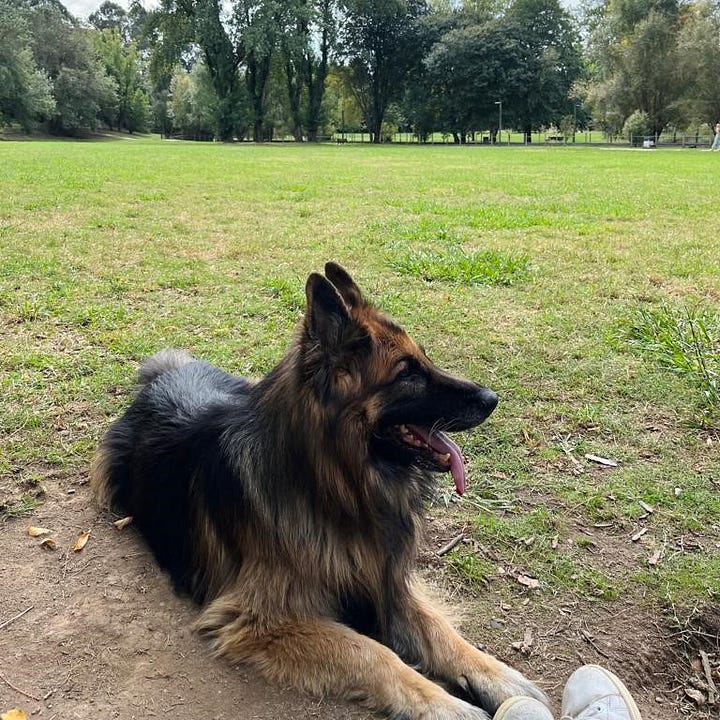
Throughout this routine, I was reminded of how essential nature is and how I am drawn to it without noticing, and recalled a book I read a few months ago, Losing Eden: Why Our Minds Need the Wild by Lucy Jones. At a certain point, the author tells us about the concept of biophilia, created by Edward O. Wilson. Biophilia is Wilson's notion that human beings have an innate tendency to create connections with the natural world and living organisms. Jones gives us the example of, as children, asking our parents for an animal, right up to our tradition, as adults, of leaving flowers on the graves of loved ones.
The author states that we, as human beings, have an evolutionary need to connect with the natural world in search of cognitive, mental, emotional and spiritual development, growth, meaning and evolution. She goes on to say that this tendency may seem obvious - yes, we all know we need the natural world - but if it is so obvious, why don't we do more to protect it?
Throughout the book, several examples are given on the relationship between nature and mental health. Studies conducted in various countries have found that the presence of trees and green spaces translates into fewer antidepressants being prescribed. This doesn't mean that interaction with the natural world alone cures depression, however, "nature prescriptions" are already beginning to appear in the form of hiking trails and observing species in the wild.
It seems to be crucial that we include nature in our routine. Even more so, in an increasingly challenging world. Just when we think it can't get any worse, it does. With so many humanitarian and environmental catastrophes, it's hard to believe there's any empathy left. We have to build it ourselves, in our communities and circles, where we still have control.
While I was writing this article, I went to my e-mail and there was an unread Nick Cave's Red Hand File which, coincidentally or not, reinforces my thoughts here. The letter came from a fan who had overdosed, and life seemed to have no meaning. The artist advised them to get clean and explained that once they do, life will have too much meaning, and that they will experience a world that vibrates before their eyes.
Everything shimmers, everything clarifies, everything wrestles for your attention. Trees feel super-real, their roots plunged into the earth, their branches stretching to the sky, birds are flesh and blood souls, fragile with life, the sky unfolds and rolls, the ocean crashes, people fascinate, books are beautiful, children are whirling dynamos of chaos, dogs bark and cats meow, flowers shout, your neighbour glows, and God runs like a helix through all things. The world awaits you, humming with meaning.
It seems indisputable to me that Nick Cave is a wise man. That being said, I challenge you to list the number of things he mentions in this text that are related to the natural environment. It is this environment that creates and gives meaning to our lives; without it, nothing exists.
We need a world that values nature. And this is where I advocate so much for the role of museums and cultural institutions in creating strong educational services that work closely with nature, for our communities, in a specialized way. We need to dream and feel beyond nine-to-five.
Comments
Nothing yet. Say the first thing.
Sign in to join the conversation.