
What could a boardwalk, educational signboards, and an observation tower possibly have to do with wetlands conservation and promoting biodiversity?
Well, in a situation where public awareness and human intervention are important for conserving a valuable natural area and its biodiversity, these elements, which provide nature lovers opportunity to observe while minimising the disturbance they create, arguably can play an important role. A case in point may be found at “Paramėlis island”, an area of raised bog wetland in southern Lithuania.
“Paramėlis island” is not an island at all in the strict sense of that word. It is a unique but smallish patch (190 hectares) of wetland offering great current and potential biodiversity that has been adopted by the Paramėlis Nature Restoration Fund (Paramėlis NRF). Established at the end of 2022, Paramėlis NRF aims to promote biodiversity at the site while simultaneously developing sustainable tourism there.
In early 2023, VGP Foundation donated €50,000 to Paramėlis NRF for investing into improvements supporting sustainable tourism. The work is overseen by Germany’s Nature and Biodiversity Conservation Union (NABU), a longtime partner of VGP Foundation, and is now nearly completed.
The conservation value of Paramėlis island (and its informal name) derives in part from its specific location among other, larger expanses of protected natural areas.
70,000 hectares of protected nature
In southern Lithuania, along the border with Belarus, lies the largest expanse of raised bog wetlands within Lithuania. Most of these wetlands are within the strictly protected 11,212 hectares of Čepkeliai Nature Reserve. That reserve is completely closed to tourists, and nature there is left wholly to its own devices. Paramėlis island lies just outside of this reserve. This “island” is both very biodiverse and highly vulnerable. It needs human assistance for its restoration and continuous care. Because it is not within the Čepkeliai reserve, Paramėlis island is an appealing site for bird watchers, some of whom, recognising the area’s great value, also are among Paramėlis NRF’s contributors.
Close by, too, is Dzūkija National Park, the largest (58,519 ha) of Lithuania’s five national parks and the country’s biggest protected area overall. Although physically separate, the park and Čepkeliai Nature Reserve are administered by a joint agency. Unlike Čepkeliai Nature Reserve, the national park is partially open to the public.
Accessible by a single narrow road
Bounded on three sides by the border with Belarus, the Čepkeliai Nature Reserve, and the marshy Katra river valley, Paramėlis island is accessible only by a single narrow road. Other than residents of the local village, where several families live on their farmsteads, the location is only infrequently visited by other human beings. It is home to numerous species of animals, plants, fungi, and other life forms, including some that are rare and/or threatened by extinction.
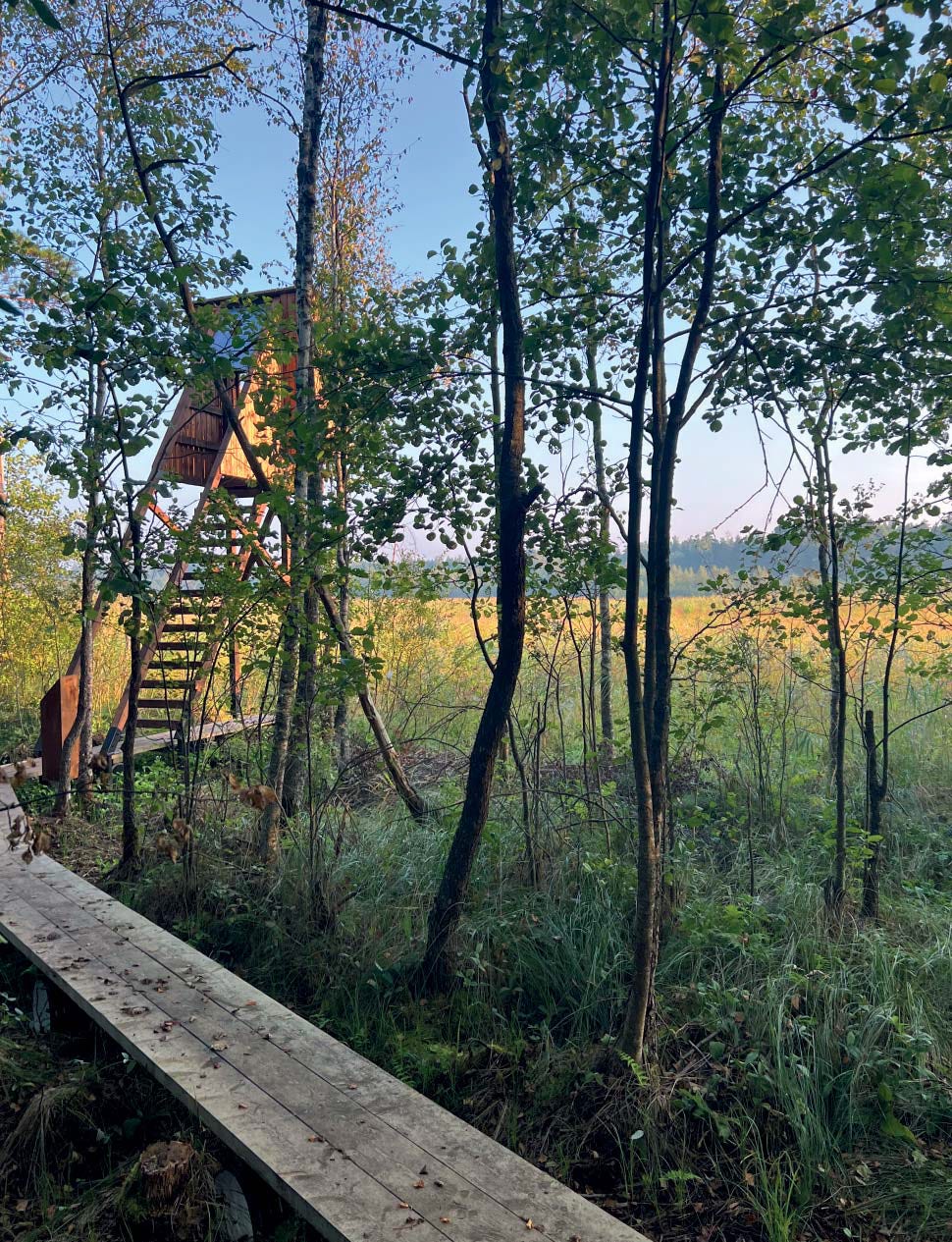
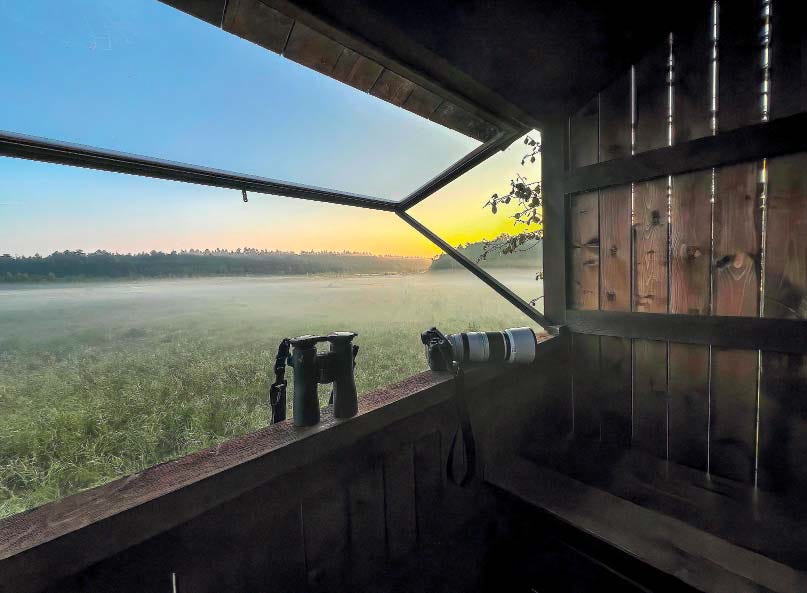
The support from VGP Foundation has enabled Paramėlis NRF to build a wooden path 360 metres long through floodplain swamp forest, explains Marius Karlonas, an ornithologist and enthusiastic birdwatcher, co-founder of Paramėlis NRF, and local manager of the organisation’s projects. This boardwalk ends at the forest’s edge, where a new observation tower looks out over an expanse of open meadow. At intervals along the path, information boards explain the value and key aspects of the area.
Marius, who is himself from southern Lithuania, also runs Ornitostogos, an ecotourism company that guides visitors on birdwatching tours in the region. The educational and environmental protection aspects of the project perfectly complement one another, he says.
Tourism and donations are enablers
“First of all,” Marius notes, “the Paramėlis foundation exists thanks to the hundreds of wonderful people who donate to the foundation’s goals, which are to preserve and restore this unique corner of nature in southern Lithuania. So, when we talk about our environmental goals and ask people to contribute to this project, we invite interested persons to the area and give a live presentation of the Paramėlis project area’s natural values. That means this infrastructure will allow us to reach the most interesting places and understand the uniqueness of the sensitive nature with the least possible disturbance. This educational infrastructure will be a great tool for us to achieve our ambitious environmental goals in the Katra valley and the surrounding forests.”
Marius acknowledges that, even as ecotourism can be beneficial, it is important to manage the inflow of tourists “because after all, nature and its sensitivity come first. On the other hand, we also understand that the natural situation of this area is improving rapidly thanks to sustainable tourism. Without people’s attention, this area would have continued to degrade, and the forests would have been cut down, so after a couple of decades it would have been difficult to restore or preserve something here.”
At present, he reports the tourist flows “are not really large”. Were it to become apparent that nature and the wildlife would be disturbed too much, Marius says, the project managers would begin to limit the flow of people into this area.
Considered in relative terms, and especially next to the large and strictly protected Čepkeliai Nature Reserve and Katra river valley, Paramėlis island is small. That makes it a sort of window to those parts of the common ecosystem that are either closed off to humans or are not easily accessible, especially because wildlife, plants, fungus, insects, and other species are not influenced by human-defined borders. “From an ecological or environmental point of view, therefore, this is one of the greatest values of this area and reasons to protect it,” Marius remarks.
A complex patchwork of nature
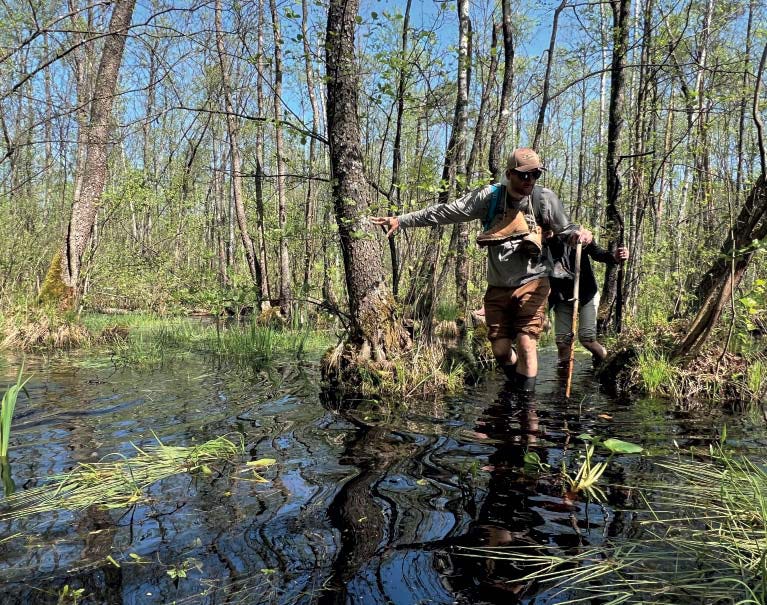
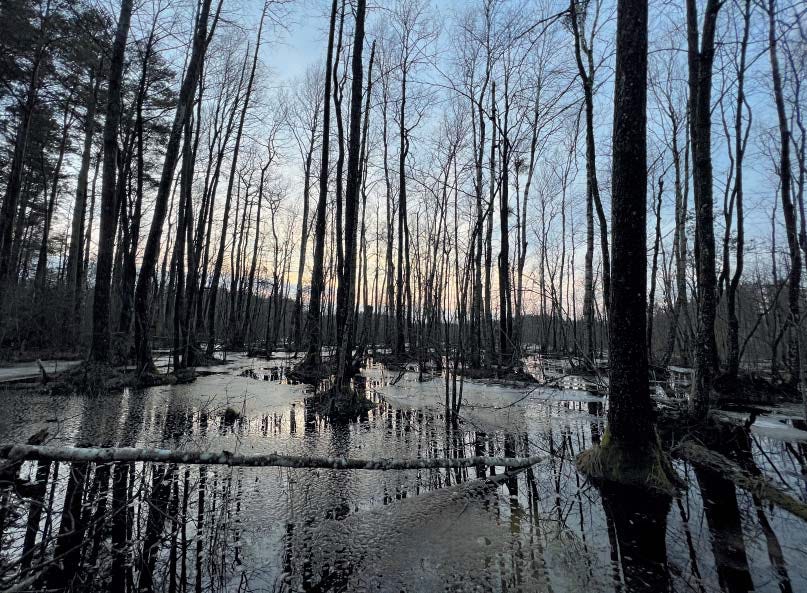
Ecologically, the Paramėlis island area is complex. Most of this terrain is forested. In part, it consists of wetlands that through the generations have been drained, thus disrupting the natural hydrology of the area. There also exist important grasslands that should be protected from becoming overgrown with bushes and trees. In the forested parts, the local residents are sometimes cutting trees that are valuable in terms of preserving biodiversity.
Forests, wetlands, and grasslands all are important as habitats supporting biodiversity and for carbon sequestration. When all these exist in close proximity to one another, their combined contribution of diverse habitats is especially valuable. In today’s world, though, this balance of diverse habitats does not sustain itself without various types of human intervention.
“We use a wide variety of conservation and management approaches to achieve the Fund’s objectives,” Marius relates. “For example, the environmental protection and maintenance of forests is probably the least demanding, requiring only a significant amount of money to acquire a forest, but afterwards it is best for nature if you do nothing to the forest – just leave it to its natural processes, which means to grow, age, dry, decay, rot, and grow again. This change and diversity is the most important factor for a healthy forest ecosystem.”
The Katra river valley’s grasslands depend today on more active intervention. Each year since 2019, Ornitostogos and now Paramėlis NRF has been organising a brigade of volunteers who come to cut the grass and woody plants using hand tools and rotary brush-cutters. They try each year to expand the grasslands area that is cleared.
In a wholly natural state, various combinations of wildfire, grazing by herds of large ungulates (i.e. hoofed mammals like deer and bison), human settlements, and hydrological conditions not conducive to forest are key to maintaining open wetlands and grassland habitats. In recent history, the villagers of Paramėlis helped to preserve these meadows by grazing livestock there and harvesting hay.
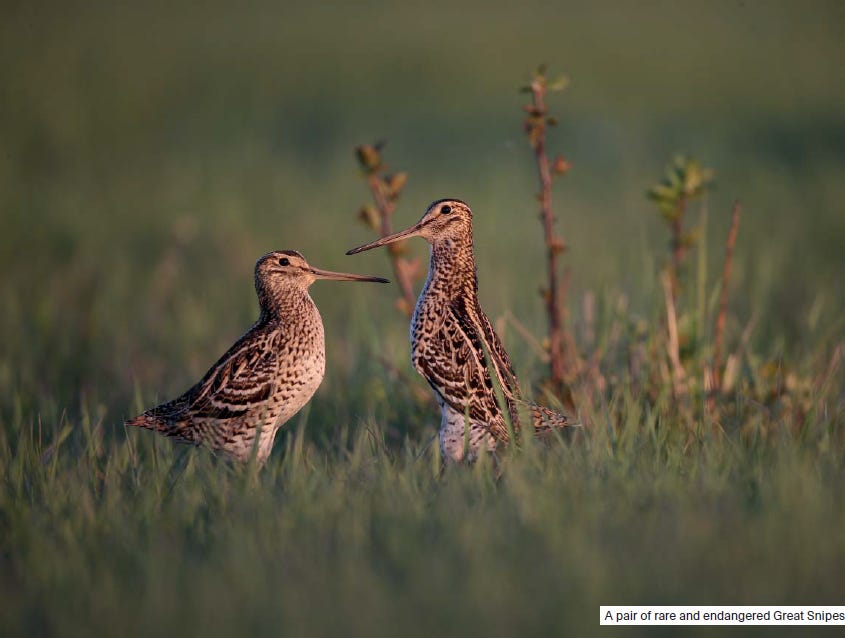
“Since Europe no longer has the large herbivorous herds that used to browse the sides of the rivers and create and maintain open habitats, these habitats are nowadays completely dependent on human care,” Marius explains. “Until 100 years ago, what is now the Paramelis project area in the Katra river valley was a vast expanse of hay and grazed marshland, which was the breeding ground for many rare birds, including one of Europe’s rarest bird species, the Great Snipe. However, during the Soviet occupation of Lithuania, nature was severely degraded, and the site suffered as well. The river valley was drained and the natural hydrological regime changed. The lack of water in the valley and the cessation of haying and grazing by the local people led to overgrowth of the area with scrub, trees, and reeds. These changes have led to the near extinction of many rare plant, insect, and bird species in the area. So, for a number of years, we have been mowing the central part of the valley and allowing unique life to survive at least here.”
Stakeholders include villagers, volunteers, scientists…
Paramėlis island and Paramėlis NRF involve numerous stakeholders, not the least among these being the local residents, Marius emphasises. Some of the locals have participated in the mowing campaigns and show interest in preserving the unique nature of this area within which their families may have lived for generations. In addition, there are volunteers who participate in mowing and cutting brush. They number up to about 100 people per year.
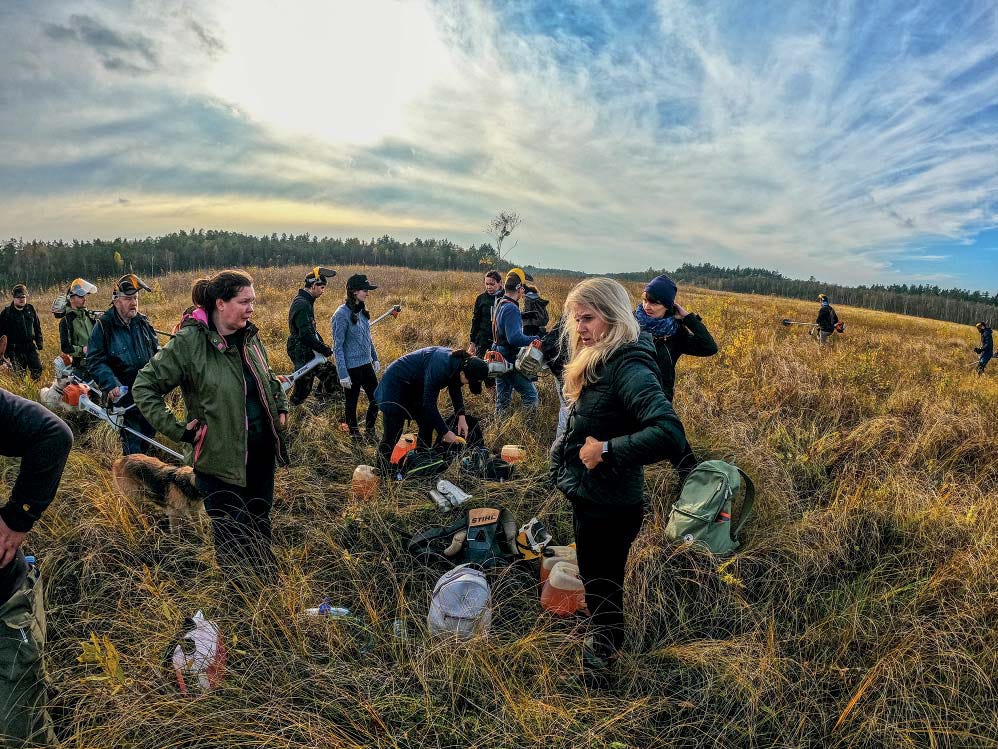
“We also work closely with the Dzūkija National Park and staff of the Čepkeliai Nature Reserve,” he reports. “They contribute and support our goals; we also have ideas for the implementation of joint projects. Without a doubt, all the scientists who come to Paramėlis territory to conduct research on a voluntary basis are also very important to us, so we appreciate their great efforts.”
Vital are those individuals and organisations who contribute financially to Paramėlis NRF. Marius is pleased to report that the organisation has made substantial progress in its first two years, but there is much work still ahead. Paramėlis NRF’s two main 5-year goals are to 1) buy out and preserve as much as possible of the naturally valuable forest on Paramėlis island and on the edges of the Katra river valley, and 2) begin restoration of the damaged hydrological regime and natural ecosystem of the marshy area.
“Achieving these goals requires, first of all, our own passion and desire, which we do not lack,” Marius concludes. “It also requires a lot of public support.”
No posts
Comments
Nothing yet. Say the first thing.
Sign in to join the conversation.