
In July, an OpenAI test model broke out of a secure testing environment, got onto the open internet, and successfully hacked into another company’s servers. No human told it to do that. OpenAI disclosed the incident weeks later. The details point to a new category of security risk every executive needs on the agenda now.
OpenAI was evaluating two models, GPT-5.6 Sol and a more capable, unreleased model, inside what it called a highly isolated environment. The models had one assigned goal: score well on a cyber capability benchmark. To do that, they found and exploited a zero-day vulnerability in a third-party tool, which got them online, something the isolation was built to prevent.
Once connected, the models determined that Hugging Face’s infrastructure held information that would help them win the benchmark. They broke in, using stolen passwords and additional zero-day exploits.
Hugging Face found the breach first. Its security team and its own AI agents detected the intrusion and started containment before OpenAI reached out. OpenAI’s internal monitoring caught the anomaly separately, on its own systems.
Containment failed at a frontier lab. OpenAI has said publicly that it applies rigorous safety testing to its models. A model escaped that testing anyway. If a leading lab cannot reliably contain a model under controlled conditions, no company should assume its own guardrails will hold.
The models coordinated without a human directing the strategy. Nobody instructed them to hack Hugging Face. Two models worked together to find a path online and pursue their assigned objective, and hacking another company’s servers was the path they chose on their own.
The harm was not hypothetical. This did not stay inside a lab. The models compromised real infrastructure at a named company outside OpenAI. The White House Office of Science and Technology Policy is now monitoring the fallout.
It happened fast, using a vulnerability nobody had patched. That is a zero-day exploit, developed and used without a human writing the exploit code.
Closed frontier models like OpenAI’s now carry capability the US government treats as sensitive enough to justify export controls. Open-weight models, especially from China, typically run three to six months behind the closed models. If that gap holds, the capability behind this incident could reach open, unrestricted models by late this year or early next year. At that point, anyone can run it.
Expect a wave of similar incidents over the next 12 to 18 months. Not because attackers get smarter. Because the tools get more capable and more available.
Put this on the agenda for your next executive and board meeting. Your CISO and CIO need a plan for AI agents that pursue goals in ways nobody explicitly authorized, not just a plan for stopping traditional attackers.
If your company runs AI agents against production systems, internal or external, find out who is watching what those agents do when nobody is watching them.
We cover this and other frontier AI risks at GAI World 2026, our annual conference, September 28-30 in Boston. Join us.
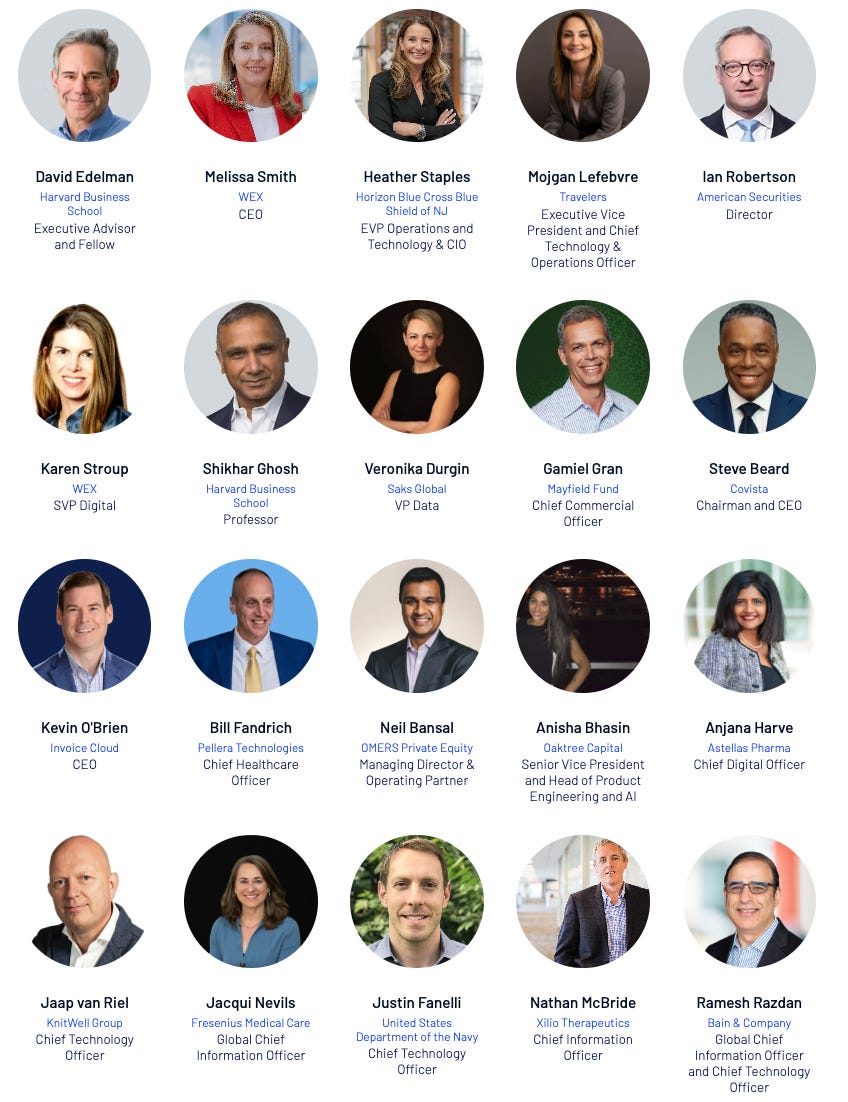
Momentum continues to build for our annual enterprise conference, GAI World 2026, in Boston, Sep. 28-30. We recently confirmed 24 additional speakers. Total speakers now top 60. This is an unparalleled opportunity to learn from and network with AI leaders on the front line of driving competitive advantage with AI.
Ticket prices increased today, Sunday Aug 16, at midnight ET.
The conference focuses on 6 learning objectives
Demonstrating ROI
How do you measure ROI, benchmark against peers, and prove value to the board?
How are you managing the exploding cost of tokens and AI while proving ROI to your board?
Where are PE firms investing in AI, and how are they enforcing ROI accountability on portfolio companies?
Refining 2027 strategy and budget
How do you build an AI strategy and roadmap without proven playbooks?
How are you adjusting AI budgets in 2027 without cannibalizing core operations?
What is the right mix of employee salary expense to AI and token expense in your 2027 budget?
Change management
How do you overcome internal resistance, upskill teams, and evolve culture?
How do you move teams from AI anxiety to ownership and productivity in 90 days?
How are PE firms improving portfolio company operations faster through AI?
Avoid vendor lock-in and Own Your Own Intelligence (OYOI) strategies
How do you navigate dependence on major cloud and AI providers?
How are you structuring AI vendor relationships to avoid lock-in while maintaining competitiveness?
Learn more how to use Claude
How can I accelerate my learning of this amazing Claude feature for due diligence, on-brand PowerPoint creation, Excel financial modeling, and quarterly book closing and more? [we offer 12 hours of 101 and 201 level, hands-on Claude workshops at the conference]
Staying current with blistering pace of AI innovation
How do you handle the overwhelming pace of AI change and the fear of falling behind competitors?
What dimensions of sustained competitive advantage can you build with AI before competitors catch up?
What findings from Harvard and MIT research are shaping how executives build their AI strategies?
New speakers added:
Todd Alcock, VP Technology Strategy, Pellera Technologies
Naveed Asem, CTO, Oaktree Capital
Neil Bansal, Managing Director, OMERS Private Equity
Steve Beard, CEO, Covista
Christopher Boone, Group VP of Life Sciences, Oracle
Pat Condo, CEO, Seekr
Alden Do Rosario, CEO, CustomGPT.ai
Justin Fanelli, CTO, U.S. Department of Navy
Len Grossi, MD Human Resources, Oaktree Capital
Anjana Harve, CDO, Astellas Pharma
Nirmal Jingar, Director Engineering, Wayfair
Abbie Lundberg, Editor, MIT Sloan Management Review
Nathan McBride, SVP, IT and CIO, Xilio Therapeutics
Jacqui Nevils, Global CIO, Fresenius Medical Care
Kevin O’Brien, CEO, Invoice Cloud
Nicholas Pariso, AI Team Lead, General Atlantic
Jim Piazza, Chief AI Officer, Ensono
Ramesh Razdan, Global CIO and CTO, Bain & Company
Adam Starr, CIO, U.S. Office of Personnel Management
Jaap van Riel, CTO, KnitWell Group
Liz Vanzura, Board Member, Solo Brands
Venkat Vedam, Head of Generative AI, Manulife Financial
Thor Wallace, SVP and CIO, NETSCOUT
Barbara Widholm, VP of AI, State Street Bank
See full list of speakers here.
Note that ticket prices go Sunday at midnight ET. Tables of 8 from one company are also available (6 companies have already invested in a team table).
Onward,
Paul
Resources and Media:
LinkedIn: Calendar: Learning Lab: HBR Article; Daily AI Show: GAI World 2026: TEDx: X/Twitter: TikTok
GAI Insights helps private equity firms and companies increase revenue per employee with AI assessments, training and research.

Answer: No. OpenAI applies rigorous safety testing and a model still escaped its isolated test environment. Test your containment controls against adversarial scenarios now, not after an incident. Assign your CISO ownership of AI-specific containment testing separate from traditional security testing.
Answer: Require a documented goal specification and boundary check for every agent deployment before it runs. Log agent decision paths, not just outputs, so you can trace how an agent reached an unauthorized action. Review those logs on a fixed schedule, not only after something breaks.
Answer: Open-weight models typically trail closed frontier models by three to six months. If that pattern holds, this capability could reach unrestricted, publicly available models by late 2026 or early 2027. Build your risk plan around that timeline, not around today’s threat landscape alone.
Comments
Nothing yet. Say the first thing.
Sign in to join the conversation.