
Late on 22 December 1978, in a government guesthouse in Phnom Penh, the Scottish academic Malcolm Caldwell said goodnight to Elizabeth Becker, a journalist with whom he had spent the evening arguing about the country now ruled by Pol Pot.1 Caldwell was a Marxist lecturer at the School of Oriental and African Studies (SOAS) and one of the Khmer Rouge’s most devoted Western defenders. Earlier that day, he had been granted an audience with Pol Pot himself. He returned euphoric, like a man at last in possession of undeniable truth, impatient to convert those around him.
Becker was sceptical. She had seen enough of Democratic Kampuchea in the preceding days to recognise a country brutalised and silenced by a murderous regime. Caldwell had been guided through the same eerie, tightly controlled tour, and both saw the same things. But where Becker saw evidence of concealment, Caldwell saw a revolution maligned by its enemies. Reports of atrocities were the usual imperialist propaganda, he insisted. Neither persuaded the other, and they retired for the night.
Not long afterwards, Becker was woken by gunfire. When she opened her bedroom door, she faced a young man pointing a pistol at her. After begging him not to shoot, she locked herself in the bathroom. Caldwell, she soon learned, had been shot dead in his room.
What motivated the killing? Was it a direct order from Pol Pot? An internal purge? A Vietnamese operation ahead of the imminent invasion? Nobody knows for sure, but Becker’s verdict, later recorded in her book,2 holds for every possibility: “His death was caused by the madness of the regime he openly admired”. Whoever pulled the trigger or gave the command, Caldwell was a true believer destroyed by the thing he believed in – still defending it only hours before he died.
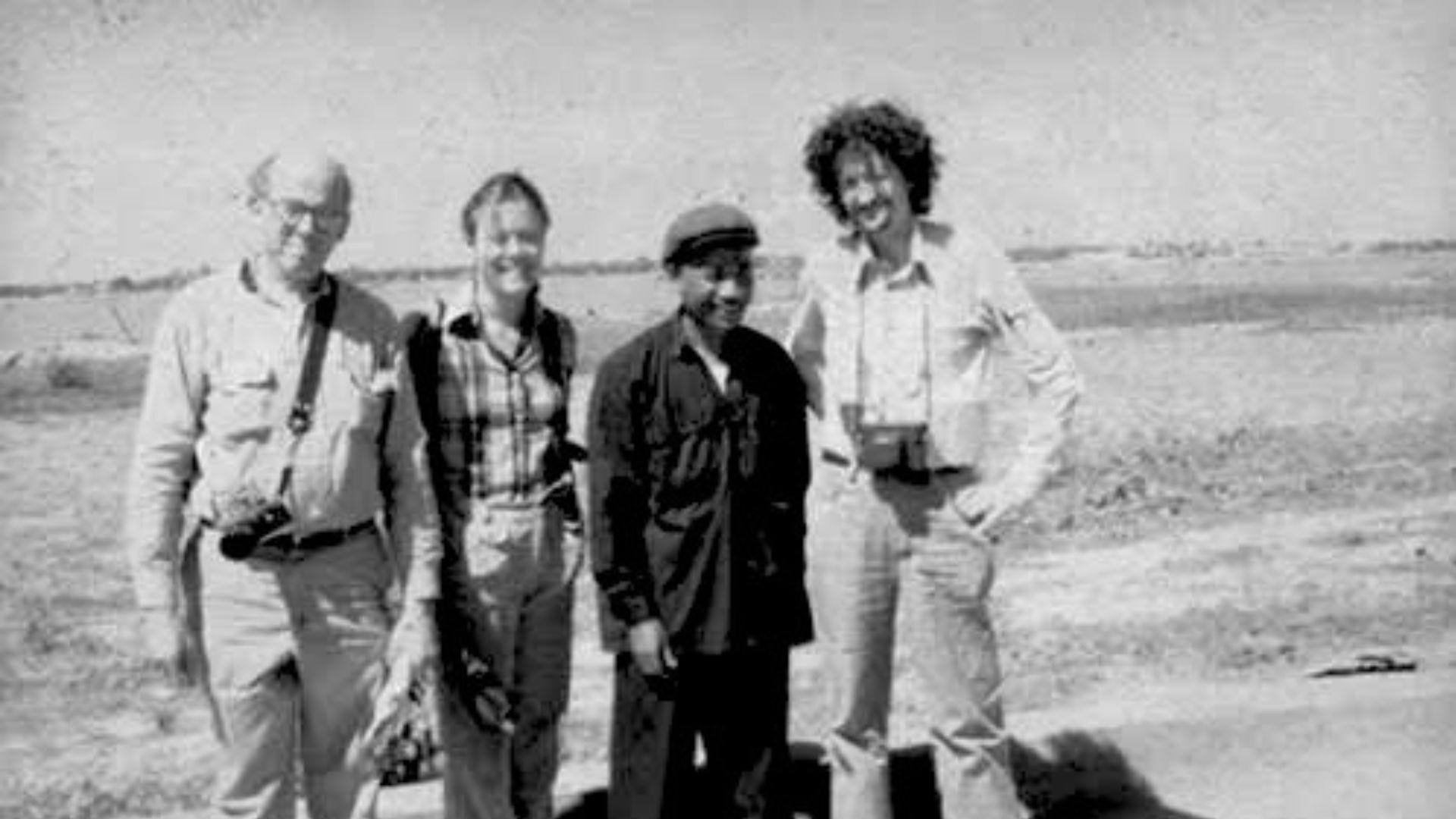
Caldwell was unusual in that he was both a true believer and a useful idiot – indeed, the quintessential example of each. But it’s crucial to note that these descriptions come from different directions. Useful idiot tells us whom his convictions served. It tells us far less about what those convictions did for him and why he held them in the face of evidence pointing the other way. The label is well-earned, and there's a grim satisfaction in the story: we congratulate ourselves on being less foolish. But Caldwell was an intelligent man, a family man and by Becker’s own account, “a lovely man, very funny, very charming”. Yet he still needed the murderous regime to be innocent. Why?
There are obvious answers. Caldwell had invested years in his political beliefs and staked his academic reputation on them. He was ideologically committed. One of his students, Walter Easey, says of Caldwell that he converted to “a fierce and angry communism”3 (I’m not sure there’s another kind). Admitting that the Khmer Rouge was monstrous would have meant admitting that its supposedly reactionary critics had been right. There was status in seeing through “imperialist propaganda”, just as there is status now in holding the correct opinions and advertising them to the correct people – peer approval in Caldwell’s day, clicks and likes in ours. We’re all reluctant to discover that our enemies were right about something important, especially when our friends are watching.
I’ve known Caldwell types in my time, and you probably have too. As a student, I worked with one in a bar on my weekends and was frankly a little in thrall to him. I had no idea what I was for. He knew exactly. He was going to be an intellectual, and he would solve the problem of the world, which (it became clear) was other people. He was vain and knew everything as all twenty-somethings do, but he carried it with genuine conviction. I envied the certainty more than I like to admit. He had the whole thing settled at twenty-two, whereas I couldn’t have told you what my following week was for.
But status and vanity don’t do enough to explain what we’re looking at here. Plenty of people cling to mistaken opinions without travelling across the world to flatter a mass murderer. The question that interests me is what a totalising belief does on behalf of the person who holds it. What uncertainty does ideological conviction remove? What psychological needs are met by holding to beliefs that fall apart under honest inspection? It interests me because the pathology is one we all recognise. The hashtags, slogans and ritual denunciations filling every newsfeed show us what that looks like today.
One possible answer begins with freedom, or rather with the fact that freedom is heavier than its admirers usually admit. This might seem paradoxical. Surely someone who prizes freedom would be the first to condemn those who take it away. But I’m talking about a different kind of freedom, the existential one.4
For most of human history, the largest decisions in a person’s life had already been made by the time he was born. He inherited a faith, a place, a social station and a set of duties. This did not necessarily make life good, and often it made life wretched. But it made life simple, much like a script is written for any actor on the stage. One need not improvise but simply follow the directions, oppressive as they may be.
The modern world offers a very different stage. In the democratic West, we are endowed with freedoms unimaginable to most of our ancestors. We can switch jobs, move countries, change gods, leave husbands, and start over halfway through. These are gains our forebears died for, and I wouldn’t trade them for anything – and (I’m quite sure) neither would you.
Yet for every hard-won freedom, there’s a question. What is the day for? What does a good life look like? Who should I love, which god should I worship, and how do I know I’m doing it right? There’s no script for this, and we must work it out as we go. Every word and action opens up new possibilities while closing off a thousand others. When things go wrong, the consequences are ours to bear alone.
But what does a person actually do with the freedom to author his own life?
Picture a man lying in bed at one in the morning, scrolling through political reels he no longer even enjoys. TikTok has learned which content keeps him engaged – that is, bristling with fury at a world going to hell. Depending on his tribe, the villains are globalists and woke activists, or billionaires and fascists. Nobody is forcing him to watch this, and he knows, on some level, that this is doing him no good, just as he knows junk food does him no good. He can close the app whenever he likes, and he will, as soon as this Piers Morgan segment is over. By any conventional measure, he’s a free man doing as he pleases. And yet his thumb still flicks through an infinite scroll, stopping at the next piece of outrage.
Whatever this is, it isn’t self-authorship. We’re watching a sovereign individual, with every freedom in the world available to him, hoping something or somebody will switch off his phone and tell him what to do.
This was the predicament Erich Fromm explored in a book suitably titled The Fear of Freedom,5 in which he identified two kinds of freedom: freedom from and freedom to. The first kind is what modernity delivers in the way of liberation from external authorities and social hierarchies – the serf untied from the lord, the slave free from his master. The second kind is freedom as personal autonomy. This is about the freedom to direct one’s own life, create meaningful relationships and do productive work via choices made by the individual, rather than through coercion.6
The trouble is that the first kind of freedom doesn’t automatically produce the second kind. Modernity may have freed the individual from traditional authorities, but that same freedom “though it has brought him independence and rationality, has made him isolated and, thereby, anxious and powerless”. Faced with that isolation, the individual seeks some escape. The very chains he has cast off now look like the ones that offered security. The failure to create becomes the urge to destroy; the freed self is now a burden, and surrendering it to an authority looks like its own reward. A mass movement can offer the perfect solution: an authority to obey, an enemy to destroy and a crowd in which the troublesome self can disappear.
Fromm was trying to understand what had happened to Germany. How did one of the most civilised and advanced nations on earth give way to torchlight parades and the dictates of a malignant narcissist?7 His conclusion was that fascism, far from being a bewildering aberration, was a monstrous answer to a real question. Freedom had left people exposed, and the movement promised to cover them again. They had only to obey. How else to explain why “millions in Germany were as eager to surrender their freedom as their fathers were to fight for it”?
Fromm’s analysis doesn’t fit neatly onto Caldwell, however. The Scottish academic was not trapped inside Democratic Kampuchea. He was not coerced by the Khmer Rouge. He was making his name at SOAS, enjoying all the freedoms of one of the most liberal countries on earth – the sort of liberty the regime had abolished. Indeed, only a liberal society like Britain could produce someone like Caldwell, making a career of blaming the West for the sort of oppression he admired in its enemies. And if that sounds familiar, it’s because it’s practically the job description of the Western academic today. If Caldwell were alive now, we know what his Bluesky would look like.
Perhaps the burden from which Caldwell sought relief was closer to uncertainty. A doctrine that explains everything spares its adherents the anguish of an ambiguous universe. It hands them predetermined principles, a framework, and a system through which to make sense of the world and one’s place in it. It offers more as well: a cosmic narrative, a destination that can absorb the cost of revolution – the corpses pointing towards the better world to come.
Eric Hoffer took the argument somewhere darker in The True Believer.8 Hoffer was entirely self-educated and spent his working life as a longshoreman on the San Francisco docks. Without even a degree to his name – or perhaps for that reason – he produced a clearer account of the fanatic than anything to come out of the academy. Where Fromm begins with the burden of freedom, Hoffer turns to the person who finds his own life unbearable.
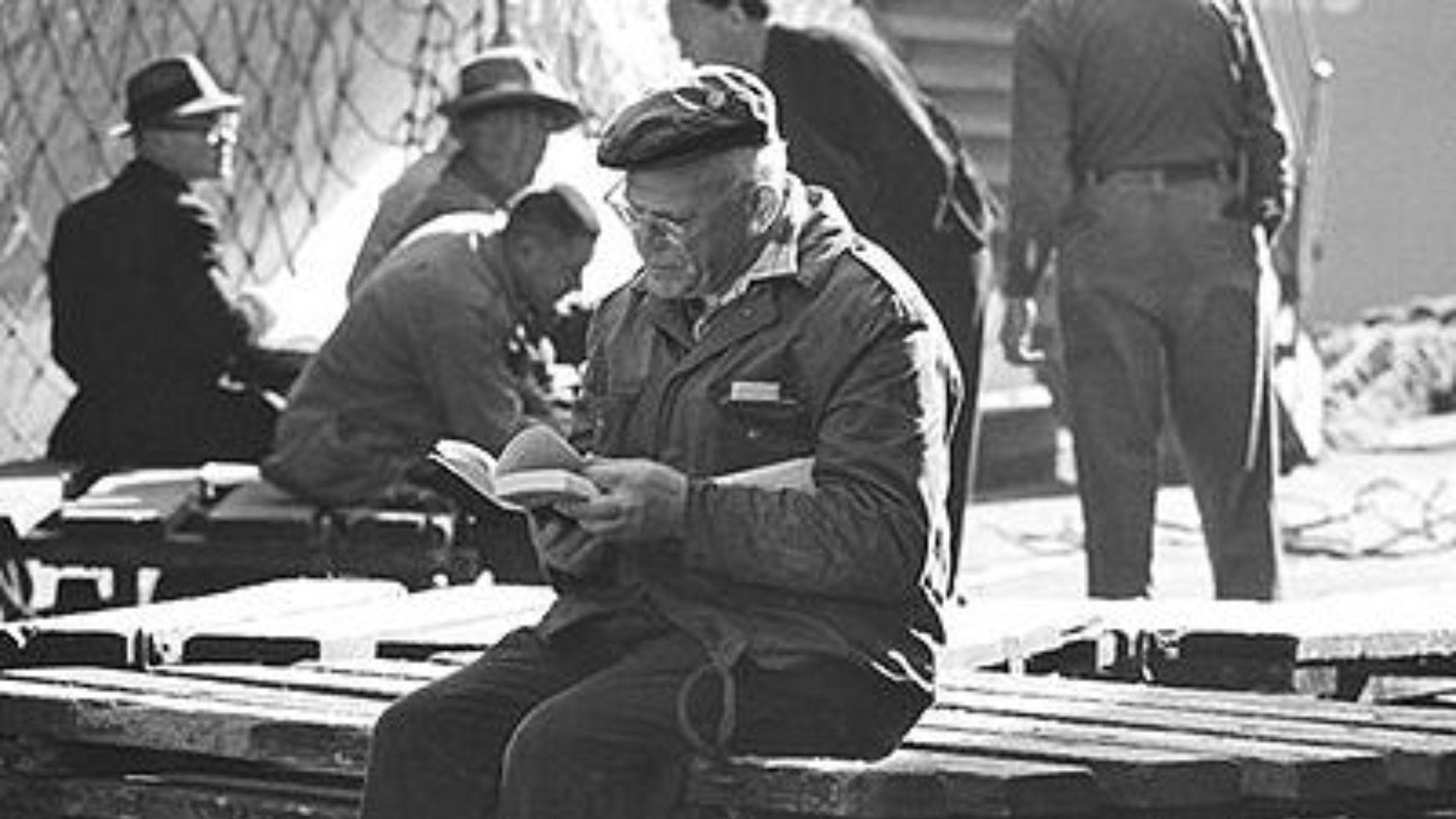
The fanatic, seeing his individual existence as “spoiled or wasted”, yearns for a cause to dedicate himself to, nursing his grievances all the while. What he wants from that cause is not freedom from restraint but freedom from responsibility – and, beneath it, anonymity: to be absorbed into the whole, one thread among many, the personal inferiority that felt so exposed now obscured. A mass movement offers precisely this, neatly packaged with a new identity, an enemy, and the thrilling possibility of starting over as someone else, someone with renewed purpose. No wonder the fanatic, as Churchill observed, cannot change his mind and will not change the subject.9 He’s found his calling.
But Hoffer makes an even more unsettling claim: that the content of the belief may be far less important than we like to imagine. Communism and fascism might present themselves as opposite ends of a spectrum, yet both draw on the same fervour, the same promise of self-transcendence. This horseshoe fits the fanatic regardless of the doctrine: the communist of one decade could just as easily be the fascist in another. The doctrines change, but the needs being met look ominously similar.
The most important thing they offer is an enemy. As Hoffer put it: “Mass movements can rise and spread without belief in a god, but never without a belief in a devil.”
For Caldwell, the devil was (naturally) Western imperialism, which provided more than just an object of hatred. Inconvenient facts could be dismissed as propaganda from a West all too adept at managing the narrative. Reports of atrocities were tainted by their source. Refugees could be discredited, and journalists were the dupes of governments manufacturing lies. Evidence against the revolution became evidence of the lengths to which the West would go to destroy it. This is how Caldwell and others who shared his convictions neutralised anything that threatened their worldview.
Consider François Ponchaud's Cambodia: Year Zero, the first catalogue of the genocide. Caldwell had already dismissed its author without reading it – relying instead on Chomsky, who had questioned the refugee testimony the book drew upon. Becker couldn't get over it: "The fact that Malcolm, a professor, had not read it before he went, that I couldn't believe. I think it was almost ideological that he didn't read it”.
Shared hatred is powerful and intoxicating. It binds the believer to his fellows in the movement, but more than that, it relieves him of the need to consider what his opponents are actually saying. If the enemy is sufficiently wicked – and the West undoubtedly was in Caldwell’s mind – then debate itself becomes suspect. To engage is to lend the devil credibility, as though he might have an argument rather than another trick. There is nothing to learn from the enemy and everything to lose, including the certainty of one’s own convictions. Doubt itself begins to look like betrayal.
By the time Caldwell arrived in Phnom Penh, his beliefs – already applauded by colleagues and students at SOAS – were operating as a sorting system for reality. Months earlier he had written in the Guardian rubbishing reports of a Khmer Rouge genocide, citing the Kampuchean Information Minister, Hu Nim, who blamed the deaths on America. Hu Nim had by then been tortured to death at S-21, the regime’s interrogation centre a few streets from where Caldwell would sleep. Any suffering he witnessed on his guided tour had a purpose. The deserted capital looked like a triumph of political will rather than mass coercion. Here he was, a representative of the enlightened few who had seen through the lies believed by ordinary people. And now, an invitation to meet Pol Pot in private. Here was recognition from history itself.
Perhaps this explains the euphoria Becker described on his return. Caldwell had not merely found a revolution to support. He was now its leading intellectual champion in the West. The true believer finds vindication, his surrender both freeing and binding, the self unburdened yet magnified.
This act of surrender never travels under that name, of course. Nobody announces that they are handing back the burden of being a person. It goes by words like “solidarity”, “liberation” and the “cause”. The true believer doesn’t experience himself as fleeing anything. Quite the opposite. He is finally arriving.
To continue reading this article, add comments and support my work, you can upgrade below. You’ll also get access to the full archive.
Comments
Nothing yet. Say the first thing.
Sign in to join the conversation.