
Jazz on low. Chet Baker, She Was Too Good To Me, the kind of record that makes a quiet room feel inhabited. One spray of Gentleman Givenchy before sitting down, amber and cedar settling into the wrist within minutes. Some mornings the ritual is the only thing that makes the hours feel deliberate.
I want to say something that most people are too polite, too afraid, or too ideologically cautious to say directly.
Professionally. Socially. In every domain where human beings interact with each other and make rapid, mostly unconscious judgments about who deserves their time, their trust, and their attention.
The research on this is not subtle.
A meta-analysis by Langlois and colleagues reviewed over 900 studies on physical attractiveness and found that attractive people are consistently judged as more intelligent, more competent, more socially skilled, and more trustworthy, across cultures, across age groups, across professional contexts, before they have said or done a single thing to justify any of those judgments.
The halo effect is a foundational bias baked into human social cognition at a neurological level. When the brain perceives an attractive person, it fires across reward circuits, social evaluation networks, and status assessment regions simultaneously. The judgment happens in milliseconds. The rationalization happens afterward.
Attractive people get hired more often, promoted faster, paid more, given more benefit of the doubt in conflicts, and treated with more warmth in everyday interactions.
Knowing this and pretending it doesn’t matter is a choice to operate at a disadvantage while telling yourself you’re taking the high ground.
Here is the part that changes everything though.
Most people treat physical attractiveness as a fixed asset. Something you either have or you don’t. A genetic lottery ticket that was scratched on the day you were born and the prize was determined before you had any say in the matter.
That is not how it works.
Attractiveness is a dynamic output generated by a set of inputs, many of which are completely within your control, and most of which the people operating below their potential are neglecting entirely.
This is what nobody tells you.
Because it requires honesty about something most people would rather leave in the category of fixed and therefore not their responsibility.
Notebooks out.
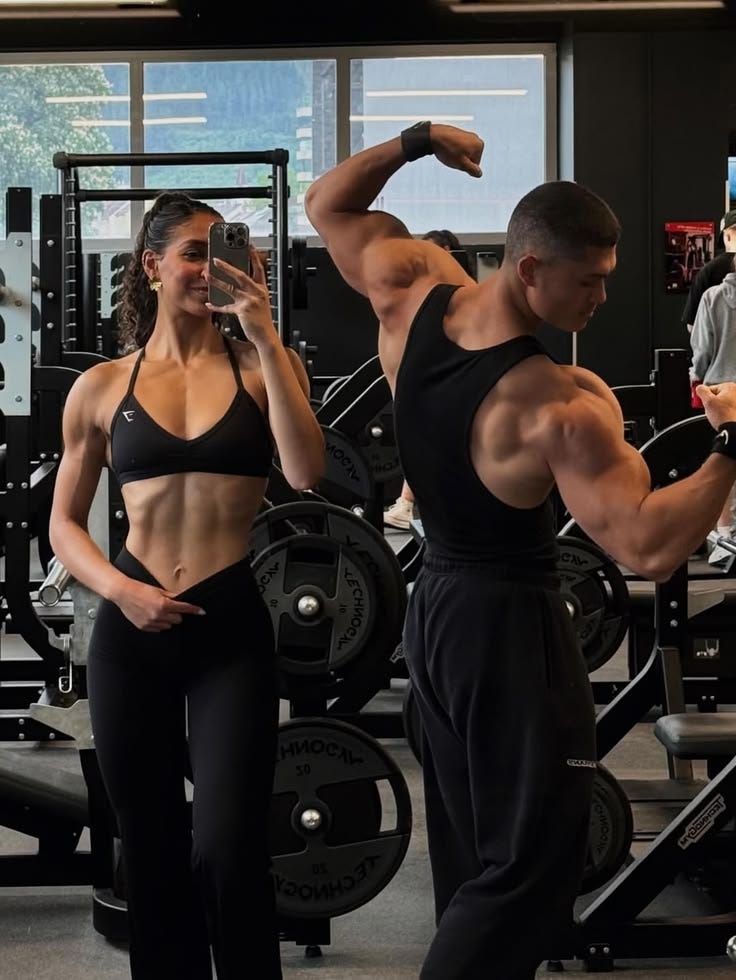
“The human body is the best picture of the human soul.” — Ludwig Wittgenstein
Most people believe their face is a static structure.
What they see in the mirror at 25 is what they will see at 35, minus the youth, plus some lines.
That is not what the science says.
Your face is a living tissue system that is continuously remodeling itself in response to the inputs it receives. Bone density, fat distribution, skin quality, muscle tone, and hydration levels are all dynamic variables that respond to behavior.
Start with sleep, because sleep is the most underestimated beauty intervention in existence.
During deep slow-wave sleep, the body releases human growth hormone, the primary signal for cellular repair and tissue regeneration. Collagen synthesis increases. Inflammatory markers drop. The lymphatic system clears metabolic waste that accumulates in facial tissue throughout the day.
A 2010 study published in the British Medical Journal asked untrained observers to rate photographs of sleep-deprived individuals versus well-rested individuals. The sleep-deprived group was consistently rated as less healthy, less attractive, and less approachable. The observers could not articulate precisely what was different. They just knew.
Because the skin tells the story of your physiology whether you want it to or not.
Chronic sleep deprivation elevates cortisol. Elevated cortisol breaks down collagen, accelerates skin aging, increases facial puffiness through inflammatory pathways, and produces the specific quality of dullness and heaviness that registers as unattractive at a neurological level before any conscious assessment has occurred.
Eight hours of quality sleep is a skincare routine. It is a facial treatment. It is the single highest-return investment in your physical appearance that costs nothing and that the majority of people reading this are not doing consistently.
Then there is the gut-skin axis, which sounds like functional medicine territory but is actually some of the most compelling research in dermatology right now.
The gut microbiome directly regulates systemic inflammation, and systemic inflammation expresses itself on the skin. Acne, rosacea, eczema, accelerated aging, reduced skin elasticity. All of them have measurable connections to gut microbiome composition. A disrupted microbiome produces skin that looks disrupted. A healthy microbiome, fed by diverse fiber, fermented foods, and the absence of chronic ultra-processed food consumption, produces skin that looks alive.
Your face is a continuously updated report on your biology.
“Biology gives you a brain. Life turns it into a mind.” — Jeffrey Eugenides
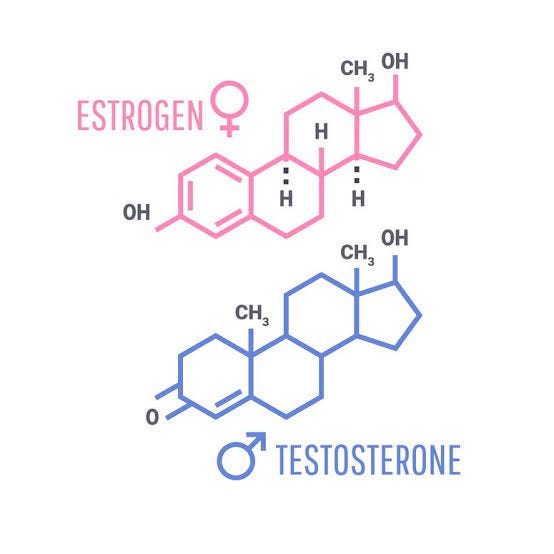
Here is something that gets discussed in evolutionary biology departments and almost nowhere else.
Your physical attractiveness is heavily determined by your hormonal profile, and your hormonal profile is not entirely fixed.
The research is clear on what each hormone produces in terms of physical signals.
In men, testosterone drives bone density and bone growth in the jaw and brow, muscle mass and the shoulder-to-waist ratio, skin thickness and clarity, voice depth and resonance, and the overall quality of physical presence. A man with optimized testosterone levels looks different from a man with suppressed ones. Not subtly. Categorically. The face is sharper. The posture is different. The body carries itself with a different kind of density.
In women, estrogen regulates the waist-to-hip ratio, facial softness and bone structure, skin luminosity and thickness, and the specific quality of femininity that registers as attractive across nearly every culture studied.
The point is not that you should artificially manipulate your hormones. The point is that the lifestyle inputs that optimize hormonal health are accessible to almost everyone and most people are running them in reverse.
Chronic sleep deprivation suppresses testosterone in men by measurable amounts. Studies have shown that one week of poor sleep can reduce testosterone levels by up to 15%, an effect equivalent to aging ten years according to some endocrinologists.
Chronic stress elevates cortisol, which directly suppresses sex hormone production through the hypothalamic-pituitary-adrenal axis. The body under chronic stress prioritizes survival chemistry over reproductive chemistry. The result is visible.
Sedentary behavior, low protein intake, chronic alcohol consumption, and ultra-processed food diets all suppress the hormonal signals that produce physical attractiveness at the structural level.
Resistance training, adequate sleep, manageable stress, sunlight exposure, and adequate dietary fat and protein move those markers in the other direction.
You are optimizing the hormonal broadcast your face and body are sending to every nervous system in the room.
“You never get a second chance to make a first impression.” — Will Rogers
Research from Tufts University found that people form complete social impressions of strangers in what psychologists call thin slices of interaction, fragments of exposure so brief they barely register consciously.
In those milliseconds, the brain is not cataloguing features. It is reading signals. Posture. Eye contact. The quality of stillness in the body. The openness or guardedness of the expression. The pace of movement.
And a 2024 study published in Royal Society Open Science confirmed that the halo effect remains deeply entrenched in human social cognition even in an era saturated with digital beauty filters and widespread awareness of cognitive bias.
Attractive people are consistently attributed confidence, intelligence, emotional stability, and trustworthiness, globally, across eleven world regions in one cross-cultural study involving over eleven thousand raters.
Here is the leverage point.
It is most commonly discussed as something attractive people benefit from passively. But the mechanics run both ways. When you carry yourself with genuine confidence, when your posture signals ease rather than anxiety, when your movement quality broadcasts that you are comfortable taking up space, the social brain of every person watching reads that signal and attributes attractiveness to it.
Confidence does not just make you seem more attractive. It makes you appear more physically attractive. The neural systems that process physical appeal and the systems that process social status and confidence share significant overlap. When one activates strongly, it elevates the perceived output of the other.
This is why the same face looks different in a photograph taken when someone is genuinely at ease versus one taken when they are anxious. Not because the features changed. Because the expression of those features through muscle tension, eye openness, the quality of the smile, the angle of the head, all of it shifts based on the underlying neurological state.
The practical implication is significant.
Developing genuine confidence is a physical attractiveness intervention.
Because confidence literally changes how your features are perceived by the social brain processing them.
“Take care of your body. It’s the only place you have to live.” — Jim Rohn
This one does not require extensive neuroscience framing.
The body composition research is direct and consistent. Body fat distribution, muscle development, and the resulting silhouette are among the most heavily weighted visual signals in attractiveness assessment, particularly in men but measurably across both sexes.
In men, the shoulder-to-waist ratio, driven by the combination of developed upper body musculature and reduced midsection fat, is one of the single most consistent predictors of physical attractiveness ratings across cultures. Research confirms it is processed as a testosterone signal, a health signal, and a physical capability signal simultaneously.
In women, the waist-to-hip ratio around 0.7 has been consistently documented across cultures as a primary attractiveness marker, linked neurologically to estrogen levels, reproductive health signals, and fertility cues that the human brain has been reading for hundreds of thousands of years.
They are biological signals that the brain evolved to read because they carried genuine information about the health and genetic quality of a potential mate.
You cannot change the hardware doing the reading.
But you can change the signal you’re sending.
Progressive resistance training combined with adequate protein intake and caloric management changes the body composition variables that feed directly into those biological attraction signals. This is not about vanity. This is about understanding what the human brain is actually assessing when it looks at another human being and deliberately optimizing the inputs.
The person who lifts seriously, eats enough protein, sleeps adequately, and manages their body fat is not just healthier. They are broadcasting a stronger biological signal on every dimension the social brain uses to evaluate physical attractiveness.
This is not complicated. It is just consistent. And consistency is what most people cannot sustain because they do not understand why the inputs matter at the level they actually matter.
“Dress shabbily and they remember the dress. Dress impeccably and they remember the woman.” — Coco Chanel
The research on grooming and perceived attractiveness is consistent and significant. Skin clarity, hair maintenance, dental hygiene, appropriate fragrance, and well-fitting clothing that complements body proportions all function as multipliers on the underlying physical signal.
A well-groomed person with average features consistently outperforms an ungroomed person with strong features in attractiveness ratings.
This is because grooming signals something beyond aesthetics to the social brain. It signals self-investment. The person who takes care of their appearance is broadcasting, at a neurological level, that they take care of things. That they are organized, disciplined, and self-respecting.
And the social brain, which is always running a rapid assessment of whether this person is worth investing in, reads that signal clearly.
The specifics are less important than the principle.
Fit matters more than brand. Clothes that fit your actual body tell a more attractive story than expensive clothes that don’t. Clean and specific beats expensive and generic every time.
Skin care is not a female domain. Cleansing, moisturizing, and sun protection produce measurable improvements in skin quality over months and years that directly impact attractiveness ratings.
Fragrance operates on a completely separate attraction channel through the olfactory system and limbic processing, bypassing visual cognition entirely and hitting emotional and memory centers directly. A considered, well-chosen scent is doing work that nothing visual can replicate.
These are not complicated or expensive interventions.
They are the multipliers that most people skip because they don’t understand the return.
“Energy and persistence conquer all things.” — Benjamin Franklin
This is the principle that is hardest to put into clinical language but may be the most important of all of them.
There is a quality that certain people have that makes them magnetically attractive independent of their features, their body, their grooming, or their presentation.
It shows up as aliveness. Engagement. The quality of being genuinely present in a way that most people are not.
The neuroscience of this runs through the autonomic nervous system.
A person whose nervous system is in a ventral vagal state, regulated, safe, genuinely present, broadcasts that state through micro-expressions, vocal quality, the warmth and movement of their eyes, the quality of their attention.
The social brain of everyone around them reads this at a level far below conscious awareness and categorizes the person as safe, warm, and deeply attractive.
A person whose nervous system is chronically dysregulated, running on cortisol and low-grade threat response, broadcasts that state through flat affect, guarded eyes, tight facial muscles, and a quality of absence even when they’re physically present.
People call this energy without being able to explain what they mean.
What they mean is the visible signature of a nervous system’s baseline state.
You build this through everything discussed in this post and in this newsletter over the last several months. Sleep. Stress regulation. Exercise. Genuine engagement with your own life. The kind of life that gives you something to be genuinely present about.
The most attractive people are not always the most symmetrical or the most developed.
They are the ones who are most fully there.
And fully there is something you build.
Physical attractiveness is not a lottery.
It is an output.
And the inputs that generate it, sleep quality, hormonal health, body composition, posture and presence, grooming and presentation, the underlying aliveness of a regulated nervous system, are all variables.
Variables respond to intervention.
The person who understands this stops asking whether they are attractive and starts asking what they are sending.
Because the signal is always going out.
The only question is what it says.
Start there.
I write two kinds of posts.
The ones you just read, and the ones I only share with people who are serious.
The paid letters are where the real work happens. Deeper research, more personal, more specific, and written for the small percentage of people who read something like this and actually do something with it.
If that’s you, the button is right there.
Become a paid subscriber.
Click the “Upgrade” button

No posts
Comments
Nothing yet. Say the first thing.
Sign in to join the conversation.