
In March 2026, I visited La Regadora, a 36-unit housing cooperative in Sant Andreu de Palomar, Barcelona, just a few months before renovations are expected to be complete.

Before getting into the structure, a few elements of this project stayed with me and continue to shape how I think about it:
Fun fact: The apartments are designed to grow and shrink over time, with bedrooms that can be reassigned between neighboring units.
Key lesson: A zero-interest public loan did not simply reduce costs; it appears to have made the project viable by allowing it to absorb years of delay without financial collapse.
Key tension: Even within a model designed for affordability, a €30,000 buy-in raises important questions about who is able to participate.
Taken together, these details—flexibility, financing, and access—offer a useful lens for understanding what La Regadora is attempting to build.
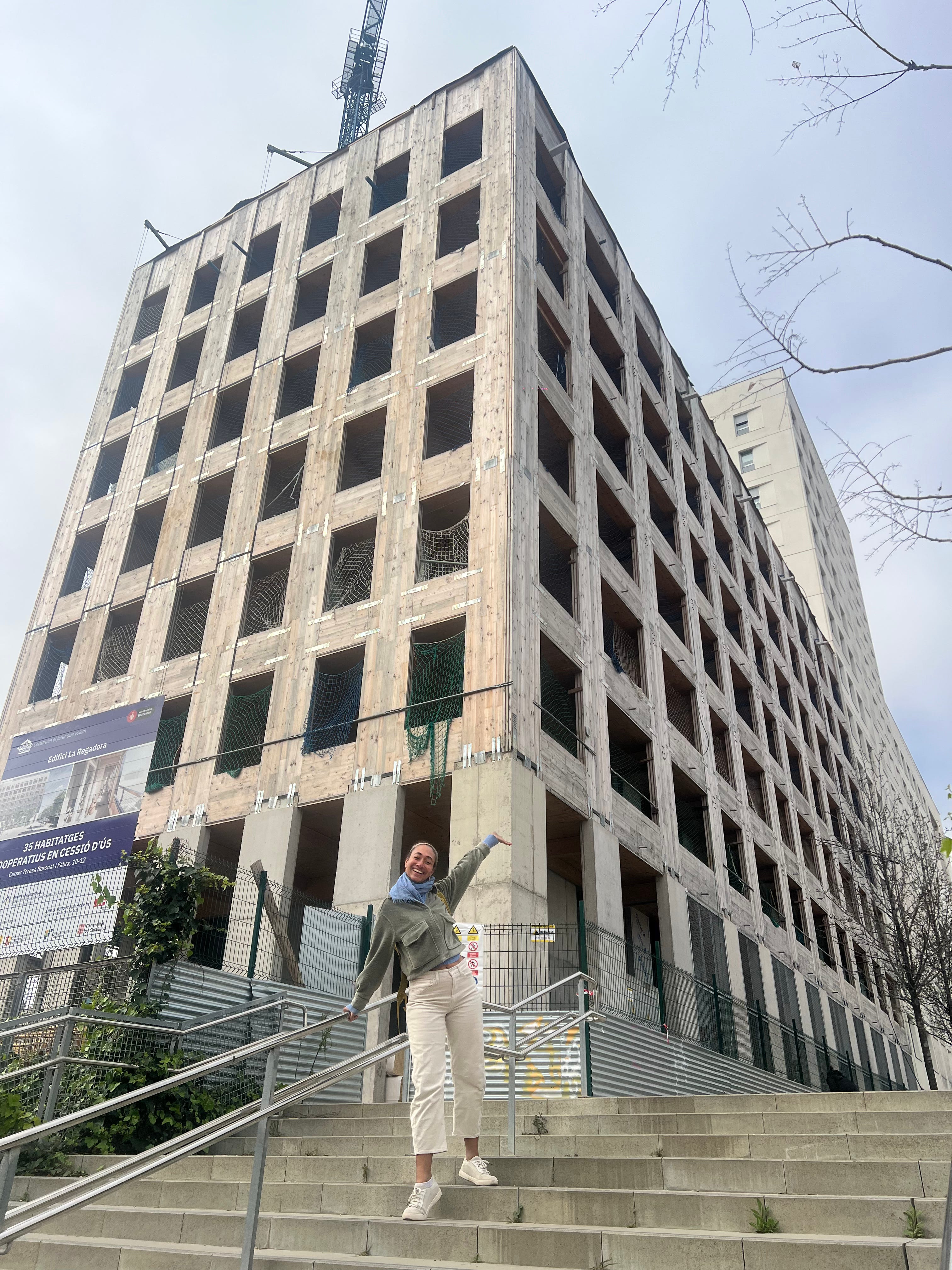
La Regadora is not only a housing development. It is an effort to treat housing as a long-term commons rather than as a commodity.
The project operates under a “right to use” model (cesión de uso). The land is publicly owned, while the cooperative finances and manages the building. Residents do not own their individual units as private property; instead, they hold long-term rights to use them.
The building includes 36 units in total:
19 three-bedroom units
2 four-bedroom units
2 one-bedroom units
The remaining units are two-bedroom
Monthly fees are expected to range from approximately €500 to €800.
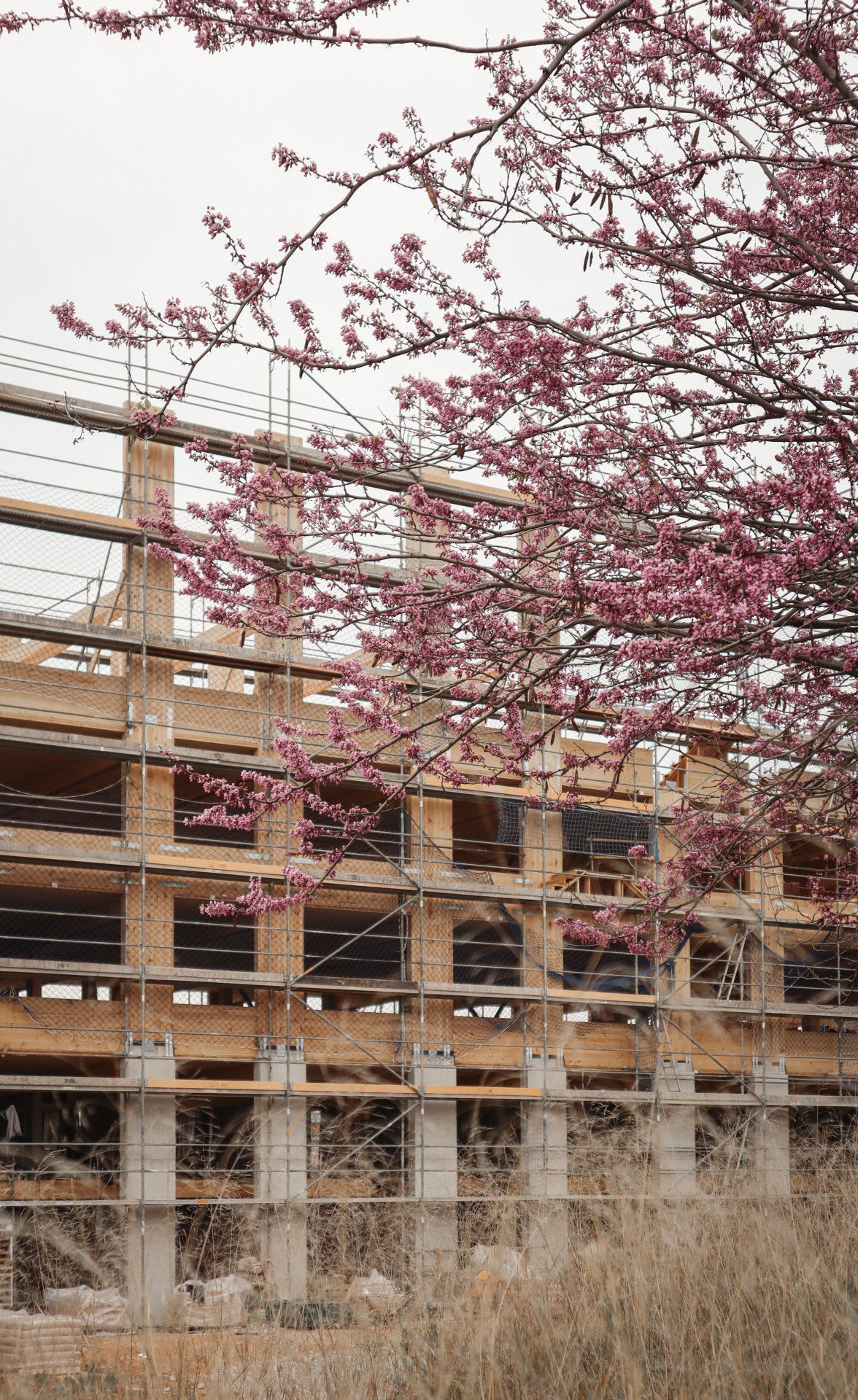
Photo from arqbag.coop
The project’s financing is layered, but one component stands out as particularly consequential.
A zero- or near-zero-interest loan from a Catalan public bank anchors the project, with the city acting as guarantor. Once residents move in, their monthly payments will be used to service this loan.
This structure seems to have had a significant impact on the project’s resilience.
Key lesson: Construction delays during COVID extended the timeline by several years. In a typical debt-financed project, this would likely lead to compounding interest, rising costs, and increased financial risk.
In this case, because the loan carried little to no interest and did not require repayment during construction, the cooperative was able to move through these delays without the same level of financial pressure.
This raises a broader question about how financing structures shape what kinds of housing projects are able to succeed.
The project also draws on European recovery funding (NextGenerationEU), adding another layer of public support to the overall capital stack.
Residents contribute an average of €30,000 upfront, with the amount scaled according to unit size.
This contribution is structured to be:
Reimbursable when a member leaves, as a new member buys their share
Non-speculative, with no appreciation within the first 40 years
Gradually reduced after very long tenure
This approach differs from limited equity cooperatives in the United States, where shares typically appreciate modestly over time. Here, the emphasis is on long-term affordability rather than individual financial return.
Project members described this contribution as “not a small amount,” which reflects a real constraint within the model.
Eligibility is capped at relatively modest income levels (approximately €52,000 for a two-adult household), positioning the project within the realm of social housing. At the same time, the upfront contribution remains significant relative to those incomes.
This creates an ongoing tension: how to design a non-speculative housing model that remains broadly accessible when some level of initial capital is still required.
If financing is largely technical, governance appears to be more relational and, in many ways, more difficult.
Membership formation has been one of the most complex aspects of the project:
Entry is managed through a waiting list, which includes a small fee
Selection currently relies primarily on formal social housing criteria
The cooperative had initially intended to develop additional social criteria, but time constraints limited that process
There is a clear recognition within the group that these decisions carry ethical and political weight. Balancing inclusion, fairness, and practical timelines is not straightforward.
This suggests that building a commons is not only about shared resources, but also about the processes through which people come together to steward them.
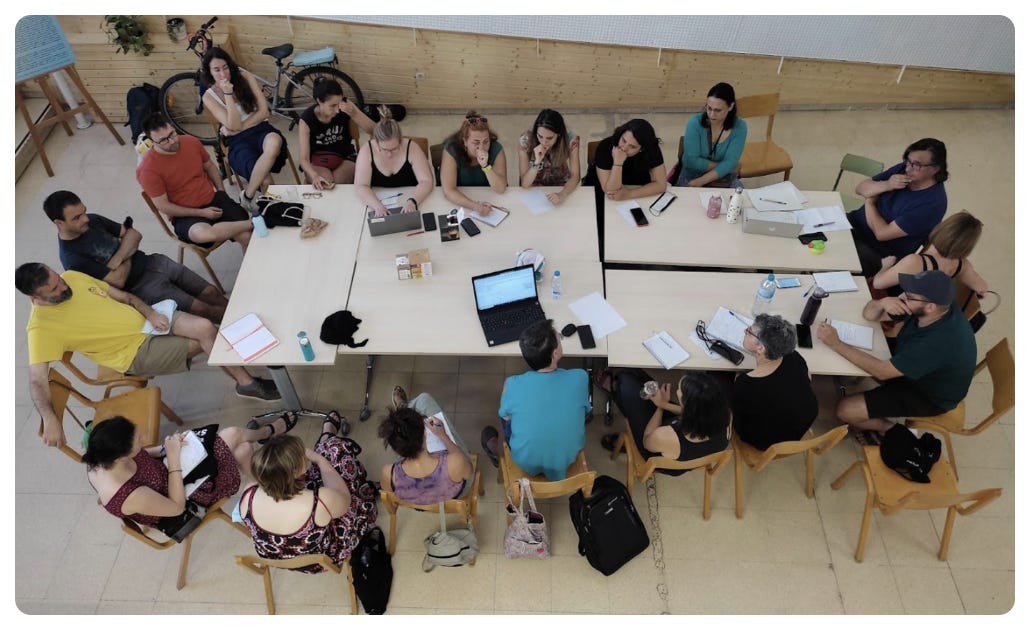
Photo from La Regadora
Fun fact: The building incorporates a modular design that allows units to change over time.
Bedrooms can be reassigned between adjacent apartments, enabling units to expand or contract as household needs shift. A growing family can gain space, while a smaller household can release space without needing to relocate.
This design introduces a level of flexibility that is uncommon in conventional housing. It also reflects a different assumption: that people’s needs will change, and that housing should be able to respond to those changes.
La Regadora extends cooperative principles beyond the building itself and into its broader relationships.
The project is connected to aligned systems across multiple areas:
Insurance is provided through a cooperative insurer
Wood is sourced from producers in the Basque Country
Banking relationships are with ethical finance institutions
Digital infrastructure is supported through CommonsCloud
There are plans to integrate an energy cooperative
In addition, assemblies are currently hosted in local community spaces, and the project collaborates with neighborhood organizations.
These choices suggest an intention to embed the cooperative within a wider ecosystem, rather than operate as a standalone development.
The project originates from a municipal initiative led by the Barcelona City Council. The municipality opened a competitive inviting community groups to develop housing on public land through long-term leases, typically ranging from 75 to 90 years.
The site itself has a layered history. It was previously a militarized zone, and later abandoned. It then became occupied informally under precarious conditions. Over roughly two decades, sustained community pressure pushed the municipality to redevelop the area.
The resulting plan combines social housing, public services such as schools and health centers, and cooperative developments like La Regadora.
La Regadora offers a set of ideas that feel worth paying attention to.
The ability for apartments to expand and contract over time suggests one way that housing might better reflect the realities of people’s lives.
The use of zero-interest public financing demonstrates how different financial structures can change what is feasible, especially in the face of uncertainty and delay.
The ongoing tension around the €30,000 contribution highlights how questions of access remain central, even in models designed with equity in mind.
As renovations near completion and residents begin to move in, it will be worth watching how these elements function in practice. How will the flexible design be used over time? How will the financial model hold up under real occupancy? And how will the cooperative navigate the questions of access and membership that are still evolving?
This next phase will likely reveal as much about the model as the development process itself.
No posts
Comments
Nothing yet. Say the first thing.
Sign in to join the conversation.