
In our individualistic culture, we’re often told there’s no point in doing something unless you enjoy it – an idea that never seemed to gain traction with my PE teachers. Another cultural trope is that having fun should be taken seriously, whether it’s appreciating satire as a form of social commentary or respecting the notion that humour can help both release and contain the emotional response to distress.
Upsetting events, especially ones that appear inexplicably random, can make us feel hostages to fate – a particularly uncomfortable feeling in a post-modernist world where, on the one hand, we are each made to feel responsible for forging our own destinies, yet on the other, as if we’ve never had less control over the outcomes of choice, be it voting, buying a house or arranging a holiday (Is the destination safe? Will a cloud of volcanic ash close the airport? What about the size of my carbon footprint? Etc, etc).
Writing so-called ‘nonsense’ in response to harsh reality and its unpredictable consequences allows the writer to enter the realm of bizarrely landscaped dreams already populated by fairy tales, a shifting diorama of surrealist fantasy where a lobster might play a ukulele, wicked stepmothers stalk the land, and an escape hatch is never more than a plot twist away.
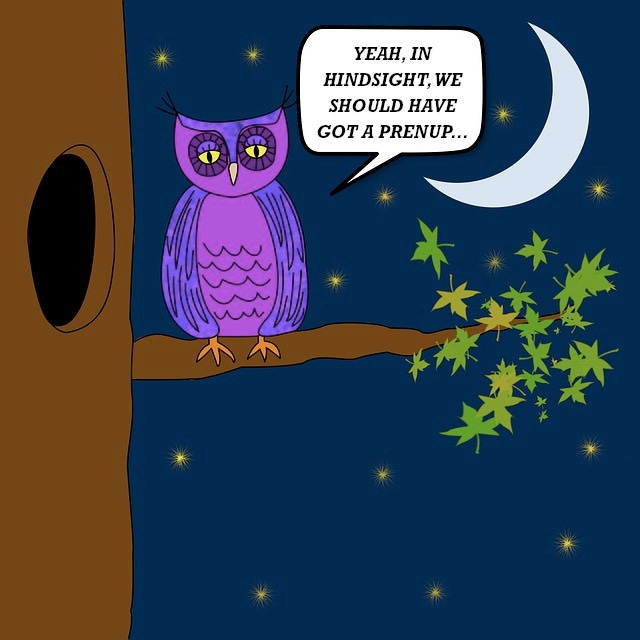
I grew up with a fondness for Lewis Carroll and Edward Lear, experimenting with adding verses to The Owl and The Pussycat, which might see them as likely to go up the M3 as the Orinoco, or getting married in Vegas by an Elvis lookalike because the turkey who lived on the hill had been kidnapped by Bernard Matthews. Nonsense poetry, to me, is a metaphor for life itself – apparently ridiculous, resistant to any inherent logic but its own, and impossible to quantify. To demonstrate, I give you the following bit of stuff and nonsense, with apologies to Lear:
The skunk and the hummingbird went to town
On a bicycle made for two
They took some lolly, wrapped up in a brolly
– But ran over Mr Magoo
‘Oh heck!’ cried the skunk in a general funk
‘Has he taken a knock to the head?’
The hummingbird sighed, ‘I think that’s implied,
If you cycle through lights when they’re red’
I say ‘apparently’ ridiculous because, in the poetry of Lear and co, there’s sanity in them thar lines: sanity, clarity and artful construction. You can’t form ‘nonsense’ without exerting control, just as you can’t maintain ‘form’ if you apply coercion. It’s a delicate balancing act.
CWTP (creative writing for therapeutic purposes) takes pride in considering the serious side of humour in writing. Therapeutically, diving into this world reminds the writer they are in and of the moment, free to conjure up the continuing adventures of skunk and hummingbird without violating the internal logic of the poem’s proposed endeavour, cycling into town on a bicycle.
Working on this idea in a CWTP context, a writer I know pounced on the word ‘bicycle’ and married it to the aphorism of a woman needing a man like a fish needs a bicycle:
Germaine the well-known jellyfish was late for a date with the sea
So she borrowed a Raleigh Chopper and pedalled from A to B
She paused at the zebra fish crossing, to make way for a school of whales
Chanting their water tables and rehearsing their fishy scales
Permission to be ‘silly’ is also permission to let go and perhaps, eventually, approach more serious issues through humour and vice versa: just as rude ditties about overpowering people or situations are a way of diminishing a perceived threat, you might recount a funny incident from your life as a heartfelt sonnet or flight of Miltonic fancy:
The mind is its own place, and in itself
Can make a heav’n of hell, a hell of heav’n
Something he found out for himself
When he didn’t get home til eleven
I’m barely a poet and don’t I know it!
Of course, for some people, the word ‘poetry’ induces the same sort of fear as a final demand or the prospect of being stuck in a lift with (insert dreaded lift co-occupant of your choice). Such dread is often a hangover from schooldays, when being required to memorise chunks of Wordsworth or Wilfred Owen was enough to put some of us off daffodils or trench warfare for life.
That said, half-remembered poems are often a doorway into the past, triggering memories attached to hearing or recounting them for the first time – perhaps a granddad extolling ‘season of mist and mellow fruitfulness’ on a childhood tramp through the woods, evoking that day, in those woods, with the same Proustian intensity as the scent of his pipe smoke or the touch of his felt hat.
I’ve increasingly deployed comedic ice-breakers in workshops to bookend activities, opening and closing the session in a way intended to relax participants rather than tickle their funny bones. I have also found that less is more, particularly when it comes to hearing my own voice. Yes, sending myself up may prompt others to share. However, as I’ve yet to run a workshop structured solely around humour, for now I regard it as one possible response to any suggested prompt. There is no impetus on anyone, myself included, to be self-consciously ‘funny’, and no reason to treat comedy as emotionally evasive.
For example, I was intrigued to read on social media about a family who penned a ‘warts and all’ tribute to their late mother containing such bon mots as:
‘She believed in overcooking everything until it chewed like rubber so you would never get sick because all germs would be nuked … The gravy was like paste and the turkey was hard and there was no juice in it.’
Everyone can relate to an obit that subverts a reverentially solemn format and takes the form more commonly found in a eulogy or wedding speech, creating an anecdotal snapshot of a person based on their idiosyncrasies and ‘realness’ rather than recalling how many films they directed, bridges they built or diseases they cured (without in any way diminishing such achievements).
In a workshop soon after, I suggested writing an obituary to a beloved pet, real or imagined, an idea I had previously considered but never used, reluctant to introduce death and its attendant emotions of loss, regret and awareness of absence. While some participants might use a ‘pet obituary’ to address a human loss at one remove, for others a mourned dog, cat, stick insect – even imaginary pet – may encapsulate their happiest memories and deepest grief, a sense of humour shading both. We are complex souls, that complexity mirrored in the act of writing itself.
Here is part of my ‘pet obituary’, a lament for a notional pet spider revealing poignancy at the heart of absurdist humour:
‘Erasmus had a major influence on reducing institutionalised arachnophobia, becoming, albeit reluctantly, a spokespider for arachnid rights and a major supporter of web infrastructure projects across the floorboard.’
There’s a lot going on here that I’ve yet to tease out through further, reflective writing – because it’s ‘funny’ how much there is to say, once you start to say it creatively.
I have quoted my own creative writing in much of this piece to avoid violating the confidentiality of others. My writing has no intrinsic superiority over theirs.
No posts
Comments
Nothing yet. Say the first thing.
Sign in to join the conversation.