
It has been a minute.
A couple of months ago, Burnout hit me like a freight train. Or, as my friend Stewart puts it, "more like complete exhaustion."
I hit a wall. Slack messages? Dread. Late emails? Terror. Endless meetings? Pure torture. Every notification triggered an anxiety attack, and each request felt Everest-sized. I couldn't even look at my computer without breaking into a cold sweat.
Why? No one knows. Maybe it was juggling work while trying to cherish rare moments with family in France. Perhaps it was the crushing financial pressure or my business coach pushing for more clients.
Whatever the reason, it happened. Conference talks? Canceled. And I had to revisit my relationship with work entirely.
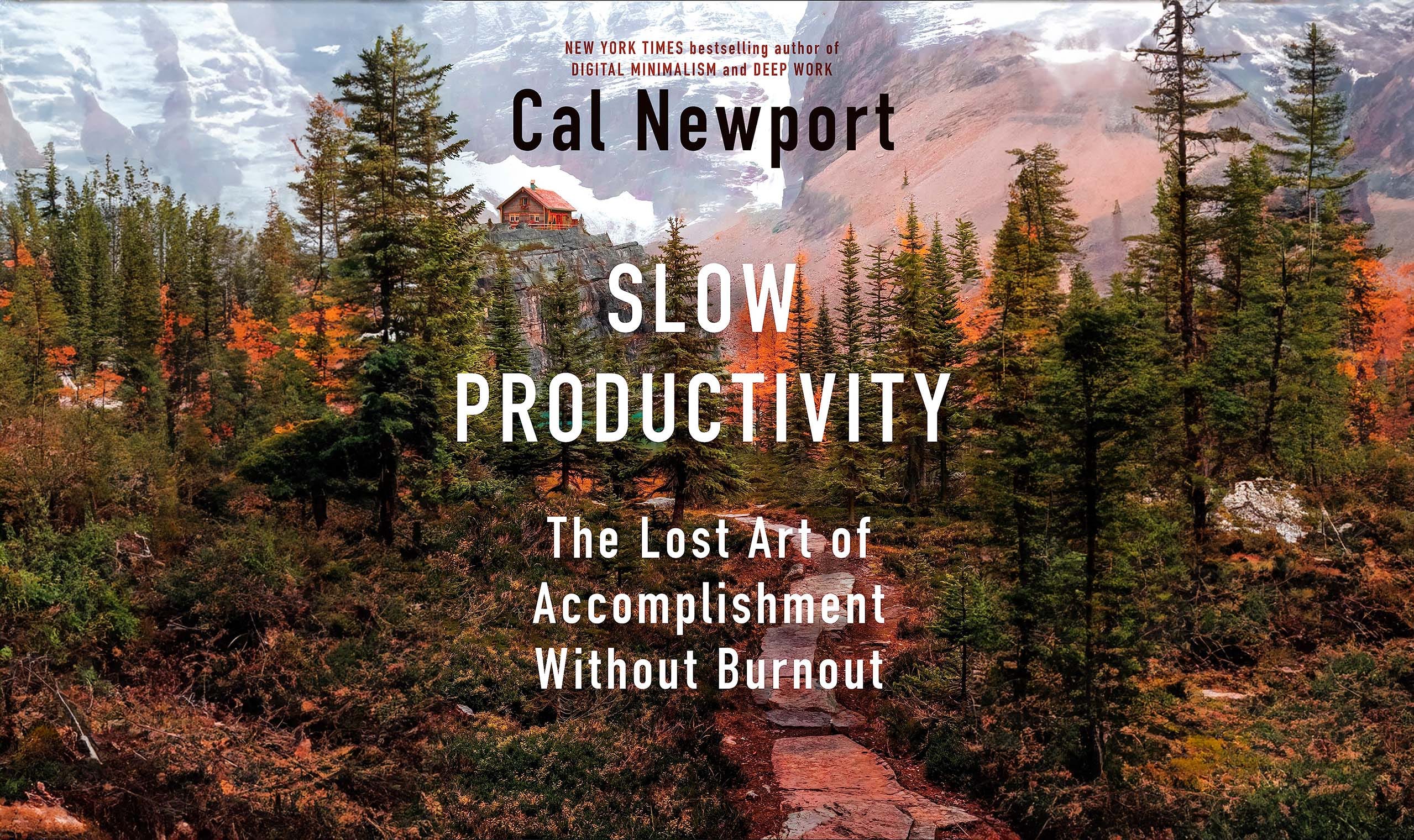
It’s been hard to redefine work without the 60+ hour week. Reading “Slow Productivity” helped. I found solace in the stories of those who chose to work differently: city escapees, sabbatical-takers, successful-but-not-burnout artists.
What helped:
Focus on physical health: Sign up to another Half-Marathon so I’m forced to run 3-5 times a week and go outside, plus a resistant training program for cross-training.
Reduced digital time: Do not disturb mode from 7PM to 9AM. Phone banished from the bedroom. Fifteen min daily limits for Linkedin/Instagram per day, like good ol’ parental controls.
Reorganized my week completely according to my needs. My week now looks like this:
Monday: Meeting & small admin tasks in between
Tuesday: Deep work
Wednesday: AM meetings, PM freedom *remember the school days when we had Wednesday afternoon off?*
Thursday: Deep work
Friday: Business day for content production, reading, strategy…
Saturday: AM Deep work
I’ve been working in Information Design for eight years. Eight years of loving my job while questioning its utility and potential harm.
I've rubbed elbows with top agencies, creating data stories, platforms, and experiences for world-changing clients. But a personal nagging question remains: Is it working?
After all, polarization is increasing, extreme far-right movements are gaining power, and most climate-related data paints a grim picture despite some progress. Of course, we can't ignore the broader power structures at play. But if we're serious about shaping a better future, we need to ask: Are we doing our job right?
The responses I've heard when working within design agencies are discouraging:
"Impact measurement? Not in the budget."
"We've got awards! Who needs impact?" (Spoiler: Awards are meaningless, see recent drama around Coca-Cola campaign.)
"Likes and shares are our measures." (No comment.)
It's easy to tally the impressions, but they don't actually show that what we did worked.
- Ann Searight Christiano
Inspired by institutions like the Center for Public Interest Communications, I am starting a new journey: bridging the gap between academic insights on how humans truly interact with information and real-world applications. To take those hidden gems of knowledge and transform them into practical strategies for those on the front lines of information design and distribution.
I guess you could say, becoming an information designer for information designers?
I don't know where this will lead. Maybe back to school. Maybe a new business. Maybe a different way to work?
Here's an ask from you, dear reader:
Know any design researchers with the same questions looking for support?
Do you have connections in the field of behavior change?
Know any organization wondering about the impact of their communication effort?
If so, please send them my way. I’d love to talk to them to learn more about the problems and the solutions.
This data-driven story on how AI is already wreaking havoc on global power systems in Bloomberg.

Comments
Nothing yet. Say the first thing.
Sign in to join the conversation.