
Good evening,
For you newbies out there, welcome to Outsider on the Inside. I hope this dispatch from in and around the nation’s capital on underreported topics finds you well.
If you’re just discovering my musings, here’s a backgrounder and make sure we’re connected on Facebook, Instagram, Twitter, and YouTube.
Support and follow the work of Independent Women Center for Energy and Conservation today if you haven’t already.
FT: A “functionally illiterate American” earns the same hourly wage as an educated Brit.
The New York Times interviewed the Twin Falls, ID good guy with a gun Jordan Salinas. It’s a superb piece.
A monastery is enlisting the help of the Trump administration to stop a problematic wind project.
Could Starlink compete with AT&T, T-Mobile, and/or Verizon for wireless service?
That’s it for the week. Stay tuned for next Friday!
Last night, I attended Young America’s Foundation’s (YAF) Freedom250 Rally at George Washington’s Mount Vernon Estate here in Northern Virginia. This event was held in conjunction with YAF’s 48th annual National Conservative Student Conference (NCSC). The organization reports 1,000 people were in attendance - making it a record-breaking crowd for any YAF event of this caliber.
Unfamiliar with YAF? Here’s their mission:
Young America’s Foundation is committed to ensuring that increasing numbers of young Americans understand and are inspired by the ideas of individual freedom, a strong national defense, free enterprise, and traditional values.
We accomplish our mission by providing essential conferences, seminars, educational materials, internships, and speakers to young people across the country.
Here are some photos from the event:
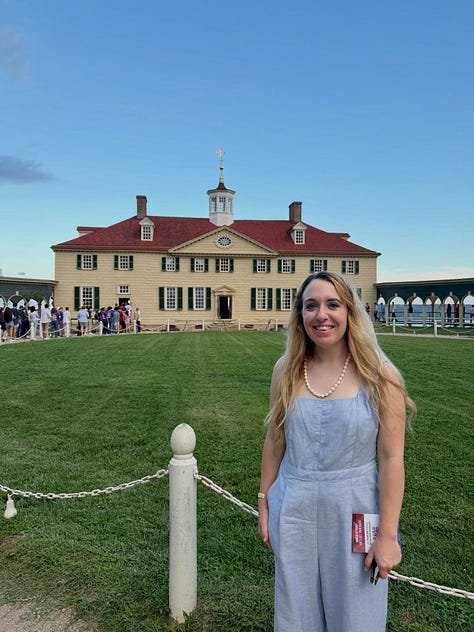


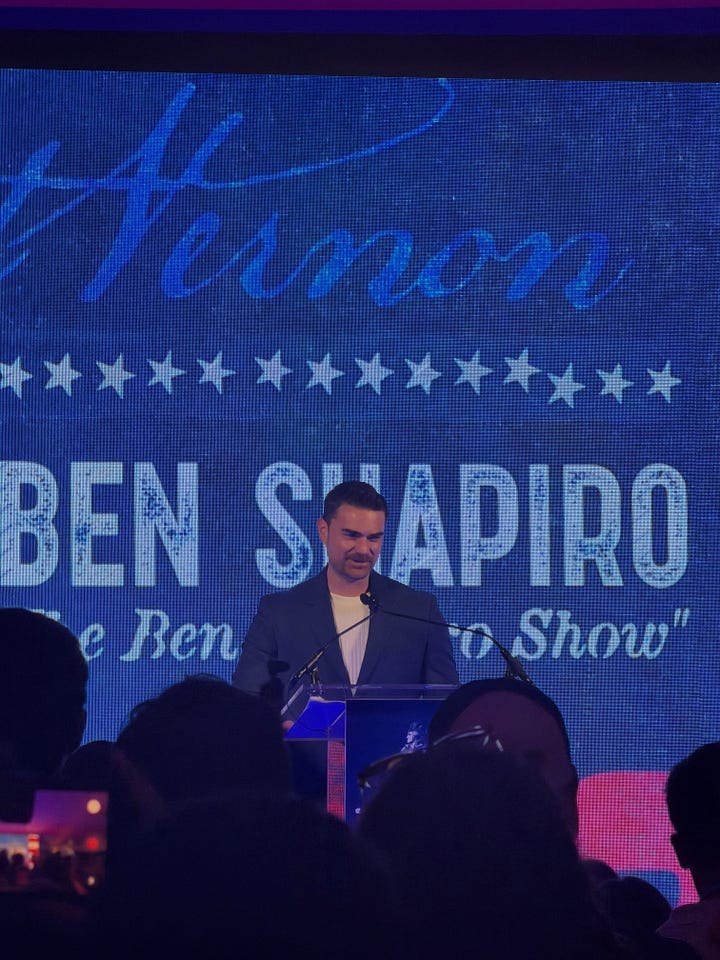

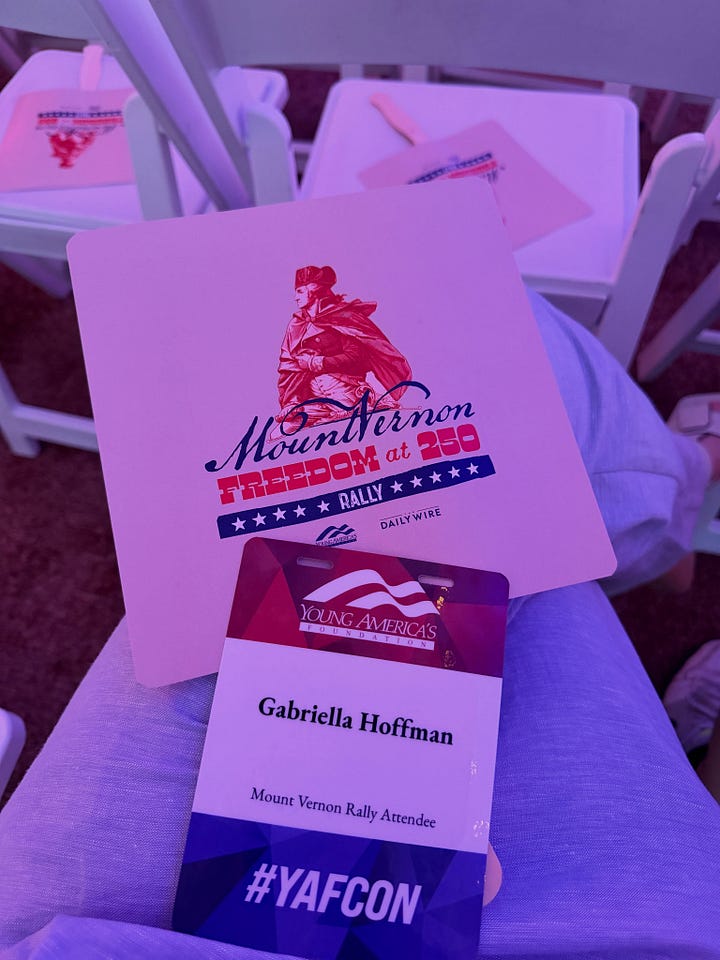
Watch all the speakers’ remarks here:
What’s my connection to YAF? I was a YAF college activist 2009 to 2012 and student leader from 2009 to 2010. I also interned at YAF’s Reagan Ranch Center in Santa Barbara, California, in summer 2010. Coincidentally, I attended my first NCSC 16 years ago this very month during my internship. It was also my first introduction (and trip) to Washington, D.C.

In 2020, I made a vlog explaining the value of YAF and my time as a Sarah T. Hermann intern at their Reagan Ranch Center. Watch here:
Thank you, YAF! Congrats on a successful event.
My home state, California, was once an energy-dominant state. But its embrace of radical climate policies has invited dependence on dirtier foreign energy and created an affordability crisis for its residents.
The status quo isn’t working. To lower energy costs, California must adopt abundance policies that embrace—not discourage—domestic production, prosperity, and environmental stewardship.
If California wants to make life more affordable, Sacramento must take immediate action to repeal its counterproductive climate policies. The scheduled transition to 100% clean energy by 2045, an unachievable target, will cost between $17,398 and $20,182 per California household over the next 25 years. Electricity prices are already up 30% since 2018, while gasoline prices average over $5.65 per gallon. This is due to a combination of regulations and taxes that discourage oil and natural gas production in favor of intermittent, costly wind and solar energy.
California has the most expensive gas prices and second-highest electricity rates in the U.S., respectively. Blue states with climate policies boast higher energy rates compared with red states without them. Over the past decade, the Golden State passed bills to phase out oil and gas production, ban internal combustion engine (ICE) vehicles, and mandate that businesses comply with environmental, social, and governance (ESG) reporting. Adding insult to injury, subsidizing rooftop solar raises electricity costs for Californians without it. To meet its power demands, California heavily relies on electricity imported from nearby states and even Mexico. This is unsustainable.
That’s why blue states around the U.S., including the six New England states, are walking back green energy mandates. Even the Golden State altered its cap-and-trade program to keep its two remaining oil and gas refineries alive as recently as May 2026.
Despite enacting policies to phase out conventional energy sources, California remains heavily dependent on oil and gas—especially foreign imports. Last year, the California Energy Commission revealed that the Golden State imports 61.1% of its crude oil supplies from foreign nations, namely Brazil, Iraq, and Guyana. More concerning, two refinery closures, should they proceed by 2027, could invite $8 per gallon gas—further exacerbating anxiety over already-high gas prices. Therefore, California must return to its oil and gas producing roots, not continue to suppress domestic production, to see economic relief and bolster energy security.
Continue reading at OC Register.
Articles/commentary/media appearances/videos from the past week.
MEDIA MENTIONS
n/a
ARTICLES/BLOGS
Independent Women: Population Control Isn’t Sustainable
OC Register: California’s climate policies created an energy crisis. Abundance is the answer.
Catch up on District of Conservation episodes below:
Thank you for reading! Let me know your thoughts and encourage your friends to subscribe to the newsletter too.
—Gabriella
Comments
Nothing yet. Say the first thing.
Sign in to join the conversation.