

I was supposed to give something up for lent, but I made a beat tape instead.
My thought process was that when I’m producing beats, I’m always in a state of hyper-fixation- which means that I’m unable to be distracted- and giving up vices for lent is supposed to help you cut out distractions from God1, so producing Christian music felt like a smart loophole. A whimsical conclusion, I know.
I called the tape ‘Nicodemus Flips’ after this bible passage, where a scholar named Nicodemus comes to Jesus to learn about his ministry2 and his ideas.
Just as Nicodemus made himself submissive to Jesus, allowing Christ’s philosophy to override his own intellect, I spent time fasting, doing regular bible study and prayer in order submit my own musical urges to God’s will. In order to keep it strictly Christian, I built this tape off of primarily Christian samples3 (some of which are field recordings of church worship captured on my phone). Just as Christ tells Nicodemus that all of humanity must be ‘born again’ in order to access the kingdom of heaven, I birthed these samples anew in my eclectic, groove-led rearrangements of them.
The result is a collection of ephemeral, abstract pieces that act as capsules for some things I’ve learnt on spirituality, faith and society. I hope that these capsules are stimulants for conscious discussion and righteous action.
I have presented them below alongside some thoughts inspired by the music; art pieces that reflect their essence; and a rigorous compilation of footnotes.
0:00
-2:58
More and more, I feel like a radical pessimist which means that I believe we need to confront the most brutal, bleak and hopeless realities of the world if we are to ever solve its most urgent problems.
For example, if we’re to talk about solving wealth inequality in the UK, we need to address the fact that the current mechanisms of our economy (where the state offers cash- in the form of universal credit- to society’s most disadvantaged, but legislates deregulation policies in favour of wealthy business owners) hinders class mobility. This is because money loses value over time through inflation but deregulation allows wealthy people to accumulate assets (like property, stocks and shares, fine art, businesses etc.), which often increase in value over time. As a result, the rich get richer and the poor get poorer. If I was to be really bleak, I would even raise attention to the fact that the disparities between the rich and the poor are becoming wider than ever before. In the face of that, we are seeing the disappearance of the middle class. This strata of society- which traditionally consists of teachers, nurses, civil servants and social workers amongst a number of other professions- are leaving the UK in droves because the salaries being offered here are not enough to own homes with, to start families with or build generational wealth with.
The radical pessimist therefore does not simply look to homeless charities, social media infographics or even voting as ways to solve this crisis. They ponder deeply on the roots of problems and imagine ways to construct long-lasting solutions to them; they understand that systems and infrastructures must be radically transformed to cater to the world’s needs.
Soren Kierkegaard, a 19th century Christian existentialist philosopher, advocates for something similar in his book ‘The Sickness Unto Death’. In it, he explained that we must all be like the biblical character Lazarus, who died from a mysterious illness, and was later resurrected by Jesus.
He says our illness- our sickness unto death- is despair. Just as pessimism is a state in which a person loses sight of blind hope and confronts the bleak realities before them, despair, he believes, is a state in which a person loses sight of themselves, their purpose, and in doing so confronts the senselessness of the world they live in.
In finding ourselves in this state, we are forced to either intentionally engage with a belief system or drown in disbelief. The first choice gives us the opportunity to personally identify what we believe in, a moral code that we can align our actions to. This gives us a purpose. It gives us meaning, hope and vitality. Altogether, this newfound direction becomes like the radicalism that mobilises pessimism. It is the enlightenment that transforms despair. Although this idea was co-opted by Atheist existentialists like Camus, Nietzche and Sartre, its foundation was the Christian writings of Kierkegaard4.
Whilst this imagery is hopeful, despair reveals the spiritual challenges that an active relationship with Jesus Christ demands (just as radical pessimism reveals the challenge of solving socio-political problems like wealth inequality)5. It shows us that, in the face of the world’s senselessness, we must fervently explore the meaning of God’s word; in the face of hopelessness, we must always strive to be light in the darkness; in the face of despair, we must never lose sight of our inner-purpose. It establishes a distinction between hopeless inaction and enlightened action.
This is important because, for many, faith is something inherited second hand from family, culture and even friends. It is inactive, latent, unaware. Despair pushes us to see how futile that second hand faith is and realise the vast possibilities of an active, personal faith. Just as pitifully, many don’t actually realise the realities of the problems of the world we live in: ideology- which is the second hand faith of politics- pushes us to use words like revolution, decolonisation, emancipation, blah blah blah without ever thinking about what any of this actually entails.
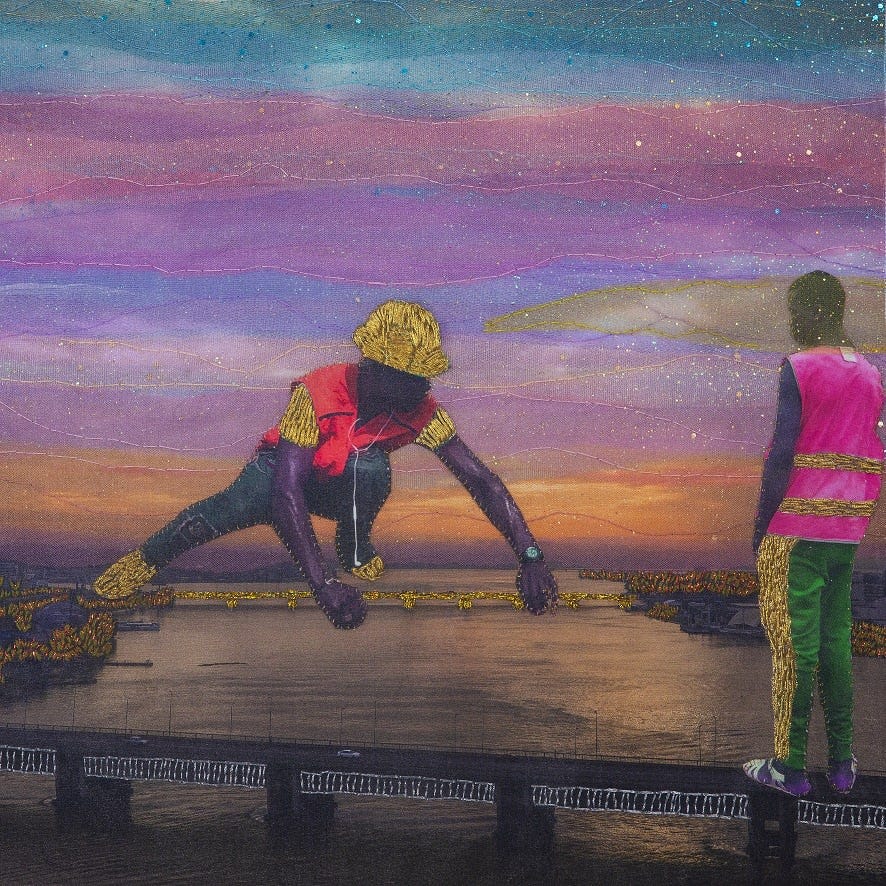
The sample used in ‘Make It Through’, an iphone recording of church worship captured during a service where I watched 21 people get baptised in one go, commemorates the active, passionate faith of believers in a world so defined by its inaction. The painting- a romantic, ethereal construction of a world that comprises mostly of colours that royal colours like purple, gold, silver- also celebrates this attitude of constructive enlightenment; it’s name ‘A Father’s Wish’ is a symbolic reminder that God, the father, seeks a personal and active relationship with all of us.
The synergy of radical pessimism and Christian enlightenment are that they are both systems of awareness paired with committed action. The bible summarises this best: ‘faith without works is dead’.

0:00
-2:00
One of the earliest productions from this tape, ‘Amen’ reminds me of church hall parties in the late 2000s dancing to Castro and Sarkodie with the aunties. That being said, its underlying hiplife-inspired groove is completely vandalised by a chopped up Amen break, inflecting an N.E.R.D punk rock essence into the track’s atmosphere. Its seance of psychedelic arpeggios harken the empathic euphoria of 90’s club culture. It’s diverse, multifarious and eclectic.
Over the past few years, I’ve seen diversity- specifically intellectual diversity- fade from the Christian world. Since young Christians associate piety with reclusiveness and isolationism, many of them shun the unfamiliar and eclectic because they don’t want to associate with perspectives that look un-Christian6. That sucks. Evangelism is vital to Christianity, and true Christian evangelism harkens us to engage with the outcasts, sinners and weirdos of this world, showing them the unconditional, non-judgmental compassion Jesus taught us to embody (remember: his best friend was a reformed sex worker). Although Christians are called to not conform to this world, we are called to minister to it.
Isolationism, through which believers lock themselves in echo-chambers of their own beliefs and ignore the happenings of the world around them, creates dissonance between contemporary issues and Christian doctrine. But this is a problem because Christianity is supposed to be conscious of the issues of the day, its doctrine should not merely be responsive to culture, but seek to steer culture towards righteousness through its consciousness. One cannot successfully minister in this way within the confines of church walls. Christians need to engage with the world to change it. The specific images used to express this idea in the bible are light, which brings clarity to darkness, and salt, which brings sharpness to that which is dull. When those who are supposed to be beacons of morality divorce themselves from the world the way many Christians have now, they selfishly steal their light from it7.
Those who should be the salt of the Earth- offering disbelievers the opportunity to taste hope, purpose and togetherness- are too busy are swaying their hands in the air, worshipping with their eyes closed and praying for their own prosperity to be aware of the state of our world (despite the fact that God insists that we seek the welfare of the society we live in before we find our own8).
Some specific issues that God demands us to pay attention to are: poverty, disability9, worker’s rights, loneliness and inequality. One of the best examples of this social awareness I have ever seen was Notting Hill Methodist Church’s role in tending to the victims of the Grenfell fire. Whilst that was a dramatic example, the church did what all church folk should be doing: meeting the world at its point of need and offering it the autonomy to rebuild from moment of crisis.
The day of Pentecost- where Christians from all walks of life, ethnicities and cultures were able to understand and communicate with each other freely for the first time- sets a further example for how the church should always be: a realm in which inaccessibility and division are erased, allowing oneness to arise10. Our everyday, in mirroring the miracle of Pentecost, can be a place for the multifarious, diverse and eclectic to converge. Myriad experiences finding respect and understanding in vibrant community… Through this, we are able to confront each other’s realities and become better equipped in dealing with each others’ crises as well as find support for our own.
Newcomers to Christianity can find solace in this type of non-judgmental, non-hierarchical environment. It’s evangelism coming to fruition through interaction- just as light particles interact with space to bring clarity to darkness and salt interacts with food to manifest flavour within it.
We are supposed to be like the two white dots in this painting. Placed upon a black panel, they look inconspicuous and insignificant, but are described by the painter as cosmic points that represent the vastness of the universe: engaging with the world humbly and non-judgmentally, we are called to be cosmic points, that capture the immensity of God, in the hopeless monochromatic mundanity that is everyday life.

0:00
-0:34
This was a fun, little experiment in which I pulled together a few pieces of music that would never co-exist elsewhere. When these disparate elements conjoin, they form a snack-sized bite of euphoria and neuroticism that is surprising and intriguing, which is what an active engagement with God feels like sometimes.
This painting, ‘Morning’, which is made to represent the calm piece of a clear mind in the early morning, captures the peaceful enlightenment that a simple routine can bring. Its neuroticism lies in its peculiar fascination with the mundane and its euphoria lies in its clarity.
Because the Christian faith is defined by acts through which you learn via direct experience (i.e. speaking to God regularly through prayer, engaging with your community- particularly its poorest- consistently, reading your bible regularly and feeling God’s spirit through frequent silence and meditation ), a committed Christian lifestyle is defined by the fruits of those experiences: steady surges of enlightenment pulse through the heart of believers, bringing them closer to God’s kingdom. This track kind of captures that.
But it also reminds me of being a child because the samples I used were a big part of my childhood.
Jesus did say that heaven is for kids haha.
0:00
-2:41
The two biggest days in the Christian calendar are Christmas and Easter.
The miracle of Christmas- Jesus’ birth- is that God compacted his immense essence into human form, plunging himself deep into the frail form of a baby. In doing so, he established a theology that conjoins the abstract divinity of heaven with the embodied realities of the human condition.
The miracle of Easter- Jesus’ death- is that God took it one step further by bearing all of humanity’s trauma, its sins, and sacrificing himself in order to save humanity from it. Prior to his death, humans were paying sacrifices in temples in order to be absolved from sin, but Christ expunged this practice. By bearing the mantle of our sin and plunging himself into the dark hopelessness of death, he paid for our freedom.
Resurrecting from the dead three days later, Christ survived this sacrifice and triumphed over death. In accepting his gospel, we cash in on that victory and overcome death’s hopelessness too.
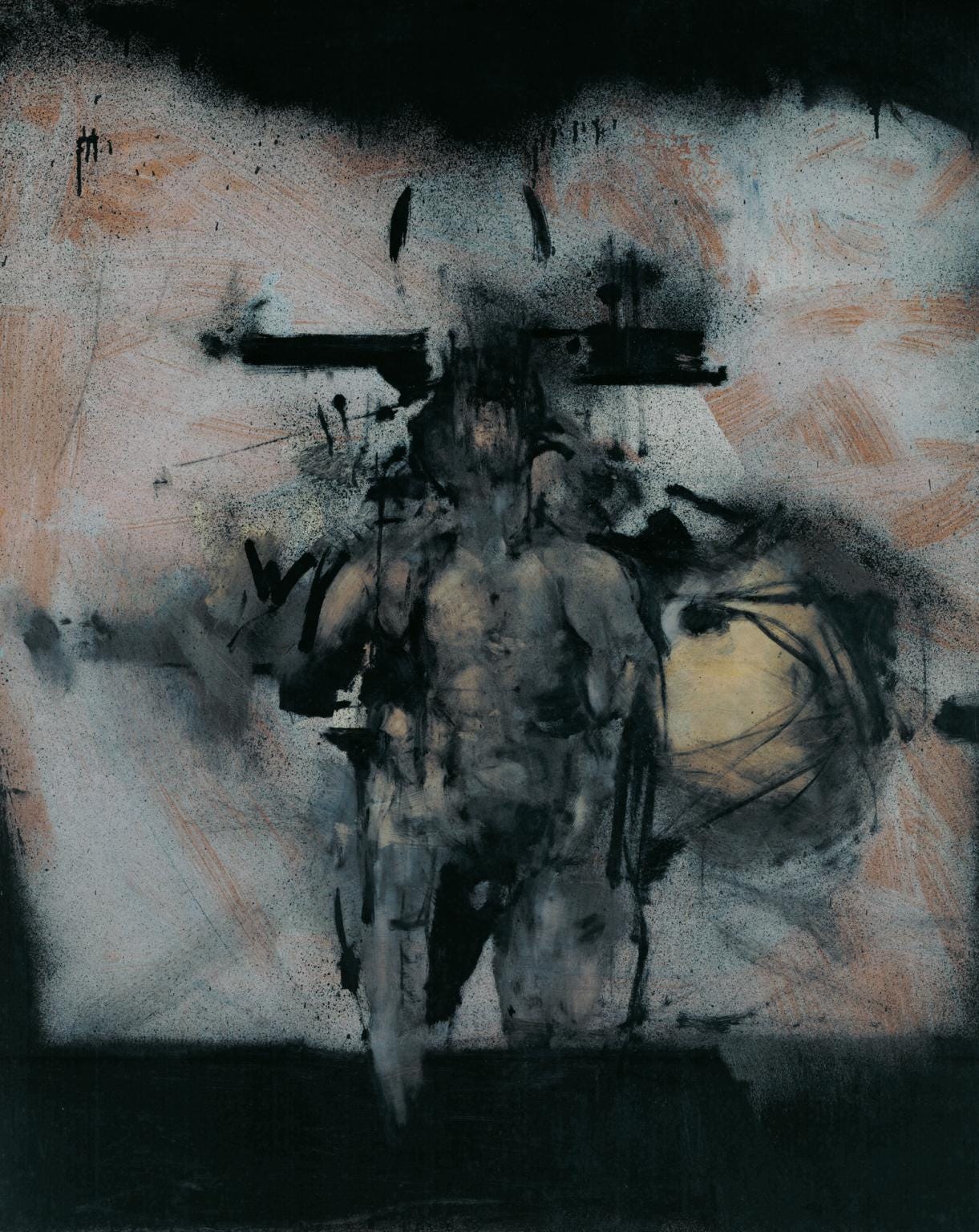
When I was making ‘Easter’s Ethos’, I had that three day period between Jesus’ death and resurrection in the back of my mind. It’s the only period in the Christian calendar where believers are actually compelled to feel hopeless, to not focus on the bright optimism of salvation, but the stark reality of despair. This painting represents this feeling in its imperceptible black shadows which shroud its protagonist in ominous mystery. He carries something- perhaps a weapon- symbolising strength, action and maybe even hope on the horizon. The hopeless Christ- tragically silent in the tomb- seems to us just the same during these three days.
Trying to capture that, I took a dancehall gospel classic ‘Hear My Cry O Lord’, then reduced it down to ominous cloudy static through distorted filters. I chose that specific song because its title reminded me of Christ’s dismal proclamation on the cross: ‘My God, my God, why have you forsaken me?’. He felt estranged from his own divinity, becoming fully human in order to empathise with the hopelessness of our own existence.
The celebratory joy of Easter is alluded to by the melody that inflects child-like glee into the track part way through. It’s the interpolation of the 1873 hymn by Fanny Crosby, ‘Blessed Assurance’, which narrates her personal joy at accepting Christ and receiving his salvation.

0:00
-2:04
Sultan Stevenson’s ‘El Roi’- a faith-inspired jazz piano album- is one of my favourite albums of this year so far, which I had the privilege of working on its release in March. I made this beat from a sample off of there whilst I was in the dressing room for its album launch at the Southbank.
My sole feeling in that moment was pride in Sultan because the project is a thoughtful, nuanced and tender commentary on Christian life. Even without words, it speaks eloquently to the prevalence of vibrant community, personal enlightenment and inevitable uncertainty within Christian faith.
Anachronistic in its influence from older more ‘purist’ jazz forms and contemporary black rhythms, these feelings are presented to us as universal and abstract, it captures a portrait of the human spirit that is timeless: its attention constantly oscillates from inward to Godward and its faith is vulnerable to pangs of uncertainty and over-introspection, but it constantly veers towards enlightening optimism.
By taking this mood and contrasting its contemplative piano solo against the pulse of syncopated percussions that pulse steadily and flurry frantically in equal measure, an urban landscape is evoked- one that is full of colour, culture and community. I envisioned the Barbican estate specifically because it’s at the heart of London’s Metropolis, absorbing all of its noise and vivacity into the hollow echoes of its isolated labyrinth. The painting, defined by rigid lines that connote to structure and order, embodies the geometric patterns of urban brutalism, but its colours- beige, cobalt blue, grey and dusk yellow- each correlate to some ambivalent ruminations under the surface.
The murky textures that characterise this beat are supposed to capture that. Altogether, it asks how our faith looks in the vibrant isolation of the metropolis: Which thoughts echo out from our heart to God’s? Which uncertainties do we reckon with on our path to optimism? How do we pierce through the noise of contemporary society to find God’s clarity again?
0:00
-2:49
There’s a saying that I grew up with: ‘L’homme propose. Dieu dispose’. It translates roughly to ‘Man plans. God laughs’. This track is essentially an acknowledgement of that. Through euphoric string harmonies and high-pitched reverb, it captures the joy of letting oneself go and throwing caution to the wind. However, through aggressive drum loops that distort, echo and skitter, it evokes chaos and mania: the sentiments we feel whenever we feel the brunt of forces like fate, the economy and nature, all of which ravage ubiquitously through our lives and leave us helpless in the face of. The appeal of faith is supposed to be that we can trust in a higher power that protects us from this mania and leads us towards the best outcomes inevitably.
The appeal of monotheist faith (which is the belief in a singular God), is that it’s a faith in the specific entity that created the universe and holds dominion over everything within it. In having created everything in the world, he inherently knows how to confront everything that could ever overwhelm us in this life.
I was reflecting particularly on Psalm 98 when I was making this beat because it expresses in very clear terms the vastness of the universe whilst presupposing the vastness of the entity that made it. I was asked to read this psalm during a mass one day during sixth form and it took my breath away. I always go back to it in times of overwhelm.
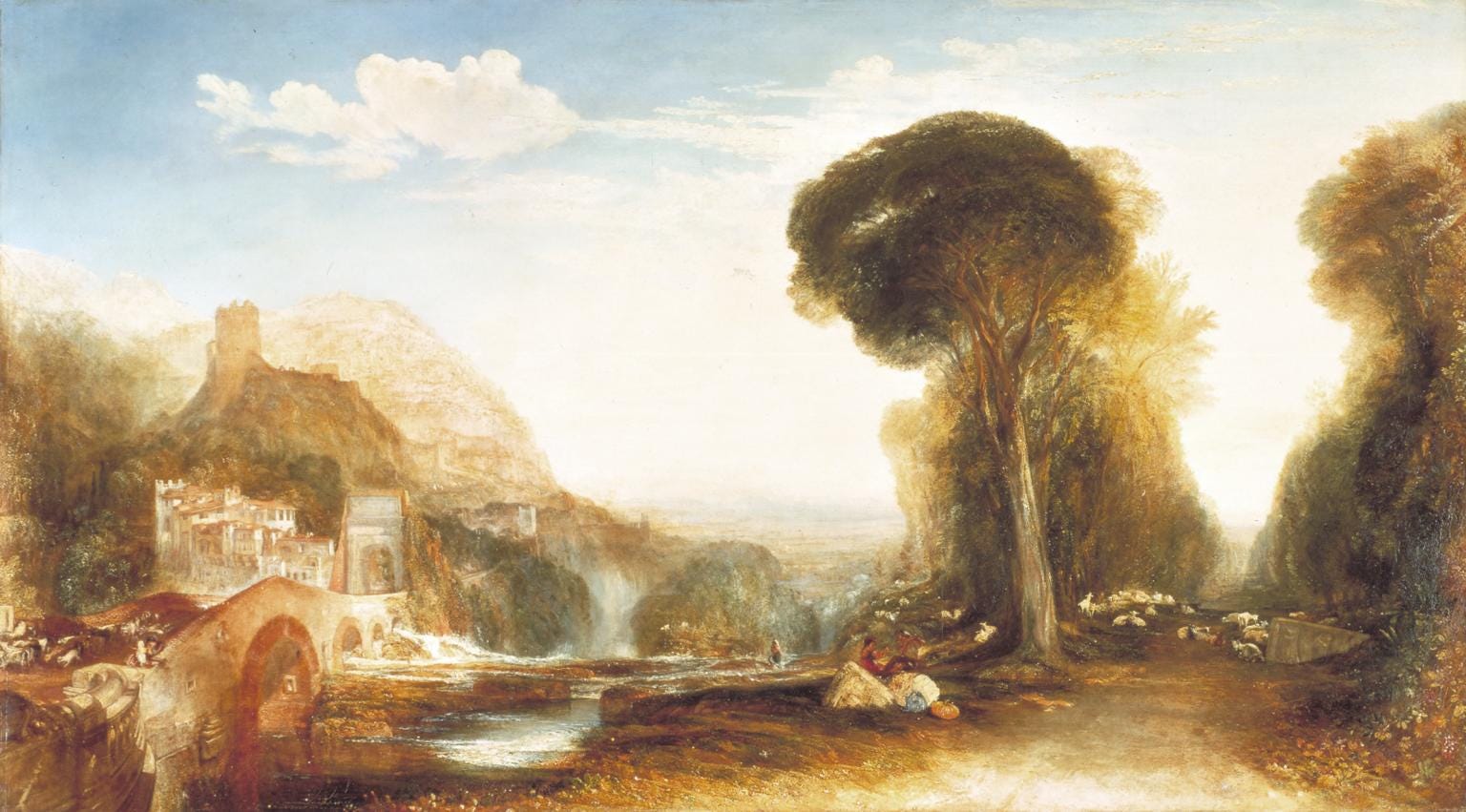
If I were to create an image that best represents the ethos of this track, it would be a large music festival in which verdant greens, tall swaying trees and bright sunrays bedazzle curious and anticipant ravers as they pitch flimsy tents up in the early morning: so much could go wrong and so much could go right, and in acknowledgment of all of that, we venture on :)
0:00
-2:53
I made this beat on a day where I was fasting. I spent much of it listening to sermons from one of my favourite churches, King’s Cross Church (AKA KXC), and Christian spoken word (in anticipation of something I’m planning for this June). A poignant reflection captured in one of those sermons was used in this beat.
I actually didn’t really understand the need for fasting until this year when I heard a sermon from KXC’s lead pastor, Pete, who explained that one of the demands of fasting is to relate the pain that we feel in our temporary hunger to the pain felt by those who don’t have a choice but to be hungry: when fasting, we must be compassionate towards society’s poorest, be mindful of them and give to them.
The bass patch on this track, through which numerous pitches resound at once into a distorted growl, reminds me a lot of the stomach pains of fasting in which the stomach itself seems to growl, hum and whimper all at once. The further you go into fasting, the more your intestines start to feel like they are being stretched apart, which is also represented by the time stretching technique used to distort the piano sample (which I pulled from an iPhone recording of a church service I was playing at in Upton Park).
Because of how uncomfortable fasting is, it’s imperative to pair it with some lucid reflection in that moment11. It’s a time of realignment, which- when done correctly- feels like a breakthrough of the spirit. Without the lucid reflection, it’s dull, painful and worthless, but with the lucid reflection, you realise that all of the vices we love (each of which keep us distant from God) are feeble in the face of the power of righteousness12.
We do this in commemoration of Jesus’ fast in the desert, where he spent 40 days and 40 nights alone to prepare for his ministry over the ensuing years. During this time, he was tempted by the devil, who offered him glory and riches and beckoned him to make break his fast. He resisted him by recalling scriptures that outline the way our relationship with God should really look like: we should be relying on his power (Deuteronomy 8:2-3), we should be trusting him (Deuteronomy 6:15-17) and we should only serve him (Deuteronomy 6:13).
Christ allowed himself to be tempted because the purpose of his ministry was to confront the issues at the heart of the human experience- an experience distinguished by its vulnerability to temptation and waywardness. In fact, Christians believe that suffering entered the human experience as a result of temptation (this is the moral conclusion of the Garden of Eden allegory). Through resisting temptation, Christ charts out a brighter vision of the future in which suffering is not inherent to the human experience because he has overcome it.
Originally, I wrote here ‘ministry and community activism’, but I struggled with the word activism because it usually implies someone promoting a change in society but never expands past that and this doesn’t capture the essence of Jesus. He didn’t just promote change: he actively healed sick people; he transformed the lives of society’s poorest; he set in place a new legislation between God- the father- and his people. That being said, he did this for us to learn to carry on that legacy. Whenever you read texts like Matthew 4:18-20; Mark 9:14-29; and Matthew 17:18-20, you see clearly that Christ’s greatest insistence was that he wants his followers to replicate his example- not just respect it. He didn’t merely come to perform miracles and leave: he came to teach us how to practice compassion- which all of his miracles were rooted in (this is the principle of the new commandment he offers: “Love your neighbour as yourself”). A better word to describe the nature of Christ’s work on Earth is ‘embodied activism’ in that he came to encourage change in society, then embodied that change. This is an apt term because Christ is the Emmanuel (God inside the body of a human), meaning that the change that he embodied was a manifestation of Godliness: God- from whom all miracles flow- is compassion itself universalised. When we recall that humans were made in the image of God, we realise that we can embody this change too- we can exude Godly compassion; work together to build new, equitable systems for humanity; cater to the wellbeing of society’s poorest- because that’s what we were made to do.
The Christian samples used on this project:
Make It Through
iPhone recording during baptism service at Saint Church (in St. John’s Church in Hackney) on 9th February 2025
Amen
Amen, Brother by The Winstons
LEAN ON IGWE
Igwe by Midnight Crew
Lean On Me by Kirk Franklin
Easter’s Ethos
Blessed Assurance by Fanny Crosby (interpolation)
Hear My Cry O Lord by Marvia Providence
Liberty Through Faith
Arise by Sultan Stevenson
Break Every Chain by Tasha Cobbs
God Laughs
Amen, Brother by The Winstons
Funky God
Sermon at King’s Cross Church by Emma
iPhone recording of Gabriel Dedji playing piano during worship at New Life Church in Upton Park on 16th February 2025
In fact, the two are deeply linked because one of Christ’s most radical statements was that the kingdom of heaven belongs solely to the poor and thereafter spent years travelling across Palestine healing those society considered poor- outcasts, homeless people and disabled people- in order to give them a chance to reintegrate into society enjoy a good quality of life.
Another one of my problems with Atheist existentialism is how obsessed it is with individualism.
Don’t get me wrong, enlightenment should be personal, but it isn’t just a personal goal, it should be a collective goal, wherein we pursue the enlightenment of the entire human race in order that we understand our purpose in relation to one another, not just privately.
True enlightenment harkens us to be aware of our own moral code in the context of the social context we live within. In Christian terms, it calls us to actively engage with the world and with God in order to build his kingdom here on Earth (hence why Jesus says the two most important commandments are: ‘Love the Lord your God with all your heart’ and ‘Love your neighbour as yourself’).
When I was younger, my dad used to preach a sermon that relates to this. The cross, he explained, is vertical- looking up to God- and horizontal- reaching out across humanity- setting the parameters upon which we should found our outlook on the world. I didn’t really understand what he was talking about until I did the bible-in-a-year in 2024 (which I must note was one of the most impactful things I’ve ever committed to in my life).
Some Christian communities that I’ve personally seen do great work in fighting isolationism and reclusiveness are:
Enlightened Entertainment, a Christian third space community that gathers believers from across the country through hall parties, picnics, dinners, concerts, balls and hikes.
The ALPHA course, one of the most renowned discussion spaces for newcomers and believers alike to engage with the crucial questions of the Christian faith. It’s a friendly and relaxed environment, but its simultaneously thought-provoking and engaging. ALPHA sessions take place all over the country. You can use its site to find the closest one to you.
King’s Cross Church, a very contemporary church in King’s Cross where sermons are accessible, yet thoughtful, detailed and intellectually stimulating. They also do intimate bible studies, prayer nights, concerts, poetry nights and dinners. Their services include long, immersive sessions of worship music too, if that’s your thing.
They also run a daily devotional called BREAD, which supports Christians in developing a regular bible routine.
Saint Church, another very contemporary church with services across East London. Sermons are just as accessible and thoughtful as King’s Cross’ and the music is similar as well. Their worship nights are renowned across London, gathering congregations from King’s Cross Church, Imprint and other contemporary Christian communities for nights of prayer and singing.
The TAB- a very black, South-London pentecostal church with exceptional sermons that delve into the realities of Christian life in the modern day. TAB have a number of community groups that cater specifically to the needs of children, young adults, men, women, single people, married couples, engaged couples and so on. They also have a bible study plan called the Growth Track which helps to build a relationship with Christ.
The 29:11 podcast, a podcast series by a group of young men who have a deep intrigue into the nature of Christian discipleship. Through regular shows and live events, they inspire Christians across the country to engage in a deep commitment to Christ’s example and discuss the ethics of implementing God’s teachings into our lives.
Crystal Hearts, a Christian-inspired talent showcase run by a filmmaker, poet and rapper named Obi Psalms. It’s full of live music, community discussions and poetry. Although it’s open to people from all walks of life, it’s a good space to meet Christians who don’t fit the typical mould.
The onus of isolationism in the Church also lies on Christian institutions who are more finance driven than spiritually motivated. I’m thinking specifically of those who are more eager to sell their church premises than cater its facilities to the needs of community- ignorant of the fact that using your space to serve the needs of others is an act of evangelism in itself. In 2021 (or was it 2022, I can’t remember), I gave a speech at the Methodist Conference in regards to this issue because I’ve seen them sell or close down far too many churches in my lifetime. As I mentioned before, church hall parties were to me a way in which I learnt to love church as a child and then later to love God. These parties constructed a monoculture in which Christians from across North London’s Afro-Caribbean diaspora were able to find solace and community in. Places like food banks, nurseries, social clubs, youth clubs, book clubs- all of which were once known to often inhabit church premises- are opportunities for Christian monocultures to be built through also. It’s a tragedy that so many Christian institutions aren’t fighting to protect their sites for this reason.
The moment I discovered this bible verse (Jeremiah 29:7), I was flabbergasted. Jeremiah 29:11 is often a dogwhistle for prosperity preachers- types of charlatans who promise Christians that they’ll get whatever they want as long as they pray to God hard for it. But Jeremiah 29:7, which comes just a few verses before it insists that you must be socially conscious and welfare driven in order to receive these blessings. God does not give material blessings out of nowhere for no reason (in fact, he hates people who horde wealth and he clearly said the love of money is the root of all evil), but he does allow us to ascertain our own blessings by bettering the world around us.
It is very likely that the bible is being metaphorical when it refers to the prisoners, the poor and the blind in this bible verse. Scholars suppose that Jesus was quoting a scripture that was using these words to explain to the effect of sin on the lives of God’s people. However, given that God literally healed blind people, sick people, epileptic people, dead people; praised poor people (all through the form of Jesus); and freed prisoners (through the form of the Holy Spirit), we can also see this as a moment of foreshadowing of a literal truth.
Oneness is very important to Christians.
Due to the notion of the trinity, some people find this hard to grasp, but the 9th century scholar, Bishop Gregory of Nyssa, clarified this concept exceptionally through the idea of operational unity: there is only one God because the different elements that God consists of (The Father, Son and Holy Spirit) act all in one accord. He explains specifically that we would never say “God gave me lives”, but rather “God gave me life” because we understand that everything God does for us is singular even if we perceive him as multi-faceted. They are different expressions of God’s singular essence.
Humanity, in having been made in God’s image, must also employ this operational unity: despite our individual experiences and myriad cultures, we must understand that we have one singular purpose: which is to be stewards of the Earth’s resources, ensuring that all life on Earth is respected and nourished.
I wrote all of this and then remembered that on Easter Sunday, a 10-year old girl tapped me and said: “Do you want to know the best way to explain the trinity? 1+1+1=3, but 1x1x1=1” Sometimes in life, the best things are simple.
Some useful questions to ask are:
Do I feel like God is trying to say anything to me right now?
Is there anything in the bible that comments on the state of my life presently?
Is there anything in the bible that comments on the state of the world presently?
Is there anything I should continue to abstain from after this fast?
This is the type of sanctimonious utterance that keeps people away from Christianity. But I think it’s important to acknowledge regardless of religion.
The prevailing opinion amongst young liberals in the West is that we need to celebrate and reclaim our desires because colonialism, patriarchy, white supremacy, homophobia and a whole load of other ideologies have forced us to become detached from our bodies and feel guilty about fulfilling our own fantasies. This implies thus that our liberation from these oppressive forces is achieved through the fulfilment of our lusts and vices; they are fulfilled through our hedonism.
The major flaw within this is that this path to liberation conflate pleasure with praxis, getting distracted then by our vices on the road to our enlightenment: we become like the wayward Israelites, who built idols whilst waiting for the 10 commandments.
I use this analogy specifically because this reclamation of our bodies is not at odds with the message of Christianity, but at one with it: liberals are trying to pursue Christian aims through secular routes. The allegory of the creation story/Adam and Eve dictates God’s original hope for creation: human beings able to roam freely through paradise, able to explore their desires without restriction. God created man to be free in every way possible just as liberals desire them to.
Due to sin, we lost this freedom, and the Mosaic Law (which we know more casually as the 10 commandments) was established to keep us close to righteousness and away from sin (it was like being on report card in school to keep your behaviour in check). But this law was never meant to be eternal.
In the book of Galatians, the apostle Paul elucidates upon this in explaining that the arrival of the Holy Spirit (which dwells in the heart of all human beings and allows them to access God directly), marked the establishment of a new order in which human beings are not punished for veering from God’s rules. Instead, they are called towards a relationship with Christ in which they can enjoy all of the freedoms God intended upon them. The specific emancipation that liberals are vying for is the emancipation which God already offered us on the day of Pentecost. It is just up to us to claim it through an acceptance of Christ’s offer of all-encompassing freedom; it is up to us to take on the mantle of believer, Christian, disciple.
Christianity directs our freedom towards the construction of an equitable, fair and just co-existence between people who practice peace, kindness, gentleness and other fruitful behaviours. In contrast, many young hedonistic liberals are satisfied with the quasi-fulfilment of our freedom (where cheap thrills bring short-term excitement) as opposed to the real fulfilment of our freedom (where a relationship with Christ brings excitement to our eternity).
When we use our freedom to overindulge in drugs, fornication, alcoholism, gambling instead, we lose sight of the world we could be building and we lose sight of ourselves- because voids that we could be filling by radically rebuilding a world that satisfies our most urgent desires, we fill with temporary, ineffective pleasures that lose their appeal inevitably. This isn’t a judgment against anyone who has indulged in these. In fact, the nature of Christianity is that salvation is available to all. This is, however, an indictment of a culture that praises pleasure over discipline. Even the most ardent atheists will agree that we must mobilise our freedom into concerted action rather than inactive pleasure if we want to make the world a better place: specifically, Jean-Paul Sartre says ‘freedom is what we do with what is done to us’. Also, I believe Thomas Sankara’s quote, “He who feeds you controls you”, is a lesson on discipline: if we want to build a better world, we need to know who we submit to and act accordingly.
No posts
Comments
Nothing yet. Say the first thing.
Sign in to join the conversation.