
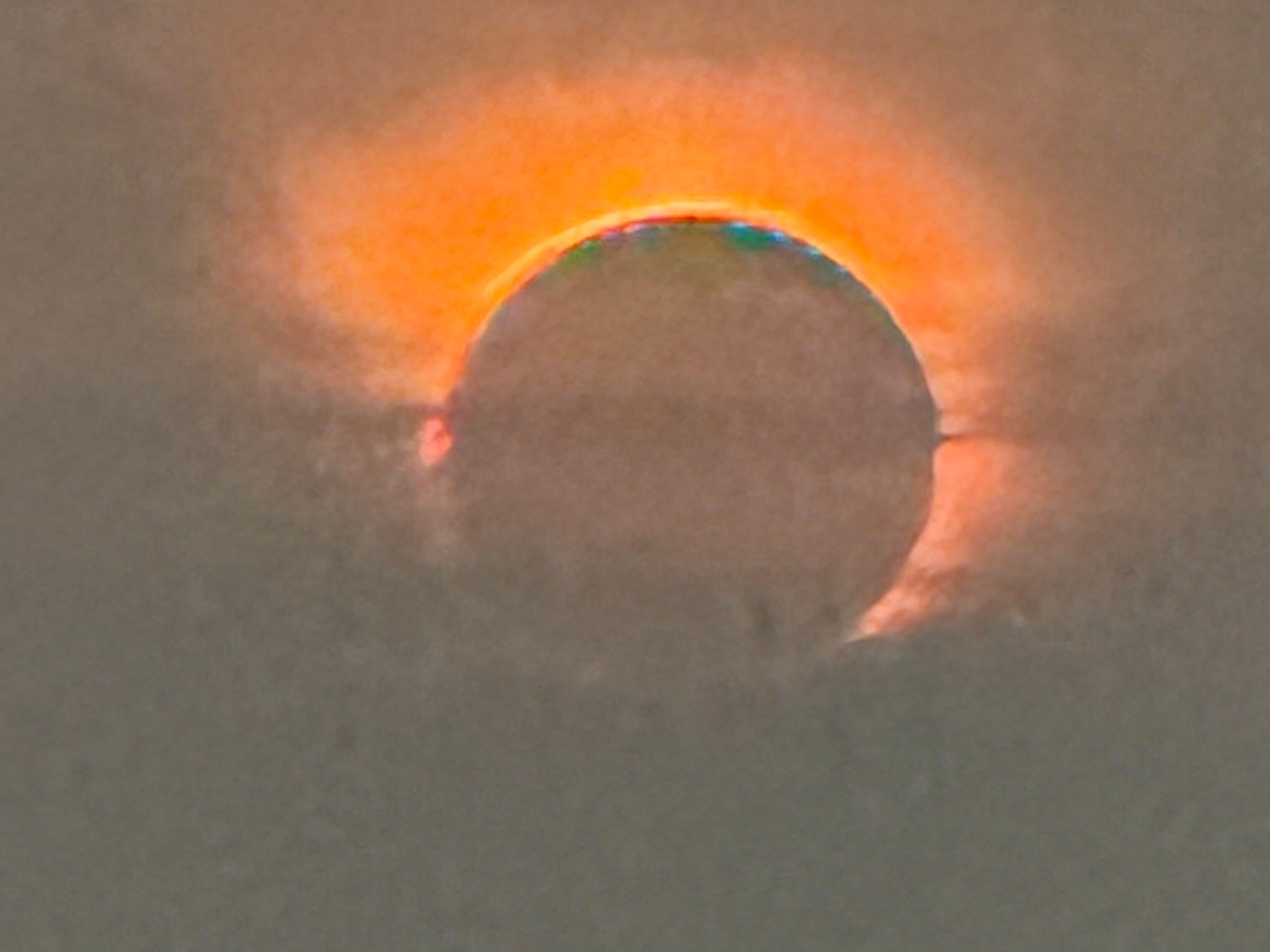
Last week I saw my first eclipse.
We were among the luckiest of the lucky. While 18,000 people here on Menorca crammed into the beach of Son Bou, on the island’s southwest coast, and roads to the northern lighthouses and other scenic vantage points were closed to traffic as early as 8 a.m., we knew the event would be visible from our backyard, so we threw a party. Maybe 25 people, including a ton of kids. There was beer, there was swimming, there was potluck. The mood was high, and the party went late, long after dark, so it’s a little bit difficult to tease out the experience of the eclipse itself—singular, humbling, literally sublime—with the more quotidian good times that surrounded it.
Part of me wishes I could have seen the eclipse (or at least could see another one—tomorrow would be nice!) under different circumstances, in the countryside, with just a few loved ones. Part of me wishes I’d left my phone in my pocket, too. It’s not so much that I was distracted by the device, but since I videoed the moment of totality, I remember the video better than I remember the moment; it’s come to supplant my own memory of the event. To eclipse it, as it were.
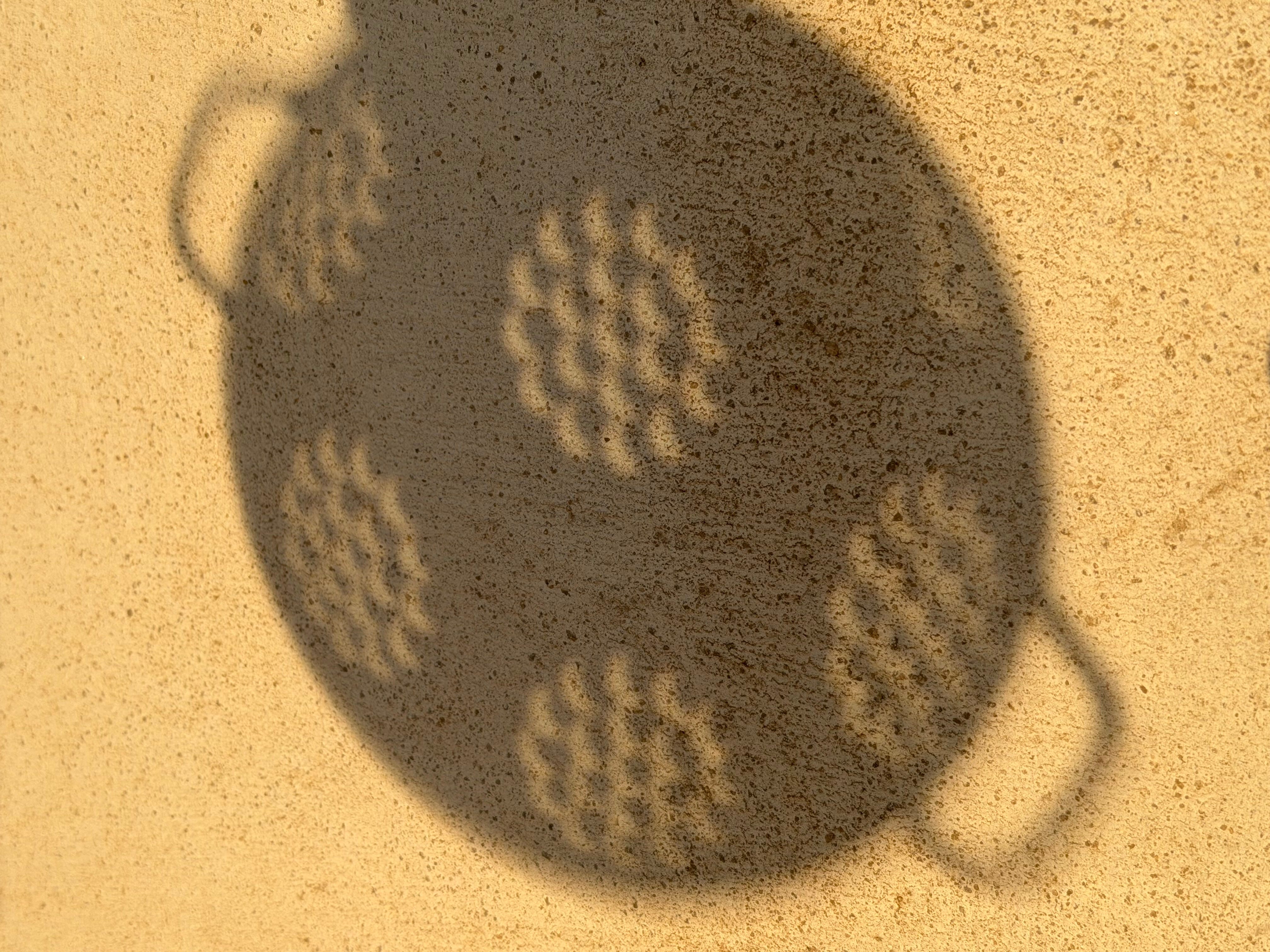
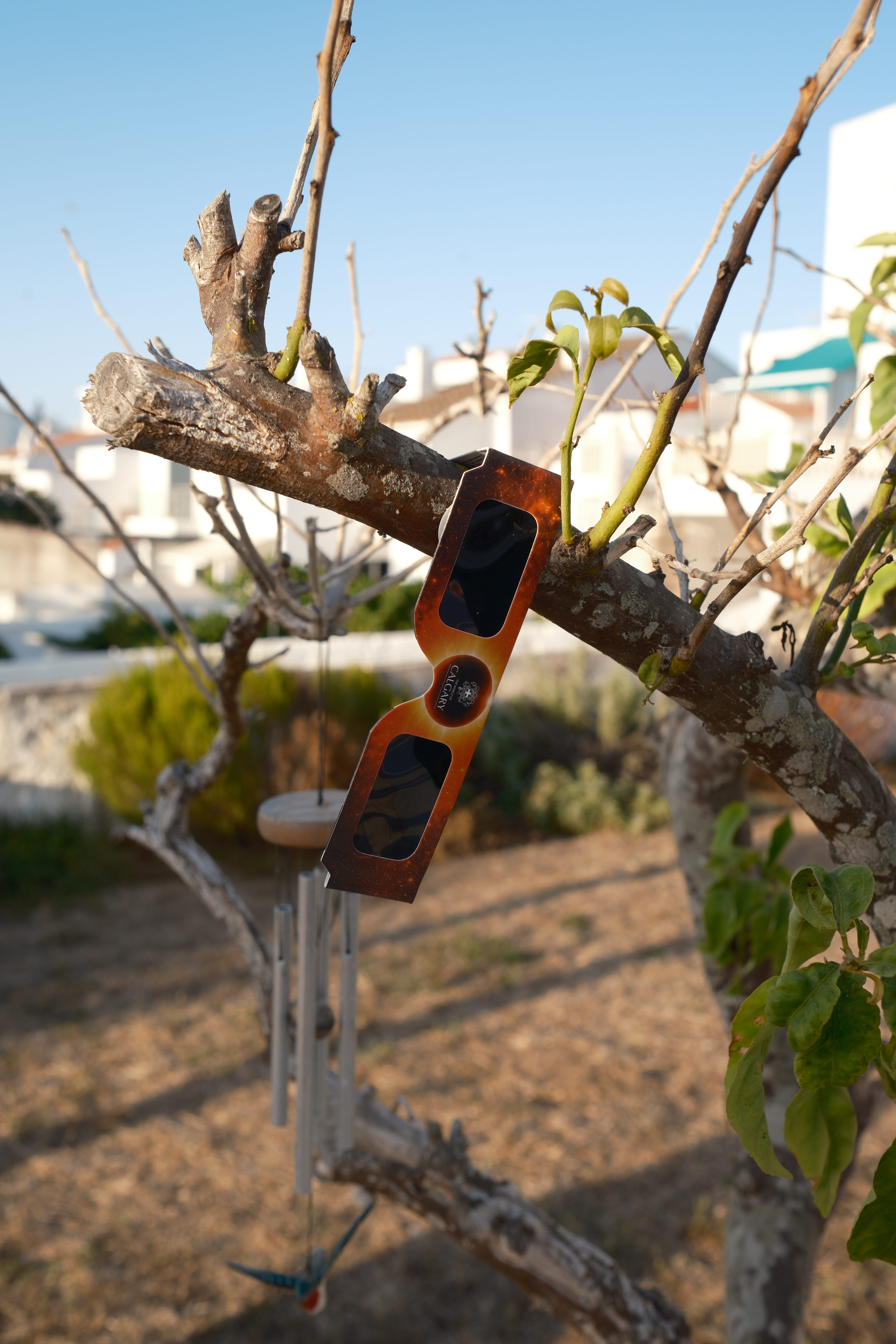
Still, these are minor quibbles. It was… incomparable. I’d like to relive it, to revisit each baffling sensation in detail. The timeline of an eclipse is strange—a long, slow buildup, nothing really happening, though you know, thanks to the miracle of science, what’s in store, and exactly when. You pop your glasses on every now and then, see how the moon’s taken a slightly larger bite out of the sun. That’s odd, but it also doesn’t really seem real, just a trick of the glasses. But then the light starts to shift; the shadows feel odd, though not in any way I could put my finger on. The strangeness of the light was magnified here by the fact that our eclipse took place just minutes before sunset—talk about squeaking by right before the bell—so the shadows were already long, the colors tinted orange.
And then things change very fast indeed. Suddenly, the sun is gone, just gone, obliterated by the disk of the moon and replaced by a silvery halo, the sky directly above you (or in front of you, in our case) dark enough that the streetlights automatically come on. It’s not night, exactly, but it’s certainly not any kind of daytime you’re familiar with. Though I didn’t realize it at the moment, in my video there’s a bat fluttering around the yard. It all happens suddenly, far more suddenly than I’d expected, as though the Supreme Being were sliding a lens cap over the sun. It’s shocking. (In the video I took of the moment of totality, there are shouts of wonder from all over; my dog is barking up a storm.)
It looks like a kind of black magic. It appears impossible. Even now, looking at the footage, I can’t quite believe what I saw. (I guess I am kind of glad that I had my phone out.) I can only imagine what prehistoric peoples must have thought of the phenomenon. Stone-age culture is a ubiquitous presence on Menorca; there are some 1,500 monuments dotted across the island, a constant reminder of those who were here before us. For thsoe talaiotic people, it must have felt that the world was ending, almost without warning—and then that evil, or whatever they called it, had been vanquished at the last minute.
It’s the suddenness that stays with me, that jumps out at me in all the videos I’ve watched online since. The buildup is long, but the eclipse—the obliteration of the sun—is practically instantaneous.

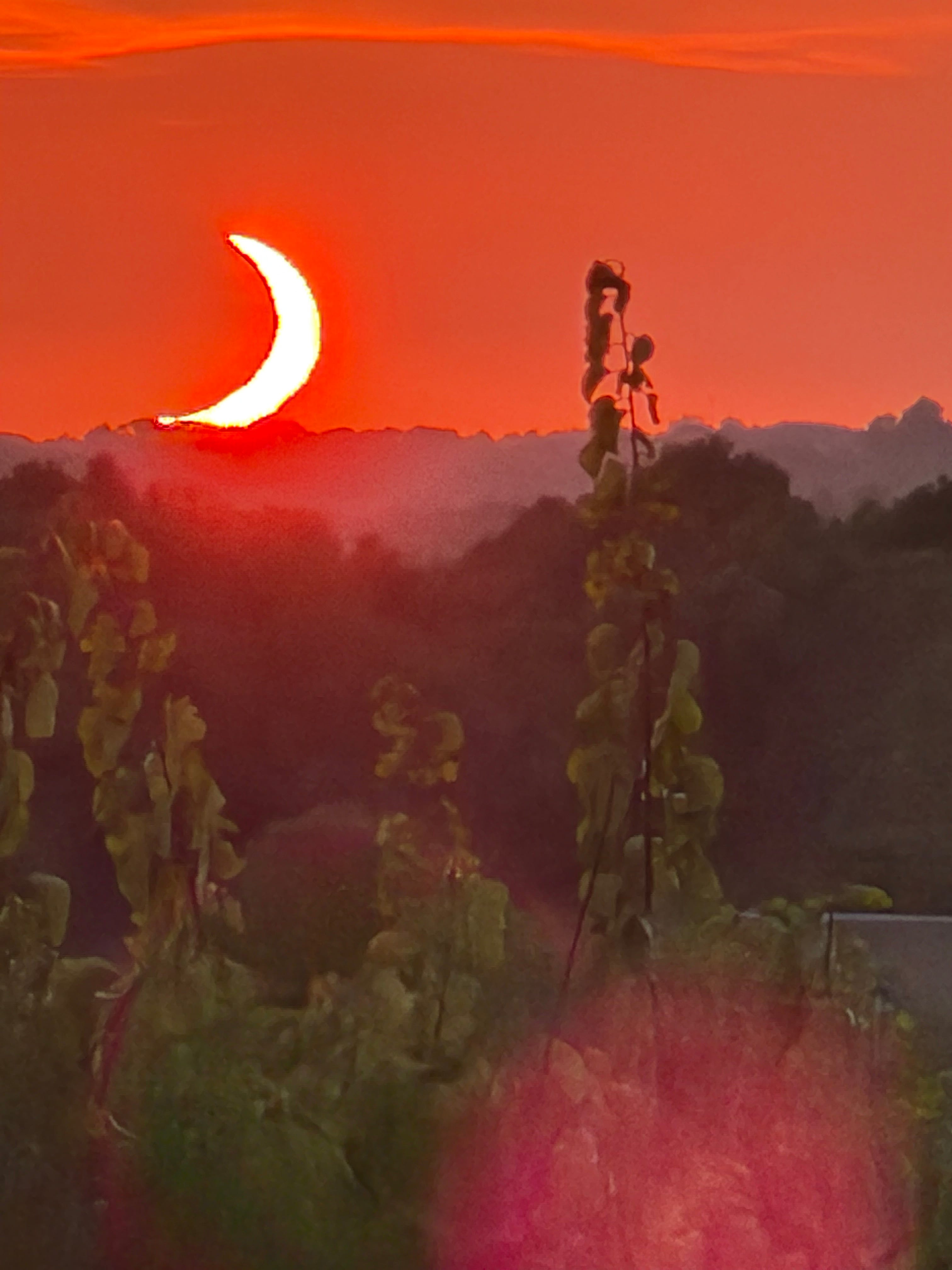
After the totality, which lasted for a minute and a half or so, we had a good few minutes in which the sun appeared like a fingernail moon in the sky—too bright to look at with the naked eye, but low enough in the sky to sneak photos with your phone. Seven, eight, 10 minutes later, the sun looked like a massive, bright red crescent moon as it sank behind the hills; in my photos, it looks like a slice taken out of the sky—a gash, bleeding fire.
It’s been a rough couple of weeks. My mom’s in the hospital. Her cat scratched her; the scratch got infected, badly. An abscess ruptured tendons in her hand. They had to operate. The anesthesia did a number on her memory, already ravaged by Alzheimer’s. It’s been a little over a week now, and the confusion persists. She doesn’t remember where she lives. She asks me to tell her friends what has happened to her, even though some of these friends have been to see her multiple times already, one of them nearly every single day. She remembers none of it.
In a group chat with my sisters, she asked why she hasn’t heard from my dad, who’s been dead for 21 years. In an email to me, she asked where Dad was and insinuated that he was gallivanting around with his ex-wife, also long dead. Then she went on to accuse the nurses of stealing her iPad—“I SAW IT WITH MY OWN EYES,” she wrote—except that’s impossible, because she hasn’t had an iPad since she crushed it beneath her walker a couple of years ago.
We talk every day, and every day it’s as though it were the first time we’d spoken since her accident, as she calls it.
So my experience of the eclipse has, naturally, intermingled with how I’m processing all of that. I don’t know if there’s supposed to be a lesson here or not. Sometimes things go away for a spell. If it’s the sun, it will probably come back. Other things—well, no one really knows. Maybe it’s that doubt that makes eclipses so awe-inspiring. Because deep down, we suspect that anything, no matter how enduring, no matter how central to our universe, could be snuffed out with only a moment’s notice.
This week’s newsletter features a dazzlingly good album of hothouse minimalism from Tonal Union’s Akusmi, a new set of guitar duets from Meg Duffy and Gregory Uhlmann, a raucous live recording of Bill Orcutt’s The Four Louies, a banging new EP from Djrum, and much more. Read on.
Paid subscriptions are $5 a month or $50 a year; perks include exclusive playlists for chilling and clubbing (now available on Tidal as well as Apple Music, Deezer, and Spotify); Eavesdropping, a new series of mixes by me; the ongoing Mixes Digest series; and full access to the archives, including interviews with Bill Orcutt, Kara-Lis Coverdale, Call Super, Avalon Emerson, Nick León, and more.
Akusmi: Terra Incognita (Tonal Union)
There’s a contradiction at the heart of Akusmi’s Terra Incognita. On the one hand, it’s coded in accordance with certain qualities of mellowness. The acoustic palette (piano, reeds, mallets) is easy on the ears; the volume rarely reaches above a low burble; the pentatonic scales and cycling arpeggios are harmonious, never jarring. But at the same time, there’s so much happening that I have sometimes found myself struggling to make sense of it, to find a purchase within its contrapuntal churn. I’d been confused by this clash of sensations; I even wondered if I was listening wrong. And then I re-read the label’s introductory note to the album, in which Akusmi’s Pascal Bideau expounds on the idea of “dépaysement,” an untranslatable French word (“uncountryfication”) that means something like having the rug pulled out from under you by an experience that is overwhelming in its alienness. “It’s the sensation you get when you visit a place you’ve never been before,” he says, “where nothing makes sense and everything needs to be learnt from scratch. There are no cultural references, no familiarity, just a constant flux of new colours, smells, social and moral codes.”
With that clue, suddenly everything about Terra Incognita makes sense. Because it’s not like it’s entirely unfamiliar; there are echoes of spiritual jazz and Ethiojazz and other various styles of African music, of American minimalism and the meditative glow of groups like Natural Information Society. But the density is what I find so strange. It comes on so gradually you don’t even notice it: One minute you’re cruising down a lazy river guided by snaking vibraphone and trilling flute, and the next you’re encased in thickets of jungle encroaching from all sides, all sense of direction smothered by the underbrush. It’s not a disagreeable sensation, far from it, but it’s confusing; we expect our ambient jazz to be soothing, yet Terra Incognita is just as often unsettling, challenging our expectations and tripping up our sense of direction. Seldom does music quite so dulcet make me wonder, But which way is up? quite like this astonishing record does.
Duffy x Uhlmann: Hot Creek (Orindal)
Meg Duffy (Hand Habits) and Gregory Uhlmann (SML) follow up their 2023 album Doubles (FR review) with another exquisite record of jewel-toned duets. I suppose you could call most of these pieces miniatures: just two guitars in play at any time, the tone clean, the movements unfussy; most of them don’t run longer than two or three minutes, and a few quite a bit less than that. But I also tend to think of them as bar puzzles: trim, sleek assemblages whose chromed knots I can’t quite seem to untangle, no matter how I wrestle with them. They’re all over the map here, in ways that belie the simplicity of the two-guitar format—sometimes there are loops involved (the sparkling “Crystal Geyser,” which sounds just like its name), or sampled rhythms (“Doing It for Me”); sometimes one of their instruments sounds almost like a saxophone (“To Be a Good Friend”); sometimes the players pluck away in perfectly mirrored counterpoint (“Plumeria”). Sometimes they sound like an Autechre live set is worming its way through their pickups (“Sewering”). Every track feels like a miniature universe unto itself, but they all build upon each other to create a sense of totality, a many-angled Cubist portrait of their singular union.
Bill Orcutt: Four Louies Live (Palilalia)
A hesitant admission: I had trouble getting into The Four Louies. I loved the sheer, stubborn audacity of A Mechanical Joey, and I find The Anxiety of Symmetry almost scarily beautiful, but The Four Louies threw up a roadblock with those first three eighth notes. I couldn’t quite get over the referentiality of the thing, the obviousness of the Kingsmen riff standing, totem-like, at the center of it all. Which is stupid, I know, because as soon as it achieves liftoff, it turns into a massive and monumental drone piece. Still, I stayed stuck at the front door. So I was surprised to find myself so taken with the live performance of The Four Louies that Orcutt put on at his three-night Roulette takeover earlier this year (what Alan Licht, in his liner notes for the live album, cleverly dubs Palilaliapalooza).
If ever there was proof that I was wrong about The Four Louies, it’s here in this gargantuan slab of ascending and descending chords, an Escher’s staircase overrun by hordes of rampaging beasts. It’s an all-star affair—Eli Knowles, more eaze, Cyrus Pireh, Alan Licht, David Golightly (organs); Chris Corsano, Eli Streich (drums); William Wynant (maracas); Jas Stade (guitar); Emmalee Johnson-Kao (bass); Bryan Day (“noise table”); and of course Orcutt himself, also on guitar—but virtuosity is hardly the point. Instead, ham-fisted key-mashing is the order of the day, Reich’s Four Organs hammered into a thick paste while the “Louie Louie” riff churns butter. As Licht himself points out, there’s a looseness to the live performance that the album didn’t achieve, and the B-side is an all-out headbanger of flaming, flailing drones, a pyre of feedback ascending to the heavens.
FR 161: Bill Orcutt: In Continuous Motion
·
Mar 31
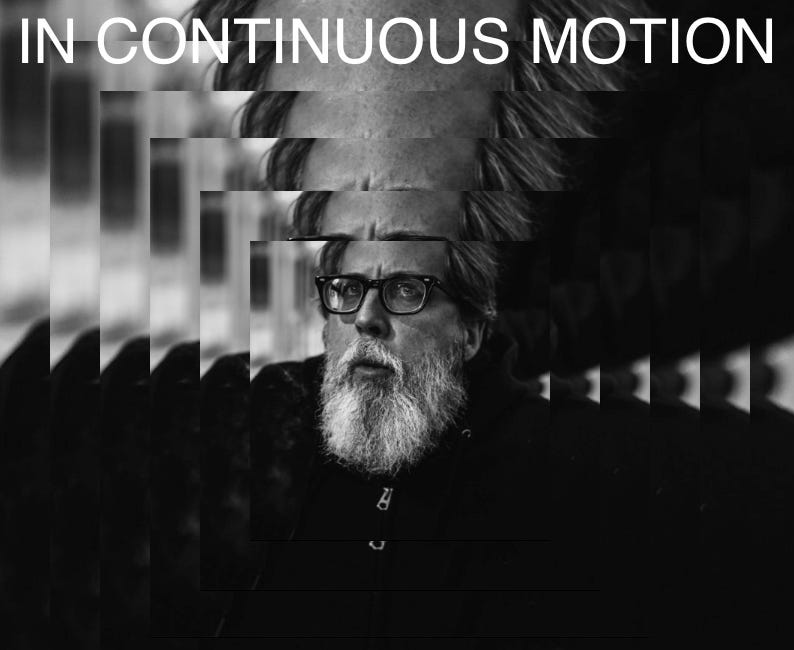
Had you come across a flyer for Bill Orcutt’s recent three-night takeover of Roulette but not known who he was, you could have been forgiven for assuming he was some elder statesman of experimental music (and not just for his estimable beard). Laying out the full sweep of the Bay Area guitarist’s work, the residency was the kind of affair that typically…
Lawrence English: The Rest Is My Ghost (Room40)
You don’t really listen to Lawrence English’s music; you listen into it. His new album The Rest Is My Ghost is a case in point. At first, at low volume—perhaps competing with a heatwave-mandated box fan, as it has been for me—it’s a velvety wall of black. But enter into it, and new dimensions present themselves, new sound images. A wordless choir shines silver around bassy thunderheads; horns stretch out like streaks of light. There’s a lot in there that I don’t hear: Track two alone, “Acid Nostalgia,” features Necks pianist Tony Buck, saxophonist Mats Gustafsson, Thor Harris on hammer dulcimer, at least three trombonists, Rully Shabara’s voice, Chuck Johnson on pedal steel… Good luck identifying any of their playing; Lawrence has stretched and smeared it all, pulverized it into cavernous eardrum pressure. “Hacks” features a similarly stacked guest list and sounds even emptier, like nothing turning itself inside out. In his notes to the album, English writes about his desire to counter the weaponization of nostalgia, and cites an abundance of inspirations, from architecture to philosophy. I suspect those “oblique notes” may be legible only to English himself. The Rest Is My Ghost doesn’t offer solutions or answers or even a definitively articulated thesis. What it does offer is space, as limitless a sense of space as sound can provide, and the time and freedom to linger inside it.
St. Silva: Forager (AKP)
Ben Dexter Cooley likes to spend time in the woods. When he began bringing a field recorder with him, his St. Silva project—from the Latin word for forest—was born, he told the Tonearm’s Carolyn Zaldivar Snow. Forager, as its title suggests, is a record of gatherings. He collected the majority of his sounds in nature in Vermont, where he lives—rain on a greenhouse roof, birdsong, melting ice—and collaged them with synthesizer parts. Sometimes a pad provides a backdrop, like the purple sky behind the treeline at dusk; elsewhere, the electronic sounds are more active, tracing squiggly lines that mimic the calls of birds. The mode is resolutely ambient, and, apart from the odd arpeggiated sequence, largely drifting and unstructured, but I suspect that’s by design. Cooley works as a data scientist; in his youth, he was a devout Christian who played in his megachurch’s in-house band. Forager sounds like an attempt to slip outside the strictures of both of those experiences, a freeform path.
Auscultation: IV (100% Silk)
Auscultation has always been my favorite of Joel Shanahan’s many projects. I suspect that he’s better known as Golden Donna, but Auscultation is where you see the full force of his growth as an artist: the ambient house of 2014’s eponymous album, by turns whimsical and spooky; the chillier, more restrained Entreinte Imaginaire, from 2015; the depth and density of III, whose seeming nonchalance hides a haunted air, a murky and reverb-fogged gloom. His music is repetitive but never predictable, tarnished metal flowers blossoming in ways you’d never expect. Auscultation’s fourth and latest album explodes his ideas in all directions: low end more forceful than ever; chords and leads alike branching out in syncopated patterns that remind me of old Titonton and Morgan Geist; fizzy pads casting the whole thing in a silvery full-moon glow.
Shanahan’s rhythmic imagination is restless, perhaps boundless: Take “Pinned,” which begins as deep-diving ambient dub and somehow grows inward, progressively filling in the spaces between the beats with fractal disco-ball dappling. “Severed Cord” does something similar around a shuddering electro beat. It’s not that these tracks are overstuffed—there’s plenty of empty space in them—but anything could happen at any moment, at any point along the rhythmic grid. Even a relatively straightforward four-on-the-floor groove like “Hazel Vacancy” shatters into micro-syncopations—brittle spring-wound hi-hats, mica-like flecks of synth, confetti-gun clouds of color floating in all directions.
Djrum: I Wander (Houndstooth)
What kind of record is Djrum’s latest? Seven named tracks, six cue points, all of it melting together in a single 16-minute stretch. The booming tom rhythm that ties it all together is among the most forceful grooves Felix Manuel has yet released, but around it, everything is in flux—erratic bursts of bit-crushed drums and what sound like samples of vinyl spinbacks; stray voices and brushed gongs; high-torque breakbeats and ambient pianos; and, more than anything, rising and falling tempos that suggest a CDJ on the fritz. It’s not really a “club record,” per se, but it’s a fascinating longform interrogation of club intensity.
The Bug: Ladybug 1 ft. Dis Fig (PRESSURE)
The Bug: Ladybug 2 ft. Friday Night Plans (PRESSURE)
Kevin Richard Martin’s music is almost always bleak; what sets aside his Ladybug series is that it’s also unabashedly beautiful. He kicked off the project last month with “Vanishing,” a desolate dub ballad featuring longtime collaborator Dis Fig (Felicia Chen), complete with a handful of progressively more numbed-out dubs—tempo crawling, bass ashen, echoplexed vocals grainy as a desert windshield. Slow and molten as ever, the parameters don’t change much on this month’s Miss U,” featuring Japanese singer Friday Night Plans, but what’s striking this time is how closely her voice resembles the breath-on-a-frosted-windpane quality of Portishead’s Beth Gibbons. It’s a tremendous piece of spirit-crushing trip-hop.
e: World Dirge (Slippery)
Slippery is a new label affiliated with British Columbia’s dub.4mt mastering studio; the label’s 12-inches are hand-cut dubplates limited to 20 copies, but fortunately, for the rest of us, they’re also releasing digitally on Bandcamp. Slippery 001 comes from 1080p/100% Silk alum Journeyman Traxx (aka Bobby Draino) and Ultimate Lover, a new name to me. The two-part “World Dirge” is smoked-out West Coast house with an ambling groove and a spacey outlook, trim machine cowbells and stumbling kicks and toms dripped in shimmery pads. Both tracks sound like a sterner, more skeletal response to Auscultation, actually.
RAMZi turns in a dreamy (yet tough!) dub-techno rework that instantly lands in my list of favorites in the genre this year—punchy, elastic, caked in glitter, with an almost ’90s house feel—while Journeyman’s dub mix of the track hollows out the beat and fills it with psychedelic ooze. Finally, a pair of digital-only mixes push the same ingredients into new territory: the “1985 Mix” is springy and stepping, wreathed in sunrise synths and full of the Balearic spirit, while the “Ambient Dub” flips the calendar page to 1992 or so, sparkling chords streaming across a velvety dark backdrop, just in time for the tail end of the Perseids. It’s a hell of a start for Slippery.
Oceanic: ICI (Nous’klaer)
Mata Disk: Mindboggle Endworld (Nous’klaer)
Few “techno” labels have captivated my attention in recent years quite like Nous’klaer. These two new EPs are a case in point. Mata Disk’s MindBoggle is fast and forceful, but there’s still something powdery and yielding about his techno; it enfolds you in its embrace rather than simply banging you over the head. Crisp, punchy, carefully detailed beats accompanied by opalescent pads—there are few things I’d rather hear on the dancefloor. Then, on the label’s latest release, Oceanic offers a burly tribute to vintage Border Community on the shuddering title track, dials back the energy on the spacious (but still plenty muscular) “Capyra Vision,” sets off percussive fireworks on “Tassman Perks,” and dissolves into a slow-mo slurry of churning prog bliss on the seven-minute “Prefig.”
Various: Curation 03: Verraco (The Third Room)
Essen’s Third Room hands the keys to TraTraTrax cofounder Verraco for the latest installment of its Curations series, and the Colombian musician unlocks a series of passages leading through the deepest techno. There are churning hand drums and spongy pads from Regal86, a firehose of hazy Detroit soul from 1morning, and an instant classic of flashing 909s and ruminative pads from Skee Mask. Verraco and Tils turn in a lithe stormer touched up with Verraco’s glistening chordal sound design. And for the dub-techno faithful, a new edit of Substance & Vainqueur’s 2007 cut “Libration” adds both velocity and heft.
No posts
Comments
Nothing yet. Say the first thing.
Sign in to join the conversation.