
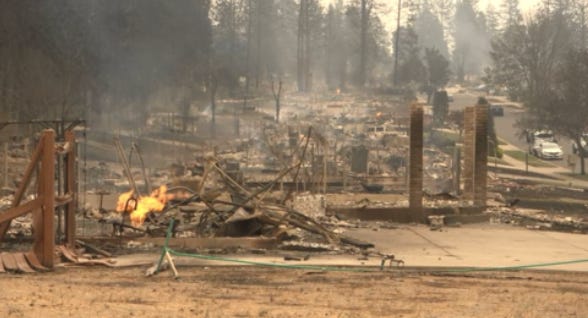
If you want to help the folks in Spokane, consider donating to Innovia’s Wildfire Response Fund.
The tragic fires in Spokane, which I wrote about last week, have yet again raised the question of what strategy – if any – we in the United States should adopt to deal with the increasing number of extreme natural disasters that appear to be afflicting us.
Whether it’s floods in Houston, hurricanes in Florida, or wildfires in the West, natural disasters have gone from becoming the exception to the norm. And so the question about how to deal with them – and how to minimize the damage to people and property – has become an urgent one.
Increasingly, that question has boiled down to: flee or fight? By which I mean to say, do we try to avoid putting people and their property in harm’s way in the first place? Or do we try our beset to mitigate the damage to people and property when a natural disaster occurs.
As a land use planner, I’ve always been inclined toward avoidance. After all, if land use planning can’t arrange the landscape in a way that protects people from harm, what’s the point of doing it in the first place?
The Future Of Where depends on you to keep going. Become a free or paid subscriber today!
But in the course of my life experience (including serving as mayor of a wildfire-prone city), I’ve come to realize that mitigation is also necessary, because there are tens of millions of people already living in harm’s way and the harm is getting more frequently.
Of course, it would be nice if we stopped putting more people in harm’s way, but that isn’t really happening. The riskiest places are also often the prettiest. Meaning there will always be people willing to buy houses in risky locations and gamble that a natural disaster won’t hit them during their lifetime, as well as developers willing to turn a profit building and selling those houses.
And while it’s theoretically possible to retreat from risky locations – and remove people from them – as I have written previously it’s unbelievably expensive (because putting people there in the first place creates value). And it’s almost impossible emotionally for the people who live there to accept, since people become so attached to the idea of place.
And, in an event, our definition of risky areas is expanding on a daily basis as more natural disasters occur. People who always thought of themselves as safe simply aren’t.
So what do you do?
Well, there are mitigation practices and then there are ways to rebuild that might reduce the risk.
Living in Southern California most of my adult life, I’ve watched the evolution of wildfire mitigation efforts. (It’s interesting to me that we used to be afraid of earthquakes but we’ve vastly improved our mitigation there, so we are not focused on wildfires.)
Thanks for reading The Future Of Where! This post is public so feel free to share it.
There are the obvious steps that individual homeowners can – and in many cases – must take, such as removing brush and plants from around their house and making sure tree branches don’t touch their roof. But there are larger-scale steps we can take as well.
In my book Guide To California Planning, which most planning students and practicing planners in California use, I specifically call out the steps taken by the developers of Stevenson Ranch, a subdivision north of Los Angeles.
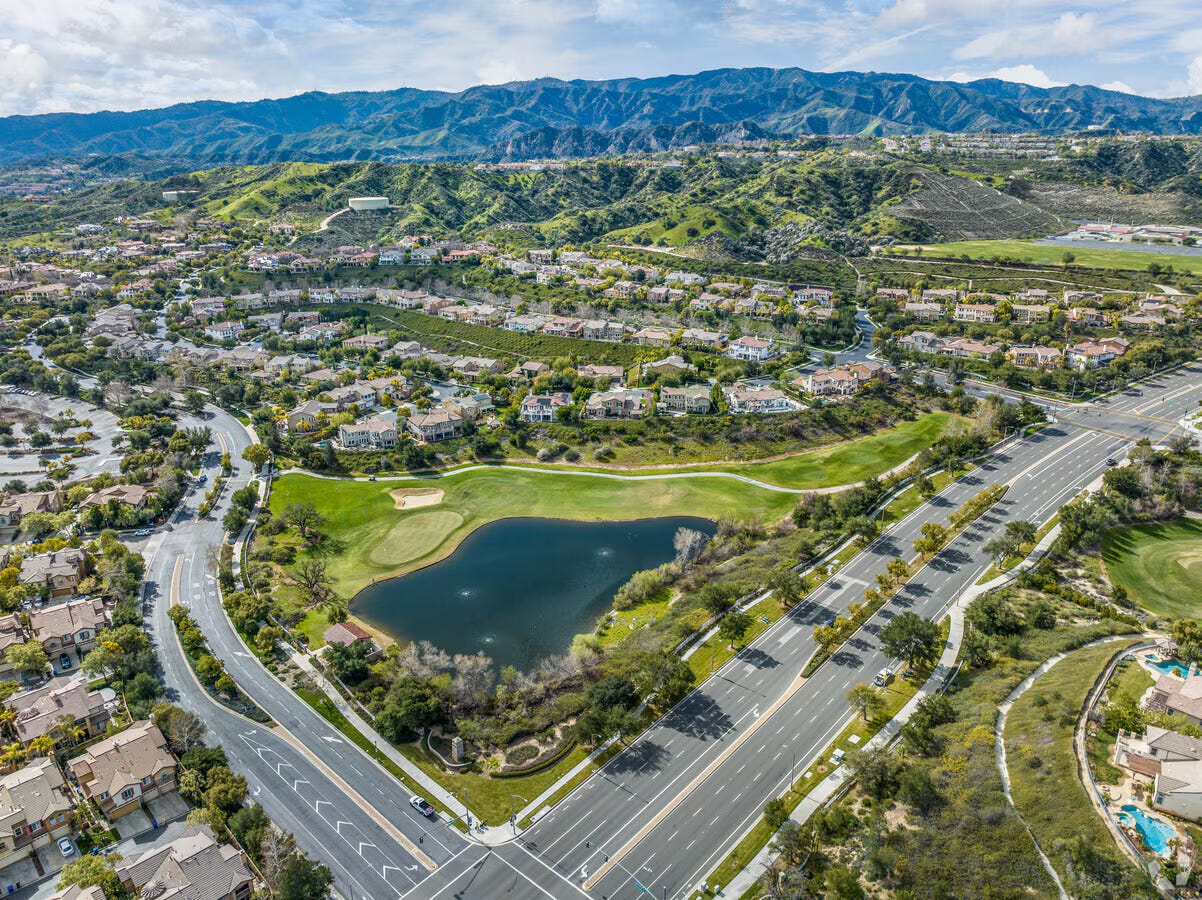
Stevenson Ranch near Los Angeles has taken unusual steps to protect from wildfire.
Among the measures taken are the following:
· A 200-foot-wide greenbelt containing judiciously spaced fire-resistant plants nearly surrounds Stevenson Ranch.
· Drainage basins and steeply sloped areas adjacent to homes are covered with rock, concrete or other material that won’t burn, providing buffers within the subdivision.
· Roofs are made of ceramic or concrete tiles, attic vents are covered with tight wire mesh, and all chimneys are covered with metal caps. These measures resist the threat caused by flying embers, which are a primary method wildfires advance into developed areas.
· Exterior walls are covered with stucco or similar material, rather than flammable wood siding. In addition, the areas under roof eaves are boxed off with an inflammable material so that roof timbers do not catch fire.
· Windows that are dual-paned, glazed and made of tempered glass. Whereas the heat from a wildfire can cause ordinary windows to explode into the building, these much more expensive windows redirect a fire’s heat away from the building.
Of course, these steps are mostly taken in new subdivisions – and they’re expensive, driving up the cost of housing. But they do reduce the risk and so far, at least, Stevenson Ranch has not been hit by a wildfire.
Older subdivisions are not likely to have these measures in place and so they’re at greater risk. There’s considerable evidence that older houses are much more likely to be destroyed by a wildfire. And there’s a growing idea in California that if you surround older neighborhoods with newer neighborhoods like Stevenson Ranch, you’ll protect them. Given how embers fly around, I’m skeptical, but …
Then there’s the question of how to rebuild after a wildfire. This has been the subject of considerable debate in Los Angeles given the destructive wildfires in Pacific Palisades and Altadena in 2025, and it will undoubtedly become an issue in Spokane as hundreds of homeowners decide what to do.
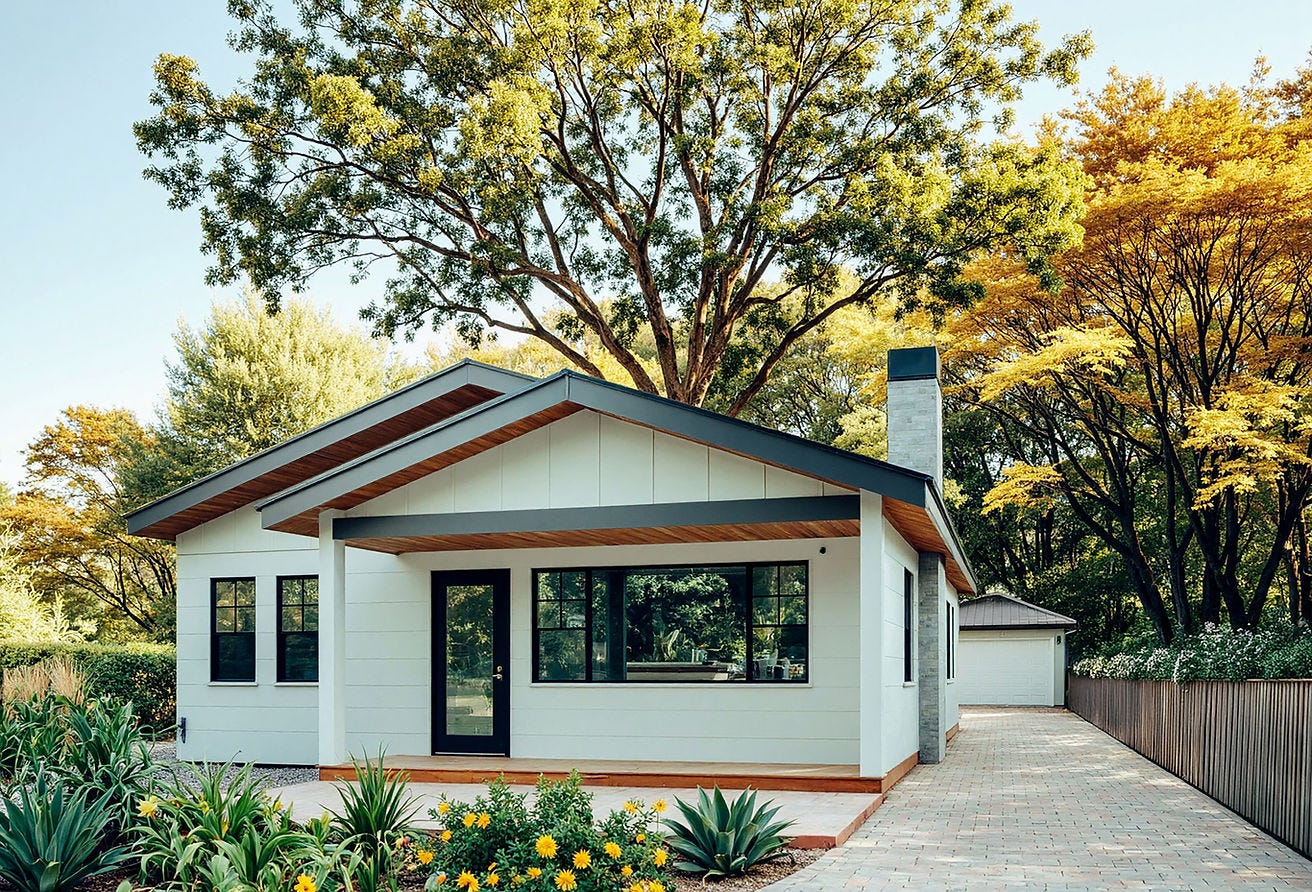
A rebuilt house in Altadena.
There’s no question there merely replacing an older home with a newer home meeting current building codes will reduce the likelihood that that home will burn in the future. And homeowners who have lived through wildfires are obviously more likely to be aware of the need to be vigilant about mitigation measures they can take, such as removing brush.
But the idea of rearranging land use patterns in a way that reduces risk usually falls by the wayside. The impulse is always to allow people to build their homes back in exactly the same way as before – no matter how risky that was – and this impulse usually prevails. That will probably happen in Spokane – and so the people there will still be at considerable risk that they’ll be affected by a future wildfire.
No posts
Comments
Nothing yet. Say the first thing.
Sign in to join the conversation.