
How are you? I know, I know… what is this? A newsletter?
If you want to unsubscribe, now is a good time!
But, of course, stay around if you can.
You are, after all, one of my favourite 1081 people in the whole wide world.
You signed up for my newsletter!
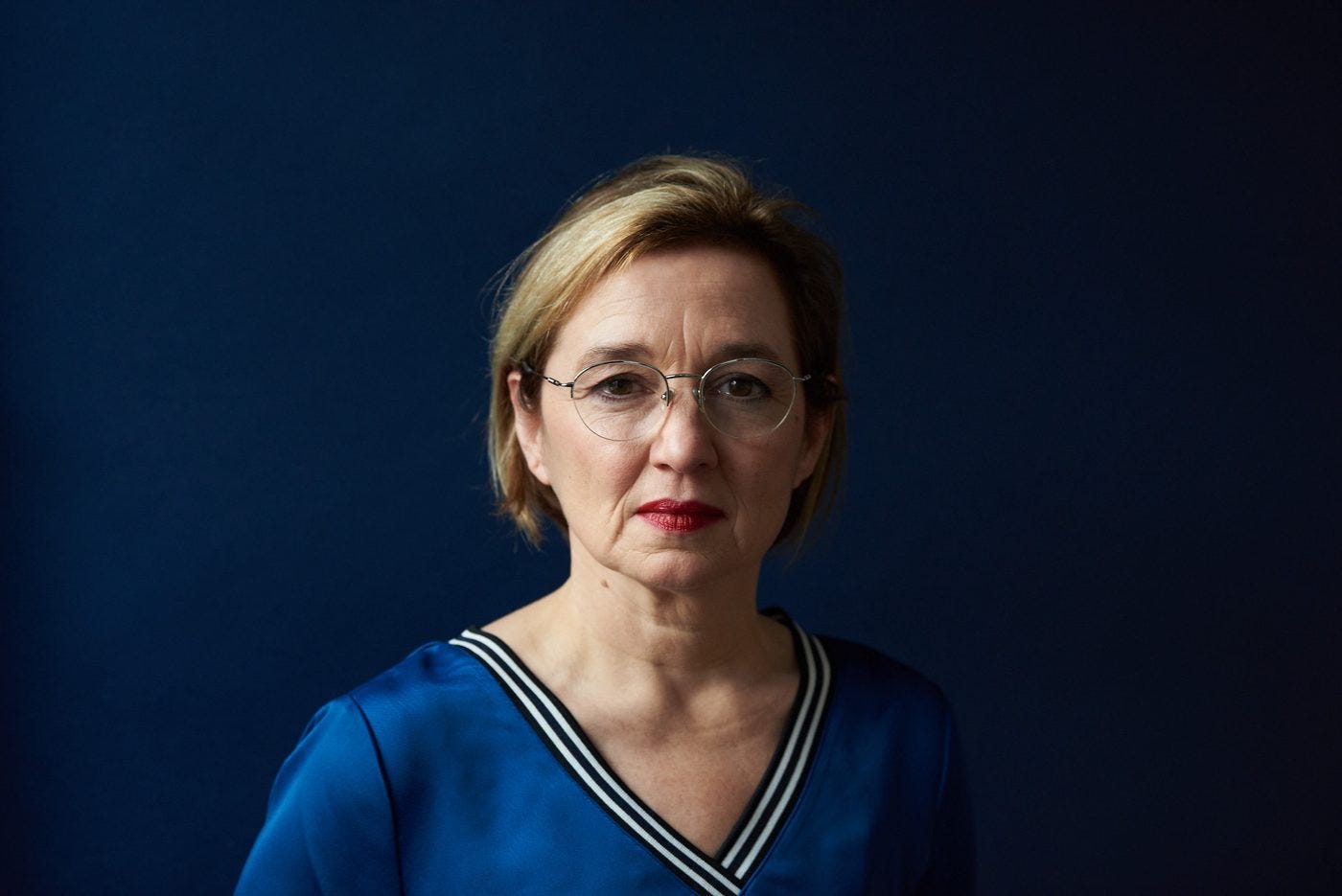
As a reminder… Monique van Dusseldorp here, Amsterdam-based curator and moderator bringing together people in tech, media, and innovation.
In the first 10 editions of this newsletter I tried to figure out the role of online events vs IRL events. I was not finished when I put the newsletter on hiatus for… a few years.
Now I want to explore a few more ideas around tech events and other gatherings.
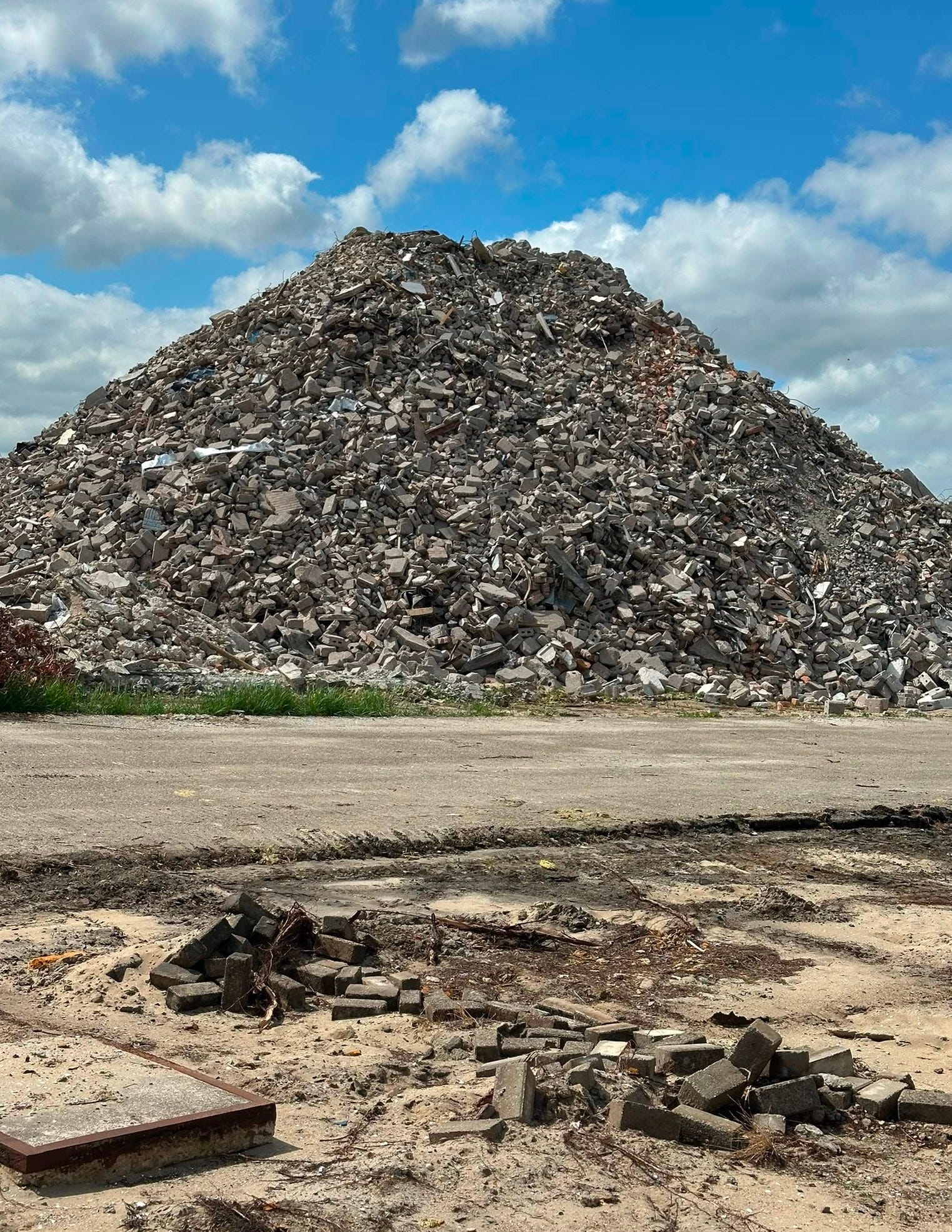
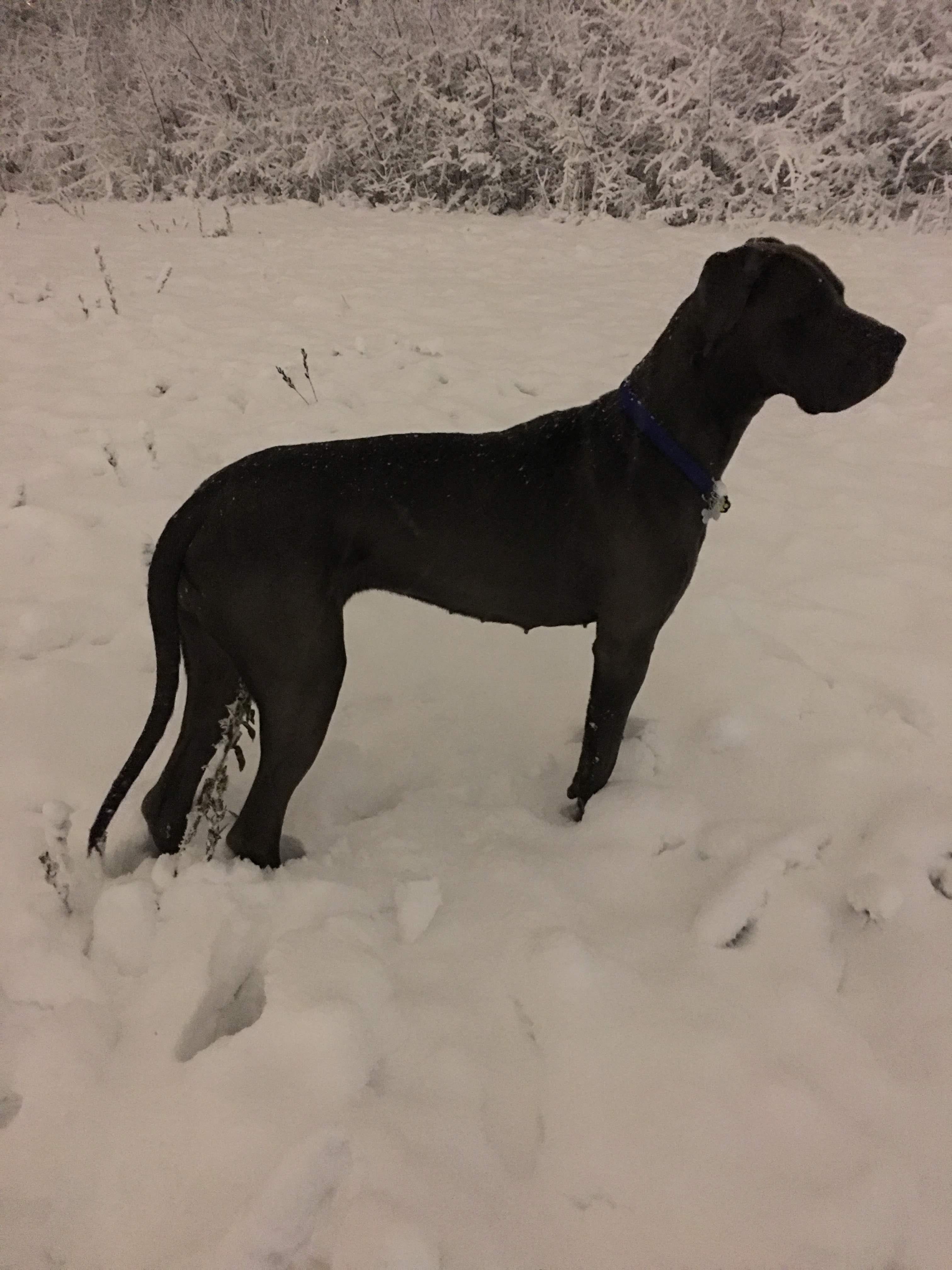
This summer feels like a season of lasts. My kids are suddenly adults, some events I worked on for decades have stopped, and the Great Dane who structured my days for many years is now running through her own Champs-Élysées. It is also the last summer in the studio where I work; the whole area is being demolished. Buildings one day, big piles of rubble the next.
And it is the last summer before war will be everywhere. It has felt that way for a while now. War is coming. War is here. War is asking something of us.
This week I visited the European Cultural Foundation here in Amsterdam. They are working on their archives, the big European story, and asked me to help locate some files. We talked about the early ’90s: the wall had come down, the web was arriving, the feeling of optimism, Europe coming together, worlds getting connected. The wind of change.
The ECF was founded after WWII to bring Europeans together through culture. It was in 1992 that the European Cultural Foundation helped me find a place to be. That is where it started. That is today’s story.
In 1992 I had already finished art school and was about to finish university with a literature degree. I had no idea what to do next.
I had been postponing graduation as long as I could. I edited the magazine for the international student association, and I went on a student exchange to Boston where I took an advanced history course. Back in Tilburg, I took a course on European law offered by Prof Frans Alting von Geusau. I had no plan at all.
Alting von Geusau kindly put me in touch with the European Cultural Foundation, which in turn forwarded my query to Prof George Wedell, director of one of the projects they supported.
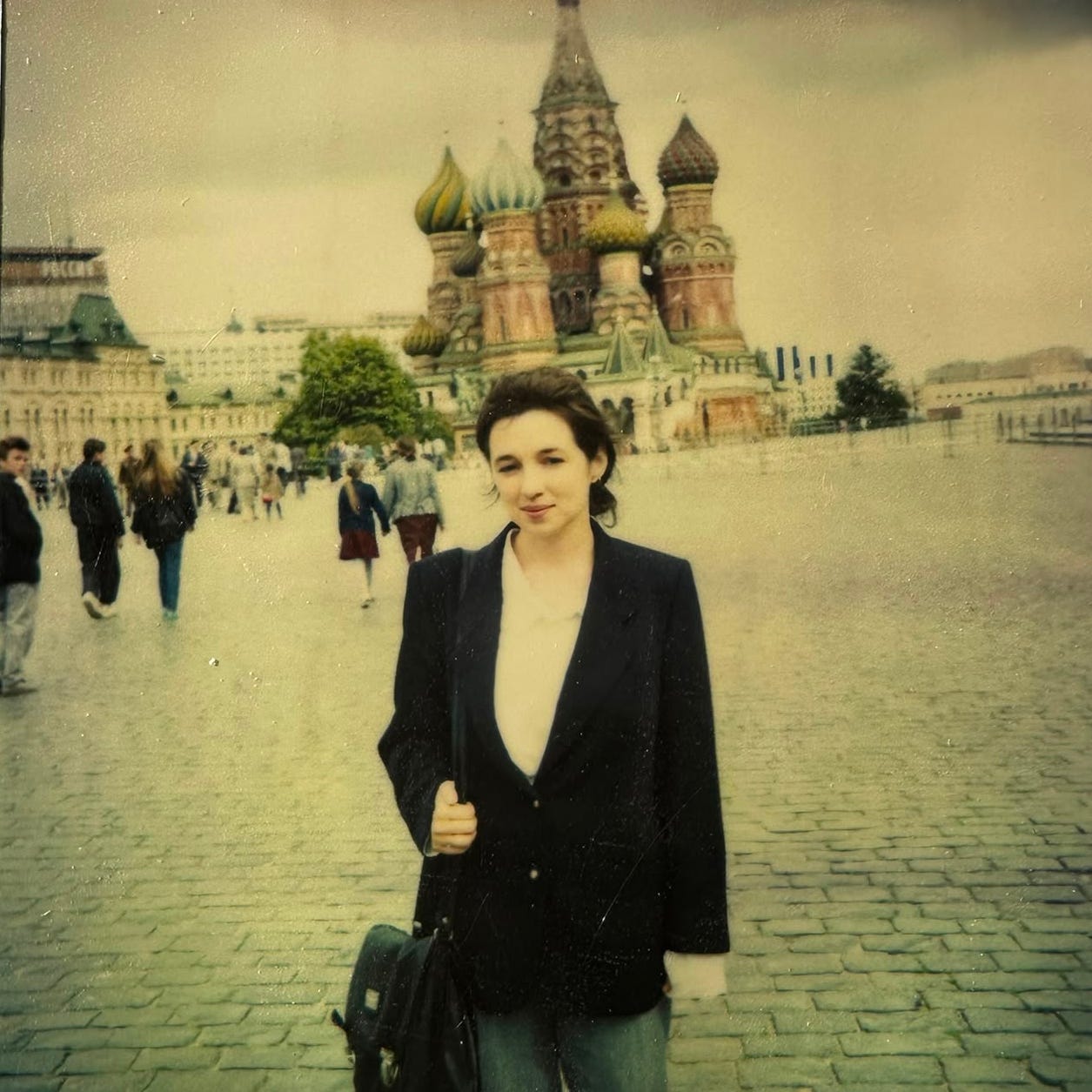
I met Prof Wedell in Brussels for a brief meeting, in my best art school outfit. Soon after that, I arrived in Manchester as a student intern at the European Institute for the Media, a grand name for a group of academics in a run-down building at the University of Manchester.
I found myself a place to stay in Longsight. Across the street was the “cricket club’’, a pub where my housemates and I went for big glasses of lager & lime, bingo, and pub quizzes. We went to the dog races once. It was a world completely new to me on all levels.
My first humble task: organise the move of the Institute from Manchester to Düsseldorf, make lists for the removal company and coordinate the grand opening event. I had meetings at the Staatskanzlei with civil servants who had no computers or typewriters on their desks. They dictated their correspondence, and the secretaries who typed it out were on a different floor.
Later, I was tasked with organising the European Television and Film Forum, an international gathering that would take place in Seville, Liège, Crete, Istanbul, Prague, and Lisbon over the years. With meetings and travel all over Europe, I often went somewhere twice a month.
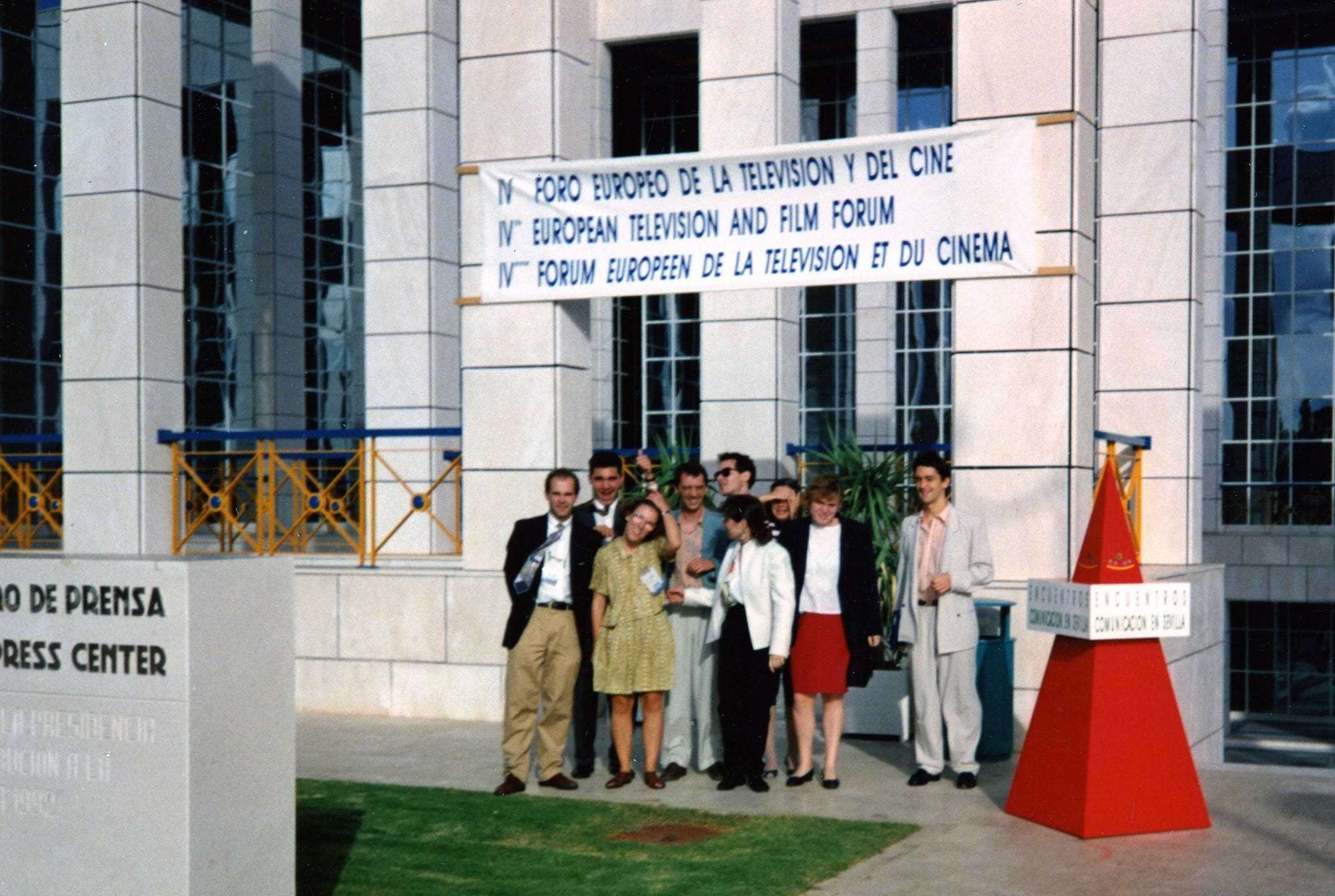
For a few years, I worked closely with Prof Wedell. He once fired me on the spot because someone had left some cups in the main conference room just before a meeting. The next day, he pretended nothing had happened; and so did I. I had no intention of leaving.
I stayed with the EIM for five years, first in Manchester, then later in Düsseldorf. (Van Dusseldorp in Düsseldorf, and living on Düsselstrasse, I kid you not).
The EIM did important work at the right time: the commercial television market was developing across Europe with new challenges for regulators. The European Platform of Regulatory Authorities (EPRA) was founded at “my” TV Forum and still exists today. Elections were held in the new democracies of Central and Eastern Europe with the EIM setting up a monitoring unit for media coverage in these countries. I left when the WWW started to truly happen.
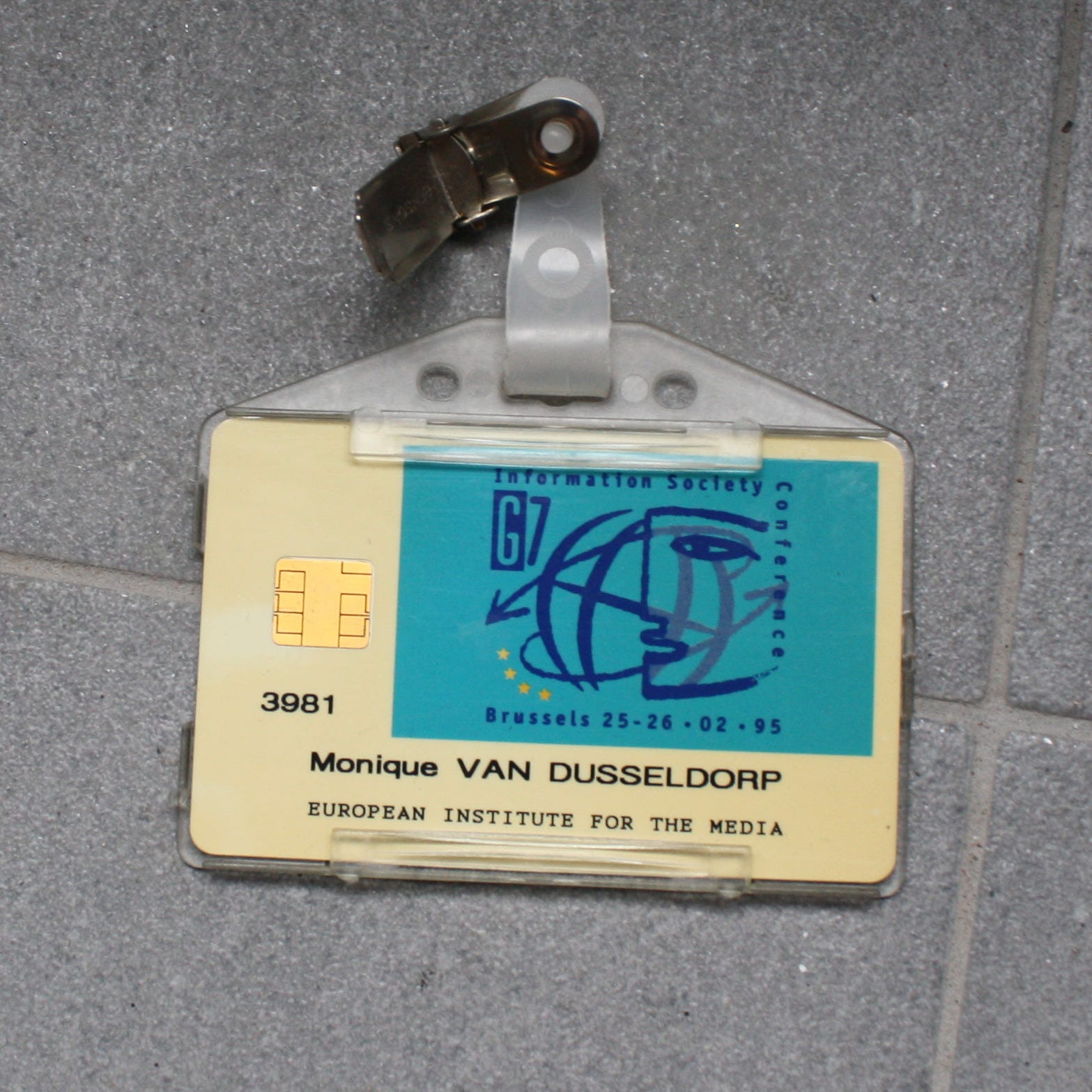
What mattered even more than the work was what was put together — not in research, buildings, institutions or projects, but in people: a completely fascinating group of Europeans.
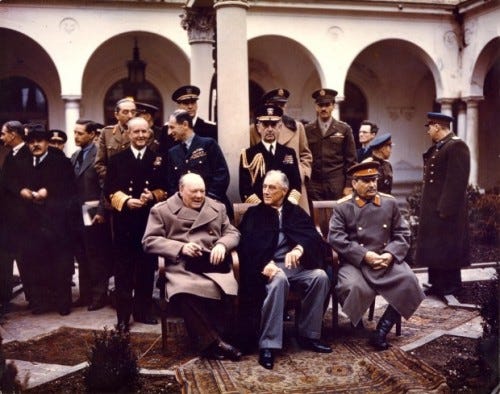
One year I travelled to Slovenia with Sir Frank Roberts, who was into his eighties at the time. Sir Frank had been an advisor to Churchill. In fact, the cover of his autobiography Dealing with Dictators features him at the Yalta conference with Churchill, Stalin, and Roosevelt.
Together we had to take a flight, a bus, and a taxi. I listened closely to the conversation he had with our driver. He was so interested, so friendly and curious about learning how the man’s life had changed since the wall came down. He asked about the current price of a loaf of bread. There I was, on a bus in Slovenia, observing Sir Frank’s inquisitive mind.
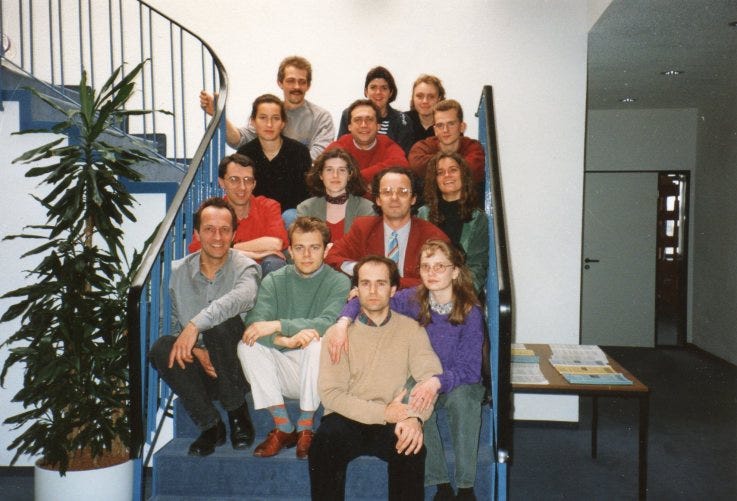
Who were my colleagues? They were a Hungarian lawyer, an American movie buff, a Russian journalist, the former head of news of Sarajevo television, a French army officer, a Ukrainian teacher, someone straight out of Oxford with a classics degree, a Bulgarian Arabist, and of course lots and lots of media researchers from all over Europe.
Most people worked at the EIM for only a few years. We were young, and we became friends. Ildiko and her family took care of me when I was lonely in Manchester. In Düsseldorf, I was proud to become godmother to Elena’s son and flew to Kyiv for his baptism. There were dinner parties, office parties, leaving parties. We picnicked on the Rhine banks, we took a boat trip to Koblenz. We worked long hours and hung out many evenings.
Facebook and LinkedIn show that some of us went on to do wonderful things. Some continued work that strengthens the European media landscape. Others carved out a different path – movie producer, war correspondent, corporate finance lawyer, sports rights specialist, novelist, teacher.
Some, like me, continued similar work in different settings. Looking back, you can draw direct lines to what I have done since that first job over 30 years ago: putting together conferences and events about media, technology, innovation, and what is changing. The EIM was point zero.
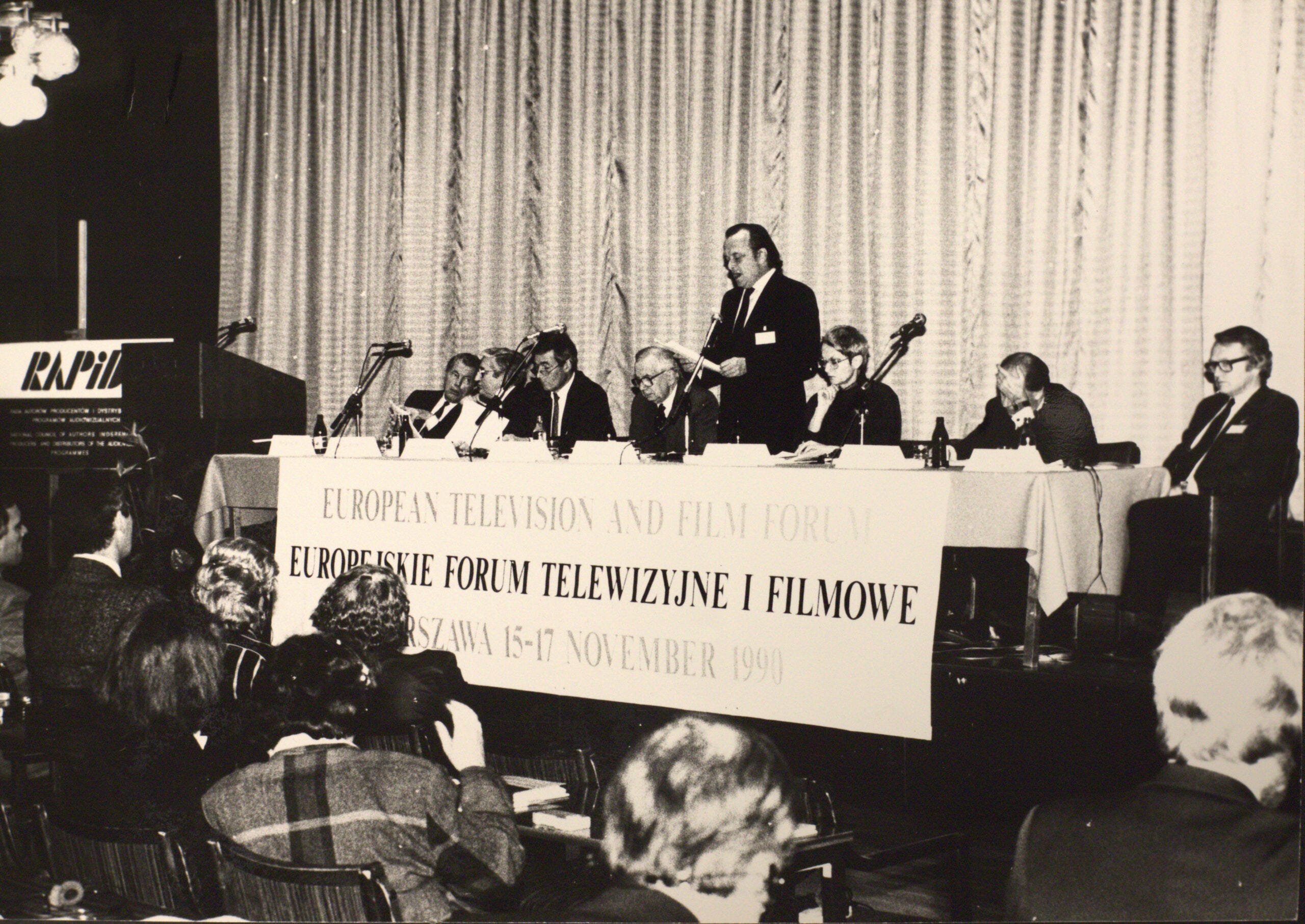
Thirty years after I accidentally found my way into the world of conferences about a changing world, I seem to be doing much the same thing.
Only the direction feels different. The EIM and the ECF were building connections, institutions and structures for a more peaceful, more connected Europe. The optimism of those years has dissipated. And I find myself wondering what it means to bring people together in a Europe preparing for war.
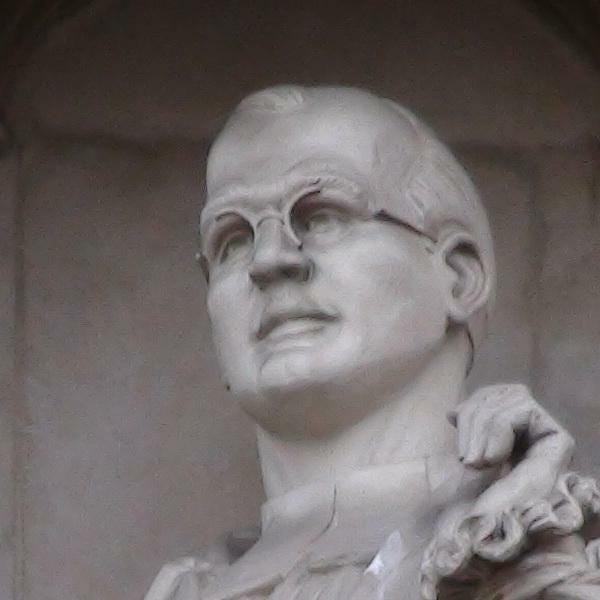
Prof George Wedell died in 2020, and the London School of Economics has an obituary with some background on his ‘distinguished career in communication and education’. Wedell was eleven years old when his family fled Nazi Germany in 1938. His godfather was Dietrich Bonhoeffer, executed in 1945 for his role in a plot against Hitler.
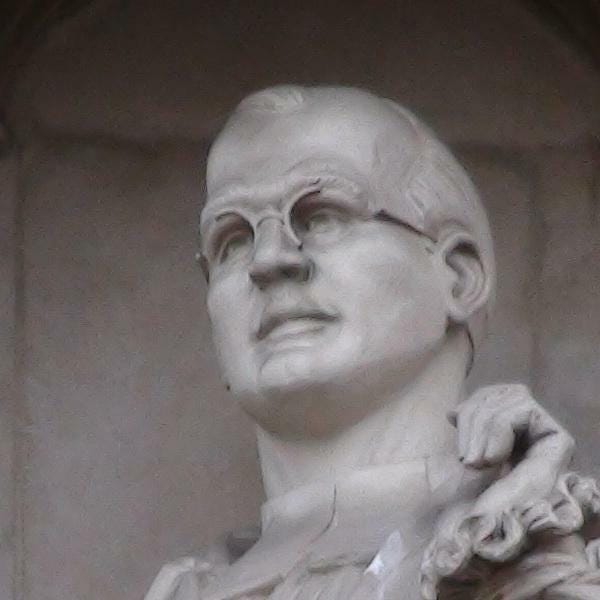
Dietrich Bonhoeffer — with glasses — at Westminster Abbey. I made myself a website. Claude reviewed a set of pictures and selected the best ones, but could not resist pointing out that I was wearing the same dress rather often… ChatGPT, meanwhile, kept suggesting more unique qualities than any person could possibly have. Anyway, now I just tell Claude Cowork what I want changed and poof! Yes, miracles!
As for work: I am continuing my work with AI House Amsterdam, with a new series of flagship events in the making. In addition, Dutch Design Week, MXT Conference, Tweakers Developers Summit, CIIIC and Emerce Eday asked me to assist with speaker programs. Follow me on LinkedIn for updates.
Wind of Change. No newsletter is complete without a recommendation. “I follow the Moskva / Down to Gorky Park / Listening to the wind of change” — the opening of the Scorpions’ 1990 anthem. There is a fabulous eight-part podcast called Wind of Change about the rumour that the song was actually written by the CIA. I truly enjoyed it.
(And since Russia’s invasion of Ukraine, the Scorpions have changed the opening lyrics when performing the song live: “Now listen to my heart / It says Ukrainia.”)
Next time: a bus, some very strange tech people, and a story about what really happens behind the scenes at tech events.
And now I finally give you back your day.
Comments
Nothing yet. Say the first thing.
Sign in to join the conversation.