

As the dog days of summer come to a close and the new school year approaches, I’ve been doing a lot of reflecting on the past school year. And I’ve come to the conclusion that I have the best job in the world.
Every single day, I get to see kids who were once bored, numb, or discouraged fall in love with learning again. I get to see them wrapped in love and support with caring, attentive adults who guide them academically, emotionally, and personally. I get to witness the Eureka! moments when kids realize they are capable of doing “impossible” things (like run their own musical festival).
But my greatest joy isn’t just seeing this happen inside Alpha Schools; it’s realizing that we are entering the golden age of education for every kid and every family.
The old model of compliance and “hating school” is finally giving way to a new era of empowerment. We are discovering that we can truly reimagine what school can be for kids, and have it transform their life for the better: loving school, mastering academics, learning life skills, but most importantly, giving them their childhoods back.
I recently wrote a letter to our families at Alpha reflecting on the wins of the past year, and I want to share my insights with you today to show you these ideas aren’t just utopian dreams.
(You can scroll to the bottom of this essay to see my top five non-negotiables for ushering in the golden age of education for your kids, regardless of where they go to school.)
Traditionally, schools get worse as they get bigger. Quality dilutes, culture fades, and the individual child becomes just a number. But the future of education actually gets better as it gets bigger.
The 2025-2026 school year was Alpha’s biggest year ever. We grew to more than a dozen campuses across the country, welcomed more students and guides than ever before, and became a truly national network.
We ended the year at or above last year’s results on the metrics that matter most: students loving school, academic growth, life-skill development, and the guide-student relationship. Our re-enrollment rate was over 95%. Most importantly, we saw this not at one campus, but across a growing network.
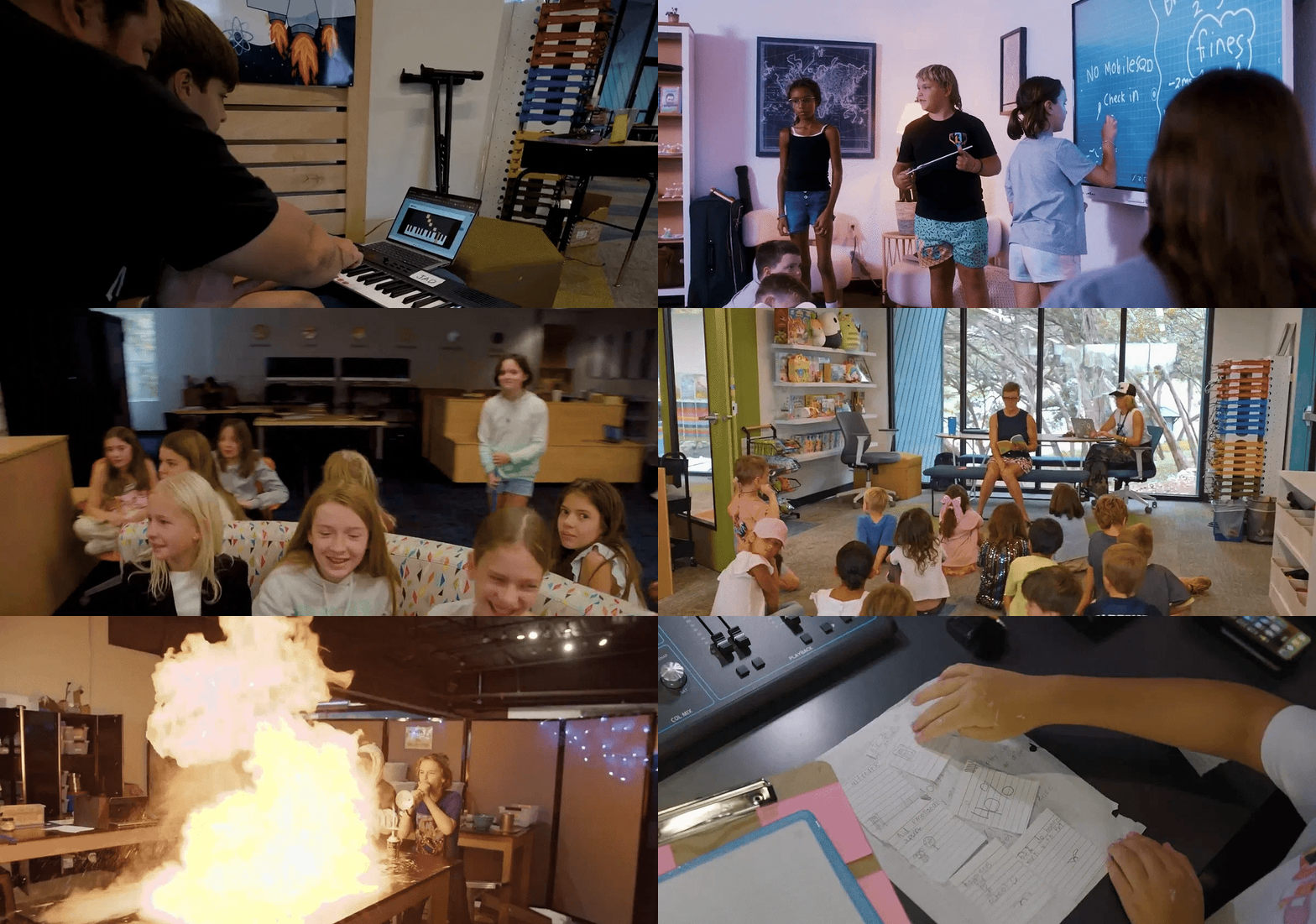
The most meaningful thing we heard this year was not just that students were learning faster. It was parents telling us, “Our child is back.” They were more confident. More curious. More independent. More willing to try hard things. A child’s relationship with school shapes the mood of an entire family, and this year we saw that transformation across more campuses than ever before.
94% of K–12 students said they love school — the same rate we hit last year, delivered this year across a dozen campuses.
Depending on the session, 40–60% of students said they would rather go to school than go on vacation — a result that still makes us smile every time we see it.
96% of parents said at year-end that their child genuinely loves school.
“Our kids would 100% rather be at school than on vacation and do not even want breaks. They LOVE school — both of them.” - Scottsdale parent
“Alpha has exceeded my highest expectations and then some. My kids are back to LOVING school and are super motivated.” - San Francisco parent
The average student learned 2.6x as much as a student in a standard school (Fall-to-Spring MAP growth). This is the fourth consecutive year of improved academic performance.
Every grade level, every subject was in the top 1% in the nation (except 5/6th grade math, which was top 3%).
Our high school results continue to shine:
Our median SAT score for our graduating class is 1500 (Honors track 1540). And shoutout to our freshman Honors track who averaged 1400.
Our mean AP score was 4.26 out of 5, and 84% of our students scored 4 or 5 on their AP tests (2026 results).
Our graduates were accepted to top universities.
Our standout strength is in Reading/Language, where we were over 3x. We invested heavily in AlphaRead and AlphaWrite and increased time in those apps vs prior years, which led to outstanding improvements. We are especially excited about this because ChatGPT is destroying reading and writing in standard school. Kids aren’t reading books and they are ChatGPTing all their papers. We are showing that intelligent use of AI delivers the opposite — great readers and writers.
Math/Science was over 2x, led by Science at >3x. We rolled out cross-subject content integration with improved science content in AlphaRead.
Math was mixed: 1.8x overall, with K–3 and 8th–12th especially strong, but 4th–7th was relatively weaker. The worked examples we implemented improved the more difficult math of 8th–12th, but the reduced initial mastery practice hurt 4th–7th grade. We have already added initial mastery supplements into the summer program and they will be there for this next school year.
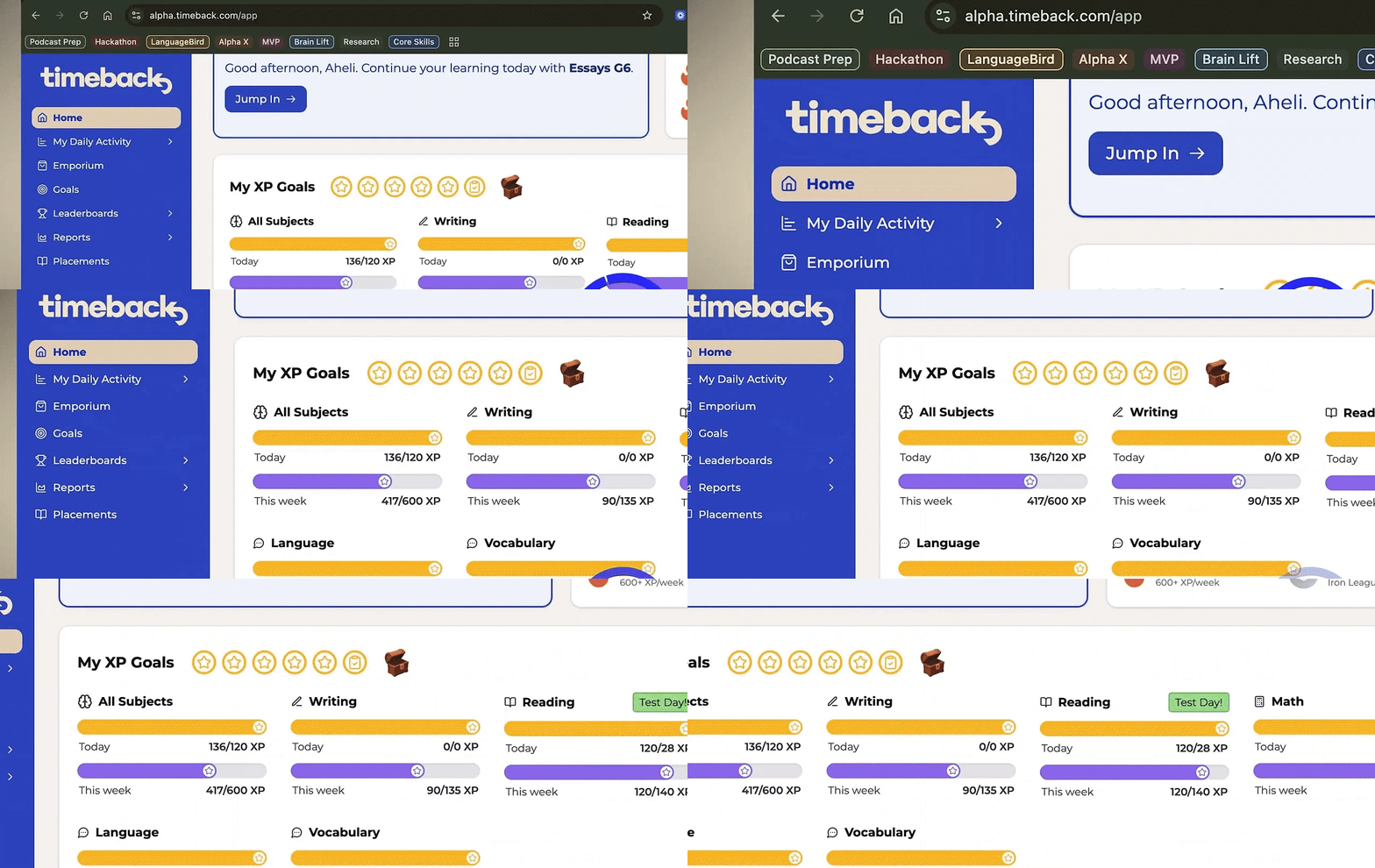
Our students averaged 110 minutes in the apps and earned 115 XP per day. We are delivering over 2.5x in 2 hours. We are rolling out a new StudyFilm next year that will show the time data to parents.
We had more students than usual this year working more than 2 hours:
~30% of students spent more than 2hrs/day (2.4hrs on average) to achieve more than 2x learning (3.3x on average). Many of these were new students having to catch up in their first year. We ask students to spend up to 1hr/day on homework to catch up when they join.
Fewer than 10% of students spent more than 2hrs/day (2.5hrs on average) and achieved 2x or less (1.6x on average). We are creating new motivational plans, changing instructional content, or improving apps for each student.
As we continue to create better AI apps, we expect our academic performance will continue to increase. That said, we are not increasing our commitment — it remains 2x in 2hrs.
“I believe I am learning at the right level because the work challenges me while still being understandable. It pushes me to think and grow without feeling overwhelming, which helps me build confidence and improve my skills each day.” - Miami Middle School student
The magic of Alpha is that students are able to spend the majority of their school day participating in workshops that teach five essential life skills.
88% of parents said their child did something this year they did not think was possible at that age.
90% of parents said they were impressed with this year’s workshops and AlphaTest events — our highest reading on this question in Alpha’s history.
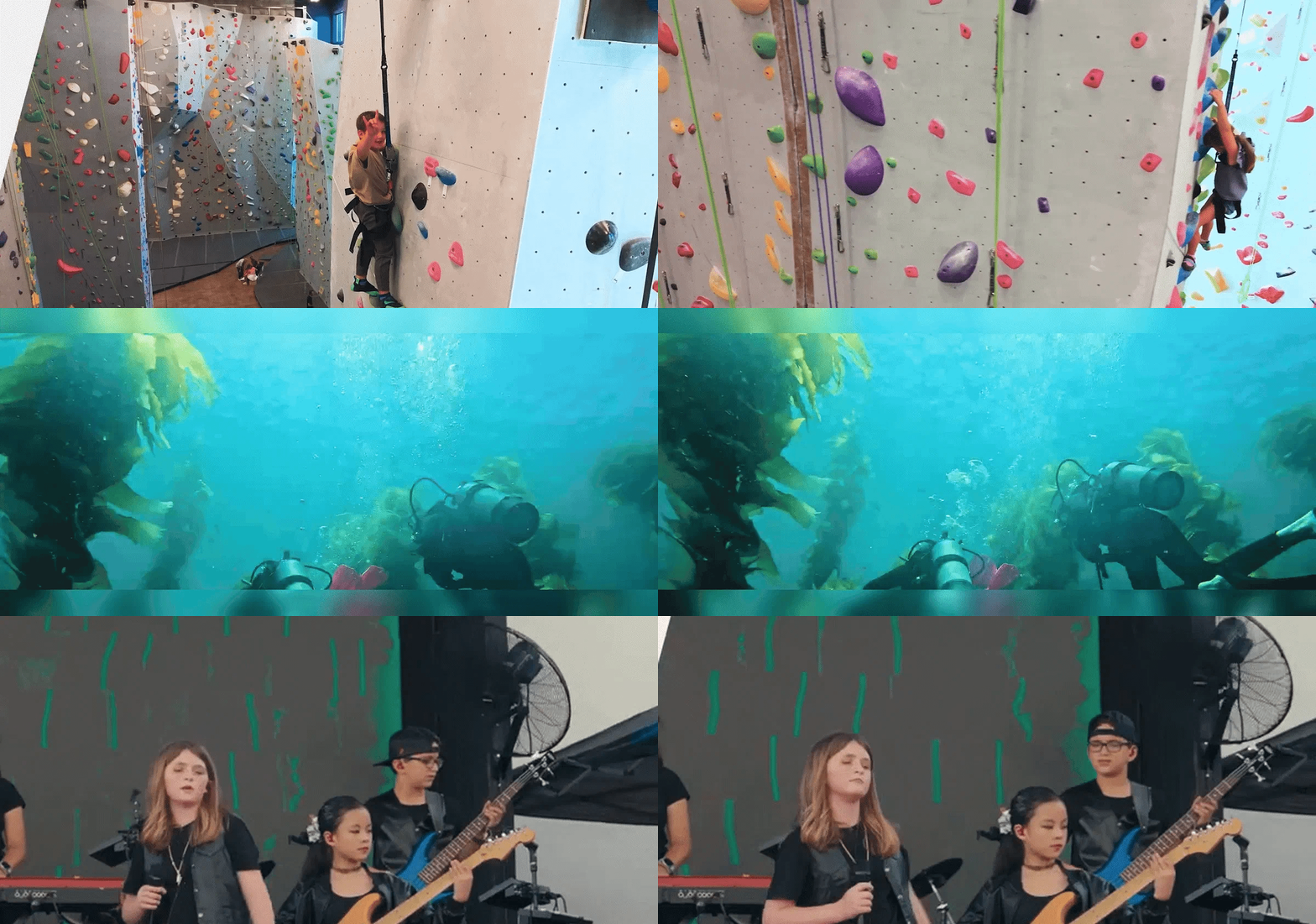
“The workshops were really amazing this year. The outdoors workshop, the 5K runs, and the flight simulator work (wow, that one was amazing).” - Austin parent
“My favorite workshop is the 5K Hero Habit. It’s where we run three miles for a 5K. And the workshop we’re learning is the Life Skill of Grit... Grit is where you keep trying.” - Austin student
“One of the biggest changes I’ve seen is his mindset. Instead of getting discouraged by setbacks, he’s seen them as opportunities. Alpha is teaching: failure is fuel.” - Fort Worth parent
Our workshops leveled up this year, with harder AlphaTests, more time outside (surfing, scuba diving, running, climbing, playing sports, gardening, and biking), trips (domestic and abroad), and cross-campus collaboration and visits.
Having caring adults in the classroom is key to a great school, and Alpha has transformed the role of the adult to have even more impact. Our guides and coaches are the most important part of our schools. Guides provide the high standards and the high support, and motivational and emotional connection that are integral to nurturing students.
86% of students said their guide is changing their life — up from 24/25’s 83%.
97% of parents at year end said their child’s guide is truly connecting with their child, motivating them, and providing meaningful emotional support.
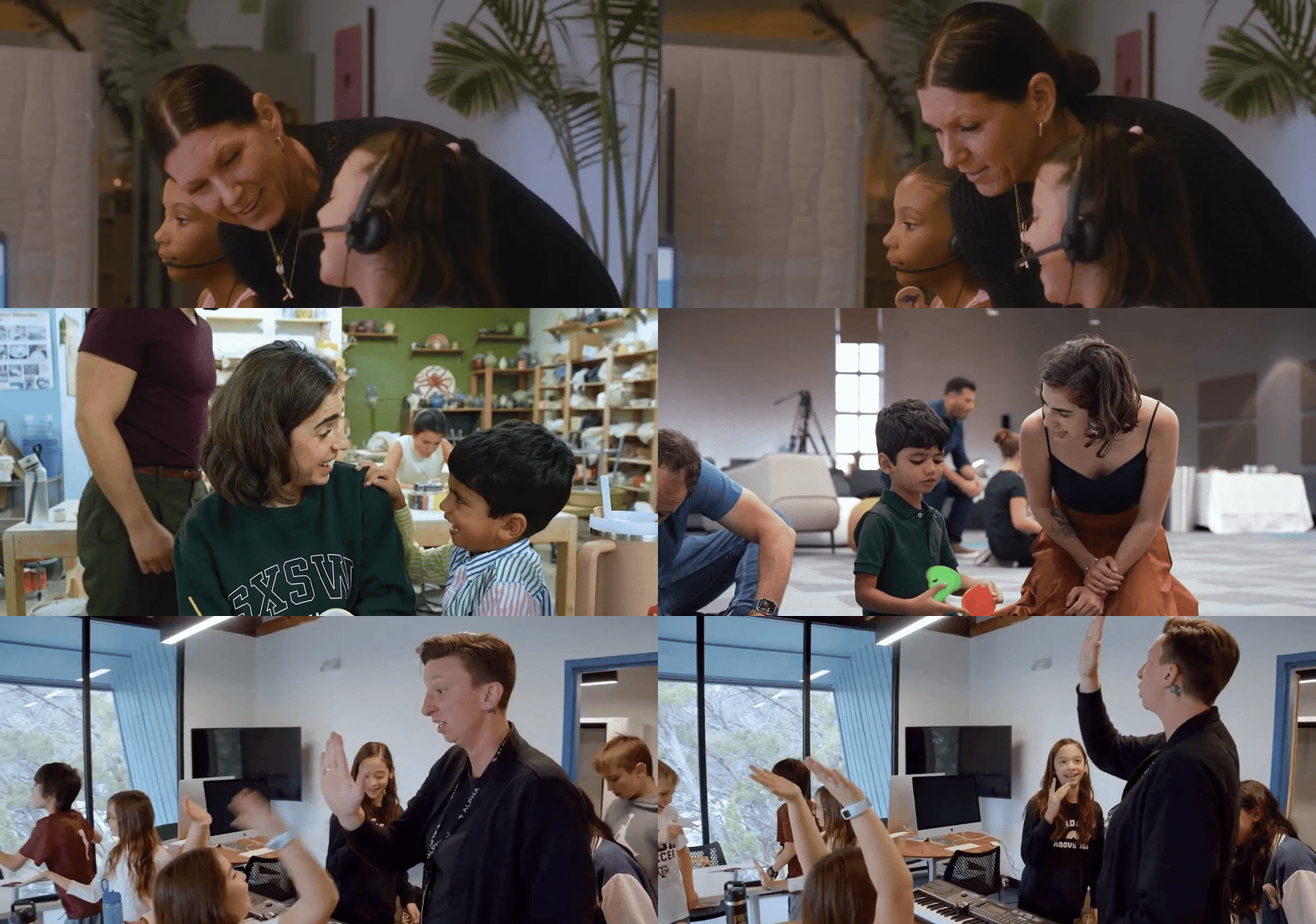
Our biggest hiring and training year in history produced our best guide-student connection year.
Because of the improved career prospects that come from getting bigger, we are becoming one of the most attractive schools (over 80,000 people applied) for the best teacher (both traditional and non-traditional) talent in the USA.
The single biggest indicator I look at is the student and parent feedback on guides. As long as it remains so positive, I know we will be able to deliver the three commitments.
Here are some of the most recent comments parents have sent:
“The guides are beyond any expectation I could have had. The care, concern, and effort that everyone in the administration puts in is honestly emotional. I have never felt that my child is in the best hands more than I do now.” - Scottsdale parent
“The level of commitment and the background and accomplishments of all the guides is truly astounding. We are watching our son grow leaps and bounds in his confidence and willingness to challenge himself.” - Chantilly parent
“The guides… have brought magic to the classroom!!! My kids have fallen in love with school for the first time because of the guides’ hard work. [They] have gone above and beyond getting to know what motivates and interests my kids!” - Palm Beach parent
One of the best examples of getting better as we get bigger was our network-wide character-building workshop, “The key to your happiness is contributing to your community.” Our Scottsdale students captured what it meant to them in their own short film, The Key to My Happiness.
Our pre-K–1st students were driven to “help the animals and kids around the world.” They earned extra Alpha bucks by doing more academic work to donate to global disaster relief and clean water, raised money for sea lions, and built dog houses for animal shelters.
Our 2nd–8th graders wanted to “raise real money and build something for the community.” They earned tens of thousands of dollars by running a music festival that donated to Austin’s music scene, donated thousands of books and built the bookshelves and library to hold them, got to know seniors around the country in assisted living and created legacy storybooks of their lives, and raised thousands of dollars for various social causes.
Our high school students (and some of our graduates) created a lasting legacy project: Alpha World School. They spent time in Africa and with educational and community leaders designing a year-long program, launching this August, where students will spend a year in Kenya and Ecuador building out local schools and doing research.
No one is more equipped to unleash your kid’s potential than you. You can usher in the future of education today, right in your home.
First, you have to believe they can. If you don’t truly believe your kid has limitless potential, neither will they. It starts with you. Do you talk to your kid like they’re “just a kid”? Or do you treat them like they can “do the impossible”?
Make mastery non-negotiable. Traditional schools may not teach to mastery, but that doesn’t mean you can’t in your own home. If your kid struggles in math, find a lens they love to help them master it: baseball stats to master percentages, Minecraft architecture to understand geometry, or baking recipes to conquer fractions.
Treat life skills as essential, not extracurricular. Bake life skills into everything. The easiest way to do this is to stop handling everything for your kid. Have your kid make the dentist appointments, plan the family reunion, budget the weekly grocery shopping, book the travel plans. Basic skills compound over time.
Unlock your kid’s motivation. Figure out what makes them tick, lights them up, drives them forward. External rewards (like stuffed animals, video games, an extra playdate, shopping, maybe even cash) can pull the lever of intrinsic motivation when tied to effort, not outcomes.
Finally, have fun! Yes, learning is serious business — but don’t make it too serious. One of the great tragedies of our current education system is the belief that all learning is inherently boring or unenjoyable. Help your kid unlock the joy of learning and accomplishing hard things. Ultimately, this is how you’ll help them become a lifelong learner.
We are moving away from an era of compliance and toward an era of limitless potential. The golden age of education is more of a decision than anything: the decision to believe your kid is capable of more, and the decision to raise them like it.
Send this to someone who’s ready to reclaim their kid’s childhood:
Comments
Nothing yet. Say the first thing.
Sign in to join the conversation.