
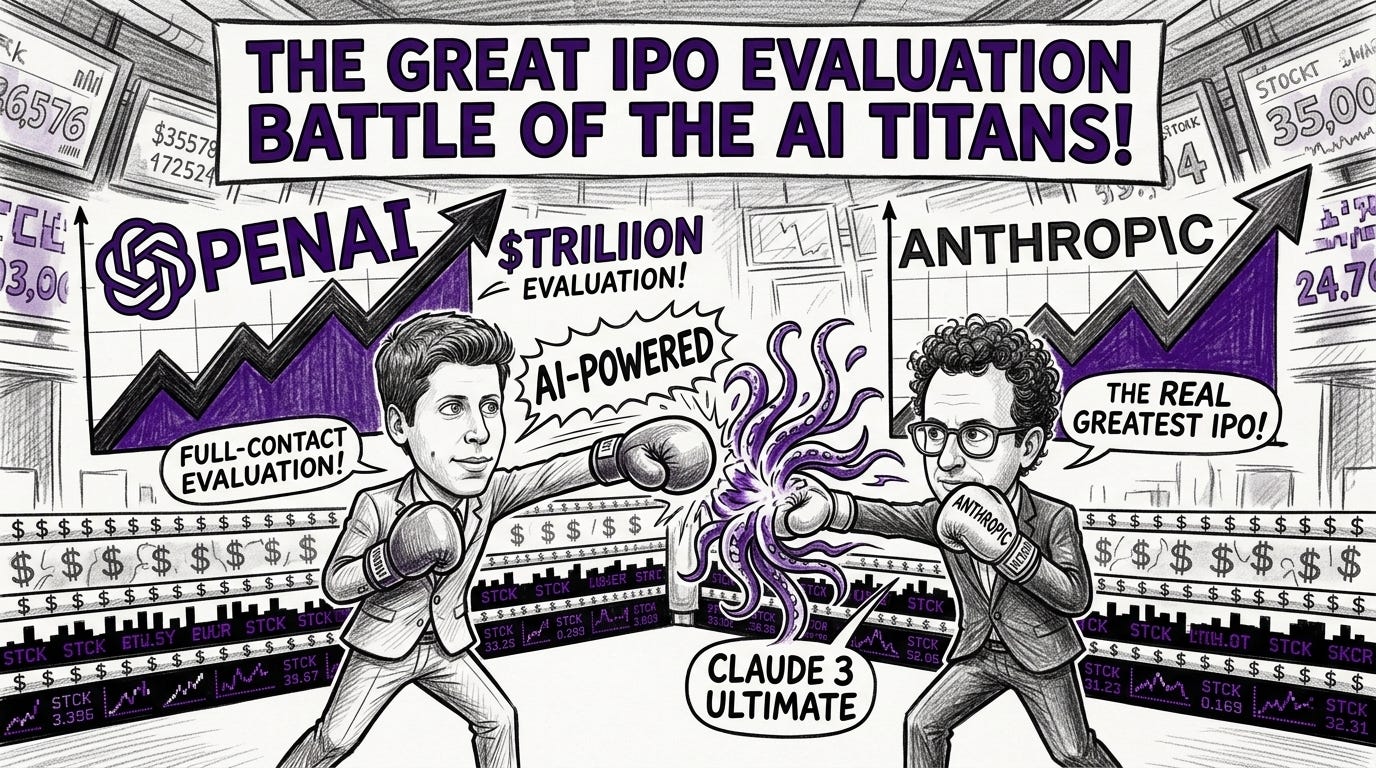
A year ago, the top CEOs building AI told you your job was on the chopping block.
This May, they changed their tune.
And the timing should make you hyper-skeptical.
Here’s what you’ll get from this post: the real story (and data) behind the AI jobs panic, what the data actually shows right now, and why your next career move should ignore the mood swings of tech CEOs.
Let’s get into it.
In May 2025, Anthropic CEO Dario Amodei went on the record with a big number.
He told Axios that AI could wipe out about half of all entry-level white-collar jobs within five years.
He said unemployment could climb to 10% or even 20%.
He named names too: finance, law, consulting, tech.
Sam Altman, the CEO of OpenAI, sang backup.
He warned that entry-level roles were at real risk.
The headlines did their job and people panicked.
Fast forward to late May 2026.
Altman sat down with the CEO of Commonwealth Bank of Australia and said he was “pretty wrong” about AI and the economy.
His words: “I’m delighted to be wrong about this.”
He even shared a story. He tried handing his Slack and email replies to AI, then went right back to typing them himself.
Amodei flipped his framing too.
Now he says AI will multiply your work instead of erasing it. Automate 90% of a job, he says, and people grow into the other 10%.
So the message changed. From “your job is doomed” to “your job is about to get better.”
Here’s the part that makes me smile.
Both OpenAI and Anthropic are getting ready to go public this year. Each one is valued at around $1 trillion.
A scary jobs story is bad for a stock sale. A hopeful one is great.
One AI policy researcher, Peter Wildeford, put it plainly. Americans feel pretty negative about AI right now, so the leaders are switching from “AI takes jobs” to “AI helps jobs.”
The question he raised is a good one. Did these CEOs actually change their minds? Or just their marketing?
This is where I want to be fair, because the truth sits in the middle.
On one hand, the panic looks oversold. The Yale Budget Lab found no big change in jobs or unemployment for high-AI roles since ChatGPT launched in 2022.
Goldman Sachs CEO David Solomon, who always doubted the doom, points out that U.S. employment has grown 145% since 1962. Building data centers alone added 200,000 jobs since 2022.
On the other hand, something is clearly shifting. Tech layoffs passed 115,000 by May 2026. That’s already close to the 124,000 for all of last year. Meta, Amazon, and Snap all pointed to AI.
And new grad hiring at Big Tech has dropped about 50% from before the pandemic.
So the bottom rung of the ladder is getting thinner, even while the sky stays up.
Here’s the elephant in the room: AI is expensive.
Uber burned through its entire 2026 AI budget in four months. Its execs started asking if it was even worth it.
Microsoft reportedly cut some of its AI licenses over cost.
When a tool costs more than a person, replacing the person looks a lot less smart.
So part of the “apocalypse delay” is just math.
Read the pattern:
The people building this stuff told you to be afraid. Now they tell you to relax.
Both messages happen to help their business on the day they say them.
So your career plan should come from you, and a CEO’s mood swing should stay out of it.
The jobs are still here. But the entry-level door is closing a little more each month. And the way in has changed.
Don’t miss this part:
The same AI that worried everyone is now sitting on the other side of the hiring desk. About 98.8% of recruiters use software that auto-rejects resumes before a human ever reads them.
So applying one at a time, by hand, is a losing game. The market is a numbers game now, and the numbers are huge.
The smart move is to play that game with a system instead of by hand.
That means three things.
A resume built to beat the auto-reject and score in the top 5% on ATS.
Everyone thinks they are outsmarting the job market by using ChatGPT, or Claude to write their resume, yet the average unemployment time is still 5.5 months. You need a more mature system for a more optimal outcome.
Volume, so you’re in front of hundreds of recruiters instead of five.
The average job gets 500+ candidates, meaning on average you should expect a 1% response rate with a good resume. Applying to thirty jobs per week when you have a few minutes is no longer a winning strategy. You need a system that can apply for you on autopilot so all you do is show up and take interviews.
And prep that turns interviews into offers much faster.
Make sure you are getting your reps in when you’re not in front of the recruiter. It’s great to have someone who’s a true industry expert to help you refine your elevator pitch and talking points. Pair that with an AI interview tool for daily feedback and you’re going to get your job on average 3x faster.
Do that, and you stop waiting for the official forecast. You start stacking the skills, the offers, and the income that hold up no matter which prediction wins.
That’s the whole game now.
In the last year I’ve run the job search for over 640 corporate professionals from Meta, Netflix, Airbnb, Google, and more. For those who follow the system fully, they average $143k in added income with the first offer in 75 days. We even guarantee placement in 90 days for those who do the work.
Want to see if you qualify for guaranteed placement so that you can build your financial fortitude and stay resilient in this time of extremely low job security?
Click here to see if you qualify:
To Life, Love & Robots,
Delaney William
No posts
Comments
Nothing yet. Say the first thing.
Sign in to join the conversation.