
Get futi for iOS and Android.
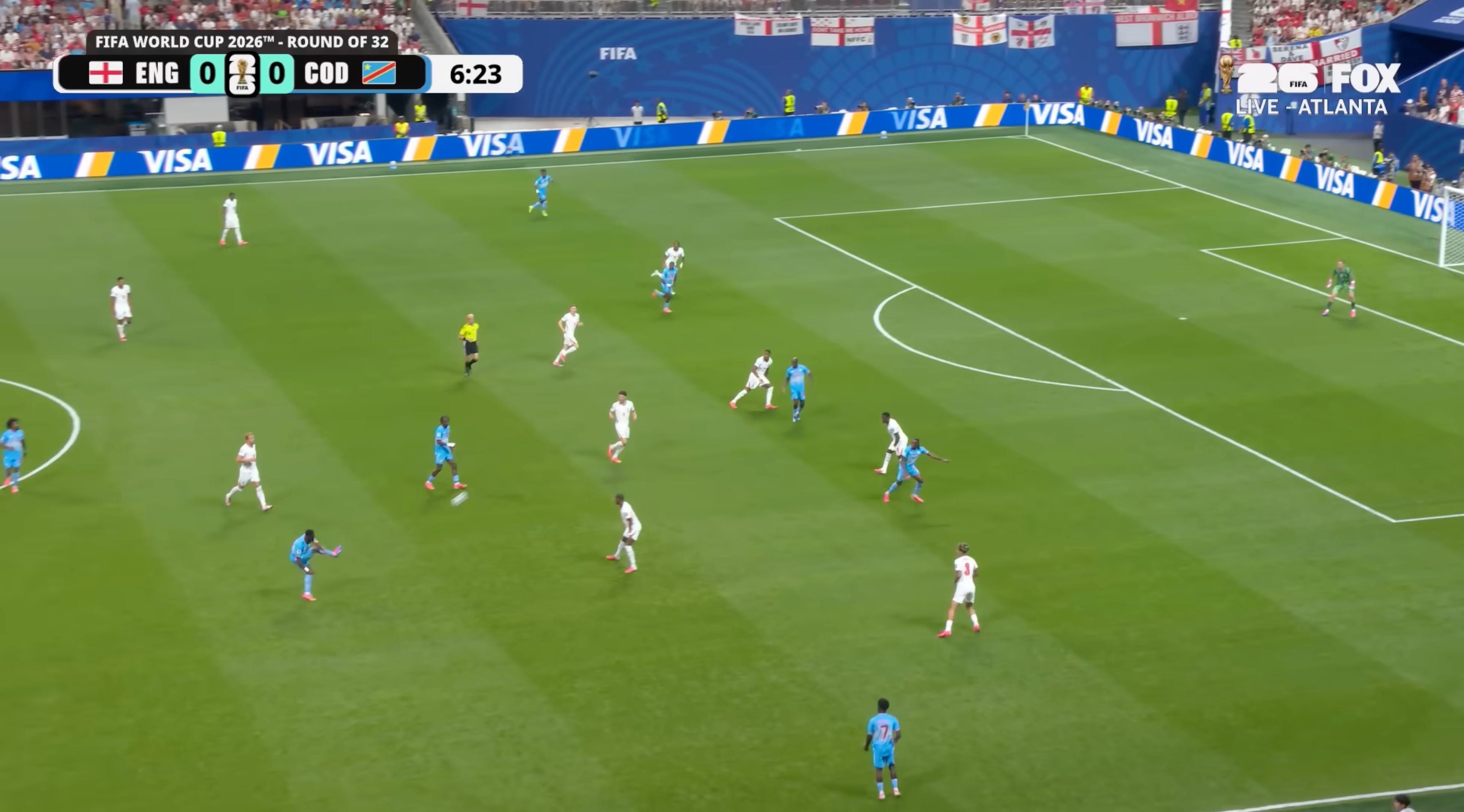
I’ll never forget the sight. England have stormed forward on another attack. White shirts have whipped past the man in possession, ripping deep into the defensive line. There goes Djed Spence, Declan Rice, Jude Bellingham — all fury, all forward.
But the ball is turned over. Suddenly, DR Congo have it. And there, there it is: a great expanse of green, an ocean of grass, the space most teams would call midfield but Thomas Tuchel’s England seem to have accepted is mostly just a big ol’ sprinting track for whoever fancies a run. What feel like hundreds of bright blue Congolese shirts come streaking in, and the lonely Elliot Anderson looks a stranded man. Marc Guehi and Ezri Konsa scrabble backwards, outnumbered, and then the blue wave is upon them.
Where other writers will be waxing lyrical about the magnificence of Harry Kane’s late rescue mission, I am struggling to move past that first half because its images were so striking. The opening goal was a mess: with the ball on DR Congo’s right, Konsa and Guehi shuffled towards it much too aggressively, leaving a huge gap down England’s right. Djed Spence was alone and overloaded, and Noni Madueke had clearly been instructed to stay high. In previous games we’ve come to learn Tuchel’s preference is to keep his wide players up the pitch so England might circulate the ball deep and use them to spring out, but again that gambit left massive gaps.
And yet, with all the dust settled, the game looks pretty good for England. They dominated by every metric. According to futi’s “Deserved win” metric, which simulates match results from expected goals, England would be expected to win from their chances 66% of the time, compared to just 11% for DR Congo. Four big chances to one, 1.99 xG to 0.68, 16 shots to seven. (Seven? I remember exactly 94, I’m sure.)
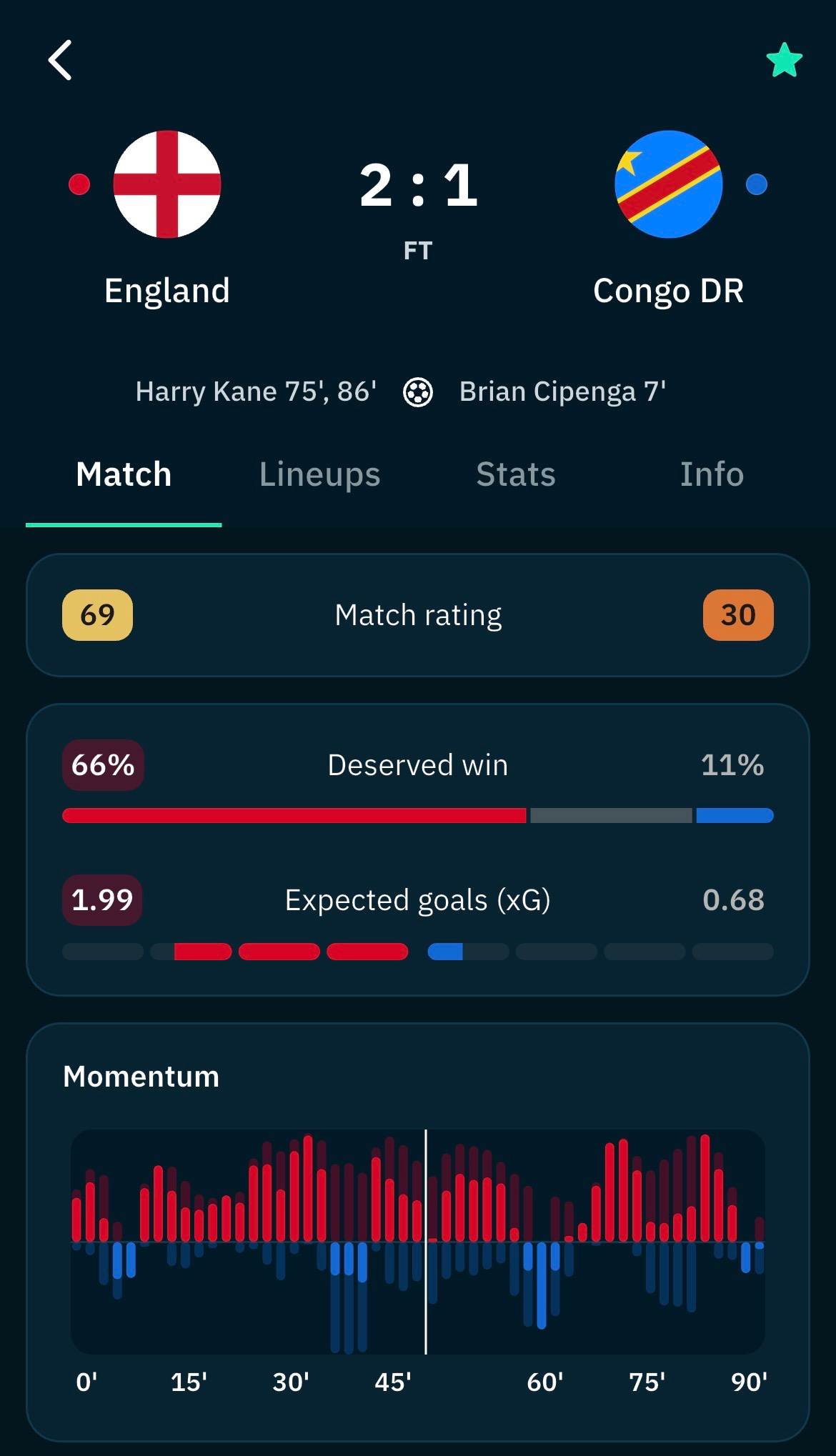
In the end, Harry Kane’s brace seemed less a desperate get-out-of-jail scramble and more the inevitable and fair outcome of a decent attacking performance: the brilliant Congolese goalkeeper Lionel Mpasi was finally overwhelmed. “We kept knocking, knocking, knocking,” Tuchel said post-game, grinning like an excited child and bouncing on the balls of his feet, perhaps aware he’d just overseen England’s first come-from-behind knockout victory since 1966. And they had kept knocking, and the game had felt that way.
It’s often said — by me too, to be clear — that we don’t learn much about teams in the group stages, but this performance followed the pattern Tuchel’s side had set so far. Again, the wide areas were England’s primary form of threat and progression. Spence was battered by pundits but I thought he was lively: he kept running into the little strips of space down the right that England had decided would be their entire world, often to good effect, skipping over and around challenges. He managed five progressive carries and 53 touches in the attacking third; Marcus Rashford managed one and 69.
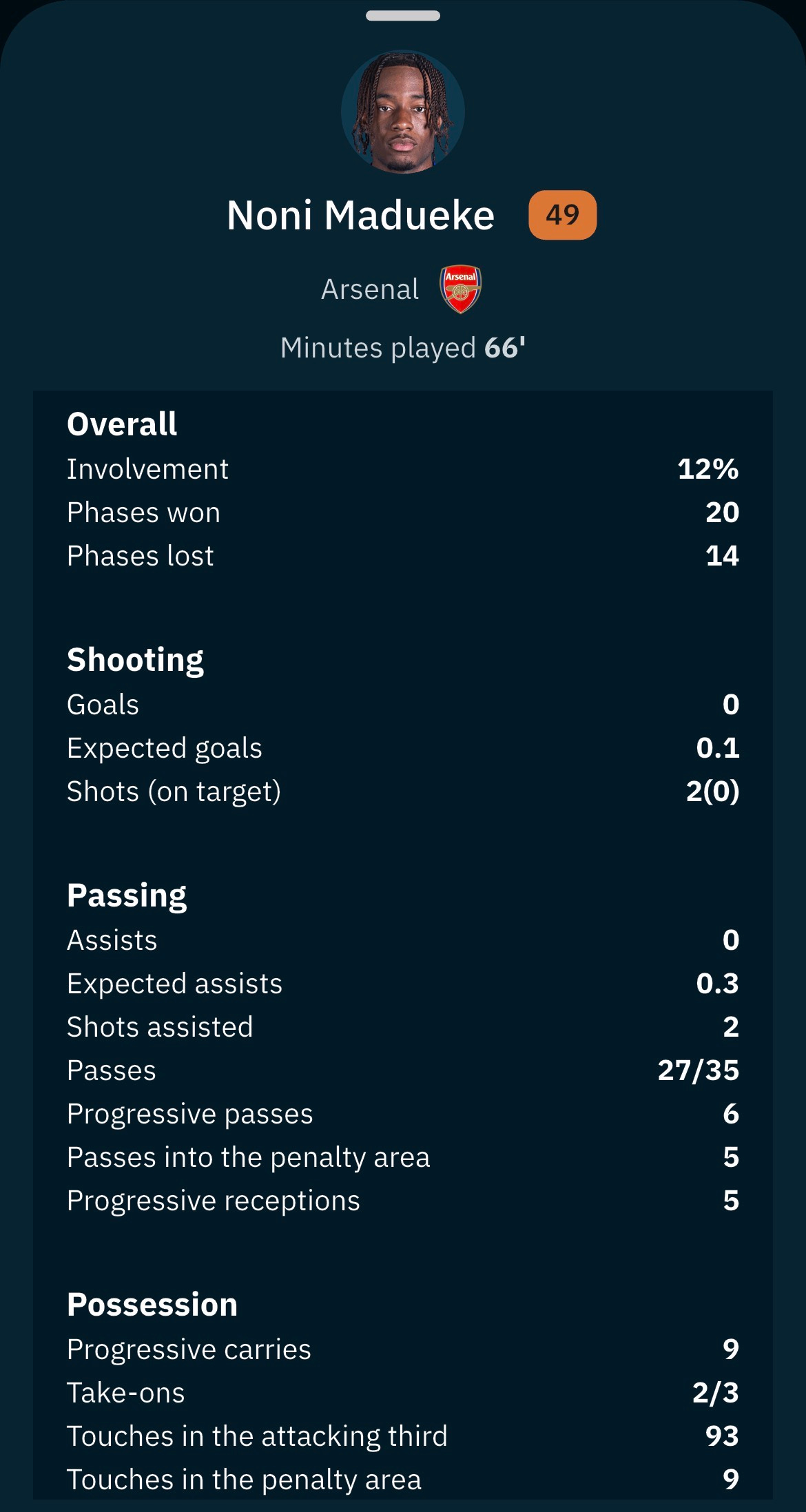
Noni Madueke, Spence’s partner on the right wing, continued to look like about 80% of a brilliant footballer. He is genuinely terrific at moving the ball up the pitch, and at his best is a cheat code for ‘we want the ball to go into the box from literally anywhere.’ He took a whopping 93 touches in the attacking third and nine progressive carries. His rail-riding is still one of my favourite footballing marvels: something about dribbling the ball along the touchline like it’s a training exercise makes him come alive. He created a great chance late in the first half, which was cleared off the line. But that other 20%, the bit where he loses control of his feet at the vital moment and the ball wobbles out for a goal-kick, continues to be intensely annoying.
It became obvious against Croatia and Panama that this iteration of England was a stretchy, big-gapped side that would go hell-for-leather and let teams come at them the other way. I was really quite excited by this, early on. It looked fresh and fast and frenetic. In many ways, it makes sense to go blow-for-blow with opponents when your players are this talented. When England get it right — when all the energy and madness coalesces into a single coherent blade, and all the pieces move in the same violent direction — it does, actually, look really quite good. But talent also makes it really easy to mistake chaos for quality. Inviting opponents to run at you constantly is terrifying, and will only get more so the deeper England go. What happens when the players sprinting through the midfield vacuum are even better than the already excellent Noah Sadiki and Yoane Wissa? What happens when it’s Kylian Mbappe, Michael Olise and Ousmane Dembele? On Sunday we’ll get a shade of an answer: Rodrigo Mora, Julian Quiñones and Raul Jimenez, roared on by the immense noise of the Azteca, will be a huge step up.
I’m not sure there’s a secret to international management. Certainly the most successful coaches seem to be home-grown, able to understand and channel the patriotism that drives international sides into a coherent footballing identity. But on the pitch, perhaps the secret is to fade into the background. How often do we talk about Didier Deschamps’ tactical setup? Of course it exists, but primarily to platform his most extraordinary weapons, to give them such a solid base to work from the rest of the team almost disappears. All the talk is of Mbappe and Olise and Bradley Barcola and we’ve forgotten France have arguably the world’s greatest centre-back partnership. This World Cup has been, so far, the tournament of superstars: the illusory, weird magic of Olise, the gravity of Lionel Messi, the storming power of Erling Haaland. That we’re talking about Tuchel’s approach so often is a worry — he has become England’s main character.
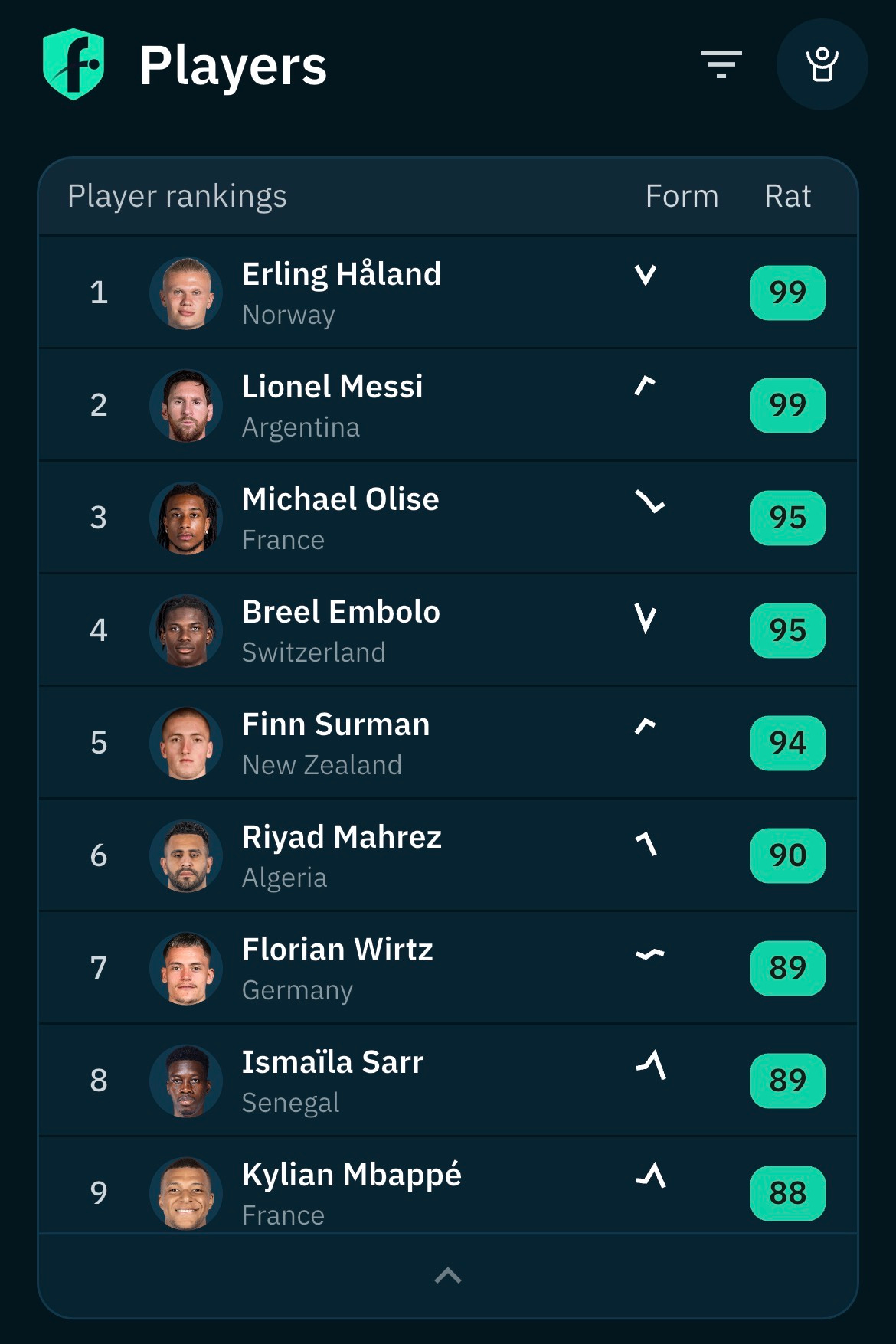
But perhaps that’s just the nature of being in an English media bubble, in which we obsess over every detail, so our words might have a target when it all inevitably goes wrong. “We talk about having hero moments,” Kane said after he’d won the game. “It could be Jude, Jordan — today it was me.” Tuchel, and this England side, understand the context they’re operating in: of a tournament that will likely be won by its most talented individuals. But I’m not sure hero moments should or can be produced from such conscious intent. Can they be engineered? Stitched into the fabric of a plan? Isn’t the nature of heroics that they emerge naturally? It’s difficult to imagine Olise thinking much at all; he moves as if the ball flows through his subconscious.
Perhaps, as glaring as it has become, Tuchel’s maniacal approach is the best way to platform these players. Perhaps it does reflect the strange national anger that seems to drive England to play best, the backs-against-the-wall attitude that runs through this country’s battered national identity. Perhaps Tuchel has figured out the English need to be threatened. Risk our pride and we come alive. And though it’s easy to fixate on the terror, perhaps in the end we’ll remember what it unlocked: a blitz of inevitable attacking quality that ended with the best striker in the world burying a genius chance.
Perhaps. Answers, and the Azteca, await.
No posts
Comments
Nothing yet. Say the first thing.
Sign in to join the conversation.