
▶️Prefer to listen? Click play above.
If you don’t mind audio, I recommend listening to the podcast by hitting play above as I go into ab it more details and there are a few more personal moments. There’s a song down below and appended to the audio podcast.
I’m a little bit vain. And I’m not sorry.
I like looking good. I love to dress nicely. Wear makeup. Dye my hair. And I do it for myself. Not for other people.
I know some people think that’s shallow, or silly, or a bit much for a woman in her fifties. I know I get judged for it. I don’t care.
I want to look nice. I didn’t even really wear makeup until my forties — and now I love it. And it does hide one age spot on my face! I like doing it and find it fun to wear makeup and watch makeup tutorials on Facebook. It’s also a form of self-expression for me.
I have quite unruly hair, so I love to dry and straighten my hair. With the amount of hair I’ve got, this is a genuine time commitment, let me tell you.
And I’ll confess something less flattering. Sometimes I’m walking down the street or in a shopping center, and I catch myself wondering, how someone left the house the way they have. I know this is not my finest quality. I’m judgy about it, and I own that.
But here’s the thing that actually gets me. We’ve been told our whole lives that a woman’s worth is tied to her looks — and in the very same breath, told not to be vain.
We’re constantly judged on how we look (even by other women, like myself), and yet society shames women for being vain and caring about how they look. It’s a fine line that we are meant to walk on.
So, my question isn’t ‘is vanity good or bad.’ It’s this: where’s the line? Where’s the difference between a healthy bit of vanity — the kind that makes you feel good, walk taller, feel more confident, enjoy yourself more — and the kind of obsession with how you look that actually shrinks your life? That stops you taking the chance, saying yes, being seen doing the thing even if you look bad doing it.
Let’s explore that ridiculous double bind. Think about how it works. The word for a woman who cares too much about her looks is vain. Other phrases used to describe such a woman are shallow or up herself.
And the phrase for a woman who’s stopped?
She’s let herself go.
There’s no safe place to stand. Care, and you’re vain. Don’t, and you’ve let yourself go.
It’s rigged.
And it goes back a long way. Who’s the villain in every fairy tale we were raised on? The one at the mirror. The wicked queen, the vain stepsisters — vanity was literally how the story marked the bad woman.
And the heroine? Beautiful, of course, but she never seemed to know it. She was good precisely because she didn’t look at herself. So we learned young: wanting to be beautiful is human, but being caught wanting it is a sin. And that’s why we all do that thing — ‘oh, this old dress’ — ‘oh, I just threw this on.’
Society has told us how we look matters too much, and yet we must hide that we care about how we look. This is an exhausting conundrum. And for me, it was exhausting.
I wear nice dresses all the time. Most days I could attend a job interview, a funeral, or a wedding in the same outfit, unless I’m heading to the gym. I even wear a dress to the gym; people find it amusing, but it’s a cute little black dress that hides a bit of my belly.
While consulting for a community organization, a staff member once told me at the Christmas Party, “Oh, you’re actually really nice. I always saw you and saw how you dressed, and I thought you were a snob.”
That comment upset me because I’ve always been friendly, and I never intended my clothing to appear snobby or unapproachable. I buy most of my clothes from thrift stores (or the op shop, if you’re Australian). They are definitely not overpriced, and I don’t like brand‑name clothing.
In my experience, a healthy bit of vanity adds to your life. You put the nice dress on and you walk taller, you feel more confident. You apply makeup to your face and you feel more like yourself, more up for the day. It gives you something. It’s fun. It’s play. It expands you.
A bit of vanity lifts you up.
Too much runs your life.
That’s the difference I keep coming back to.
Obsession about how we look doesn’t give — it takes. It’s the woman who won’t go to the party because she’s got nothing to wear and hates how she looks. Who won’t get in the photo. Who cancels because of a breakout. Who won’t try the dance class, the swim, the new thing, because someone might see her not being perfect or looking good while doing it. That’s not healthy vanity lifting a life. That’s vanity shrinking one.
I was out, wearing a dress I really loved. Feeling good. And a woman about my age got chatting with me — lovely woman — and at some point she turned to me and my partner and said, all delighted: ‘Oh gosh — are you expecting a baby?’
I’m in my early fifties. I am perimenopausal. And I have a perimenopausal belly — that soft little roundness under the boobs and in that particular dress, apparently, it read as ‘baby on board.’ I still menstruate, technically. I am also in no way whatsoever interested in having a baby at this stage of my life. That ship has not only sailed, I waved it off from the dock with a glass of something cold in my hand.
So someone just told me, in public, in a dress I loved, that I looked pregnant. This exactly the kind of moment that can flip a woman’s whole relationship with her body in one sentence. That’s the comment you replay at 2am for weeks. The one that makes you stop wearing the dress, stop going out, start hiding.
Here’s what I did with it. Later, in that same chat, we got to talking about our ages — and it turned out she and I were exactly the same age. Same age. And she’d thought I was thirty-eight. Thirty-eight! So I walked away from that conversation and I did not think ‘I looked pregnant.’ I thought: she took fifteen years off me. I’ll take it. That’s a win.
I told my girlfriends the story and they were horrified. Horrified on my behalf — ‘how dare she, how awful, you must have felt terrible about your tummy.’ And I loved them for it. But I genuinely hadn’t gone there. They heard an insult about my belly. I heard ‘you look thirty-eight.’ Same sentence. Two completely different women could receive it — and I got to choose which one I was.
Full honesty, though? I never did wear that dress again — I donated it to a clothing charity. So I’m a work in progress, like all of us.
I do struggle with my weight. That’s true, and I’m not going to pretty it up or pretend I’ve transcended it. There are clothes in my wardrobe I love that don’t fit me right now, and I want to fit back into them. Not for anyone else — for me. I want to feel good in my body. I want to look good in my clothes. That wanting is allowed. It’s allowed to sit right next to loving myself exactly as I am today. Those two things are not enemies, no matter how often we’re told we have to pick one.
Either you love yourself exactly as you are and never want to change a thing — or you want to change and clearly you’re self-hating and brainwashed by the culture. Rubbish.
I can love this body, this belly, this face, and get up in the morning and want to feel stronger and fitter in it. Loving something and tending it have never been opposites. We tend the things we love.
We are allowed to care about we look, want to feel better in our bodies, AND refuse to hate on ourselves for one second while we do.
And I’ll tell you two things I do when the criticism gets loud, because maybe they’ll help you too.
The first: I have people in my life right now living with cancer. And when I catch myself being critical about my body or complaining about my aches and pains, I sometimes stop and remember — there are people who would give anything for this level of a healthy body.
And the second: I think back to ten years ago, when I stood in front of the mirror convinced I was so overweight, so far from good enough. And do you know what? I would love to have that body now. The one I was so cruel to back then. Which makes me wonder what I’ll think in another ten years, looking back at photos of me today — and whether I want to spend this decade at war with a body I’ll probably end up missing. I don’t. I really don’t.
And there’s a flip side to that same thought. Right now, somewhere, there’s a woman ten or twenty years older than me who would give anything to have the body and the face I have today.
One day I’ll be her, looking back at photos of me now and thinking, what on earth was I so worried about? She was gorgeous and didn’t even know it. I’d like to know it now, while I’m here, instead of only in hindsight.
Which brings me to hair — because gray hair is where this whole fight gets effusive, and it’s the perfect example of us being forced to pick a lane when we don’t have to.
Hair is an area where women are often divided is regarding what to do with our hair as we age. The old rule: dye it, or you’ve let yourself go. Women marched to the salon for decades by that one.
But there’s a newer rule now, wearing your natural gray hair as a badge of honor to show that you’re aging gracefully and that if you dye it, you’re inauthentic, chemical-dependent, still performing youth, not brave like us.
I’ve been dyeing my hair since I was about thirteen. My natural color is dark blonde — a dishwater-gray type of color and, honestly, the most boring shade never to make a swatch card. So I’ve colored it for years. And about six years ago I started doing it myself, at home, with good product — I even cut my own hair. Not to save money but because I enjoy it. I get the color I want at home, for a cheap price, and I enjoy the creative process of it.
The women around me have made every different choice, and I love it. Friends who went gray in their thirties, dyed for years, and now in their fifties have let this gorgeous steel-silver come through — stunning. My mum’s grey came in a beautiful soft blonde-silver. The few greys I’ve got look like they might do the same one day — not enough yet to grow anything out, so ask me in a few years; honestly it depends on what my grey turns out to be.
And I’ll confess the judgy bit again, because honesty: sometimes I see a woman with a young face and gray hair and the thought jumps out before I can stop it — oh, she’d look younger if she colored it.
And then I catch myself and think: hang on — why are we all so desperate to look younger? Where does THAT pressure come from? Because I feel it too, in my fifties, as much as anyone — and that, my friends, deserves an episode all of its own, and it’s coming.
But for today, the thing that actually bothers me isn’t anyone’s color, or their grays, or their choice to age however they please. It’s the self-righteousness — in both directions. The dye camp judging the grey camp, the grey camp judging the dye camp, everyone certain their way is the right one.
I’m all about doing whatever works for you. Truly. Color it, grow it out, shave the lot off. Just make sure it’s YOU it’s working for. Not other people.
I am figuring out this aging thing and how it fits with a healthy dose of vanity. I’m known to run from photos and never look at them if I get caught in one. The other day, my partner wanted a photo of me at the wharf by the sea. I let him take one and I said make me look slimmer. He wanted to show me how lovely the photo was, but I could barely bring myself to look at it.
I love a selfie – a photo I take myself, my angle, my phone. But hand the camera to someone else and I brace, because in those photos I always seem to come out bigger, and honestly, worse, than I picture myself. So, I dodge. There are whole stretches where I’m barely in the family photos because of it.
Recently, I have been to several funerals and I realized that the people that love me, such as my kids, don’t care if the photo is flattering or not, they just want a photo of me. Their mum, in the picture. The version I’m hiding to protect — they won’t even see it. They’ll just see that I was missing. So I’m making a commitment to myself to get in the frame. Not because I’ve made peace with how I look in them, because some days I haven’t. But because being in my own life matters more than looking good in the photo.
If this conversation stirred something, I would love to invite you to follow or subscribe to Fully Expressed on Substack. And if you’re new since the pleasure episodes, subscribers also get the Pleasure Switch Meditation free.
I also mentor a small number of women one-to-one in living a fully expressed life — the beliefs, the body, the voice, the whole business of taking up your rightful space in the world and enjoying it.
Now how about going and putting the good thing on that makes you feel gorgeous. Wear it to the supermarket. Dance to your own music.
Talking of music, here’s a song I wrote for this podcast/article. Written my me with the music generated by AI. The song is called “I won’t save my sparkle.” Feel free to dance along with the song!
0:00
-3:27
Here’s to living fully expressed! And being a work in progress.
Love
Ayesha xox
If this space resonates with you and you’d like to go a little deeper,
you’re warmly invited to join the Fully Expressed Collective.
PS Find out how to work with me if you’ve got something you want to express in the world!
Ayesha Hilton is a writer, creator and mentor who believes there is often far more within us than we have yet expressed. Through Fully Expressed, she explores creativity, identity, self-expression and life in midlife, and what it means to bring more of who we are into the world.
She also mentors women who want to turn their ideas into something real, including books, journals, podcasts and oracle decks. Her Card Deck Creators Toolkit has helped more than 1,200 women create their own card decks.
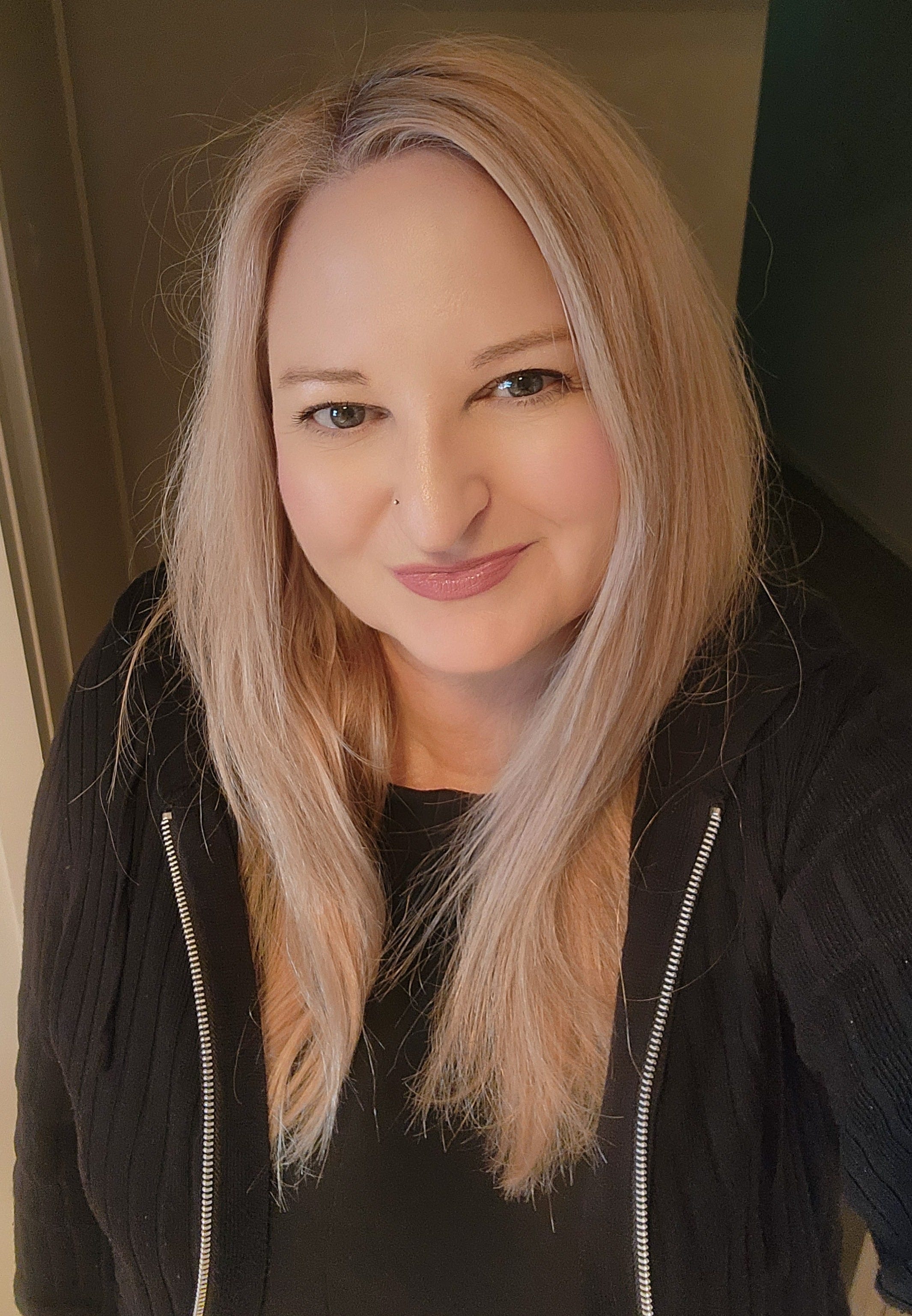
This is me today about to go to the gym in my cute little black gym dress (think of a kind of tennis dress in black). Showing up as myself. Not caring what anyone else thinks!
Comments
Nothing yet. Say the first thing.
Sign in to join the conversation.