
Budget Balance Deficit
The financial media focused on inflation data today because it was exactly as expected.
The upward pressure on inflation was relatively modest despite two wars underway and the biggest capital investment trend in history. From that perspective it is a wonder inflation is not much higher.
Aside from that I thought the most significant data item today was the US Federal Budget Balance was $86 billion worse than expected.
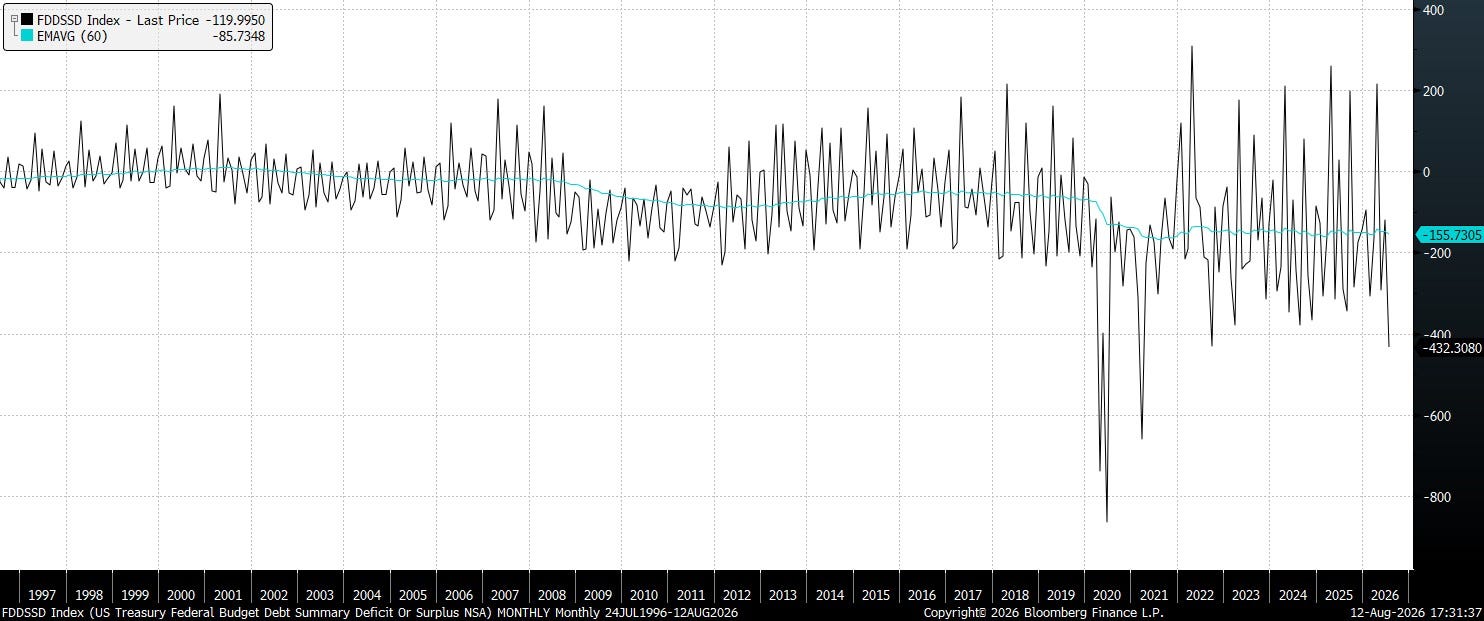
If we look at the long-term chart it gives us two important pieces of information.
The first is that the volatility of the data is much greater now than in the past.
Since 2001, the trend of budget volatility has been deteriorating. It certainly looks like the US government has a problem with the predictability of income and is now relying on highly volatile sources of tax take while spending demands rise.
It is also worth noting that the moving average has taken several steps lower which coincide with major economic pain points. 9/11, the Global Financial Crisis and the COVID pandemic all had a material impact on the budget balance which it did not recover from.
That implies spending went up without a commensurate increase in income.
The second is the budget is in a worse position today than all but three other occasions. The trend is both more volatile and deteriorating.
The US government needs cash to fund its spending priorities. Since taxes have been cut in successive rounds over the last decade, that increases dependency on economic expansion which is heavily dependent on the AI building boom persisting.
Comments
Nothing yet. Say the first thing.
Sign in to join the conversation.