
I was fifteen the first time I stepped inside the state capitol in Richmond, Virginia.
I had just grown big enough to fit into my brother’s oversized sports jacket, freshly graduated from middle school. But on this Monday morning, I wasn’t reaching for the familiar classroom door; I was gripping the cold brass handle of the towering doors to the Virginia General Assembly.
I carried with me many of the same emotions so many of us are experiencing now; I spent countless evenings glaring at news broadcasts and parsing through articles, frustrated and outraged at the state of the world. But my outrage had become a repetitive loop of grievances I didn’t know how to address.
Feeling disjointed from power, I searched for a state organization for and by youth and signed up for their lobby day. In retrospect, by heaving open the door that morning, I had overcome the most significant barrier to affecting real change.
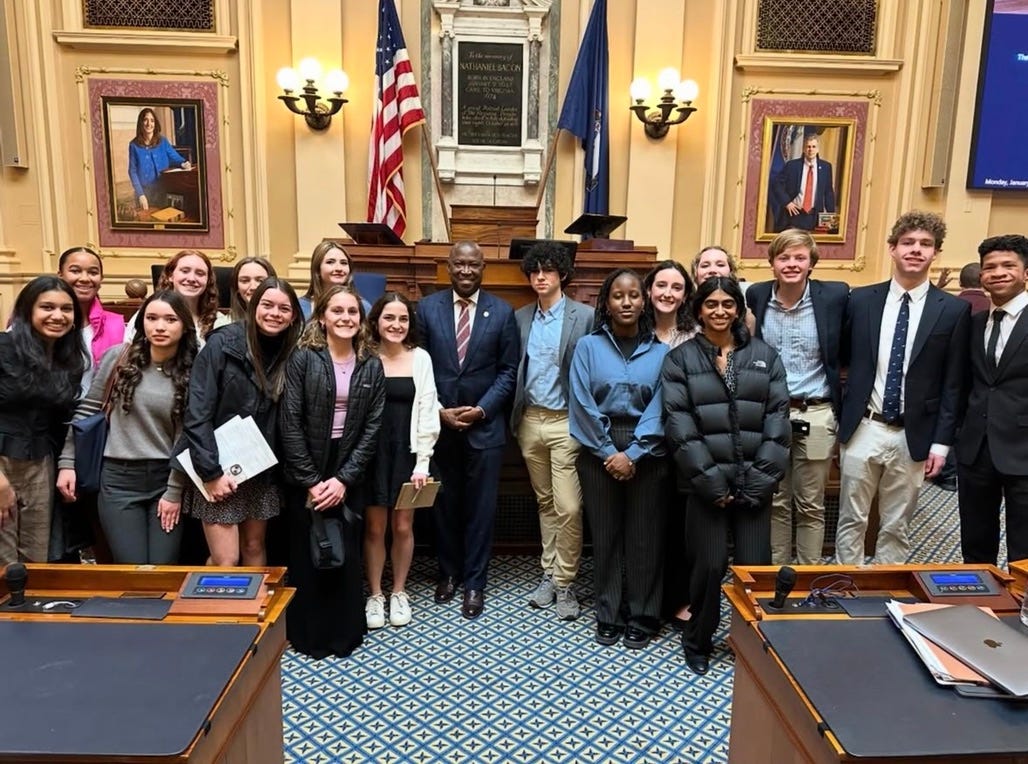
That morning, I overslept and missed my morning coffee, so I was running on adrenaline and my discontent as I, alongside other college students, filed in and out of small, sterile offices under harsh fluorescent lights. Seating was so scarce it felt like a hint not to stick around, and committee rooms were hidden behind imposing, unlabeled doors. The ambiance was stale, and most of the building’s occupants were staffers and lobbyists who had clearly spent more time in the building than out of it over the recent weeks.
Standing in those halls for the first time, it dawned on me: there was no secret machine of power, but rather many voices trying to make the case for what they needed.
When our group of young people filed into the fifth committee meeting of the day, my tie had started to slouch around my neck, and our group’s motivation had dwindled. We filled up much of the small conference room designated for the Education Subcommittee, watching as lobbyists and politicians diligently debated policy and community concerns, the speakers entirely unrepresenting those affected most.
When the chair finally flipped his agenda page to the bill that expanded access to university scholarships, he looked up from his docket, peering over the rim of his glasses, and asked if any representatives were speaking on the bill.
We students spoke until the clock ran out about our experiences in relation to the scholarships. We shared how access to funding expanded our horizons, making education more accessible than ever. We were passionate, and we had a real stake in the outcome.
When the vote arrived, the chair scanned the room and gave a slight nod before the bill passed without objection.
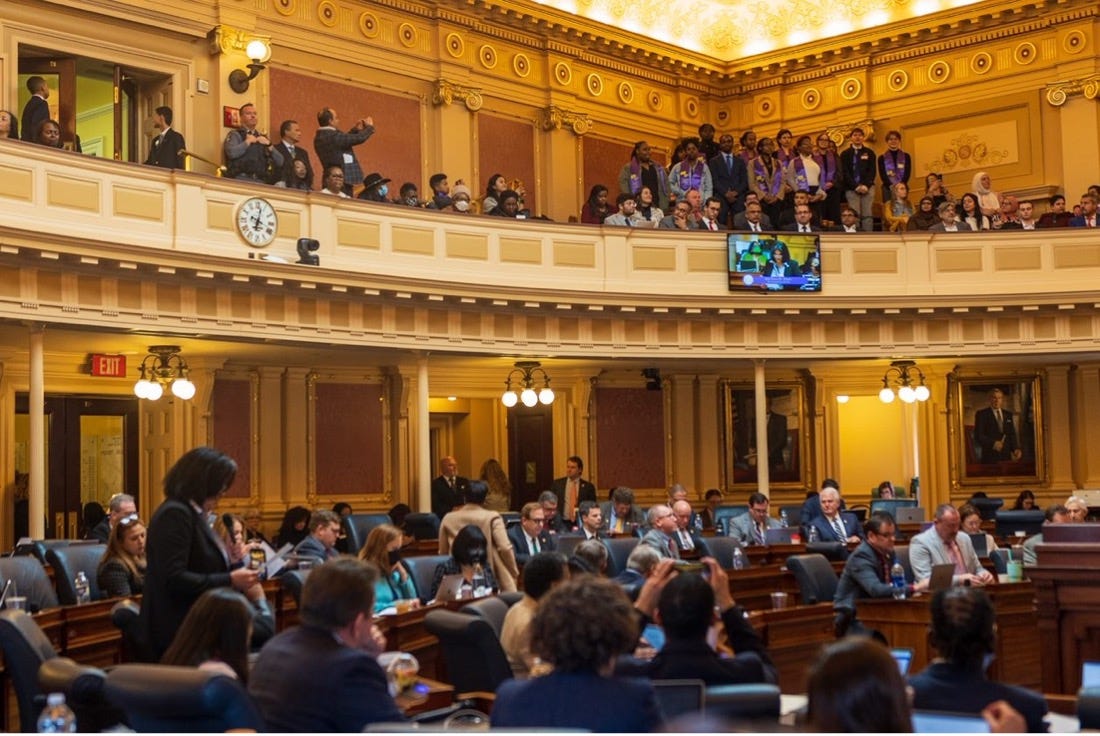
By merely showing up that morning, I learned a lesson too valuable to ever be found on a corner of social media: my presence had the power I had previously felt so far from.
Walking out of that committee, I was left with a lingering question: If the process could be this easy, why were the halls so devoid of community advocates?
For as long as I can remember, there’s been a disconnect between everyday Americans and the chambers of power. Most of us engage in the discourse, stay up to date on the consequences, and even agree on what the problems with our system are. But so few of us take that next step and open the doors to the real process.
This paralysis of action isn’t an accident; it’s a successful political strategy. The forces actively dismantling our institutions do not fear our digital outrage. Instead, they rely on it to ensure they can speak on our behalf.
As I’ve grown up in and out of political spaces, I’ve watched social media become a political pacifier that relieves the exact frustrations and resentments that should be driving us to the doors of the General Assembly. In our absence, I’ve witnessed lobbyists from big firms gladly construct the narrative.
Politicians rarely have to hear the voices of their own constituents because they know our pressure will rarely materialize into anything more than vague, undirected emails or tags on social media.
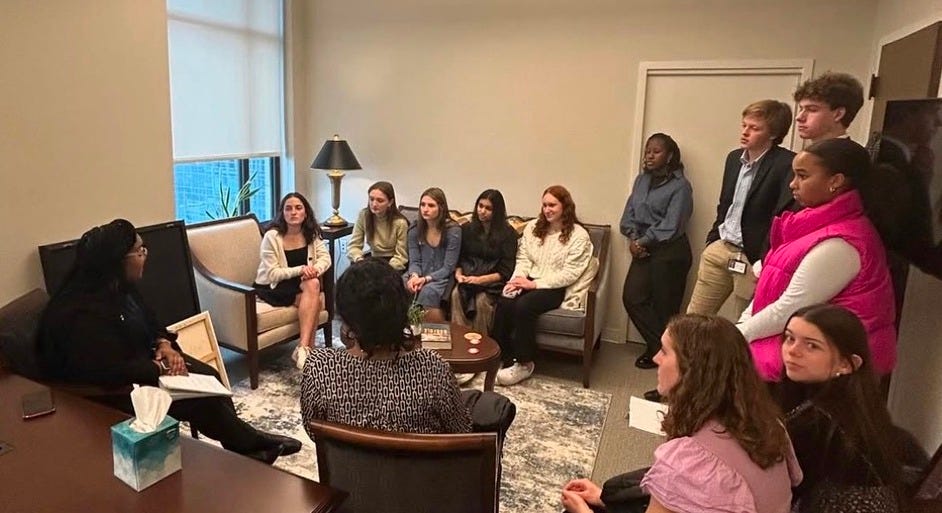
We must not be naive enough to be pacified by our digital outrage; the machinery of democracy won’t be found or fixed in another swipe or story. It exists in cramped offices and formidable committee rooms. It runs on brief negotiations and procedural nods that translate into consequences for our livelihood. It doesn’t care whether our jackets fit or how old we are; it rewards us when we show up.
The doors will be heavy, and the days won’t offer the instant gratification and simple interpretations of social media.
The system was designed to reward our presence. It’s time we pull the handle.
-Written from the perspective of Tucker Ward, a youth activist from Central Richmond, Virginia. Additional contribution from Elijah Lee, a youth activist from Chesterfield, Virginia. Both represent Voters of Tomorrow, a Gen-Z-led political activism organization.
Comments
Nothing yet. Say the first thing.
Sign in to join the conversation.