
The period when robots moved like people doing the robot took decades to arrive, was brief, and is already over. Technologists accelerated past anything anticipated by interpretive dance. Doing the robot, once appreciated as science fiction, has quickly become a historical reenactment.
We’d known already that machines had surpassed our human capacity for physical comedy. What this week’s World Humanoid Robot Games in Beijing added were new levels of uncanniness. Competition androids now have a precocious human swagger, meaning we can fully enjoy the hubris of their demise by pratfall, death drop, combustion, or fresh-air tornado kick. They even carry the bits off on a little stretcher. It’s been a masterclass in clowning.
More sensible voices than ours wish to remind you that it’s all propaganda. The robots tasked to extract our minerals and kill us on battlefields won’t have to take on such relatable human shapes, FT Innovation Editor John Thornhill writes:
[A]s with some human influencers, you wonder if they have much purpose beyond entertaining us. If technology, as the saying goes, is about making machines act like they do in the movies, then these robots certainly fit the bill. But they are more likely to be the show ponies than the workhorses of our robotic future.
It’s also, self-evidently, Beijing propaganda. China added the robotics industry to its 15-year plan in March, and has followed up with various state initiatives to encourage adoption. Chinese companies made 97 per cent of the 19,000 humanoid robots sold in the 2026 first half, according to Smart Analytics Global.
In the Telegraph, Technology Editor James Titcomb speaks to Brookings Institution’s China industrial policy wonk Kyle Chan:
“This is perhaps one of the biggest efforts by Beijing to turn a fantastic vision of the future into reality, almost by force of will. They know the technology is not ready, but they think if they can turn it into this big spectacle that will crowd in investment and trigger this boom.
“They do want to present themselves as not just a world leader but the world leader for robotics. It’s an area where the Chinese policymakers believe that China has the edge, has a natural advantage over the US.”
China's PR job has to clear a high hurdle of protectionism.
Hyundai car-factory workers in South Korea last month called a strike to protest the possibility that the company’s Atlas humanoid might join them on the assembly lines. In the US, the Federal Communications Commission has blocked the import of robot vacuums and lawnmowers, while the bipartisan GUARD Act seeks to classify any foreign-made humanoids as a national security risk (using a definition that “would explicitly exclude mermaids”, notes the Foundation for American Innovation).
A lot of the concerns being raised are, for the moment, hypothetical.
Most humanoids are doing novelty work. Three-foot-tall bipedal humanoids — of the type that bust moves at trade shows and do meet-and-greet sessions — make up about half the market. A good number of those are ending up on the game: the cost of renting a humanoid for a day has reportedly crashed from about 18,000rmb ($2,500) early in 2025 to less than 3,000rmb in April.
What’s obvious from the Beijing footage is that, mechanically, humanoids are still a long way from being reliable, durable and cheap enough to displace labour on a large scale. Their entertainment value doesn’t yet translate easily into a measurable return on capital employed.
There’s also the question of how to train an AI brain for the physical world. Labs have been moving away from vision-language-action reasoning software that translates sensor inputs into responses, and towards real-world reinforcement learning that develops predictive responses by trial and error. The answer might be a hybrid system that allows the robot to learn recursively but won’t let it go ED-209. Or maybe not. No one knows yet. It has taken a hundred years and counting to figure out this stuff for cars.
Differing corporate messages demonstrate the industry’s fledgling state. On one side is Tesla. Its Fremont factory in California is now converted into a production line for Tesla’s humanoid robot Optimus and its CEO continues to spout fantastical nonsense. On the other side is Mitsubishi Motors, which cautioned this month that parts shortages might put next year’s production target of 1,000 humanoids a month out of reach. In the middle are startups like Unitree and Xpeng, as well as industrial spinouts such as Toyota-backed Walden Robotics.
Where demand comes from is not yet clear. As the FT has reported, a lot of Chinese robot sales have been to state-run data centres that count the manufacturers themselves as customers. The rush by Tesla and others to get hardware on the market might also speak of a need for fresh training data — a strategy that has some pretty obvious risks. Labour unrest at Hyundai’s plant is a reminder that rollout bottlenecks won’t just be technological. It’s going to be a long road.
In the meantime, the people who do the robot have taken to impersonating robots that are failing to robot. Never underestimate the human capacity for reinvention.
○ What a century of data tells us about today’s corporate bond spreads
○ A summary of Nvidia’s awkwardly circular, awfully debt-like balance-sheet-as-a-service.
○ SpaceX is considered a leasing company.
○ Charting the trillion-dollar arms race in Total Addressable Markets.
○ Parsing the op-ed about US Treasury Secretary Scott Bessent’s bond-buying strategy that Stanley Druckenmiller didn’t write.
○ Harvard and the Cloudflare governance fight.
○ What links Northampton Town FC and Gemcorp, the emerging markets asset manager?
○ The problem with using speculative fiction for bank stress tests.
○ Bitcoin is, among other things, a useful mechanism for stealing aid money.
○ Adam Tooze’s Chartbook visits one of Alphaville’s pet subjects, the US Treasury market hedge fund trade.
○ A Groundbreaker piece on why the AI boom is hitting a wall is blighted by AI-assisted writing, but worth struggling through nevertheless.
○ For Works in Progress, Jacob Witten has an introduction to siRNA therapy, “the kill switch for harmful genes”.
○ CBC Radio Canada has an uplifting interview with a long-distance swimmer.
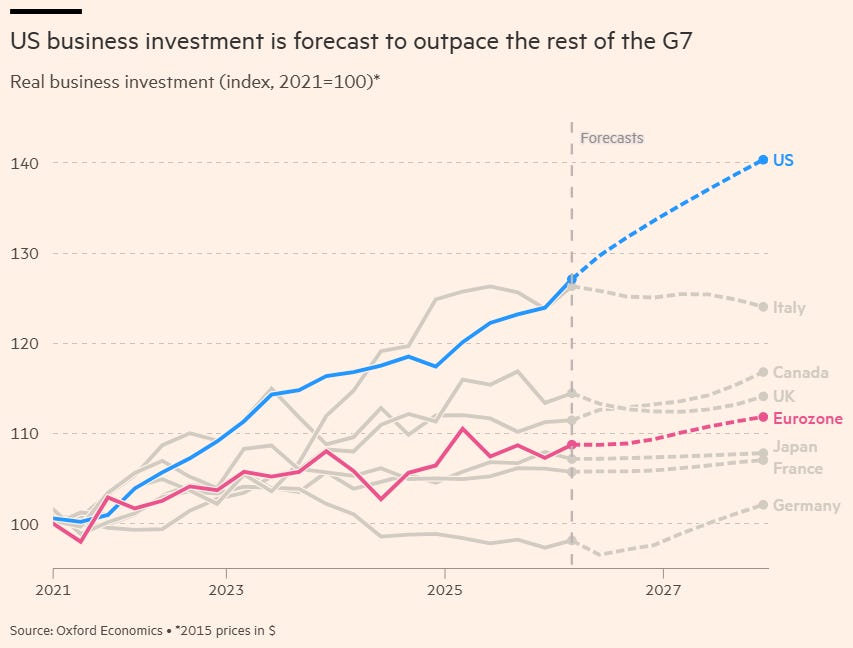
○ Soaraway business investment in the US isn’t all about data centres, though it does include a lot of them.
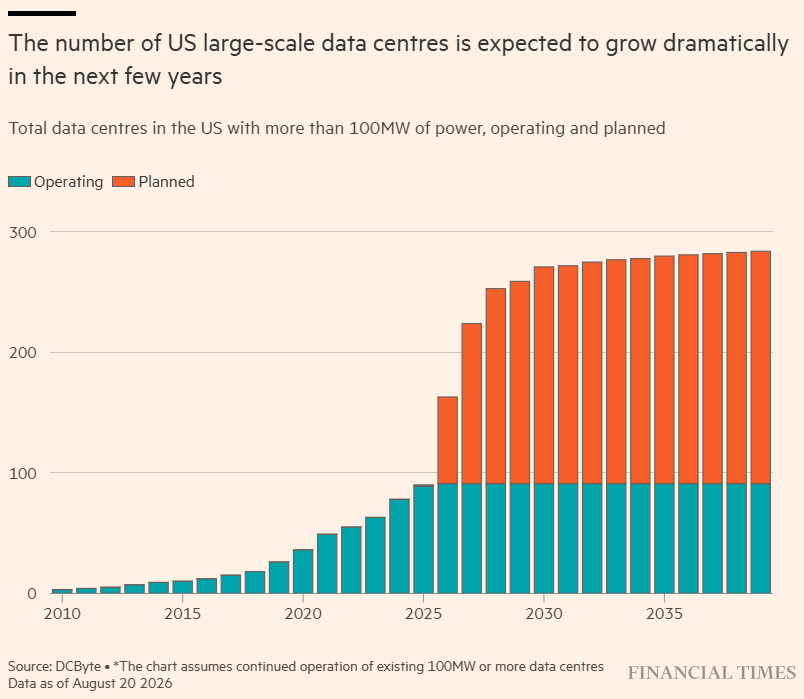
○ And if you’re wondering who’s paying for a doubling of US hyperscale data centre capacity by end-2027, the great news is that we all are.
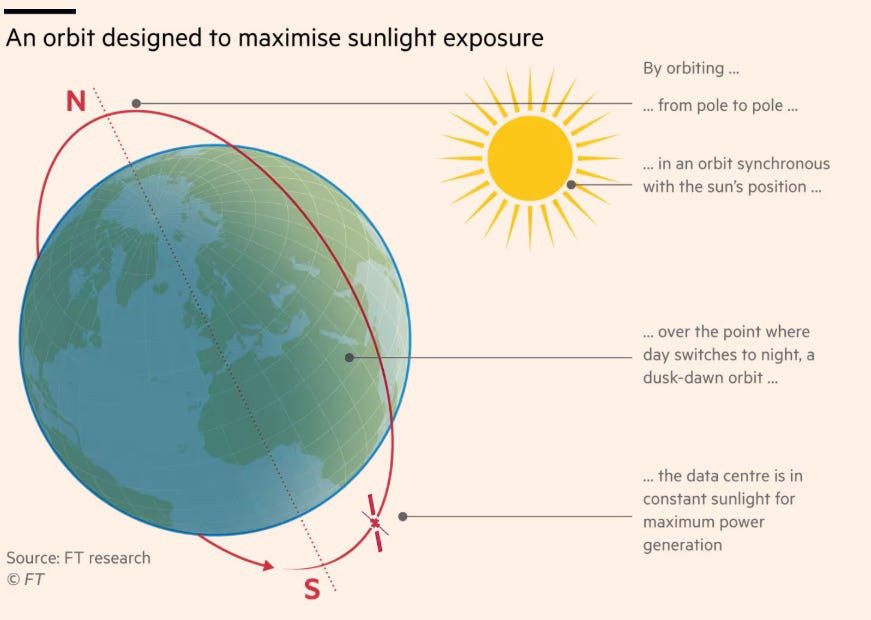
○ Might the answer be to put data centres in space?
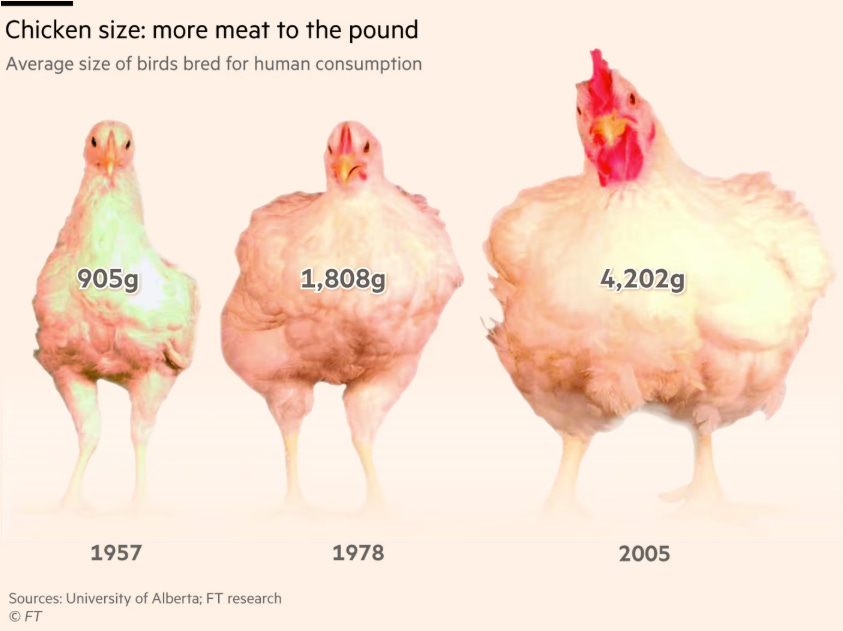
○ Just one of the great charts in this deep dive on how chicken took over the world.
All those stories and many more featured this week in FT Edit. It’s a daily top-slice of the FT that costs just £4.99 a month after a 30-day no-commitment free trial.
No posts
Comments
Nothing yet. Say the first thing.
Sign in to join the conversation.