
Jeremy Fry was a maverick inventor with royal connections, a scion of Britain’s third-favourite confectionery dynasty, and a socialite hellraiser whose tireless curiosity was matched only by habitual shortcomings with regard to keeping it in his pants.
Fry “rebuilt a village in France, moved a palace in India, rescued the Theatre Royal in Bath and reorganised the Northern Ballet Company”, the Independent says in a 2005 obituary. “It was clear from the outset that he did not abide by any normal rules of convention”, adds The Telegraph, in a gloriously colourful roundup of anecdotes from Fry’s social circle that included Tom Stoppard, James Dyson and The Earl of Snowdon.
For all this life well lived, Fry’s most significant legacy is the electric valve actuator.
Fry realised that, with the introduction of an electric motor to regulate flow, valves could be precise and hardy enough for use in hostile environments like oil fields. Shortly after the second world war ended, he used a small inheritance to buy a Bristol engineering workshop, moved the staff to his country pile near Bath, and started making actuators for the Kuwait Oil Company.
Seventy years after its first sale, the company built by Fry is being sold off to Switzerland: ABB this week agreed to buy Rotork in a £4.1bn deal.
Rotork’s name joins an ever-growing quarry list in what’s been the UK’s busiest year for inbound M&A in decades.
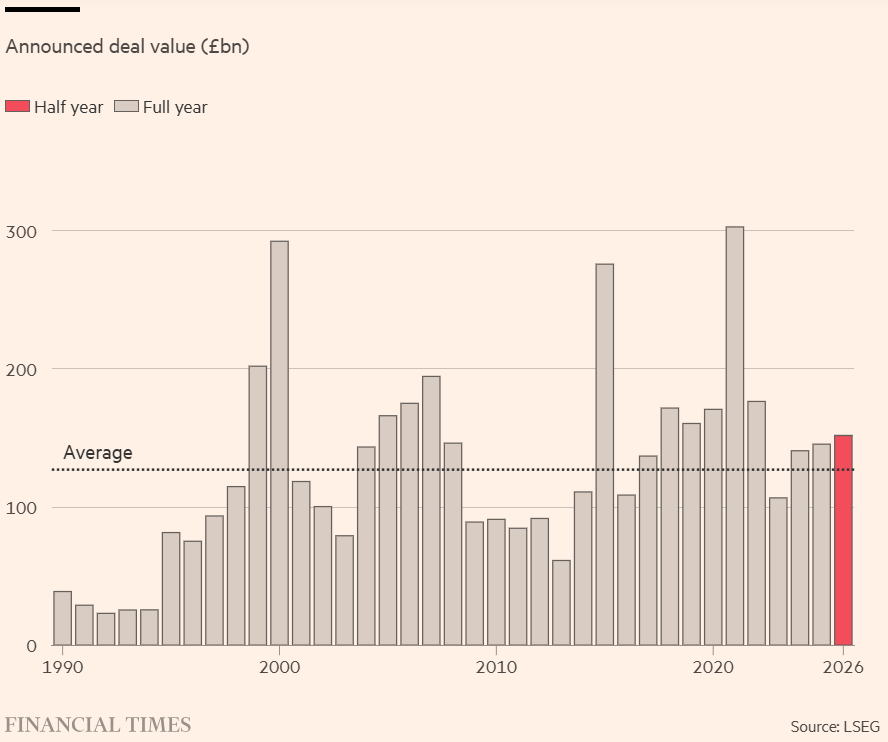
It’s a loss. And, in combination with a dearth of new London Stock Exchange listings that has lasted half a decade, UK de-equitisation is beginning to look terminal. Not even the newspaper columnists can muster much enthusiasm any more to call for reforms that might help lift UK PLC out of the bargain bin and pull some of the IPO flow away from New York and Amsterdam. Having gone through denial, anger, bargaining and depression, we’ve reached acceptance.
There’s one under-discussed question through all this, however. Does it really matter?
Undoubtedly, the LSE’s continued atrophy is embarrassing for politicians and the armies of City lobbyists, as well as being inconvenient for all the firms operating within a square mile of LSE offices. HMRC might find that the tax affairs of companies subsumed by foreign-owned entities or private equity get more opaque.
On the other hand, the pillaging of UK public markets finds its opposite in private markets.
Technology and biotech companies emerging from UK universities remain uniquely attractive for foreign direct investment (FDI), as do niches of its outsized financial services sector. The UK is the world’s third-largest destination for private AI capex investment over 2013-25, behind only the US and China, according to Stanford’s 2026 AI Index Report. EY’s latest FDI Attractiveness Survey notes a cyclical downturn nearly everywhere, but says UK inflows are increasingly of a higher quality, particularly in tech and services sectors.
Bank of America makes the argument that the takeover wave is a short-term facet of foreign direct investment that’s shifting the UK economy in the longer term “towards higher productivity/capital intensity”. Whereas large cross-border M&A deals usually cause sterling all sorts of ructions, the positive longer-term effect for Britain’s balance of payments from an influx of high-quality, sticky investment might explain the pound’s recent relative strength, it says.
The shift toward R&D, manufacturing and knowledge-intensive sectors should support the currency over the medium term through stronger income generation, productivity gains and reduced reliance on volatile M&A flows which has been a theme for GBP in recent decades.
It’s not in our nature to wave around flags nor to make claims about national exceptionalism, but maybe? It’s useful sometimes for the British disease of pessimism to find a counterbalance. Maybe the inbound M&A wave says something about the UK other than its public markets are too cheap.
A Swiss multinational engineer is buying control of Rotork. But could it ever deliver to the world a character the equal of Jeremy Fry? We’ll not remind you what’s said to have been produced by 500 years of Swiss democracy, peace and brotherly love, because it wasn’t the electric valve actuator.
○ SpaceX bonds have entered the junk orbit.
○ Assessing the world economy’s resilience.
○ Some charts showing pay gaps at lots of UK corporations.
○ Bloomberg’s terminal velocity.
○ Advisory overlaps on this year’s mega-IPOs have the potential to create a compliance nightmare.
○ An update on memory chip mania, and a look at SK Hynix ADRs.
○ IBM warned, for IBM reasons.
○ Passive flows lift all boats, which might be bad news for anyone who only likes some boats.
○ A look at which monthly direct debits are most likely to bounce.
○ The US passed a bill designed to lower housing costs. Will it work?
○ A Malaysian chicken and fish head claypot restaurant chain is pivoting to data centres.
○ Stock market eccentric Dan Ives has teamed up with one of the Trump family’s favourite financial services groups to launch an AI merchant bank.
○ IEEE Spectrum dives inside Nokia’s race to catch the iPhone and Android wave.
○ Princeton computing professor Arvind Narayanan considers what AI might, and might not, change about what we do all day.
○ Still on the theme, here’s a BIS paper that puts the AI investment boom in historical context, and here’s an Atlanta Fed paper that shows tech-bubble hiring sprees cause people to earn less.
○ Pigeons and Planes recalls the anarchic early days of online music piracy.
○ The Pudding has a history of America by its restaurant menus.
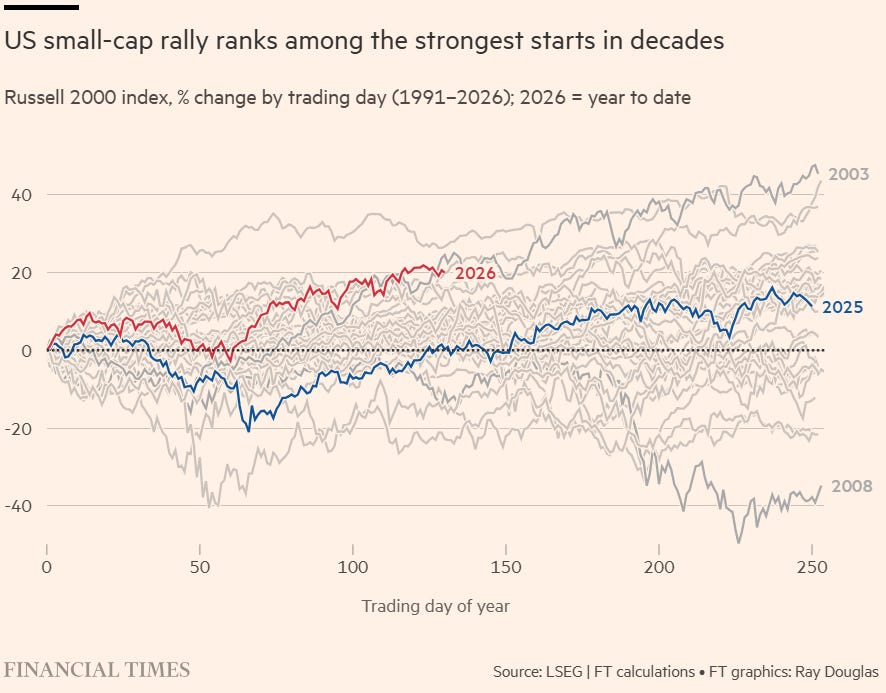
○ US small-caps are having an unusually good year.
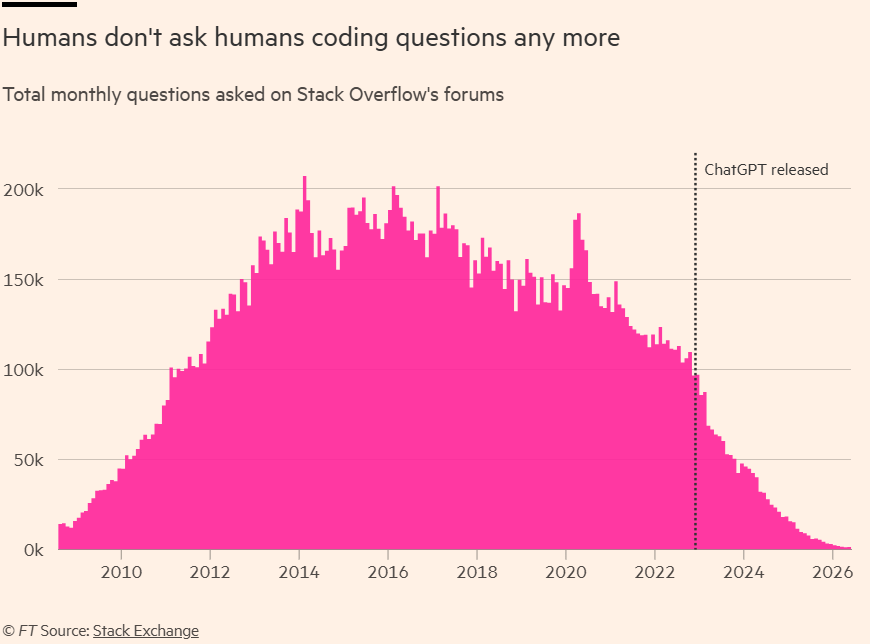
○ Technically it was last week, but this long read from Sam Learner on vibe-coding’s hostile takeover of the internet is worth re-upping.

○ Soumaya Keynes’ column on spreadsheet parenting had a lot of people jumping straight from the first paragraph to the comment box. Do yourself a favour and read the whole thing.
No posts
Comments
Nothing yet. Say the first thing.
Sign in to join the conversation.