
Text within this block will maintain its original spacing when published
“It is possible to make people content with their servitude, you can provide them with bread and circuses, and you can provide them with endless amounts of distraction and propaganda” - Aldous Huxley
…but what happens when the bread and circuses become too expensive? We won’t get into the World Cup ticket prices, concert price gouging, or other exploitative pricing today but we will be discussing groceries.
You may notice some changes in the order of things this week! I’m playing around with the format —kind of like the feminine urge to redecorate random rooms in your home and move furniture around at inopportune times. Is it necessary? No, but it sure is fun! Also I’ve always tried to send this newsletter on Fridays, but with the kids home all day every day this summer, my writing hours are currently relegated to the margins of the day and evenings. Thanks for bearing with me! :)
Earlier this year, I boldly exclaimed that I was going to get a handle on our grocery spending this year —to read that full piece (as I won’t rehash the whole thing) if you missed it, or are a new subscriber (welcome!) you can see it here:
Reining in our grocery spending in 2026
·
Mar 6
"Frugality is one of the most beautiful and joyous words in the language, and yet one that we are culturally cut off from understanding and enjoying." -Elise M. Boulding
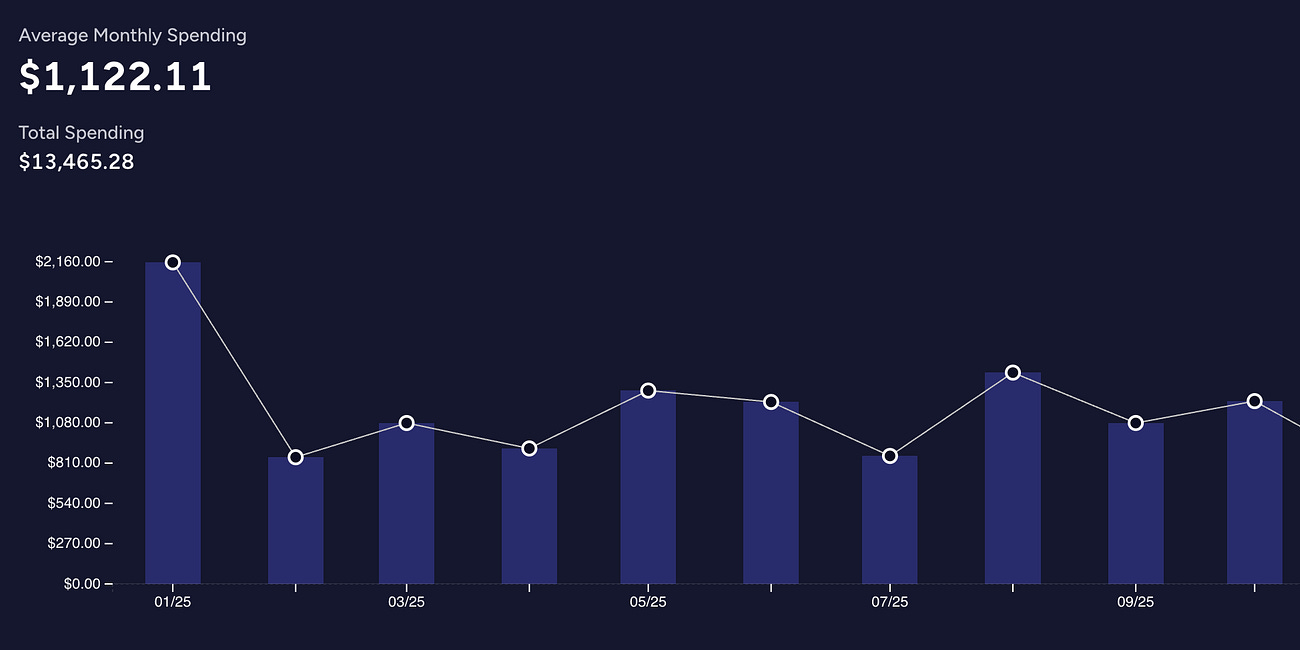
For reference, here are the 2025 numbers that gave me pause, and prompted this whole experiment in the first place.
2025 Grocery Spending, Month by Month
January 2025 — $2,155.45
February 2025 — $849.46
March 2025 — $1,078.61
April 2025 — $908.19
May 2025 — $1,296.20
June 2025 — $1,219.76
July 2025 — $858.02
August 2025 — $1,416.59
September 2025 — $1,078.71
October 2025 — $1,225.49
November 2025 — $771.28
December 2025 — $607.52
Total for the year: $13,465.28
Average per month: $1,122.11
Thus far this year, I’ve been dutifully meal planning (ugh), reducing food waste, cooking at home (well, I’ve always done this so it’s nothing new), buying mostly store brand whenever possible, and avoiding expensive grocery stores. I’ve been much more mindful than I usually am, and though we did have some extra food expenses the past couple months (we’ve been having some work done at the house and I like to put snacks and drinks out for the crew when they’re here), I feel fairly confident that I’ve reduced our average monthly groceries from 2025. However, to keep myself honest and write this part out honestly and from the heart, I haven’t pulled the exact numbers yet, but will do so right this instant.
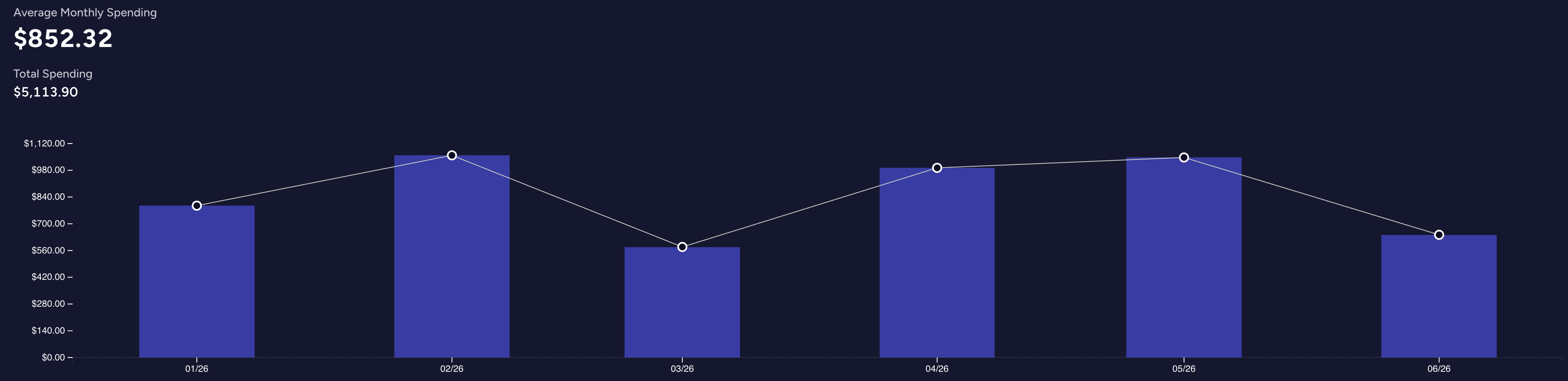
2026 Grocery Spending, Month by Month
January 2026 — $794.82
February 2026 — $1,058.30
March 2026 — $578.68
April 2026 — $992.73
May 2026 — $1,047.14
June 2026 — $642.23
Total so far (Jan–Jun): $5,113.90
Average per month: $852.32
Meaning that in terms of my lofty 2026 goal was to cut our 2025 average in half, from $1,100 to $550 —and while I’m not there yet, if we go January - June from both years:
2025 (Jan–Jun) average: $1,251.28/month
2026 (Jan–Jun) average: $852.32/month
31.9% reduction, I’ll take that!
So not nearly as dramatic as I was expecting, and I know the Costco purchased snacks/drinks for workers play into it, but also that’s what a grocery budget is sometimes. Like if you’re having relatives for a visit, or hosting a lot of seasonal entertaining at your home. It is what it is!
And like I always say with everything from budgets to workouts to habits, what gets measured gets managed. I would always rather have the numbers, even if they’re not pretty, than be flying blind or sticking my head in the sand like an ostrich. When you know better, you can do better.
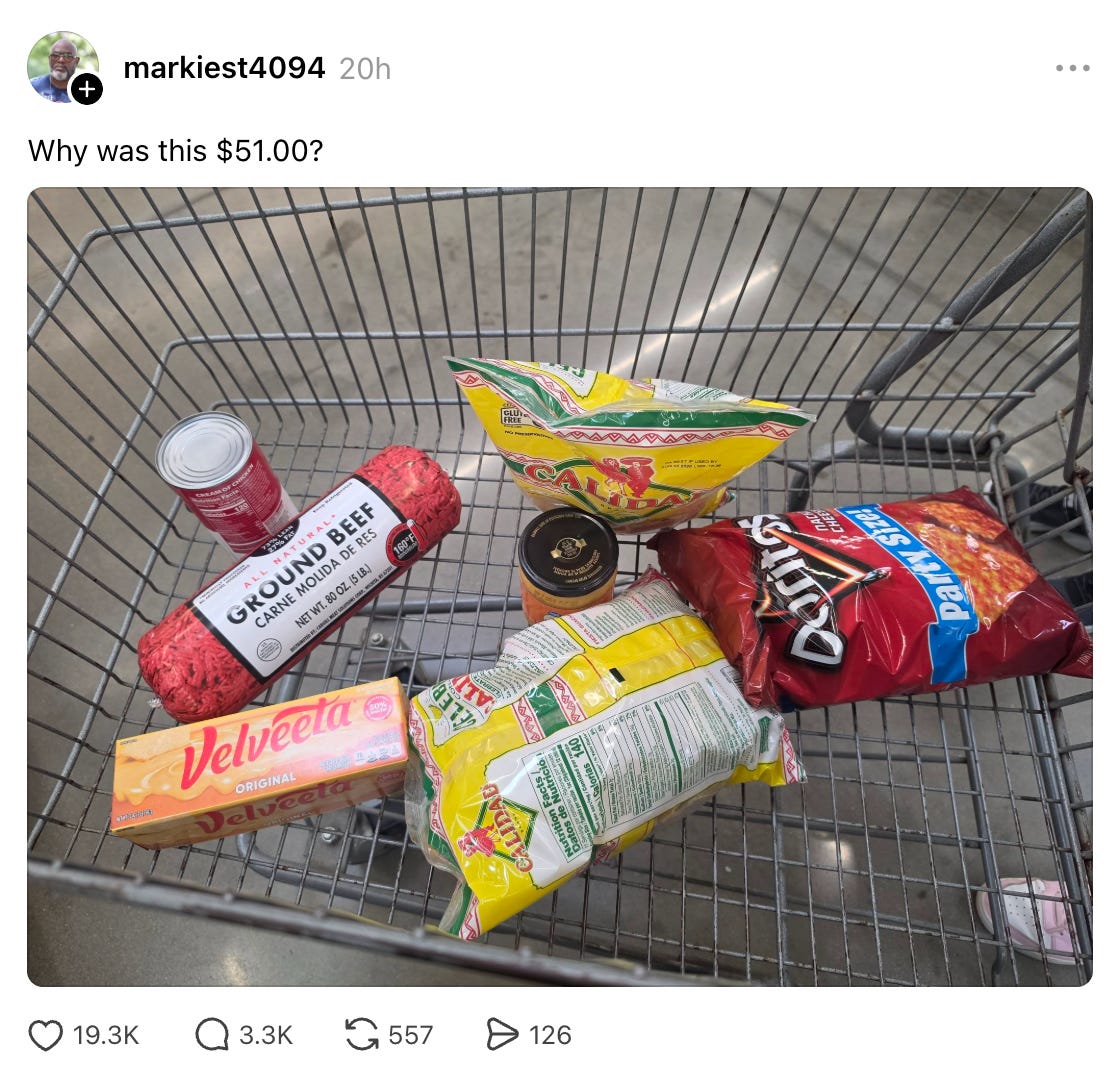
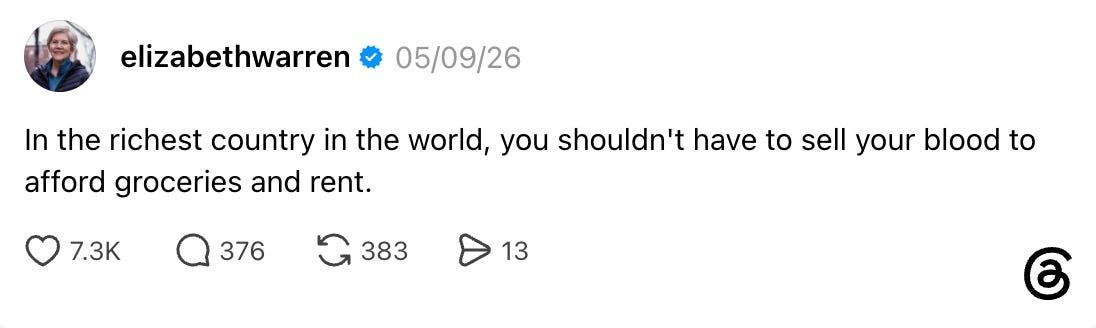
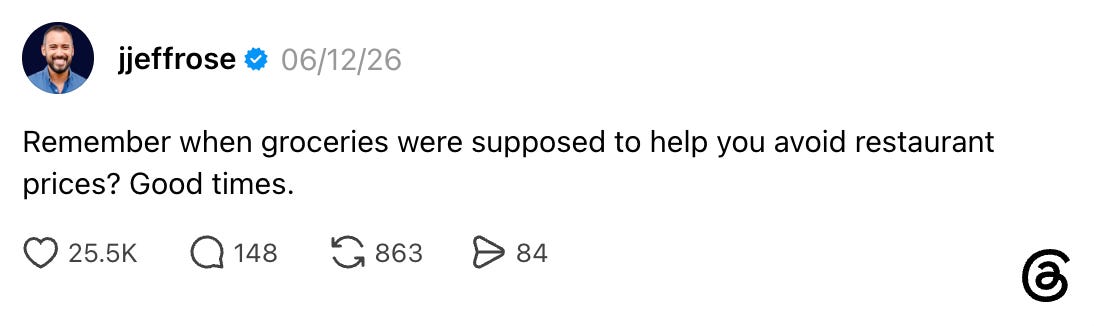
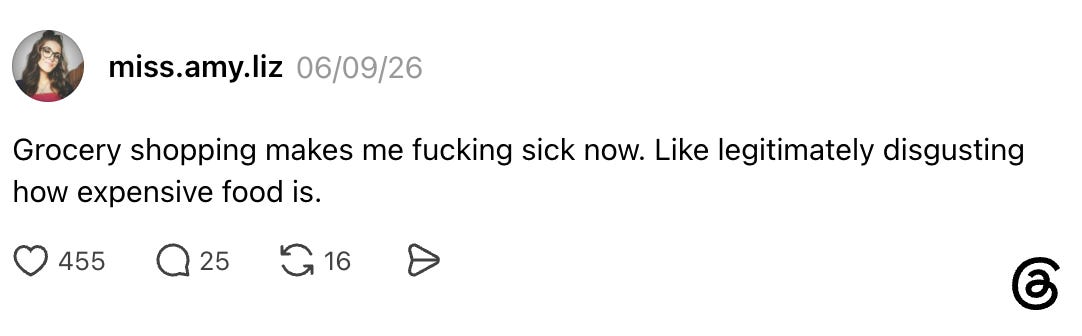
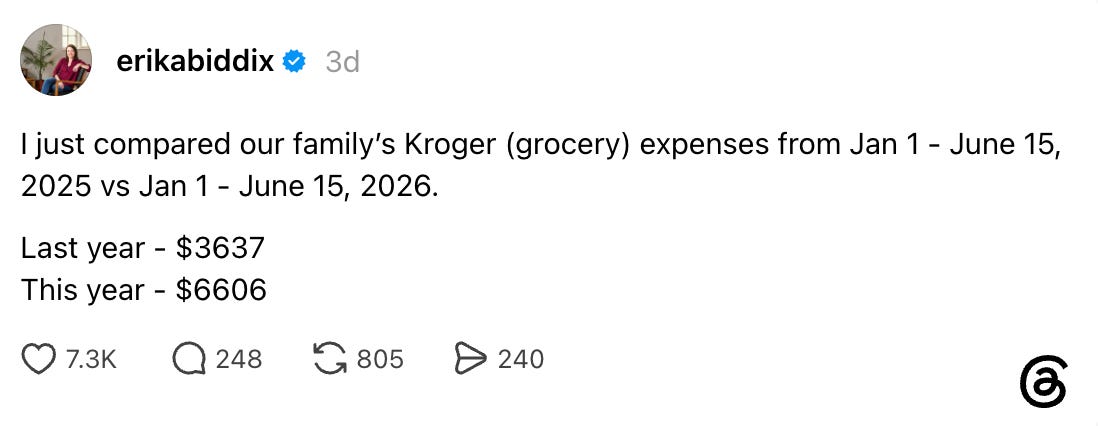
While researching today’s newsletter, I wanted to check the internet’s pulse on how we’re all feeling about the cost of groceries. A collective vibe check, if you will. I took to Threads (while lamenting the days of searching Twitter before it was taken over and made completely unusable IMHO!), with the search term being simply “groceries” and here is but a small smattering of posts that just about sum things up.
I remember being broke-as-a-joke after graduating from college in 2009, and spending roughly $40 a week on groceries at Trader Joe’s while living in Boston, and shortly thereafter in San Francisco. I was eating like a queen! I even had room in the budget for good ol’ 2 buck Chuck (IYKYK). In fact, I did some digital forensics just now and was able to unearth my old spreadsheet that I used for budgeting from 2012-2015, before my husband and I switched to joint finances after getting married in 2014. Then, we began using YNAB (You Need a Budget) and have never looked back!
Now, I manually tracked all of my expenses when I used the spreadsheet tracker, and I was incredibly diligent about that because I wasn’t making much money and was living in Brooklyn during that time period. I also lived with my husband, but the way we sorted our finances then was I covered groceries, we split the rent, and he handled all of our other expenses (phone, internet, utilities, dates, etc) and it typically all came out in the wash or he would spend more because he made more than I did.
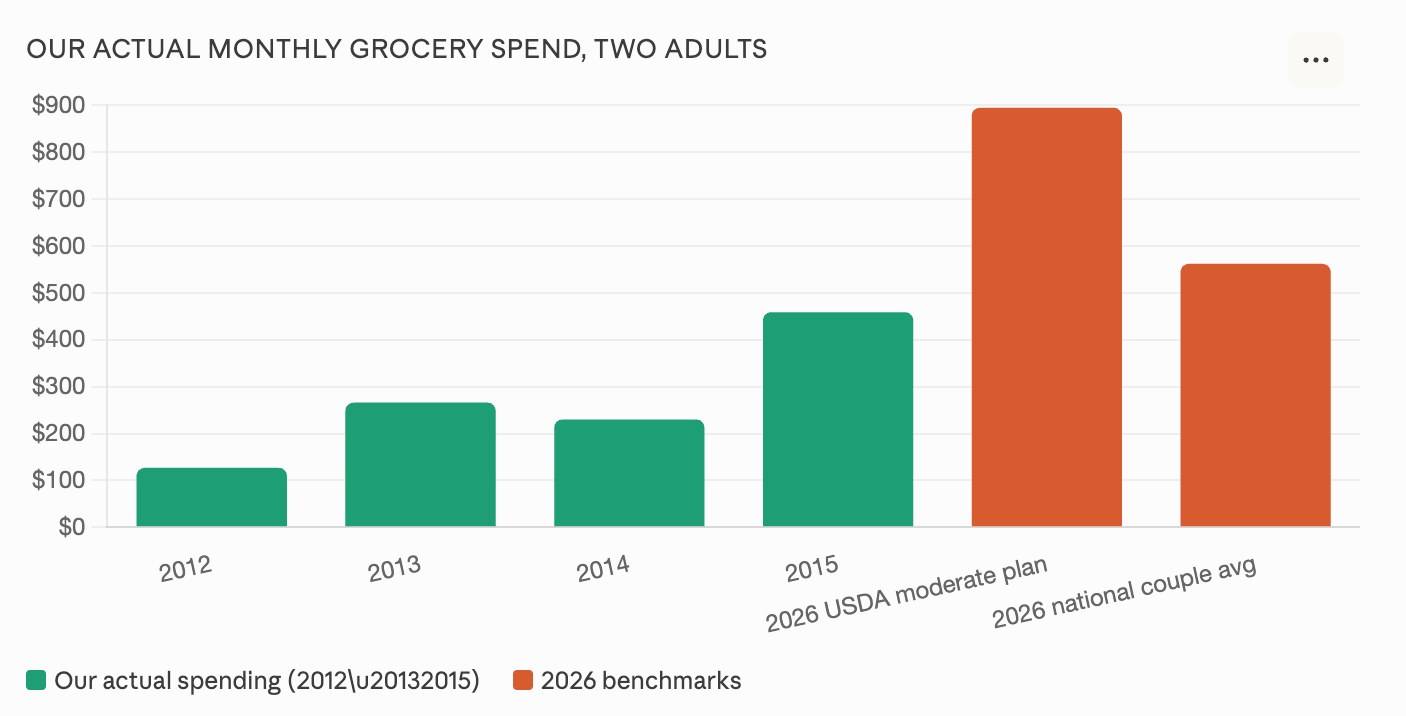
So here’s what two adults actually spent on groceries each month, pulled directly from real receipts (from NYC stores such as Key Food, Trader Joe’s, Pathmark, Park Slope Food Co-Op, and general grocery line items):
2012: We spent $127/month.
2013: $266/month
2014: $230/month
2015: $459/month
It was such a long time ago that I can’t recall what caused the 2014 to 2015 jump, but I want to say we started predominantly shopping at our local bougie food co-op, and were buying more specialty items, and became a bit less budget conscious.
What I can tell you, because I went down a whole rabbit hole instead of catching up with Love Island like I should be doing (hehe), is how those numbers actually stack up against the real, official cost-of-groceries data for those exact same years. I found the USDA’s archived “Cost of Food” reports — these come out monthly, going back decades, and they publish an exact figure for what two adults (ages 19–50) “should” be spending on a moderate, not-trying-particularly-hard budget. So I pulled the June figure for each year we have data for, to match against our June-to-June spreadsheet.
I wanted to know why grocery bills have gotten so brutal more recently, beyond the vague gesture at “inflation” we’re all doing at the self-checkout while quietly wondering if we should consider going vegan again (just me?), reevaluating our life choices (why didn’t I go to law school or start a tech company and sell it!!), and wondering if it actually is cheaper to cook at home anymore (host a BBQ in this economy)? Turns out there are three distinct things happening, and they get blamed interchangeably even though they’re not the same thing:
1. Plain old inflation. Food-at-home prices rose 31% between January 2020 and February 2026 alone. And groceries specifically have outpaced general inflation — one analysis found grocery prices rose 23.5% from late 2019 to early 2024, compared to an 18% increase for everything else. Your grocery bill is rising faster than your gas bill, your rent, your everything-else bill.
Some of the other charts in this Wolfstreet article had me like:

Chicken: boneless chicken breast averaged $4.14 per pound, up 35% from January 2020
Eggs: Grade A large eggs soared 368% from $1.33/dozen in mid-2020 to a peak of $6.23 in March 2025, then plunged 60% from that peak to $2.50/dozen in February 2026 — but still 71% higher than mid-2020.
Dairy: the dairy CPI is 21% higher than January 2020.
Coffee: ground roast coffee averaged $9.46/pound, up 30.5% year-over-year and 127% since January 2020.
Beef: Ground beef averaged $6.74 per pound, up nearly 20% from a year earlier and 73% from January 2020. Uncooked steak spiked 3.6% in February alone, to $12.74 per pound — up 17% year-over-year and 66% since January 2020.
If any of those items are in your weekly grocery cart, you’re no stranger to the “holy shit, this is HOW MUCH NOW?!” It’s not your imagination, and you’re not crazy!
Climate change shoulders a lot of the blame here, alongside geopolitical conflicts and ongoing supply chain disruptions. Fruits and vegetables are especially vulnerable to drought, since they depend so heavily on irrigation and steady weather, while beef prices reflect drought's slower-moving, longer-term toll on cattle herds.
The USDA forecasts fresh vegetable prices to rise 7.8 percent in 2026, while fresh fruit prices are also expected to climb.
2. Shrinkflation. About a third of common grocery items have shrunk in size since the pandemic while charging you the same price, banking on the fact that nobody’s out here weighing their cereal box. Except me! Because I’m a crazy lady with a chip on her shoulder about Big Corporations Trying To Pull One Over On The Little Guy (I’m workshopping here ok!). Some real albeit random examples:
Family-size Wheat Thins: 16 oz → 14 oz (28 fewer crackers per box)
Cottonelle Mega Rolls: 340 sheets → 312 sheets
Gatorade bottles: 32 oz → 28 oz
Chobani Flips: 5.3 oz → 4.5 oz (this one I especially noticed because I worked at Chobani when the team developed Chobani Flips and I used to crush those things —when I’ve purchased them, I just knew they were smaller!)
Some more photo examples can be found in this Buzzfeed article —wow what a throwback to the early 2010s —and in this piece from BusinessInsider.
3. “Greedflation.” Economists are not in agreement on this, but that’s good because I am in agreement on this, and I’m not a professional economist so I don’t feel the need to judiciously hedge my bets here. Corporate profits have been argued to have driven over half of inflation in some recent quarters, and grocery chains specifically have kept a slightly bigger cut of every sale than they used to, even as manufacturer profit margins mostly settled back down post-pandemic. However, other economists who looked at markup data across thousands of companies found basically no correlation between which industries raised prices fastest and which grew their margins the most — meaning the increases line up more with “costs went up for everyone” than “this particular company got greedier.”
According to this piece from Northeastern’s College of Social Sciences and Humanities:
There’s a concept in economics called “customer markets.” It holds that firms don’t like to raise prices because consumers get mad, and so if they’re in a situation where they feel they can raise prices, they’ll take advantage of it if they’ve had increases that have accumulated over a long time and their profit margins have been eroded. Then they’ll use the excuse to make up for past cost increases and also sometimes for expected future cost increases as well.
So the customer markets phenomena can lead to even bigger increases in prices than you might expect.

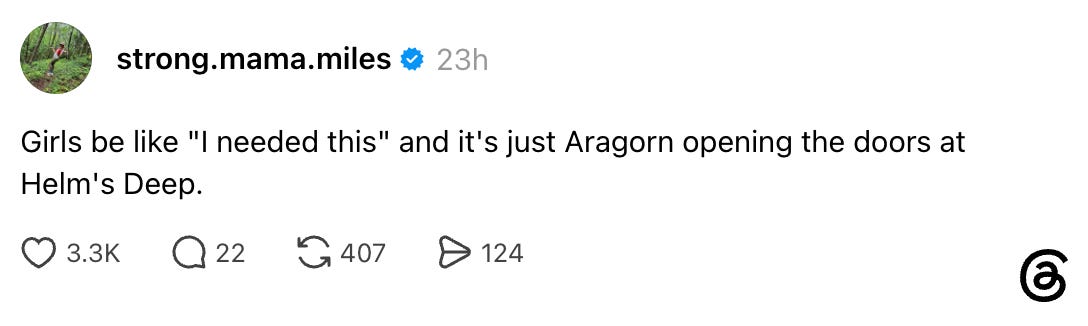
Except replace “orc mischief” with “greedflation!”
It’s not just in your head. “Groceries feel more expensive” and “groceries are objectively more expensive” are both true at the same time. When your staple grocery items are rising at objectively insane rates, it becomes yet another item added to the mental load. If grocery shopping used to be a mindless activity for you, and something you found truly enjoyable, it now is likely fraught with stress. It is for me, and I am fortunate enough to not have to truly worry about the cost of groceries. I don’t like to overspend because I’m frugal, but that’s different from being unable to spend. And food insecurity is a real and scary problem for many in this country right now.
In response to the truly appalling grocery price increases the past few years, a new report finds that instead of merely switched to lower cost brands, consumers are trading down on retailers themselves and seeking out lower-priced stores. The report also notes that, “Consumers aren’t just spending less — they’re spending more deliberately. Value-seeking behavior spans all income levels and demographics.”
So the next time you’re standing in the cereal aisle wondering if you’re taking crazy pills, because a box that used to last the week now disappears by Thursday, you’re not imagining it. The box got smaller but the damn price never does.
Until next week, brushing up on Depression era meals (obsessed with this YouTube account Depression Cooking, may she rest in peace) because the news has me kind of freaked out over food prices in the near future,
Amy
P.S.: Get a free month of YNAB here! I’ve put quite a few friends onto this and they’ve all said that it has transformed their relationship with money. As a former broke-bitch who had to track every single penny and used to overdraw her bank account fresh out of college, I will budget until the day I die honestly lol



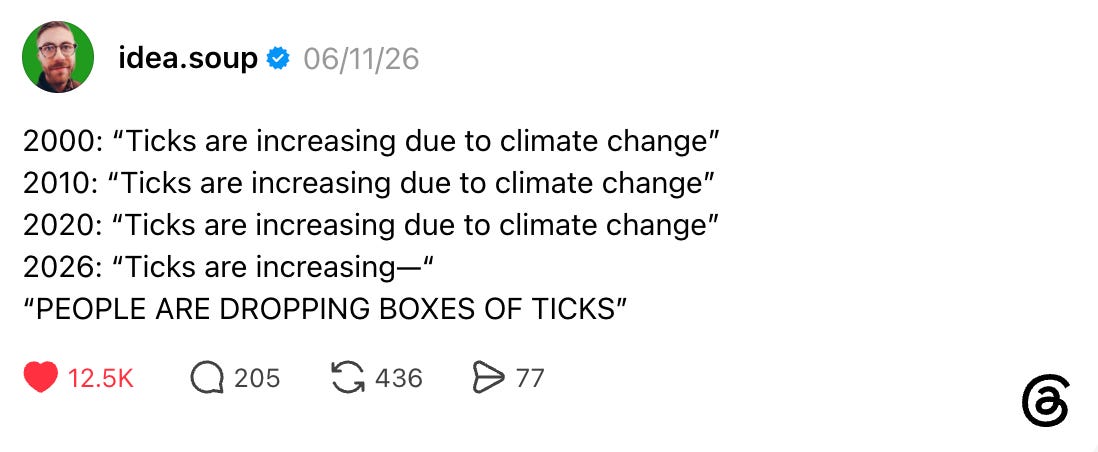


It’s Time to Worry About Ticks in the City [New York Times] — Turns out that we've gotten so good at building green spaces in cities, and that's invited the wildlife (deer, mice, birds) that bring ticks right along with them. We're hitting peak nymph season right now too, which is the part that should actually worry you, since nymphs are tiny, easy to miss, and the ones most likely to cause Lyme disease. Tuck your pants into your socks, even on a "quick walk to the park" — yes, even in the city. Also I’ve got a whole nerdy newsletter on ticks!
Why Pollinators Belong at the Center of Biodiversity Policy [Earth.org] —This piece makes the argument that pollinators aren't a cute side issue, they're load-bearing infrastructure for food security, biodiversity, and sustainable development. We hear a lot about pollinators regarding food production, as ~ 3/4 of the world’s leading food crops depend on animal pollination, but pollinators also can sustain the hedgerows, wildflower borders, wetlands and riparian vegetation that stabilize soils and reduce contaminated runoff.
Do You Know Where the Compost Goes? [Offrange] — Here’s a great albeit slightly deflating read on municipal composting! The gist is that a lot of curbside "compost" in places like NYC is actually getting turned into bio-gas and burned for energy rather than becoming soil. Bummer! Although more people than ever are composting, all of that waste isn’t necessarily reaching farmers, and ultimately, we need to make sure we reduce food waste overall.
We’re quietly teaching our kids that everything is more important than them [Courtney McGee on Substack] — This essay about parents (all of us, let's be honest!) scrolling while our kids talk to us absolutely wrecked me. Also applies to family members, friends, grandparents, everyone who interacts with children.
Pamela Anderson, Martha Stewart, and Ron Finley on What They Wear to Garden [Secret Strategist on Substack] —Such a fun piece, and I found a lot of new folks to follow from this! Glad they didn’t ask me, as I’m usually in various states of garden gremlin attire and nothing nearly so chic as some people on here.
That’s it for free subscribers this week! Paid subscribers get the rest: what’s in season now and what to make, this week’s harvest highlights, Master Gardener notes, and everything else. Once a month, I unlock the whole thing for everyone, but if you don’t want to wait, you know what to do!
Comments
Nothing yet. Say the first thing.
Sign in to join the conversation.