
Text within this block will maintain its original spacing when published
“It is simply amazing how quickly attitudes improve when people finally understand bats as they really are—sophisticated, beautiful, even cute, quite aside from their crucial roles as primary predators of insects, pollinators of flowers, and dispersers of seeds.”
-Merlin Tuttle
First, a mea culpa! We were thrust back into the stone ages last weekend when we lost Internet for 3+ days due to a major storm in NY/NJ that…evidently affected the Internet in a small town in Central MA. I’m no technical whiz but that seems like a not ideal situation! So as a make good, I wanted to offer this issue (the second of the month, technically) as free to all and then resume the regular cadence of publishing. Thanks!
Last night while walking our son upstairs to bed — far too late, as summer bedtimes have become — I saw a bat whiz by my head and into our daughter’s room. Now, I love bats and think they’re adorable and have spent far too much time watching baby bats get swaddled and fed bananas, but one in the house is too close for comfort. So naturally I shrieked for my husband, grabbed my son, ran him back downstairs, and stuck both kids in the bathroom and closed the door.
Ever the calm, cool, and collected one (I have hardly any of those bones in my own body, unfortunately), Kristian grabbed a container and ventured into our daughter’s room to try to remove the bat. He was able to do so with ease, and we all got to take a close look at our nocturnal intruder before he set it outside on a branch which allowed it to crawl out and fly off. What an unexpectedly dramatic bedtime for everyone!
However, my mom brain started to immediately run through everything I know about bats and bat encounters and that dreaded word — rabies. I wasn’t sure how long it had been in the house, or if it had been around while we were sleeping the previous night. I remembered one of our cats had been meowing very peculiarly all afternoon on Thursday, but I attributed it to her simply getting old and senile. Perhaps it had come down the chimney that day?
After some cursory Google searching, I started to spiral and decided to call poison control for more guidance. They then gave me the number of the state epidemiologist’s office, and the on-call epidemiologist gave me a call back shortly thereafter. I explained the situation, that I wasn’t sure how long the bat had been in the house, and that I was worried about possible rabies exposure. She was wonderful in talking me off a ledge (we’re ok!) and also educated me a bit on bats — things that even as someone who is pretty down with nature-y things I was unaware of. And naturally I got to researching a bit more on my own so I thought I’d pass some bat info around, given how crucial they are in our ecosystems but also how they can be a bit misunderstood and can wrack our nerves when we find them in unexpected places — like hanging on a wall tapestry in your kid’s room!
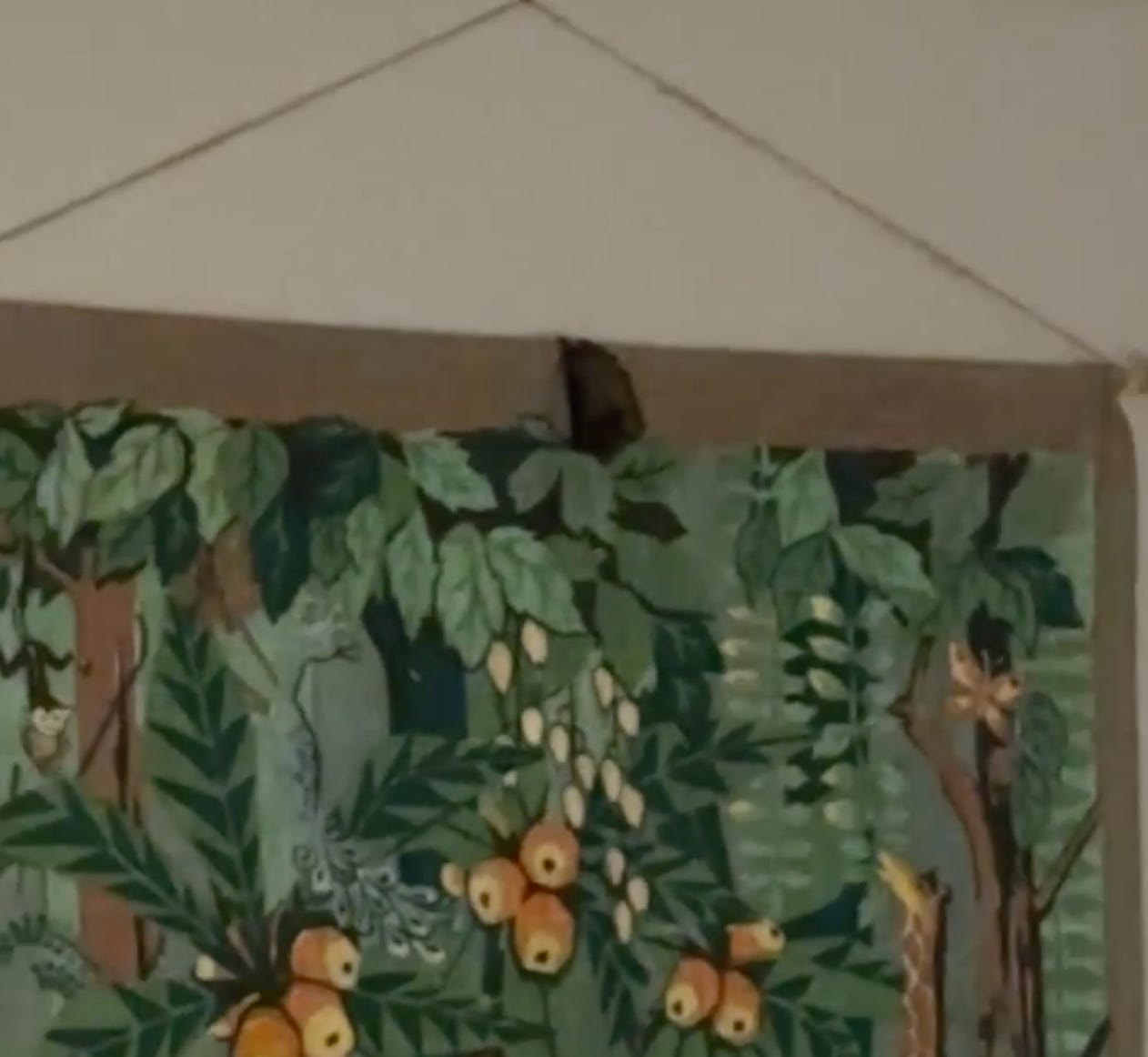
Bats are mammals that belong to the order Chiroptera (from the Greek cheir – “hand” and pteron - “wing”).
There are 1,500+ species of bats worldwide, with 40 species in the United States alone!
Bats make up one-fifth of all mammalian species worldwide and are found on every continent except Antarctica, contributing to ecosystem health by suppressing pest insects, pollinating plants, and spreading seeds.
Scientists estimate that insect-eating bats may save U.S. agriculture billions of dollars annually in pest control — making them among the most economically valuable wildlife on earth.
A single little brown bat can eat thousands of mosquitoes and other insects in a single night.
While bats locate insects via echolocation, some have excellent eyesight as well, contrary to popular belief.
Bats can live more than 30 years and can fly at speeds of 60 miles per hour (or more!)
Most bats only have one pup at a time and bat mothers can find their babies among thousands or millions of other bats by their unique voices and scents.
Over 300 species of fruit depend on bats for pollination. Bats help spread seeds for nuts, figs and cacao — the main ingredient in chocolate. Without bats, we also wouldn’t have plants like agave or the saguaro cactus.
Bat droppings, called guano, are one of the richest fertilizers, and guano used to be Texas’s largest mineral export before oil.
About 80 medicines come from plants that rely on bats for their survival.
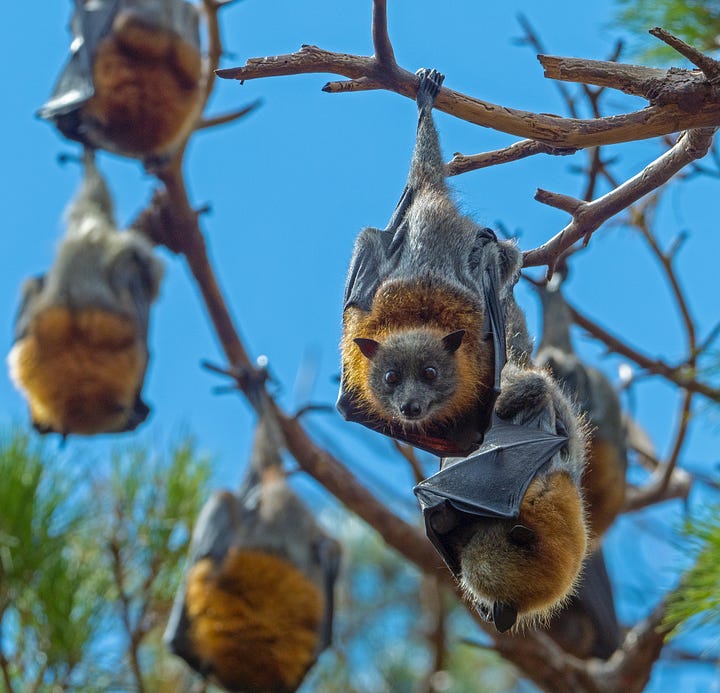
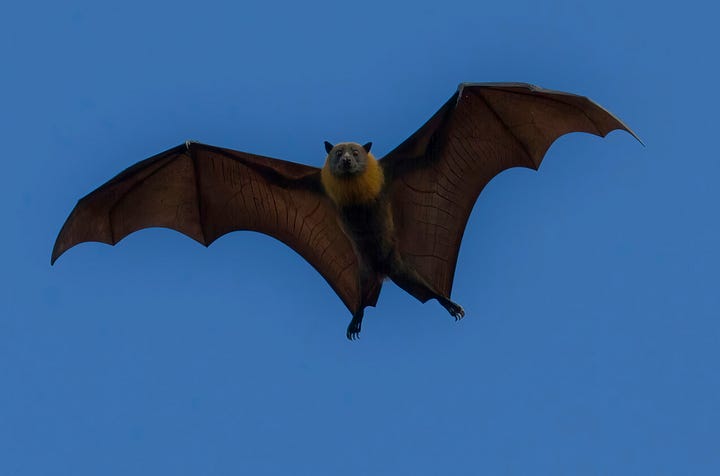
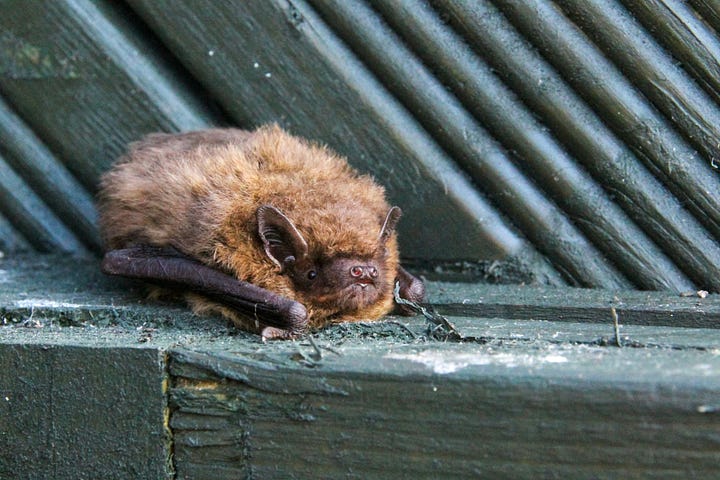
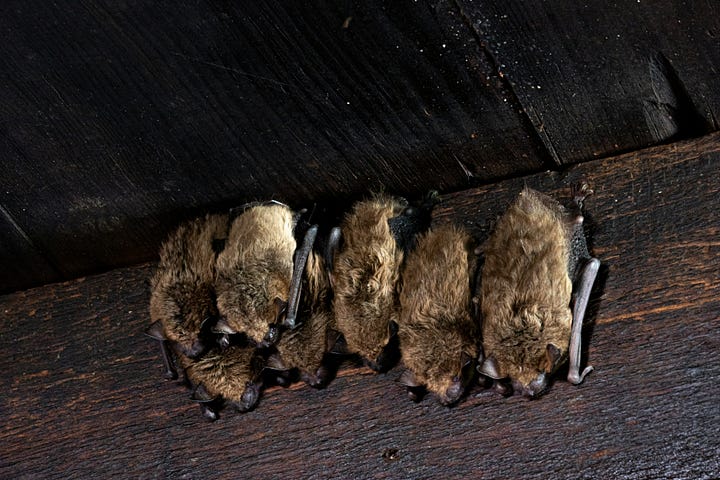
Some of North America’s once most abundant bats have lost more than 90% of their populations.
More than half of the bat species in the United States are in severe decline or listed as endangered.
Bats have few natural predators — disease is one of the biggest threats. White-nose syndrome (WNS) is a fungal disease killing hibernating bats in North America.
Bat disease hysteria has endangered bats, and given them a bad rap!
If you happen to have bats nesting in your attic or barn and it’s problematic, there are companies who specialize in removal and making it so bats can exit but not return. However, these actions should be undertaken only during May and from mid-August to mid-October. This timeframe can differ depending on where in the country you live, but in between those periods young bats could be blocked inside, and without access to food, would be left for dead. In fact, it’s illegal in many locales to remove bats during the maternity season, so make sure to do your due diligence before blocking entrances up!
Put up a bat house — research has shown that bat houses providing warm roost microclimates can dramatically reduce energy costs for bats recovering from white-nose syndrome, improving survival and reproduction. Bat Conservation International has free plans and placement guides at batcon.org.
Skip the pesticides — Many bats eat insects, and some pollinate plants, so limiting these chemicals gives bats healthy foods to eat.
Bat-proof thoughtfully and at the right time — Bats can fit through openings as small as 1/2” , and you can bat-proof your home using caulk, chimney caps, and draft guards. But! This should only be done outside of maternity season (generally May through August) when pups may be present and unable to fly out.
Plant native plants. Native plants attract native insects that provide food for bats. Specifically, they love to eat moths so finding moth host plants will be especially beneficial to them.
Turn off lights at night — Bats rely on darkness to survive and light pollution can disrupt their natural behaviors. Just like birds! And many insects!
Leave deads trees AKA snags if you’re able to — Bats can roost in dead trees, so if a dead tree does not pose a safety concern, consider leaving it as a potential bat roost.
Until next week, ordering a bat house and putting it up ASAP,
Amy




I Wanted an Ecologically Responsible Garden. It Was Harder Than I Thought. [New York Times] — A beautifully written piece highlighting how quickly native plants can make a meaningful contribution to the local ecosystem. The author visits the home of Doug Tallamy, a professor of entomology and a leading expert advocating for gardening with native plants, and learns that through his own native gardening has attracted 1,370 moth species and 62 species of breeding birds on his land. Incredible!
Floral Arraignment: Plant evidence can be a powerful crime-solving tool. So why is it used so rarely? [Distillations Magazine] — Pollen and plant fragments have cracked murder cases, kidnappings, and other unsolvable crimes for a century thanks to forensic ecology and environmental archaeologists.
He’s Big, Loud and Unruly. Meet Neil, Australia’s Celebrity Seal [New York Times] — I love Neil so much it hurts. Neil is a2,204-pound southern elephant seal who is making his twice-a-year pilgrimage to Tasmania’s southeast coast, his birthplace, and wreaking havoc in an adorable fashion everywhere he goes. However, the public is warned to love him from a distance to keep him and everyone safe.
What to Know About the Diarrhea Outbreak Tied to Fresh Produce [TIME] Wow, I really hoped I would never have to write the word “diarrhea” in this newsletter, but alas I’ve written it twice now! And since it’s all over the news, with the unfortunate adjective of “explosive” often being tied to it, I figured it was important enough to address here. There’s nothing conclusive yet, but from what I’ve read it sounds like cooking kills the parasite, and to avoid bagged lettuce, along with a list of other foods that have been associated with past outbreaks.
EPA’s Pesticide Approvals Prompt Fears of PFAS Contamination on Farms [Civil Eats] — Nathan Donley, Center for Biological Diversity, referred to this as, “the single biggest mass approval of pesticides I’ve ever seen.” Coincidental timing, given that the Supreme Court granted immunity to pesticide companies! MAHA, right guys?!

Wind and Truth (Book 5 of The Stormlight Archive) by Brandon Sanderson —I will finish this book if it’s the last thing I do! It’s spectacular, but as the last book in the series where each book is 1,200 pages, I’m ready for a new world. Next up will be either Red Rising or Dungeon Crawler Carl, I think!
What to Eat Now: The Indispensable Guide to Good Food, How to Find It, and Why It Matters by Marion Nestle —This book is downright fantastic but be warned that it is LONG. I’m listening to the audiobook on walks/runs/doing chores and it’s ~25 hours long but I keep jotting down notes as it’s incredibly thought provoking and infuriating in equal measure.

Two absolutely spectacular playlists that I’ve been enjoying this summer: one, aptly named because every song I’ve been able to sing nearly all the words to despite not hearing for 20+ years and the other just a hysterical and oddly descriptive name loaded with bops galore!

Blueberries (peak!), blackberries, raspberries, first tomatoes, sweet corn (just arriving), cucumbers, zucchini and summer squash (abundant — brace yourself), green beans, peppers, eggplant, fresh garlic, beets, Swiss chard, kale, collard greens, cabbage, cauliflower, scallions/green onions, chives, kohlrabi, new potatoes, purslane, lamb's quarters, fresh herbs (basil especially — peak!), mushrooms, watercress, and the first melons if you're lucky.
Sally’s Blueberry Pie. To avoid the parasite, of course! That’s going to be my justification for baking all sorts of fruit pies and tarts this summer, TBH.
Fresh Tomato, Basil and Prosciutto Pasta. I’m a sucker for a simple pasta dish featuring fresh produce in the summer. No oven needed.
Creamy Corn Pasta. If ever I’m able to save some ears of corn from my kids who gobble up corn on the cob any chance they get, it’s immediately going into this pasta.
Blueberry Cake. I’ve made this one before and it was a hit, and endlessly riff-able as she provides loads of other fruit swaps.
Angel Hair Pasta. There’s something about angel hair pasta and summer because I swear I never eat it at any other time of the year?

I'm writing from zone 6a in Central Massachusetts, so if you're in a warmer zone you're probably a few weeks ahead of me, and if you're further north you might be a few weeks behind. Adjust accordingly!
Keep watering consistently, but you can ease up slightly. Keep an eye on moisture levels —we got 2.5” of rain in one day last week so the soil was saturated for days following that.
Harvest, harvest, harvest. We’ve gotta be out checking daily (I need to take my own advice here!). A zucchini that’s perfect on Monday is a baseball bat by Wednesday in this heat. Green beans, cucumbers, and the first tomatoes all want to be picked regularly to keep the plants producing. Leaving overripe produce on the vine signals the plant to stop putting energy into new fruit so pick, pick, pick!
Tomato check-in. If you’re seeing the first blush of color on your tomatoes, resist the urge to pick them too early. Let them ripen on the vine as long as possible — flavor develops in those final days. Which is why grocery store tomatoes taste like sadness and despair, because they’re picked when they’re not ripe yet. If you’re worried about critters getting them first, picking at first blush and ripening on the counter is fine, but avoid picking while they’re hard and green.
Cucumber and squash patrol continues. Early morning checks are your friend as they’re moving slowly in my experience. You’ll catch more cucumber beetles, squash bugs, and vine borers in the cooler morning hours. Check the base of squash stems for frass (sawdust-like material) which signals a borer is already inside. Also if you see squash bug eggs on the leaves, smoosh them or drop them into soapy water.
Garlic harvest time. I think this will be my week to harvest garlic —a good rule of thumb is to harvest when roughly half the leaves have browned. Don’t wait too long or the wrappers start to deteriorate (been there!). Once pulled, cure in a shaded, warm, well-ventilated spot for three to four weeks before storage. Do not wash them — just brush off loose dirt and let them be.
Succession sow beans this weekend. Water them in well and keep newly sown seeds consistently moist until germination, which in this heat that means checking daily.
Weed while the weeding is good. Every weed we pull now is one less weed to be a problem when it goes to seed!
Pinch your basil constantly. Pinch flower buds off ruthlessly and harvest big handfuls weekly as we want the plant to keep producing foliage and not seeds. It’s pesto time, baby!
Plant fall crops this month. Mid-July is the time to start thinking about what goes in for fall — broccoli, cauliflower, cabbage, kale, and Brussels sprouts all want to be started from seed now (or transplanted in early August) for a fall harvest. Count back from your first frost date (mid-October for zone 6a, I use October 17th) and work backward from the days-to-maturity on your seed packet. Truthfully, I’m not sure if I’ll get a fall planting in the ground but who knows!

Black raspberries are starting to fade and blueberries are getting picked by the handful, much to our children’s delight. I’ve barely had any! Kale, Swiss chard, and lettuce are still producing beautifully, as are the collard greens and cabbages. Lots of lettuce has bolted, but enough has been hanging in there despite the heat that we’re enjoying weekly salads. There are a couple of volunteer sunflowers that are well over 10’ tall, while the ones that I planted and painstakingly protected from chipmunks are inching into 5’ territory. We’ve started plucking some early cherry tomatoes off the vine, and I’m working to stay on top of tying them to the wooden stakes for support as they grow furiously in the summer heat. I think my squash are already a lost cause, and potentially my pumpkins, due to squash vine borer damage. Ugh!
Other goings-on:
Our two roosters have been sparring more than normal, which I’m watching closely and may have to rehome one of them if it continues to be a problem — it can stress the hens out, and I worry about one of the roosters getting injured! They’re both docile and sweet with humans though, so I am hoping they sort things out.
Baby bunnies have been coming and going from the garden but seem to not be inflicting much damage. They’ll be too big to fit through the fence openings soon so I’m inclined to let it ride.
One of the chickens caught a toad recently and was triumphantly parading it around the yard until Kristian heroically rescued and relocated it. The toad, not the hen!
We’ve been seeing loads of monarch butterflies laying eggs all over the milkweed that has self-seeded prodigiously all over the property. Including smack dab in the middle of the driveway through a tiny crack.

This section periodically comes and goes, because sometimes our meals are so boring and uninspired that I think, “what’s the point in even sharing this!?” But then I think that sharing actual meals as a mom of young kids, trying to be mindful of the grocery bill, cut down on food waste, cook at home a lot, and add some variety while keeping it fairly simple might be helpful. Or IDK maybe I am overthinking the whole thing, but here we go!
Monday: Pesto pasta + broiled shrimp
Tuesday: Baked salmon + cornbread (Reese’s request)
Wednesday: Chicken caesar salads (Zach’s request)
Thursday: Lots of frozen goodies from H-Mart, like potstickers and steamed pork buns
Friday: veggie pizza with bell peppers, onions, and Swiss chard
Saturday: kale chicken caesar salad
Sunday: dinner on the road, will be driving home from a beach day trip
Goodies made this week:
bagels
sandwich bread
Caesar dressing
Ranch dressing for dipping veggies

My new favorite TikTok comfort creator who also now has a Substack, Kacy B! Every time one of Kacy’s posts pops up in my feed it’s like a calming breath of fresh air. I was so glad to read her intro Substack post and learn more about the woman behind the account. I know lots of folks aren’t on TikTok but good news, she also has an Instagram account! Go follow for feel-good vibes and good food and drink content.
Chef Moe on TikTok. A chef of 20+ years, he is using his expertise about the art and science of cooking to help his viewers cook good meals, on a budget, with his specialty being $5 or $10 meals. He’s positive, encouraging, and empowering, and I love seeing someone put so much good out into the world and using their platform to help others. He has 2M followers on TikTok but somehow only 17K on Instagram, so spread the good word!
These sewing patterns for cute bags! From the Desk of Madison Moore has these patterns available currently and they’re too cute I can’t even handle them. Sewing is a burgeoning hobby of mine, and I’m currently in the “too many saved ideas, not enough things actually made” phase of the hobby, and mentally I have convinced myself I can only sew in the winter since it’s an indoor hobby. Which makes no sense, I know! But I am absolutely dying over these bags and want to make one for my daughter, who is a budding ornithologist and birdwatching enthusiast.

No posts
Comments
Nothing yet. Say the first thing.
Sign in to join the conversation.