
Welcome to Front Running, the prediction markets newsletter from Eilers & Krejcik Gaming.
The following data and insight comes from our new Predictions Markets Intelligence vertical. For subscription options and sample reports, contact Simon Krejcik at skrejcik@ekgamingllc.com.
1. Chart of the Week: Kalshi Dominates Combos
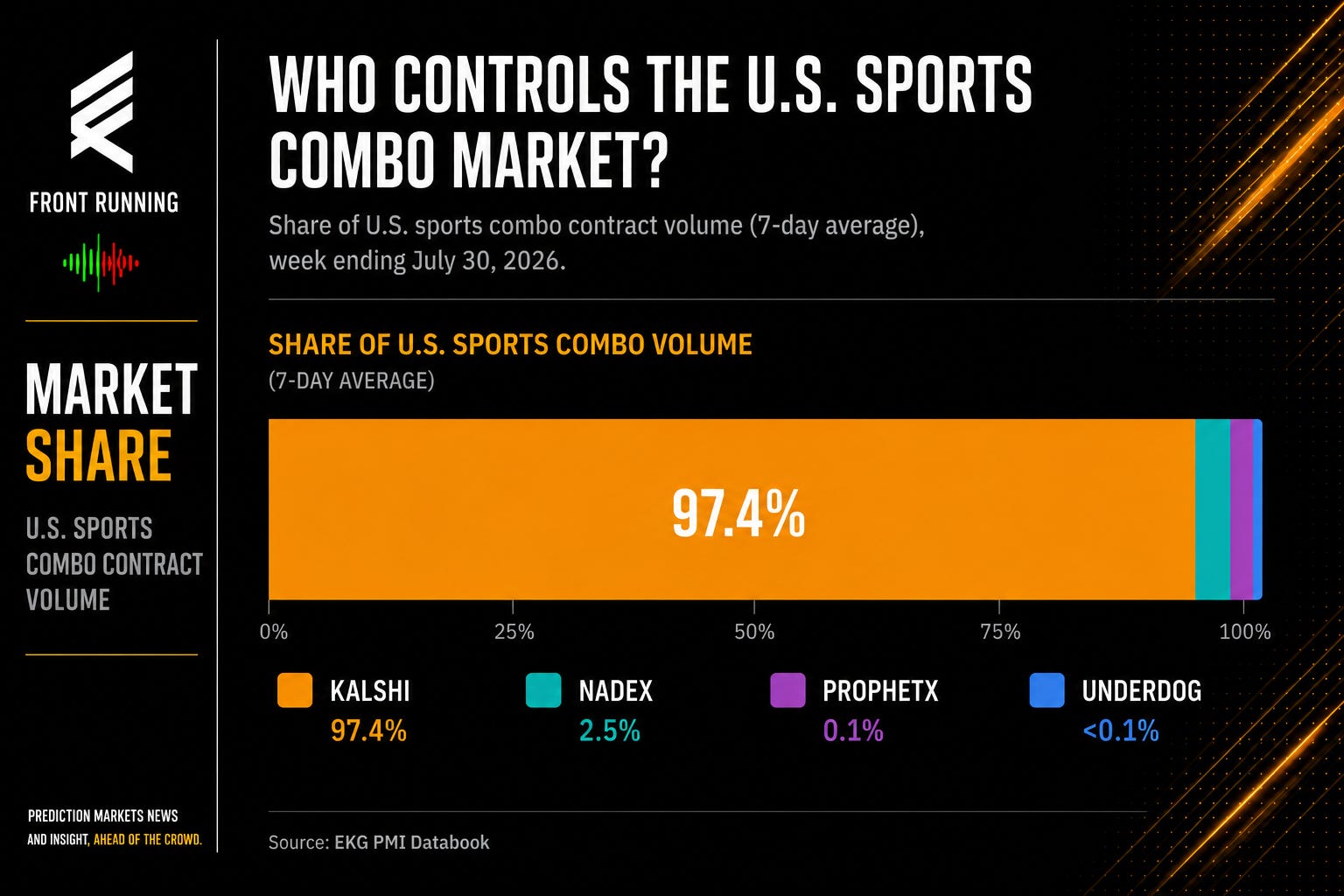
Kalshi accounts for 97% share of the PM sports combo market, per the latest EKG tracking.
The exchange saw combos reach ~44% of contract volume in July, roughly double the levels seen in March.
Beneath Kalshi, combo performance is nascent and evolving. Underdog just launched combos on its own exchange, and Nadex‘s combo share growth corresponds with ramp-ups at key partners including DraftKings Inc., Fanatics and FanDuel.
At FanDuel JV partner CME Group, combo contract volume has not been reported since 2Q26 earnings, on which management expressed reservations about parlay-style sports contracts. Combo contract volume at ProphetX, meanwhile, is rising off a modest base.
In Illinois OSB, parlays account for 58% of wagers and roughly 60-70% of GGR at FanDuel and DraftKings.
The readthrough: combo is not a niche feature but a central product layer—and potentially the defining one—in determining who captures mainstream sports PM demand.
The data above comes from from EKG’s forthcoming PM intelligence platform.
2. News You May Have Missed: The End Of In-House Market-Makers?

The CFTC has proposed a new set of rules addressing in-house market-makers.
The proposed rules say exchanges can own affiliated market-makers but they must act as “bona fide” liquidity providers rather than proprietary traders.
That means continuous two-sided quotes, no directional trading, no preferential treatment, and operationally separate from the exchange. They also must get filled after non-affiliated traders if the same price.
Public comments on the rules are open for 60 days.
If enforced tightly the regs would fundamentally change the current market dynamics.
For one, the rule against taking directional risk could potentially prohibit laying combos via RFQs. The rule on getting filled after other participants could also hurt profitability.
These rules are still under discussion, but will have a potentially massive impact on the future of the industry and whether firms offer a true open market or can try and farm order flow through their own in-house MMs.
3. Quote of the Week: Can Kalshi Raise More Tax Than Sportsbooks?
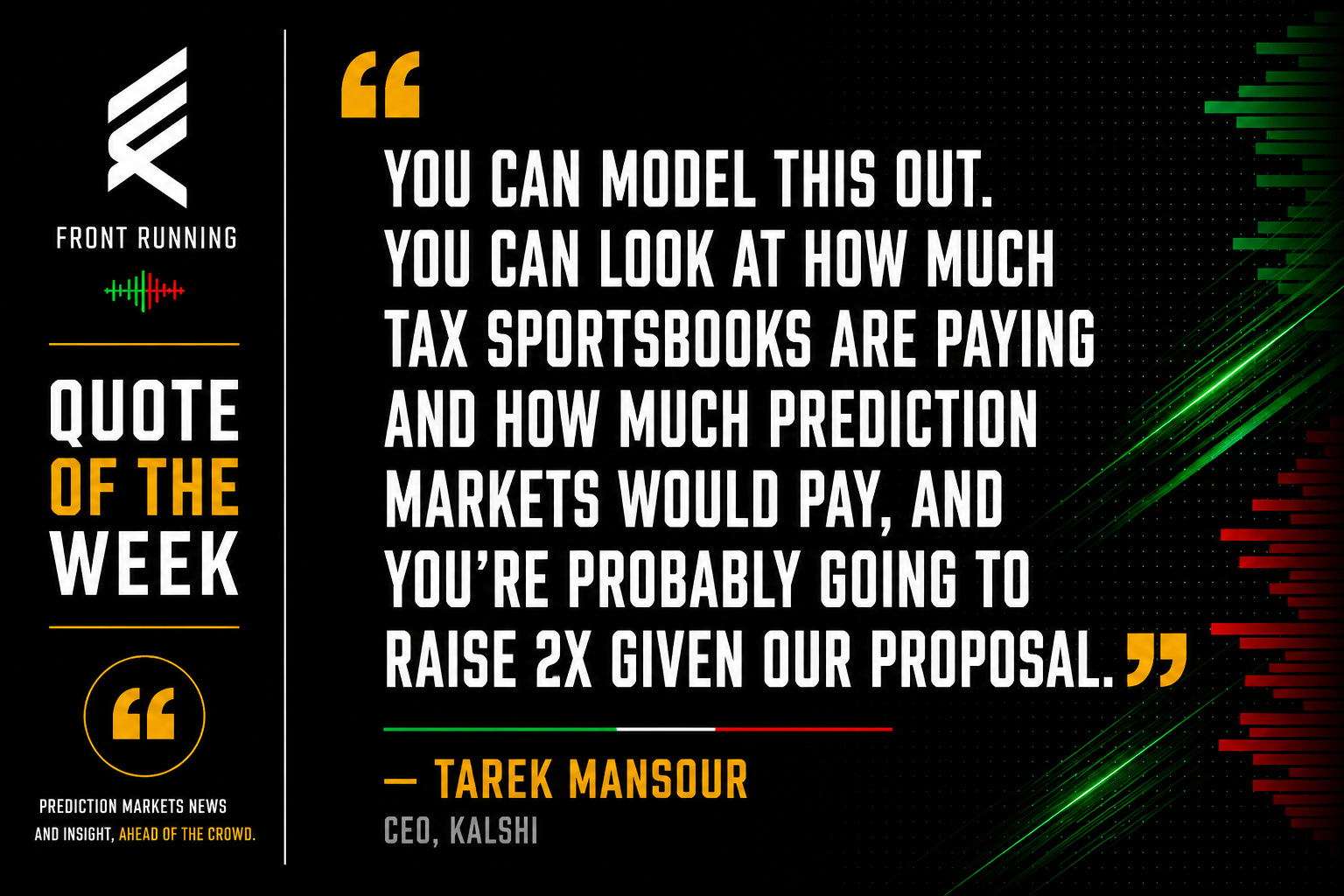
Kalshi CEO Tarek Mansour said the above on CNBC this week, following news of a lawsuit against the company by the state of New York.
Mansour said Kalshi offered to pay tax to New York that would double what sportsbooks pay, but said “we just didn’t hear a response”.
The WSJ reported the Kalshi offer was worth $10bn in tax over five years, though industry observers are skeptical.
New York taxes sportsbooks at 51% of GGR and collects the most taxes of any state in the US. Cumulatively it has collected $4.5bn in sports betting tax, nearly 4x any other state.
NY Gov. Kathy Hochul said Kalshi could offer to pay 100% of its revenue but it couldn’t buy an exemption from the law.
No posts
Comments
Nothing yet. Say the first thing.
Sign in to join the conversation.