
This article is not a prediction; far from it. I wrote it because I enjoy thinking about where the future will take us.
Take this article as a sentiment and an idea to start a conversation about the future of frontend engineering.
I believe the future of the development of frontend applications will undergo a significant paradigm shift.
Frontend engineers will develop and maintain the software that designers and product managers will use to build the application.
I have built two custom page creators that help explain the paradigm shift. A custom page creator is like Webflow or Wix but for a specific website.
The project allowed editors to build new pages. We also developed a simplified version of a Storybook so that designers could edit and improve components without engineering. They only needed to know CSS and a little bit of JS.
Page creators are similar to what I believe the future of frontend development will be.
Let me give you an example of how I believe web development might work in the future.
A product manager of Github wants to improve the view of Pull Requests by showing the number of unread comments.
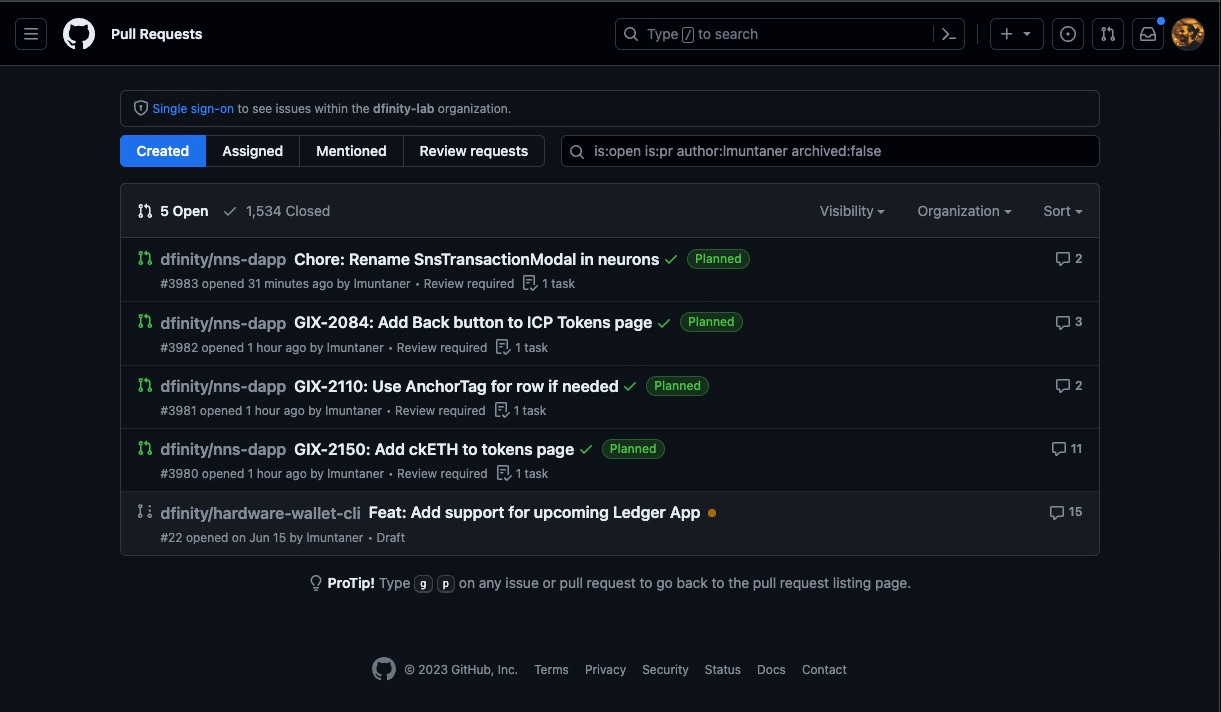
He writes the requirements and sits with the UX designer to come up with the best way to show them. They agree that the best way is to put a new icon and number next to the total number of messages.

They open the GitHub Development App, select the PRs page, and click “Add new component.”

A new screen opens to create a new component. They select some components from the current component library and then input the prompt: “Connect to unread messages, show the number of unread messages with the primary color.”. This step creates a PR for a developer to review.
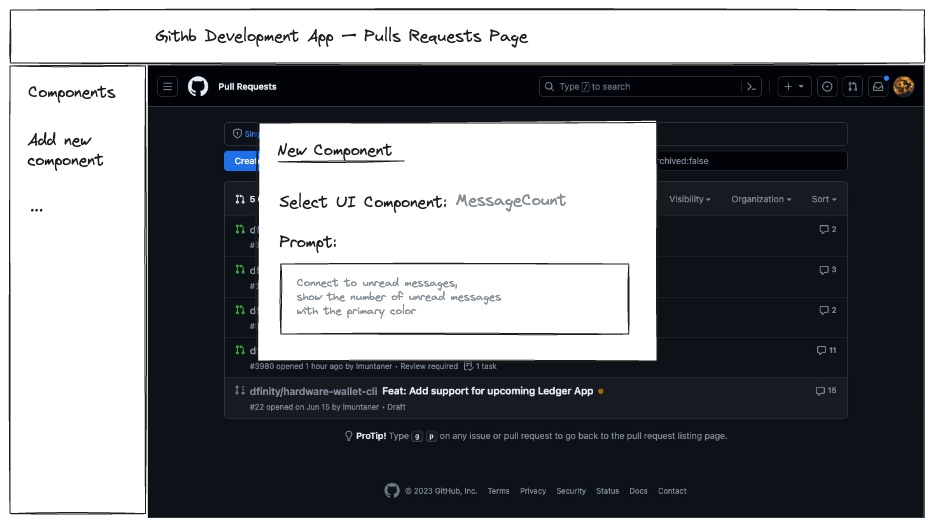
The GitHub Development App I just introduced is the application frontend engineers will build and maintain. Product managers and designers will use these apps to build their desired applications.
Frontend Engineers will build software that builds software, not user-facing applications.
Software like GitHub Development App will use AI to convert what the designers and product managers want into code. Then, the engineer will review, confirm, and probably merge the new code.
AI will bridge the knowledge gap of design and development.
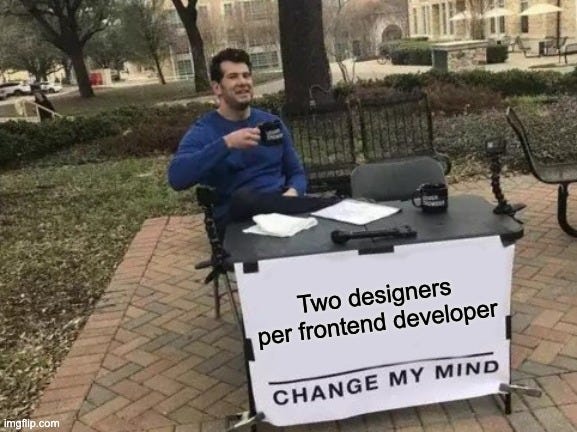
In this new paradigm, I see the ratio of designers to engineers reverting and designers becoming more predominant than devs—for example, a ratio of two designers per developer.
The ratio of designers to developers will increase dramatically.
The same will happen with product managers. Product managers won’t be working on big frontend teams because they will be able to implement changes directly into the product.
There might be limitations on what software like GitHub Development App can do, especially at the beginning. In that case, the frontend engineers will develop innovative features that AI can’t find good examples and build.
On the other end, incremental improvements will be reviewed by an engineer and developed by AI with input from product managers and designers.
Frontend engineers will develop and maintain the software designers and product managers will use to build the application.
Unlike generic page creators like Wix and Webflow, I don’t believe there will be one generic software or AI to build all kinds of products. What are your thoughts on this? Do you agree or disagree?
Reply or add a comment, and let’s start the discussion!
Thanks to Elina, Yusef, Miquel, and Sebastià for reviewing this article!
Comments
Nothing yet. Say the first thing.
Sign in to join the conversation.