
This is The Great Books Project in Anthropology. I am on a quest to rediscover the classics and their insights into the human condition as a salve to the contemporary technological, social, and political threats to our humanity. Lest we forget.
Email me your recommendations: frontalobe.substack@gmail.com
The Abyssinian Journey by Marcel Griaule
Griaule, Marcel. (1929) 1991. Les Flambeurs d’hommes. Paris: Gallimard
Griaule, Marcel. (1929) 1935. The Abyssinian Journey (trans. E.G. Rich) London: J. Miles
Beginning: My faulty impression | Chapter One| Chapter Two | Chapter Three | Chapters Four and Five | Chapter Six (Part 1)
Chapter Six (Part 2)
================
The Book Review Guideposts: The Rhetorical Sandwich
While reading early modern ethnographies or monographs, I shall use these tropes to evaluate and appreciate the literary and scientific work of the forefathers of anthropology.
The Opening Trope
Writing using referentiality (realist) or evocative (literary)
The chapters are written as parts of the whole (holism)
The Closing Trope
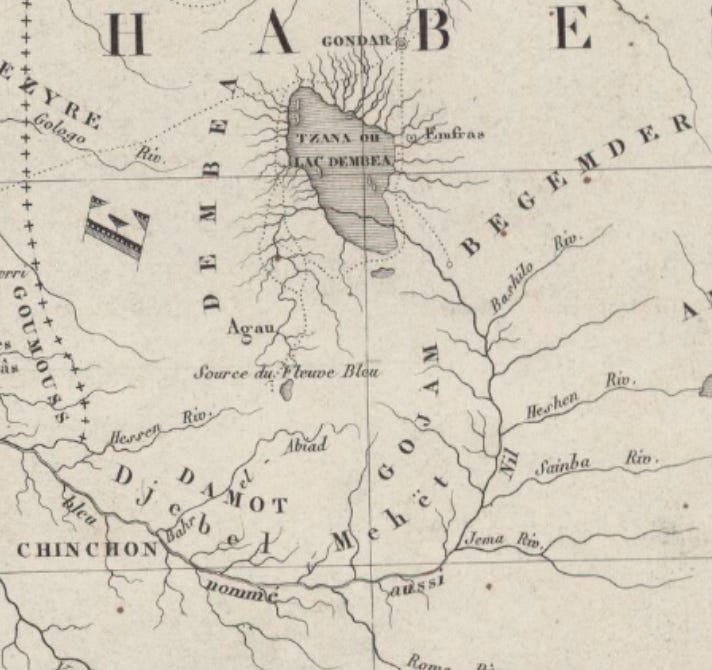
The court of the Prince, son of the governor Ras Hailou of Gojjam Country in Abyssinia (Ethiopia), is all summoned.1 The Dwarf Court of Justice is what I call the importance of the sacred in matters of adjudication in Gojjam. The figure of the dwarf or the court jester as the literal seat in the proceedings manifests the divine and material power of the Prince.
Every travel account needs a sensational account. After all, the public must buy books. And this is Marcel Griaule’s first fieldwork whale. Now, we are ready to begin.
The criminal, no longer assumed to be innocent in this account, after all, he was caught red-handed shooting at the Prince and falling into the bosom of the tree he was atop. Unsurprisingly, he received heavy blows when he was pushed towards the dais of the Prince.
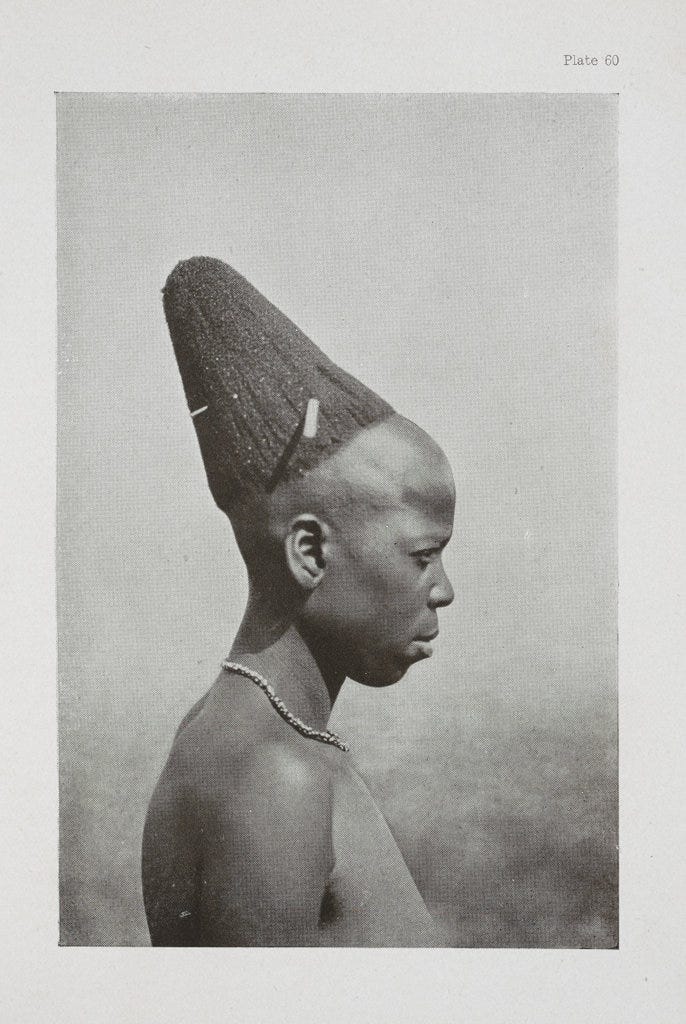
The man bore a heavy stone on his neck; he had chains on his wrists, which joined, on the one hand, an iron collar, and, onthe other, rings on his feet which were bound together by a single link. He bent towards the bed the austerely solemn head of the Jew of the Passion; his head was haloed with long crisp hair dressed straight on his head in the ancient mode of true warriors and hunters. He had the bright complexion which the Abyssinians call red.
Griaule, p. 158
The stream of spectators at times struck the prisoner, who had to jump forward in order not to fall. Slowly, with short steps which made the rivets rattle, as he approached the Prince. The crowd surged to ogle, breaking the reed doors and tearing a folding door loose. Griaule saw a “white crowd like a raft in the sea.” The hall was hushed.
The examination was conducted by a magistrate but the prisoner would only look at the Prince as he responded.
Who are you?
Dog!
Whose son are you?
Dog!
Where do you come from?
Dog!
And on and on, the prisoner continued to respond with ‘dog’ as answers as he faced only the Prince. The guards forced him to bend his neck.
By the Trinity, stop your abuse and answer!
Dog!
Driven by frustration, the magistrate “gasped for breath and no longer closed his mouth after a question.” It was into this that the prisoner spat into the magistrate’s mouth before he looked the Prince. The magistrate intoned
Slayer of Kings! Disturber of customs! You have broken the luck of the country!
Dog!
And so the questioning continued with no answers. Griaule could not track what was happening as the prisoner spat sideways, his answers whispered, then violently retorted, until his resignation to his fate. To which he answered his final, “dog!” before capitulating to the process.
You shall have my soul, said the accused gently.
And so the useless dance between the magistrate and prisoner continued with Griaule describing the scene as one of a high-strung magistrate and a placid criminal. The roles were now reversed.
The crowd thought the magistrate silly while the elders, wrote Griaule, couldn’t help but wonder how the head of the prisoner still remained. In the meantime, there’s a lot of drama among the crowd, with one almost falling atop a pile of bones, as the people occupied all the spots to view and hear the spectacle.
The magistrate, we now understand is an orator of magnitude. The adolescents were used to poetry from the court. The military was used to the merriment and jokes of the violin players. This time they were floored. Perhaps it was the “archaic and pedantic forms of the language” or the “internal plurals, unusual feminines and frequentives.” On top of this, the praise to the Prince, everyone knew was just skillful calculation on his part. It all ends with his final sentencing,
Death by fire, in muslin.
The sentence was unusual. It is usually only given to those who committed regicide. The eunuchs stopped the noise. The Prince was not yet the king and the kung was not dead. The Queen Mother tried to dissuade her son the previous night against this sentence that only his father could receive. Yet, the Prince refused to budge from his decision—I shall be king one day, he replied. And so everyone else around them, the bakers, the guards, and the servants all deigned to ignore the conversation.
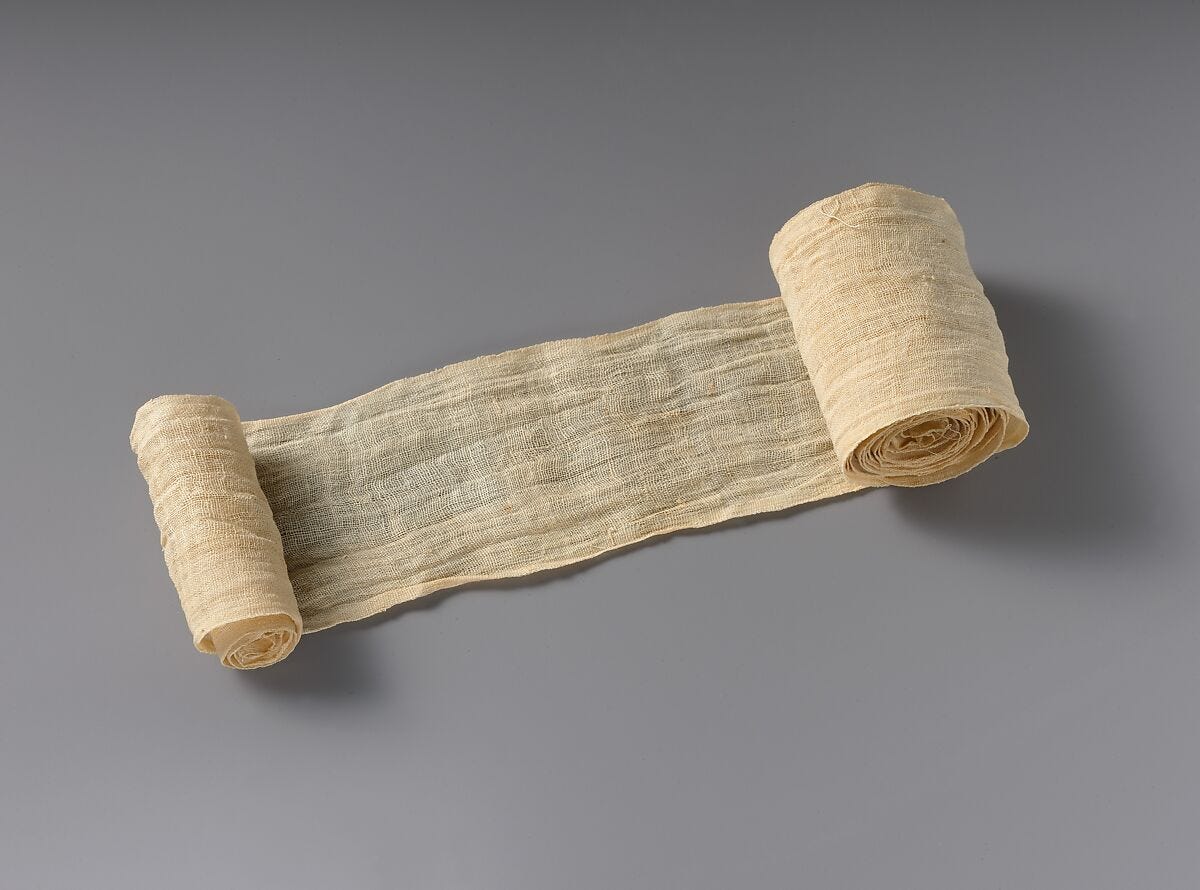
The final sentence was not a surprise. The ordainer already prepared the braziers in the “hot house,” a hut with a low opening used by the Prince during colder winter mornings. There, a large kettle is boiling a malodorous liquid stirred by two Goum slaves wearing corded white cotten around their loins. They were stirring in bright yellow wax, perhaps beeswax, as honey dripped. Occasionally, they licked their fingers. Finally, they unspooled thin muslin cloths, white almost cheesecloth or drape quality, into the kettle to have the wax set on it. This will be the muslin that would be wrapped around the prisoner.
The prisoner, fully naked, was knocked out cold as the six eunuchs prepared the condemmed man.
With the muslin, from which scales of wax still dripped, they wrapped both legs separately, being careful to leave the top of the mid-thigh free. In this way they avoided for the patient the unbearable pain which would have prevented his holding himself erect…The body was less easy to dress; it had to be raised every time so as to pass the ball around…for only the eyes and nose in his face were free; the rest of the head had disappeared under several layers of the bands…The hollow of the neck had been entirely filled, and the rolls went around the trunk, imprisoning the arms in the mass…They placed him upright, and he remained in that position.
Griaule, p. 166
Griaule likened this to a suit of armour in the Middle Ages or an armless Michelin man. They marched him as the prisoner broke the rolls by his knees. At the cenre of the counicl stood the Prince surrounded by his dignitaries. The prisoner stood before the Prince and behind him is a large circle of fire lighted by cedar. The people smelled the perfume of honey from the human candle.
Heat, the Prince shouted.
Two eunuchs shoved the man into the poor man’s fire and stepped away to watch. One of the Whites (I am unsure whether it is Griaule or his colleague Marcel Larget) fainted at the sight. Everyone else—the Prince, the dignitaries, Wouddie, the dwarf, breathed short breaths through their mouths.
![Claudii Ptolemaei ... opus Geographię [translated by J. Angelius] ...](https://substackcdn.com/image/fetch/$s_!TWkK!,f_auto,q_auto:good,fl_progressive:steep/https%3A%2F%2Fsubstack-post-media.s3.amazonaws.com%2Fpublic%2Fimages%2F1999988e-50a7-4c76-a2ef-3212a483b673_1024x955.jpeg "Claudii Ptolemaei ... opus Geographię [translated by J. Angelius] ...")
Griaule described the layers of smell and sound in the hall. Though he was enmeshed in honey, Griaule knew that this was the poorer quality of honey, “thrown regretfully by the tax into the government jars” smelling of eucalyptus and euphorbia-candelabra. It smells of burnt honey. Still, it is honey, he attested, gathered from the warmer valleys between sycamore trees. It contrasts with the stench of sweat and rancid butter applied on the hair of the people. You can hear the criminal shriek in spite of the gag sounding like hyenas feasting on the carcass. The honoured guards surrounding the fire poked him, as a precaution, with their lances to keep him in the pyre. Both shouting and competing, resulting in canceling out the noise. In the end, the smell turned into what Griaule describes as a “peaceful odour of a church where a hundred women have offered virgin wax candles.” But without any redemption. This eventually will be replaced with the smell of roasted meat, hence the baying of the dogs. It made Griaule think of “the great feasts of meat around the fires of St. John.”
There’s something about the execution that pricks the mob. The guards and spectators were feverish with battle, honouring the Prince and the crowd jostling to view the macabre display of dying and death.
The crowd had become one group. They bruised the feet with unintentional blows of the butt and might have done it intentionally and no one would have said anything. Everyone was beside himself. The themes shouted rose on a foundation of murmurs which breathed impatience, rancour, and the grudges of a whole unlucky people; everyone wanted to be in the centre and go around that glorified and still-smoking corpse.
Griaule, p. 173
And so in the final fumes of the burning, functionaries displayed their allegiance to the Prince, hoping to catch his attention. The loudest praise was obviously performance.
Writing this as if it is true, to the extent that this happened, maybe not in Griaule’s time, this incident would probably sear into the eyes of the French reader. It has been a long time since France had a public execution. Michel Foucault in his Discipline and Punish, a study on penal power of the state, traced the outlaw of public executions on April 1848. That was the last time that public punishment was made visible to the public. This gaze has since been transferred to the trial. Foucault argues that in the concealment of the actual sentencing, the state washes itself clean of the penalty of justice and criminality by condemming man. Thus, it is the reverse, by making it very public and celebrated that power (and brutality) is established with the reigning monarch.
It is unsurprising that Griaule chose to include this account despite its questionable provenance. He ultimately borrows what power and shock that it produces to not just record the details of the justice system but also to garner attention to the research project. Perhaps, Vincent Debane, in his book Far Afield, was correct. It is so mundane out in the field that it is almost necessary to include such a tale.
The most impressive piece here is the three layers of smell of death by fire. It is a pretty good use of the senses to record the unfolding drama. Of course, I am skating around the horrible corporal punishment of a human. Though convicted of an actual crime, it still is shocking to witness a sentence we all clamour for—death to a fellow man.
Punishment’s stark description whets the appetite for the macabre by the reading public. I can tell you going through most of the chapters—nothing is happening. Without this, the entire novel is pretty bland unless you are interested in Abyssinia. In all my readings, I had never before encountered a similar account. Hence, it is unsurprising that this was questioned for its veracity. Like the modern tabloids, the travel account requires a jolt for its readers. And we all secretly relish reading true crime and horror. I know I am. Travel accounts are no different. Selling literary travel books require a sensation. This is it. Can you smell the honey?
Further Reading:
Clifford, James. 1983. Power and Dialogue in Ethnography: Marcel Griaule’s Initiation in George W. Stocking, Jr. (ed.), Observers Observed: Essays on Ethnographic Fieldwork, History of Anthropology Volume 1. Wisconsin: The University of Wisconsin Press. pp. 121-156.
Engelke, Matthew. 2008. The Objects of Evidence. Journal of the Royal Anthropological Institute 14: S1-S21. https://doi.org/10.1111/j.1467-9655.2008.00489.x (click the title to read the full paper on JSTOR)
Fabian, Johannes. 1983. Time and the Other: How Anthropology Makes Its Object. New York: Columbia University Press (see Chapter Three)
Foucault, Michel. 1977 [1995]. Discipline and Punish: The Birth of the Prison (Translated by Alan Sheridan). New York: Random House
Kuipers, Joel. 2013. Evidence and Authority in Ethnographic and Linguistic Perspective. Annual Review of Anthropology. 42:399-413. https://doi.org/10.1146/annurev-anthro-081309-145615 (open access)
The ongoing draft and outline of our project are available on our main page.
If you got this far, I appreciate it! If you find reading this worthwhile, it greatly helps my cause if you can share. My tip jar is open, but this newsletter will always remain free.
Contribute to my library access!
If you are new here, we have just concluded reading David Graeber’s Debt: The First 5,000 Years. My first slow read here on Substack in 2023 was David Graeber’s The Dawn of Humanity. Unique among his peers, Graeber asked the big questions in anthropology—how did people organise themselves and what were the values and choices they made. Sadly, except for a few scholars, we have stopped boldly asking who we are, why we are different, and where we are headed. We are changing this now.
Re-read the previous post:
Here’s an explainer taken from the previous post: This is the controversial truth chapter that French anthropology researcher, Vincent Debane, railed against Marcel Griaule. Debane mentioned that Chapter Six, Death in Muslin, did not happen. Well, in my first post on Abyssinia, I pointed out that this incident did not happen during Griaule’s trip. It seems that this story was recounted of an actual incident based on Jacques Mercier’s, a fellow contemporary French anthropologist of Ethiopia, investigation into Griaule’s research. In the footnote to Far Afield, Debane wrote that Mercier attested that historians accepted the truth of the incident and it was attributed to Menelik and how he punished a rebel, Bezzabeh.
As Debane argues, since nothing seems to happen in the field, this chapter gives you a big splash of an incident in an otherwise mundane situation. Plus, the readers lapped this up; this was serialised in the public press as part of the book promotion.
Comments
Nothing yet. Say the first thing.
Sign in to join the conversation.