
This one took a while to write. The most personal stories are the hardest to tell, particularly when the emotion is still present and deep. It’s also a bit of a long read. Use this Table of Contents to navigate to the sections you are most drawn to.
Story: A Tale from the Table of Stormy Weather (~10 min. read)
Table Setting: Resources for Grieving & Transitions
Letter: For Ernest
Menu: A Very Good Boy’s Last Supper (for Paid Subscribers)
Recipe: Roast Duck with Dried Fig, Prune & Lapsang Souchong Tea Jam Glaze Over White Beans
Recipe: Roast Cauliflower with Gremolata
Recipe: Puppy Love Yogurt Panna Cotta with Ginger (also available publicly in Vol. 12)
Table Setting: The Care & Feeding of Your Canine
It’s been a stormy season. Sometimes you can sense it coming — a change in the wind, the earthy scent of rain, the crisp hush of snow, a gathering darkness. Some days, the storm catches you without an umbrella.
This season started for me last spring with cryptic messages, my parents’ absence from an important family occasion, late-night conversations, and early-morning calls — trouble in the air. My Mom chose religion over connection, but that’s how we learned that my Dad’s health had taken a dive. My siblings and I took a pause during my brother’s wedding and belted ourselves together. You don’t stop the party when the rain comes, but it does change the mood. You keep an eye on the sky.
Over the next several weeks, we coordinated emergency travel, phone calls, and doctors’ appointments. Assess. Support. Check in. Hold your breath.
I thought I was prepared by my previous experience in elder care. After all, I saved for college by working in a nursing home. It was only a couple of years ago when I was neck-deep in research assessing opportunities in elder care for a med tech investment client.
My aunt implied that as the eldest daughter, I would be responsible for elder care — a role she had played and seemed a little overwhelmed by. I’ve been bracing for that expectation for a long time. When the time came to take action, I found myself leaning into the familiarity of my eldest daughter role out of habit as much as a sense of duty — rushing to direct the effort, to coordinate, to be there as caretaker and project manager. Drop everything to support family when they need you — it’s just what you do for the people you care about most.
During this time, I was fortunate to be introduced to a grief counselor, James, who helped me see this time as an opportunity to grow together. I was delighted to see my younger siblings stepping up in their own ways — coordinating care, offering physical and emotional support for both of my parents. But it’s been challenging, in some ways, to step back. At times, I still see their younger selves even though we are all adults. It’s been a silver lining to witness who they’ve become, to make space for them to take point, and to find us growing closer through caretaking. Whatever storms may come, we’ll weather them together.
I worried more about my parents’ emotional state during this time. The transition from caregiver to needing support can’t be easy, particularly for someone like my Dad, who is used to being the one to rely on, the one who fixes things. I saw in him an unfamiliar frailty overtaking his ability to work through his daily to-do list. After our initial round of visits, I asked them to please keep us in the loop and let us know how we could help.
In this lull, I turned back to the matters of everyday — cooking and cleaning, seeking new client work, project planning, walking the dog. Things moved at their normal pace — fits and starts. Some days held progress and flow; others I felt distracted and blocked. On one afternoon walk, a summer storm caught my pup, Ernest, and me by surprise. He managed to wriggle out of his leash and dash down the street as I desperately called after him. I was sure that would be his end until I found him, impatient and safe at our door.
It seemed like things were moving in the right direction. But by September, it all took a turn for the worse. My Dad’s sleepless nights fighting RLS symptoms were bad enough that he was hallucinating, falling asleep standing up, and unable to drive or ride comfortably in the car for longer than ~15 minutes at a time. He had become a regular in the ER and PT with cuts, injuries, and broken bones. It was clear my parents needed additional support.
Two of my siblings were able to make it there first, tackling the most urgent needs: assessing home fall risks, monitoring medications, and finding home care. I came next with six weeks blocked off, an open-ended return ticket, and a rough plan. In the month before I arrived, my Dad had three falls, leaving him in a walking boot and orders to stay off his broken foot. Over dinner, the night after I arrived, we talked over the challenges they were facing and finished sketching out a plan together, including everything from home safety modifications and fall monitoring devices to support with doctor’s appointments and medication, and documenting wishes for long-term care and end-of-life planning. Like my Dad, I work better with a goal, a plan, and a to-do list.
The days were full — light sleep with an open door so I could listen for my Dad and get up as soon as he did, trips to doctors and to the store, cooking and cleaning, eradicating a pantry moth invasion, planning for Thanksgiving, and lots of long, deep conversations. The days started with a large pot of coffee for my Dad and me. He was always an early riser, but the pre-sunrise hours were a challenge I had to plan for. I cooked and baked things I knew he would like, and things I hoped he might. My sourdough loaves and bread pudding were a hit; salads were fine. But my default didn’t include meat, and I’d forgotten that salt was added at my parents’ table, but not in the pot — you learn so much about a person when you cook for someone with different habits and tastes. The days were tiring, challenging, and unexpectedly heart-filling. It felt like I was growing closer to my Dad than I had ever had the opportunity to before, and growing a deeper understanding of my Mom. Some days I would see the dynamics of my childhood playing out once more, and some days felt like basking in the rays of a new understanding of each other. Those days together were a gift, even though they felt a bit like doggy-paddling.
And then, during a particularly challenging morning, my husband called — our little pup, Ernest, had just been diagnosed with lymphoma. The prognosis wasn’t good. We were told to expect to see him decline quickly. We had a few weeks to a couple of months. We could do chemo, but we were looking at extending his life by a matter of months. It seemed cruel to put him through all those vet visits — the poking and prodding, the meds. We couldn’t put our sweet little guy through all of that. We opted for prednisone to help him keep his appetite and energy up, to keep him comfortable, and a promise that my husband would send me lots of photos. He’d let me know if Ernest took a sudden turn for the worse. I still had several weeks, maybe a month, before I could return home. Attention splintered, like lightning — torn between the ones who needed me.
Ernest meant so much to me, to my relationship with my husband. It was a happy accident that we wound up with him — he had been meant for another couple first. We brought him home the year I had a couple of minor health scares, the year Danny proposed, the year we were married. We called him Ernest because he was… and we were too — about our hopes for the future and building something of a life together. This time with my parents was the longest I had been away from him, from Danny, since that year.
I’d catch my Dad watching cute Facebook videos of children and Golden Retrievers — ones who looked patient and attentive, like his last dog, Duke. He tried to comfort me in his own way by mapping out the steps to take at the end. Too soon. I snapped back in the moment with neutral words, but a tone that said, “Back off!” Mom always knew better how to comfort in the moment. I hoped my Dad would laugh at the irony of the thought that flashed through my brain: ‘How would my dad feel if we were talking about his end that way?’ I knew he meant well. I hoped while I was there, we could plan for fading days and the legacy he wanted to leave behind. I hadn’t anticipated needing to do that for my dog.
By mid-December, things were stable enough with my Dad’s sleep, healthcare, and support tools that I could return home, and keep things going with regular support calls, our shared calendar, a few tech gadgets, and to-do lists. I could turn my attention back home. Ernest still trotted to the front door to greet me, though he looked somewhat smaller — emaciated despite his newly rounded belly. He still acted much the same, just hungrier and thirstier than usual, thanks to the prednisone. But after taking him to visit my mother-in-law for the holidays, he really started slowing down. He was more tired, more grumbly than usual. He didn’t want to be touched. He seemed both too hot for the weather and the season. He was up at 2 am to beg for another meal, to go outside, to vomit, but he would avoid his morning walks, tapping at my shoulder to let him burrow under the bedcovers and hide. We started reaching out to the home care services our vet recommended to figure out what to watch for and when to schedule euthanasia. It was almost his 12th Birthday, and it was almost the end of our time with him — far too short.
His favorite things were food. His favorite times with us were spent in the kitchen, in the yard, where we would sit with a coffee or drink, and he would chase squirrels, at a restaurant, on walks where he could visit his favorite people and shops — the ones that kept treats for him. We started planning out his favorite treats and meals — yogurt, noodles, cheese, steak frites, roast duck and cauliflower, crunchy bread crust, flaky bits of croissant. He wasn’t as interested in his normal food, so he may as well have what he liked and would eat.
The last few days with him, and those after he was gone, were the hardest. There’s a feeling of failure as well as grief in losing a dear little one who is dependent on you. We may not have children, but Ernest was the closest we had. Our house and our lives feel so much quieter without him. On some of those early days, it felt like I could drown in the dark, endless water of grief. But the weeks went by, and the coldest, snowy days little Ernest would have hated have melted away.
It’s spring once again. The first brave crocuses and daffodils are in bloom. Our home is a little emptier, but my heart is full with the memory of our days together through a stormy season.

I met James Philipp at the most serendipitous time. Days away from leaving town to support my parents through my Dad’s health crisis, my head whirring with worry, Mikki (the fabulous Fabrik DUMBO Community Director) suggested I come to his workshop: Facing the Grief of Aging Parents. My expectations were completely upended during our conversation. In his work as The Turbulence Coach, James helps folks navigate difficult life transitions, drawing on his experience losing his sister at a young age. James’ warmth and empathy were palpable while listening to my concerns about navigating this life phase, and he helped me completely reframe this experience as an opportunity to deepen my relationships with my parents and siblings. It was exactly what I needed to hear and an incredible gift for navigating a turbulent time!
About James: James’s work was born from personal loss. After his sister died, he devoted his life to understanding grief and guiding others through the identity-shifting transitions that follow.
If you are navigating grief, aging parents, identity shifts, career changes, or another major transition, I couldn’t recommend James’ work more highly. James offers 1:1 coaching to help you move through change with steadiness and purpose — so you don’t just survive it, but actually grow through it. Learn more at TheTurbulenceCoach.com and through his newsletter In Transit which you can subscribe to below.
He also supports partners, friends, and family members who want to show up well for someone experiencing grief. You can download his free guide, Supporting Others in Grief: A Quick Guide, to get started.
Additional grief counseling resources recommended by James and others include:
The Dinner Party connects folks grieving a loss with other folks who are experiencing the same type of loss through in-person or virtual groups.
Death Cafes offer a supportive space to talk about death. Created by the UK-based non-profit Impermanence and available everywhere, search for (or host) a death cafe in your area.
Reimagine is one of the most interesting organizations I have come across in this space. Through their events, writing, and resources they aim “to help all people face life’s most challenging and isolating experiences, and channel them into meaningful connection, action, and growth.” That comes to live through collective and personal experiences to work through grief together and use it as a conduit for creation and connection. I have my eye on their group meditations, music, writing, and art workshops.
And if you need a little more support right now, plug in your headphones for this meditation on Love & Loss from Open.
It’s mental, emotional, relational, and administrative work to prepare for death.
Paperwork: As Ben Franklin famously quipped, ‘the only things that are certain in life are death and taxes.’ They both come with a lot of paperwork. Wills and estate planning are important to consider and communicate, but there is much more that can be done to ensure that your (or a loved one’s) wishes are understood and taken into account on the journey toward and after the end.
Buried in Work is an aptly named resource created to help you or aging family members organize all the paperwork for navigating the end of life into a neat set of binders. It’s not easy, or quick, but in working with my parents on their own set, it gives some relief that there will be a first place for my siblings and be to check for the paperwork and notes on my parents’ wishes when the time comes (hopefully not too soon). If you are planning for yourself or a family member, the Buried in Work guides, checklists, and directories are a great place to start wrapping your head about what you need to plan for and use as a first step to learn what questions to ask and where to look for support.
Trust & Will is a lightweight, but thoughtfully created service for creating wills and estate plans. I’ve been seeing it around for several years now, but really started paying attention after seeing it recommended by trusted credit unions while researching options.
Mental & Emotional Work: It’s arguably harder to work through the cognitive and emotional reality of loss. But this is a problem as old as people have loved, lost, and feared their own end. Looking to cultural, religious, and artistic traditions as well as looking to how other species process the seasons of life and death can give reassurance that you are not alone in working through this, and inspiration for finding a path to process difficult times that resonates for you.
Spring Renewal: Winter isn’t just a metaphorical season of darkness, hibernation, and death — it is the season with the highest death rates. While some of this difference in the modern climate remains unexplained, it can make traditional Spring celebrations of renewal even more meaningful for those of us who have experienced a loss in winter. Celebrations to mark the seasonal change from darkness to light, to mark the Spring as a period of renewal and growth have surprising similarities across time, cultures, and continents. The earliest celebrations were tied to the Spring Equinox and agricultural calendar beginning with the Mesopotamian Akitu festival and Egyptian celebration around the Flooding of the Nile (~3000BCE), and Aztec Tlacaxipehualiztli and Mayan Return of the Sun festivals. Common themes occurring in ancient and more modern Spring festivals include themes of death/rebirth and ritual sacrifice (featuring stories of figures like Osiris, Persephone, Kachina, Christ), fasting and clearing away old things (as in Lent before Easter and Ramadan before Eid) which may be woven into an element of fire or color (as in bonfires for Beltane/May Day, Easter candlelight vigils, Holika Dahan), and ritual meals (like Passover sedar, and Nowruz). Everything has a season. As we transition from winter to spring, consider leaning into spring rituals to grieve transition from grieving loss and find inspiration for a new season of growth.
Art of Impermanence: Like stormy weather and sunshine, no state is permanent. It’s an incredibly simple concept that can be difficult to remember and accept. Grappling with this concept is at the heart of practices like Mindfulness Meditation, Hanami (Cherry Blossom Festivals), and the Bhutanese ritual of Sand Mandalas. A couple of weeks ago, I was fortunate to attend an evening co-hosted by Culturally Curious Club focused on impermanence, where we made sand mandalas together, brushing the beautiful product of our effort away at the end of the evening. The most beautiful things are impermanent and worth the effort.
Memento Mori: In Ancient Rome, after a victory the triumphant general would be celebrated with a military parade. During the procession, a slave would ride behind the general, reminding him “Memento Mori” — “Remember, you will die.” It was a Stoic reminder to remain humble and focus on what mattered, as much as it was of the inevitable. Reminders of the inevitability of death as a means of focusing on the highest values in life is a theme carried prominently in Western religion and artwork since then. 4000 Weeks by Oliver Burkeman is something of a modern meditation on prioritizing what matters in the roughly four thousand weeks of the average human life.
Places of Contemplation: Churches, graveyards, and memorials can all be incredibly meaningful places to grieve or contemplate the flow of life and death. The Rothko Chapel is one worth seeking out as a non-denominational place to contemplate, grieve, or find spiritual solace. The chapel was commissioned and designed to house 14 of Mark Rothko’s Color Field paintings — inspired by the works Rothko had created for the Four Seasons Hotel (one of which is shown below). Created in the years at the end of his life as he struggled with illness and depression, all are dark, lit only by the natural light shining in from the skylights above. The impression is immersive and deeply personal. What I find in gazing at his paintings from the period encapsulates the abyss of loss in all its complexity — lonely, overwhelming, numbing, and if you can swim through the waves of grief… healing.
Learning from Animal Grief: While it’s unclear how other animals experience and process emotions, and how they may be similar or different to human emotions, there’s certainly some compelling evidence that other animals experience sadness from the loss of companions. Listen to this episode of Unexplainable as a jumping-off point for more on studies of animal emotion. The most interesting difference for me in canine relationships is the tie to scent. Because of dogs’ heightened sense of smell, they likely experience a companion leaving in a more gradual way — like a ghostly fading of presence after the companion has left.
It’s a gift to be able to plan for the end, even if it is wrapped in the most challenging ribbons of care and difficult decisions. As we were navigating decisions for Ernest, we felt lucky to have thoughtful veterinarians who helped us navigate possible paths and recommend end-of-life care. If you need additional support as an individual or family, enlisting an outside advocate may help.
Death Doulas are non-medical professionals who help support the physical, mental, emotional, and spiritual needs of patients and their families at end of life. They can help with practical matters like advanced directives and physical patient care, to being a caring guide for the patient and their loved ones. INELDA (International End of Life Doula Association) is a governing body that offers training and certification, and can help you find a death doula.
Pet Home Hospice, Euthanasia, and Grief Support:
Gentle Journey Vet Care offers home visits in Brooklyn, Queens, and Lower Manhattan for palliative and end-of-life care to help pets remain as comfortable as possible.
Paws at Peace offers at home quality of life assessments, euthanasia, cremation, and grief support throughout the 5 boroughs of NYC. They came to us highly recommended by our vet’s office, and after an initial call with a few services, we decided to work with them because of their high level of emotional sensitivity and support for pets and their families during a very difficult time. If you find yourself navigating end-of-life decisions with your pet, I couldn’t recommend them more highly. Their doctor took care to make sure Ernest was as comfortable as possible, gave us plenty of time and space to hold and say goodbye to him, took a paw impression and a lock of fur for us, and helped me swaddle him snugly in a star-covered shroud and carry him out to her car for his final ride. They even checked in with us a couple of weeks after with resources for grief support. They have a therapist on staff for pet loss grief counseling, but also recommend outside resources.
AMC Pet Loss Support Program is another resource the folks at Paws at Peace recommended. The Schwarzman Animal Medical Center is a full-service animal hospital and rehabilitative care center on the Upper East Side of Manhattan.
I may be a little more sentimental than most, but I love keeping little mementos from loved ones to feel closer to them and to the qualities I admired in them. Creating little memorials of the ones we’ve lost is a beautiful way to work through the pain of loss and be reminded the time you had together. The way you process and remember may not look like mine, or like anyone else’s, but it’s meaning for you is what makes it important. Here are a few favorite, recent examples for inspiration.
Artifacts
The Heart-Shaped Tin by Bee Wilson: Relationships really do live on through the artifacts they leave behind. For Bee Wilson, and many of the people she profiles in her latest book, The Heart-Shaped Tin, all the complicated memories and feelings of relationships live on in cherished kitchen objects like the title cake tin in which she baked her wedding cake. This was one of the most touching books I’ve read recently, and a beautiful reminder that sometimes the things we hold on to can help us work through the loss of relationships and come to a place of accepting them with all their joys, disappointments, and complications.
Framebridge is a custom frame shop that will help you create a custom frame for any artwork or mementos. We’ve turned to them many times over the years to frame favorite prints, but they mount and frame objects, as well.
Creative Work
Hamnet: Whether you are a fan of The Bard’s work or not, watch Hamnet. The Academy Award winning movie about the personal loss that may have inspired Shakespeare to write Hamlet is a beautifully, tragically moving story and a reminder of how we can alchemize loss into something beautiful to honor the memory of our loved ones. You can find it streaming on Peacock.
Animal & Human Portraits: When everything is “content”, photos and videos feel both ephemeral and disposable. An artist-painted portrait of a pet or loved one feels precious, intentional, maybe a little silly, but I’d argue a beautiful memorial in line with the intention of portraiture before the ease of modern photography. A few artists I have my eye on for a future memorial portrait include: Desmond MacMahon, Marianne Huntington, Rory Gevis, Carly Kuhn.
Storytelling
Story Tell: Before media, before the written word, there were stories. Storytelling is a powerful way to create meaning and keep memories alive. A couple of weeks ago, I attended an incredible evening of storytelling and art in collaboration with Caitlyn of Culturally Curious Club focused on the theme of Impermanence. There were stories of changing relationships, evolving self-perception, deaths, and everything in between — nothing too polished, all heartfelt. Rachel, the founder of Story Tell, created a space where all are welcome to share and be celebrated for their stories. Where The Moth is for polish, Story Tell is for real, raw, off-the-cuff stories still in development. Each gathering focuses on a different theme. Don’t miss the next Story Tell on April 14th in Brooklyn — Story in Sound.
Storyworth: And if you would like to create a shared book of stories for loved ones, Storyworth offers a service to help you create a beautiful, hardcover book of stories as a family keepsake.

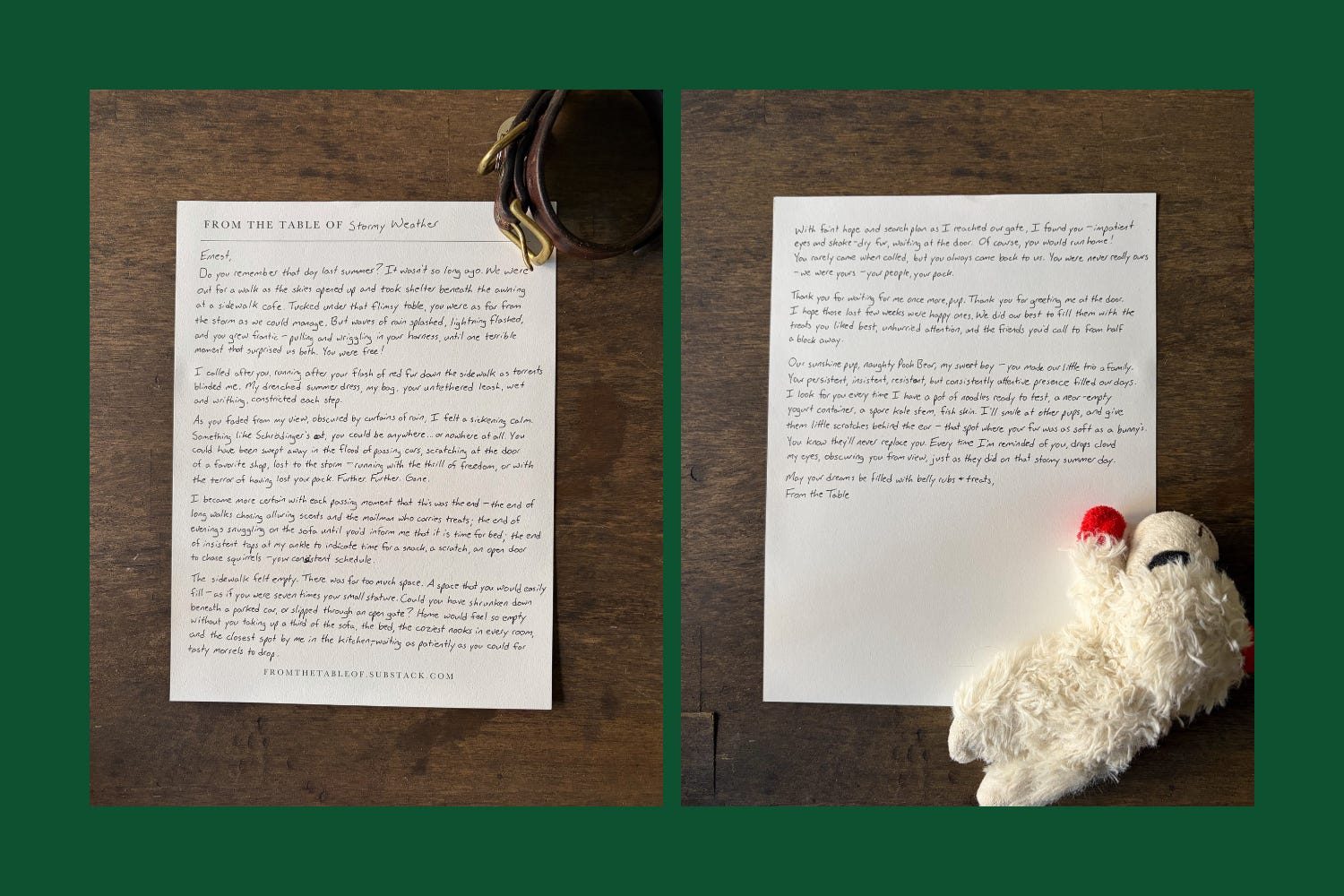
Ernest,
Do you remember that day last summer? It wasn’t so long ago. We were out for a walk as the skies opened up and took shelter beneath the awning at a sidewalk cafe. Tucked under that flimsy table, you were as far from the storm as we could manage. But waves of rain splashed, lightning flashed, and you grew frantic — pulling and wriggling in your harness, until one terrible moment that surprised us both. You were free!
I called after you, running after your flash of red fur down the sidewalk as torrents blinded me. My drenched summer dress, my bag, your untethered leash, wet and writhing, constricted each step.
As you faded from my view, obscured by curtains of rain, I felt a sickening calm. Something like Schrödinger’s cat, you could be anywhere… or nowhere at all. You could have been swept away in the flood of passing cars, scratching at the door of a favorite shop, lost to the storm — running with the thrill of freedom, or with the terror of having lost your pack. Further. Further. Gone.
I became more certain with each passing moment that this was the end — the end of long walks chasing alluring scents and the mailman who carries treats; the end of evenings snuggling on the sofa until you’d inform me that it is time for bed; the end of insistent taps at my ankle to indicate time for a snack, a scratch, an open door to chase squirrels — your consistent schedule.
The sidewalk felt empty. There was far too much space. A space that you would easily fill — as if you were seven times your small stature. Could you have shrunken down beneath a parked car, or slipped through an open gate? Home would feel so empty without you taking up a third of the sofa, the bed, the coziest nooks in every room, and the closest spot by me in the kitchen — waiting as patiently as you could for tasty morsels to drop.
With faint hope and a search plan as I reached our gate, I found you — impatient eyes and shake-dry fur, waiting at the door. Of course, you would run home! You rarely came when called, but you always came back to us. You were never really ours — we were yours — your people, your pack.
Thank you for waiting for me once more, pup. Thank you for greeting me at the door. I hope those last few weeks were happy ones. We did our best to fill them with the treats you liked best, unhurried attention, and the friends you’d call to from half a block away.
Our sunshine pup, naughty Pooh Bear, my sweet boy — you made our little trio a family. Your persistent, insistent, resistant, but consistently attentive presence filled our days. I look for you every time I have a pot of noodles ready to test, a near-empty yogurt container, a spare kale stem, fish skin. I’ll smile at other pups, and give them little scratches behind the ear — that spot where your fur was soft as a bunny’s. You know they’ll never replace you. Every time I’m reminded of you, drops cloud my eyes, obscuring you from view, just as they did on that stormy summer day.
May your dreams be filled with belly rubs and treats,
From the Table
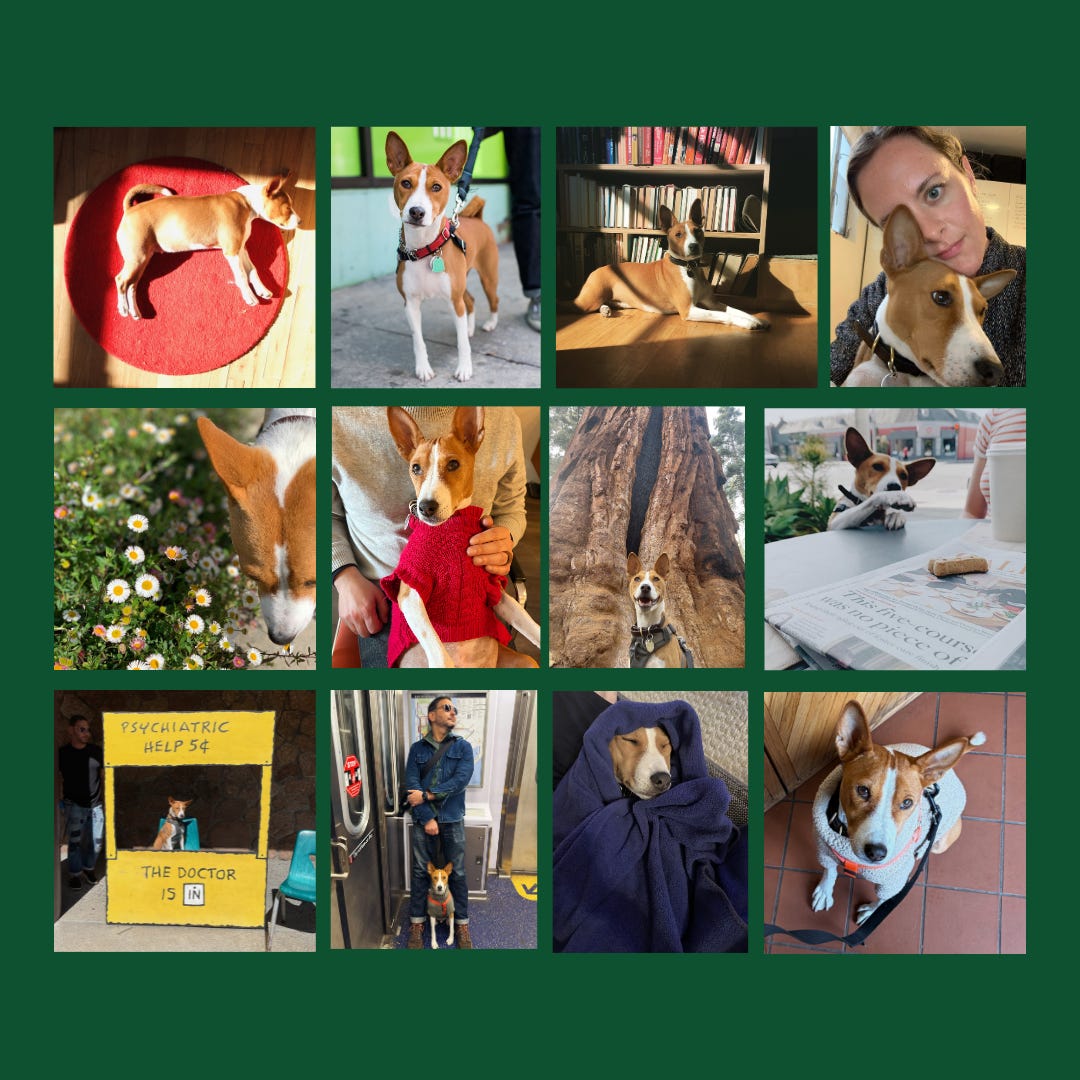
In rows from the top left:
Ernest’s favorite spot to nap in the afternoon sun as a very young pup
Photographed by The Dogist, April 4, 2016
Dapper in dappled light, he seems well-read
My work-from-home companion insisted on joining every call
Stopping on a Spring morning to smell the flowers
At the table with us in his Pooh bear sweater
On an adventure in Yosemite amongst the redwoods
Couldn’t wait any longer for his treat during our morning coffee date
Worth every cent — a very good listener
Where next? He was a pro at finding a seat on the subway.
Swaddled in blankets between us on the sofa for evening snuggle time
Waiting patiently in line at the bakery for his Birthday treat — a ham and cheese croissant
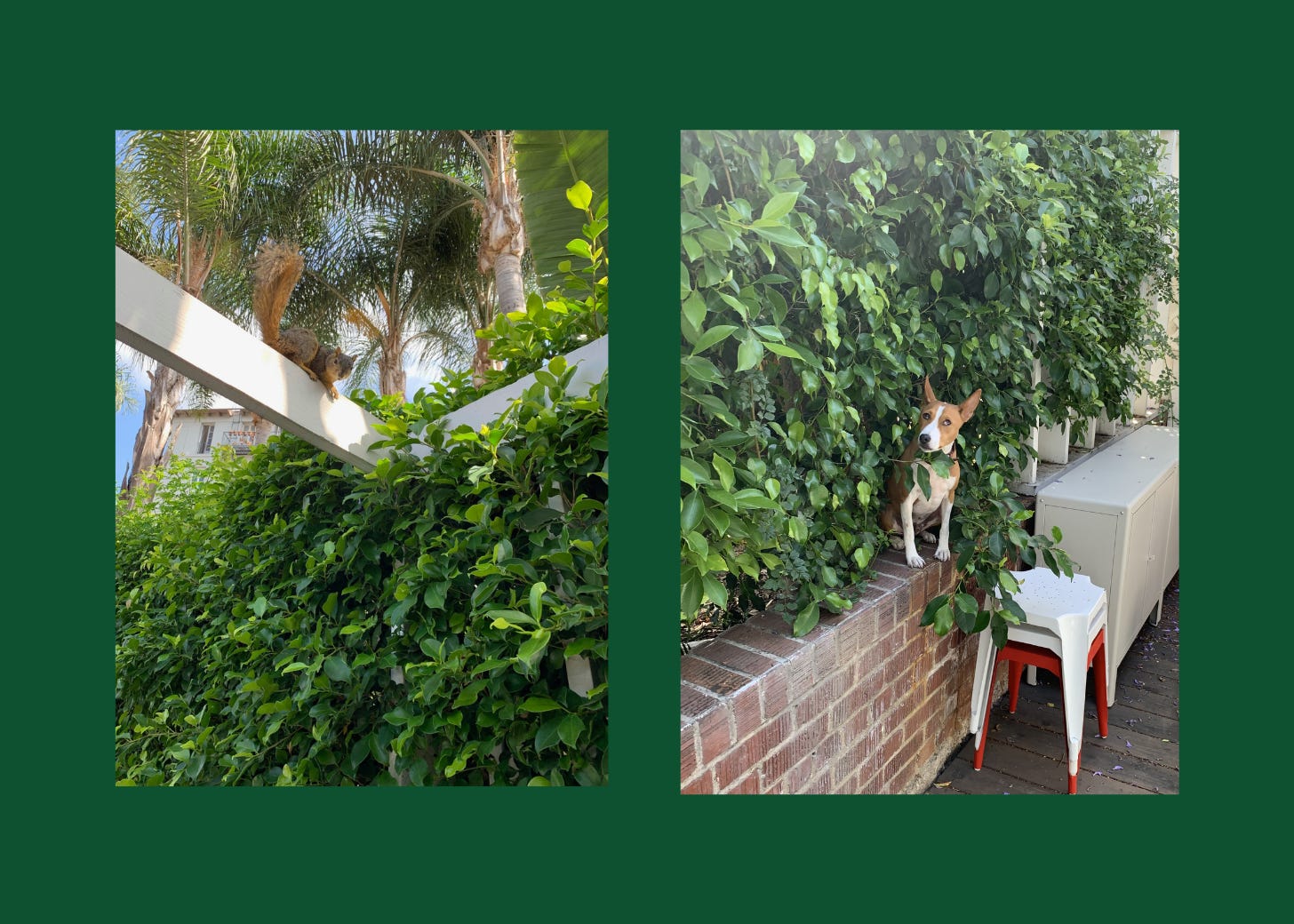
Keep your eyes peeled for the walk-on who thinks he’s both a production assistant and the star of the show.
Take a Break: James Becomes A Dog Groomer
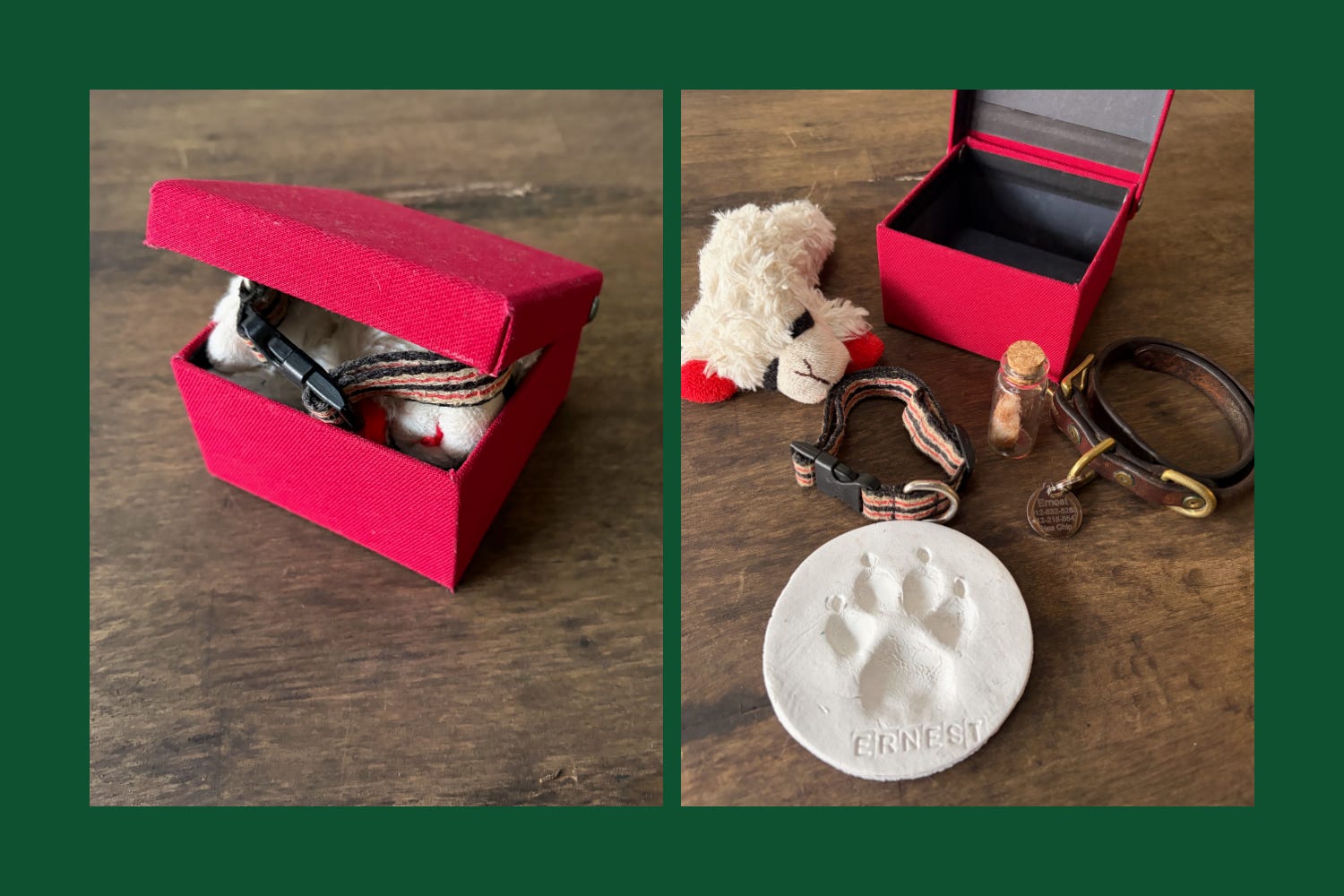
Does this story bring up any memories, emotions, or sensations for you? Just as scent, taste, and sound are powerful ways to access memory, writing is a powerful way to process thoughts and emotions. I’d like to invite you to use this prompt for your own private writing or creative process. If you’re inclined to share, I’d love to hear what came up for you! Leave a comment or send me a private note.
If you had the opportunity to share one last meal with a loved one, what would you serve?

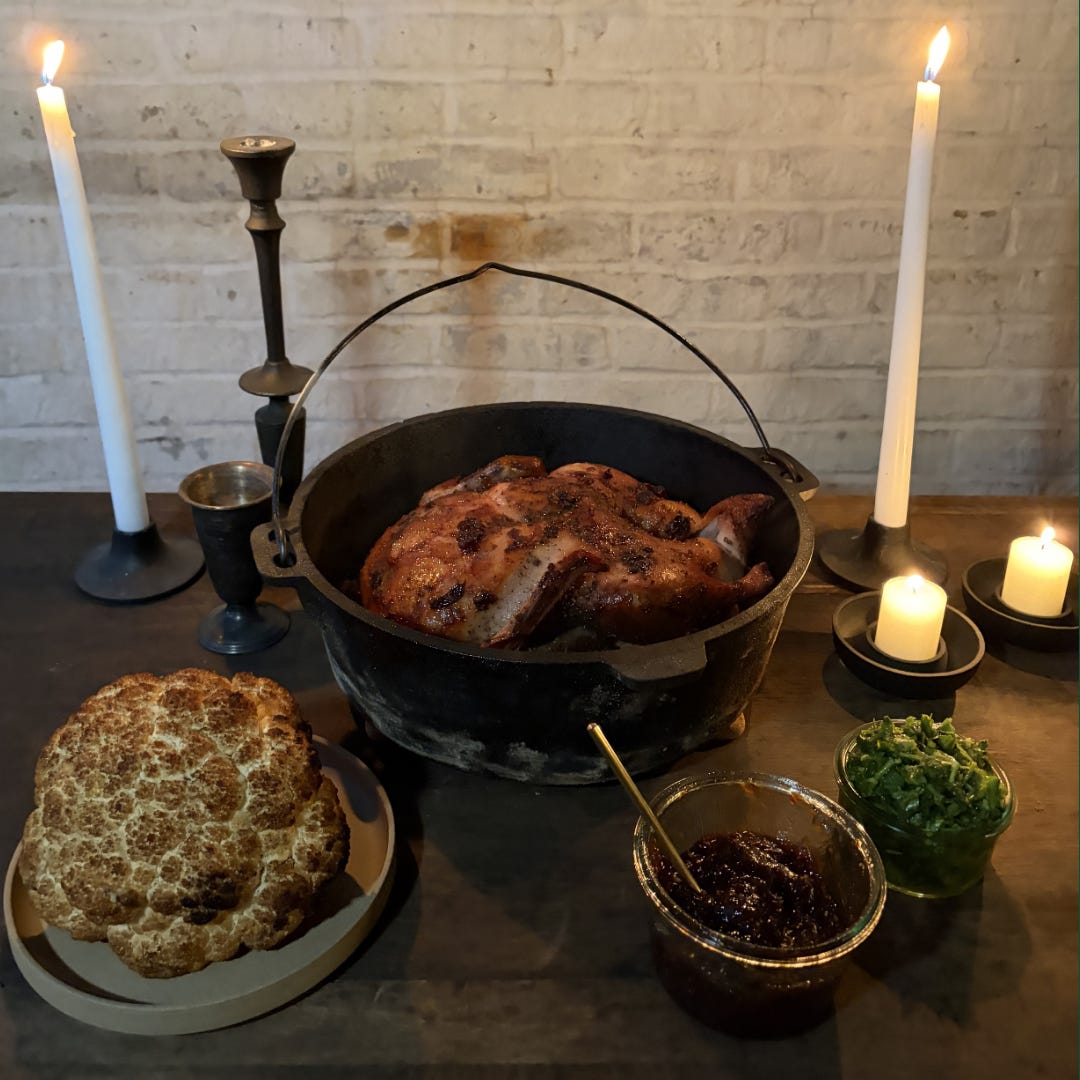
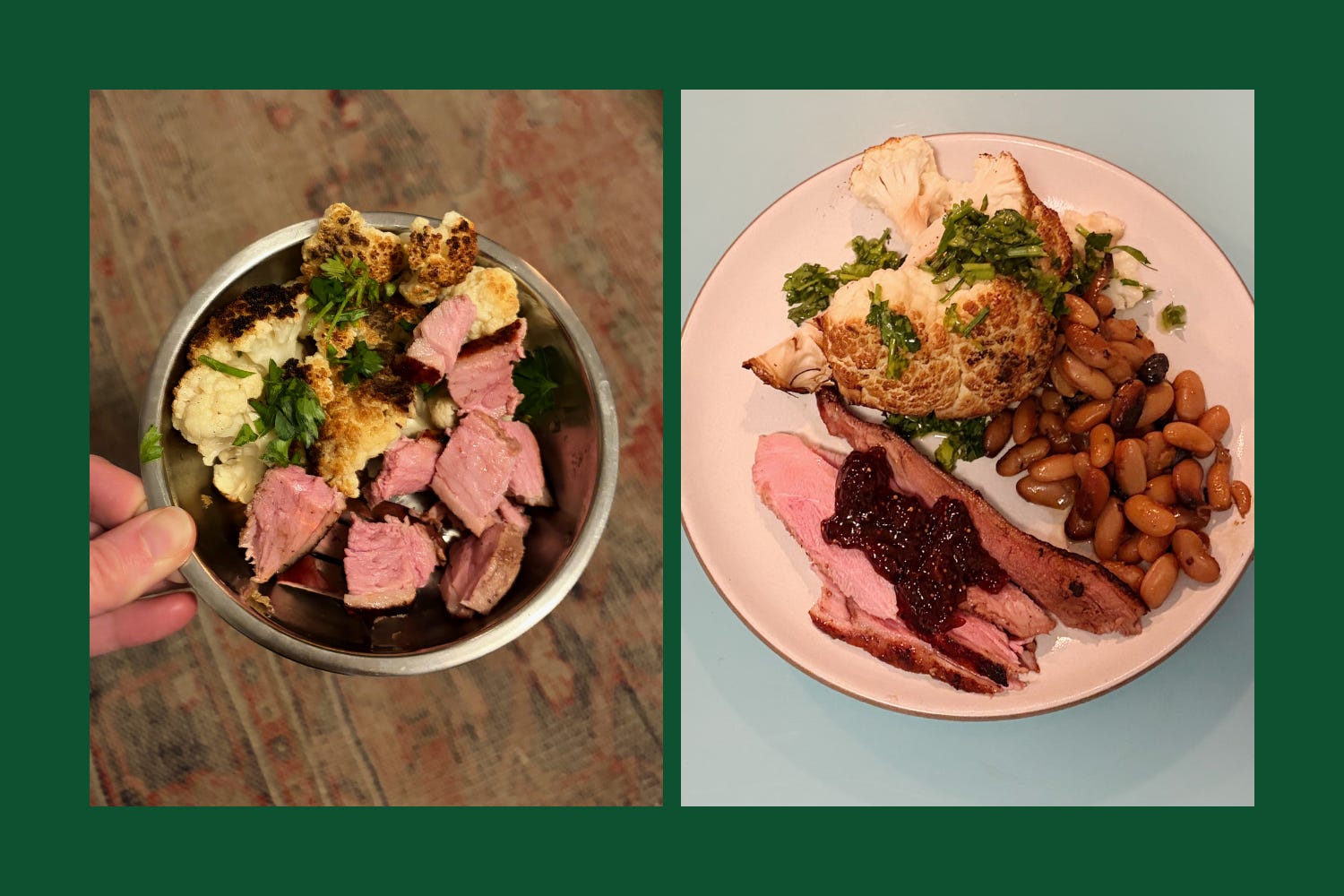
In some ways, it’s a gift to know the end is near. We spent Ernest’s last days watching for changes in his voracious appetite, energy level, and happiness. We tried to fill his last “good days” with as many of his favorite things as possible. As his became more lethargic, avoiding morning walks and skipping regular meals, we planned out a last big, indulgent dinner for him filled with things he loved — roast duck and cauliflower, prepared on the grill during a relatively warm winter day to spend extra time together in the yard. These are just as easily roasted in the oven as in my recipes below. Take advantage of one of the last cold evenings of early Spring to make this for a warm, comforting, indulgent meal before warmer evenings demand lighter fare.
Roast Duck with Dried Fig, Prune & Lapsang Souchong Tea Jam Glaze Over White Beans
Roast Cauliflower with Gremolata
Puppy Love Yogurt Panna Cotta with Ginger
Comments
Nothing yet. Say the first thing.
Sign in to join the conversation.