
Friends & Neighbors,
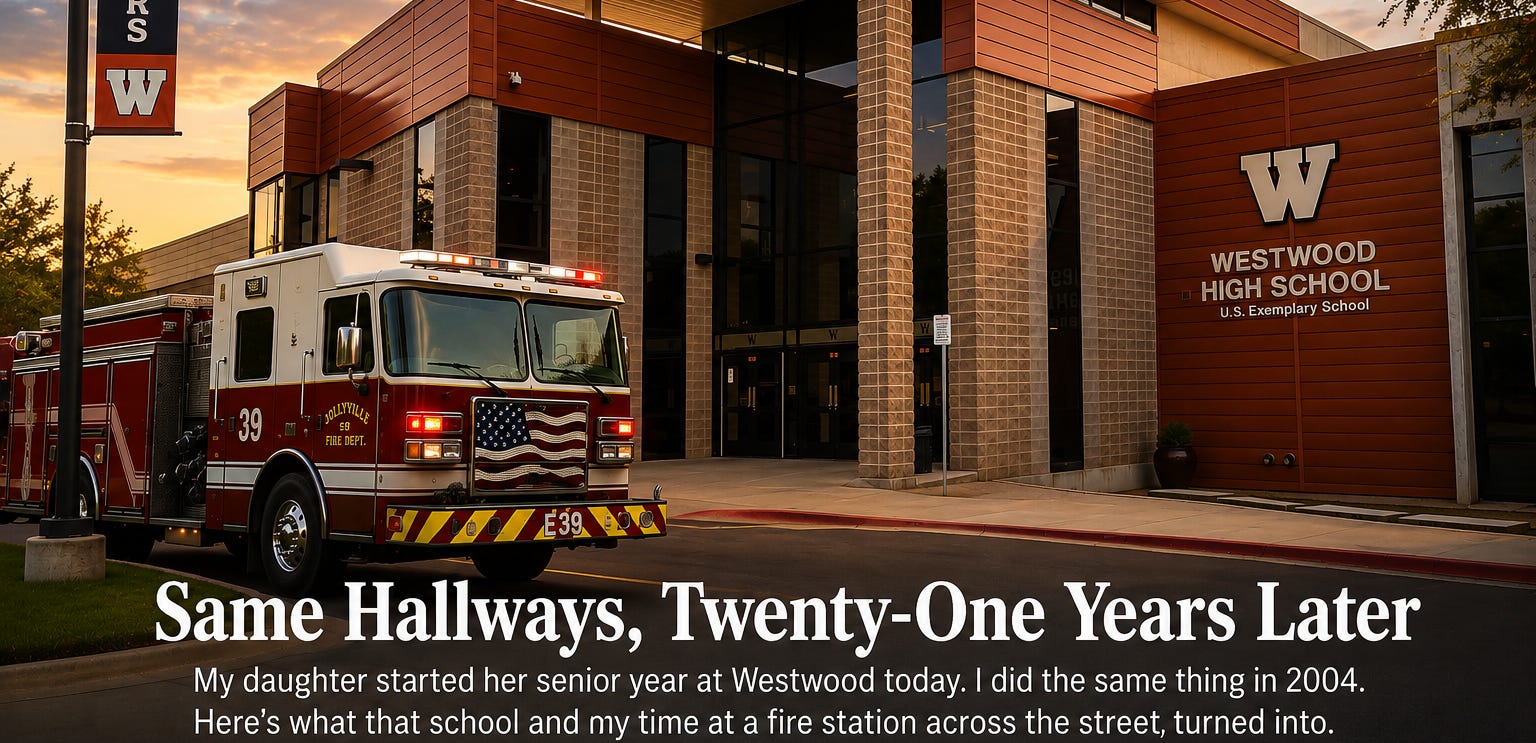
This morning, I said goodbye to my daughter in our front yard as she headed off to the first day of her senior year at Westwood High School. I’d actually already been back on that campus the day before, for her basketball team meeting. Twenty-one years ago, almost to the week, I was doing the same walk she will be doing, into the same building for my own senior year. Same hallways, same burnt orange and white, same Warriors on the wall. Standing outside that building yesterday, I lingered a little longer than I needed to.
I’ll admit I got a little emotional. I wasn’t planning to. It just happened.
I want to tell you about that school today, both its history and mine, because the two turned out to be more tangled together than I ever appreciated as a seventeen-year-old.
Westwood opened in 1981 at 12400 Mellow Meadow Drive, in the Anderson Mill neighborhood of northwest Austin, built to keep up with a wave of suburban growth that Round Rock ISD could see coming. It’s been there ever since, Warriors, burnt orange and white, University Interscholastic League Class 6A.
What Westwood became over the following decades is a little more than the standard suburban high school. It houses one of the district’s International Baccalaureate World School programs, it regularly produces some of the highest numbers of National Merit Semifinalists in the state, and it runs an Academy Program that lets students specialize early across five tracks: Science, Technology, Engineering, and Math; Business and Industry; Visual and Performing Arts; Health Sciences; and Public Service. That last one, Health Sciences, is where I spent most of my time there.
I went through Westwood’s Health Science Academy, and by my senior year, I was enrolled in an EMT class. I want to be clear about what that meant at seventeen: it wasn’t a career day or a guest speaker. It was real coursework, toward a real certification, sitting next to classmates who wanted to be nurses or doctors or, like me, first responders. As far as I know, Westwood’s Health Science pathway still runs a version of this today, with certifications available in CPR, CERT, and pharmacy technician training layered on top of the classroom work. Twenty years ago, mine was built around emergency medicine specifically, and it changed the entire direction of my life before I’d even graduated.
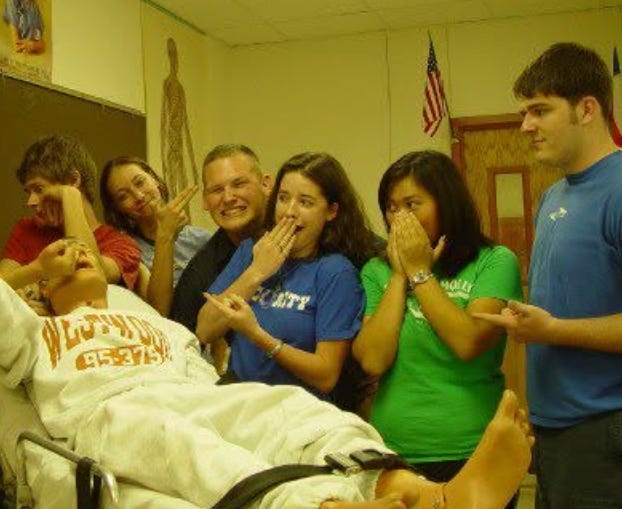
While I was taking that class, I also joined the Jollyville Fire Department, right across the street from campus, as a Fire Service Explorer.
I should be honest about why I actually walked over there in the first place, because it wasn’t some noble calling. A few people in my class had joked about the Explorer program, treating it like a dress-up club where you got to pretend to be a firefighter rather than a real pathway into the field. That got under my skin. I went over there specifically to prove them wrong, that this was a real career with real training behind it, not a costume. I’ve been hard-headed about exactly this kind of thing my entire life, and I’m not sorry about it. I just didn’t expect proving a point to my classmates to end up deciding the next twenty years of my life.
I want to tell you a little about the department I walked into, because Jollyville Fire has a genuinely scrappy origin story that most of the neighborhood has probably forgotten.
Jollyville Volunteer Fire Department started in the summer of 1975, after a house fire destroyed a home in the Forest North Estates subdivision. A group of 12 residents from Forest North and Anderson Mill met afterward and decided the neighborhood needed its own fire protection. They took out a bank loan, bought an Army surplus 750-gallon tanker, and, because surplus military vehicles had to be repainted, did the job themselves with a paintbrush and a bucket of whitewash. They borrowed an open-cab 1943 Chevrolet fire engine from Round Rock’s volunteer department to use as their first real engine until they could afford one of their own. That old Chevrolet still exists today, on display at the Williamson County Old Settlers Association Fire Museum in Round Rock.
By 1978, the same volunteers had trained as Emergency Care Attendants and started responding to medical calls, not just fires. In 1985, they organized Williamson County’s first fire district. In 1990, they became the first volunteer department in the county with automated external defibrillators. In 1995, they became the first emergency services district in the county. What started as twelve neighbors and a whitewashed Army truck grew, over twenty years, into a real, professional, ISO Class 2 department. This year, 2025, Jollyville Fire marked its fiftieth anniversary.
That’s the department I joined as a teenager. The Explorer program is a national model; most fire and police departments run some version of it, built to let young people train alongside real firefighters and EMS crews, ride along on calls, and learn the actual mechanics of the job well before they’d ever be allowed to do it professionally. Between an EMT class during the school day and an Explorer post across the street after it, I spent my senior year of high school more immersed in emergency medicine and fire service than most people are before their twenties.
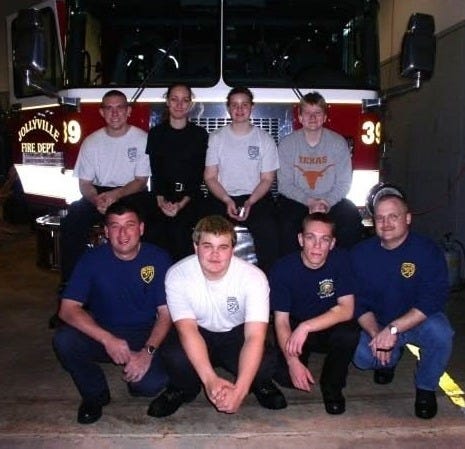
I did not know, standing in that station as a seventeen-year-old, that I was building the entire foundation of the career I’d have. I just knew I liked helping people.
That combination, the classroom certification and the real department, is the direct line to almost everything I’ve done since, even if it didn’t go exactly the way I planned at seventeen. Although I completed the class, I never actually obtained my EMT certification. But I did stick with the fire service side long enough to earn my advanced firefighter and fire marshal certification through the State Firefighters’ and Fire Marshals’ Association of Texas, training I received through Jollyville and supplemented by the Texas Engineering Extension Service. Funny how that works. The path I didn’t finish wasn’t the one that ended up defining me. The one I stuck with almost by accident was.
Before I ever got to being elected, I worked as a civilian in the Training Division at the Round Rock Fire Department, which is its own kind of full circle, sitting on the administrative side of the same kind of training I’d once gone through across the street from my high school. That’s why I went into emergency management professionally at Williamson County afterward. It’s why, years later, I applied for and completed FEMA’s National Emergency Management Advanced Academy, and why my capstone paper sits in a filing cabinet in Maryland right now. It’s why disasters and emergency response have never felt like a casual interest to me; they were the first real subject I ever studied seriously, and I started at seventeen, across the street from my own high school.
One of the people I came up with during that time is now a chief over at Austin-Travis County EMS. Both when I was elected and even after, we joke about it whenever we catch up: “Look at what happened to us, two Explorer kids from a high school class who somehow ended up actually doing this for a living, one of us just took a very different org chart to get there.”
I think about that a lot when people ask why I care so much about the mechanics of emergency response in this city, why a reorganized 911 office or a fire department budget line gets more of my attention than it probably gets from most people reading a City memo. It’s not an abstraction for me. It’s the same subject I picked at seventeen and never actually put down.
That instinct is also, in a roundabout way, what led me to run for office in the first place. Emergency management and fire service train you to show up for people on the worst day of their lives, a fire, a wreck, a call nobody ever wants to make. Getting elected gave me a version of that same pull to help people, just pointed in the opposite direction. Instead of showing up on someone’s worst day, I got to show up on their best ones: a resolution passing that a family had been asking for, a problem solved before it ever became a crisis, a neighbor’s specific, unglamorous request actually getting handled. Same instinct that sent me across the street to Jollyville at seventeen. Just a completely different kind of day to be the one who shows up.
Between saying goodbye to my daughter in our front yard this morning and standing in front of the high school building myself just yesterday, I felt the specific, strange gravity of a place that shaped you showing up again in your kid’s life, on its own terms, whatever she decides to make of it. She doesn’t have to choose Health Sciences. She doesn’t have to walk across the street to the fire station (it's not even a fire station anymore). That was my path through that building, not a requirement for hers.
But I’ll admit, some quiet part of me hopes she at least wanders past that career fair table later this year and gives a look at emergency services.
Here’s to the first day. Here’s to every parent who dropped a kid off at a school that still means something to them personally. And here’s to Westwood, still standing in the same spot on Mellow Meadow Drive, still turning seventeen-year-olds into whoever they’re about to become.
Until Next Time,
Mackenzie
No posts
Comments
Nothing yet. Say the first thing.
Sign in to join the conversation.