
This summer has tested every flower grower I know. With the driest, hottest stretch many of us have seen in years, keeping a cutting garden productive without running the hose day and night has become the challenge on everyone’s mind.
In this newsletter I’ve invited Rebekah from Headley Flower Garden to join me in selecting our top drought resistant perennials for cutting. Rebekah grows on a much larger scale than me on her parents farm in Headley, Berkshire.
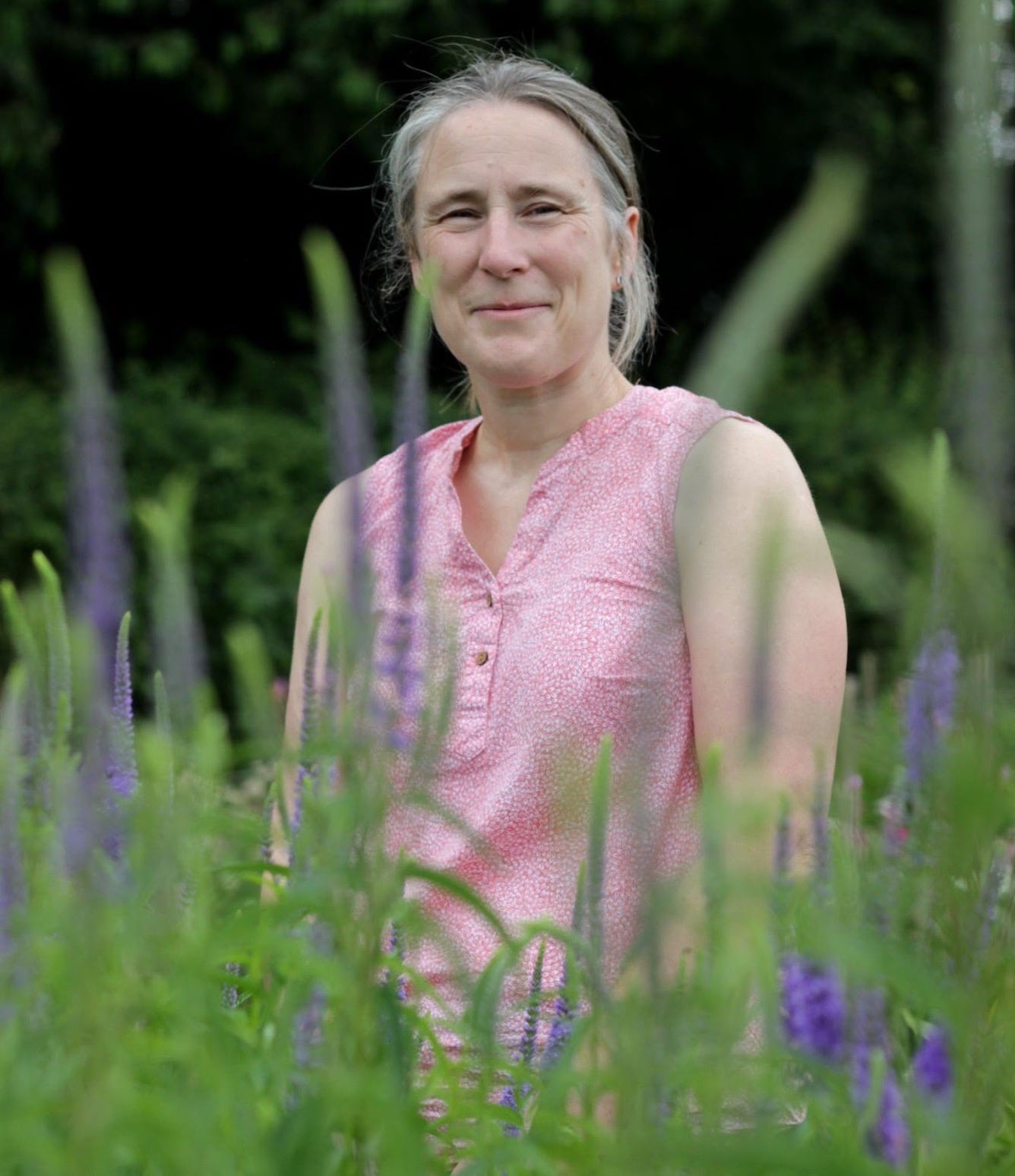
Two cut flower growers based in slightly different corners of the UK — despite our different soils, microclimates and growing conditions, we’ve both been watching closely to see which perennials are shrugging off the drought and which are struggling. Between us, we’ve compared notes on what’s thriving with minimal watering while still producing enough stems for a decent cut.
So we’ve put our heads together to share our top five perennial flowers for dry conditions — the varieties that, in our experience this year, have proved most resilient without sacrificing the quality or quantity of blooms you need for cutting. Whether you’re planning ahead for next season or looking for resilient additions to fill gaps now, we hope this list helps take some of the guesswork out of gardening through increasingly unpredictable summers.
My first pick is Gypsophila, which has earned its place at the edge of my cutting garden in one of the most exposed, sun-baked spots I’ve got. It’s been growing there for five years now, and I’ve never given it a drop of water. Despite that, it flowers prolifically year after year, and from just a couple of plants I get an abundance of stems.
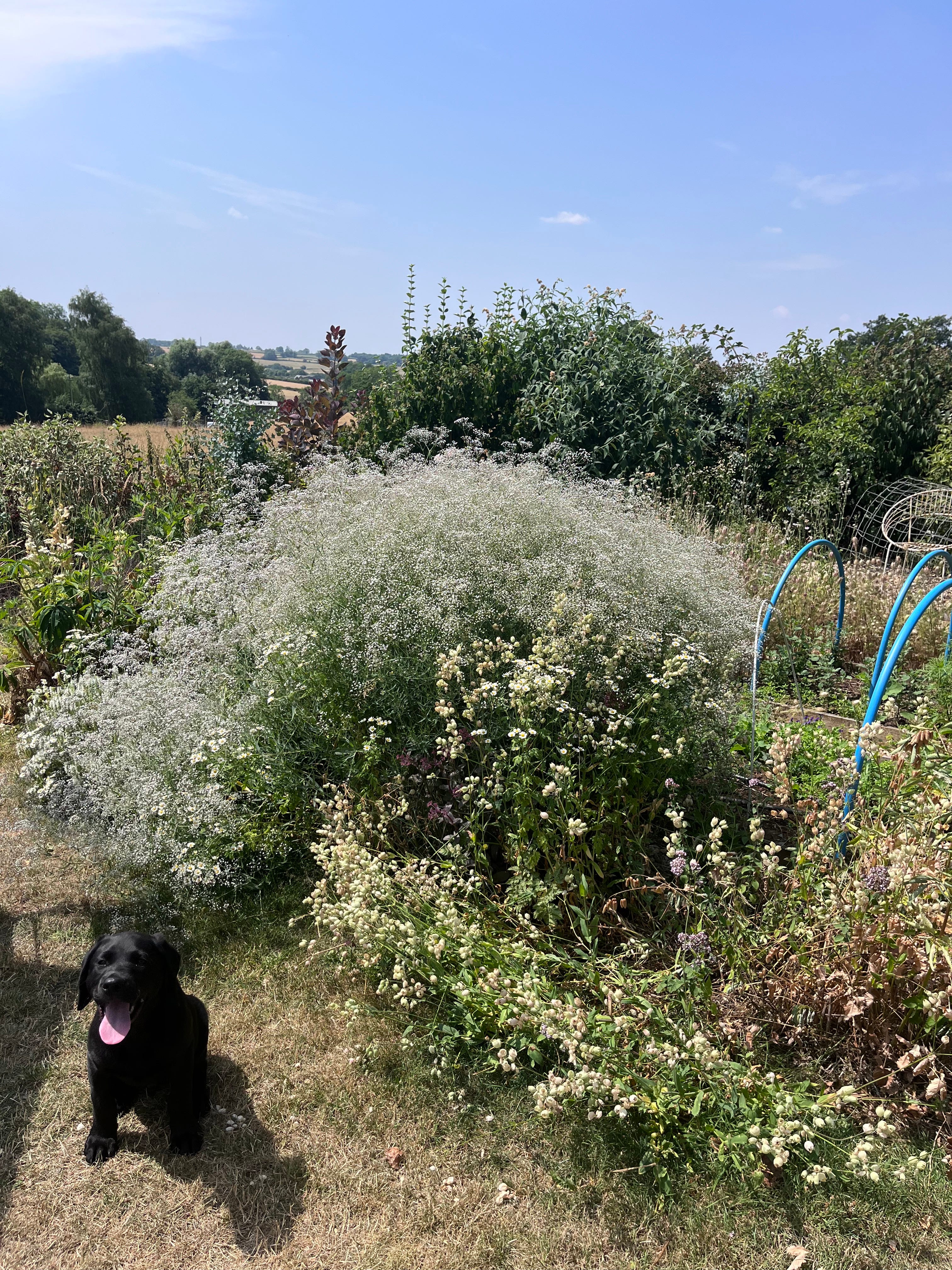
Its soft, grey-silvery foliage is a clue to how well it copes with drought — those pale, fine leaves are brilliant at reflecting heat and reducing moisture loss, which no doubt explains why it thrives in such a well-drained, dry position. The stems are wonderful used fresh, but Gypsophila also dries beautifully, giving you a crop that keeps on giving long after the growing season ends.
Thanks for reading From Garden to Vase! This post is public so feel free to share it.
If you’re looking for a reliable, low-maintenance perennial that won’t let you down in a heatwave, Gypsophila is hard to beat. My only slight issue with it is I don’t personally like the scent, but it doesn’t seem to bother others!!
My second recommendation is Saponaria officinalis, commonly known as Soapwort — a native wildflower that’s proving itself completely unbothered by drought in my garden this year. It’s flowering beautifully right now in July, and like the Gypsophila, it’s had no supplementary watering at all.
The name “soapwort” comes from the plant’s long history of practical use: its leaves, stems and roots contain saponins, natural compounds that produce a gentle lather when crushed and mixed with water. For centuries, it was used as a mild soap substitute — for washing delicate fabrics, cleaning tapestries, and even in traditional wool processing, since it’s gentle enough not to damage fibres or fade dyes. Some historic textile conservators still use soapwort infusions today for cleaning antique textiles, precisely because it’s so gentle.
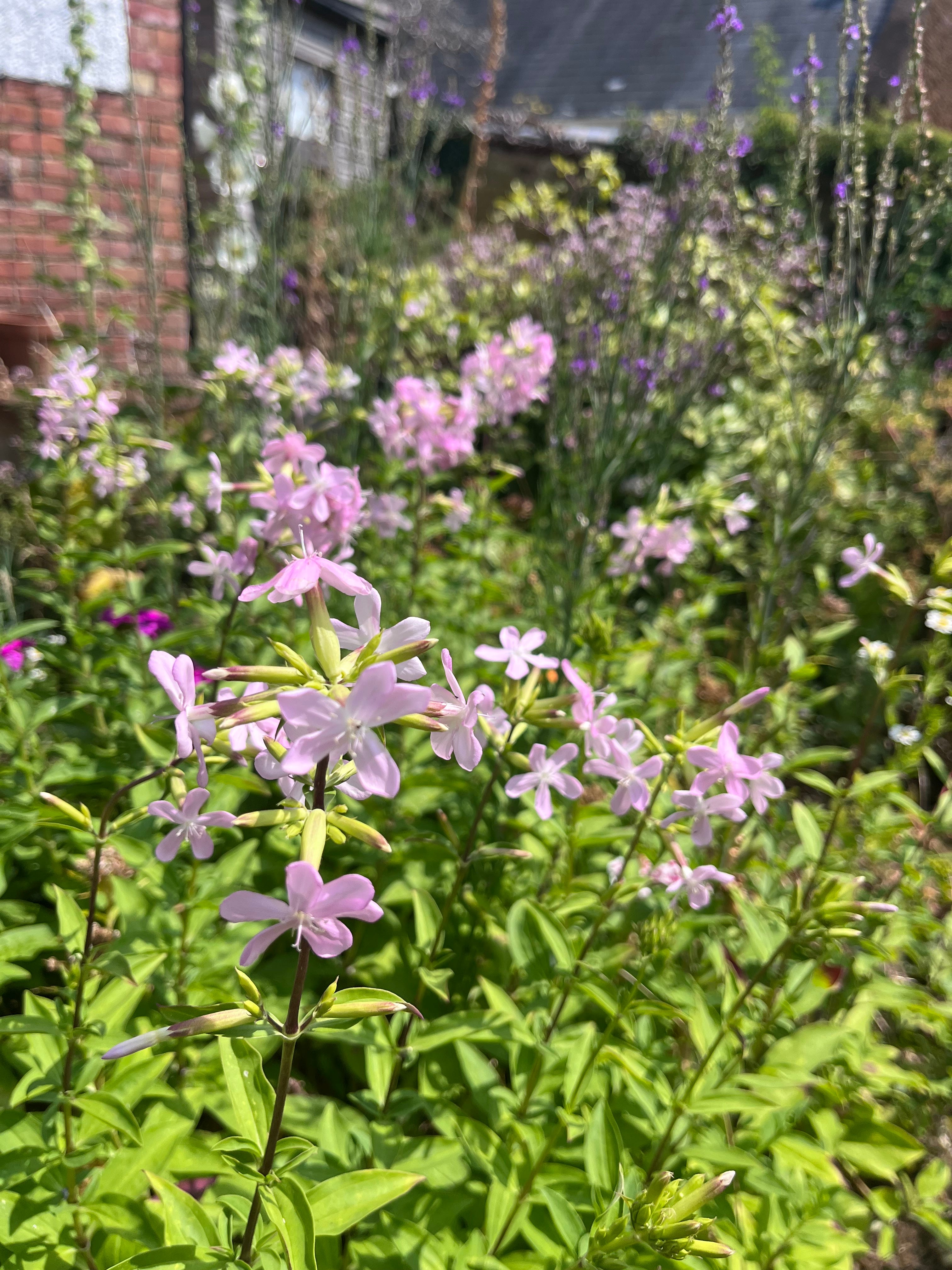
Worth noting: soapwort can be a bit of a thug in the border. It spreads readily by rhizome and will happily naturalise if given the chance, so it’s one to plant with intention — perhaps somewhere it can roam a little, or where you’re happy to keep dividing and controlling it. But as a low-water, reliable source of cut flowers, it more than earns its keep.
I’ve got mine at the top of the garden where the soil isn’t as good, it is shallow and less nutritious probably due to the house extension. But the soapwort thrives there.
Rebekah’s first pick is Echinops, or Globe Thistle, which she’s been growing in the same spot for five years now, in both blue and silver varieties. They sit in a bed alongside other plants that need regular watering, so hers get watered every 7-10 days during dry spells — but she suspects they’d cope perfectly well without, thanks to a deep tap root that lets them seek out moisture far below the surface.
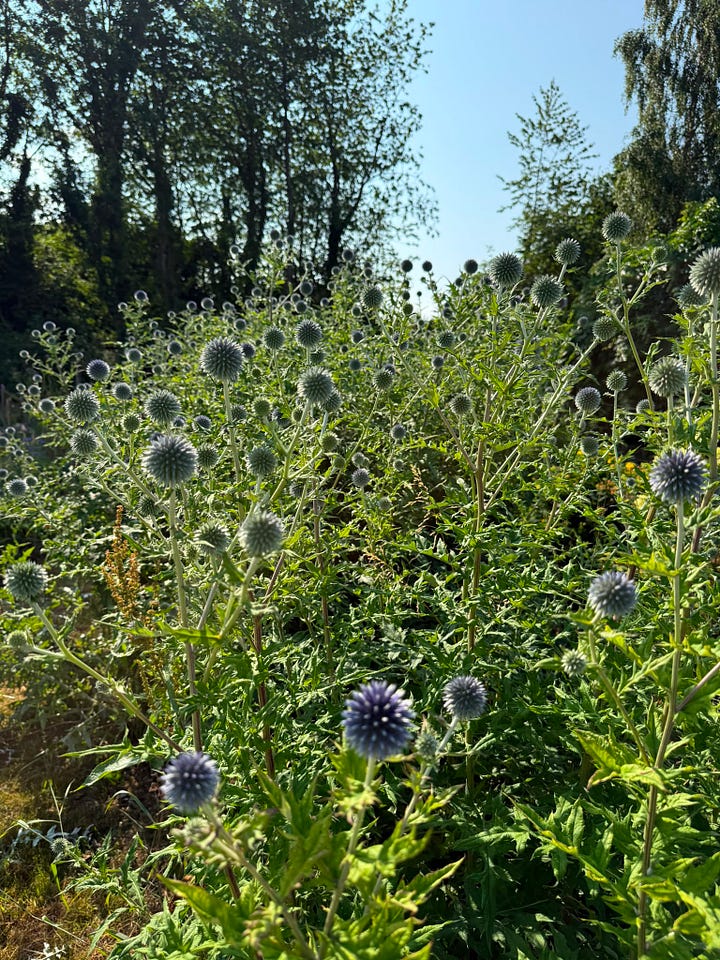
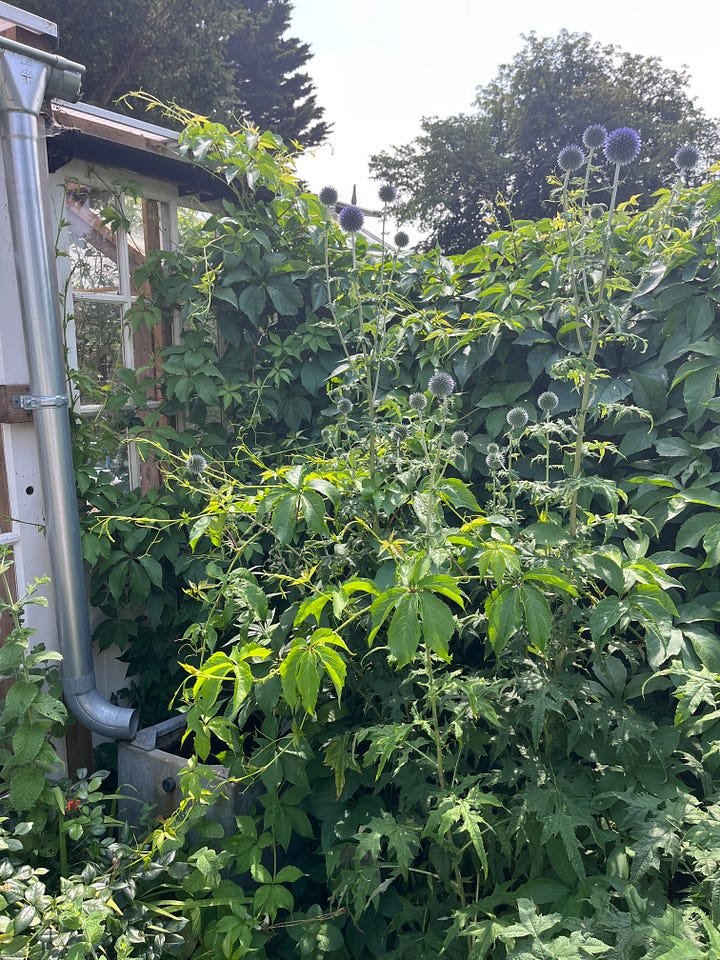
I grow them too and never water them!!
Echinops are wonderfully versatile as a cut flower, working just as well fresh in an arrangement as they do dried, and their bold, spiky, architectural form makes them a real standout in any bouquet. As the small flowers open, they’re also a magnet for bees, making them a lovely addition for anyone wanting to support pollinators alongside their cutting patch.
They’re easy to grow from fresh seed too, establishing quickly and settling in well — so if you fancy giving them a try, they’re a straightforward one to start from scratch.
Rebekah’s next pick is Echinacea, or Coneflower, another perennial that’s easy to grow from seed and comes in a wonderful range of colours, giving plenty of scope for different colour palettes in your arrangements. She’s grown various different types over the years, and everything in her beds gets a little water via leaky pipes — so nothing is entirely without moisture, but it’s a fairly minimal amount.
Interestingly, Echinacea isn’t always a fan of her clay soil, and in wetter years it can struggle. But the last couple of hot, dry summers have suited it brilliantly, and it’s been one of her most productive plants. Rebekah also collects seed from her own plants each year, gradually propagating a strain that’s better suited to her particular soil and climate — a nice reminder that resilience can be bred into a cutting garden over time, not just chosen off the shelf.
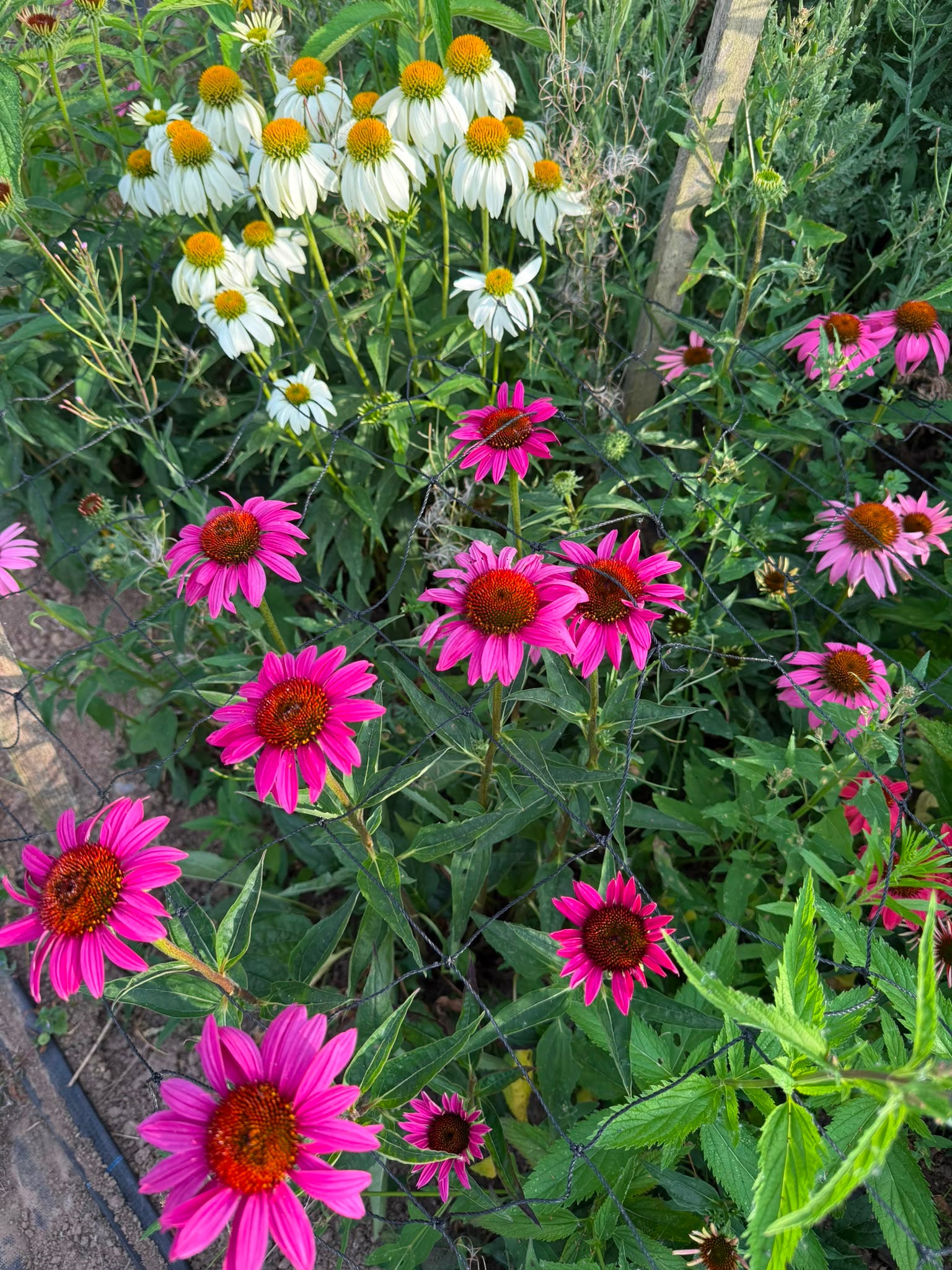
One of the things Rebekah loves about Echinacea is how little goes to waste — if the petals get damaged or start to look tired, she simply removes them and uses the central cone on its own. That dense, textured dome holds up beautifully in arrangements and gives a completely different look to the fuller flower, so you effectively get two cut flower options from one bloom.
I don’t have them in the garden here but will be adding some to see if they are productive for me too.
For our fifth and final pick, we’ve joined forces — Scabious is a firm favourite for both of us, though we each grow a different type. I grow the giant perennial scabious, which thrives in the garden without ever being watered, standing tall and productive even through the driest spells.
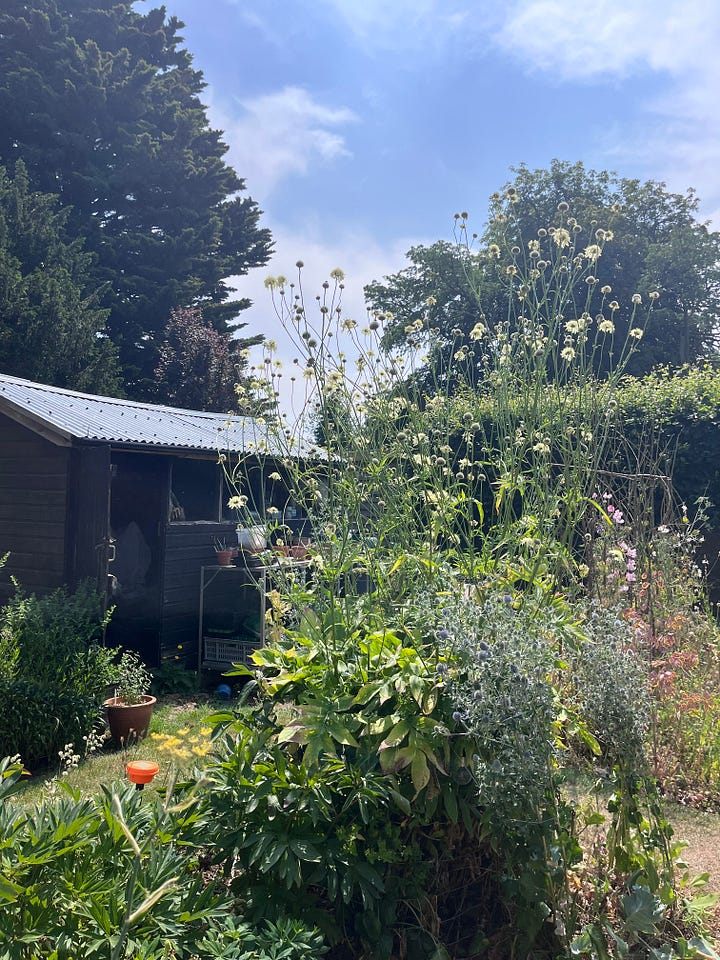
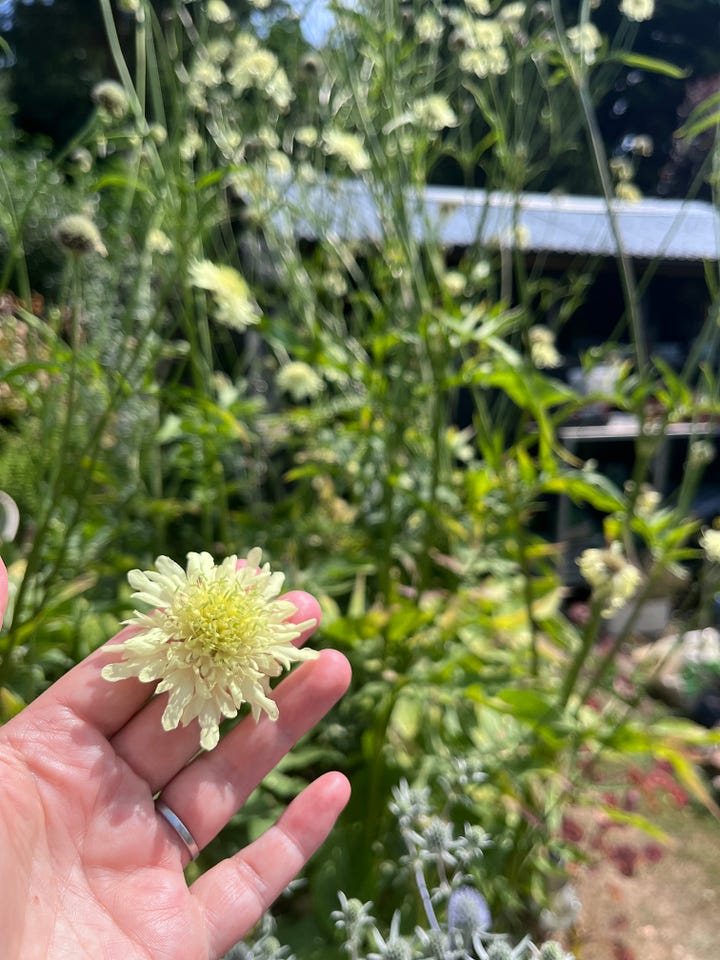
Rebekah, meanwhile, grows the smaller, short-lived perennial variety, which seems to be flowering well this year. Recommended varieties are:
Scabiosa caucasica either perfection or fama.
Between the two forms, Scabious shows just how adaptable this family of plants can be — whether you’ve got space for a statuesque giant at the back of a border, or prefer a shorter variety that’s quick to establish and just as generous with its blooms. Both types produce lovely, delicate flowers that are wonderful for cutting, with that distinctive pincushion centre adding texture and movement to any arrangement.
It’s a fitting way to close out our list: proof that even within a single plant family, there’s a drought-tolerant option to suit almost any garden.
So there you have it — our top five perennial flowers for cutting in dry conditions: Gypsophila, Soapwort, Echinops, Echinacea and Scabious. Between my garden and Rebekah’s, spread across slightly different soils and microclimates, these five have proved themselves time and again this summer, producing generous, reliable crops with little to no watering.
We hope this list gives you some inspiration for your own cutting garden, whether you’re planning ahead for next year or looking to add some resilience to your beds right now. As summers continue to swing towards hotter and drier, we think these perennials are well worth a place in any cutting patch.
And do keep an eye out for our next newsletter, where we’ll be turning our attention to annuals — sharing our top five picks for drought-tolerant annual cut flowers to grow alongside these perennial favourites.
If you’re keen to start a cutting garden of your own — or want to improve one you’ve already got — I offer in-garden consultations. I’ll come to you, take a look at your space, and offer tailored advice on what to grow and how to get the best from your plot, whatever your soil, aspect or watering situation.
1:1 Consultation details & booking
All the details, along with booking information, are on my website, or feel free to email me directly for more information - suzy@fromgardentovase.co.uk
I hope you found this interesting and maybe even helpful! If you read it - please like it 💛 Anything to ask or add please leave a comment and I’ll get back to you.
Suzy x
No posts
Comments
Nothing yet. Say the first thing.
Sign in to join the conversation.