
Dearest Friends & Fiction Community,
Today we are in for a real treat! Our beloved F&F co-founder and co-host Patti Callahan Henry is here to chat with award-winning, #1 NYT-bestselling author and playwright—and longtime friend of the show— Chris Bohjalian about his brand-new novel that’s getting all the buzz, The Amateur. Just published on August 4th by Doubleday and already an instant NYT-bestseller, this is Chris’s 26th novel and it’s racked up a trifecta of starred reviews from Publishers Weekly (“a masterpiece”), Kirkus (“irresistible… a perfect novel”), and Booklist (“intrepid . . .timely and empathic.”)
Join us in welcoming Chris and be sure to grab your copies of The Amateur.
Dearest Chris,
Welcome to the Friends & Fiction Endless Stories newsletter. I have been reading your novels on the day they come out (and sometimes, when I am lucky, even earlier) and have loved ALL of them. But this one, The Amateur, I can not put down. I am not being metaphorical with a “can’t put down novel” – I can’t put it down. Not when I am trying to go to bed. Not when I am trying to work. Not when I take it with me on every appointment so I can sneak in a few more pages. This is, as advertised, the most propulsive novel you’ve written.
Let’s dig into this novel about Mira Winston, an eighteen-year-old golf prodigy who accidentally kills a teenage caddy when her ball flies through a damaged practice net at an exclusive country club. This event upends her life and decades later, Mira—now a successful novelist—recounts the accident, the trial, and its effect on the rest of her life.
Let’s talk about it…
You’ve said that in this novel you are both Mira and the caddy—“the instrument of death and the dead.” Your Superego and Id. And Mira is a writer with novels about both a midwife and an alcoholic flight attendant (sounds familiar). Tell us more about this please. In some ways, it must feel terrifying to dig into your own life such an intimate way (or I am imagining it for myself and feeling terrified?).
A beloved older friend of mine with a National Book Award behind him taught me two things. The first is that you can hide turnips in mashed potatoes and get an extra vegetable. The second is this and these are his exact words: “If your family doesn’t hate your guts, you’re not doing your job.” Still, I would never have written this novel if they were still alive.
Why? They were remarkable people and loved me deeply, and I would not have wanted them to see how I turned so much of my childhood into what I hope is a propulsive roller-coaster of – to paraphrase the lovely New York Times review – a girl off the rails, a morality tale, and a courtroom drama.
Also? My parents would have made Don and Betty Draper from “Mad Men” look like Good Housekeeping’s Parents of the Year. Just as Mira Winston, my id, used to water down her parents’ booze from the time she was eight, so did I; just as her parents would brag that their monthly alcohol bill was larger than the mortgage, so did mine. A lot of it was the era, when parenting was benign neglect, and if your kids were still alive at dinner, you’d done your job.
But then there was me: Just as Mira set a door on fire, so did I. Actually, I set many doors on fire. (It’s a long story.) The novel is filled with that sort of thing.
It wasn’t just the drinking, however, because that was merely the 1960s and 1970s. It was the reality that Kenny, the caddy – my well-behaved superego – is caddying for summers at a country club that his parents could never have afforded to join. Just like me. I was caddying for my classmates’ parents, and the class divide was clear to me, though I would not have known to use those words. At one point, I went to five schools in six years in three states. When you are in Kenny Foster’s bedroom, you are in my high school bedroom. I was always that new kid observing a new ecosystem and trying to fit in.
I love the storytelling structure of this novel. Mira is, in many ways, talking to us as the reader and telling us the story decades after the inciting incident. How did you decide when the older Mira should interpret the younger Mira—and when she needed to let that frightened, furious girl speak without correction? As Mira says, “I am reliable.”
I think Mira can be very funny. I love it when readers tell me how they love her dark sense of humor. My favorite of Sarah Silverman’s standup specials is the one about her parents’ deaths; I think John Mulaney’s best work is his standup about his drug addiction and rehab. Well, meet Mira.
Also, just for the record, Mira does not say, “I’m reliable.” She says, “I am reliable AF” (though she does not abbreviate AF). I have loved watching Mary Kay Andrews speak her mind every Wednesday. She is inspiring to me. And Mira is like that. If you read the prologue, you assume until the very end that this will be a third-person, omniscient novel. But then you reach the end of the prologue, Kenny Foster dying in front of the stunned caddies and Mira Winston, who hit the golf ball that killed him, and suddenly you read, “I know. I was there. I was the girl who hit the golf ball.” I hadn’t planned that. But I knew it was right. This wasn’t Kenny’s story. It was Mira’s. And I knew that was what would make this a page-turner: her guilt, her acting out, and the fact there are no grownups in 1978 who will have her back. There are only the men who will exploit and abuse her.
Mira undeniably causes Kenny’s death, yet the novel gradually separates causing harm from deserving blame. Were you consciously exploring the difference between guilt, culpability, and shame or was that an uprising of the story itself?
Oh, trust me on this: You can be utterly blameless, and still the magical thinking will swamp you like a tsunami.
Mira’s confidence and ferocity make her an extraordinary athlete, but those same qualities are later used as evidence that she is reckless, unstable, or possibly dangerous. This seems to me, as a woman, to be about women’s power and how it gets labeled. What was it for you?
You nailed it. Mira is a fiercely competitive athlete. And she plays a sport better than all the grown men around her. So, she is diminished and dismissed and, yes, considered unseemly. If she were a boy, she would be applauded for her competitive nature.
You set the novel in 1978, before girls like Mira (and me) had today’s vocabulary for grooming and predatory behavior. You nailed this with such precision — the way a body knows something is amiss and yet not having the words to describe it. Talk to us about this and how you approached the wild affairs she had at such a young age.
Among the most haunting scenes for me in the novel is when Mira and the one classmate who knows that she has been sleeping with a married man since she was 15 are talking at a McDonald’s. And Mira is worried about what will happen to THAT MAN if their affair becomes public. As Mira observes now, it was like Lolita fretting about what might happen to Humbert Humbert. (The shadow of Lolita haunts Mira – and The Amateur. I hope readers never forget the tattoo she gets. . .and why.)
Talk to us about the country club as a setting. You were once a caddy at an elite golf club. What did you take away that you brought to these pages about privilege and secrecy?
Among my favorites of Mira’s observations? The only reason why golf was invented was so that men would talk to each other. And on the long fairways where the men never had to make eye contact, I heard a lot.
The twist I did NOT see coming. Without spoilers, I need to know if you knew it from the start?
No idea. But I rarely have the slightest idea where my novels are going. I depend on my characters to take me by the hand and lead me through the dark of the story.
I believe that every novel we write changes us or shifts something inside, as a person and a writer. How did The Amateur change you?
A part of me feels THIS is the novel after which I should drop the mic and exit, stage right. But I won’t. My next novel is already done and I know what comes after that. Writing still gives me so very much pleasure.
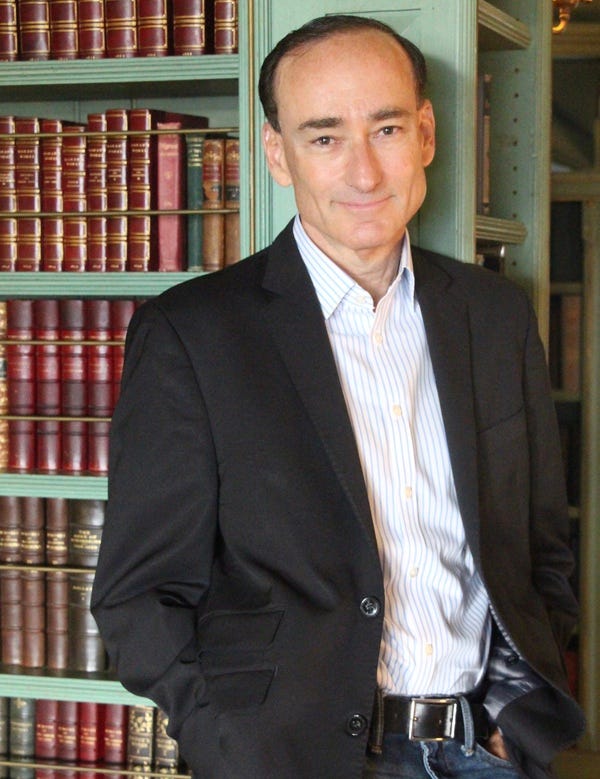
Chris Bohjalian is the #1 New York Times bestselling author of twenty-five books, including The Princess of Las Vegas, The Lioness, Hour of the Witch, Midwives, and The Flight Attendant, which was a Max series starring Kaley Cuoco. His other books include The Guest Room; Close Your Eyes, Hold Hands; The Sandcastle Girls; Skeletons at the Feast; and The Double Bind. His novels Secrets of Eden, Midwives, and Past the Bleachers were made into movies, and his work has been translated into more than thirty-five languages. His novels have been selections of Oprah’s Book Club. He is also a playwright (The Club, Midwives, and Wingspan). He lives in Vermont with his wife, photographer Victoria Blewer, and can be found at chrisbohjalian.com or on Facebook, Instagram, Threads, TikTok, X (formerly Twitter), Litsy, and Goodreads, @chrisbohjalian.
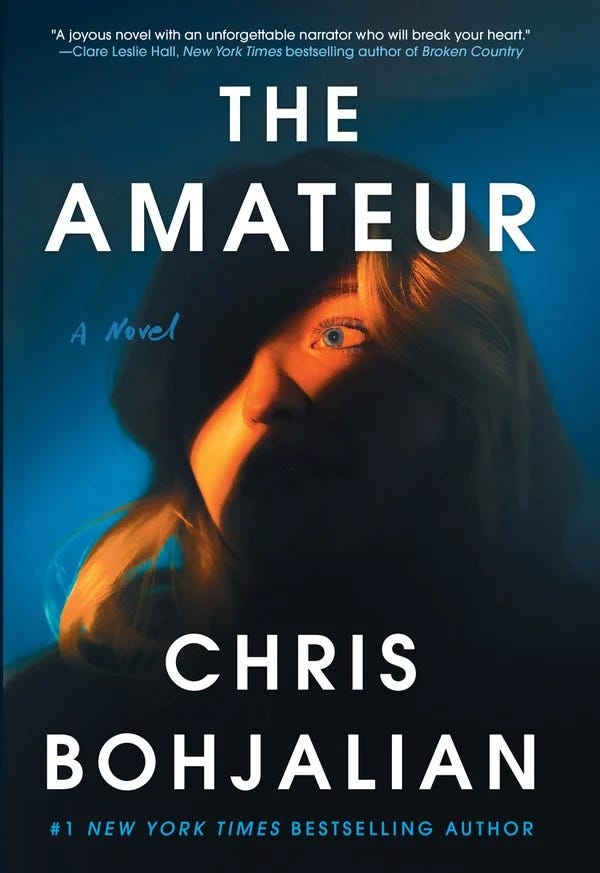
From the #1 New York Times bestselling author of Midwives and The Flight Attendant: When a young woman, a golf prodigy, kills a caddy with a stray ball at the country club, the investigation of this freak accident reveals a dark and shocking tale of secret affairs, predatory men, and a teenager on trial.
1978: It is the first Thursday in August and temperatures are flirting with ninety when Mira Winston, eighteen years old, drives a golf ball from her tee toward the practice net near the clubhouse and caddy shack. The golf ball, weighing 1.6 ounces, tears through the net, traveling 150 miles per hour, and slams, with sickening force, into the temple of a high school junior named Kenny Foster, rupturing an artery and unleashing a torrent of blood. Kenny brings his hand to the side of his head, then topples onto his side. He’s dead before the ambulance even arrives.
In the wake of this terrible accident—and everyone, at first, agrees it was an accident—Mira looks for comfort in all the wrong places: In her lover, Theo Catton, a married man three decades her senior. In her mother, a well-kept woman with secrets of her own. In the dead caddy’s little sisters, girls bewildered by grief. But when the investigators look more closely at the torn net, when a detective recalls Mira’s history of recklessness, and when Kenny’s father spies Mira with her married lover, the affluent and mannered community turns on this once-promising young woman. A gripping story that takes the reader from the sun-soaked greens of a tony Westchester country club to the fluorescent-lit stand of a county courtroom, The Amateur asks: What happens when one small moment—a swing, a ball, a piece of string—changes the course of an entire life?
Subscribe to our PODCAST.
Join our FACEBOOK group.
Follow us on INSTAGRAM.
Subscribe to our YOUTUBE channel.
Find details about everything F&F on our WEBSITE.
Shop our guests’ & hosts’ books in our shop on BOOKSHOP.
Join the F&F Official BOOK CLUB with Brenda & Lisa.
Upgrade to our PAID Subscription for bonus content from our hosts and guests.
No posts
Comments
Nothing yet. Say the first thing.
Sign in to join the conversation.