
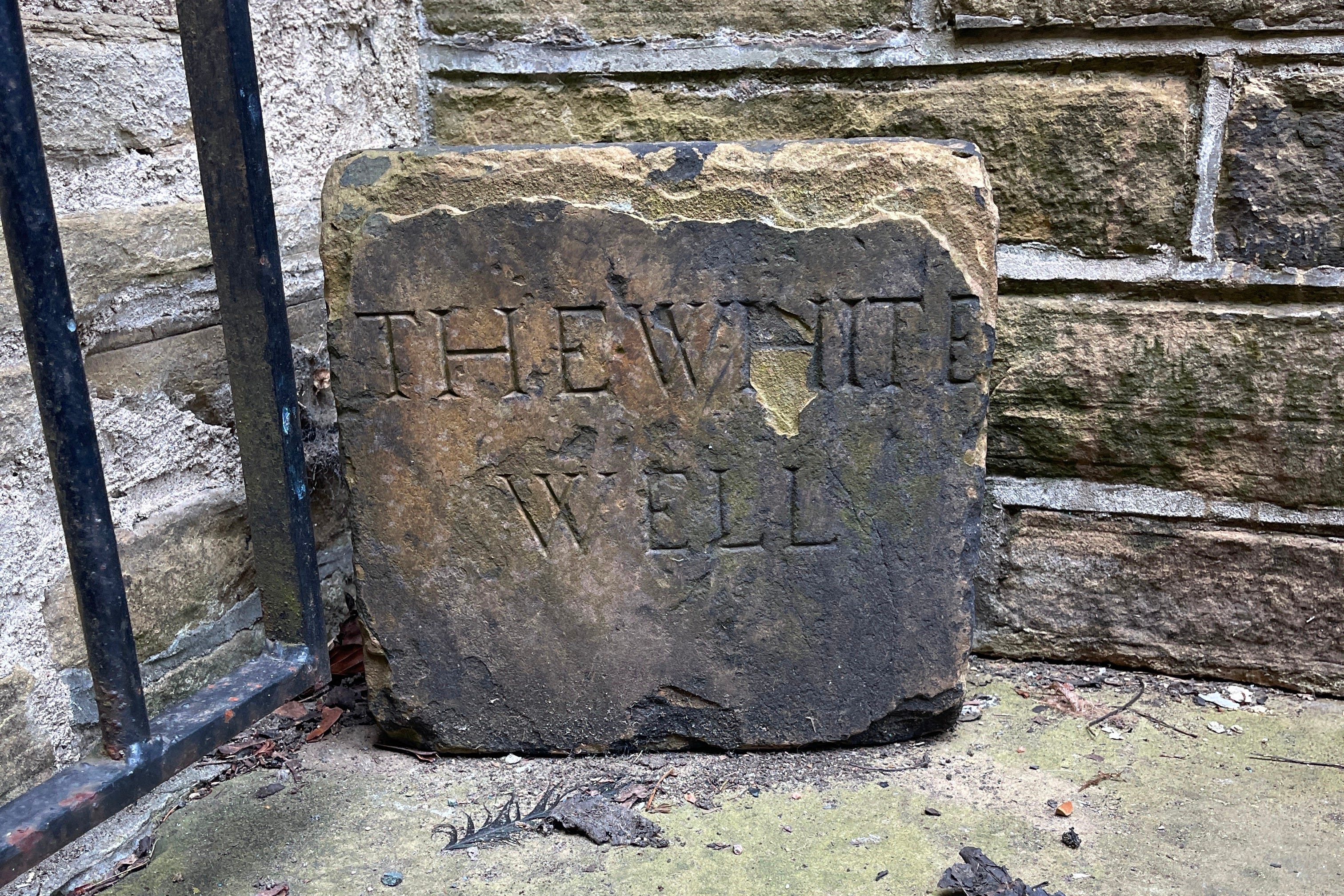
Reading the Living World is a series of essays that I have been working on for several months. I wanted to take stock of where my journey, since life was disrupted by Lockdown and the end of a marriage, has bought me.
It is to a very different place. Or perhaps it is the same place but now seen very differently.
I will publish the essays every Friday for the next 6 weeks. The timing seems right as Andy Burnham spoke just last year about a ‘culture of encounter’, based on the writing of Pope Leo. Now he is our Prime Minister, if a culture of encounter is to be realised, then we have work to do. My hope is that these essays might help.
This begins with Barry Lopez’ recognition that the wolves we fear are often projections of ourselves. It is about humility and the discovery that reality is much richer, more mysterious and unknowable than the stories we tell about it. It introduces the possibility that our categories conceal as much as they reveal.
The question becomes:
What if the world is not what I think it is?
The seed of this essay was a walk on the beach near a nuclear power station in Scotland, trying not to interpret, argue or decide whether this was good or not. This essay explores the practice of suspending judgement and allowing enchantment to return. It suggests that attention precedes understanding.
The question becomes:
Can I remain with what is present before rushing to explanation?
I think this was an important discovery in our conversations.
Before we can read the world differently we have to notice how we ourselves are noticing.
This essay explores awareness itself—not as introspection or “mindfulness” in its fashionable sense—but as the opening through which the world begins to disclose itself differently.
It gently questions the supremacy of analytical thought without replacing it with another orthodoxy.
The question becomes:
Who, or what, is doing the noticing?
This is where everything starts to weave together. There is a scene from Band of Brothers and ideas from Heraclitus. “None of us can read the same book.”The essay explores reading not as decoding information but as participation. We never simply receive reality. Reality and reader continually create one another. I wish now I’d called this essay Encounter!
The question becomes:
How do I learn to read (encounter) a living world?
Having recognised projection and perhaps having learned to notice, cultivated awareness and learning to read as encounter, the final question is ethical. What do we now owe the world?
Faithfulness is not certainty. It is remaining true to what has been encountered. It is living in response rather than control.
The closing question then becomes:
How shall I now live?
There is an assumption woven through much of modern life that the purpose of reading is to acquire ideas. A writer has thoughts. They arrange those thoughts into words. The reader receives them, evaluates them, perhaps adopts them or rejects them, and moves on a little better informed than before. Knowledge, in this account, travels from one mind to another. I have become less and less convinced that this is what actually happens.
Ursula K. Le Guin once wrote that, as a child, she paid very little attention to authors’ names because she “did not believe in authors.” A book existed; it was there. The author might be absent, unknown or long dead, but the book remained. As we read, she suggested, we participate in the book’s coming into being, just as a cellist participates in the coming into being of Bach’s music. And, as we read and reread, the book participates in the creation of us. It shapes not simply our opinions, but our thoughts and feelings, “the size and temper of your soul.” I return to that image again and again.
Perhaps books are not containers of meaning after all. Perhaps they are places where something happens. Places where writer, reader and the world meet in ways that none of them entirely control. Places where reality is not transferred but encountered. If that is true, then the essays that follow are not intended to persuade you of anything. They are invitations to notice. They ask for very little agreement and a great deal of attention. They are less interested in the conclusions you reach than in the quality of your encounter with what is already present around you.
That is why they begin, not with theories, but with ordinary things: a wolf, a power station, a book, a walk, a memory, and a conversation. The extraordinary is rarely hidden behind complexity. More often it is concealed by familiarity. We stop seeing what has become too ordinary to notice.
You will not read these essays in quite the same way that I wrote them. Nor will you read them tomorrow as you read them today. You cannot. Between readings, the world will have altered a little, and so will you. Even the same words become different because they enter into a different relationship. None of us can read the same book, even when we read the same book.
In that sense, these essays have no fixed destination. They are not a series leading towards mastery, nor a set of arguments building towards a conclusion. They are more like paths through a landscape. Some will end where you don’t expect. Others will disappear into a thicket. Some may seem to go nowhere at all until, much later, you realise they changed the way you were walking.
If there is a hope behind this series, it is not that you will think differently, though that may happen, it is that you may come to trust other ways of knowing that have always accompanied thinking: attention, imagination, faithfulness, perception, wonder, affection, silence and care. Modern life has trained us to stand outside the world and analyse it. These essays suggest another possibility: that we come to know the world most deeply by participating in it.
Essay 1 - Wolves will be published on Friday 31st July.
Comments
Nothing yet. Say the first thing.
Sign in to join the conversation.