
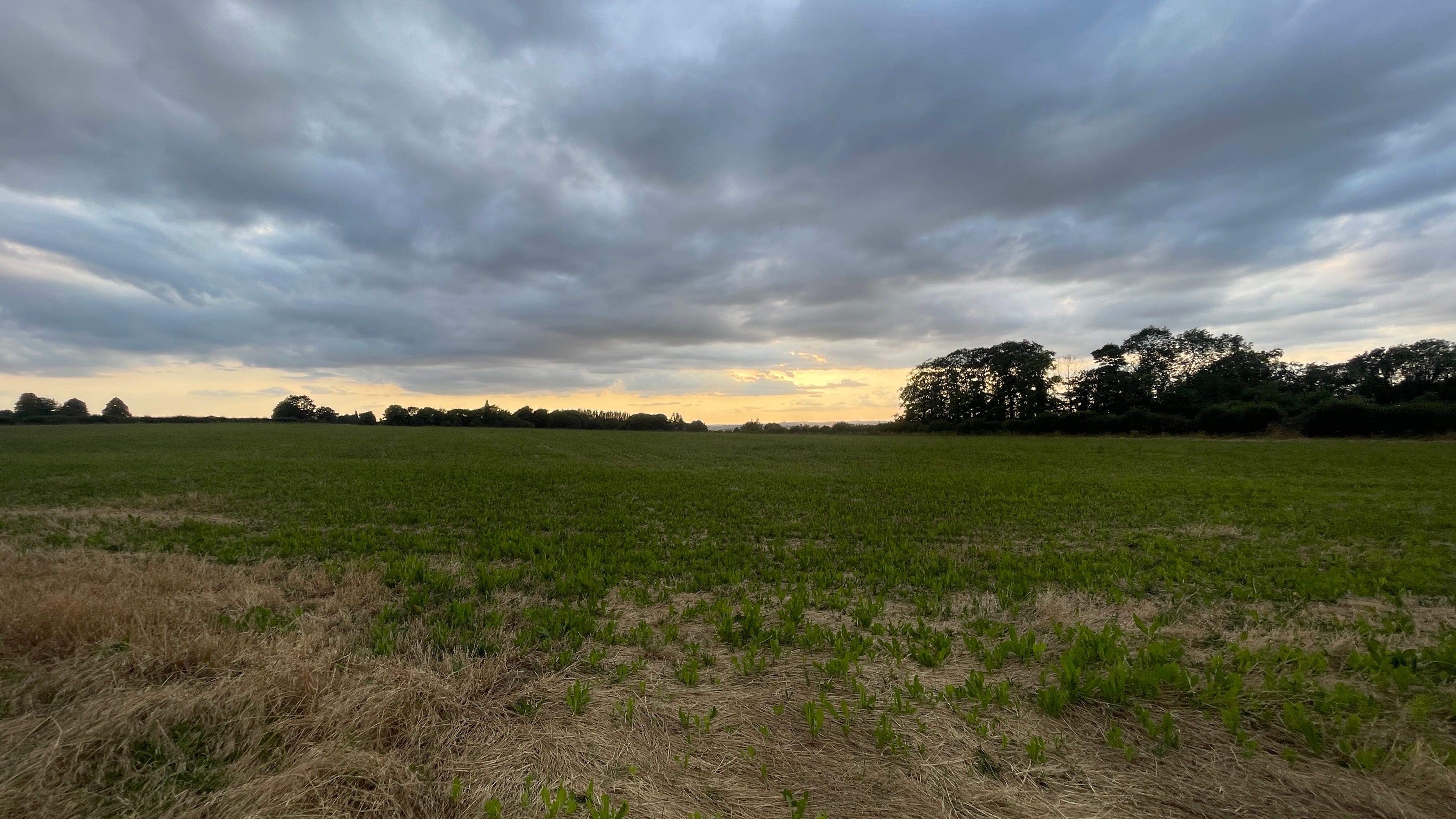
For a long time I would ask:
What is this?
But later it more often became:
What does this mean?
And, now I ask another question:
How shall I meet it?
This changes everything, for me, because now the living world is something to which I am answerable.
If you read the earlier essays in this series then you may remember how Barry Lopez showed how we create Wolves. Then, in Nuclear I tried to show how words gather worlds until the words and their worlds begin to feel like the things themselves, the things they always point to, but reduce. In Reading I suggested that reading is less about extracting information than cultivating relationship. My understanding will never be complete, so I can never meet a world that is fully known to me, but is my way of meeting the living world faithful to that?
Faithfulness is an unfashionable word. It sounds old, religious and perhaps restrictive. But it doesn’t have to be. Faithfulness, for me, is about remaining in relationship. The faithful gardener returns to the soil. The faithful musician returns to the instrument. Not because they already know, because they know they do not. There is always more to learn.
Faithfulness is not the refusal to change, but the refusal to abandon the relationship through which change becomes possible. It is the choice to keep listening, even when the living world asks us to let go of the stories that have carried us more or less safely up to this point.
Modern life offers us a different promise: Know more and predict better. Optimise, measure, control. Move faster and be certain. But the living world keeps refusing these promises.
The living world continually exceeds the worlds we make of it, perhaps to remind us that it too is alive.
Maps, theories and models are useful. I built a career on them, first as a teacher, then working for Outward Bound and later as a consultant in organisation and leadership development. They helps us to find our way, but none of them is the country, although we can mistake the map for the place, and become so skilled at navigating that we forget to notice where we are. We literally follow the map, rather than the reality that it reduces to a sheet or a screen. This is why orientation matters more than navigation to me. Navigation asks,
Where am I going?
Orientation asks,
How shall I stand?
Navigation seeks direction while orientation seeks relationship. Navigation centres the map, while orientation centres a relationship to the territory. A compass tells us where north is, but a gyroscope helps us remain steady while everything else is moving, and perhaps that is what faithfulness becomes. It is not a fixed destination or rigid belief, but a way of remaining open while the living world continues to surprise us. Neither resisting change, nor chasing it, but remaining present enough that we can respond. Needless to say in my time in leadership and organisational development this was not the modus operandi or the mainstream, where change was to be planned, managed, driven and ALWAYS resisted.
There is a temptation to imagine that wisdom consists in finally arriving, understanding and finally seeing reality exactly as it is. It comes only with grey hair and aching joints. But perhaps wisdom has always been something else? Perhaps wisdom lies in become increasingly willing to be taught, by the seasons, the beehive, the stranger, the poem and the child. Taught by the living world itself and really grasping its unknowability. Dwelling on the threshold of what we think we know, and what we don’t. I find great freedom in this. I no longer have to defend my worlds against reality. I am free to let reality enlarge my worlds instead. This is why it is so easy to consider young children as essentially wise. Because they are always open to learning, until we start to teach them.
It takes some discomfort for me to notice before naming and to listen deeply before speaking. It is a struggle to remain with uncertainty and to change my mind without feeling defeated. To discover that I have misunderstood without believing I have failed (Studying the evolution of Physics from Newton to Rovelli offers a case study in all this powerful wrongness!). Every genuine encounter asks us to remain available, open, listening and sensing. Attending is not to recall what we know and smother our experience in it, but attending to what’s beyond the threshold of our knowledge and dwelling there.
None of us can meet the same wolf twice.
None of us can read the same book twice.
None of us can step into the same river twice.
Not because the living world alone is changing, but because we change with it. Every meeting becomes another invitation, not just to understand more, but to become someone capable of meeting more faithfully. To recognise that we may deepen our understanding but we can never understand. The mystery will remain.
Perhaps that has been the purpose of these reflections all along. To point to a different way of meeting our experiences. The living world has never expected us to know everything, never demanded certainty. I believe it asks something that is simple but not easy.
To be present, to attend, to listen and to remain faithful.
Comments
Nothing yet. Say the first thing.
Sign in to join the conversation.