
« Sur ce sentiment inconnu, dont l’ennui, la douceur m’obsèdent, j’hésite à apposer le beau nom grave de tristesse. »
What if the most famous French summer novel began with sadness?
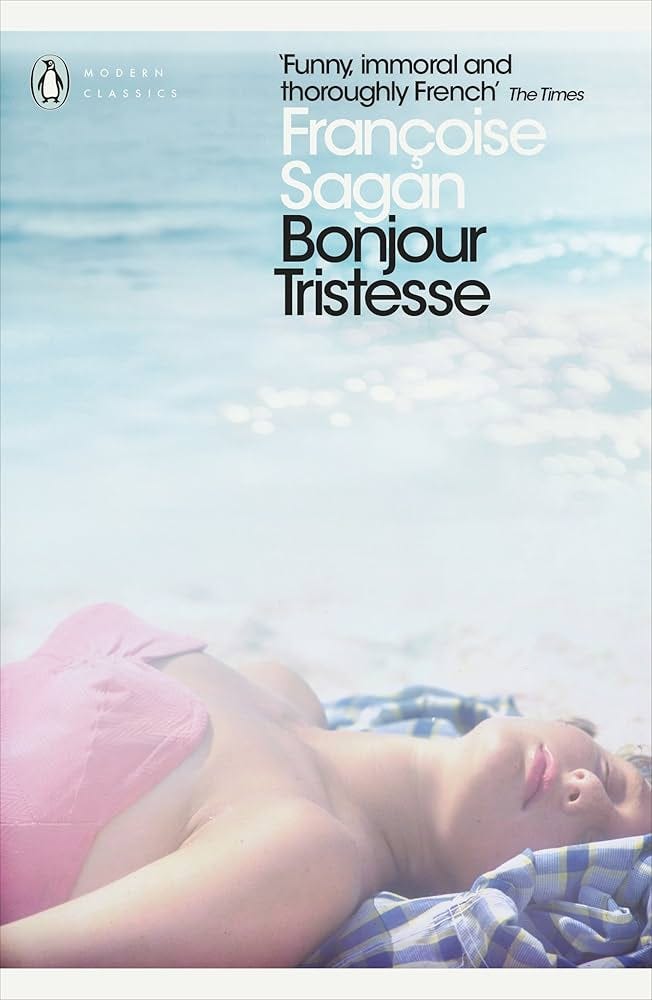
Published in 1954 when she was only eighteen years old, Françoise Sagan’s Bonjour tristesse became an instant literary sensation. Readers were captivated and sometimes scandalized by its portrait of youth, desire, freedom, and moral ambiguity. Overnight, Sagan became one of the most famous writers in France.
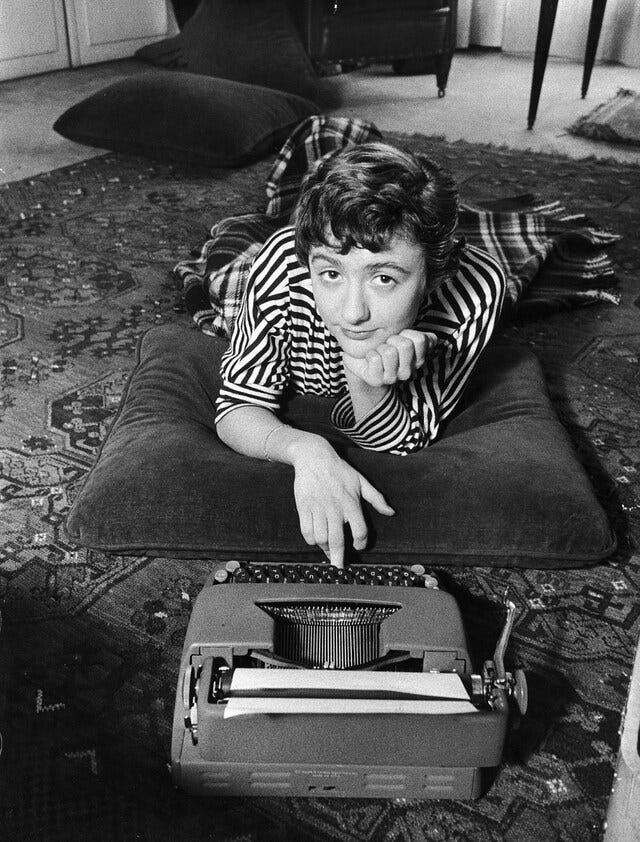
More than seventy years later, the novel still feels remarkably modern.
Set on the French Riviera during a long, dazzling summer, Bonjour tristesse follows seventeen-year-old Cécile, who spends her holidays with her charming, carefree father. Their days are filled with swimming, sunbathing, late-night conversations, and the intoxicating feeling that summer will never end. Then anew arrival disturbs this fragile paradise, forcing Cécile to confront emotions she does not fully understand and consequences she never anticipated.
But even here, beneath the beauty, Françoise Sagan is already asking deeper questions about love, appearance, desire, and the need to be loved.
For French learners, Bonjour tristesse is an excellent introduction to modern literary French. The prose is elegant without being difficult, sophisticated without becoming obscure. The vocabulary is accessible, the sentences are fluid, and the emotions feel surprisingly contemporary.
In today’s Literary Bites, you will:
spend a summer on the French Riviera with one of literature’s most unforgettable narrators;
read a passage filled with sunshine, sea, first attraction, and youthful freedom;
discover the extraordinary story of Françoise Sagan, who became a literary star at 18;
explore the film adaptations that brought Bonjour tristesse to the screen;
and learn a useful French grammar point from the passage.
Because sometimes the most memorable summer stories are not the happiest ones, sometimes they are the ones that leave a trace.
For the monthly price of a ☕, support this project and go further into your French journey: paid subscribers receive full access to the archives, the full poem of the week, literary bites, writing workshop, art, music and more… Upgrade and enrich your learning!
Bonus: when you upgrade, receive for free the French en Musique Workbook, a 50-page workbook to guide you through 10 stunning French songs, step by step(value 10$).
& your exclusive summer gift: La Petite Anthologie Poétique de l’Été.
Les premiers jours furent éblouissants. Nous passions des heures sur la plage, écrasés de chaleur, prenant peu à peu une couleur saine et dorée, à l’exception d’Eisa qui rougissait et pelait dans d’affreuses souffrances. Mon père exécutait des mouvements de jambes compliqués pour faire disparaître un début d’estomac incompatible avec ses dispositions de Don Juan. Dès l’aube, j’étais dans l’eau, une eau fraîche et transparente où je m’enfouissais, où je m’épuisais en des mouvements désordonnés pour me laver de toutes les ombres, de toutes les poussières de Paris. Je m’allongeais dans le sable, en prenais une poignée dans ma main, le laissais s’enfuir de mes doigts en un jet jaunâtre et doux ; je me disais qu’il s’enfuyait comme le temps, que c’était une idée facile et qu’il était agréable d’avoir des idées faciles. C’était l’été.
Le sixième jour, je vis Cyril pour la première fois. Il longeait la côte sur un petit bateau à voile et chavira devant notre crique. Je l’aidai à récupérer ses affaires et, au milieu de nos rires, j’appris qu’il s’appelait Cyril, qu’il était étudiant en droit et passait ses vacances avec sa mère, dans une villa voisine. Il avait un visage de Latin, très brun, très ouvert, avec quelque chose d’équilibré, de protecteur, qui me plut. Pourtant, je fuyais ces étudiants de l’Université, brutaux, préoccupés d’eux-mêmes, de leur jeunesse surtout, y trouvant le sujet d’un drame ou un prétexte à leur ennui. Je n’aimais pas la jeunesse. Je leur préférais de beaucoup les amis de mon père, des hommes de quarante ans qui me parlaient avec courtoisie et attendrissement, me témoignaient une douceur de père et d’amant.
Mais Cyril me plut. Il était grand et parfois beau, d’une beauté qui donnait confiance. Sans partager avec mon père cette aversion pour la laideur qui nous faisait souvent fréquenter des gens stupides, j’éprouvais en face des gens dénués de tout charme physique une sorte de gêne, d’absence ; leur résignation à ne pas plaire me semblait une infirmité indécente. Car, que cherchions-nous, sinon plaire ? Je ne sais pas encore aujourd’hui si ce goût de conquête cache une surabondance de vitalité, un goût d’emprise ou le besoin furtif, inavoué, d’être rassuré sur soi-même, soutenu.
Quand Cyril me quitta, il m’offrit de m’apprendre la navigation à voile. Je rentrai dîner, très absorbée par sa pensée, et ne participai pas, ou peu, à la conversation ; c’est à peine si je remarquai la nervosité de mon père. Après dîner, nous nous allongeâmes dans des fauteuils, sur la terrasse, comme tous les soirs. Le ciel était éclaboussé d’étoiles. Je les regardais, espérant vaguement qu’elles seraient en avance et commenceraient à sillonner le ciel de leur chute. Mais nous n’étions qu’au début de juillet, elles ne bougeaient pas. Dans les graviers de la terrasse, les cigales chantaient. Elles devaient être des milliers, ivres de chaleur et de lune, à lancer ainsi ce drôle de cri des nuits entières. On m’avait expliqué qu’elles ne faisaient que frotter l’une contre l’autre leurs élytres, mais je préférais croire à ce chant de gorge guttural, instinctif comme celui des chats en leur saison. Nous étions bien ; des petits grains de sable entre ma peau et mon chemisier me défendaient seuls des tendres assauts du sommeil.

The first days were dazzling. We spent hours on the beach, crushed by the heat, gradually taking on a healthy golden colour, with the exception of Elsa, who turned red and peeled in dreadful suffering. My father performed complicated leg movements to make disappear the beginnings of a stomach incompatible with his Don Juan tendencies. From dawn, I was in the water, a fresh and transparent water in which I buried myself, in which I exhausted myself in disorderly movements to wash myself of all the shadows, of all the dust of Paris. I stretched out on the sand, took a handful of it in my hand, let it escape from my fingers in a soft yellowish stream ; I told myself that it was escaping like time, that it was a simple idea and that it was pleasant to have simple ideas. It was summer.
On the sixth day, I saw Cyril for the first time. He was sailing along the coast in a small sailboat and capsized in front of our cove. I helped him recover his things and, in the midst of our laughter, I learned that his name was Cyril, that he was a law student and was spending his holidays with his mother, in a neighbouring villa. He had a Latin face, very dark, very open, with something balanced, protective, that pleased me. Yet I avoided those university students, brutal, preoccupied with themselves, with their youth above all, finding in it the subject of a drama or a pretext for their boredom. I did not like youth. I greatly preferred my father’s friends to them, men of forty who spoke to me with courtesy and tenderness, who showed me a gentleness both paternal and lover-like.
But Cyril pleased me. He was tall and sometimes handsome, with a kind of beauty that inspired confidence. Without sharing with my father that aversion to ugliness which often led us to associate with stupid people, I felt, in the presence of people devoid of all physical charm, a sort of discomfort, of absence ; their resignation to not pleasing seemed to me an indecent infirmity. For what were we seeking, if not to please ? I still do not know today whether this taste for conquest conceals an excess of vitality, a taste for domination, or the furtive, unspoken need to be reassured about oneself, supported.
When Cyril left me, he offered to teach me sailing. I returned for dinner, very absorbed in thoughts of him, and took little part, if any, in the conversation ; I barely noticed my father’s nervousness. After dinner, we stretched out in armchairs, on the terrace, as every evening. The sky was splashed with stars. I watched them, vaguely hoping that they would be early and begin to streak the sky with their fall. But it was only the beginning of July, they did not move. In the gravel of the terrace, the cicadas were singing. There must have been thousands of them, drunk on heat and moonlight, sending out that strange cry for entire nights. I had been told that they merely rubbed their wing cases against one another, but I preferred to believe in that guttural throat-song, instinctive like that of cats in their season. We were well ; tiny grains of sand between my skin and my blouse alone defended me against the tender assaults of sleep.
This passage is a beautiful example of how French uses different past tenses to tell a story.
Notice the contrast:
Nous passions des heures sur la plage.
J’étais dans l’eau.
Les cigales chantaient.
These verbs are in the imparfait.
The imparfait describes:
background information,
habits,
atmosphere,
ongoing actions.
It paints the scenery.
Then suddenly:
Le sixième jour, je vis Cyril pour la première fois.
This verb is in the passé simple, the literary equivalent of the passé composé.
Here, something happens. The story moves forward.
Think of it this way:
Imparfait = the movie set.
Passé simple / passé composé = the action.
Few writers have burst onto the literary scene with as much force as Françoise Sagan.
In the summer of 1954, an unknown eighteen-year-old woman published a short novel called Bonjour tristesse. Within weeks, France was talking about little else. Critics were scandalized. Readers were fascinated. The novel sold at an extraordinary pace and quickly crossed borders, making its teenage author an international literary celebrity almost overnight.
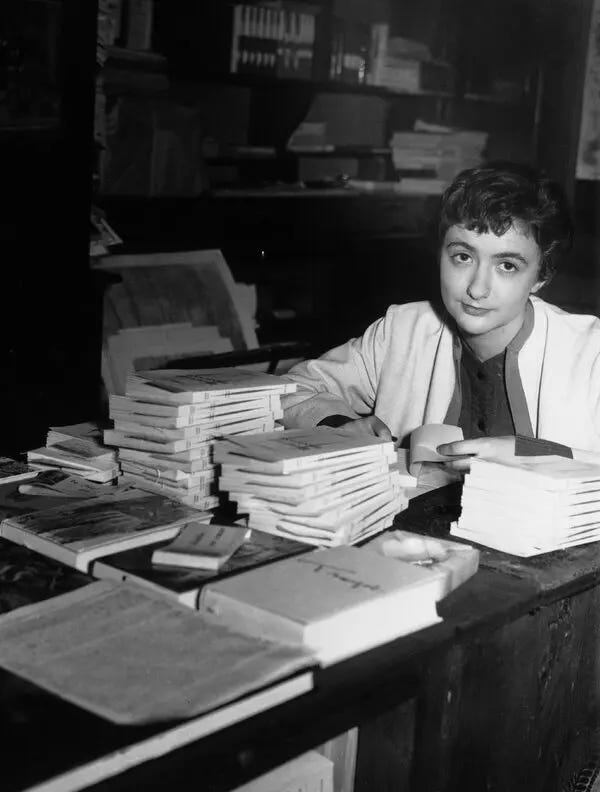
Born Françoise Quoirez in 1935, she chose the pen name Sagan after a minor aristocratic character in Marcel Proust’s À la recherche du temps perdu. The choice was fitting: Proust would remain one of her great literary influences, particularly in his attention to memory, desire, and the subtle movements of the heart.
The success of Bonjour tristesse was so sudden that Sagan later joked she had no idea what to do with it. One day she was a student who preferred reading and cafés to university lectures; the next she was one of the most famous writers in France.
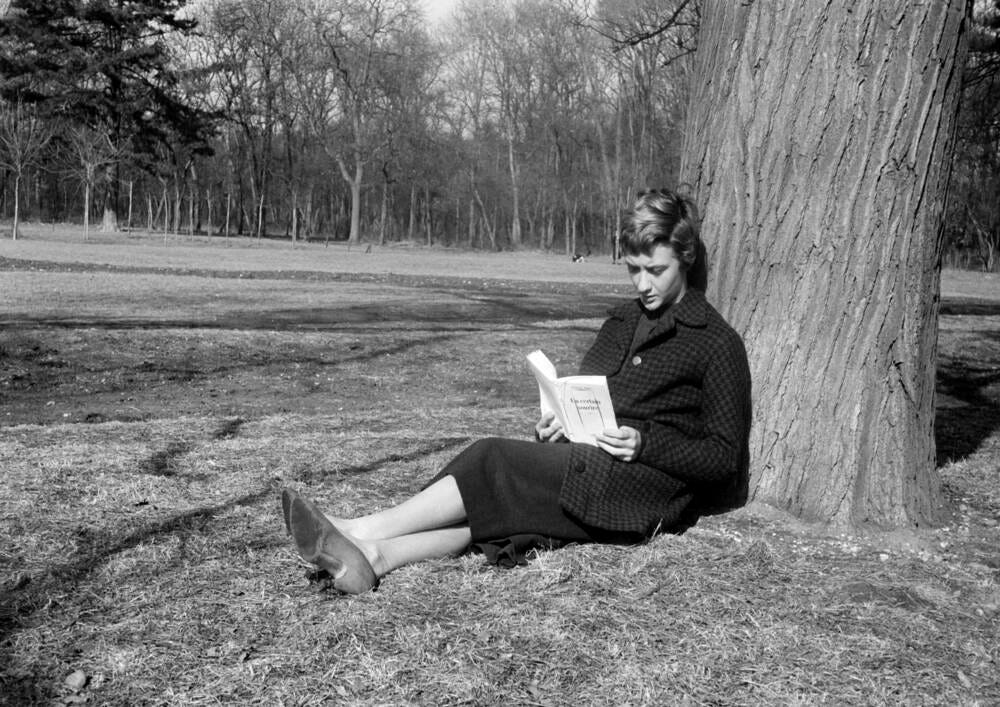
The Catholic novelist and future Nobel laureate François Mauriac famously described her as:
« un charmant petit monstre »
“a charming little monster.”
The phrase followed her for the rest of her life. Yet it captured only part of the story.
What shocked readers was not only Sagan’s age but her tone. Unlike many novels of the period, Bonjour tristesse did not punish its heroine for her desires or present clear moral lessons. Cécile is intelligent, selfish, seductive, vulnerable, and often contradictory. Sagan trusted readers to judge for themselves. In 1954, that freedom felt revolutionary.
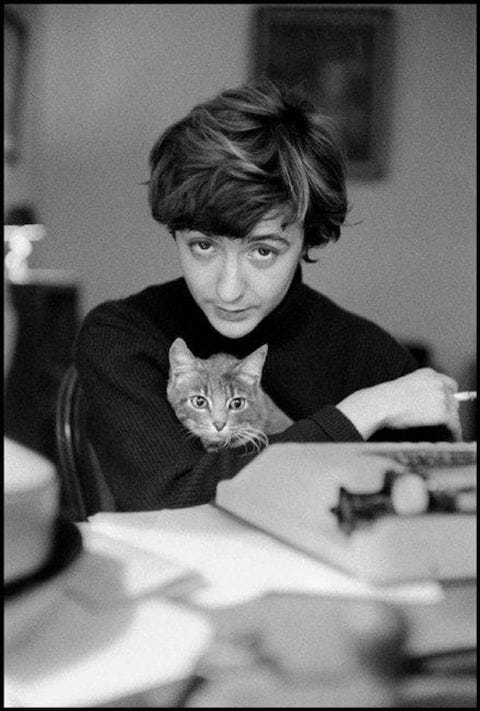
One of the most surprising things about Sagan is how quickly she wrote.
She drafted Bonjour tristesse in only a few weeks during a summer holiday, often writing in cafés and working with remarkable speed. Throughout her life, she preferred instinct to elaborate planning. She once said that she wrote almost the way other people breathed.
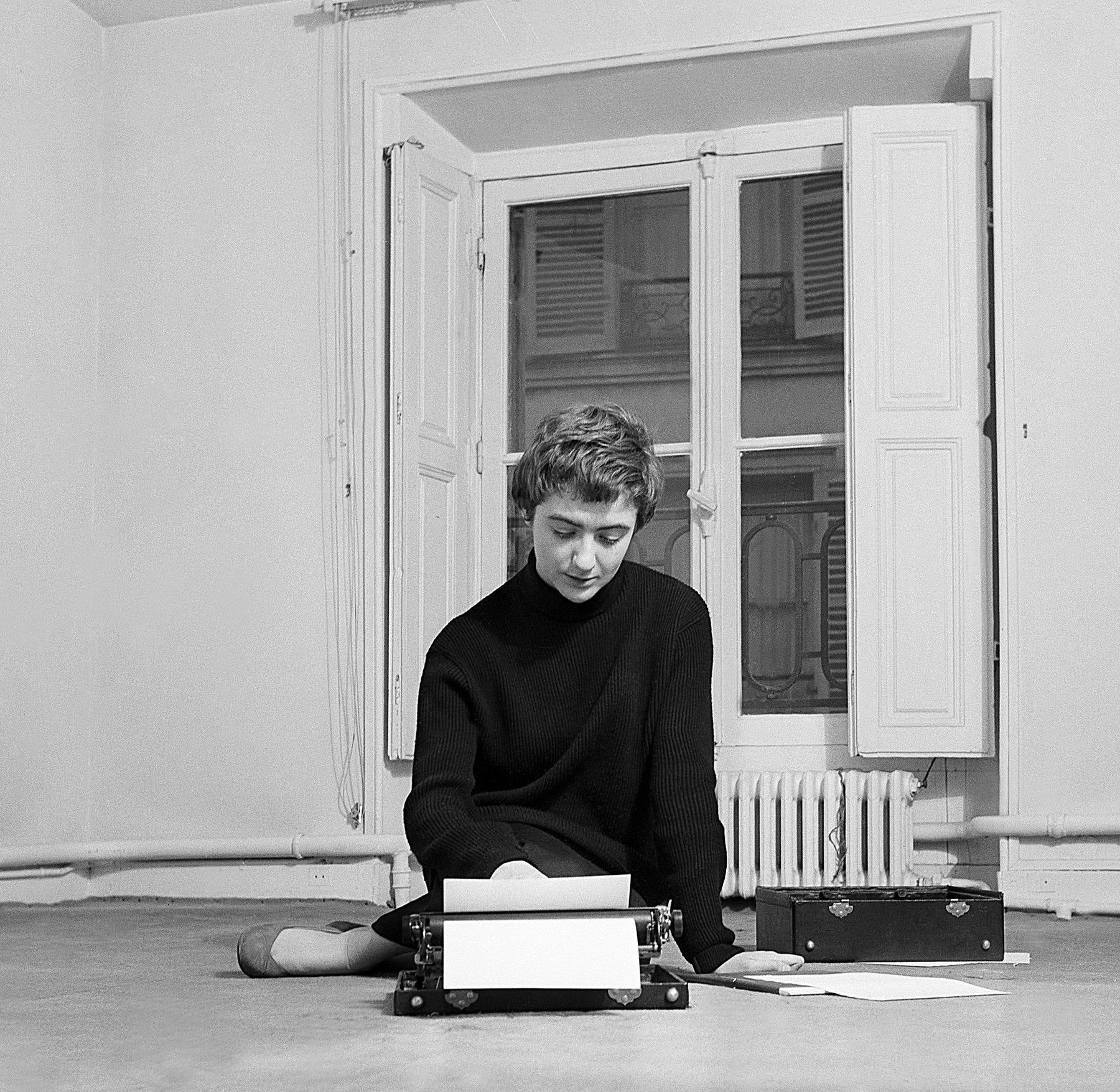
Her prose reflects that approach: light, fluid, conversational, and seemingly effortless. But that simplicity isdeceptive.
French learners often discover Sagan because her sentences are relatively accessible. The vocabulary is rarely difficult. The grammar is generally straightforward. But beneath that clarity lies a remarkable precision. A single sentence can reveal jealousy, desire, boredom, irony, and tenderness all at once. That is one reason her work remains so modern.
Sagan did not merely write about freedom; she lived as though rules were optional.
She loved fast cars and drove them recklessly. In 1957, at only twenty-two, she survived a serious car accident that nearly killed her and left her hospitalized for months. The accident became part of her legend and reinforced her image as a woman determined to live intensely.
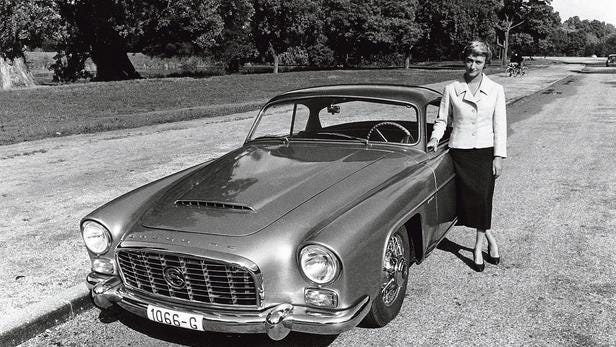
She adored gambling, luxury hotels, long dinners with friends, jazz music, and nights that lasted until morning. Unlike many literary celebrities, she never tried to appear respectable.
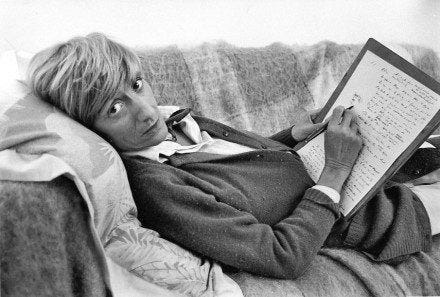
She openly discussed her mistakes, debts, loves, addictions, and disappointments with a disarming honesty. This refusal to perform the role of the “serious intellectual” sometimes frustrated critics but endeared her to generations of readers.
Behind the glamorous image, however, was a writer deeply interested in solitude, melancholy, and emotional vulnerability. Again and again, her books return to the same question:
Why are happiness and sadness so often inseparable?
When a novel becomes a cultural phenomenon, filmmakers inevitably try to bring it to life.
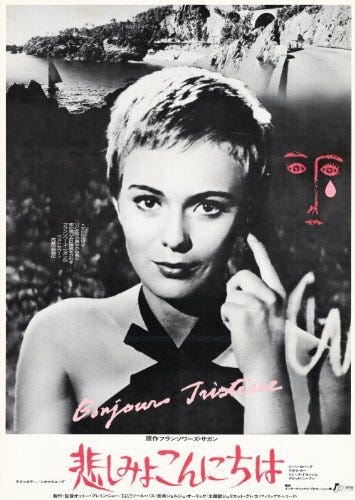
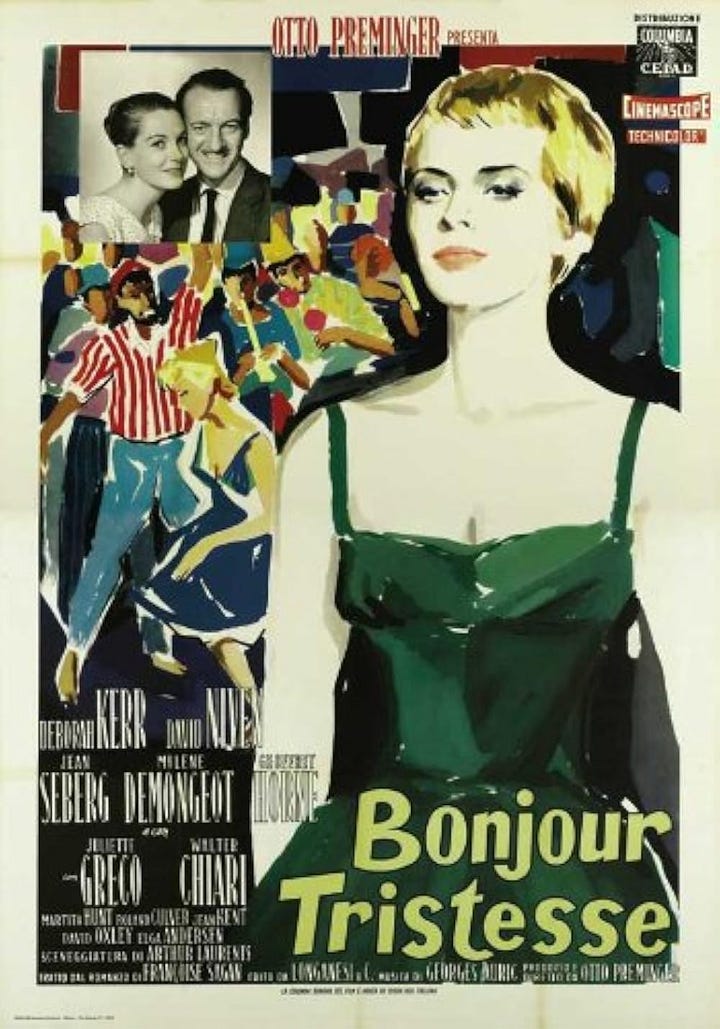
Directed by Otto Preminger, this adaptation arrived only four years after the publication of the novel.
The film stars:
Jean Seberg as Cécile
David Niven as Raymond
Deborah Kerr as Anne
Its visual style captures the glamour and elegance of the French Riviera while preserving much of the emotional tension that made the novel famous. For many readers, this remains the definitive screen version.
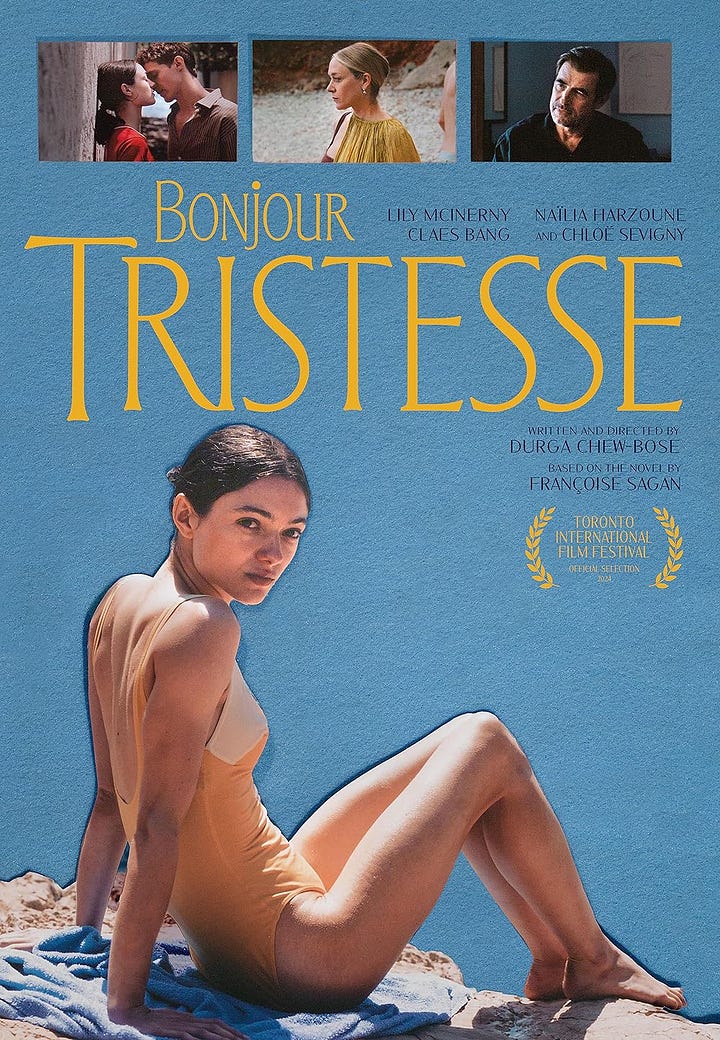
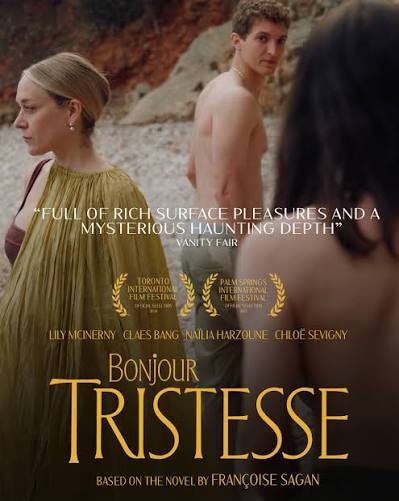
More than seventy years after the novel’s publication, director Durga Chew-Bose returned to Sagan’s story for a new generation.
The film stars:
Lily McInerny as Cécile
Claes Bang
Chloë Sevigny
Nailia Harzoune
Rather than treating the novel as a period piece, the adaptation highlights how contemporary its themes still feel: youth, privilege, desire, freedom, and the unintended consequences of our choices.
Both adaptations remind us that while fashions change, human emotions rarely do.
Few books capture summer quite like Bonjour tristesse. The heat, the sea, the long afternoons, the illusion that life can remain suspended forever, Françoise Sagan transforms these familiar summer sensations into something unforgettable.
Perhaps that is why the novel continues to resonate. We all remember a summer that seemed endless. We all remember a moment when happiness felt effortless. And many of us remember discovering, sooner or later, that even the brightest days cast a shadow.
Have you read Bonjour tristesse? Or seen one of its film adaptations?
No posts
Comments
Nothing yet. Say the first thing.
Sign in to join the conversation.