
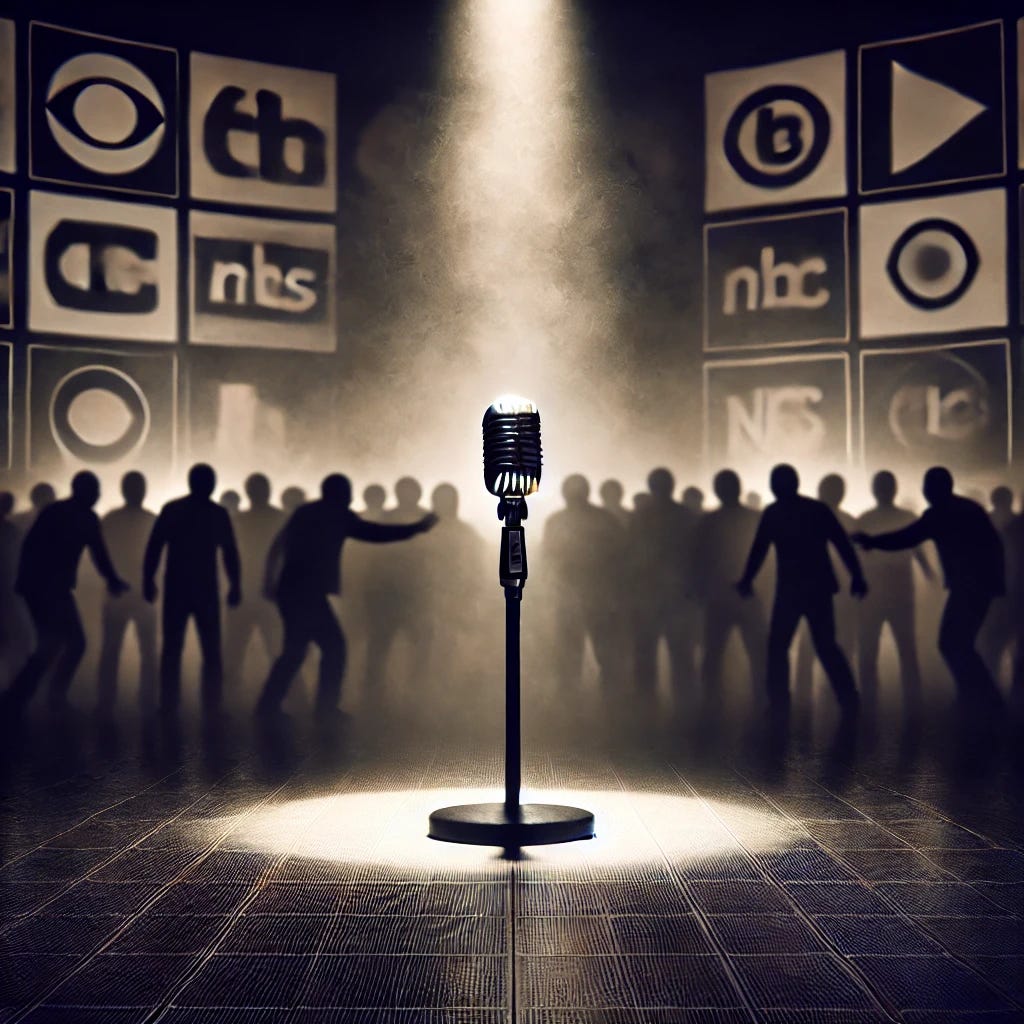
In a recent article, the Los Angeles Times harshly criticized Stanford University for hosting a conference that featured what it called "purveyors of misinformation and disinformation." The piece, dripping with disdain, paints a picture of a university recklessly endangering public health by giving a platform to dissenting voices. But the article does more than criticize—it reveals a dangerous trend in media: the weaponization of journalism to silence and demonize those who dare to question the prevailing narrative.
Let’s begin with the core issue at hand: the right to question, debate, and discuss. Science is not a monolith; it thrives on inquiry, skepticism, and rigorous debate. Throughout history, what was once considered settled science has been upended by new evidence and perspectives. Yet, today, we find ourselves in a climate where questioning the World Health Organization (WHO) or challenging the mainstream narrative on COVID-19 is met with immediate and severe backlash.
The LA Times article is a prime example of this. Rather than engaging with the ideas presented at the Stanford conference, the piece opts for character assassination, branding qualified experts as "purveyors of misinformation" without a fair examination of their arguments. This approach not only undermines the principles of free speech but also erodes public trust in the media.
The article doesn't stop at dismissing alternative viewpoints; it goes further to demonize those who hold them. Labeling dissenters as dangerous or irresponsible is a tactic used to stifle legitimate debate and create a chilling effect. When the media resorts to such tactics, it is not merely reporting the news—it is actively shaping the narrative to fit a specific agenda.
The consequences of this are profound. In an environment where dissent is equated with misinformation, critical thinking is discouraged, and the public is left with a one-sided view of complex issues. This is not journalism; it is propaganda.
The media's weaponization extends beyond demonization; it serves as a tool for broader censorship efforts. By framing alternative viewpoints as "dangerous," the media justifies the suppression of these voices on social media platforms, in academic institutions, and in public discourse. The LA Times article is part of a larger strategy to deplatform and marginalize those who challenge the WHO, governments, and other powerful entities.
This is not a new phenomenon. We have seen this playbook before. During the pandemic, doctors, scientists, and even Nobel laureates who questioned the efficacy of lockdowns, vaccine mandates, or other public health measures were systematically silenced. Their opinions, no matter how well-reasoned or supported by evidence, were dismissed as "misinformation." This heavy-handed approach has left us with a distorted understanding of the pandemic and has hindered our ability to learn from it.
The media should serve as a check on power, a forum for debate, and a source of truth. Unfortunately, in cases like this, it has become a tool for enforcing conformity and punishing dissent. When journalists act as gatekeepers of acceptable opinion, they betray their duty to the public and undermine the very foundation of a free society.
The LA Times' attack on Stanford's pandemic conference is not just an assault on the individuals involved; it is an assault on the principles of free speech and academic freedom. If we allow the media to continue down this path, we risk losing the very freedoms that allow us to innovate, grow, and improve as a society.
It is imperative that we resist the media's attempts to weaponize journalism against free speech. We must defend the right to question, dissent, and engage in open and honest debate, just being allowed to expose the falsehoods being promoted by the new world order oligarchies. The stakes are too high to allow a narrow narrative to dominate the conversation. As we move forward, let us remember that true progress comes not from silencing voices, but from hearing them all.
Susan Sweetin of Freedom Travel Alliance, a platform dedicated to preserving freedom in travel, healthcare, and public discourse.
No posts
Comments
Nothing yet. Say the first thing.
Sign in to join the conversation.