
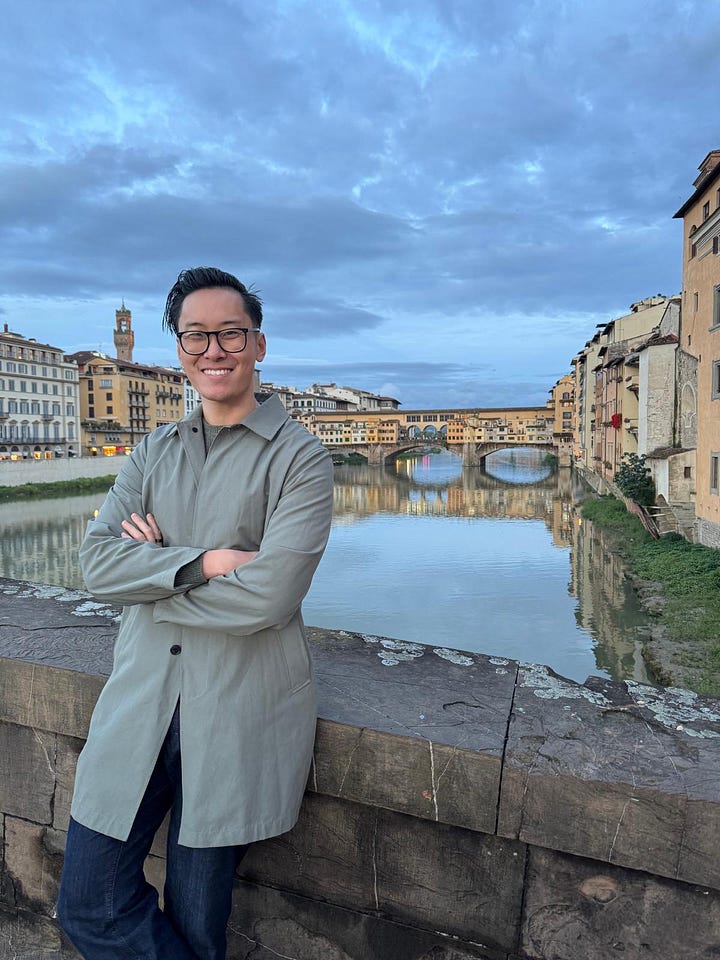
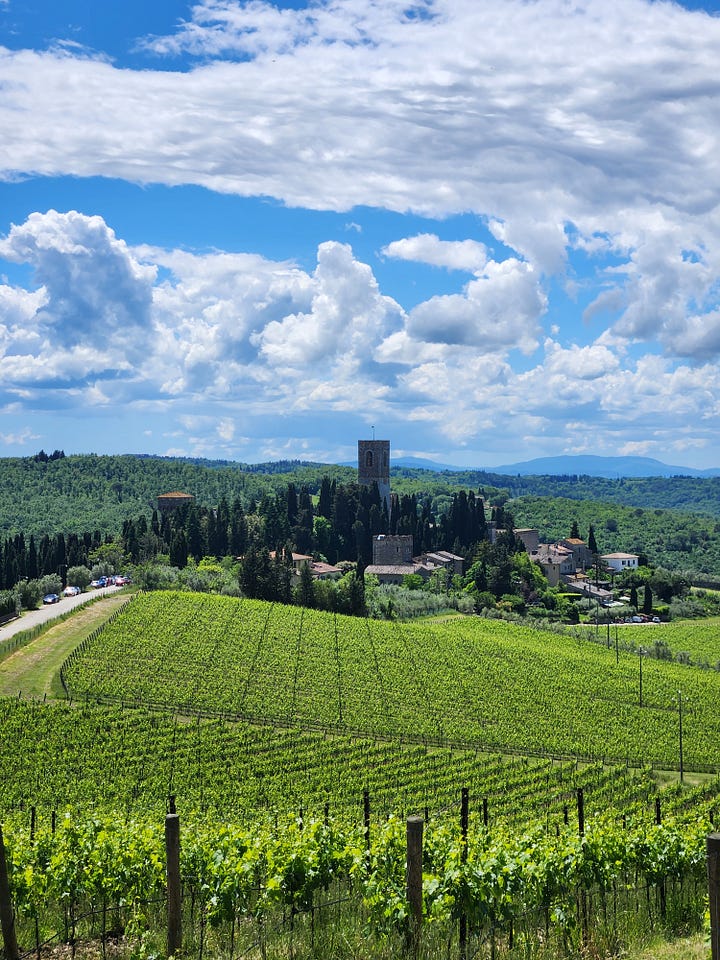
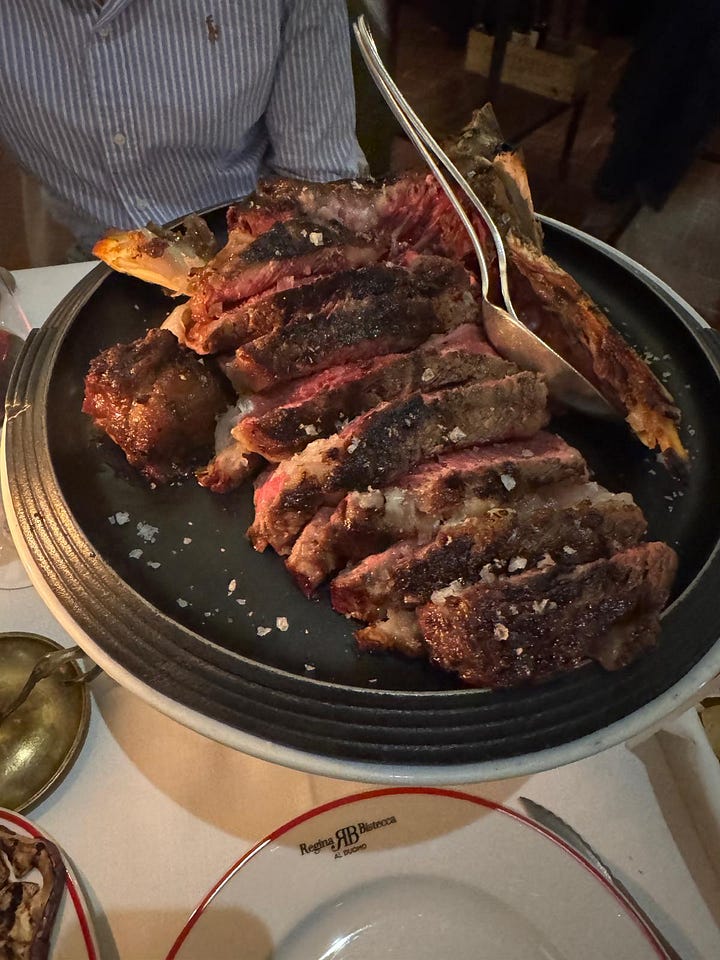
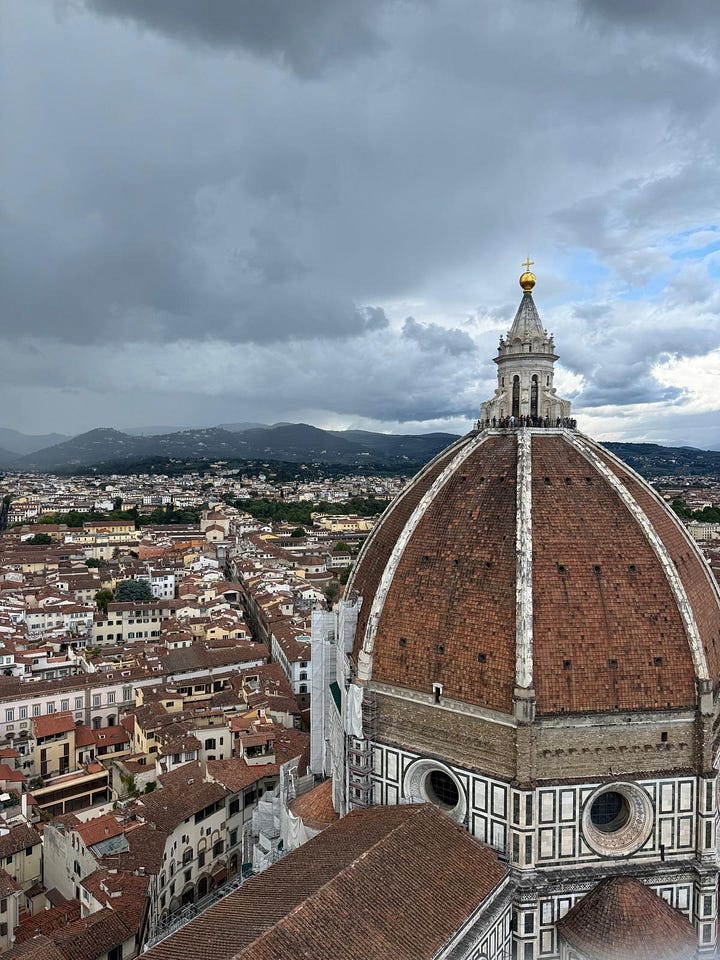
This is the second instalment of my honeymoon series where I cover artists from some of the cities that I visited in Italy last month with my wife. We’re still covering rock progressivo Italiano (RPI) or Italian prog rock, but moving north from Rome to Florence (Firenze) this time, which is far less densely packed but still very vibrant in cuisine and culture. We spent two nights there, and managed to spend a whole morning at the Uffizi Gallery, climb both the Duomo and Giotto’s Bell Tower, do a wine tour outside the city, and I went to see the Mark Rothko exhibit while my wife went shopping. I’ve yet to have better steak in my life than the famous Florentine Steak there.
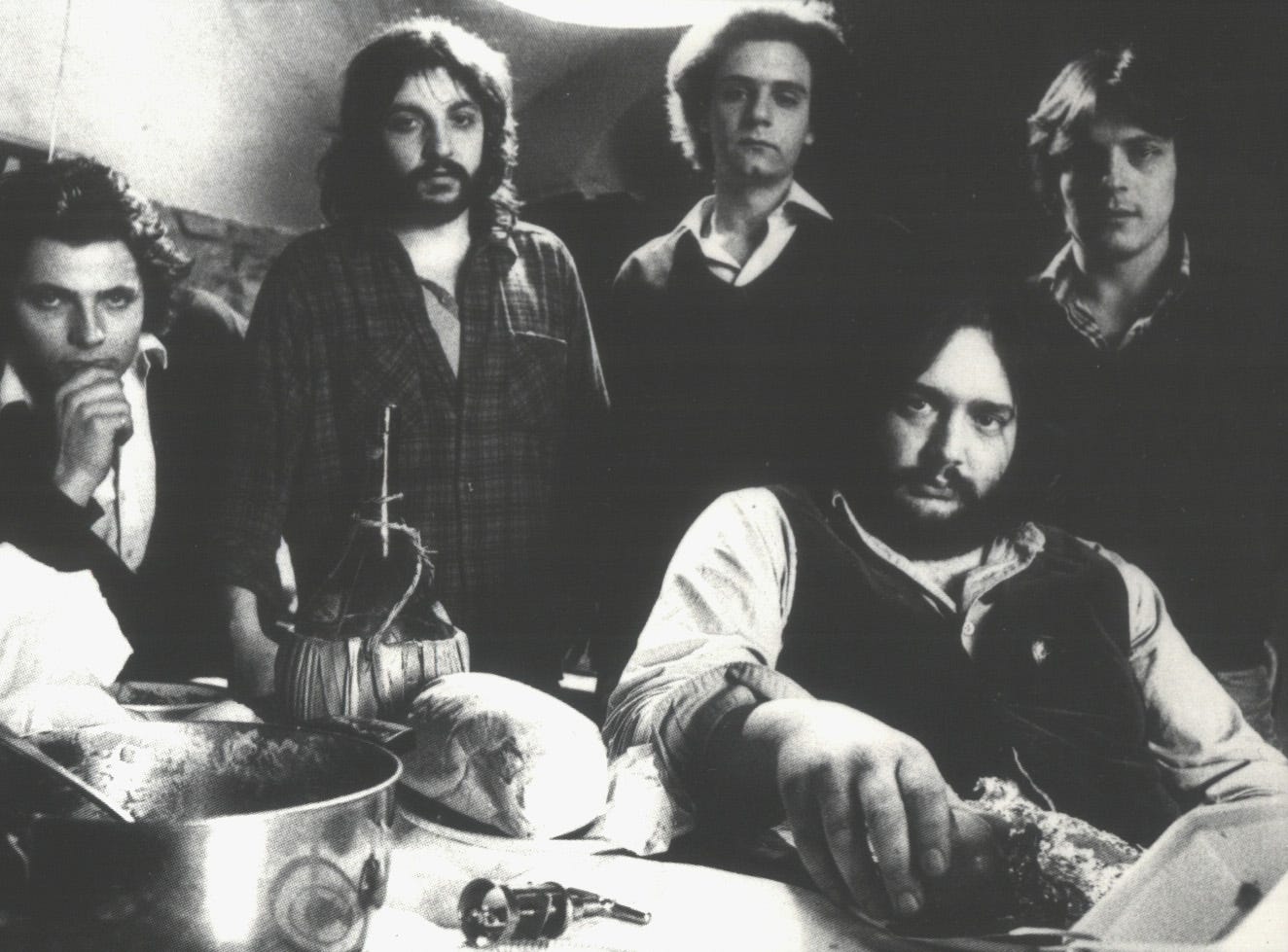
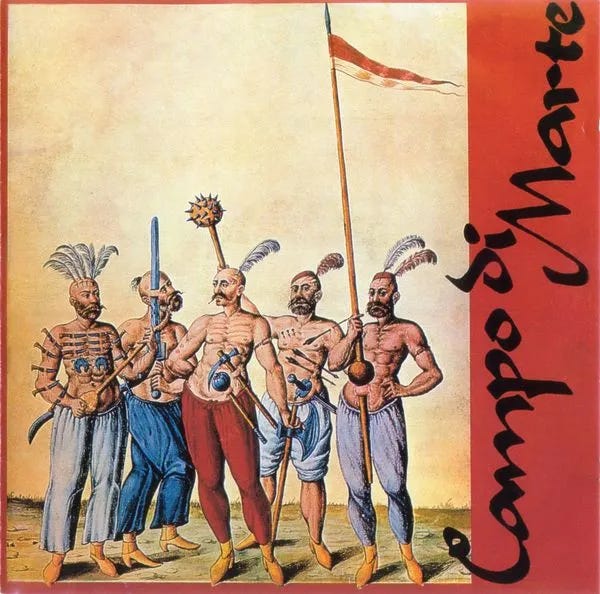
Campo di Marte were one of many short-lived RPI bands, named after a northeastern neighborhood in Florence that was thrust onto the band by the label United Artists after they finished recording their one-and-done debut album instead of chosen themselves. Most of the band didn’t like the name. “Marte” is named after Mars, the God of War, and so it ended up working serendipitously for them in the end as it related somewhat to the album’s cover, depicting soldiers wounded in battle but standing triumphant, and the album’s story of a town living peacefully before war encroaches on them. With all seven tracks named simply after how they should be listened to sequentially, it’s clearly presented as a concept album, but United Artists’ Italian director Gian Borasi tampered with the album to start with the heavier second side, which ultimately only made it seem like the sequence and story didn’t matter to the album.
Campo di Marte might be held up in some circles as a cult classic, but it just misses the mark for me, held back by a few issues. For one thing, the vocals barely register; diffidently-sung, and with no melody to speak of. I’m sure the band liked the story they wanted to tell, but the vocals are so unimportant, it seems unlikely that anyone would be following along to the lyric sheet to understand the concept, never mind that the story’s order was broken by the label.
But a bigger issue is that the band want to prove out their proggy complexities on songs that don’t support it, so you constantly have songs made up of stitched together parts. The worst offender is “IV Tempo,” which is also the shortest track but still clearly parsed out into four sections. It begins with half a rendition of Bach’s “Prelude No. 2 in C Minor” on organ backed by a rock beat, and frankly anyone who knows that piece knows who easy it lends itself to having its rhythm emphasized, and rather than perform the whole piece (which would still only be half since it’s missing the fugue), the band shift gears afterwards into a bunch of miniature sections. First a dirge, then a piano-led groover, and then an acoustic coda that all feels like a series of disconnected images.
It is a shame because the band can clearly rock out or soften up when called upon. Balducci’s time at the conservatory in Florence learning French horn—a notoriously difficult instrument to play—is put to good use, and the melodies that he plays on the bucolic “II Tempo” are simply gorgeous. The horn and the flutes, performed by both Barducci and drummer Mauro Sarti, are chamber textures that were not available to other, bigger, and longer-lasting RPI bands. Ursillo’s roving bass are generously mixed, and he does a lot of work supporting the band during the louder parts of “VI Tempo” and “I Tempo” as he rocks out alongside Enrico Rosa’s electric guitar channeling King Crimson and Balducci switching to organ.
It’s no surprise to me that Campo di Marte disbanded almost immediately after recording Campo di Marte given they had little artistic control of their music. Paul Ursillo joined Sensations’ Fix while Mauro Sarti joined Bella Band, both other Florentine prog rock bands. Enrico Rosa moved on to jazz which was his original calling—he would have been a pianist but his family sold the piano—and joined a jazz fusion band called Leghorn—where Rosa was originally born—that was dropped by United Artists that prompted him to leave Italy for Denmark, where he eventually found work as a jazz musician. (Methinks had he stayed in Italy, he would’ve been a natural pick for Bella Band’s lone album.) Campo di Marte eventually reunited in 2003 with original members Rosa and Mauro Sarti but otherwise new members for some live shows in Florence, which were packaged up with concert material from 1972 on a live release, before stepping back into obscurity.
B+
No posts
Comments
Nothing yet. Say the first thing.
Sign in to join the conversation.