
CHRISTOPHER NOLAN’S ODYSSEY IS NOT “WOKE”
The controversy around the film is contrived
Editors’ note: Christopher Nolan’s Odyssey opens in theaters today. Frequent JFBT contributor Quinn Que responds to the controversies that have surrounded the film for months.
Christopher “Chris” Nolan is one of the Top 5 greatest living directors in anglophone filmmaking. He is best known for speculative epics like Inception or Interstellar, as well as elevated genre fare like the Dark Knight trilogy. His last film, Oppenheimer, cleaned up at the box office, enamored critics and audiences alike, and even soared through the preening annual cinematic tradition colloquially known as Awards Season. Riding these highs and earning the mandate of heaven in Hollywood, Nolan opted to double-down on his own bet on greatness, with the upcoming adaptation, The Odyssey.
I’ll admit my bias upfront. I’m a fan of this man, have been since I was small child. He went from brilliant indie films to directing and co-writing the two greatest, most-comics accurate and yet also most original, Batman films in live action (I’ll let you figure out which of the trilogy was his weakest). He’s never rested on his laurels, and arguably never even had an unmitigated flop; the closest he came to career-level miss was 2020’s Tenet, a film which, given the circumstances surrounding it, I’d call sufficiently mitigated indeed. All this to say, Nolan has earned the respect he carries.
And yet, just days and weeks after the second teaser/trailer for his Odyssey dropped, a curious thing began to happen: the discourse around both his latest film and the man himself started to wobble. A narrative developed that Nolan had “gone woke” and was making his Greek fantasy epic in ways that disrespected the source material, weren’t period or region accurate, wouldn’t entertain fans, and seemed attuned to tastes of political progressives above all. At least, according to a vocal minority of right-aligned bloggers, YouTubers, cable news pundits, and Xitter trolls.
How did this happen? What does it mean? And who, or what, is really behind the campaign to come at the king?
The Critical Drinker is a Scottish YouTuber named Will Jordan who publishes film commentary under that handle to an audience of millions. His catalog reads like a greatest hits of the anti-woke film grievance industry: videos “fixing” Captain Marvel, Rey, Fat Thor, and Luke Skywalker; broadside after broadside against what he characterizes as ideologically captured Hollywood. He is, by his own positioning, a culture war content creator. One who has found an extraordinarily lucrative niche in telling a specific audience what it already believes—that modern Hollywood hates them, hates their heroes, and hates the stories they grew up loving.
Jordan is also, not incidentally, a failed novelist, which I mention as relevant context: this is a man with a complicated relationship to the gap between creative ambition and creative achievement. And he is now making his living telling other people their ambitions have failed. Often in strictly tribalist terms, and with an edge that does much of the work in place of cooler headed criticism as discipline, unlike his peers like Chris Stuckmann or Jeremy Jahns.
Within days of the second Odyssey trailer dropping, Jordan posted “The Odyssey—I Got A Bad Feeling About This One,” and the outrage machine did what it does. Reaction channels picked up the video. Some literally played it on screen while filming their own responses. Substack essayists—some sharp, some less so, a few friends of mine—absorbed the cynical framing and dressed it in more sophisticated language.
Cable news anchors, including at least one who went after actor Elliot Page on air, performed outrage for their audiences. Elon Musk, who has apparently appointed himself guardian of “Western civilization” (as he often puts it) and Greco-Roman fiction between rocket launches and electoral interventions, weighed in repeatedly. The whole apparatus took approximately seventy-two hours to spin up.
This is a contagion with an identifiable patient zero, not an organic thing. And here’s what the contagion obscures: Nolan’s choices, taken individually and collectively, are not aberrations. They are expressions of a filmmaking tradition as old as adaptation itself—the tradition of regional reimagining, in which a story is transplanted into the cultural register of its new creatives and audience. Without fear, without apology.
Consider Akira Kurosawa. His films Ran and Throne of Blood are adaptations of Shakespeare’s King Lear and Macbeth, respectively. They feature Japanese casts, Japanese language, Japanese aesthetic, feudal Japanese setting, and a sensibility drawn entirely from Noh theater rather than Elizabethan drama. The cultural transplant is total, immersive, and highly effective. No one demanded Kurosawa cast English actors or approximate period-/region- accurate Gaelic dialogue. No one called these films a desecration of Shakespeare. Instead they sit comfortably in the canon of the greatest films ever made—a testament to what happens when a master filmmaker takes a classic story and makes it fully, unashamedly his own.
Or consider Astérix & Obélix: Mission Cléopâtre, Alain Chabat’s 2002 French comedy adaptation of the Belgian comic series. It is set in ancient Egypt and Rome. Its cast is French—Gérard Depardieu, Monica Bellucci, Jamel Debbouze—with an Italian actress playing the Egyptian queen herself. The humor is French, the sensibility is French, the cultural register is French from first frame to last. It was one of the most beloved French comedies of its generation. Nobody accused Chabat of desecrating Egyptian heritage. Nobody demanded ethnic accuracy. The film was understood, correctly, as a French production doing what French productions do.
Nolan is doing what American productions do. He is making an American film—which means an English-language film, with contemporary American idiom, drawing on the full range of American talent (plus some international superstars with American followings), and reflecting the demographic reality of the country whose entertainment industry is footing the $250 million bill. That’s not “woke.” That’s not ideology. It is filmmaking at its most intuitive and perceptive.
The Ten Commandments gave us the all-American actor Charlton Heston as Moses—a figure of ancient Hebrew and Egyptian history—and that film became a cultural institution. The complaint about Nolan’s casting choices only makes sense if you apply a standard of ethnic authenticity that would see the whole cast look Jason Mantzoukas and Nia Vardalos. Which, as we’ll see below, the detractors are very much not. Indeed, we see the complaints are applied selectively, only when the casting runs in a particular direction. How curious.
What Nolan has actually done is announce, through his choices, that he intends to make his Odyssey the way Kurosawa made his Macbeth: as a work that belongs to the moment and the culture producing it, not as a museum piece in service of someone else’s chauvinistic, anachronistic, and ultimately highly political agenda. The critics calling this “woke” aren’t defending Homer or Greek people or “the West.” They’re defending a mental image of Homer that is itself deeply inauthentic, artificially constructed, and arguably well past its sell-by date. And they’re doing so on behalf of a YouTuber who gets paid for clicks, whether the film is good or bad.
Before we litigate specific choices, a disclosure: I’ve written about racebending before, at length and with some care, for the Journal of Free Black Thought. My position there was that racebending is a real phenomenon, that it’s omnidirectional, that it causes real harm in both directions, and that it should end as a lazy industrywide habit. I stand by that piece. I’m not going to pretend the concept is illegitimate here simply because I’m defending Nolan. What I am going to do is apply my principles honestly and consistently. A feat which, as we’ll see, the critics of this particular film conspicuously have not. Let’s start with what’s actually confirmed.
The cast of Nolan’s Odyssey includes Matt Damon as the titular Odysseus (king of Ithaca and hero of legend), Anne Hathaway as his wife Penelope (Queen regent of Ithaca and most important woman in the film), Tom Holland as their son Telemachus (put-upon prince of Ithaca), Robert Pattinson as Antinous (one of many nefarious suitors for Penelope), Jon Bernthal as Menelaus (the Greek king of Sparta and Agamemnon’s brother), Benny Safdie as Agamemnon (the Greek king of Mycenae and the commander of the Achaeans during the Trojan War), Charlize Theron as Calypso (a temptress sea nymph), Samantha Morton as Circe (a goddess and witch), Bill Irwin as the Cyclops, Zendaya as Athena, Lupita Nyong’o in the dual roles of Helen of Troy and Clytemnestra, John Leguizamo and Mia Goth as servants to the Ithaca royal family, plus Himesh Patel, Will Yun Lee, and Jimmy Gonzales as members of Odysseus’ seafaring crew. Along with Travis Scott as the Bard (a semi-narrator role), and then several people, including Jesse Garcia, Elliot Page, Michael Vlamis, et al. in still undisclosed roles. (Nolan is famously secretive, thus the ambiguity.)
Read that list again slowly. Then ask yourself: which names generated outrage? I’ll tell you: Nyong’o. Zendaya. Elliot Page. Just three people out of several. Two of them melanated (“black”), one of them trans. That’s essentially it. The discourse has been wall-to-wall about those three, with Nyong’o bearing the heaviest weight. Out of a cast that spans dozens, featuring people of African, Asian, Jewish, Latino, and Gaelic/UK descents. By the way, near as I can tell, Vlamis is the only ethnically Greek in the whole roster, certainly the most prominent.
Even if we wanted to pretend that “white” and Mediterranean are roughly the same thing (which is still inaccurate and special pleading), ask yourself what’s missing from the outrage by any truly objective measure. John Leguizamo—a Colombian-American actor of Puerto Rican descent—is playing Eumaeus, a character described in Homer as a Phoenician-born slave of Greek parentage. No uproar. Himesh Patel, a British actor of Gujarati Indian descent, is playing Eurylochus, Odysseus’s second-in-command and one of the most prominent crew members in the poem. Silence. Will Yun Lee, a Korean-American actor, has a shipmate role. Nothing. Jimmy Gonzales as Cepheus. Not a word from the people supposedly weeping for Homer’s integrity.
I should also point out here, as I am frequently wont to, that the thing we call “race” is fake. I will continue using the concept of ethnicity, pegged roughly to regions rather than color terms. And I will use color terms sparingly, because they are pseudoscientific and frankly sloppy. Not unlike the concern-trolling about this film.
For the issue here is selective outrage, and selective outrage is never a principled position. It is a tell. If the argument is ethnic authenticity—that Bronze Age Aegean Greeks should be played by people who look like Bronze Age Aegean Greeks—then the entire cast fails that standard. Damon is Scottish-American. Bernthal and Safdie are Jewish-American. Charlize Theron is an Afrikaner from South Africa. None of them are remotely proximate to the Mycenaean Greeks of 1200 BCE. The people screaming about Nyong’o as Helen are, without exception, fine with all the rest or just echoing talking points that isolated her. Which tells you the complaint was never about authenticity. It was about one specific direction of casting deviation, and one only.
That said—and I mean this—the Nyong’o casting isn’t accurate. Helen of Troy is described in the ancient sources as golden-haired and white-armed. She is a Spartan Greek princess. Casting a Kenyan actress in the role is a departure from the source material, full stop. I just don’t care about picking on her and arbitrarily ignoring the rest. The discourse around racebending has identified that concerns about authenticity were, prior to the last ten years, often asymmetrically applied in favor of, non-“white” people and no one else. I said this in my FBT piece and I’ll say it here: the practice is problematic regardless of direction, and pretending otherwise is dishonest.
But here’s the thing: Nyong’o is not playing Helen in a Greek production, in a historically strict docudrama, or in an adaptation that has staked its identity on period accuracy. This is not the Passion of the Christ, which famously opted for Aramaic, Hebrew, and Latin dialogue with subtitles. This is not Shogun, the FX miniseries that pushed for heavy Japanese dialogue—in period dialect—with subtitles alongside a predominantly Japanese case (all despite being an American production). This is a Christopher Nolan American blockbuster with international flare, a contemporary English-language script, and a cast assembled from the full breadth of Hollywood talent. The Kurosawa standard applies. The Chabat standard applies. This is an American film, made for a global audience that looks like contemporary America.
Let us also remember that Charlize Theron, an Afrikaner whose ancestry includes Dutch as well as French and German, is playing the nymph Calypso; and Samantha Morton is an English actress from Nottingham, is of Polish and Irish descent, and will play the goddess Circe. I have yet to read a single thinkpiece demanding Nolan explain those choices, possibly because the characters are supernatural beings rather than a Spartan queen, and possibly because there’s a certain kind of critic who gets much more exercised about some casting decisions than others. What’s up with that?
I don’t like double standards or hypocrisy. I think they’re evil, in fact. So I can’t support picking out one or two black performers over others. I can’t support ignoring Asian actors, Latino actors, Euro actors, or any other group because they’re “close enough,” or because complaining about them doesn’t drive clicks. Either the whole cast is inaccurate and someone cares about that on principle, or they’re just looking for an excuse to whinge. To attack people. To ride a subcurrent of hate, because that’s what will get them eyeballs and ad rev. I’m not interested. That’s hollow.
I will say, just for clarity, that I don’t think all of the people criticizing the film preemptively are racists or grifters. I think some want to discuss and dissect this topic in good faith. I think some are confused. And I think some are just a little bored of Nolan as an all-star director. But trying to score cheap shots isn’t how you figure this sort of thing out. If the film really does suck, we’ll know that from the full release, not a trailer or a casting announcement. Nolan has earned that much by now.
Let’s talk about the dialogue. Within hours of the second trailer dropping, a particular line from Robert Pattinson’s Antinous went viral: “You’re pining for a daddy you didn’t even know, like some sniveling bastard.” Matt Damon’s Odysseus shouts “Let’s go!” as a battle cry. Tom Holland’s Telemachus says “My dad is coming home!” These lines sent a certain subset of the internet into convulsions. The complaint: the dialogue sounds too modern, too American, too casual for a story set in Bronze Age Greece.
Yet this is the weakest objection in the entire arsenal. The critics demanding more period-appropriate language have, seemingly without noticing, painted themselves into a corner with no exit. What would period-accurate dialogue actually sound like? Ancient Greek. Mycenaean Greek, specifically—a dialect so remote from modern Greek that it requires specialist scholarship to parse. Nobody is asking for that. What they seem to want instead is something that sounds old; the vaguely Elizabethan, pseudo-medieval register that Hollywood has historically used as a shorthand for antiquity. “Thee’s” and “thou’s” alongside inverted syntax and formal declamation.
The problem is that Elizabethan English is no less anachronistic to Bronze Age Greece than contemporary American verbal register. It is simply a different flavor of inaccuracy, one audiences have been conditioned to accept as a proxy for oldness. Demanding it here is just nostalgia for a media trope, a mere convention—one that doesn’t hold up. Nolan’s dialogue choices are consistent with the American production framework we established in the previous section. Contemporary language is how American filmmakers signal immediacy and emotional access. “Let’s go!” tells you Odysseus is a man of action in a way that every American viewer instantly understands. Whether these specific lines are good writing is a fair question, but it’s also one we can’t fully answer until we see them in context.
Then there is Travis Scott. Nolan has stated publicly that he cast Scott because the Odyssey is oral poetry, and that oral poetry is analogous to rap. This has been met with considerable mockery. Yet Nolan’s position is actually defensible. The Homeric tradition was not a literary one. These poems were performed, not read—sung by traveling bards called aoidoi to audiences who had never seen a written word in book form (because books broadly didn’t exist). The poems are structured around mnemonic devices, repeated epithets, and formulaic phrases precisely because they were composed and transmitted orally. Rap, whatever one thinks of it as an art form, is a plausible analog, one whose rhythmic oral composition and performance could work here. The connection Nolan is drawing is a serious argument about form.
What can be said about Scott specifically is that he’s an arrogant, arguably megalomaniacial, and ultimately deeply controversial figure who’s been involved in multiple egregious cases of deadly concert mayhem. There are better men to pick as a representative of rap and hip-hop, as well as better actors to give this kind of grand platform to. I personally would not have chosen Scott, and I might have paused at the rap to bardic parallel. Still, those who simply see a black male rapper—with no awareness of his legal or moral baggage—and think him unfit for the role of the Bard are sort of telling on themselves. We might ask how much of their reverence is for the actual tradition Homer represents—an oral, popular, communal art form—and how much is for the museumified version they encountered in a university syllabus.
Now, the Emily Wilson question—because this is where the audio and source material objections converge, and where the bad faith is most concentrated. The Critical Drinker and others have leaned heavily on the claim that Nolan adapted exclusively from Wilson’s translation, and that Wilson’s translation is an ideologically compromised feminist revision. Meaning therefore that Nolan’s film is ideologically compromised feminist revisionism. This chain of claims has several problems.
On the first claim: Nolan did not adapt exclusively from Wilson. As explained in a Time magazine profile from May 2026, he studied versions by Wilson, by E.V. Rieu, and by Robert Fagles while developing the screenplay. These are three translations representing significantly different approaches to the text, all famous and beloved in their own rights. Wilson was only one piece, and hers was chosen in part because her Odysseus is more morally complex and ambiguous—closer to the flawed, suffering, difficult men that Nolan has built his career dramatizing.
On the second claim: Wilson’s translation is contested, and some of the criticism is legitimate. She makes choices that reflect her views on gender and heroism, and those choices are worthy of scrutiny. “Tell me about a complicated man” as an opening line is more deflating than the grandeur of prior translations. Similarly, rendering polymetis as “Lord of Lies” rather than “cunning” or “wily” is an interpretive decision with an ideological signature. These are real objections to take seriously. But Wilson has also been widely praised on literary grounds. Nolan picked it because it’s famous, not just for its politics. As he did those of Rieu and Fagles, two giants in the medium.
On the third claim—the leap from Wilson’s translation choices to Nolan’s film being woke propaganda—we have no evidence whatsoever. We have a trailer. We have casting announcements. We have a director whose entire body of work is built around morally complex male protagonists who suffer for their obsessions. Nothing in Nolan’s track record suggests he absorbed Wilson’s gender politics. The chain of inference requires you to assume bad faith at every step, which is not a critic’s job.
Of all the complaints levied against Nolan’s Odyssey before a single paying customer has seen it, the most embarrassing belong to this category. Not embarrassing for Nolan—embarrassing for the people who spread them as likely or, worse yet, as fact.
The centerpiece is the Elliot Page-as-Achilles theory. Here is what is actually known: Page appears briefly in the second trailer, covered in mud, in what appears to be an underworld setting. He delivers one line to Odysseus: “Who’s looking after your wife and son?” His role has not been officially confirmed by Nolan or Universal. That is the complete inventory of verified information.
Here is what the internet decided: Page is playing Achilles. Specifically, a trans Achilles. This reading spread from anonymous trailer speculation into think pieces, YouTube videos, cable news segments, and Elon Musk’s mentions within the span of a few days. A Newsmax anchor went on air to perform outrage about it and got Page’s bio details wrong. Musk responded to an UnHerd piece on the subject. That piece qualified that the whole thing was speculation, but it still plowed ahead as if that wasn’t a red flag. Musk and the TV anchor treated it as a settled reality worthy of their venom.
This is worth sitting with. The most viral, most-cited, most-outraged-about piece of evidence that Nolan has “gone woke” was a rumor, sourced to trailer speculation, laundered through a think piece that didn’t assert it as fact, amplified by the richest man in the world, and repeated by cable news anchors who couldn’t get the basic biographical details of the actor in question correct.
And it has since been contradicted. The fan account Nolan Archives, whose track record on the film has been reliable, posted on May 14th that Page is expected to be playing Elpenor—not Achilles. Elpenor is among the least heroic figures in the entire poem. He is the youngest and least distinguished member of Odysseus’s crew, remembered primarily for getting drunk on Circe’s island, falling off a roof, and breaking his neck. He shows up in the underworld scene because he died before Odysseus could bury him and he wants his body dealt with properly. He is, narratively speaking, a figure of pathos and mild comedy. The mud-covered, mournful apparition in the trailer fits Elpenor considerably better than the greatest warrior in Greece.
None of the people who circulated the Achilles theory have issued corrections. The discourse has simply moved on, leaving the impression of a trans Achilles lodged in the minds of everyone who saw the original posts and missed the follow-up. This is how manufactured outrage works: the alarm travels at the speed of social media, and the residue of the original claim does the intended work regardless of the truth.
The broader pattern here is worth naming. I’ve seen pieces about this film open with laundry lists of the film’s alleged woke sins. Some are inferences from casting or the trailers. Some appear to be invented whole cloth to fatten the list. These articles, tweets, and YouTube videos seem less like film criticism and more like a prosecution brief assembled before the evidence has even come in.
The film will be released today, but the criticisms I’ve addressed started months ago. The correct response to a trailer you find aesthetically disagreeable is to wait till you see the film. Odysseus’ wife Penelope waited twenty years. The critics of this film haven’t been able to manage a couple months without issuing verdicts. That asymmetry tells you something about what this discourse is actually for.
Christopher Nolan is making an American film based on an ancient Greek epic. He has cast it the way American films get cast, written it the way American films get written, and structured it around the moral complexity that has defined every film he has ever made. The backlash against it is not a principled defense of Homer. It is a contagion that began with a culture war content creator, spread through an outrage apparatus that runs on clicks and engagement, and culminated in the richest man in the world performing grief over a rumor that the original source didn’t even assert as fact. At no point in this chain did the people driving the discourse demonstrate meaningful knowledge of the poem, the translation history, the production, or the filmmaker.
The one legitimate question this film raises—whether racebending is still a problem, and whether that matters—deserves a serious answer, and I’ve tried to give one. Yet this exists inside a production where a dozen other casting choices fail the same ethnic authenticity standard and nobody cares, which tells you the objection was never really about Helen of Troy or respect for authenticity. It was about specific people and shades, for reasons the detractors have mostly declined to state plainly.
Whatever Nolan’s Odyssey actually is, we will find out today, July 17th. That’s the only date that matters. Everything before it was noise—some of it cynical, some confused, some just contrarian or bored. The epic poem has survived three thousand years of reinterpretation, regionalization, and reinvention. It will survive Christopher Nolan. It will survive Lupita Nyong’o. It will survive Travis Scott. It will certainly survive the Critical Drinker, Elon Musk, and their acolytes.
Christopher Nolan interview, Time magazine, May 12, 2026 — translations consulted, armor/costume commentary, Travis Scott casting rationale
Hollywood Reporter, May 12, 2026 — Lupita Nyong’o confirmed in dual roles (Helen of Troy, Clytemnestra)
Britannica, “The Odyssey (2026)” — confirmed cast list including Zendaya as Athena, Charlize Theron as Calypso
Wikipedia, “The Odyssey (2026 film)” — full cast inventory, production and plot details, regularly updated with citations
UnHerd, “Elliot Page as Achilles Is Not as Far-Fetched as It Seems,” May 2026 — origin and anatomy of the Page as Achilles rumor
Reality Tea / GB News / AOL — Musk response to UnHerd piece, Newsmax anchor segment
@NolanAnalyst (Nolan Archives), X (formerly known as Twitter), May 14, 2026 — Elpenor counter-rumor
IBTimes UK / ComicBasics / MovieWeb — Elpenor rumor corroboration and Page trailer analysis
David Josef Volodzko, “Did Christopher Nolan Make a Woke Odyssey?” The Radicalist, May 19, 2026
Frederick Alexander, “Hollywood: A Race Odyssey,” The Gadfly, May 17, 2026
Quinn Que, “Racebending—What It Is and Why It Should End,” Journal of Free Black Thought, June 6, 2025 — author’s prior work, linked in text
EthniCelebs / IMDb / Wikipedia — ancestry verification for cast
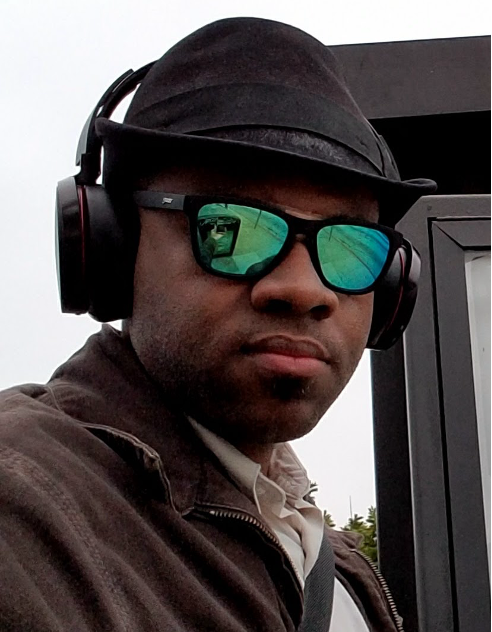
Quinn “Edokwin” Que is a journalist, commentator, and artist featured in a variety of publications. His blog, the Edokwin Editorial (where a previous version of this essay appeared), and his prolific Twitter (X) account are great sources of insight. A larger portfolio can be found on his Bento. His primary areas of interest are arts, entertainment, philosophy, and politics. His previous essays for the Journal of Free Black Thought include “Reforming the DEI Reforms,” “Racebending—What It Is and Why It Should End,” “Which Violence Against Black Lives Actually Matters?,” and “When Vegans Appropriate Atrocity.” He appeared as a guest on a Free Black Thought Podcast episode titled “Race Is Astrology for Melanin Content.”
No posts
Comments
Nothing yet. Say the first thing.
Sign in to join the conversation.