
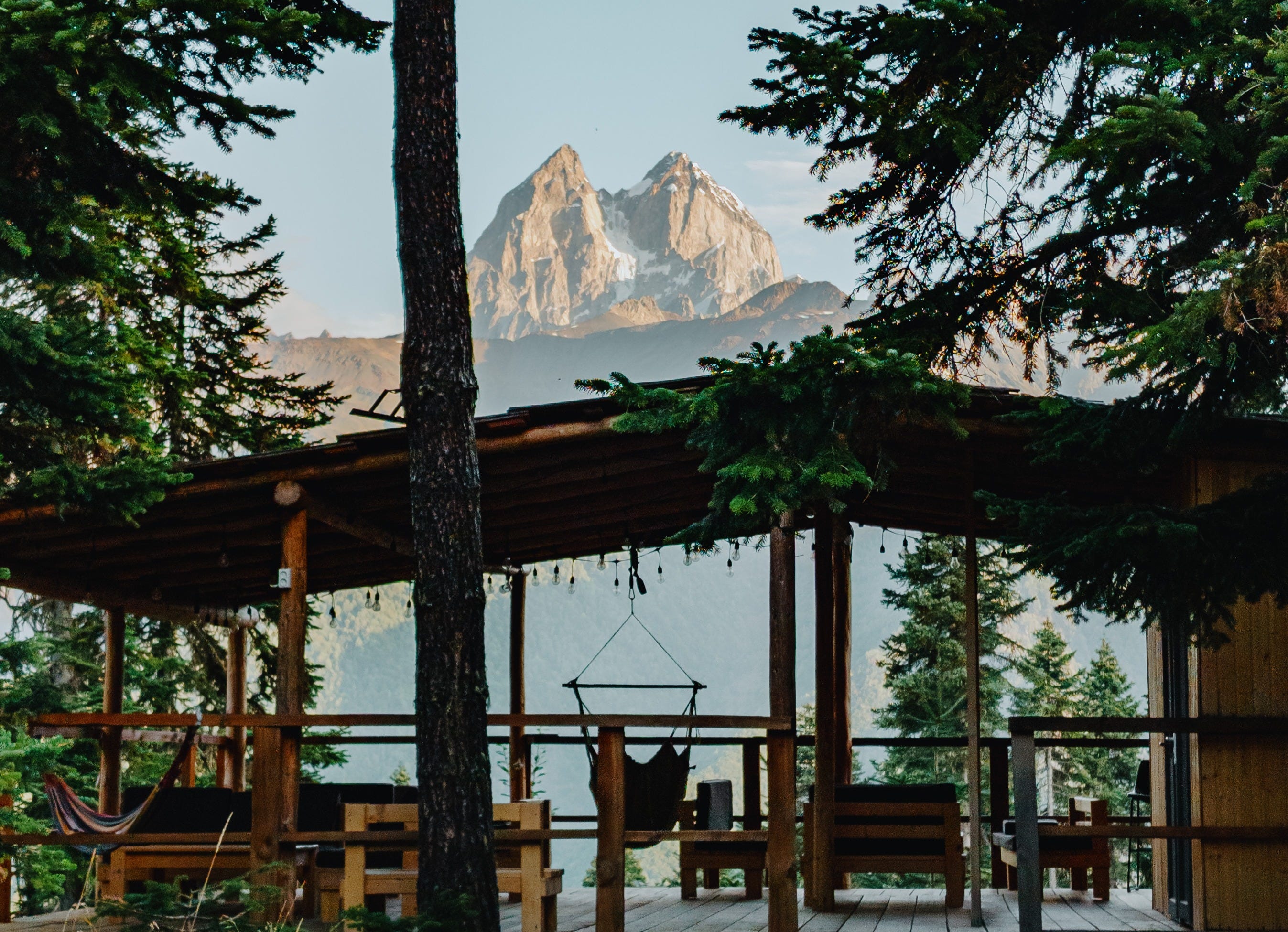
I never did buy that bike in Chicago.
For ten years, I convinced myself it wasn't worth the investment. "I'm not staying here long, I think. But should I?" I'd ask myself, even as seasons turned into years, friendships deepened, and the city became home. It wasn't until I was packing for Peace Corps when I realized how much life I'd put on hold waiting for some imagined "permanent" future to arrive.
Now, as I enter my last few months of service in Georgia, that unpurchased bike has become a bit of a personal metaphor. Each December, I write two letters: one to my past self, reflecting on the past year, and one to my future self that sets up a mantra for the year ahead. This year though, I found myself paralyzed by the weight of what comes next. The usual mantras felt hollow as I grappled with the looming question of life after Peace Corps. Should I deepen my international work? Return to building community in Chicago? The options seemed to present themselves as binary choices, each path excluding the other.
It wasn't until I stumbled across Rainer Maria Rilke's meditation on "living the questions" that something shifted. Or perhaps it was my favorite lyricist Stephen Sondheim who said it best in Company: "Why look for answers when none occur?" Sometimes our most meaningful growth happens not in finding definitive answers, but in learning to move forward with curiosity despite uncertainty.
As someone who builds connections through conversation, I initially saw my limited Georgian language skills as a barrier to meaningful relationships. How do you create trust when you can't discuss organizational effectiveness or process existential anxiety in your host family's mother tongue? (A question that feels particularly relevant when you're trying to explain to your Georgian host mom why you're still single at 30, which I respond with a shrug and an არ ვიცი ar vitsi — I don’t know.)
Communication flows through unexpected channels when perfect grammar isn't an option. It lives in the shared laughter over misunderstandings, in the patient gestures of shopkeepers teaching me to count my change, in the comfortable silences during evening walks with friends and colleagues. While I still can't quite eloquently respond to my host mom's questions about my perpetual singlehood (and let’s be real, არ ვიცი is the appropriate answer as I don’t even know the answers myself), we've found deeper connection in simpler moments – sitting side by side on the living room couch, sharing photos of past adventures, getting excited and laughing about all the places we want to visit but haven't been yet. These spaces between languages have taught me more about human connection than any fluent conversation could.
These imperfect exchanges, with their stumbles and gaps and moments of genuine connection, have taught me more about human communication than any polished conversation could. It's a truth that feels especially relevant now, as AI promises to optimize our every interaction. The most meaningful connections happen not in the perfect translation, but in the shared experience of working through misunderstandings together.
Active participation in creating community becomes a necessity when you never quite fit in. In Georgia, I've found deeper belonging than I sometimes felt in Chicago, not because it's easier (it isn't), but because the constant navigation of otherness demands a kind of presence I never knew I needed to assert.
My early days in Georgia felt like being a particularly anxious anthropologist, cataloging every potential misstep in my mental field notes: Would washing dishes be seen as helpful or as criticism of the household routine? Should I speak up at the supra table, or is silence more appropriate? How do I run to the bathroom to wash my boots before my host bebia gets to them first and does it for me?
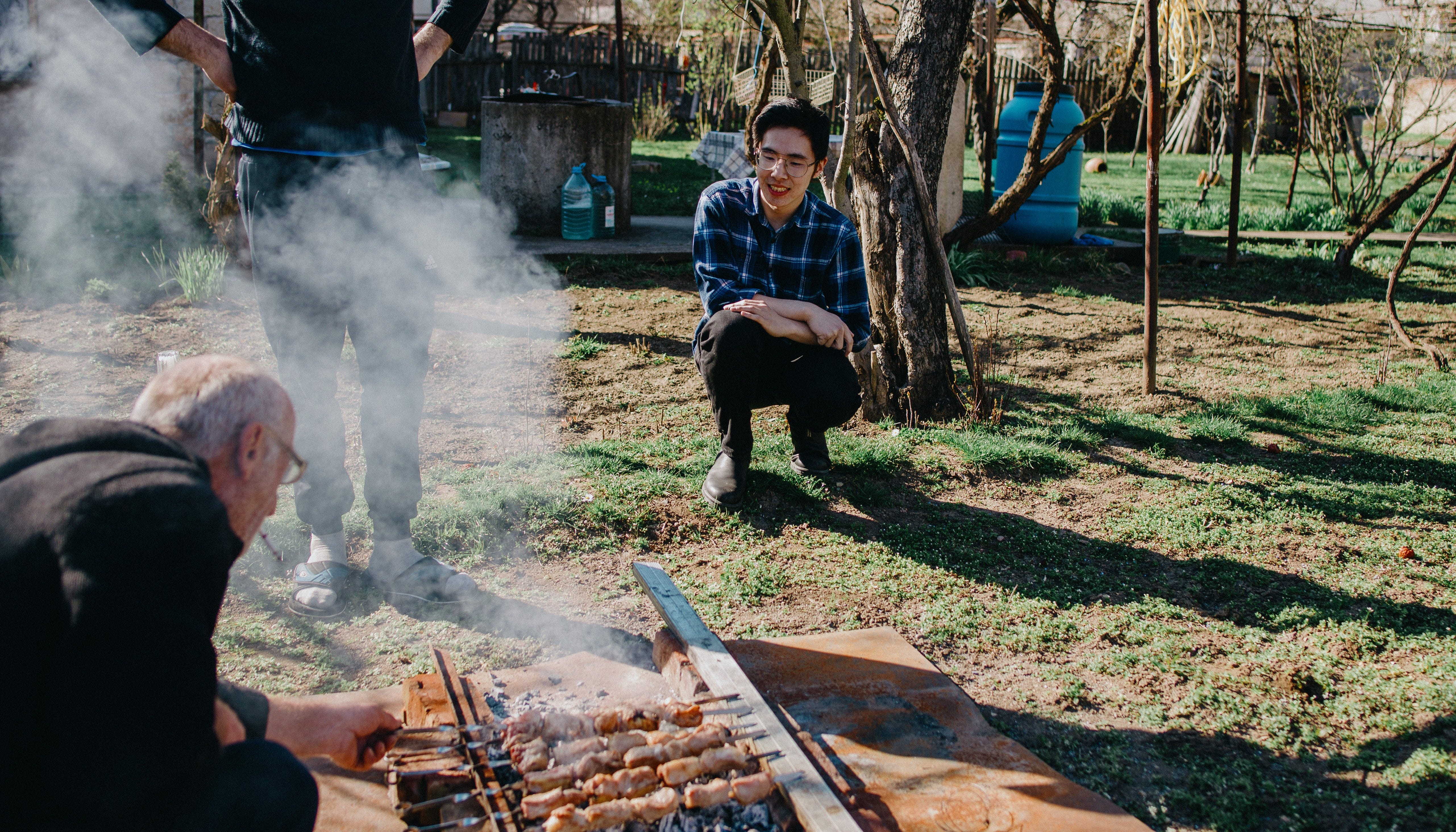
But somewhere between attempting (and badly mangling) my first Georgian toast and learning to navigate the social etiquette of refusing yet another cup of wine after three cups too many, I discovered that true cultural exchange isn't about perfect adaptation – it's about finding that delicate balance between honoring local traditions and staying authentic to who you are. It happens in the unexpected fusion moments: teaching American line dancing at a July 4th event while stumbling through the Georgian dance steps the students teach in return, introducing hot sauce to traditional dishes, finding ways to be both guest and contributor to community life. (Admittedly, the age-old saying that Georgians live by – “სტუმარი ღვთისაა” (a Guest is sent by God) – makes trying to clean up after yourself before others do a test of speed and craft.)
Cultural exchange creates something entirely new – not quite Georgian, not quite American, but a third space where both cultures can breathe and evolve together. When the host family starts adding sriracha to their lobiani and I conversely start putting adjika salt on everything, or when local friends start sprinkling in the English phrases they’ve picked up from conversations (apparently I say “Sounds good!” too much), we're not diluting either culture but creating something meaningful together.
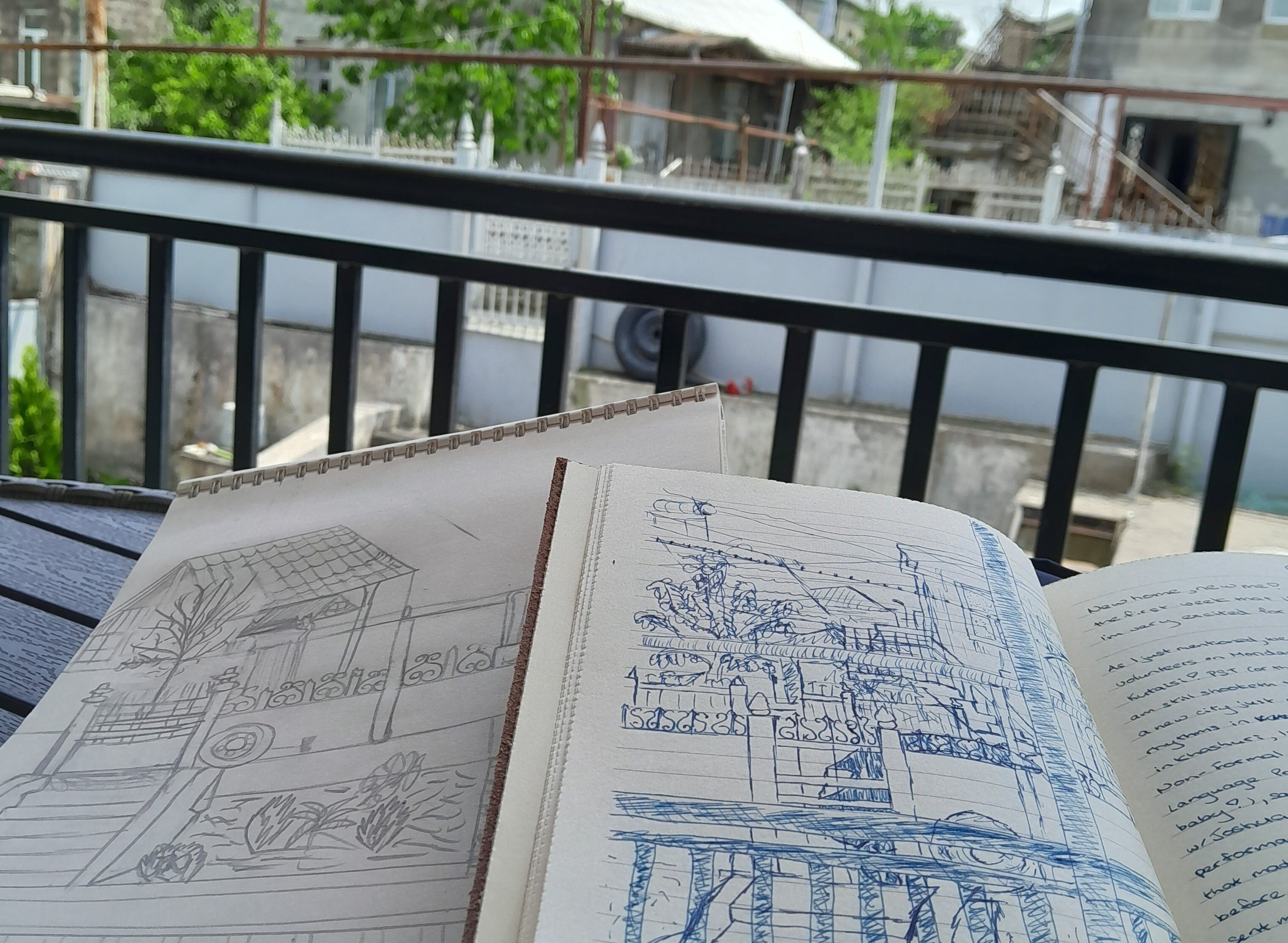
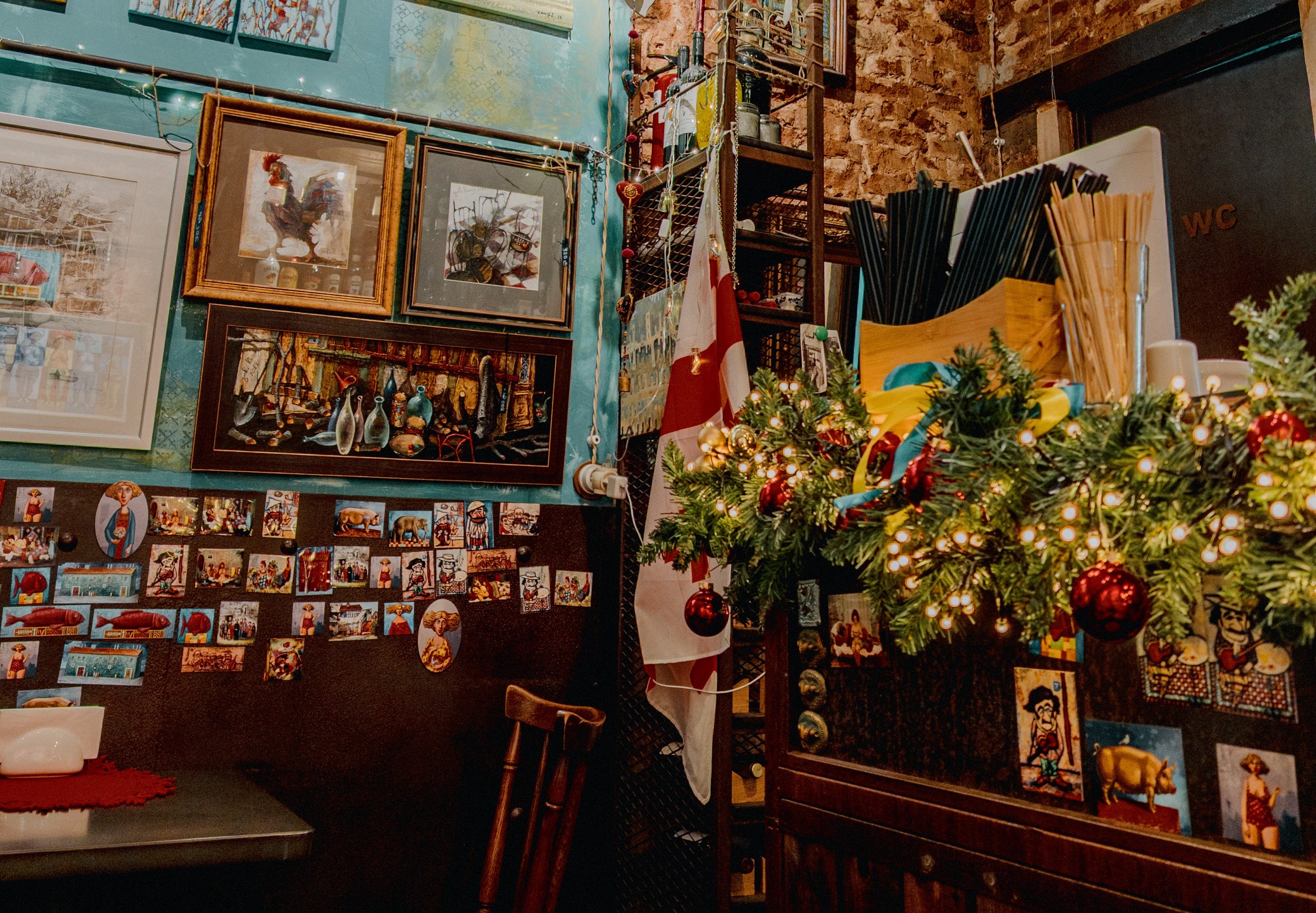
The aroma of freshly ground coffee mixes with the sound of rain against the window at my favorite local coffee shop, where the artwork changes as often as storms come and go through Imereti. The cafe, amidst the chatter of conversations and the 80s rock playlist wafting through the space, serves as a refuge for when my host brothers' energy gets to be a bit too much, or when my friends and I gather across random hours of the day to share conversations about love, life, and loss.
The days of planning meetups with friends three weekends in advance like back in Chicago are thankfully gone. Here, I'll bump into friends on the street and grab coffee on a whim. These chance encounters have led to some of my most meaningful moments here. I remember sitting with my friend Giorgi over pizza and croissants, him patiently correcting my faltering Georgian, our conversation drifting between language practice and discussions about German philosophers and English novels. Sitting in these unplanned moments, I find myself thinking about how many connections I missed back in Chicago, always waiting for the 'right' time, the 'right' place. What would shift if I stopped trying to create the perfect opportunities and started embracing the ones that naturally emerge?
The local expat bar has become another hotspot for cultural exchange. The owner, now a close friend, offered his space for free to host one of my entrepreneurship trainings. Watching him share his startup journey with local budding entrepreneurs felt like a perfect example of how community builds across boundaries - no longer just a foreigner sharing advice, but a local business owner helping others succeed.
I often wonder whether my city placement makes my Peace Corps experience less "authentic". But I'm learning that authenticity isn't about meeting some preconceived notion of what service should look like. Instead, it shines in organic moments of connection: a language lesson over coffee that turns philosophical, a training seminar in a bar that becomes a bridge between communities. The most meaningful exchanges don’t happen in formal settings, but in these in-between spaces where different worlds naturally collide and connect.
Working in Georgia's NGO sector means existing in a peculiar space between participant and observer. As a Peace Corps volunteer, I navigate this carefully: present enough to support my colleagues through increasingly complex challenges, removed enough to maintain appropriate boundaries. This has been increasingly complex to navigate during a year when Georgia's civil society sector faced enormous pressure. A new "Transparency of Foreign Influence" law now requires organizations receiving more than 20% of their revenue from foreign sources to register as "agents of foreign influence." Meanwhile, the country's parliamentary elections in late October have sparked mass protests and controversy.
When the majority of NGO funding in Georgia comes from external sources, the implications of this legislation hits close to home. I've watched my colleagues grapple with questions that go beyond typical grant reports and participation metrics. How do you maintain your mission when your very existence is under scrutiny? How do you serve your community while navigating increasingly challenging waters?
While I can't engage directly in political discourse as a Peace Corps volunteer, I can witness the resilience of my colleagues who continue their work despite mounting pressures. Impact in this context takes on new meaning: sometimes the most meaningful contribution comes from simply being present, from creating space for others to process their frustrations, hopes, and fears about their country's future. It's about resisting the urge to offer solutions when what's needed most is solidarity and understanding.
As I look toward what comes next after Peace Corps, I'm drawn to the intersection of storytelling and research – not just asking "How Might We…" questions about others' needs, but exploring how we capture and share the human moments that metrics miss. The frameworks and systems I love still matter – they help us make sense of complexity – but they work best when they create space for the unexpected, the unquantifiable, the deeply human.
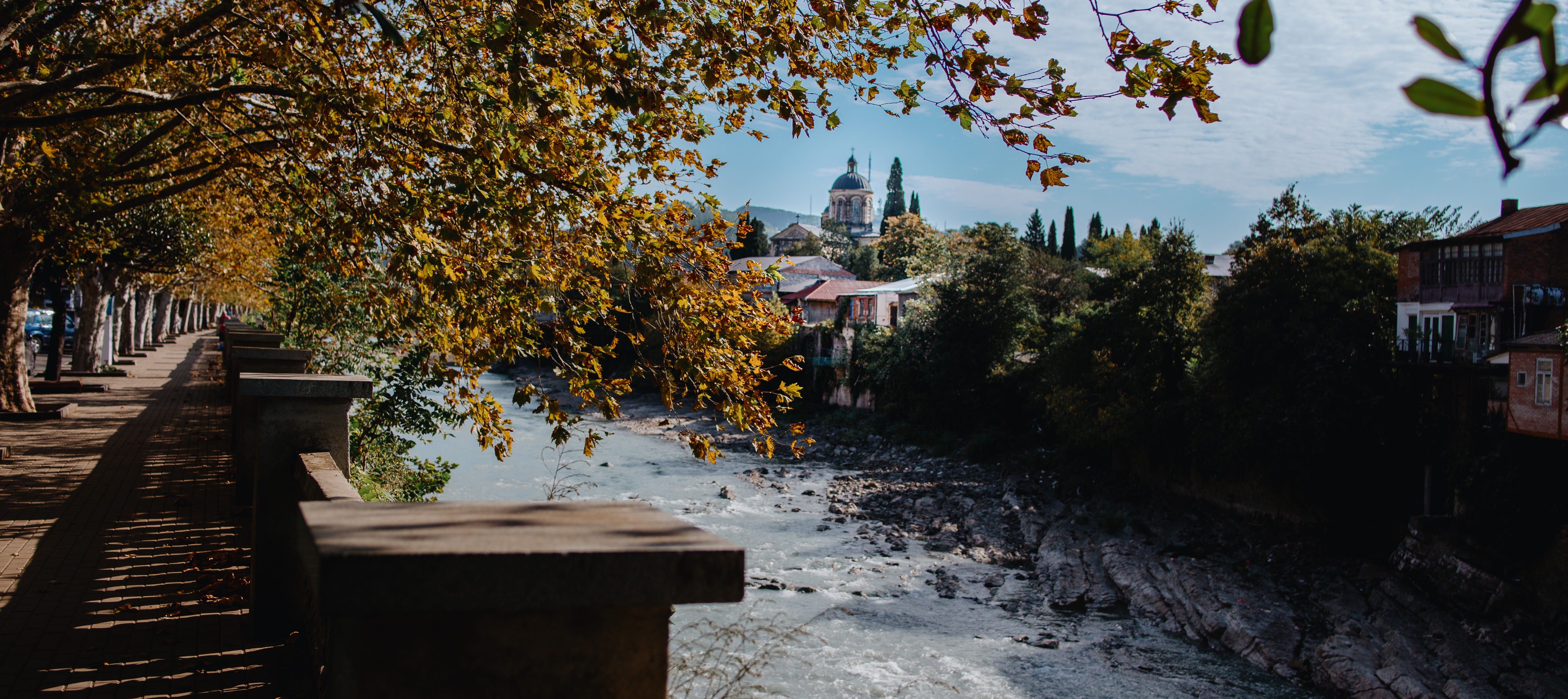
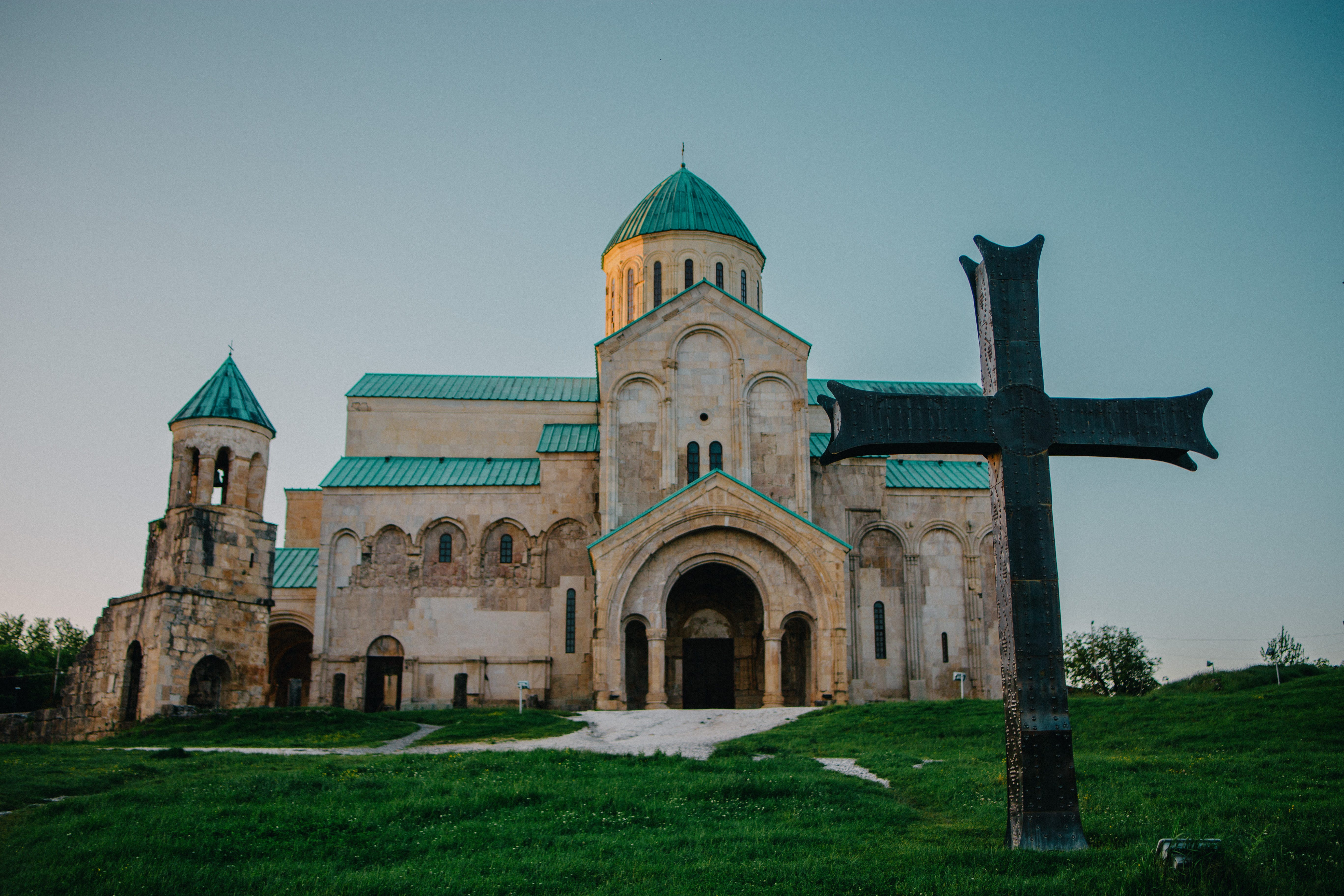
Walking home at night, I often catch a glimpse of Bagrati Cathedral up on the hill, its silhouette shifting with my perspective – sometimes dominating the skyline, sometimes barely visible, always present. Like the city itself, it reveals different facets depending on where you stand, what you're ready to see. These days, I'm learning to appreciate these shifting viewpoints, to find clarity in the questions themselves.
The questions I grapple with now feel different from those anxious wonderings of my early days: less about finding definitive answers, more about staying curious about what might emerge. Just as my relationship with Georgia has evolved beyond simple categories of 'guest' and 'local,' my approach to life's big decisions has grown more nuanced. How do we honor the ripple effects of small moments? What stories emerge when we create space for uncertainty? What happens when we stop trying to decode every interaction and start embracing the messy work of human connection?
These two years have taught me that growth happens not in spite of uncertainty, but because of it. It comes from showing up imperfectly but consistently, from creating space for questions to breathe, from trusting that meaning will emerge in its own time. Sometimes the best way forward isn't choosing between binary options or knowing exactly the right time to buy a bike, but learning to dance with the questions themselves.
The views expressed here are my own and do not necessarily reflect those of the Peace Corps or the U.S. Government.
No posts
Comments
Nothing yet. Say the first thing.
Sign in to join the conversation.