
If you want to support, buy the first 3 issues of our comic! The digital pack is only $5!
I’ve directed found footage feature films. I’ve directed shorts in the middle of nowhere. I have watched schedules collapse, locations disappear, equipment break and entire scenes get rewritten because the sun had the audacity to go down.
Making a comic might be harder.
With a movie, you can occasionally cheat. You can imply the monster. You can ask an actor to run through the same hallway three times and pretend they are in different parts of the building.
In comics, somebody has to draw the hallway.
Then they have to draw it again from another angle. Then they have to draw the hero running through it. Then the monster behind her. Then the close-up of her face when she realizes the monster is gaining on her. Every chair, shoe, shattered window and ancient Mesoamerican deity has to be created by hand.
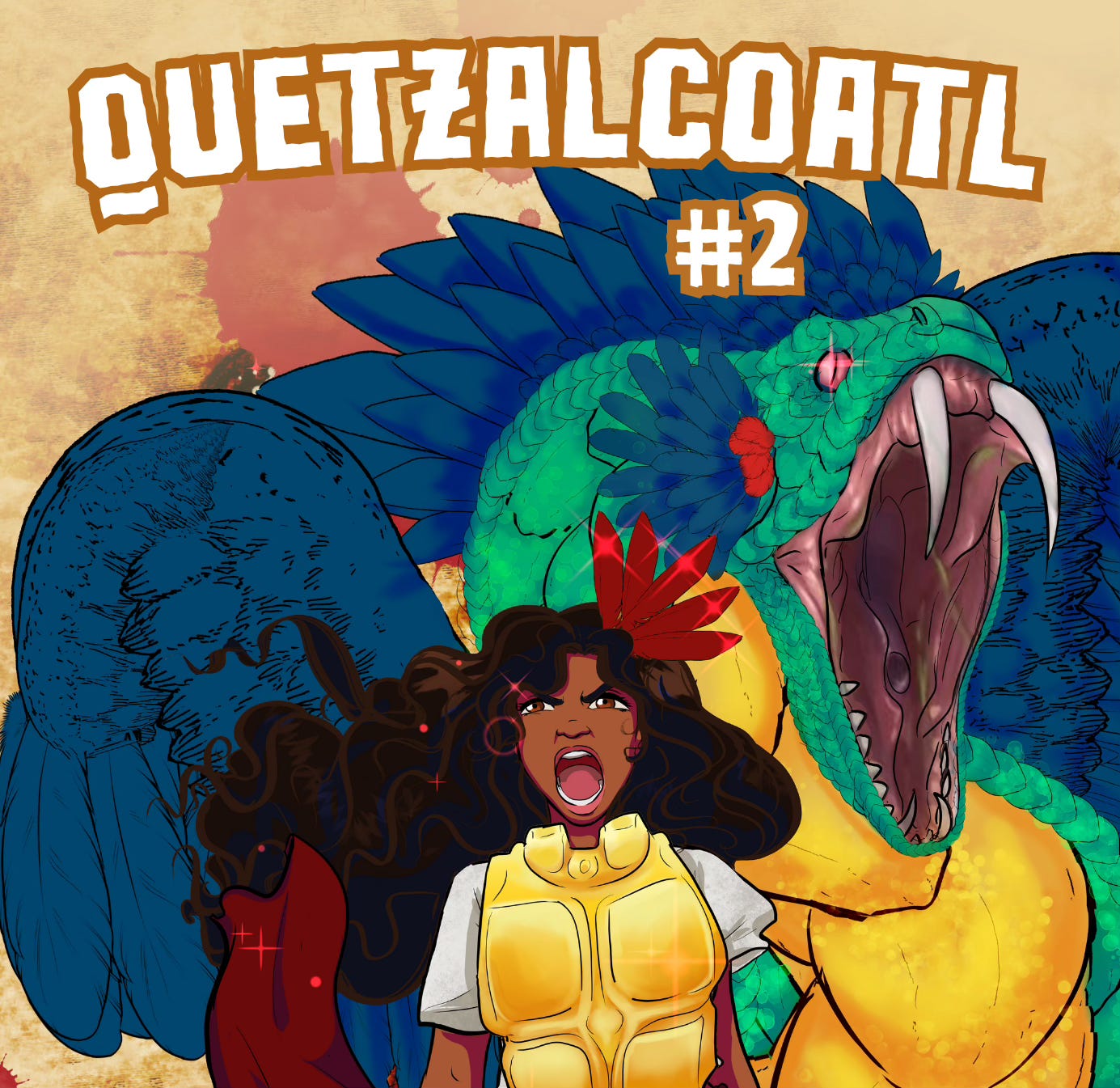
This is especially inconvenient when your comic is about a very large feathered serpent. Quetzalcoatl began with my best friend and co-creator, Sam Jimenez. We wanted to make the kind of comic we had spent years looking for. Something contemporary and unapologetically Latino, full of family, mythology, horror, superheroes and all the strange contradictions that come with inheriting a culture you love while still trying to figure out where you fit inside it.
Our hero, Herminia Ximenez, is a young Chicana whose grandmother dies and leaves her a silver serpent ring. This would already be a complicated inheritance if the ring were merely valuable or cursed. Unfortunately for Herminia, it is also a prison containing the spirit of Quetzalcoatl.
Family heirlooms can be a real pain in the ass.
We describe the comic as a Latino coming-of-age superhero story with mythological horror. Think Ms. Marvel, The Amazing Spider-Man and The Runaways, except the family baggage may be capable of swallowing the sun.
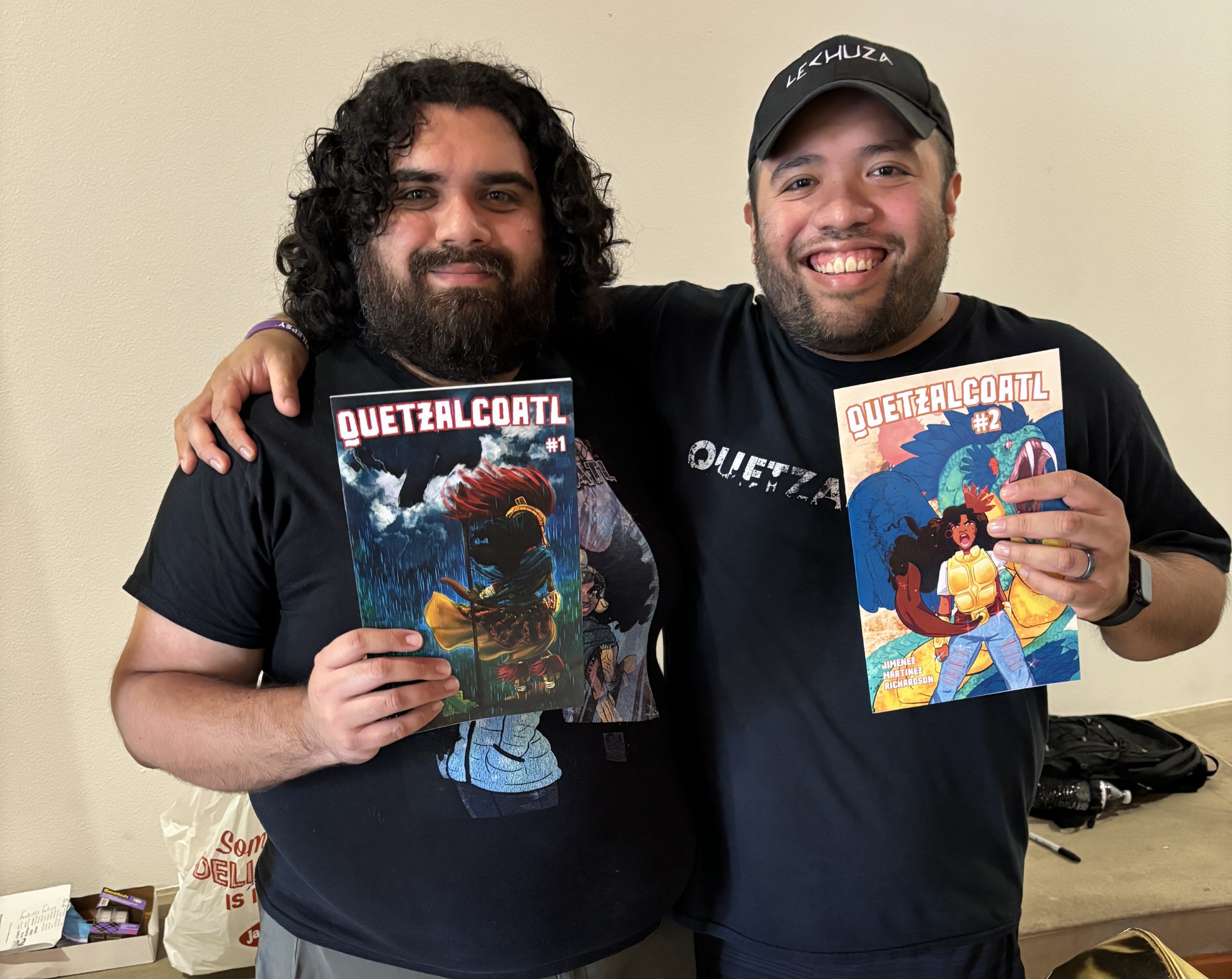
Sam and I originally thought we could divide and conquer.
That phrase sounds very productive. It sounds like something people say before opening a spreadsheet. Sam could write one sequence, I could write another, then we would combine everything and move along efficiently.
This did not work.
We both had too many ideas. Each time we would come back together we had too many notes because both of us had a specific thing we were going for and it was getting too hard to try to lead into each other’s scene.
So we wrote every scene together.
This made the process slower, louder and much better. We talked through every beat until the story stopped feeling like one person was decorating another person’s house. At this point, I could not reliably tell you which ideas were mine and which were Sam’s. The comic exists in the space where our brains overlap. That is the best version of collaboration, although it is terrible for anyone hoping to claim credit during an argument.
Writing a comic also forced me to unlearn some habits from screenwriting. A screenplay can move quickly because the actors, director, production designer, editor and composer will eventually add information that is not on the page. A comic script has to communicate enough for the artist to understand the intention without becoming a hostage note containing seventeen paragraphs about one panel.
A comic page has a merciless amount of space. Every balloon covers artwork. Every panel changes the rhythm. Every page turn creates an opportunity for a reveal, a joke, a scare or an emotional hit. You start thinking less like a person writing dialogue and more like a burglar trying to fit an entire television through a bathroom window.
A comic script is not a comic.
It can be formatted beautifully. It can contain exciting descriptions. It can make your mother cry. Until an artist gets involved, it is still a document explaining a comic that only exists inside your head.
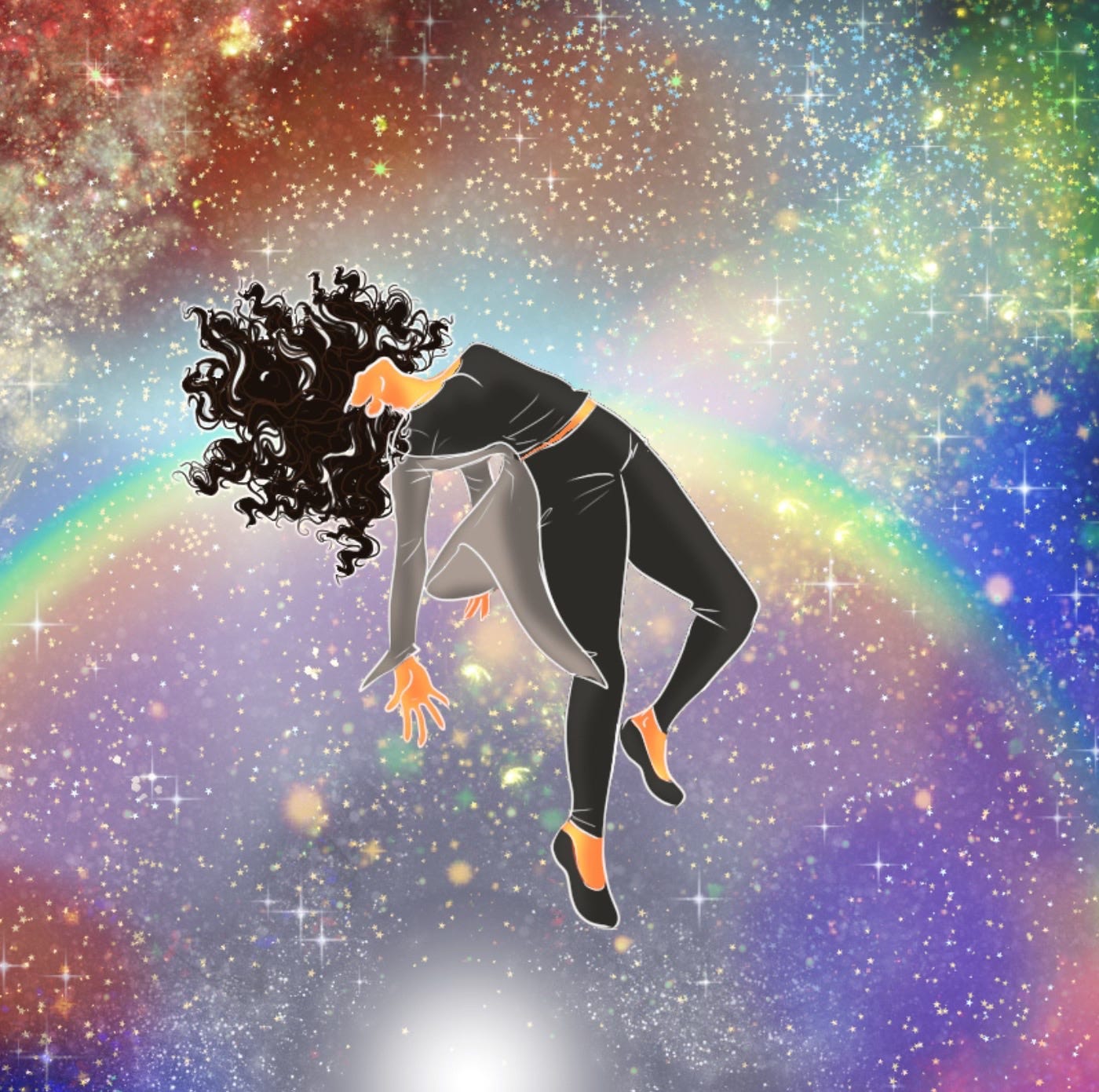
Anna Maria Richardson made Quetzalcoatl real.
That sounds sentimental, but I mean it literally. Sam and I could describe Herminia, her family, the ring and the mundo espiritual all day. Anna had to decide what they actually looked like.
Artists make thousands of decisions that readers may never consciously notice. How does Herminia stand when she is uncomfortable? What does grief do to her face? How does the ordinary world differ from the spirit world? How much of Quetzalcoatl can fit inside a panel before the size of him becomes meaningless? How do you make a god feel ancient without making him look like he was copied from a museum gift shop?
That last question mattered to us.
Mesoamerican imagery gets used constantly without much interest in the people connected to it. It becomes decoration, an “ancient curse,” a calendar illustration or a monster waiting in a temple for some white archaeologist to accidentally wake it up.
We wanted mythology to feel alive.
Herminia is not exploring somebody else’s ruins. This history belongs to her family, even when she does not know what to do with it. The supernatural parts of the story had to feel connected to kitchens, bedrooms, family arguments, grief and the uncomfortable experience of being handed an identity other people assume you already understand. Anna had to hold all of that while also making the book exciting.
She also had to interpret two writers who had spent far too long discussing every detail. There is a moment in any good collaboration when the work comes back different from what you imagined, and better. That can be difficult for writers. We like to believe the movie or comic is already complete inside our minds and everyone else is helping us retrieve it.
They are not.
They are making it with us.
Otherwise, you did not hire a collaborator. You hired a very exhausted pair of hands.
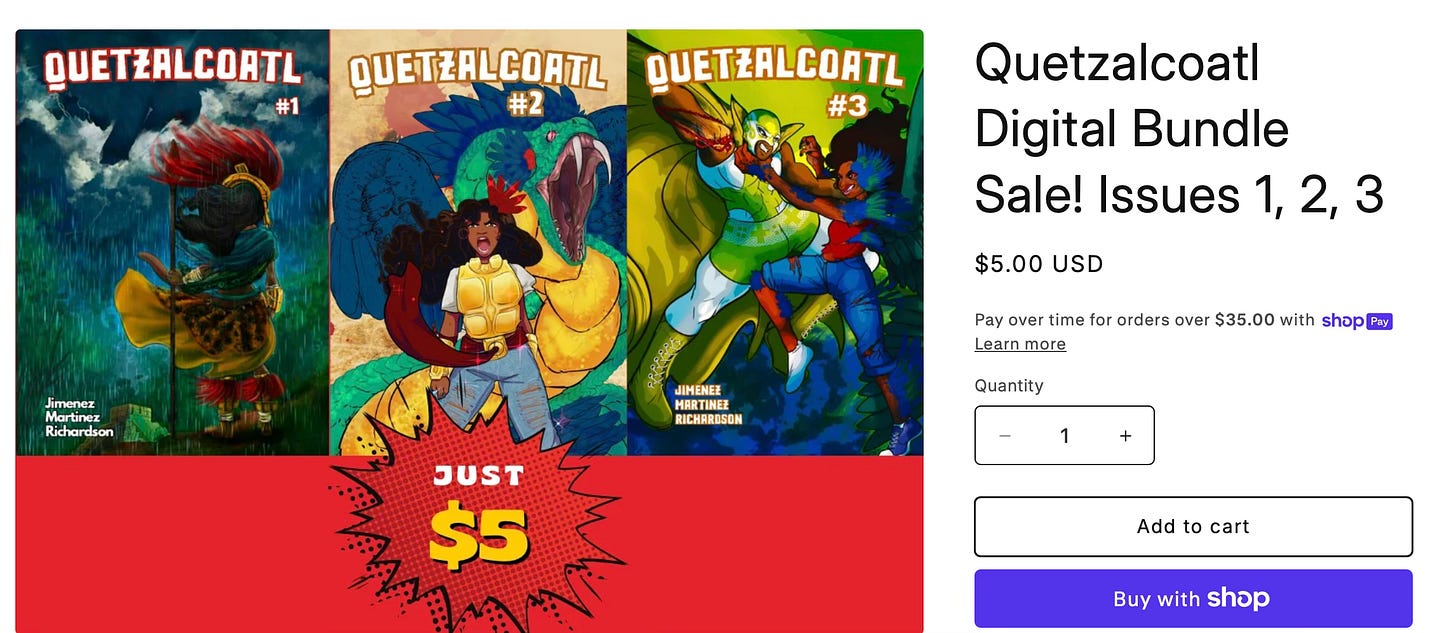
We now have multiple releases of Quetzalcoatl. The first 3 issues to be exact. That sentence makes the process sound wonderfully tidy. It leaves out the revisions, production conversations, campaign work, scheduling problems, promotional posts, formatting, uploading, printing and the low-grade anxiety that follows every independent project around like a loyal dog.
After you make a comic, you have to convince people to read it. Then you have to convince them to talk about it. Then you have to make another one.
There is no magical point where the industry arrives, places a crown on your head and announces that you are now officially allowed to create comics. Even when you begin approaching publishers, you are still asked to bring proof. A logline. A synopsis. Character descriptions. Sample pages. A complete outline. A plan for several issues. An audience. A reason this book needs to exist.
Sam, Anna and I have been doing that work. We have built Herminia’s world beyond a single issue because we never saw this as a one-off exercise. We know where her story goes. We know the family secrets waiting for her. We know what happens when the thing your ancestors imprisoned becomes the only force capable of protecting you.
We also know there is no guarantee that doing all of this correctly will produce the outcome we want. That may be the hardest part.
Creative industries love to pretend success is a recipe. Finish the book. Build the audience. Attend the convention. Make the pitch. Post consistently. Find the right editor. Know the right person. Be undeniable.
Plenty of undeniable people are still waiting.
So why make the comic?
Because it exists now. Because Herminia exists now.
Because somewhere there is a Chicana kid who has seen plenty of gods from Greece and Asgard but has rarely been invited into a superhero story where Mesoamerican mythology belongs to the characters instead of the villain.
Because Sam and I made something neither of us could have made alone. Because Anna took a collection of descriptions and arguments and gave them faces, bodies, movement and color. Because people supported the campaign. They read the issues. They saw themselves in the family, the grief and the feeling of inheriting something too large to carry.
Making comics is hard. It is slow, expensive, uncertain and occasionally ridiculous. You will spend an afternoon arguing about a panel that takes a reader three seconds to look at. You will learn more about shipping rates than any artist should know. You will discover that printing twenty additional pages is apparently an act of financial warfare.
Do it anyway.
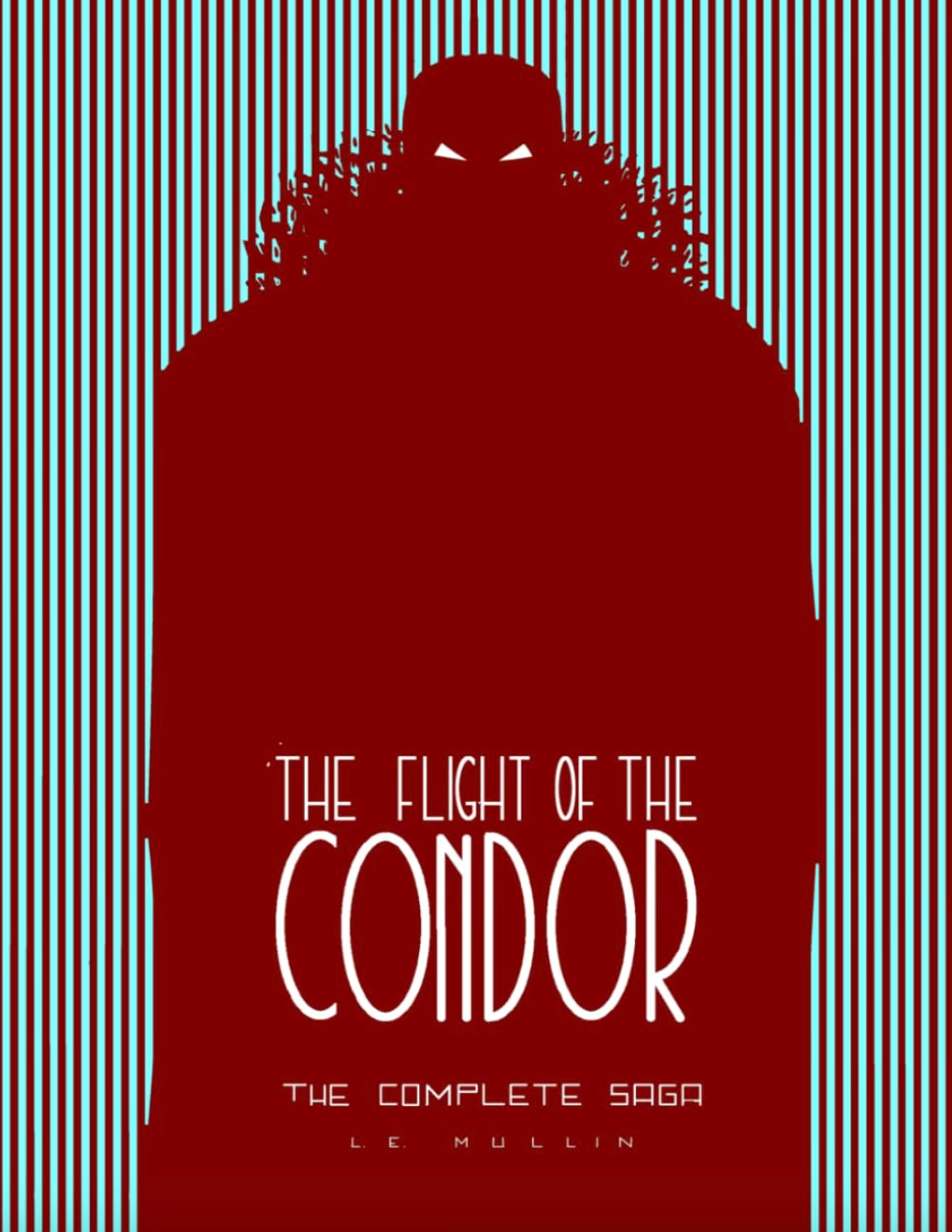
Here is a Q/A I had with my friend L. E. Mullin ! Among other things, he is the creator of The Flight of The Condor comic series! Enjoy!
M: What was the first image, idea, or feeling that became The Flight of the Condor? Was it the character, the mythology, the tone, or just the need to make your own kind of vigilante comic?
L: It was my desire to draw Batman. Just that. And to write Batman stories without having to be hired by DC Comics.
M: You’ve described the project as making a Batman-type story on your own terms. What were the “terms” you felt mainstream superhero comics weren’t giving you? What did you want to reclaim, reject, or rebuild?
L: If you were to draw or write Batman one day, you wouldn’t be allowed to tell his whole story, because if the story had an end, then the company that owned it wouldn’t be able to keep asking readers, “What happens next?”So I came up with a character who looked like Batman, but not too much, and who had the same atmosphere Batman comics have, while still being something different.
M: The Andean condor carries a lot of spiritual and cultural weight. What made that image feel like the right mythic engine for this character? Did you start with research, personal connection, or instinct?
L: Yeah, I did some research, but I didn’t want to use much of it because the idea was that it had to look a bit like Batman. The Andean condor, on the other hand, is such an imposing animal that I thought, “Well, this is going to be the villain.”
M: Wayne Huaman feels like he belongs to superhero comics, noir, horror, and myth all at once. How do you balance those genres without letting one swallow the others?
L: It’s just all the stuff I’m interested in. I have no intention of balancing them. I just write what I’m in the mood to write, and, lucky me, it sort of looks balanced, at least for now.
M: A lot of vigilante stories are about trauma turning into violence. What do you think makes Wayne’s pain different from the usual masked-hero origin story?
L: It’s probably that he wants to believe he’s in control of the situation, but he’s still a puppet of the higher entity that gave him his power. Most stories I come up with interest me because they let me explore the perspective of a man who, when he’s lucid enough to see what’s going on, realizes that he’s actually powerless, or has barely enough power to follow a plan he doesn’t even understand. It’s like the hero lives in a nightmare, and sometimes, but only sometimes, he can see it.
M: What has the Substack/Sunday strip format unlocked for you creatively that a traditional issue or graphic novel format doesn’t? Has writing in smaller weekly bursts changed the rhythm, humor, pacing, or intimacy of the comic?
L: Yes, it changed everything. I have less space than if I were doing a 22-page comic or a graphic novel. All the stories are 12 panels long, so you have to cut to the chase. There are many humorous Condor strips because humor works well in a one-page comic, whereas something like melodrama simply doesn’t.
M: When you’re making a strip, how much are you thinking about the larger canon versus the immediate hit of that week’s joke, scene, or emotional beat? Is each strip a window into the larger story, or its own separate beast?
L: I’m always thinking about the big picture. If a strip doesn’t add anything to the idea of The Condor or the world he lives in, I don’t like it very much. I’m not as concerned with the ending of each strip as I am with making every one of them an important part of the bigger picture.
M: Indie comics require a ridiculous amount of self-belief because you’re often the writer, marketer, publisher, editor, and hype man all at once. What kept you going when there wasn’t an obvious audience yet?
L: Two very simple ideas. First, it takes time to build an audience, and many readers will only show up once you already have a handful of strips done. Second, even if no one read it, I’d have enough strips at the end of the first year to compile them into a book that I could put on my bookshelf. I’m very lucky to have found an audience, but even if I hadn’t, The Condor would exist anyway.
M: What did you have to learn the hard way about making and releasing comics independently? Was there a point where your process finally clicked, or are you still rebuilding it as you go?
L: I learned a lot of things. The two most important ones are these: first, consistency pays off. And second, if you talk to your audience with respect, but in the same way you would if they were standing right in front of you, it’s much easier to connect with them.
M: For someone who discovers The Flight of the Condor through the Substack strips, what do you hope they feel before they even fully understand the mythology? Is it awe, dread, fun, mystery, recognition, something else?
L: I hope they’re entertained for the few minutes it takes them to read the strip, and I hope they leave with the feeling that there’s something more there, like a mystery that can’t be solved. Like the feeling that makes you ask yourself, “What’s going on here, man?”, but in a good way.
Support Indie Comics!
No posts
Comments
Nothing yet. Say the first thing.
Sign in to join the conversation.