
Bitcoin’s price ripped from $62k to almost $80k this week.
In my over eight years in this space, I’ve hardly seen a move this aggressive.
And I’m not going to lie and say it didn’t feel good.
After the last few months of downward price action, I’d almost forgotten what these pumps feel like.
So, why did it happen?
Short answer: There were more buyers of bitcoin than sellers.
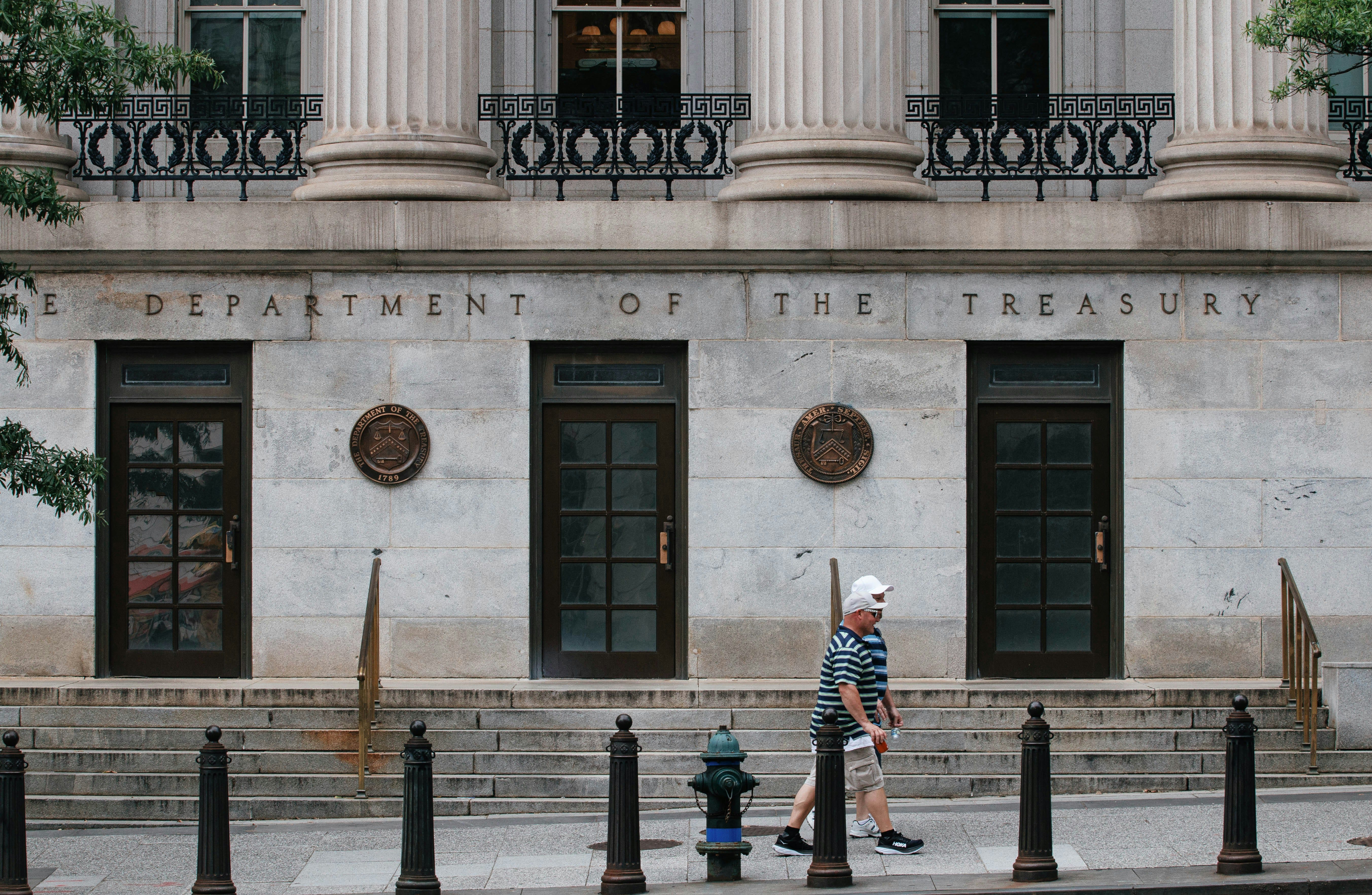
Longer answer: Market participants not only took note of the U.S. national debt hitting $40 trillion, an unfathomably large amount of debt that is nearly impossible to pay back without significantly more currency debasement, but they also watched as U.S. Treasury Secretary Scott Bessent failed in his attempt to bring down bond yields on the long end of the yield curve.
On Wednesday, Secretary Bessent announced that the U.S. Treasury would be accelerating bond buybacks, pledging to spend up to $4 billion on the operation and targeting the long end of the yield curve — 10-to-30-year bonds.
Bessent said that the Treasury would begin the buybacks on September 9. The announcement initially brought bond rates down a bit.
But as the week went on, yields rose again, wiping out the mildly disinflationary effect of Wednesday’s announcement.
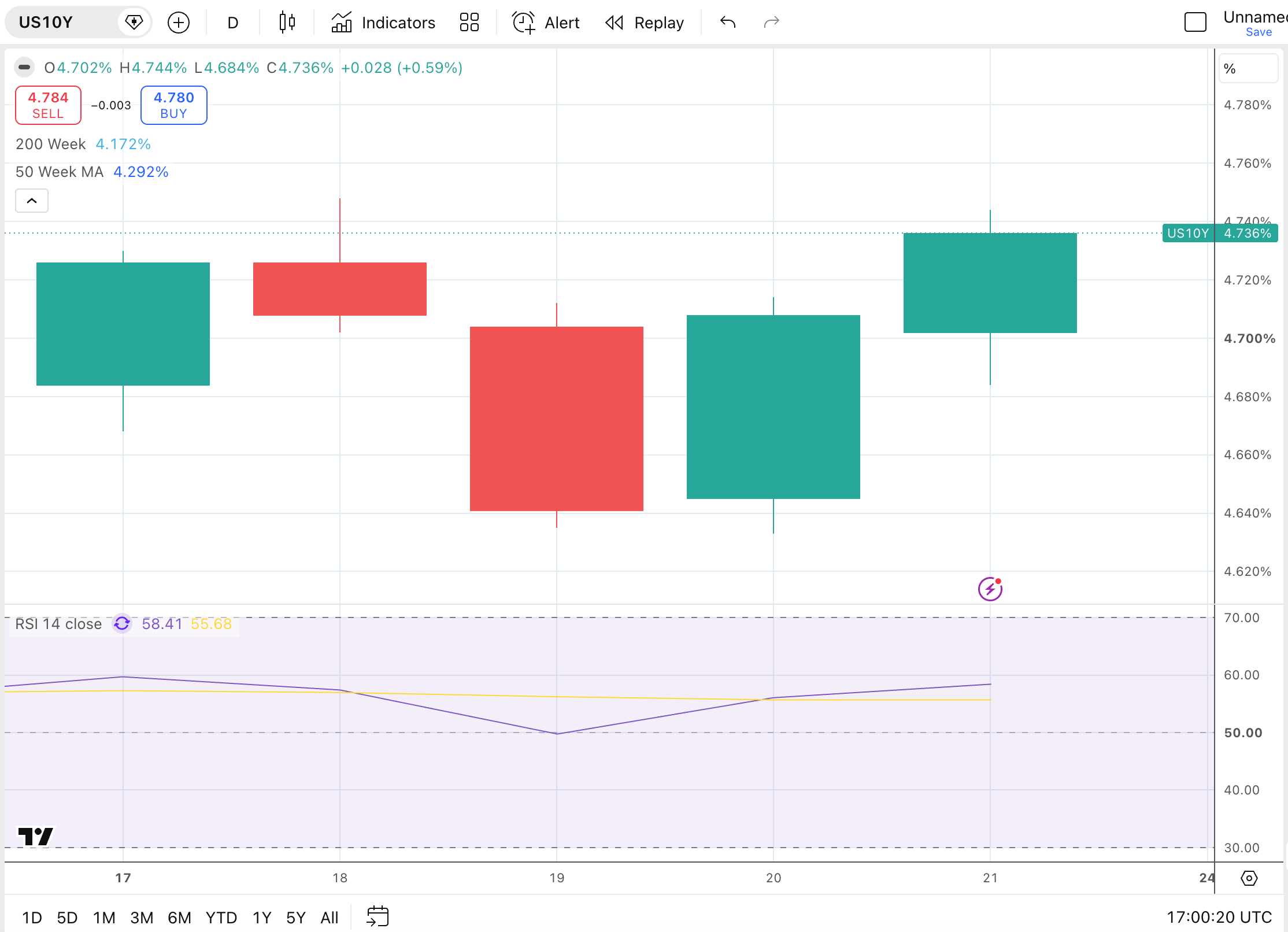
The U.S. 10Y rate is now higher than it was before the onset of this past week.
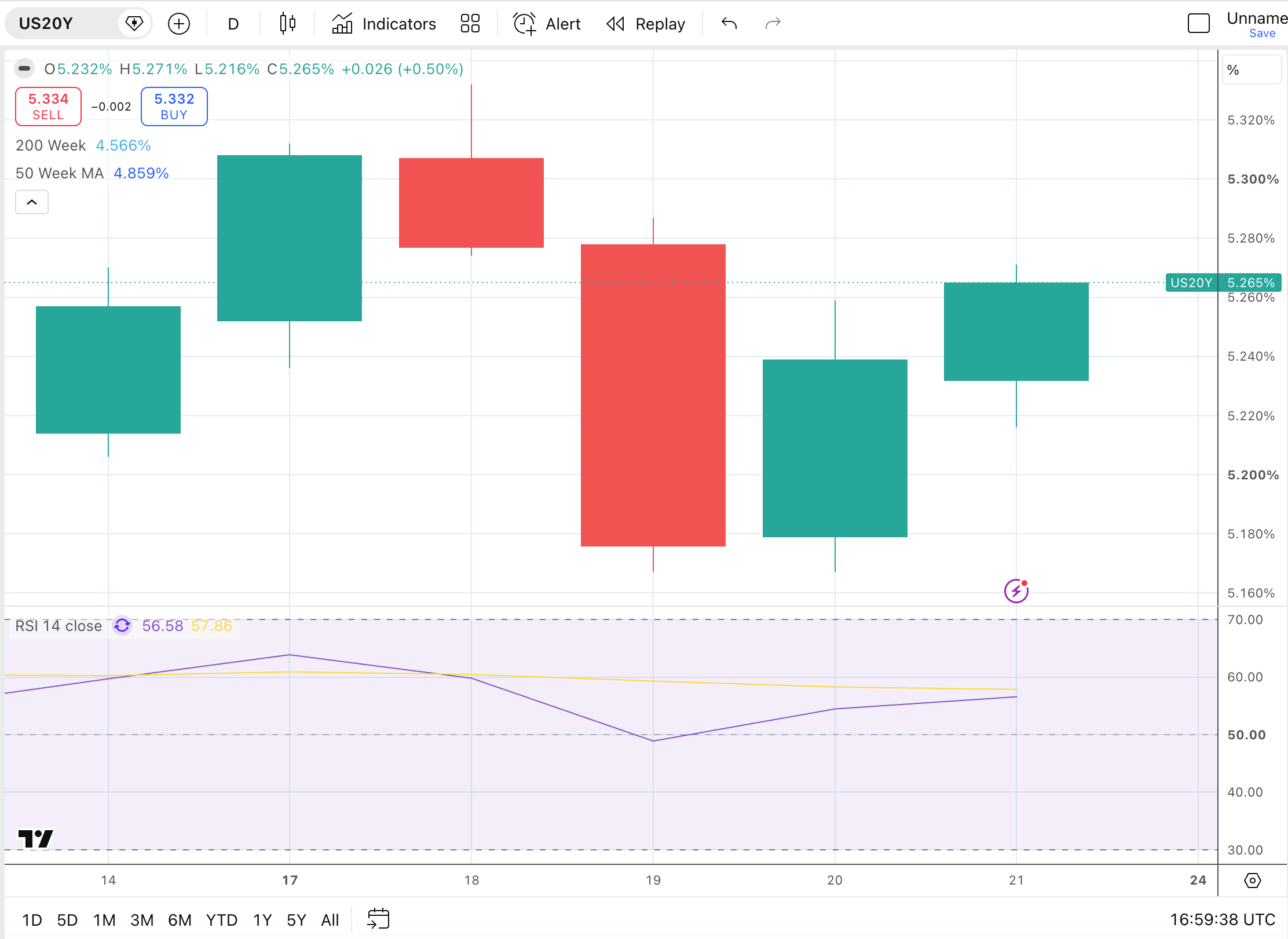
The U.S. 20Y rate is just below where it was before Bessent made the announcement.
The same with the U.S. 30Y rate.
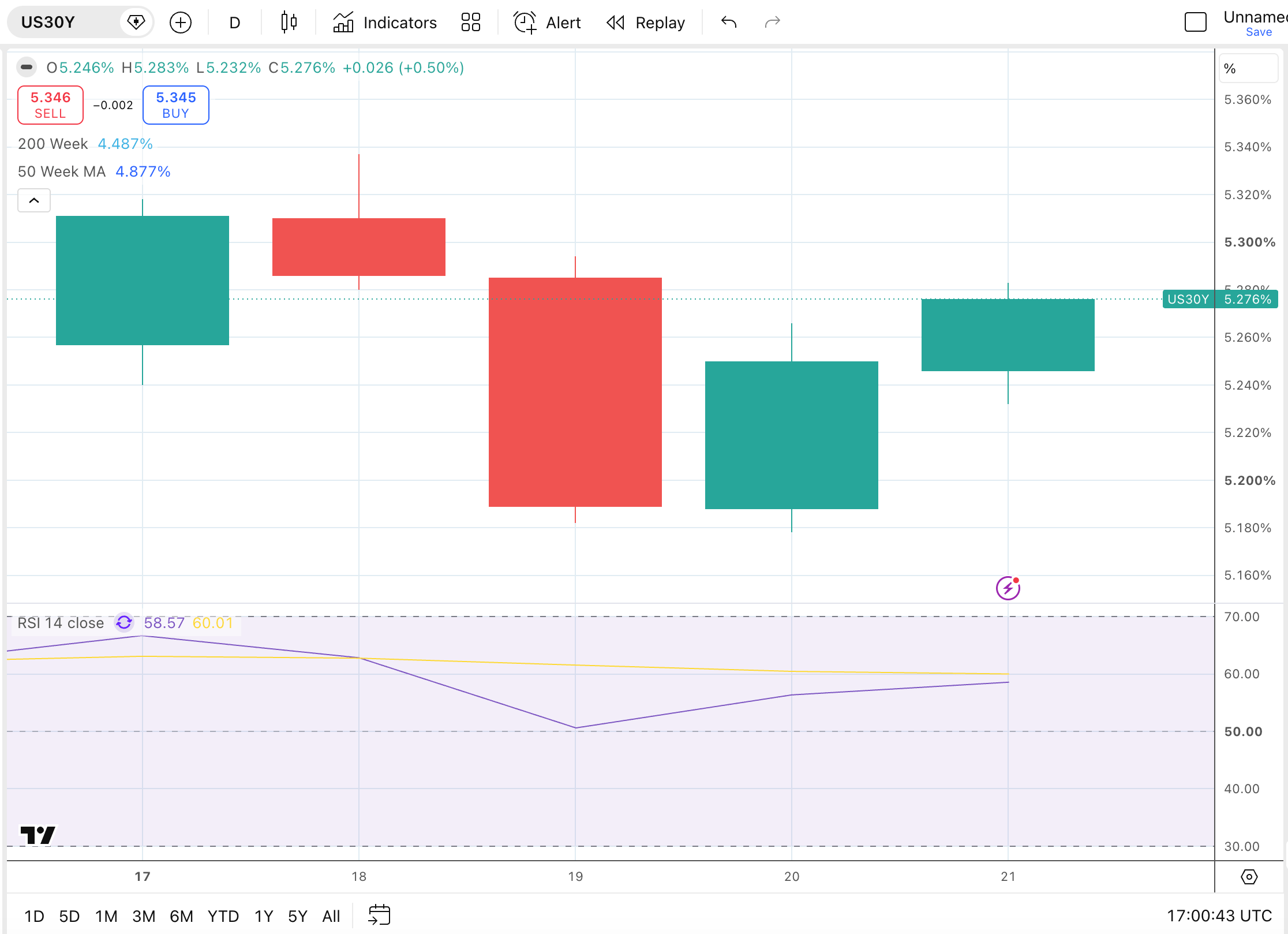
An increased rate in long-term bond yields is a sign that market participants feel inflation is going to increase.
Bond holders are essentially telling the market, “I’m not going to hold these if you don’t pay me more to do so,” because they don’t trust that the U.S. government has inflation under control.
One of the issues causing inflation is the conflict in Iran.
Because the Straight of Hormuz remains mostly closed, oil prices are spiking, which is inflationary for goods and services across the board (oil is a key ingredient in just about everything we produce).
President Trump understands this, which is why he threatened an “Economic D-Day” for Iran this week.
Bessent has also been banging this Economic D-Day drum.

He published a piece on the topic via the Financial Times just a few hours ago, as well.
President Trump also didn’t rule out further military intervention in Iran to bring down yields.
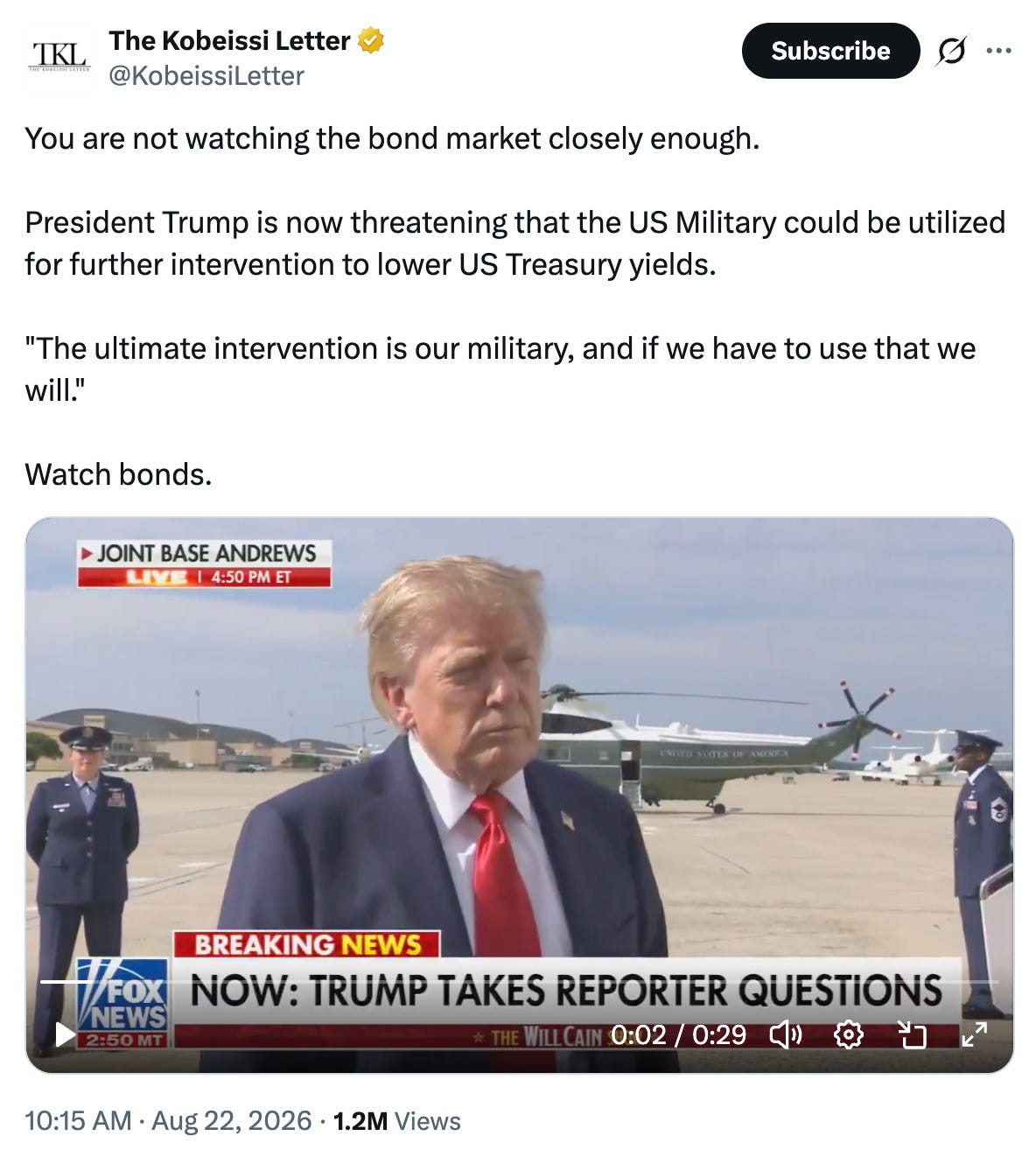
For those of you who didn’t click on the post above, here’s the transcript of the interaction between Trump and the reporter:
Reporter: Did you direct Secretary Bessent to intervene in the bond market? Was that your idea?
Trump: No, not at all. He’s a very capable man. He wanted to do it. He’s very good at it. He has a good touch, very good natural touch for the bonds and interest. He did that, yeah.
Reporter: The yields have come back up since then. Have you talked to him about another type of intervention? Is that something he’ll be doing?
Trump: We have many types of interventions. That’s one. The ultimate intervention is our military, and, if we have to use that, we will.
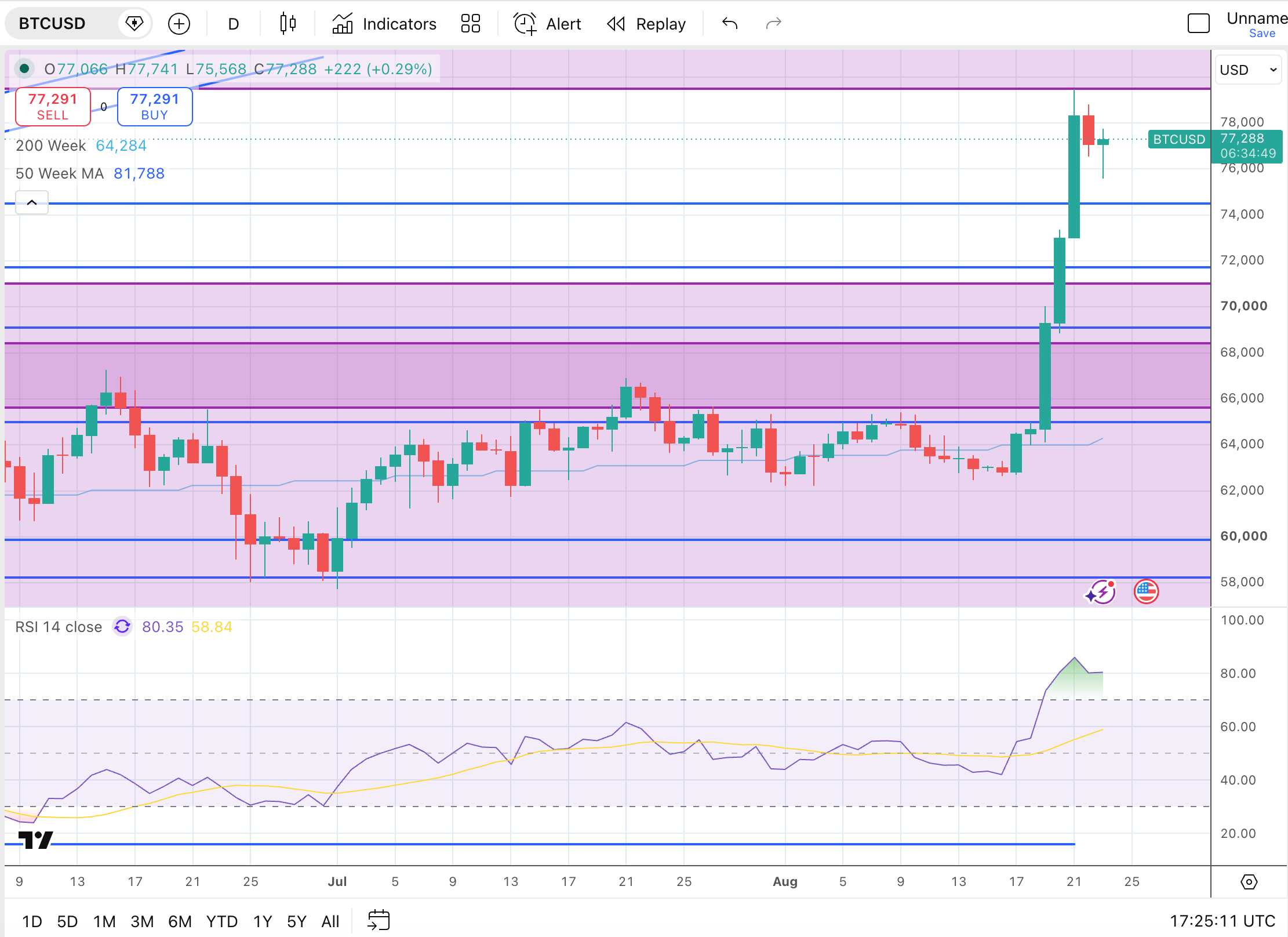
As Bessent and Trump’s attempts to calm the bond market failed, bitcoin and gold ripped.
As mentioned, bitcoin’s price ran from just over $62k to almost $80k.
And gold’s price ran from just over $4,300/troy ounce to over $4,600/troy ounce.
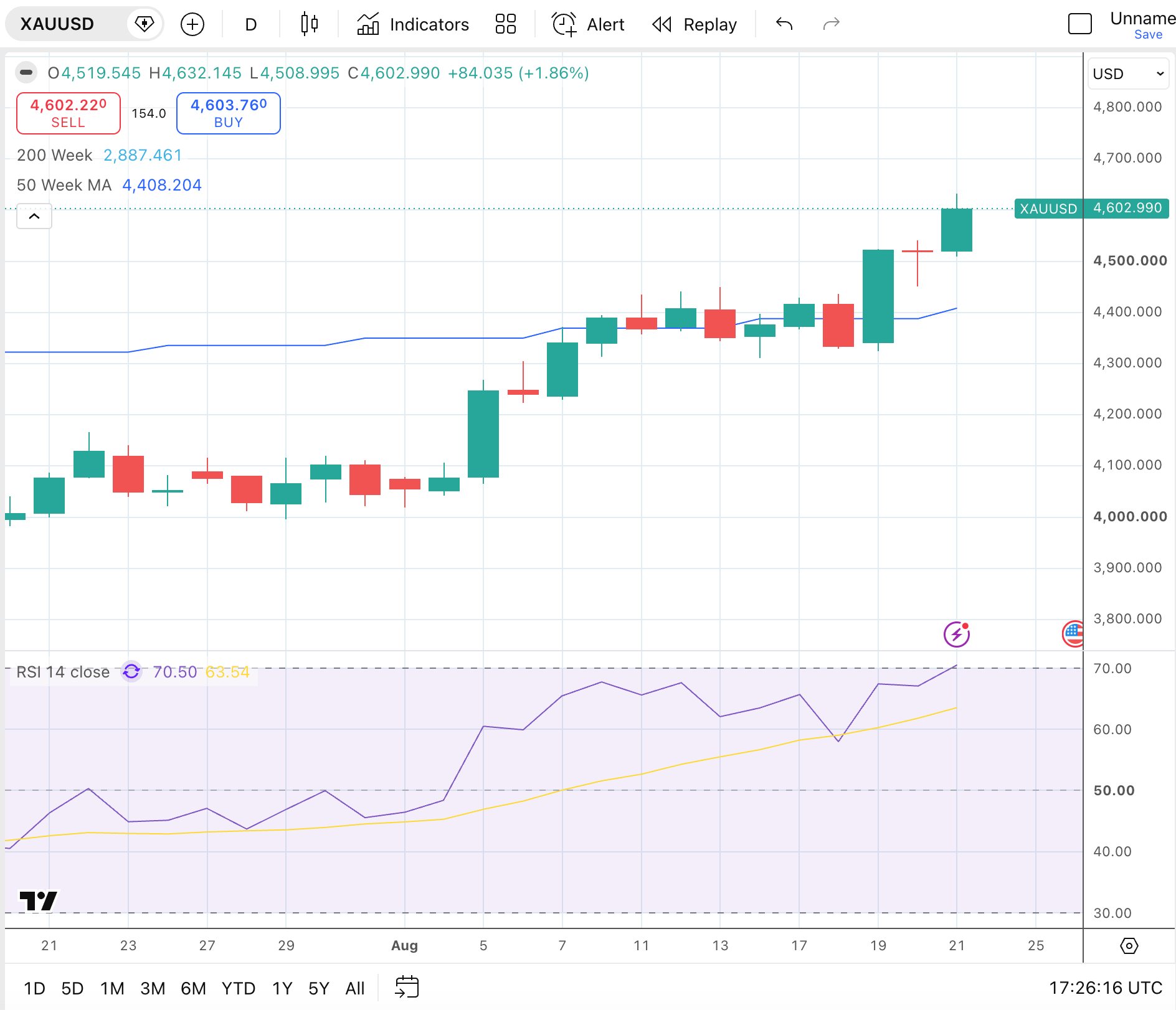
Bitcoin and gold are hard assets, assets that investors pile into as part of a “debasement trade”.
“Debasement” is another term for “inflation,” which is a term for “the U.S. dollar will soon be worth even less.”
There are a few reason’s bitcoin’s price ripped even harder than gold’s.
One is that bitcoin’s market cap is smaller, which it’s price easier to move.
Another main reason was that many were short bitcoin as Bessent made Wednesday’s announcement.
Once Bessent made the announcement, and investor’s piled into bitcoin, it resulted in the second largest short squeeze in the history of crypto, with over $1.74 billion in crypto short positions being liquidated from Wednesday to Thursday. By the time bitcoin’s price hit $72,000 on Thursday, $1.6 billion in bitcoin short positions had been liquidated.
(A “short squeeze” happens when traders who are betting on an asset’s price going lower are forced to buy back their positions as the price of an asset rises, which forces the price of the asset higher. This happens in a self-reinforcing loop until the squeeze ends.)
In my humble opinion, the trade is over and bitcoin’s price will deflate a bit or level out over the course of this week.
With that said, Bessent will be holding a press conference tomorrow at 1:00 PM ET in which he’ll be discussing the U.S.’s plan for further sanctions on Iran.
I don’t have much of an idea of how markets will react to what he says, but I have a feeling he’ll do everything in his power to try to calm them, which makes me think we’ll see bitcoin and gold pull back.
Also, bitcoin’s daily RSI is higher than it’s been in over two years, and my gut says we’ll see a pull back back to maybe $70k or so in the coming days. (Very hard to tell, and I could very much be wrong about this.)
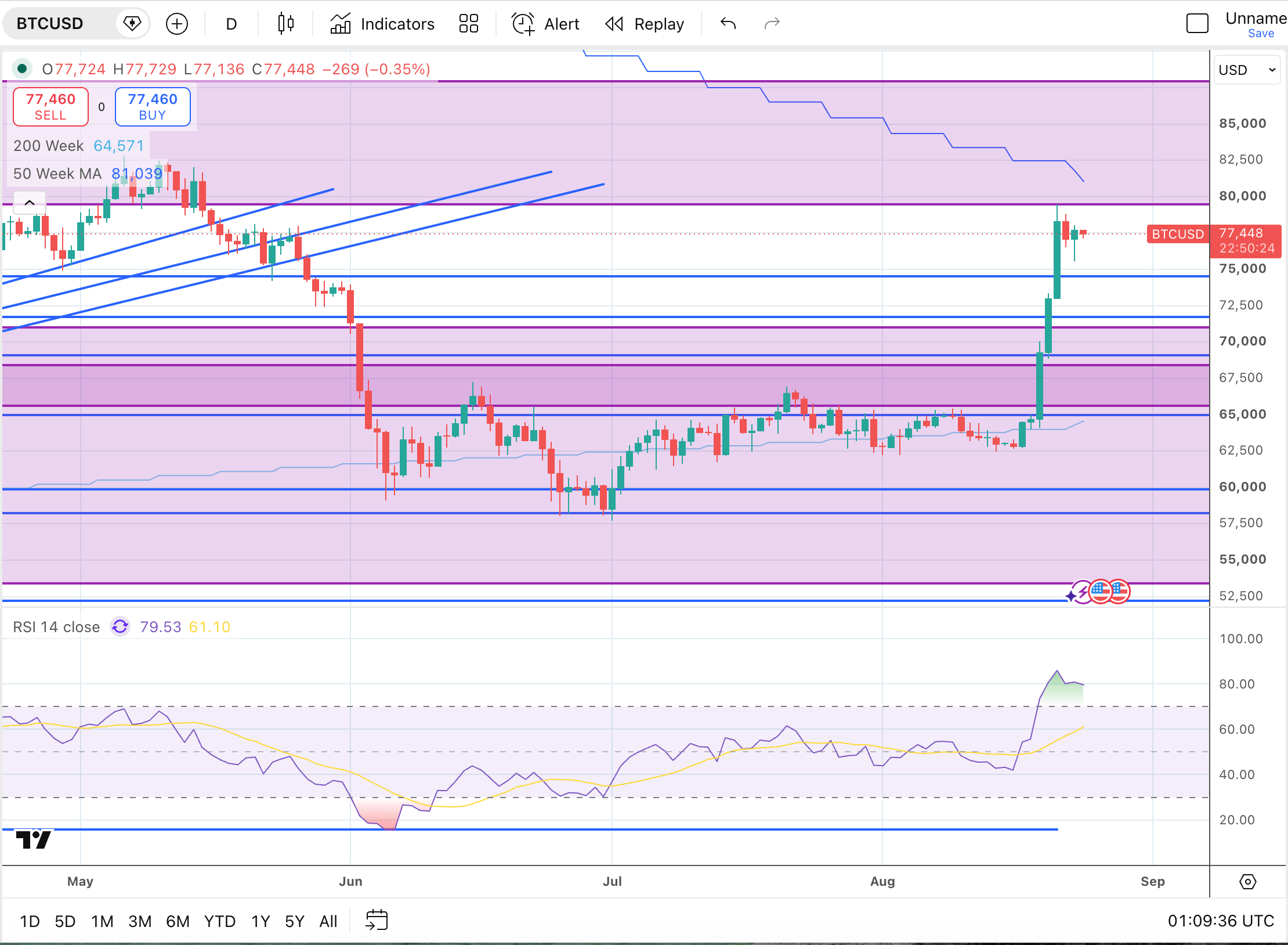
Please note that nothing I shared above is financial advice, nor should it be treated as such. Everything I’m sharing is for educational purposes only.
ANYWAYS, the pump has been fun and here’s to everyone who’d been dollar-cost averaging into bitcoin as those lower $60k levels, especially the newbies out there!
Welcome to the Bitcoin roller coaster.
Two weeks ago, I wrote about why Mamdani’s distorting food prices via city-run grocery stories will inevitably lead to even greater economic issues.
I was half-relieved this week to see that Mamdani’s people at least know the sort of damage they’re on the verge of causing.
Dan Rivoli, a reporter at NY1, spoke with Waverly Neer, the person leading the city-run grocery store project for Mamdani, and learned that she is considering giving grants and taking other actions to support local independent businesses that now have to compete with city-subsidized stores that are undercutting their prices.
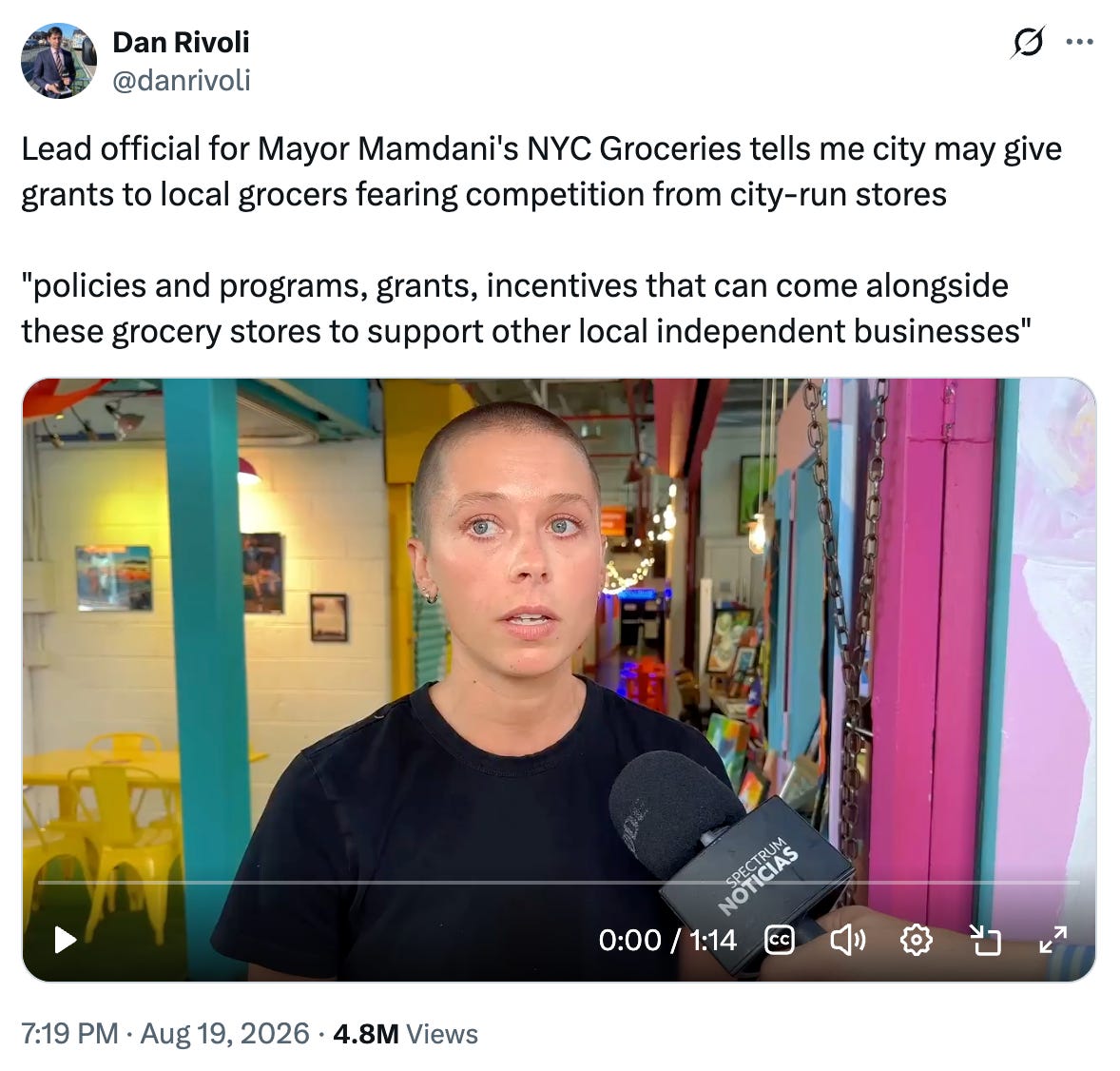
All I heard as I listened to this clip was “We’re going to continue to centralize power and choose winners, which will make the system more and more fragile.”
And the irony of it all is that what Neer is just doing a version of what Bessent is trying to do with the bond markets.
Both will ultimately fail, though, as history has shown us time and time again that when governments attempt to control prices — whether that be of food items or bond yields — bad things happen.
The good news is that when all of the mess caused by government interventions come crashing down, there’s hope that even the self-proclaimed socialists will embrace Bitcoin as we rebuild.
This is evidenced by the fact that a member of “The Squad”, Rashida Tlaib, is reported to have some exposure to bitcoin.

The NY Post shared that Tlaib holds $15,000 in shares in BlackRock’s IBIT Bitcoin ETF.
I’m not quite surprised that she doesn’t hold the real thing but am happy to acknowledge that holding shares of a bitcoin ETF is a start as well as a potential indicator that she understands bitcoin’s value proposition.
Glad to have you on our team, Rep. Tlaib.
In this final section of this week’s edition of the newsletter, I wanted to give a major shout out to Nadeige Uwamba, Philanthropy Officer for the Human Rights Foundation.
She recently published on how Bitcoin has helped the residents of Kibera, Africa’s largest informal settlement, while the efforts of NGOs, the World Bank, and the United Nations have fallen short.
In the piece, she highlights the incredible work that the team at Afribit, a grassroots initiative that has helped to establish a Bitcoin circular economy in Kibera, is doing.
The piece is a moving testament to the catalytic role Bitcoin can play in disenfranchised communities.

For more on the work that Afribit is doing, please see the piece I wrote on the project for Forbes or check out my interview with one of the projects co-founders, Ronnie Mdawida.
Alright, alright, alright. (In McConaughey voice.)
That’s all for this week.
Thank you to everyone for reading, as always, and here’s to a fantastic week ahead!
Much love and big hugs.
Best,
Frank
No posts
Comments
Nothing yet. Say the first thing.
Sign in to join the conversation.